
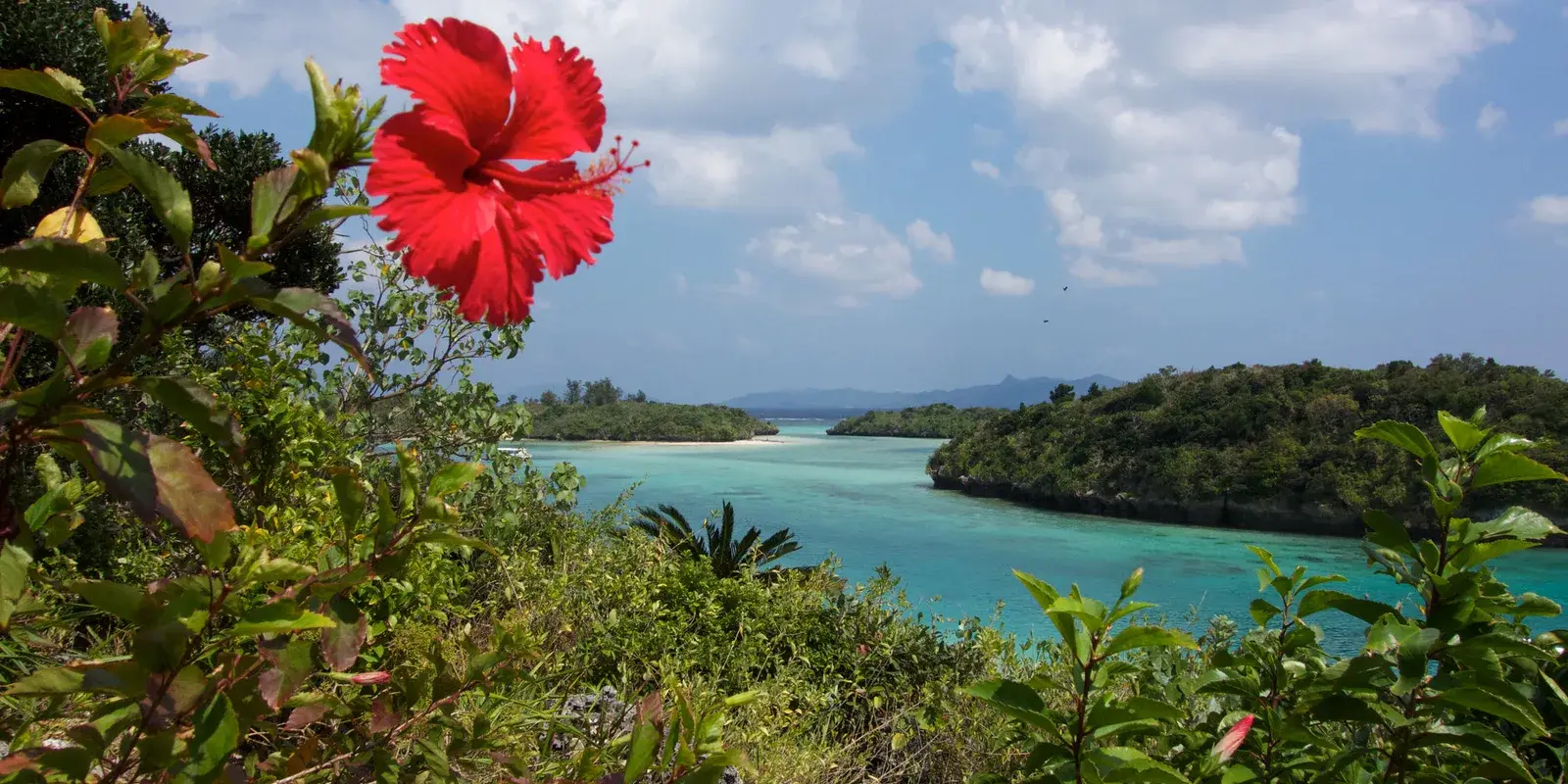
Is Ishigaki Worth It? What International Visitors and Japanese Visitors Both Found
Ishigaki is the gateway to Japan's southernmost islands, a subtropical stepping stone closer to Taipei than to Tokyo, famous for one turquoise bay, manta rays, and a climate that can swing from postcard to washout inside the same week. Before you book the flight past Naha, the doubts pile up fast. Does the weather actually ruin trips here, or just some of them? Is the famous bay as good as the photos, and why can't you swim in it? Is a few days on this one island worth it when the rest of Okinawa is right there too? We gathered real visitor voices, international and Japanese, to see how the doubt holds up.
Is it worth the trip? (in international visitors' own words)
We gathered 100 voices from international travelers, posted on Reddit, Google Maps, and TripAdvisor reviews of Ishigaki Island and Kabira Bay. Here is how their verdicts fell.
Nine of the 13 voices in the red bar are about weather or trash. One visitor wrote plainly: "Ishigaki is just constant rain, winds and clouds. Not a little bit of sun. The island is like a prison. The capital is derelict and the food is overpriced." Another, partway through a trip, reported: "Pretty shitty. Arrived Sunday and until today, I saw the sun for 20 minutes, the rest of the days probably had 1 hour without rain and the rest of the time has been raining no stop. I was able to go snorkeling 2 days ago but other than that, ocean has been very windy." A second pattern shows up in two threads: litter on beaches and streets, which one visitor called out plainly: "there is trash virtually everywhere in tourist area and non-tourist area (cans, plastic bottles...) I don’t recall seeing this amount of trash for example in Nanjo." One Swiss reviewer described the Kabira Bay letdown specifically: "Once you have the car parks and the numerous souvenir shops behind you, it is a beach that first of all makes you dream. But when we learned that we cannot swim there and that it is de facto reserved for boat operators, we quickly became disillusioned."
The other 88 voices sit in the green and middle bars. One visitor flagged a practical safety note: box jellyfish in July and August, dangerous enough that beaches there fence off a netted area for swimmers. A traveler who went in the off season wrote, "despite it being "off season", it was amazing and really fun to experience this side of Japan... The weather was not too hot (around 25-30°C), not too many people, and we were still able to go to the beaches and swim without getting cold." Another, comparing Ishigaki directly to the main island it's usually bundled with, wrote: "I actually enjoyed being on Ishigaki more than Okinawa; Okinawa is less populated and urbanized than like Tokyo or Osaka, but is still noticeably more crowded, congested and messy than Ishigaki." And one visitor, replying to a thread titled "Ishigaki is the worst island I have ever been to," pushed back hard: "Ishigaki was Nirvana❗️ ... Kabira Bay was beautiful and there is a lovely shrine there as well."
What Japanese visitors say
Japanese visitors review the same bay constantly, mostly in their own TripAdvisor.jp reviews, plus answers on a Japanese Q&A site where people ask for advice before a trip. Their register reads differently from the international one above.
Almost half of the Japanese voices land in the middle bar, and reading them shows why: the praise and the caveat usually arrive in the same sentence. One reviewer wrote, "まずは一度は行くべき場所。本当にきれいな海です。あとは8月9月は暑すぎて、ここに居ることが耐えられません。しかも、海の周りには店もあまりない。自販機も2・3台程度。もし、夏にここに行くのであれば、水分補給の準備が必要です。" ("A place you should go at least once. The sea is genuinely beautiful. But August and September are too hot to bear being here, and there aren't many shops around the water, just two or three vending machines.") A reviewer of the island's own Blue Cave made the same move about tides rather than heat: "満潮時と干潮時とではかなり印象が変わるとは思いますね。行った時は干潮時でしたので洞窟中までは海水がなく手前の窪みに海水が貯まってる感じでしたので青の洞窟感は薄い印象でした" ("I think the impression changes a lot between high and low tide. I went at low tide, so there was no seawater reaching into the cave, just a pool near the entrance, which made it feel less like a 'blue cave.'") And a reviewer of Kabira Bay itself paired the same praise and condition: "天気のいい日にはグラデーションがとても綺麗に見えます。逆に言うと、天気によって綺麗かどうかかなり左右される。グラスボートも同様。" ("On a sunny day the gradient looks really beautiful. On the other hand, whether it looks beautiful depends a lot on the weather. The glass boat ride is the same.")
The unconditional green bar includes repeat visitors. "20年ぶりに訪れた川平湾。天候にも恵まれ、エメラルドグリーンに輝く美しい絶景に心奪われました。" ("Visited Kabira Bay for the first time in 20 years. Blessed with good weather, I was captivated by the dazzling emerald-green view.") wrote one reviewer. The red bar here is smaller than on the international side, and what's in it reads closer to a shrug than to shock. One Blue Cave reviewer, comparing it to the one on Okinawa's main island, wrote: "本物のイタリアの青の洞窟はテレビでしか見たことしかありませんが、沖縄本島の青の洞窟と比べると、あまりオススメ出来ないと思いました。..." ("I've only ever seen the real Blue Grotto in Italy on TV, but compared to the Blue Cave on Okinawa's main island, I didn't think I could really recommend this one...") And on that Q&A site, one answer to a traveler anxious about a rain forecast put the weather bluntly: "南西の天気はコロコロ変わります。晴れ予報でも大雨振ったり、予報も変わりますし、当たりにくいし。寒くないから、星空以外は雨でも楽しめるのでは。そもそも南西の天気は基本的に悪いです。沖縄は曇りがとても多いですよ。良い天気を狙って行くのはほとんど無理だと思いますので、何回も行くしかないかな。" ("Weather in the southwest changes constantly. Even a sunny forecast can turn to heavy rain; forecasts shift and are hard to trust. Since it's not cold, you can enjoy most things even in rain, just not the stargazing. Honestly, the weather here is mostly bad, cloudy very often. Aiming for perfect weather is almost impossible, so you may just have to come back more than once.")
What we wish you'd noticed before you booked
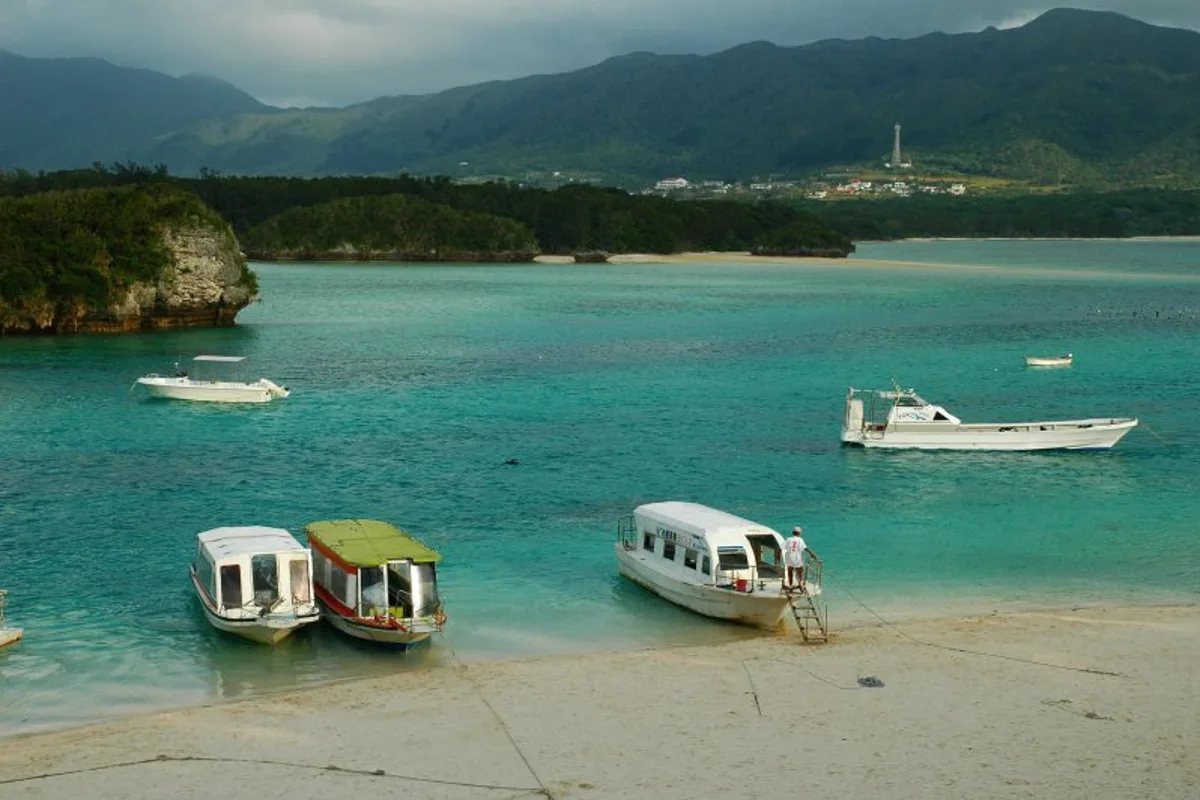
Start with the bay itself, which Okinawa's official tourism site calls the island's finest scenic spot. Kabira Bay, together with Mount Omoto, was designated a National Place of Scenic Beauty (名勝) by Japan's government on September 11, 1997, with the protected area expanded twice since, in October 2015 and October 2016. Separately, Okinawa's official tourism board gives the practical reason behind a complaint several reviewers raised: the current running through the bay is fast, which is why swimming is prohibited there. Visitors see the water from a glass-bottom boat tour instead, though at least one visitor described a separate area within the bay where paddleboarding was possible. If a swimming beach is what you pictured, the boats-only rule is worth knowing before you go.
Typhoons are behind some of the weather complaints above. Ishigaki is one of eight weather stations the Japan Meteorological Agency uses to define a typhoon's "approach" to Okinawa Prefecture: a typhoon counts as approaching the prefecture once its center passes within 300 km of any one of those eight stations, spread from Naha to Yonaguni. Over the 1991-2020 period JMA uses for its official normal values, an average of 7.7 typhoons approach Okinawa Prefecture every year. Ishigaki City's 2025 visitor count hit an estimated record of 1,490,152, and the city's tourism division named zero typhoon-related flight cancellations that year as one of three factors behind the record, alongside the resumption of international flights and newly launched routes. The prior record was 1,471,691 visitors, in 2019. None of this means a typhoon will affect your specific trip. It means the risk is officially tracked, and worth checking before you fly.
Doing Ishigaki without the surprises
Treat the weather as the main variable in this trip. If you can, build in enough days that one washed-out day doesn't sink the whole visit, since voices on both gauges describe wind or rain grounding boat trips and spoiling beach days. Check the real-time typhoon and flight status before you fly, especially during the Yaeyama typhoon season from roughly June through October.
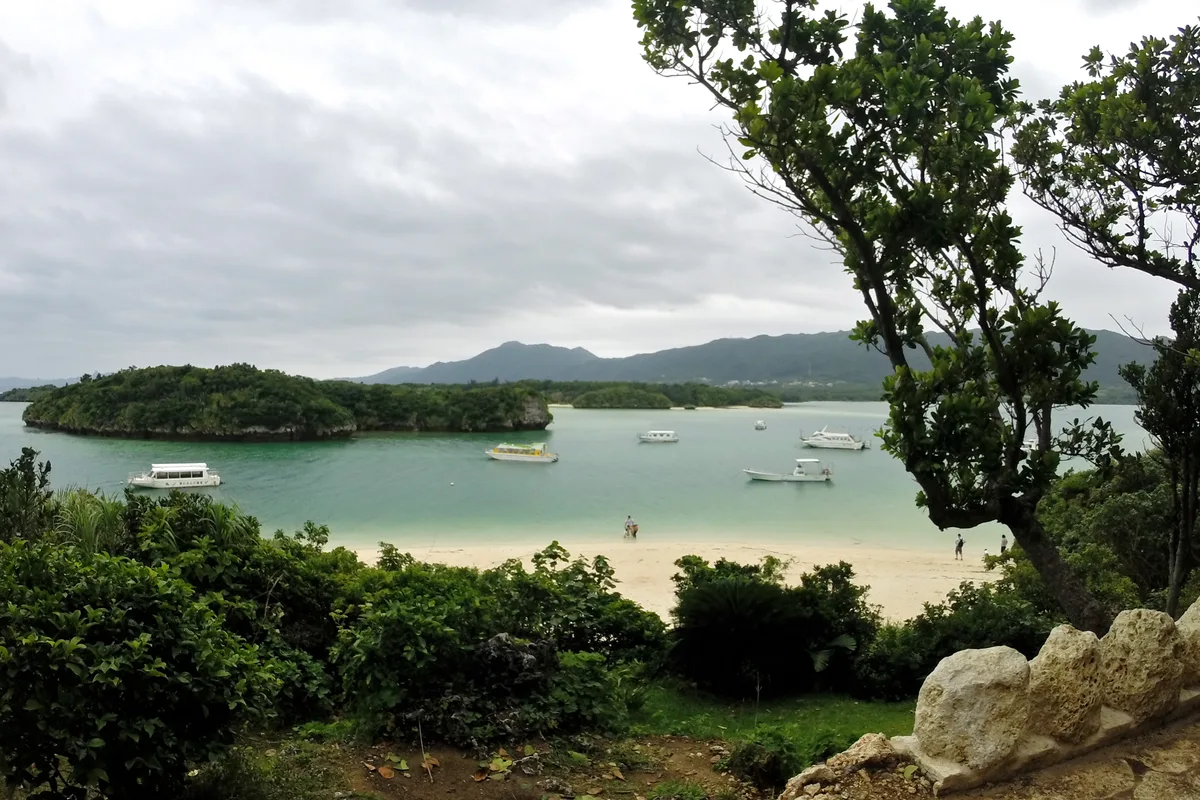
At Kabira Bay specifically, go in expecting a boat ride rather than a swim. If the glass-bottom boats are grounded by wind or weather, the overlook above the beach still delivers the view that made the bay famous; reviewers on both gauges described that view holding up under cloud and rain. If you're curious about Ishigaki's own Blue Cave, know that the tide matters as much as the weather: at least one Japanese reviewer who went at low tide, and found the cave barely blue, said they'd try high tide next time. One answer on the Q&A site went further, suggesting visitors who'd already seen the better-known Blue Cave on Okinawa's main island would be more impressed by a manta ray snorkeling tour than by Ishigaki's smaller version. Bring sun protection, and if you're swimming between June and September, stay inside a netted area: Okinawa Prefecture's box jellyfish advisory for 2026 ran from June 1 to September 30.
Budget a car into the trip if you can. At least one visitor described some bus routes running only two or three times a day, enough to strand a half-day plan waiting for the next one, and one visitor who found Ishigaki City itself flat said a car, or a bike and a lot of time, is what it takes to enjoy the island's highlights. Both gauges above still land on more green than red, weather, trash, and transport included.
Ishigaki is one stop in a much larger trip across Okinawa Prefecture. For the main island, which some of the travelers above also visited, the Okinawa guide covers the Ryukyu Kingdom history, Churaumi Aquarium, and Naha access.
Sources
- Ishigaki City, Protection of Cultural Properties (mainly Natural Monuments and Places of Scenic Beauty): Kabira Bay and Mount Omoto designated a National Place of Scenic Beauty (名勝) on September 11, 1997, with the protected area expanded on October 7, 2015 and October 3, 2016.
- Okinawa Convention & Visitors Bureau, "おきなわ物語" official tourism site, Kabira Bay: Kabira Bay described as Ishigaki's finest scenic spot; the current inside the bay is fast, so swimming is prohibited; visitors view the water by glass-bottom boat instead.
- Japan Meteorological Agency Okinawa, reference-station definition of "approach" to Okinawa Prefecture: a typhoon is counted as approaching Okinawa Prefecture once its center passes within 300 km of any of eight reference stations, including Ishigaki, and its 1991-2020 monthly normals are highest from June through October (0.6 to 2.2 approaches a month, against 0.4 or fewer in every other month); Japan Meteorological Agency, 30-year normal values (1991-2020): an average of 7.7 typhoons approach Okinawa Prefecture per year over that period.
- Okinawa Convention & Visitors Bureau, box jellyfish advisory notice (2026-06-16): Okinawa Prefecture's box jellyfish advisory for 2026, issued for June 1 through September 30, 2026, after 81 of 199 marine-creature sting injuries in the prior year were attributed to box jellyfish.
- Yaeyama Mainichi Shimbun, "入域観光客 過去最多 25年石垣市" (2026-02-01): Ishigaki City's 2025 estimated visitor count of 1,490,152, a record, versus the prior record of 1,471,691 in 2019; Ishigaki City's Tourism and Culture Division cited zero typhoon-related flight cancellations, the resumption of international flights, and newly launched routes as the three main factors, per city tourism official statements reported by the paper.
WMJS is written in Japan, in English, with AI help. We check every page, but English is not our first language. If a sentence reads oddly, tell us. One sentence is enough.
Thank you. A person reads every note.
How well do you know Japan?
Built from 635 public posts by Japanese people
Want to know more? Ask Japanese people
Have a follow-up question about this topic? We'll ask real Japanese people.
Voice Box →