
Is Churaumi Aquarium Worth It? What 151 Real Visitors Say
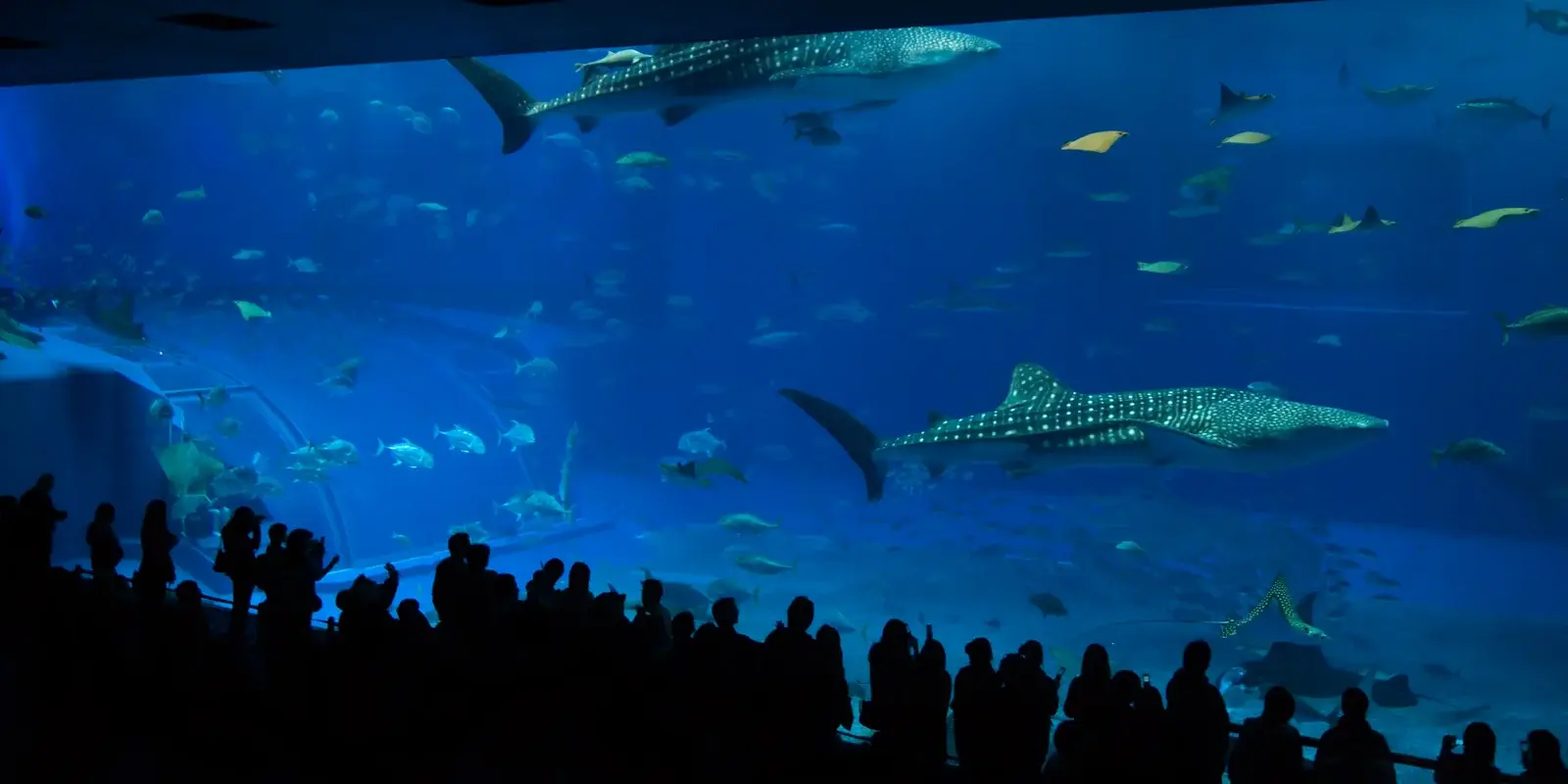
A two-hour drive up Okinawa's coast, a giant tank with a whale shark in it, and a ticket that costs about the same as a nice lunch. On paper the trip sounds simple. Then you start reading reviews and two very different conversations show up. Foreign visitors argue about whether it's right to keep a whale shark in a tank at all. Japanese visitors argue about something else entirely: whether the place still earns the drive once you factor in the crowds.
Here is the short answer the voices keep landing on: most people on both sides call it worth going. The ones who hesitate are hesitating about two almost unrelated things.
Is it worth it? (in visitors' own words)
We gathered the voices of people from outside Japan who have actually been to Churaumi Aquarium, on Reddit and TripAdvisor, and read them with one question in mind: was it worth it? Here is how they fell.
We expected the red band to be about the two-hour drive from Naha. It mostly isn't. One traveler summed up the actual majority view among the disappointed: "Some really cool animals but unfortunately a lot of them had very small enclosures, especially the manatees and the turtles. Incredibly cool to see the whale shark, but that too had way too little space to roam around in." Another, more blunt: "If you care for animals then you should not visit this place. These signs of animal abuse are so clear that I am shocked people still visit." A third visitor, who enjoyed the trip overall, added the caveat almost as an aside: "Really exciting... though I also find it morally questionable."
A meaningful share of foreign visitors feel this standing in front of the tank, and it is a real reaction worth knowing about before you go. The aquarium is certified by Japan's Minister of the Environment as a conservation facility for rare species, and its own materials describe rescuing weakened animals and returning them to the wild; the manta ray breeding in the Kuroshio Sea tank is, by the aquarium's account, a world first. Whether that balances the enclosure size is a question the reviews leave open, and so do we.
The people who left satisfied talk about something much simpler: scale. "If you're looking for a valid reason to rent a car in Okinawa, here it is," wrote one visitor, noting the two-hour drive from downtown Naha and the ¥2,180 admission. "You need at least an entire day since you need to travel a long distance to the park," wrote another. People write about the whale shark the way they write about a concert they got tickets to.
What the Japanese reviews argue about instead
Japanese visitors, in their own words on jalan and other Japanese travel and Q&A sites, describe a different aquarium almost entirely.
Animal welfare barely comes up. Instead, the honest complaints cluster around crowding, and, less often, a sense that the content doesn't quite match the reputation. One visitor wrote after a particularly packed weekday afternoon: "I've been many times but this was the most crowded I've ever seen it... the viewing area in front of the whale shark tank was packed with people who wouldn't move. It's a place I love, so it was a shame." Another, weighing the four-hour round trip from Naha against a rushed few hours inside, ended up genuinely unsure: "Whether it's worth seeing, honestly, my frank opinion is that it's questionable."
A smaller group raises a different doubt on a popular Q&A site, before they've even gone: "It's a man-made tank with fish someone collected. If you're in Okinawa, I feel like you should see wild fish instead." The most common reply is a practical one: a wild dive gives you no guarantee of seeing anything in particular, least of all a whale shark, while the tank guarantees the sighting and lets you read about what you're looking at.
The tank's design, the crowd, the four-hour drive, the ticket price going up over the years: all of that gets discussed frankly in the Japanese reviews. Whether a whale shark belongs in a tank does not.
What's worth building your day around
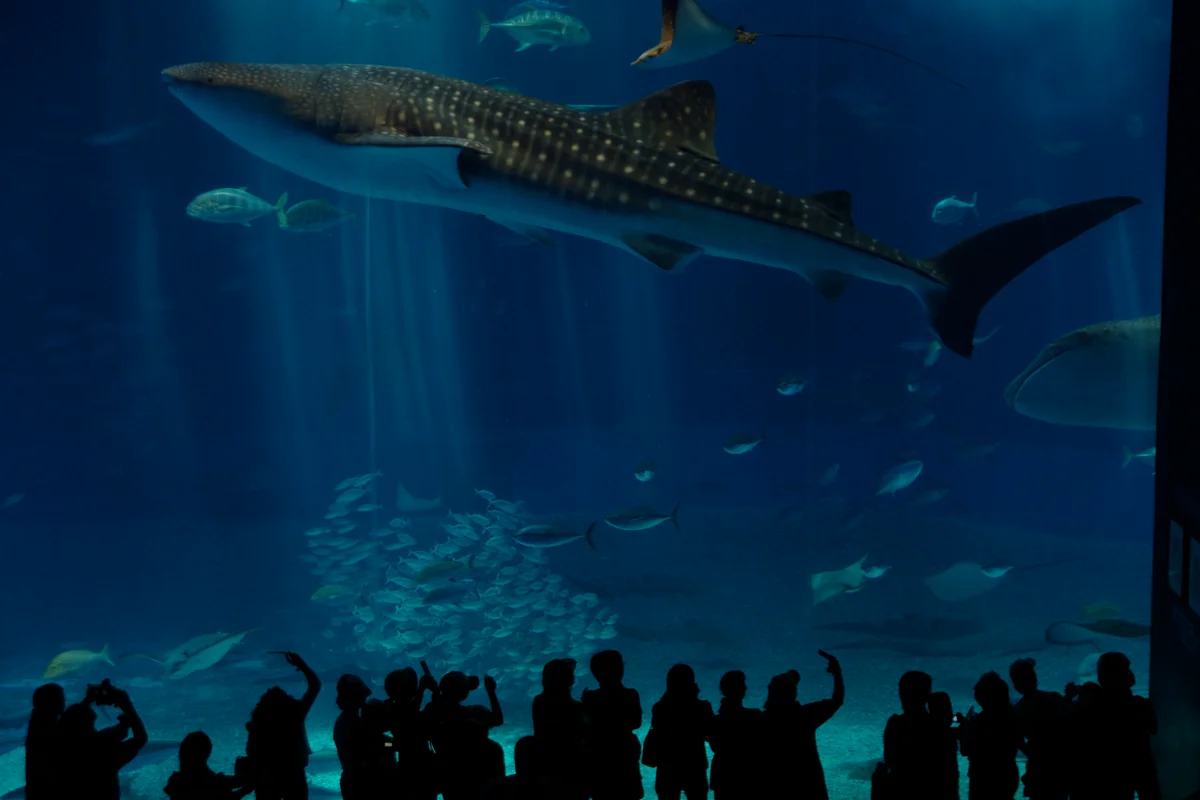
Strip away the debate and there's a specific thing here worth seeing. The Kuroshio Sea tank holds 7,500 cubic meters of water behind an acrylic panel 8.2 meters tall and 22.5 meters wide, and it's built around the aquarium's signature achievement: alongside the whale shark, it holds manta rays that Churaumi says it was the first aquarium in the world to successfully breed. Feeding times draw a crowd for a reason. Several visitors mention timing their visit around the whale shark feeding specifically, when the fish comes up to the surface and, as one reviewer put it, seeing it go vertical to eat has real presence.
The rest of the building is arranged as a descent: a naturally lit coral reef tank on the upper floor, the Kuroshio Sea in the middle, and a deep-sea gallery on the ground floor before you step back outside. Outside is free, whether or not you buy an aquarium ticket at all: the dolphin lagoon, sea turtle pool, manatee pool, and Emerald Beach all sit in the wider, no-charge Ocean Expo Park. Multiple visitors describe planning around the whole park as the day out, with the aquarium as one part of it.
Doing it the welcomed way
Arrive right at the 8:30 opening, or in the last hour or two before closing (closing runs later in summer, so check the current hours). Visitors on both sides of the language divide agree the crowd that dominates the negative reviews mostly isn't there yet at that hour, or has already left; the visitor quoted above who called it the most crowded visit yet went on a weekday between noon and three. The aquarium's homepage also carries a current congestion indicator, useful as a rough signal for the drive up, though the number is only ever as current as when you last refreshed it.
The brochure time is wrong, and it's wrong in a predictable direction. Ticket sellers and tour buses tend to plan for ninety minutes to two hours. Visitors who went at their own pace describe staying three, four, even six and a half hours once you count the cafe by the tank, the behind-the-scenes tour, and the free areas outside. If you're coming from Naha, that changes the math on the two-hour drive: it stops looking like a long trip to a short stop, and starts looking like a full day that happens to have a long drive attached to it.
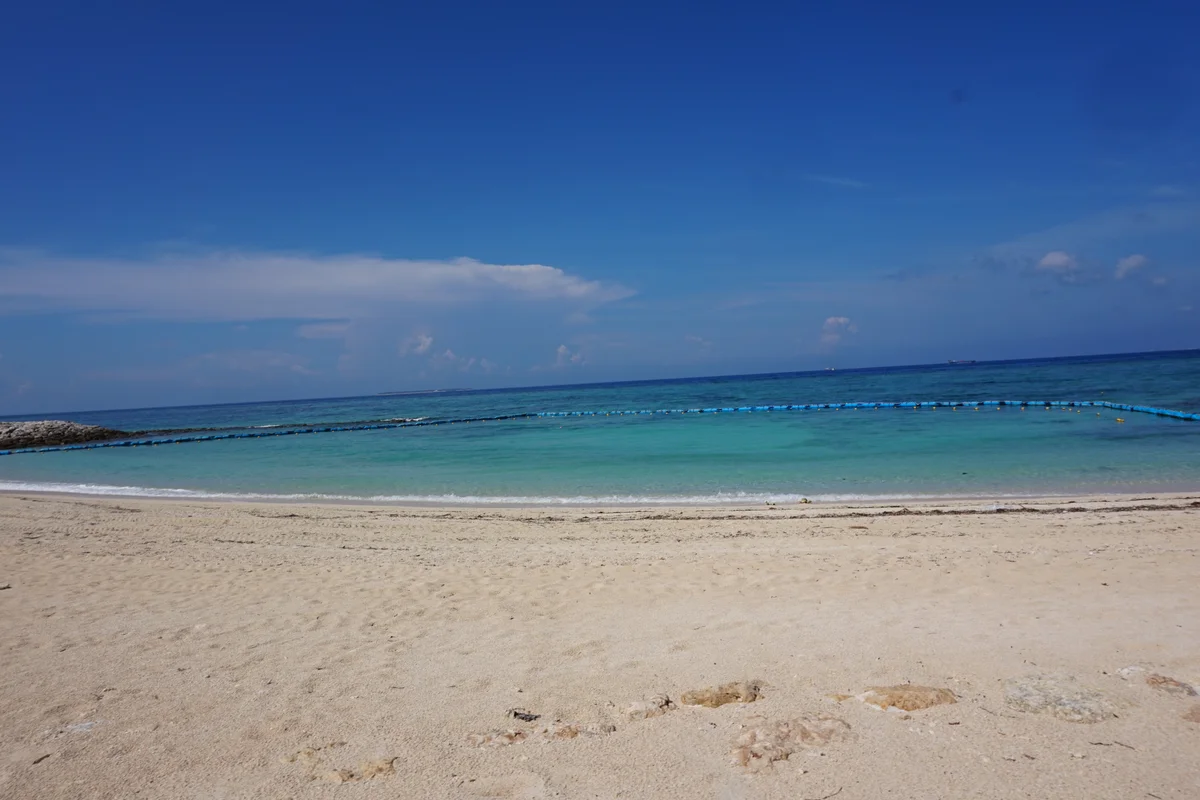
Pair it with the rest of the Motobu peninsula. Several visitors recommend staying overnight nearby, then giving a morning to Emerald Beach right next door or the fukugi-tree lane in nearby Bise.
Decide what you think about the tank size before you arrive, not while you're standing in front of it. If the enclosure question matters to you, the aquarium's conservation and breeding-research materials are worth reading in advance, alongside the reviews above. If it doesn't, the satisfied reviews keep coming back to the same word: scale.
Where the two groups part ways
Most of the worth-it debates we've measured turn out to be an argument between people who had different weather, or arrived at different times of day. This one is different. Foreign visitors and Japanese visitors are largely arguing about two separate things, and each side is almost silent about the other's concern. That is a reasonably accurate map of what each visitor actually brings with them: a tourist a long way from home, weighing whether a captive animal display sits right with them, against a local for whom the aquarium has been a fixture of family trips for decades, now noticing how much more popular it has gotten.
Knowing which of those two you actually are, before you get in the car, does most of the work of deciding whether the drive is worth it. And whichever one you are, the free half of the park, the beach, the turtles, the manatees, is waiting outside the door either way.
Planning the rest of an Okinawa trip around this one stop? Start with is Okinawa worth it for how the aquarium fits into the wider island, or the Okinawa guide for Naha, Shuri Castle, and getting around without a car. For more on how to weigh a famous stop against the rest of a trip, see what actually matters in Japan.
Sources
- Okinawa Churaumi Aquarium (official): The Kuroshio Sea: The tank's 7,500 m³ volume.
- Okinawa Churaumi Aquarium (official): Haisai facility details: The acrylic viewing panel's dimensions (8.2 m tall, 22.5 m wide, 60 cm thick).
- Okinawa Churaumi Aquarium (official): Area guide: The aquarium's account of being the first in the world to successfully breed manta rays in captivity, and a same-day congestion indicator published on the homepage.
- Okinawa Churaumi Aquarium (official): Conservation: Certified as one of Japan's Ministry of the Environment's Certified Zoos and Botanical Gardens Conserving Rare Species.
- Okinawa Churaumi Aquarium (official): Biological Conservation Efforts: Describes rescuing weakened animals and returning them to the wild.
- Okinawa Churaumi Aquarium (official): Hours: Regular hours of 8:30–18:30 (last admission 17:30), extended into the evening in summer.
- Okinawa Churaumi Aquarium (official): Admission fees: ¥2,180 adult admission.
WMJS is written in Japan, in English, with AI help. We check every page, but English is not our first language. If a sentence reads oddly, tell us. One sentence is enough.
Thank you. A person reads every note.
How well do you know Japan?
Based on 51,218+ real Japanese voices
Want to know more? Ask Japanese people
Have a follow-up question about this topic? We'll ask real Japanese people.
Voice Box →