
Is Tofuku-ji Worth It? Almost Everyone Who Goes Says Yes, If They Time It Right
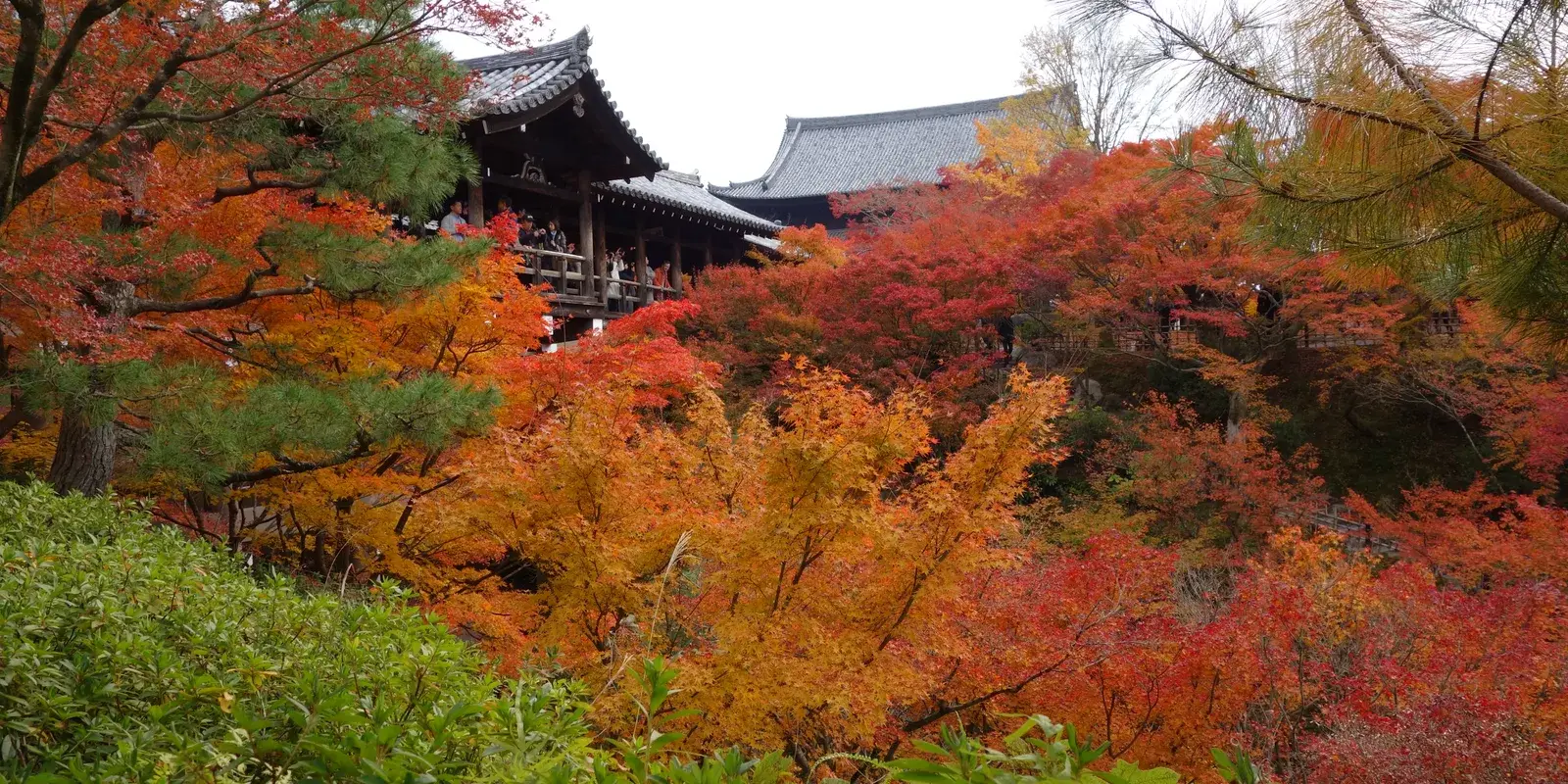
The photo that pulls you here is the one everyone has seen: a covered wooden bridge seeming to float over a ravine that has turned completely red. So you arrive half-braced for the catch. The ¥1,000 autumn ticket. The crush of people. A bridge where, at peak season, you are asked not to stop and take pictures. Then you look at what the visitors who actually went came home saying, and the catch mostly evaporates. The debate about Tofuku-ji was never really about whether. It turns almost entirely on when.
Was it worth it? (in visitors' own words)
We read through the accounts of international travelers who had actually walked Tofuku-ji and, in effect, asked each of them the plain question. Weighted by how much each opinion resonated with other readers, here is how they landed:
That empty red bar is the surprising part, and it is worth sitting with. In every other place we have measured this way, someone comes home disappointed. Here, essentially no one did. What splits the visitors is the calendar. The ones who came home glowing and the ones who came home cautioning had both loved the place; they had simply gone in different weeks. One traveler summed the whole gamble up after seeing the ravine for the first time: "Tofuki-ji was my favorite foliage stop in Kyoto. Admission was 1000 yen a person but I quickly decided it was worth it after I saw the many-colored leaves."
The people in the neutral band are not lukewarm about the place. They are warning you about the hour. "It does get very crowded here at peak fall season... The rock gardens are very interesting (there are at least five), better than Ryoan-ji in my opinion. The Sanmon Gate is also impressive. When we visited in early November things were not very crowded, at the end of the month it was a very different story," one visitor wrote. A former neighbor of the temple put the same thing more bluntly: "Tofuku-ji is absolutely gorgeous, but it can get extremely crowded at peak season (which is unusual because it's almost empty for the rest of the year)."
And notice how the happiest reports read. They are almost all about timing, or luck with it. "I managed to visit Tofukuji during a rain storm and had it all to myself basically." "There were relatively few people there at 9ish on a Monday in December. It is a very peaceful place." "I love this temple, just one train stop from Fushimi Inari and a lot less people. Very calm and stunning!"
How the people who live with it feel
Here is the layer a forecast site will not give you: what Japanese visitors say, in their own reviews, about the same ravine.
The shape is almost the same as the visitors', with one difference worth naming: the red band is a little larger here, and it says exactly what it says. Peak autumn really is hard. One reviewer visiting with family wrote that the leaves were "beautiful and overwhelming, but as expected it was very crowded," and that for her mother, who uses a walker, the crush was a real strain. When the people who could come back any weekend tell you the hard part straight, that is worth more than a wall of five-star raves.
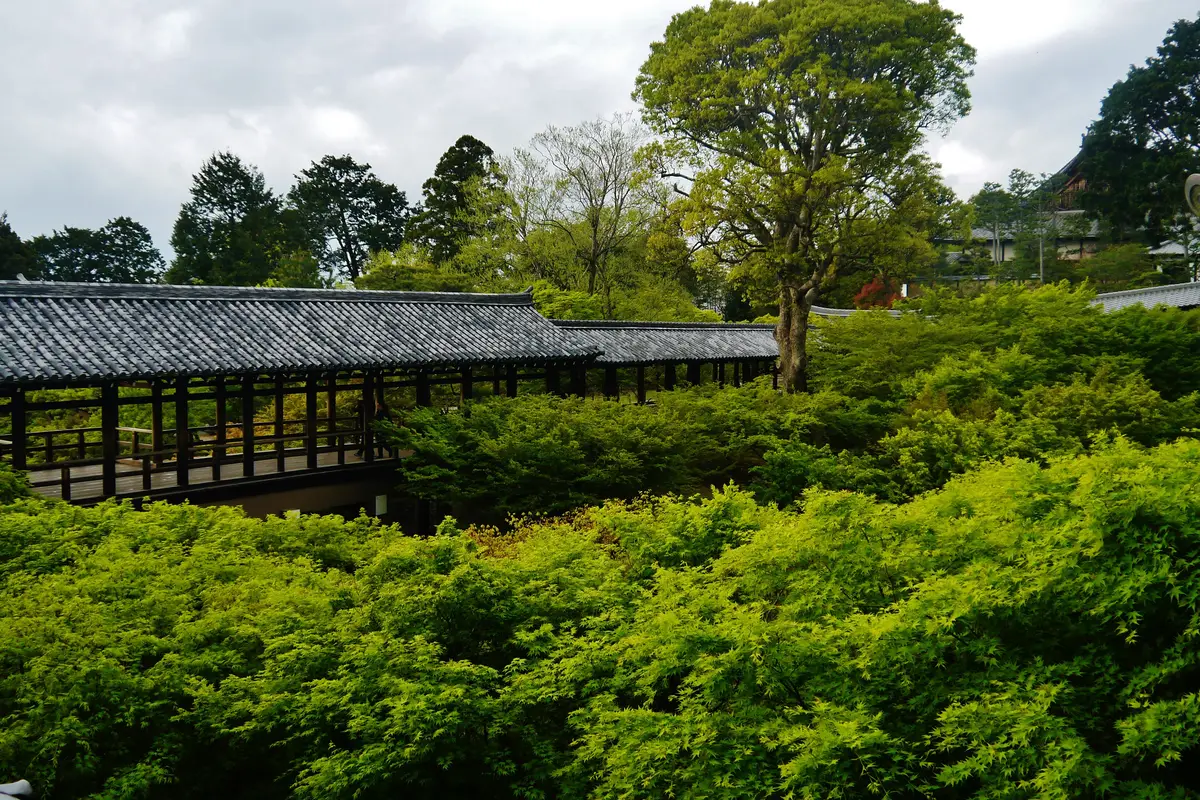
But the most useful thing in these Japanese reviews is something visitors rarely hear at all. The locals have stopped fighting the November crowd. They go for the green maples instead. "During autumn foliage season it's crowds, crowds, crowds," one wrote, "but the green maple leaves of Kyoto in May are also very beautiful. Best of all, there are few people, so you can sightsee at a leisurely pace." Another was more precise about the trade: "Autumn foliage season is spectacular but crowded, so you can't view it leisurely. The fresh green maples in early summer are also a wonderful sight, and you can take your time." One even caught the ravine empty during the Gion Festival, when everyone else had drifted toward the parade: "Vivid green maple leaves close in. Somehow we had the place to ourselves." The same ravine, the same bridge, a fraction of the people, and a cheaper ticket. It is a local habit that is easy to miss and easy to borrow.
What's actually there when you look up
The maples get the photos, but the reviews keep circling back to how much else there is, and how little of it people expected.
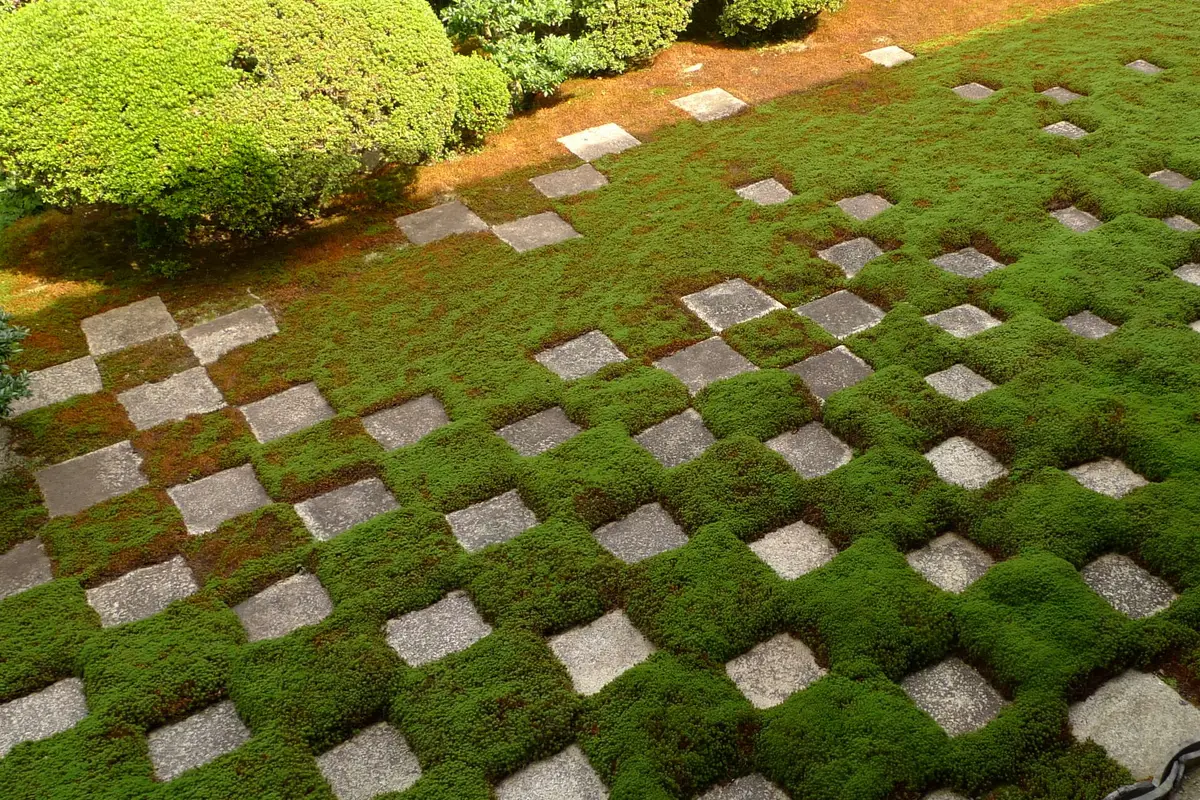
The four Zen gardens are the part almost no one reads about first. The abbot's hall garden, the "Garden of Eight Phases," was laid out by the modernist designer Mirei Shigemori in 1939, and it is the only Zen abbot's hall in Japan with a garden on all four sides. The checkerboard of moss and stone in the north garden looks startlingly contemporary. It is a National Site of Scenic Beauty, and visitors who slowed down for it were the ones who came away calling the day great rather than merely pretty. The Sanmon gate deserves the same slow look: it is the oldest and largest surviving Zen temple gate in Japan, completed in 1425 and designated a National Treasure. During special openings you can climb inside to the painted ceiling and the ranks of arhat statues. "Tofuku-Ji Temple is great with The Sammon Gate right next to it with awesome carvings on the inside," as one visitor put it.
Two more things are easy to miss if you only chase the ravine. "Maybe the best part are the small subtemples scattered around the place, like Kōmyō-in and Funda-in," one traveler wrote. They rarely see the main crowd, and their gardens reward a slow bench. And if you time it right, there is real stillness on offer: "Went there with some buddies in 2007. We just sat in silence for a good hour. Man I miss Japan."
Doing it the welcomed way
The whole thing comes down to a few choices that Tofuku-ji quietly rewards.
- Pick your season on purpose. If you want the famous fire-red ravine, come in the roughly three-week peak, usually mid-to-late November, and treat the crowd as part of the deal. If you mostly want the place, its gardens, and the ravine, come any other time. Locals rate the young green maples of May and early summer as the same view without the queue.
- Go at opening, or in bad weather. Nine o'clock on a weekday, or a rainy morning, and the corridors can be nearly empty even in high season. The visitors who "had it to themselves" almost all arrived early or got lucky with rain.
- Know which ticket buys what. In the normal season the Hojo (abbot's hall) garden is ¥500 and the Tsutenkyo bridge and founder's hall are ¥600, or ¥1,000 for both together. During the autumn special period, roughly November 14 to December 6, the Tsutenkyo and founder's hall ticket becomes ¥1,000 and the combination ticket is not sold, so decide in advance whether the walk across the bridge matters to you or the gardens do. (Note that the Hojo garden's normal-season price rises to ¥600 from November 1, 2026, and the autumn dates shift each year, so check the official page before you go.)
- You can see the ravine for free. Gaun-kyo, the bridge on the public approach path, looks straight across at Tsutenkyo and the sea of maples below it, and you cross it without a ticket. Several Japanese reviewers make the point that the free view is already worth the trip; the paid ticket buys you the walk along the famous covered bridge itself and the gardens.
- On the bridges in peak autumn, keep moving. During the busy autumn opening the temple asks visitors not to stop for photos on the Tsutenkyo and Gaun-kyo bridges, to keep the crush flowing. Take your picture from the garden or from a still spot, not mid-span. There are no tripods and no eating or drinking on the grounds in any season.
Do these, and the day tends to go the way the delighted reviewers describe rather than the way the once-a-year crowd photos suggest. Almost everyone who picks the right week comes home glad they went.
So, is it worth it? The visitors are almost unanimous that it is, and the locals mostly agree while being honest that late November is a scrum. A thousand-year Zen complex with the country's oldest great gate, four gardens that feel modern, and a ravine that turns to fire and then, for anyone paying attention, turns just as beautifully green when the crowds go home. Come early, pick your season, and Tofuku-ji gives back more than the one photo promised.
Still weighing which famous names actually earn a place on a short Kyoto trip? Start with what actually matters in Japan. And for the deeper story of the bridge the monks built and the gardens almost no one reads, the Tofuku-ji guide is just below.
Sources
- Tofuku-ji Temple official visiting guide: seasonal hours; normal-season admission (Hojo garden ¥500, rising to ¥600 from November 1, 2026; Tsutenkyo and Kaisando ¥600; combination ¥1,000, written without thousand-separators, that is 1000 yen); the autumn special period (Tsutenkyo ¥1,000 with no combination ticket, autumn dates change yearly); the request not to photograph while standing on the Tsutenkyo and Gaun-kyo bridges during the autumn opening; no eating, drinking, or tripods on the grounds.
- Tofuku-ji Temple official page on Tsutenkyo Bridge: the covered corridor bridge connecting the main hall to the founder's hall across the Sengyokukan ravine, built in 1380 by Shunoku Myoha.
- Tofuku-ji Temple official page on the Hojo (Honbo) garden: the "Garden of Eight Phases," designed by Mirei Shigemori in 1939; the only Zen abbot's hall in Japan with gardens on all four sides; the checkerboard north garden; a National Site of Scenic Beauty.
- Tofuku-ji Temple official page on the Sanmon gate: the oldest existing and largest Zen Sanmon gate in Japan, completed in 1425, designated a National Treasure in 1952.
- Tofuku-ji Temple official history page: founded in 1236 by the regent Kujo Michiie to rival Nara's Todai-ji and Kofuku-ji; the name fuses 東 from Todai-ji and 福 from Kofuku-ji.
- JNTO official overview of Tofukuji Temple: the founding, the roughly 25 subtemples, the autumn foliage over the Sengyokukan ravine, and the four 1930s Hojo gardens.
- Agency for Cultural Affairs, National Cultural Properties Database, Tofuku-ji Honbo garden: the official designation of the Hojo garden as a National Site of Scenic Beauty (2014).
WMJS is written in Japan, in English, with AI help. We check every page, but English is not our first language. If a sentence reads oddly, tell us. One sentence is enough.
Thank you. A person reads every note.
How well do you know Japan?
Based on 51,218+ real Japanese voices
Want to know more? Ask Japanese people
Have a follow-up question about this topic? We'll ask real Japanese people.
Voice Box →