
Is Umeda Sky Building Worth It? What's Behind the Ticket
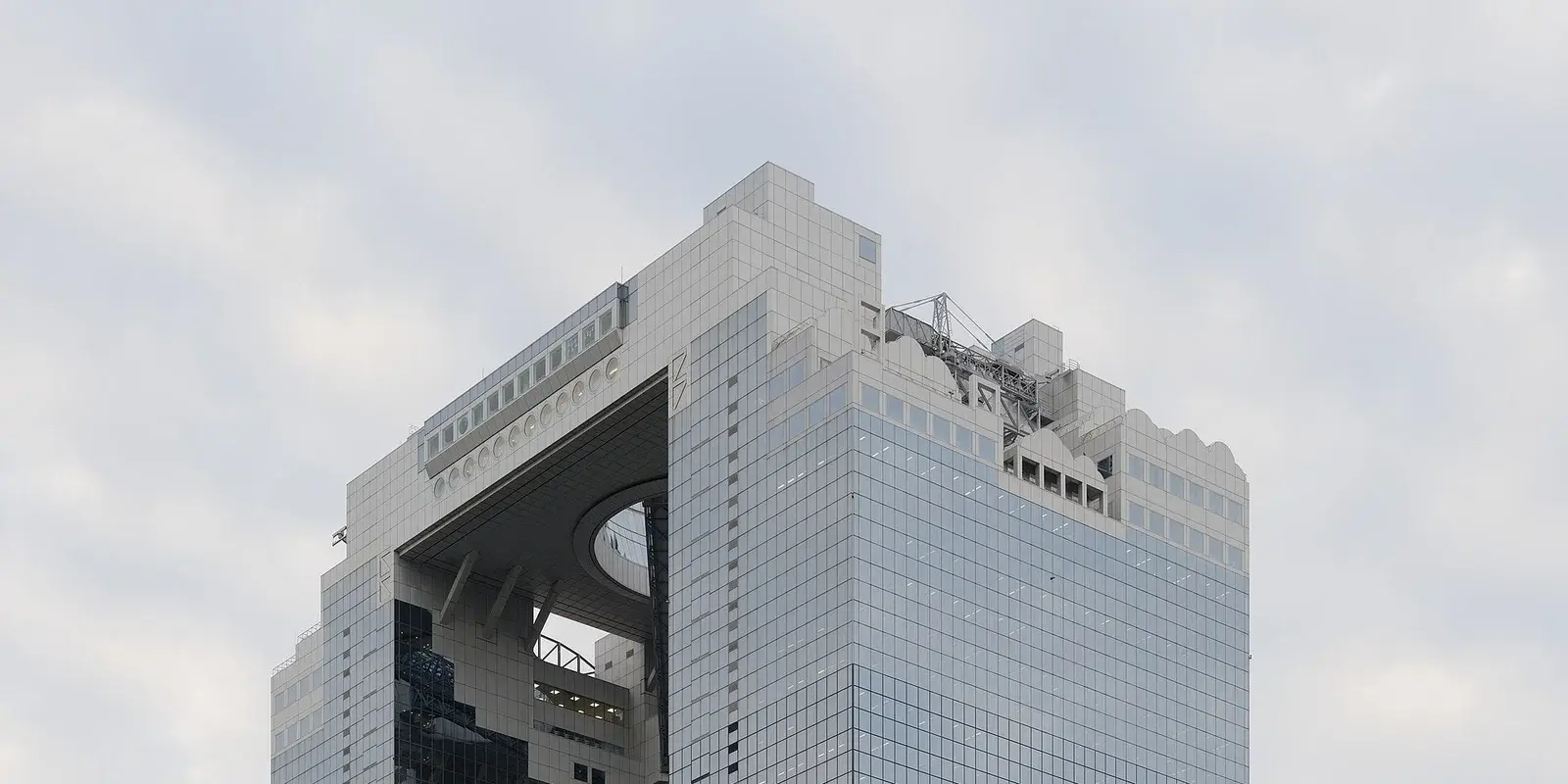
Two glass towers, joined near the top by a ring with a hole in the middle, an escalator visibly crossing open air between them. That's the photo everyone sees before they book a flight. One visitor who went calls the building "quite ugly to look at from below, and when you get up there it looks even uglier." Another visitor calls the same building "an absolute highlight of my time in Osaka." We gathered what both kinds of visitors actually said, to see where the disagreement comes from.
Is it worth it? (international visitors' own words)
We gathered voices from international visitors discussing Umeda Sky Building, on Reddit and TripAdvisor. Here is how they fell:
Three of the clearest red voices compare the building to something else they'd seen. "I've been on various tall building observation platforms around the world, none have been so pointless as this," wrote one visitor, going on to call it ugly from below and uglier up close. Another, who'd expected more given the architect's reputation, called it "a bit too expensive for a 10 minute walk on a roof. I was excited to see this building as the Kyoto station by the same architect is amazing. No dice." A third compared it unfavorably to skipping it entirely: "you are probably better off paying for the view from Osaka Castle." A fourth made no comparison at all, just a flat verdict: "Overpriced and not that special. The building is high, but that's it. We spent no more than 10 minutes at the top."
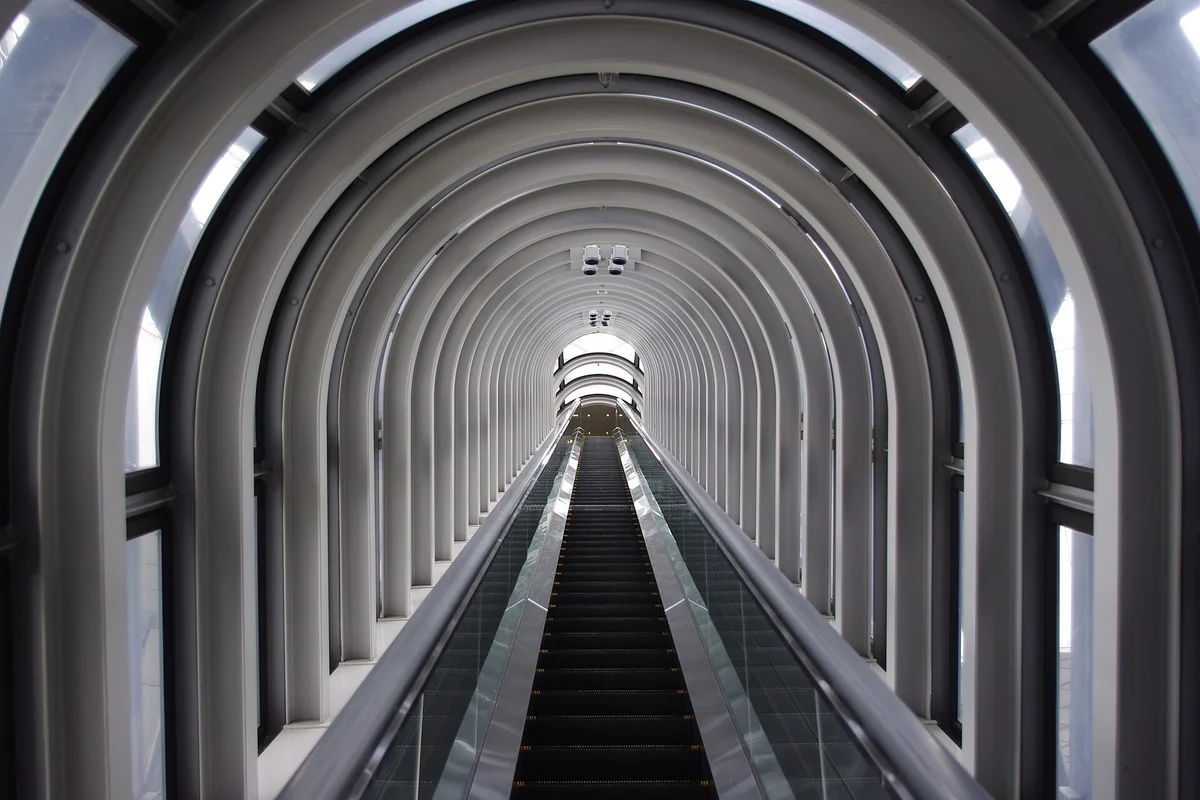
Most green voices describe something they liked about the building or the climb up to it, not just the skyline at the end. "Firstly, I absolutely hate heights! However, I talked myself into going up the sky building," one visitor wrote. "The views are phenomenal." Another described the escalator in detail: "The journey up is an experience all by itself. Riding the futuristic glass-walled escalator suspended between the two towers feels like you are traveling through a sci-fi tunnel in the sky." A third kept it simple: "I personally prefer Umeda Sky Building. The building itself is interesting to look at, the views are fantastic, and it has a bar/restaurant to relax in and look at the view."
How Japanese visitors feel about it
One review names something worth noticing on its own: "There aren't many Japanese visitors, but the 2000 yen entry fee is worth it. ... Probably the people who live nearby are the ones who don't know about this great view." Another reviewer, recalling the opening year wrong by four years, offered a theory for why it became popular at all: "It opened in 1997" (it opened in 1993) "and was talked about even then, but what really sparked its popularity was inbound tourists, especially Western visitors, rating it highly." A visitor from Kitakyushu who had come to Osaka many times before, and skipped this building every time because the walk from Osaka Station, more than 20 minutes by this reviewer's count, felt like a chore (the building's own access page gives 7 minutes from JR Osaka Station), finally went with a grandchild and wrote that it was "more impressive than I'd imagined."
Among the minority who felt let down, the biggest single complaint is that the view itself didn't live up to the hype. "It's a popular spot, but the night view was disappointingly underwhelming for how much buzz it gets. I had no idea what was supposed to be good about it! It was nothing but a letdown," one wrote. Price and unfriendly staff come up too, in smaller numbers: "The counter staff also spoke so quietly I couldn't understand. Even for a tourist spot, I think they could be a bit friendlier." Even some of the visitors who rated the trip in the middle, not a letdown exactly, flag the same mismatch found in the foreign reviews: the name promises a garden that isn't there. "I thought it would be a botanical garden up high, but it wasn't," one wrote; another said the connecting structure might be better called a "sky corridor" than a "floating garden." There's no garden up there at all, just a ring-shaped platform and the view.
What's behind the price
The observatory, Kuchu Teien, opened on July 2, 1993, inside a building completed that March. At 173 meters it was the tallest in western Japan when it opened, a record other Osaka towers later took. The City of Osaka's own planning records describe something stranger than height: the world's first skyscraper built as two separate towers, joined only near the top, designed by architect Hiroshi Hara. The building's operator says The Times put it on a 2008 list of the world's "Top 20 Buildings," the only Japanese building the paper chose. Writing for the city's own archive, architectural historian Shunsuke Kurakata summed up what's left of that claim: other buildings have long since passed it in height, but in ambition it still ranks among the world's best, in his judgment.
A detail that surprises some visitors: the famous glass escalator between the towers doesn't require a ticket. The route runs from the 3rd floor by elevator to the 35th, then up the glass-walled escalator to the 39th floor lobby, where the ticket counter sits. "You can actually ride the escalator for free then you pay to enter the viewpoint," one visitor confirmed. What the 2,000 yen admission (500 yen for ages 4 to 12, free under 4) buys is what's past that counter: the enclosed gallery floor and the open-air rooftop ring above it, not the ride itself. Hours run 9:30 AM to 10:30 PM, last admission 10:00 PM.
One thing to check before you plan around it: the observatory is included free with the Osaka Amazing Pass, but only for entry before 3:00 PM. After that, the pass gives a 10% discount instead. One visitor who found this out the hard way called the pass "useless" for that visit; several Japanese reviewers who also used the pass had no complaint about it at all.
A few things worth knowing before you go
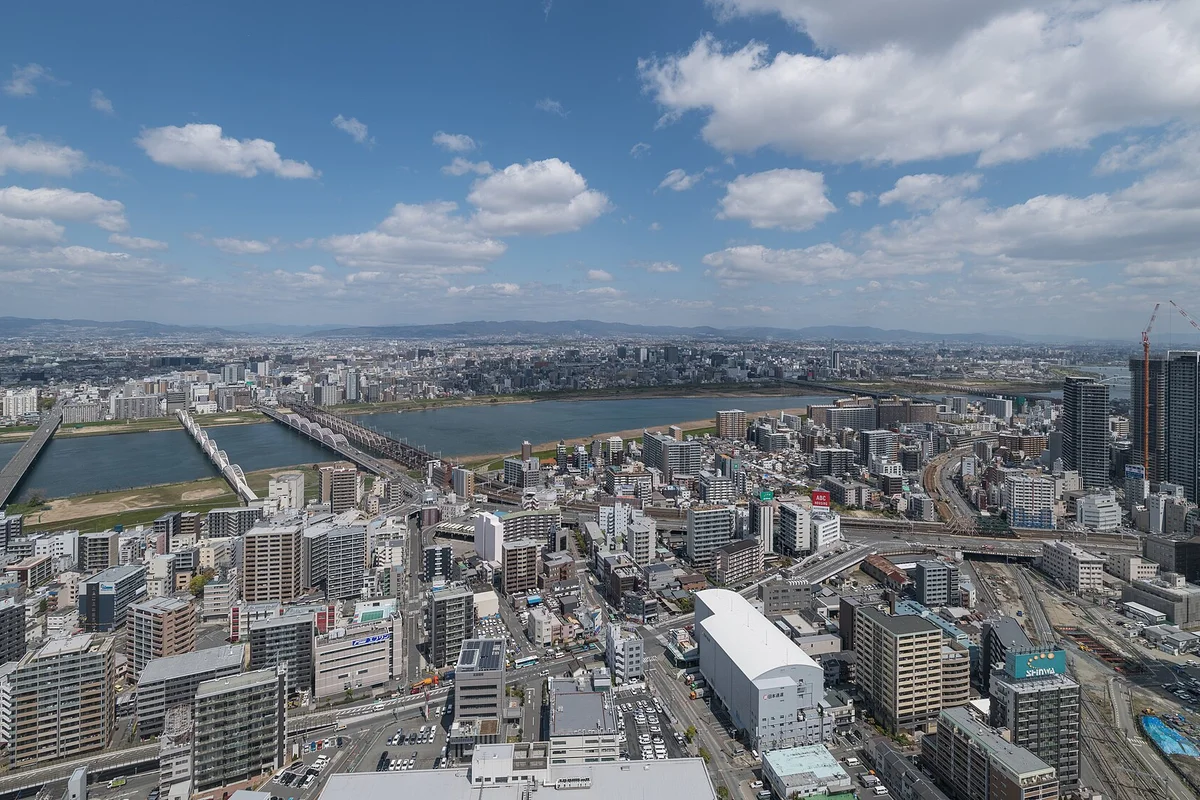
If you're weighing this against Abeno Harukas, Osaka's taller observatory: among the reviewers in this corpus who compared the two directly, most leaned toward Umeda for its architecture and atmosphere, even though Harukas wins on pure height. That's a small sample, not a verdict, but it's worth knowing the taller building isn't the automatic favorite.
Weather changes the experience here more than at an enclosed observation deck, because the rooftop ring has no glass between you and the sky. Three Japanese reviewers went in rain: one saw the ground glowing blue, like snow; another still had a slow, relaxed visit but wants to come back on a clear day; the third found the view disappointing.
Go expecting a ring-shaped platform and a 360-degree view rather than an actual garden, and the one complaint that shows up in both languages about the name simply doesn't apply to you.
The reviewer from Kitakyushu who'd skipped this building for years, put off by the walk from the station, is a reminder of what's easy to miss here: not the tallest view in Osaka, but a piece of architecture a newspaper once ranked among the 20 best in the world.
Deciding how this fits into a wider Osaka itinerary? What actually matters in Japan is a good place to start narrowing the rest of the trip.
Sources
- Umeda Sky Building Observatory, official site: hours and admission: current opening hours (9:30–22:30, last admission 22:00), adult admission fee (2,000 yen), and ticket counter location (39F).
- Umeda Sky Building Observatory, official English page: Kuchu Teien Observatory description and admission tiers (adults 2,000 yen, ages 4–12 500 yen, under 4 free).
- Umeda Sky Building Observatory, official site: FAQ: no real garden inside the observatory; the floors up to the 39th, including the restaurants and the shop, are open without an observatory ticket.
- Umeda Sky Building, official site: access: walking times from nearby stations (JR Osaka Station 7 minutes; Hankyu Osaka-umeda and Osaka Metro Umeda stations 9 minutes).
- City of Osaka, Urban Planning Bureau: Umeda Sky Building (Shin-Umeda City): construction year 1993, height 173m (the tallest in western Japan at completion), description as the world's first skyscraper built as two towers connected near the top, architect Hiroshi Hara + Atelier Phi, and commentary by architectural historian Shunsuke Kurakata on its continued design significance.
- Sekisui House, 25th Anniversary press release (2018-06-27): observatory opening date July 2, 1993; the operator's statement that The Times' 2008 "Top 20 Buildings" list named it the only Japanese building included.
- Osaka Amazing Pass, official list of free facilities: Kuchu Teien Observatory listed as a facility included free with the pass, with entry free only until 15:00 (a 10% discount applies after that time).
- Japan Ministry of Land, Infrastructure, Transport and Tourism, multilingual tourism description database: Umeda Sky Building Floating Garden: visitor route detail (3F departure gate, elevator to 35F, glass-tube escalator to the 39th-floor Sky Lobby, gallery on 40F, rooftop open-air "Sky Walk" observation deck).
WMJS is written in Japan, in English, with AI help. We check every page, but English is not our first language. If a sentence reads oddly, tell us. One sentence is enough.
Thank you. A person reads every note.
How well do you know Japan?
Based on 51,218+ real Japanese voices
Want to know more? Ask Japanese people
Have a follow-up question about this topic? We'll ask real Japanese people.
Voice Box →