
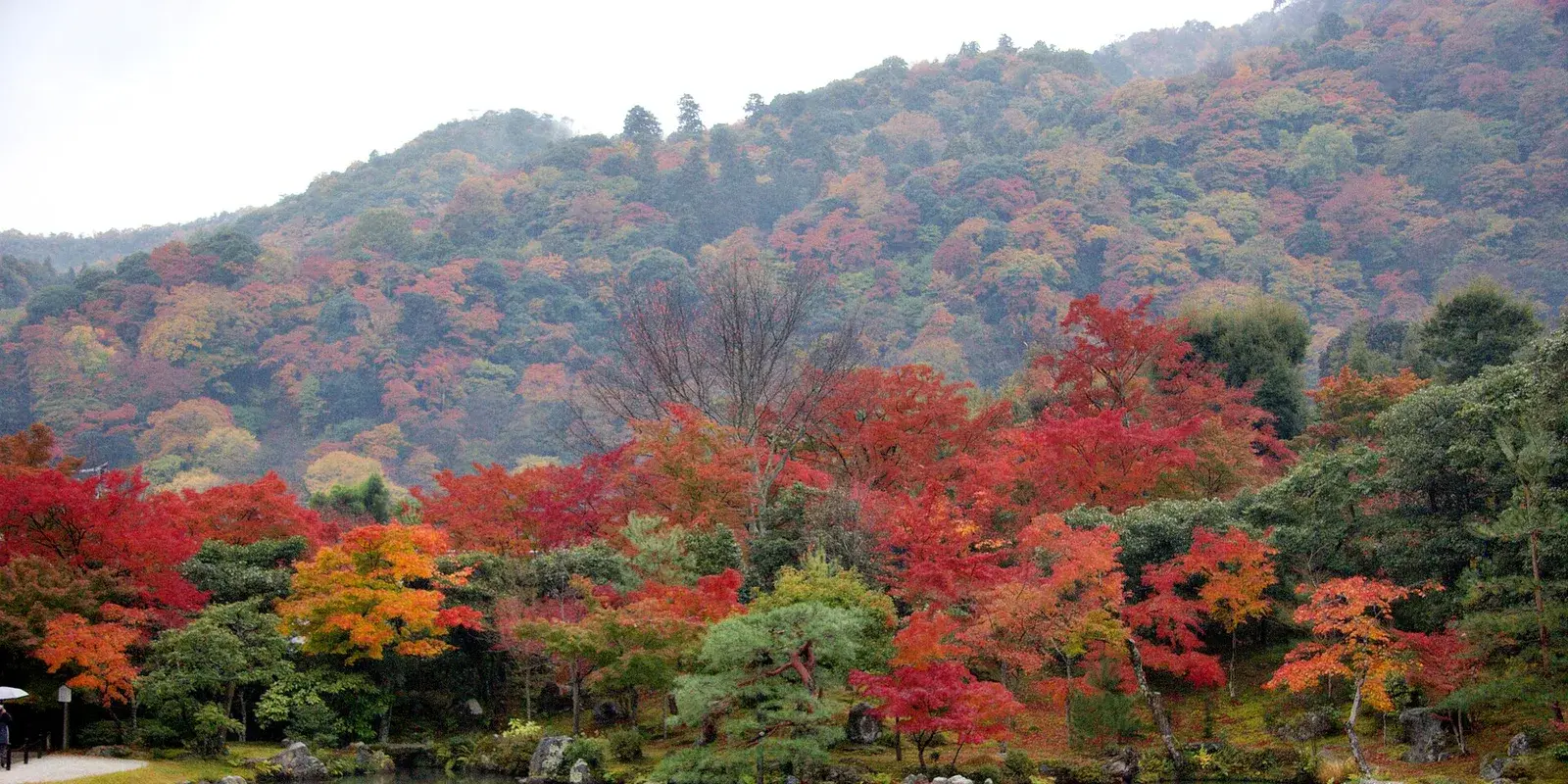
Autumn Leaves in Japan: What Locals Really Feel When You Come for Koyo
What you'll learn in this article:
- What 242 Japanese people actually said about autumn-leaf (koyo) season: the crowds, the photos, and how they feel about you being there
- Why the famous spots feel overwhelming, and why locals quietly struggle with it too
- The small, gentle ways of enjoying the colors that earn a warm response in Japan
If you're dreaming of Japan's autumn leaves but worried the famous spots will be a stressful crush of people, take a breath. You're going to be just fine, and you're in very good company.
We collected 242 real opinions from Japanese people (across Q&A forums, social media, travel blogs, and video comment sections) about what koyo (autumn-leaf viewing) season actually feels like on the ground. The honest answer? The crowds are real, and locals are worn out by them too. But the warmth toward visitors who come to share the colors is just as real. Once you understand both, the whole season opens up.
Do Japanese people mind when tourists come for the autumn leaves? We read what 242 Japanese people wrote. The honest answer: most welcome you, and only about a quarter feel any real fatigue about visitors, aimed at the crowds rather than at you. Locals get just as worn out by the famous spots, and they use the same fix you can: go early.
Of the Japanese people who wrote about the crowds, 51% said they genuinely wear them out, including locals who skip the famous spots entirely. The frustration isn't with foreign visitors. It's with the sheer number of people. You're not the only one who finds it overwhelming.
Quick Guide
| At a koyo spot | What Japanese People Said | |
|---|---|---|
| 🟡 Good to know | The crowds | Half of the voices about crowds said they're exhausted too. The fix locals use: weekday, early morning, or the quieter edges of a famous area. |
| 🟢 Relax | Taking photos | The gentle move is "one shot, then step aside." Everyone wants the same view of the red maples: sharing it is what's quietly respected. |
| 🟢 You're welcome | Coming as a visitor | Most are glad you came. Many feel the colors are best when shared. The honest grumbles are about overtourism's scale rather than about you. |
| 🟢 A small kindness | The leaves themselves | Admire them, don't pick them. Picking up a single fallen leaf to enjoy is lovely; snapping a branch off a living tree is what saddens people. |
The one thing to remember: Japan in autumn is more welcoming than the crowded photos suggest. Go early, share the best spots, leave the trees as you found them, and you'll see a side of koyo that the guidebooks never show.
How We Gathered These Voices
We collected 242 Japanese-language voices across five questions about autumn-leaf season: navigating the crowds (53), sharing photo spots (51), how locals feel about visitors coming for koyo (45), the small etiquette of the leaves themselves (52), and how attitudes differ by generation (41). We gathered them from public Japanese Q&A sites, forums, social posts, travel blogs, and video comment sections.
A quick note: This isn't a controlled scientific survey. It's a collection of what real Japanese people said, in their own words, on public platforms. No English-language autumn guide has put together this range of Japanese perspectives on what the season actually feels like, and we think that's worth sharing.
The Temperature Gauge
Autumn in Japan comes with a lot of quiet questions: Will it just be a wall of people? Can I take my photo without being rude? Do locals even want me here? Let's walk through what Japanese people actually said, starting with the thing everyone worries about most.
🟡 The Crowds
The honest truth: yes, the famous spots get intense. And here's the part that should put you at ease: Japanese people feel exactly the same way.
Of 53 voices about autumn crowds, half described being genuinely worn out by them.
The feeling came through again and again, and it's strangely comforting:
木々を見に行ったのか、人を見に行ったのかわからないときがありました。 Sometimes I couldn't tell whether I'd come to see the trees or to see the people.
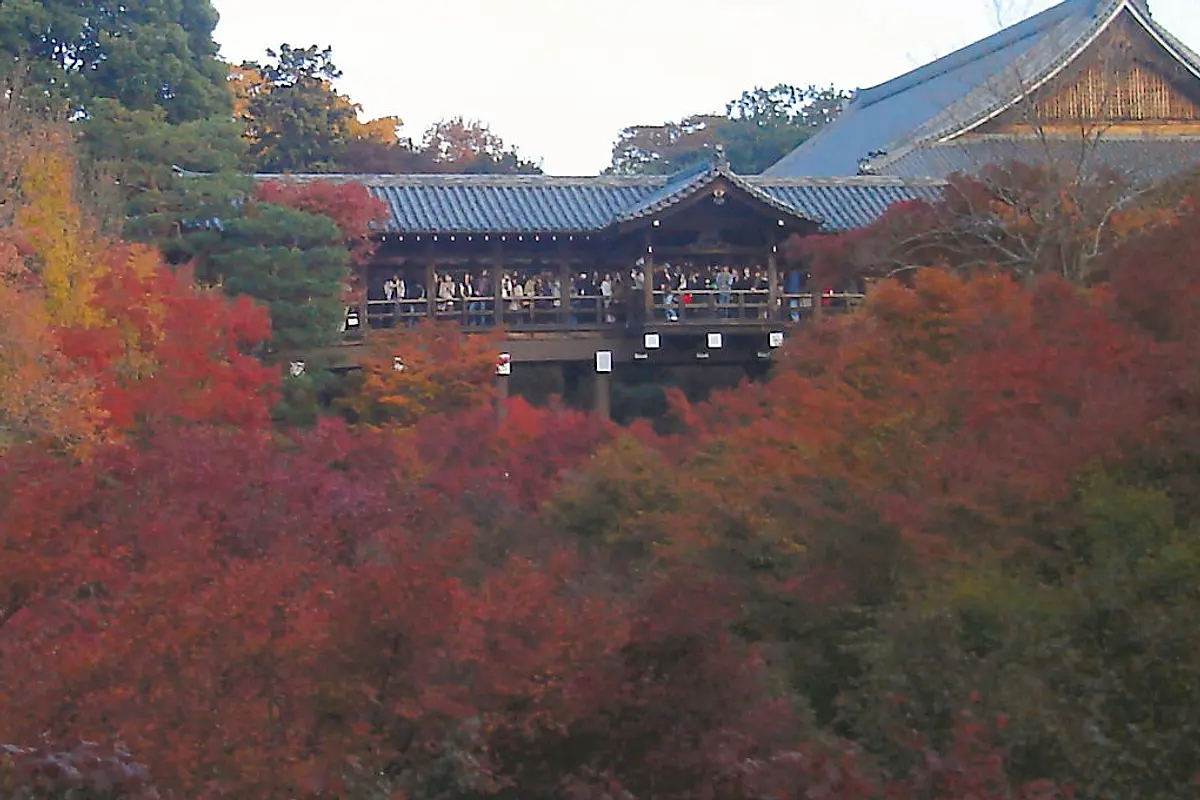
紅葉トップシーズンの中、人人人人…にモミクチャにされながらも、一目通天橋から眺めようと朝から頑張ってきました。まぁある程度は覚悟の上ではありましたが、まさかここまでとは… In the peak of foliage season, getting jostled in a sea of people, people, people, I pushed from the morning just to get one look from Tsutenkyo Bridge. I'd braced myself, but I never expected it to be this bad.
That view is from Tsutenkyo Bridge at Tofuku-ji, the Kyoto temple whose maple ravine pulls the season's densest crowds.
Here's what matters: the locals aren't just complaining. Many have simply opted out of the famous spots. Someone who lives near Mt. Takao, one of the busiest autumn destinations outside Tokyo, admitted:
地元八王子では、激混みの高尾山は嫌と言って紅葉シーズンには行かない人が多い。わたしもその1人だった。 Here in my hometown, a lot of people say they hate how jammed Mt. Takao gets and won't go during foliage season. I was one of them.
So if the crowds feel like a lot, you're not doing anything wrong, and you're certainly not alone. The good news is that the people who live here have already figured out the fix.
The locals' playbook is simple: go on a weekday, arrive early (or come for the last hour before evening illuminations close), and lean toward the quieter edges of a famous area rather than its single most-photographed point. One Kyoto visitor found that even in peak season, a slightly out-of-the-way temple path was calm and beautiful while the main gate was chaos. Another discovered that a local tram into Arashiyama was nearly empty even on a packed weekend. The colors are the same; the experience is completely different. And some of the loveliest autumn evenings happen well away from Kyoto's crush: a daimyo strolling garden like Ritsurin in Takamatsu lights its maples for just a few nights each November, in a quiet corner of Shikoku most crowds never reach. Closer to Kyoto, the mountain valley of Kibune rewards the same instinct: the people who leave happy go for the Kurama-to-Kibune walk and the turning season rather than one headline sight. Once the maple lights go dark for the season, the same instinct carries into winter: a companion piece on winter illuminations gathers Japanese voices on the crowds, the cold, who to bring along, and how to photograph them.
When you actually go matters too. For the month-by-month picture of foliage timing and which weeks the crowds ease, see the best time to visit Japan, and for why so many people funnel into the same few places, is Japan overtouristed? has the bigger story.
💡 What Japanese people want you to know
Half of the people who wrote about the crowds are worn out by them too. Some skip the famous spots entirely. The frustration is about the number of people, not about you. Go early, and a different Japan appears.
🟢 The Photo Spot
Everyone wants the same shot of the red maples. The quiet rule that earns respect: take your photo, then step aside.
Of 51 voices about sharing photo spots, the warmest and most common message was about give-and-take.
There's a beautiful, unwritten etiquette that Japanese photographers described, and it's easy to follow:
三脚禁止になった人口の多い撮影現場では、数枚撮った後に交代、さらに撮りたい人は一番後ろに並んで再度待つ、という形になっています。こうすることで全員に平等に撮影するチャンスが訪れます。 At crowded spots, it works like this: shoot a few frames, then swap; if you want more, line up at the back and wait again. This way everyone gets a fair chance.
私は記念写真を撮っておられる方がいたら撮り終わるまで待ってあげるし、自分が撮っている時は「どうぞ通ってください」と譲ります。その方がお互い気持ちがいいし、構図をゆっくり考えられるので。 If someone is taking a photo, I wait until they're done, and while I'm shooting I say "please, go ahead and pass." It feels better for both of us.
And the kindness goes both ways. One photographer remembered being a nervous beginner when a stranger waved them in:
途方に暮れていると、優しい方が「はやく撮らないといいシーンが逃げちゃうよ、ここに入っていいから」と声をかけてくれました。この親切丁寧な対応が、その後の自分の撮影中の行動に大きな影響を与えてくれました。 As I stood there at a loss, a kind person said, "Hurry, you'll miss the moment — come in here." That gracious gesture changed how I behave when shooting ever since.
What's striking is how aware Japanese photo-lovers are that their own "rules" can look silly to everyone else. As one put it, the whole idea of a "shooting point" is really just camera people's logic, and ordinary visitors who just want to enjoy the leaves shouldn't have to worry about it at all.
So go ahead and get your photo of those impossibly red maples. Take your shot, share a smile, and step back so the next person can have theirs. That small rhythm is the whole etiquette. (For the general courtesies of photographing people and places in Japan, see photo etiquette at tourist spots.)
🟢 How Locals Feel About You Coming
Wondering if Japanese people secretly wish tourists would stop coming for the leaves? Most are genuinely glad you're here, and many say the colors feel better when they're shared.
Of 45 voices about foreign visitors coming for koyo, the spectrum was honest: real warmth, easy acceptance, and some genuine ambivalence.
The warmth is easy to find, and often very specific:
外国人の方が前に黄色い紅葉はあるけど赤はないって日本の紅葉に感動してたな。 A foreign visitor was once moved by Japan's autumn — they said we have yellow leaves, but no red ones like this.
海外の富裕層様、来ていただいてほんとありがとう。楽しんでくれてるならいいです。 Visitors from abroad — thank you so much for coming. As long as you're enjoying it, that's what matters.
There's even a lovely twist: hearing how amazed visitors are by Japan's maples makes locals appreciate their own autumn more. One blogger admitted that hearing foreigners marvel at how "colorful" it all was made them realize the itsu-mo-no scene outside their window was special:
海外の紅葉に触れたことのないワタシは、「イッツ カラフル」な紅葉は日本独特の光景らしいことを初めて知った。 Having never seen autumn leaves abroad, I learned for the first time that our "it's colorful" autumn is apparently a uniquely Japanese sight.
And the honest, complicated voices? They're worth hearing too, because they're not what you might fear. They're about the crush, the prices, a city straining under its own popularity. One person captured the whole feeling perfectly:
私自身も海外旅行が好きなので、もう日本に来ないで欲しいとは全く思いませんが、少なくともその国のマナーや習慣などを調べて訪れるべきかなぁと思っています。 I love traveling abroad myself, so I don't think "don't come to Japan" at all — I just think people should look up the country's manners and customs before they visit.
That's the bridge. The welcome is real, and the one thing people quietly ask in return is small: come with a little curiosity about how things are done here. (If you'd like to know where Japan's warmth runs warmest, where you're most welcome maps it out.)
💡 What Japanese people want you to know
The welcome is genuine. The honest grumbles are about overtourism's scale, not about you, and even those voices hold the door open: come, just come with a little curiosity about how things are done here.
🟢 The Leaves Themselves
A small kindness that locals notice: admire the leaves, don't pick them. Cupping a single fallen leaf in your hand is lovely. Snapping one off a living tree is what quietly hurts.
Of 52 voices about how to treat the leaves and trees, the overwhelming feeling was gentle: just look, and let it be.
The guidance was warm rather than scolding. The message was never "don't," but "enjoy it with your eyes":
紅葉している木の枝を折ったり、葉をちぎりとって自然の木々を傷つけてはいけないというのは当然のこと。どれだけきれいでも、目で見て楽しもう。 Of course you shouldn't break a branch or tear off leaves and hurt the trees. No matter how beautiful it is, enjoy it with your eyes.
And here's the part that's pure delight: picking up a leaf that has already fallen is not only fine. It's a cherished little ritual. Japanese people press them in books, hold them up to the light, and keep them all year:
ドライブに出かけた先々で「あ、綺麗だな」と思った落ち葉。そっと拾って、長く保存できる押し葉にしては? That fallen leaf that made you think "oh, how pretty" — why not gently pick it up and press it to keep?
枯れ葉を通過した太陽の光によって美しい葉脈をはっきりと見ることができ、うれしくなって何枚も何枚も太陽にかざし、美しい葉脈を見ながら写真を撮りました。 Through a withered leaf, the sunlight revealed the veins so beautifully that, delighted, I held leaf after leaf up to the sun and photographed them.
There's a tenderness in how people talk about the leaves that tells you everything about the culture. One innkeeper wrote about a large branch breaking off their courtyard maple, not with annoyance, but with something like grief, because they'd loved that branch since its fresh-green spring. That feeling (that even a fallen leaf is something to be a little sad about) is the heart of it.
This gentleness has official backing, too. Japan's Ministry of the Environment asks visitors to its national parks simply not to take plants or carry things off, so that the people who come after you can enjoy the same scene. In the most protected areas, picking plants is actually restricted by law. But you'll rarely need a rule: once you feel how much these colors mean to the people around you, leaving them exactly as they are comes naturally. (Many of the best spots are temples and shrines; for the gentle courtesies of visiting those, see visiting temples and shrines.)
💬 What do you think?
Japanese readers: How do you feel about this?Visitors: Have you experienced this in Japan?
Share your voice →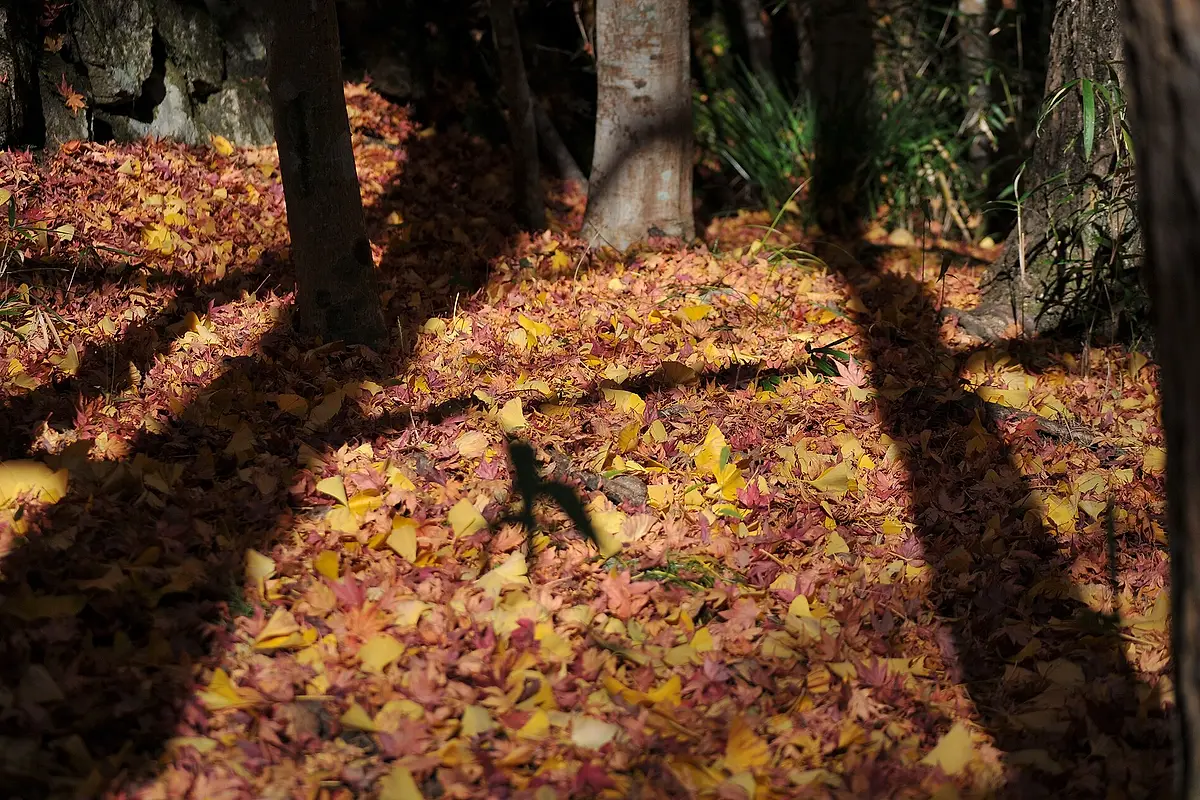
The Generation Surprise
There's a common assumption (in Japan and abroad) that it's young people glued to their phones who behave badly at scenic spots, while older generations quietly appreciate the view. When we looked at how Japanese people of different ages talk about koyo, the data turned that idea on its head.
First, the appreciation itself isn't an "old person" thing at all. Plenty of young people pushed back on the stereotype:
年取ると花とか紅葉好きって言ってますが、小学生の時から好きだったんだよな。 People say you start liking flowers and autumn leaves once you get older, but I've loved them since elementary school.
綺麗なものを見ると誰もが嬉しい気持ちになります。これは当たり前のこと。…桜や紅葉が好きと言うことは何も年寄りではない、人間としての本来の姿。 Everyone feels happy seeing something beautiful — that's only natural. … Loving cherry blossoms or autumn leaves isn't an old-person thing at all; it's just being human.
And on the touchy subject of photo manners, the voices were genuinely surprising. On a thread where someone scolded "young people" for bad photo etiquette, the replies overwhelmingly disagreed. Many said the pushiest behavior they'd seen came from older photographers, not younger ones:
ただ若者だけではありません。最近は猫も杓子もカメラを持つ時代です。私の周囲では若者よりお年を召した方のほうが多いですよ。いずれにせよマナーを守り周りを気遣う人の方が多いです。 It's not just young people. These days everyone has a camera. Around me, I see more older people doing it than younger ones. Either way, the people who mind their manners are the majority.
The wisest voices landed on the same conclusion: it was never about age at all.
若者とか年寄りという括りじゃなくて、マナーのなってない家庭で育った人が全世代に居るだけじゃないですか?若いころ桜の枝を引っ張ってた人が年を取って人を押しのけたりするだけ。 It's not young versus old — isn't it just that there are people raised without manners in every generation? The person who yanked cherry branches when young grows up to shove others aside.
The takeaway is freeing: don't worry about which "type" of tourist you are. Across every generation, the people Japan appreciates are simply the ones who pay a little attention to those around them. That's it.
💡 What flips the stereotype
The assumption that it's young people who behave badly at scenic spots doesn't hold up. Japanese voices said it again and again: it's not about age. It's about whether someone pays attention to the people around them.
The Cultural Engine: Why the Japanese Love the Leaves
To understand why autumn feels so charged in Japan, it helps to know that koyo-gari (literally "autumn-leaf hunting") isn't a modern tourism trend. It's more than a thousand years old.
According to the Japan National Tourism Organization, the practice began among Heian-period court aristocrats in Kyoto in the 8th century. Because these nobles had no autumn-coloring trees in their own gardens, they traveled out to the mountains to seek the leaves, and composed music and poetry with the colors as their backdrop. References to it appear in the Kokin Wakashū poetry anthology and The Tale of Genji. By the mid-18th century, what had been an elite pastime had spread to ordinary people, becoming the seasonal ritual it is today.
Beneath it runs a deeper feeling the Japanese call mono no aware: a tender, wistful appreciation for things precisely because they don't last. Autumn leaves are the perfect expression of it: at their most brilliant, they're already falling. To love koyo is partly to love the fact that it's ending. That's why a single fallen leaf can carry as much feeling as a whole blazing hillside.
There's beautiful science underneath the poetry, too. The reason the colors turn at all comes down to temperature: the change begins when daily lows drop below about 8°C and deepens around 5–6°C, helped along by a big gap between day and night temperatures and plenty of sunlight. As temperatures fall, the green chlorophyll in the leaves breaks down, red pigments (anthocyanins) are newly produced, and yellows (carotenoids) are revealed, which is why the same maple can glow scarlet, amber, and gold all at once. Japan's weather agency even tracks the "maple coloring day" at stations nationwide, the basis of the koyo front that sweeps down the country each autumn, and on a single sacred mountainside like the slopes of Yoshino, you can watch that same wave of color climb gently downhill, day by day.
And Japan really is unusually rich in maples: the Forestry and Forest Products Research Institute counts around 26 native species. Asia is the world's center of maple diversity: roughly 80% of all maple species are native to Asia, and the genus is thought to have originated and diversified there before spreading to Europe and North America. That deep variety is part of why a single Japanese hillside can hold so many shades at once.
So How Do You Have the Best Autumn in Japan?
Put it all together, and the recipe is simple and kind:
- Go early, or go on the edges. Weekday mornings and the quieter corners of famous areas give you the colors without the crush: the exact trick locals use.
- Take your shot, then share the spot. One photo of those red maples, a smile, and a step back. That little rhythm is the whole etiquette.
- Leave the leaves on the trees. Admire them where they are. If one has already fallen and catches your eye, cup it in your hand, press it in a book. That part is pure joy.
- Come with a little curiosity. The one thing even the most tired locals ask is just that you arrive caring a bit about how things are done. You already do. You read this far.
Do these, and you won't just see Japan's autumn. You'll feel the thousand-year-old tenderness behind it, and you'll be exactly the kind of visitor Japan is quietly glad to welcome.
Still deciding where to spend one autumn day? We looked at two of the season's busiest names through the same kind of Japanese voices you read above: Kiyomizu-dera and Nikko.
Share Your Experience
Have you stood under a blazing maple in Japan, or are you planning to? We'd love to hear about it. Your story helps us build a bridge between cultures, and we may add new perspectives to this article.
Share your experience on Voice Box →
More Japanese Perspectives
Curious about other parts of a trip to Japan? These articles explore what Japanese people actually think, based on hundreds of real voices.
- The Best Time to Visit Japan: month by month, when the leaves peak, when the crowds ease, and how the timing changes the welcome you get.
- Is Japan Overtouristed?: the bigger picture behind the autumn crush, and what Japan is actually doing about it.
- Photo Etiquette at Tourist Spots: the gentle courtesies of taking photos of people and places in Japan.
Sources
Primary Research Data
WMJS autumn-leaf (koyo) research data: 242 Japanese-language voices collected June 2026:
- Navigating the crowds: 53 voices
- Sharing photo spots: 51 voices
- How locals feel about visitors: 45 voices
- Etiquette of the leaves themselves: 52 voices
- Generational attitudes: 41 voices
Factual Sources (Tier 1–2)
- Japan National Tourism Organization: history and culture of koyo (Heian-period origin, Kokin Wakashū / Tale of Genji, Edo-period spread): https://www.japan.travel/en/au/experience/autumn-leaves/history-culture-koyo/
- Nippon.com: mono no aware and the Japanese appreciation of impermanence: https://www.nippon.com/en/japan-topics/c14021/
- Japan Meteorological Agency: biological-season observation, including maple coloring day: https://www.data.jma.go.jp/sakura/data/index.html
- Fukuoka Prefecture (Biodiversity): the science of autumn color (8°C threshold; chlorophyll, anthocyanin, carotenoid): https://biodiversity.pref.fukuoka.lg.jp/futsushu/zatsugakustory/autumn_leaves.html
- Japan Weather Association (tenki.jp): temperature and leaf coloring: https://tenki.jp/forecaster/deskpart/2022/11/04/20344.html
- Forestry and Forest Products Research Institute: number of native maple species in Japan: https://www.ffpri.go.jp/tmk/midokoro/tanhou/4april/kaedetokuchou.html
- Scientific Reports (Nature): Asia as the center of maple (Acer) diversity; Pleistocene glaciation and species survival: https://www.nature.com/articles/s41598-020-78145-0
- Ministry of the Environment: national park etiquette (do not take plants or carry things off): https://www.env.go.jp/nature/nationalparks/about/manner/
- Ministry of the Environment: legal protection of designated plants in national/quasi-national parks: https://www.env.go.jp/nature/np/plant_prot/index.html
Opinion Collection Sources
The following are places where real Japanese people expressed their views about autumn-leaf season. They are not cited as factual authorities, but as sources of first-hand opinion.
- Public Japanese Q&A sites, forums, social posts, personal and travel blogs, and video comment sections: first-hand opinions on autumn crowds, photo-spot etiquette, how locals feel about visitors, generational attitudes, and the etiquette of the leaves themselves
- https://kyotopoi.net/bad-autumnleaves/
- https://4travel.jp/travelogue/11804613
- https://massa0216.blog.fc2.com/blog-entry-134.html
- https://www.lemon8-app.com/@japanwalker4k/7578796737997947448
- https://news.tv-asahi.co.jp/news_society/articles/900178517.html
- https://bbs.kakaku.com/bbs/-/SortID=22161051/
- https://bbs.kakaku.com/bbs/00490811103/SortID=8712280/
- https://komachi.yomiuri.co.jp/topics/id/184628/
- https://ganref.jp/m/potomacriver/reviews_and_diaries/diary/35410
- https://kazu-photo.com/archives/8005
- https://www.youtube.com/watch?v=KoExNK2ieUU
- https://www.youtube.com/watch?v=-_VWQBlMZ3E
- https://www.youtube.com/watch?v=RFaSo84bBuw
- https://www.youtube.com/watch?v=AdLvSqSe6L8
- https://koyo.walkerplus.com/topics/article/1047631/
- https://asajikan.jp/article/306745
- https://www.shuminoengei.jp/?m=pc&a=page_qa_detail&target_c_qa_id=6468
- https://tenki.jp/kouyou/column/usagida/2020/10/29/30053.html
- https://kurukura.jp/article/181121-22/
- https://www.myoshinji.or.jp/houwa/archive/1218
- https://www.gozu-yumotokan.com/blog/9233/
Note on Quotations
Quotes from online platforms have been lightly edited for readability (fixing typos, formatting for clarity). The meaning and intent of each comment remain unchanged. Original sources are linked above.
WMJS is written in Japan, in English, with AI help. We check every page, but English is not our first language. If a sentence reads oddly, tell us. One sentence is enough.
Thank you. A person reads every note.
How well do you know Japan?
Based on 51,218+ real Japanese voices
Want to know more? Ask Japanese people
Have a follow-up question about this topic? We'll ask real Japanese people.
Voice Box →