
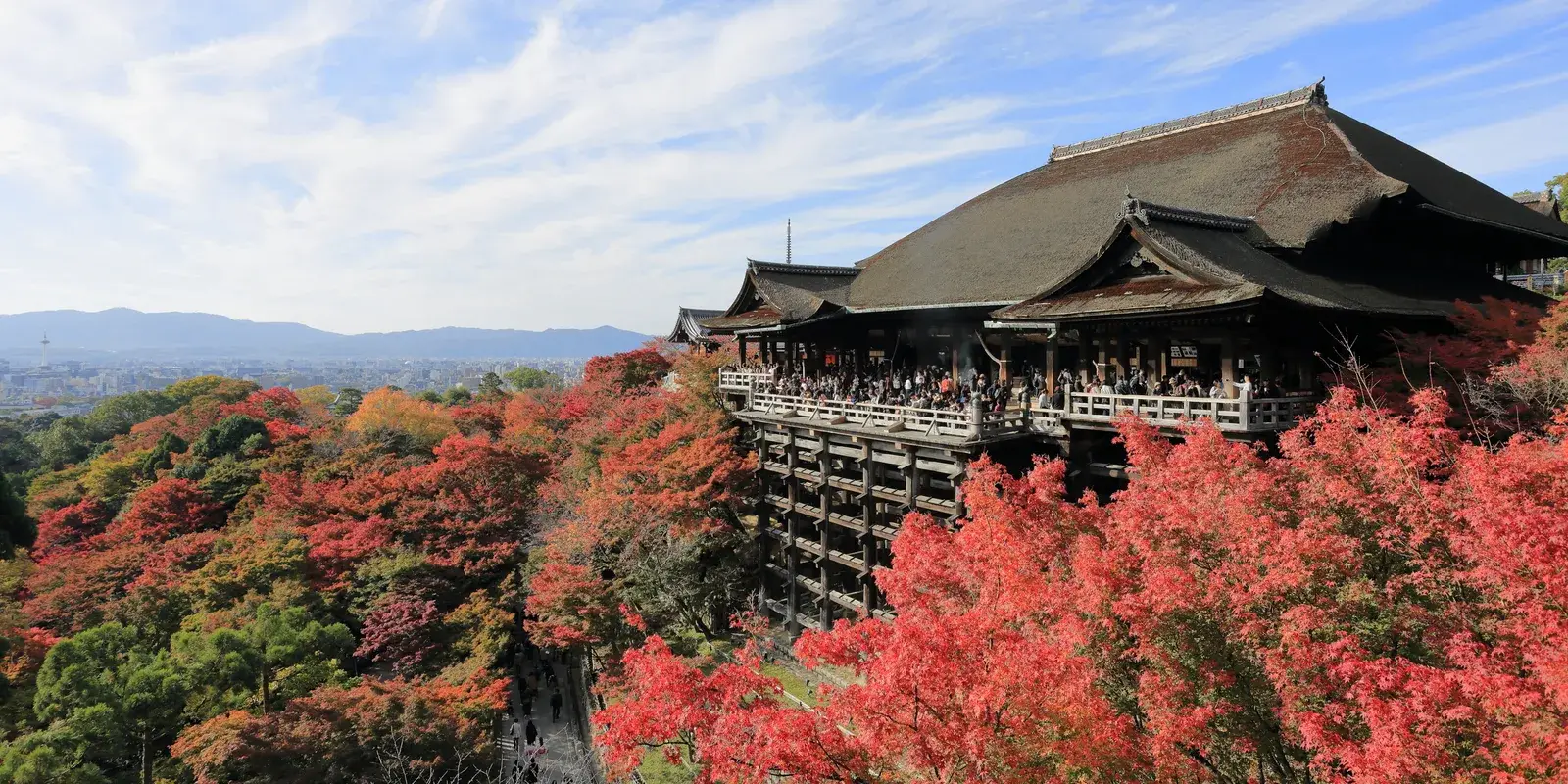
Is Kiyomizu-dera Worth It? It Depends Almost Entirely on When You Go
You've seen the photo: a great wooden stage hanging out over a hillside of maples, the whole of Kyoto spread out behind it. Then you read the reviews and they split clean in half: "one of our highlights from Kyoto" sitting right next to "0/10… horrible experience." So which is it?
Here is the short answer, and everything below unpacks it in full: yes, it's worth it, but more than almost any famous place in Japan, worth it here is a question of timing more than location. The visitors who came away unhappy nearly all arrived at the same wrong hour.
Is it worth it? (in visitors' own words)
We gathered the voices of international travelers who have actually stood on the stage, and asked, in effect, was it worth it? Weighted by how strongly each opinion resonated with other readers, here's how they fell:
Look at that middle bar. The biggest single group of travelers didn't say yes or no; they said it depends on when you go, and then spent their whole comment working out the timing. "At 8:30 a.m. you'll mostly see independent travelers and small guided groups; big tour buses usually [come later]," one wrote. "I went there at around 8am and it was not crowded. By 3pm, it was crowded," said another. This is the rare famous place where the honest answer really is a schedule.
And the red bar is almost all one story. The let-downs aren't about the temple. They're about the hour. "I went last year in late Nov… It was an absolute madhouse… just people shoulder to shoulder… The phrase 'crowd crush' crossed my mind. Decent pictures, horrible experience. 0/10," wrote one visitor who arrived after 6 p.m. in peak color. "2pm on a Monday… so packed I couldn't move. Not worth my time," said another. Even the sharpest critic is really complaining about the crowds rather than the place: "not really worth the hype… dozens of equally impressive temples in Kansai get only a fraction of the tourists".
The people who loved it were often standing on the exact same stones a few hours earlier or later. "We… got there just before 6am to catch the sunrise. It was so peaceful and quiet, and one of our highlights from Kyoto," one wrote. Another, on the autumn night opening: "so packed… but absolutely worth it. We went in November for the night illumination." The most-upvoted verdict of all simply weighed the trade and paid it: Kiyomizu is "worth the crowds."
We'll be honest about one thing the cheerful guides skip: dawn is the fix, but it isn't a force field. "We went early morning and it was still packed," one traveler reported in high season. Early is far better; it is not magic.
How the people who live with it feel
Here's the layer most pages never show you: what Japanese visitors say, in their own reviews of the same temple.
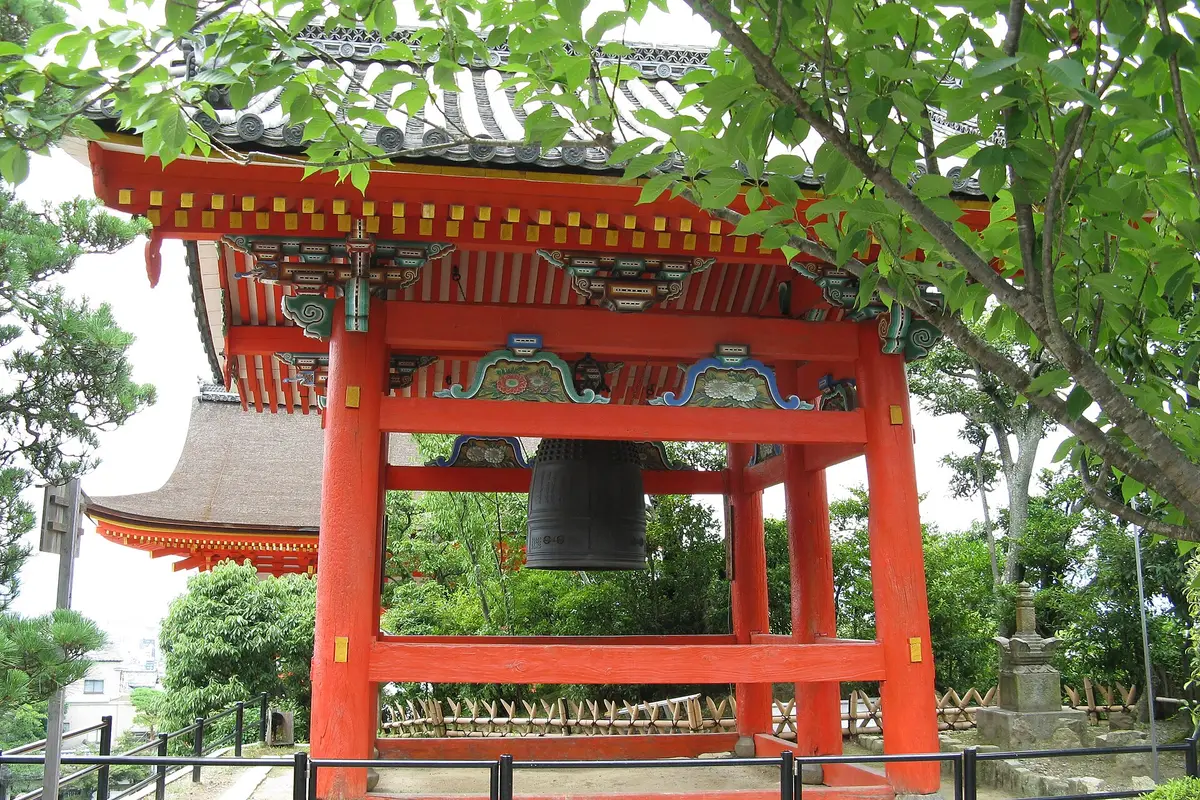
Most Japanese visitors simply treasure it. "The fresh greenery soothed me. There are so many maples I want to come back in autumn — and cherry blossoms, so I want to come in spring too," one wrote, before listing the whole ritual: ringing the great bell, scooping the Otowa water, the gentle slope that doubles as good exercise, the panorama of Kyoto. "The scenery has barely changed since my school trip decades ago," another said. "Kiyomizu-dera is a sight Japan can be proud of."
Now look at the two red bars. They are a dead heat: 14% of international visitors and 14% of Japanese visitors came away with a hard memory. And the most common reason is the very same one: the peak-hour crush. "Even before you enter, a traffic jam of people," one local wrote. "Kiyomizu-zaka was a crush of people, people, people — I've never seen it like this. I want to come back at a calmer time." The clock catches everyone equally.
But the two reds are the same size and not the same shape, and the difference is quietly telling. The international 14% is almost entirely the crowds. The Japanese 14% is about half crowds and half something a visitor passing through in another language would never even notice: a brusque exchange at a fortune (omikuji) or temple-seal (goshuin) counter that soured an otherwise good day. It's a useful reminder that the hard moments people remember aren't always the famous ones, and that the single thing both groups agree you can control is when you arrive.
What we wish you'd noticed
Everything above resolves into a few moves the temple quietly rewards.
- Take the 6:00 a.m. opening. Kiyomizu-dera opens at six, every day of the year, earlier than almost anything else in Kyoto. Arrive then and you walk up near-empty lanes, photograph the stage in the soft early light, and pass the crowds heading up as you stroll back down for breakfast. This is the single most-repeated piece of advice from people who've been.
- Or come for a night illumination. Three times a year the temple stays open into the evening for special night viewings: in spring (late March to early April), high summer (mid-August), and autumn (late November), with the gates open until 9:30 p.m. (last entry 9:00). The stage lit against the dark, a beam of light rising over the hall: "absolutely worth it," as one visitor put it, even on a busy night.
- That scaffolding worry is out of date. If you saw older photos of the Main Hall wrapped in sheeting, relax: the roof was completely re-thatched in cypress bark for the first time in 50 years, the scaffolding came down in February 2020, and what you'll see now is a freshly finished stage.
- At the Otowa Waterfall, choose just one stream. The three channels are said to grant long life, success, and love. Catching a sip from each looks efficient and reads, gently, as greedy; the graceful move is to pick the one you came for.
- The climb is the destination. The stage is a quick, one-way visit; the reward is the whole slope around it: the stone lanes of Sannenzaka and Ninenzaka, and the quiet maple-and-bamboo path that loops down the back, away from the main crush. "Go past the crowds towards the back," one visitor advised, "there is a pretty path back down."
- On the narrow slopes, keep moving. The lanes up to the gate are steep and tight, and they bottleneck when people stop mid-path for photos or to eat. Save the snack and the photo-stop for the open spaces, step to the side to frame your shot, and the climb stays kind for everyone behind you.
Do these, and the day tends to go the way the dawn visitors describe rather than the way the 2 p.m. ones do. The crowds are real, and on a peak weekend even early can be busy. But a thousand-year-old waterfall, a nail-free wooden stage rebuilt in 1633, and a view of all Kyoto are waiting for anyone willing to set an alarm.
Is it worth it, in the end? Almost everyone who came at the wrong hour says no, and almost everyone who came at the right one says it was a highlight of the trip. Same stage, same stone steps. The difference is a few hours on the clock, and that, at least, is the one thing you get to decide.
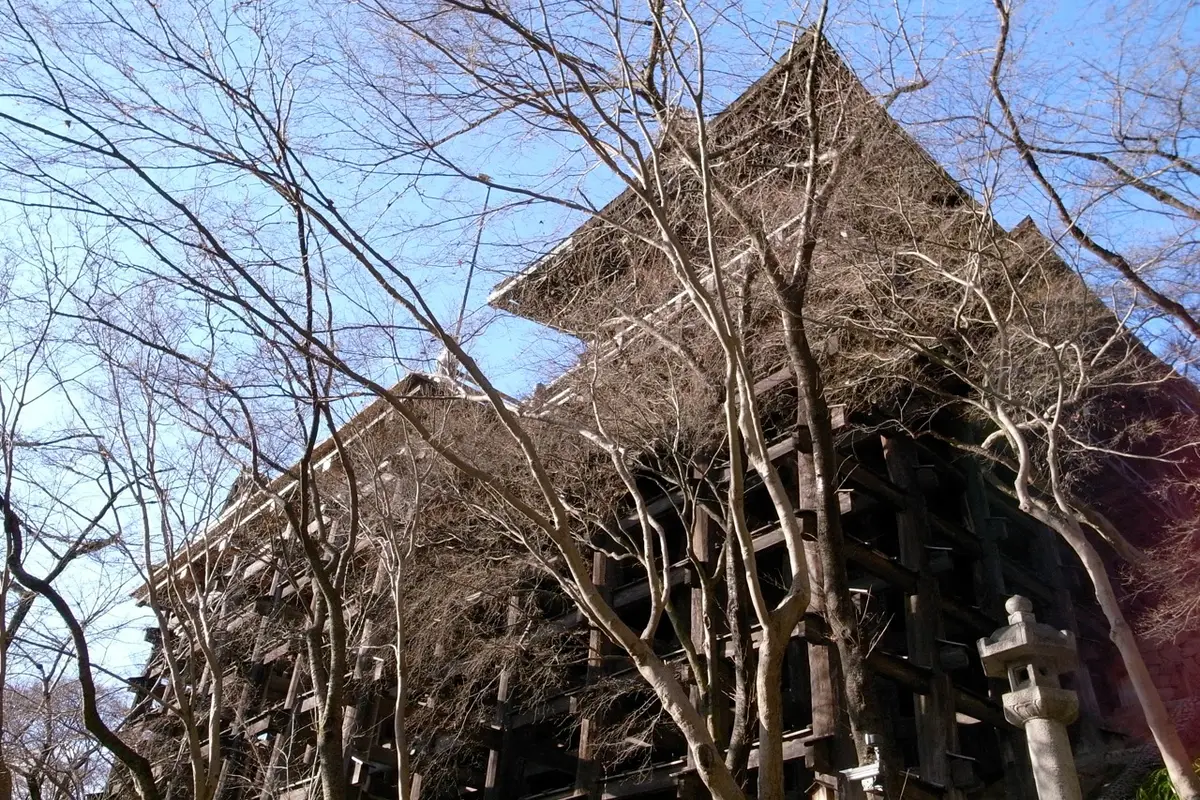
Want the deeper story of the stage that hangs in mid-air, why it faces inward, and how "to jump off the stage of Kiyomizu" became a phrase the whole country uses? The full Kiyomizu-dera guide is just below. And still deciding which famous places actually earn a slot on a short trip? Start with what actually matters in Japan.
Sources
- Kiyomizu-dera Temple: Location & Opening Hours: the official site confirms the temple opens at 6:00 a.m. year-round; the 2026 hours table, including the spring (Mar 27–Apr 5), summer (Aug 14–16) and autumn (Nov 21–30) special night viewings, is open until 9:30 p.m. (last entry 9:00 p.m.).
- Kiyomizu-dera Temple: Visit / Highlights: the official site notes the Main Hall (Hondo) is a wooden structure reconstructed in 1633, built to support the famous stage; visitors catch one of the three streams of the Otowa Waterfall with ladles.
- Kiyomizu-dera Temple: The Main Hall renovation (News, 2020): the official announcement confirms the Main Hall reroofing, part of the Heisei Great Renovation, was completed and the scaffolding removed in February 2020.
WMJS is written in Japan, in English, with AI help. We check every page, but English is not our first language. If a sentence reads oddly, tell us. One sentence is enough.
Thank you. A person reads every note.
How well do you know Japan?
Based on 51,218+ real Japanese voices
Want to know more? Ask Japanese people
Have a follow-up question about this topic? We'll ask real Japanese people.
Voice Box →