
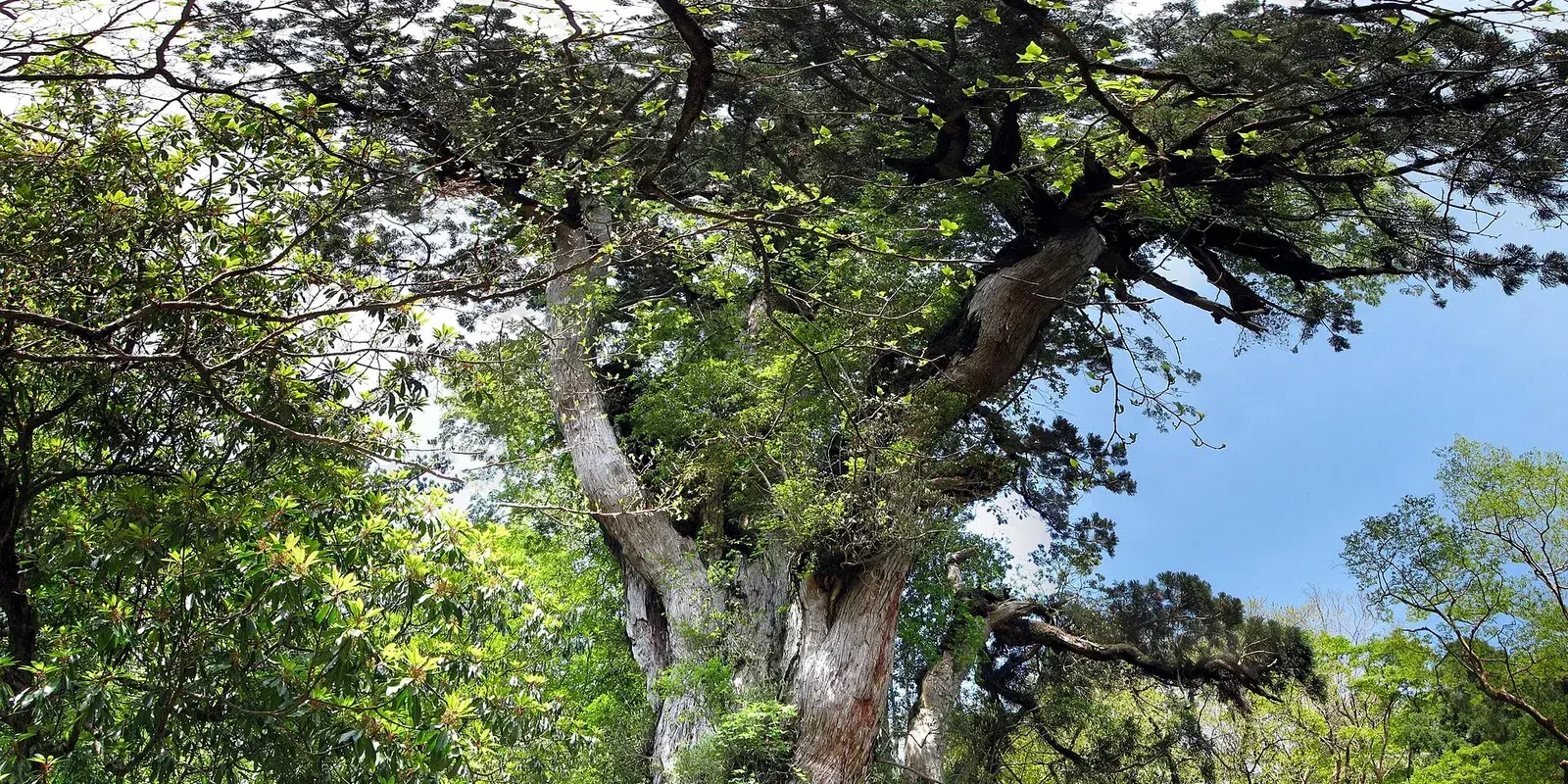
Is the Jomon Sugi Hike Worth It? 195 Real Voices From Yakushima
Twenty-two kilometers round trip. Eight to ten hours on your feet. A tree that is somewhere between 2,170 and 7,200 years old, fenced off behind a viewing deck you cannot get close to. Those are the numbers everyone quotes before they go. The detail that rarely makes it into the planning stage is how short the moment at the end actually feels, and how much that gap between the effort and the arrival ends up deciding whether people call the day worth it.
We gathered 195 real reviews, comments, and trip reports (foreign visitors on Reddit, AllTrails, TripAdvisor, and independent hiking blogs; Japanese visitors on jalan, 4travel, and their own travel blogs) and sorted them by how each person actually felt when they got there. Here is what they say.
Do international hikers think it's worth it?
Just over half call it worth the effort outright. One guide published on a site called Japan Revisited built a whole piece around this exact question and landed firmly on yes: "Yakushima is worth the effort... no one who makes the trip comes back disappointed." Another, after ten hours on the trail and heavy crowds at the end: "a worthwhile venture to say the least."
But look closely at the red slice and the same story repeats: reviewers trace their disappointment to a narrow window near the end, rarely to the hike as a whole. One hiking guide site put it as bluntly as we've seen anywhere: "Jomon Sugi is somewhat anti-climactic. In fact, people often don't notice it until someone points it out." A traveler who kept a detailed trail report of her own trip agreed, ranking an earlier tree higher than the finish line: "the experience felt somewhat underwhelming compared to my up-close encounter with Daiosugi," the huge cedar you pass shortly before Jomon Sugi itself. And one reviewer described the final moment in words that keep recurring across the whole corpus: arriving at the tree felt "like going to the zoo, take a couple photos, look at it from afar, and off on your way back."
The neutral third of the gauge tells its own honest story. One hiker, who put off the whole trip for years waiting to feel fit enough, put it this way after finally going: "I'm very happy I did it last year, but also think it was a mistake that I didn't go to yakushima until I was in shape to do it... if you're kind of dreading it, maybe better to spend the time on something you won't resent." Others simply chose not to go at all and don't regret it: "I decided not to do the big trek to Jomon Sugi. No regrets."
What Japanese visitors who made the climb actually say
Worth pausing on one number here: the Japanese red bar is smaller than the foreign one. Some of that is the corpus itself: these reviewers had already chosen to make the trip, so warm views are naturally overrepresented, as the gauge note above discloses. It also lines up with what Japanese reviewers actually describe wanting on the day: the walk itself, and the tree almost as a bonus at the end. One traveler wrote plainly: "the sense of accomplishment of making it this far came before any 'wow, it's huge!' feeling about the tree itself." Another framed her whole trip around that same idea: "more than any attachment to the World Heritage status or the history of Yakusugi cedars, I just wanted to lay eyes on Jomon Sugi at the end of that long walk."
Where the honest complaints do show up, they land close to where the foreign doubters landed too. "I'd built up an image of it being huge from TV, so seeing it in person was a letdown," one reviewer wrote, and a second, independently, used almost identical words: "the guidebook photos had built up my expectations... a bit of a letdown." One reviewer closed her account with the comparison that cuts sharpest: on a foggy day at the deck, "Daiosugi just before it actually got a bigger 'whoa!' out of me." Another asked herself mid-review whether the whole thing had been worth it and answered honestly: "the emotional payoff was thin... not really, maybe." And a hiker who returned for a second visit five years after his first named the honest reason the first trip had moved him so much: without the fresh accomplishment of a first ten-kilometer trek, the same tree read differently on the repeat.
What we wish you'd noticed
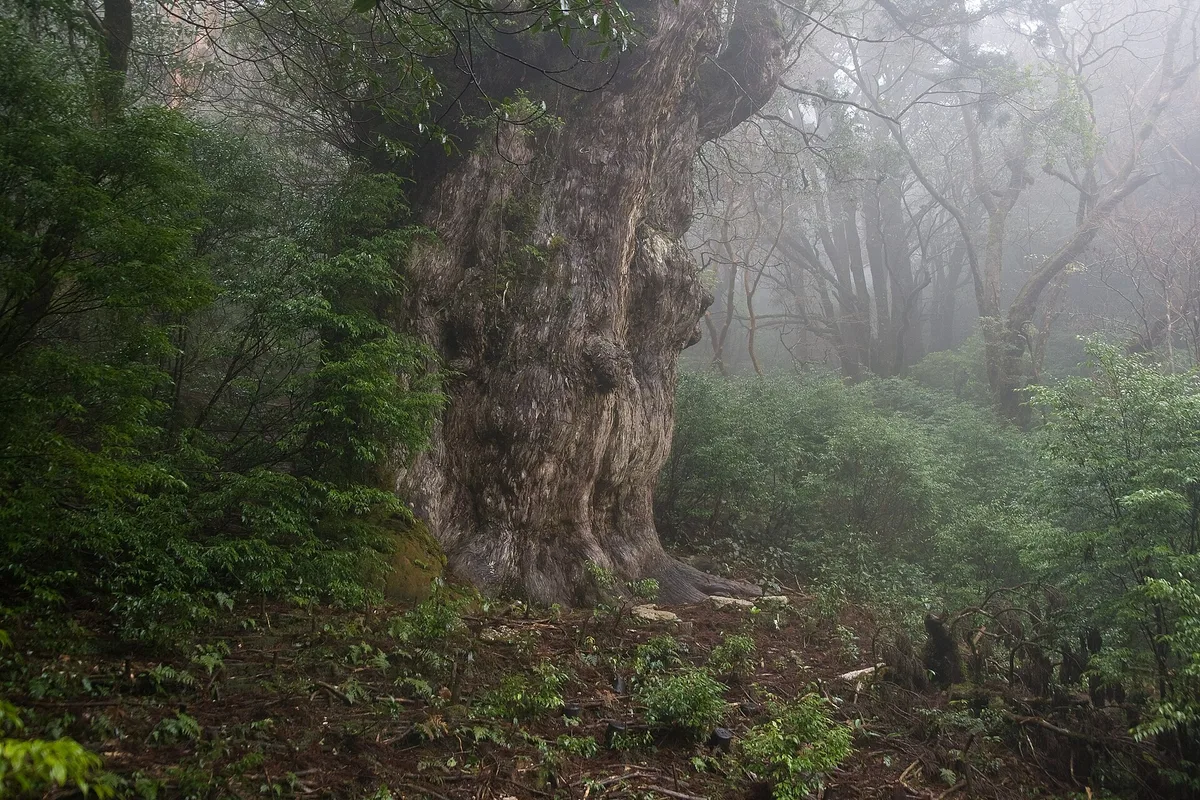
The distance has a specific, deliberate cause. Jomon Sugi has been a known destination since 1962, and decades of visitors standing at its base wore away the soil and exposed its roots, which is what prompted Japan's Ministry of the Environment to act. In their own words: "Soil has been washed away exposing the roots, and protective measures have therefore been put in place. These measures include keeping visitors at a distance, and installing a viewing deck." Every fenced-off complaint in this corpus traces back to that same decision, made to protect roots the crowds had already damaged.
It also helps to know what you are actually looking at. Jomon Sugi stands 22.2 meters tall with a trunk 16.1 meters around at chest height, and its age is estimated at somewhere between 2,170 and 7,200 years old. That is a genuinely enormous tree. What guidebook photos rarely convey is how far back the deck actually sits, so a scale that reads clearly in a photograph can feel abstract standing in front of the real thing.
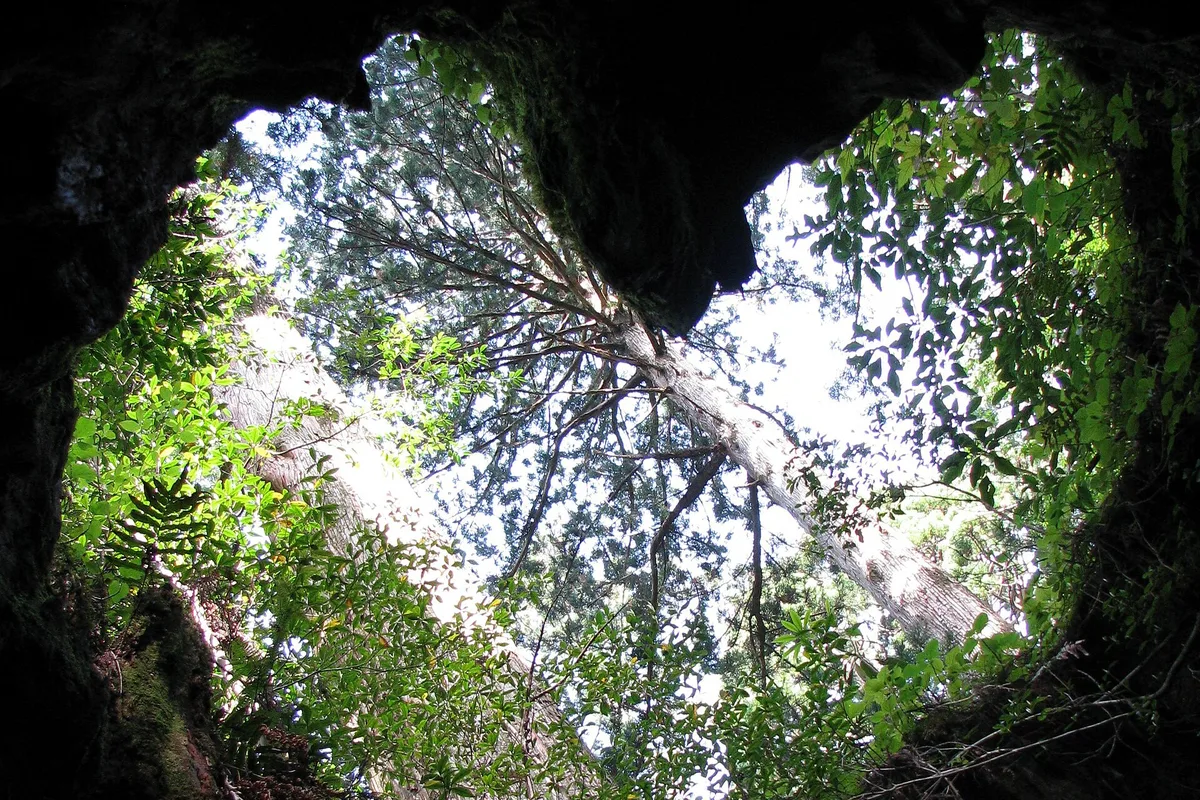
Most of what people end up loving about this day happens well before the final platform. The trail begins along an old forest railway, built for hauling logs out of these mountains and still occasionally carrying a maintenance railcar, an easy stretch through cedar forest with river crossings and narrow bridges. Then comes Wilson's Stump, the hollowed base of a felled giant cedar large enough to walk inside, with a natural opening at the top shaped like a heart when you look straight up. Many hikers who came away unmoved by Jomon Sugi itself still name Wilson's Stump, the climb past it, and the forest around it as the actual highlight of the day.
Doing it the welcomed way
- Set your expectation before you start walking. Treat the old forest railway, the ancient cedars along the way, and Wilson's Stump as the main event, with the platform at the end as a quiet last stop rather than the whole reason for the day.
- Book the shuttle bus. Private vehicles are restricted at the Arakawa Trailhead every day from March 1 through November 30, so almost everyone connects through the shuttle bus from the Yakusugi Museum. Buy your ticket the day before if you can, and plan to start walking before sunrise.
- Pay the conservation fee. Since March 2017, a voluntary environmental cooperation fee funds trail maintenance and mountain toilets: 1,000 yen for a day hike, 2,000 yen if you're staying overnight on the mountain, free for elementary-school age and under. Pay it with your bus ticket or at the visitor center.
- Give yourself the full 8 to 10 hours, and then some. Officially the round trip runs 8 to 10 hours over roughly 22 kilometers with about 700 meters of elevation gain. Build in slack for photo stops, river breaks, and a slower pace than you'd guess from the trailhead map, and know your last-bus time before you set out.
- Pack for rain regardless of the forecast. Yakushima's mountain weather turns fast, and the trail includes narrow bridges, some without full handrails, and slippery railway sleepers. A poncho and grippy footwear matter more than an umbrella.
- Consider a guide if this is your first serious hike in Japan. Several reviewers who were anxious about the distance said a guide's steady pace and running commentary made the difference between suffering through the day and actually enjoying it.
- If the tree itself is the only reason you'd go, weigh Shiratani Unsuikyo too. Multiple hikers, including some who found Jomon Sugi underwhelming, rate the shorter Shiratani trail, with its moss forest and Taikoiwa lookout, as the more rewarding half-day. Several say they would pick it again over the full trek to Jomon Sugi.
The reviewers who came away disappointed and the ones who came away moved walked the same trail, rode the same shuttle bus, and stood at the same fenced platform. What split them was what they had counted as the point of the day before they ever set out: one tree, or the walk that leads to it, past cedars a thousand years old and a stump you can stand inside. Pack for the walk, and the platform waiting at the end is just where the day happens to stop.
Weighing Yakushima against other big commitments on a Japan itinerary? We counted sixty of them one at a time. Start with what actually matters before you build the rest of your trip around one hike.
Sources
- Ministry of the Environment, Japan: Jomon-sugi Cedar Trekking Advice and Etiquette: official guidance stating that the protective viewing deck was installed after root damage from visitors since the tree became widely known in 1962; round-trip hiking time 9 to 10 hours; vehicle restriction March 1 to November 30; Wilson's Stump conservation notes.
- Ministry of the Environment, Japan: World Natural Heritage Yakushima Mountain Area Conservation Cooperation Fee: official cooperation fee since March 2017, 1,000 yen for day hikes and 2,000 yen for overnight mountain stays (written without thousand-separators, that is 1000 yen and 2000 yen), free for elementary-school age and under.
- Yakushima Town: Jomon Sugi official tourism page: tree height 22.2m, trunk girth 16.1m at chest height, estimated age 2,170 to 7,200 years, one-way distance approximately 11km, elevation 1,328m, elevation gain approximately 700m, round trip approximately 8 to 10 hours, viewing from the protective platform.
WMJS is written in Japan, in English, with AI help. We check every page, but English is not our first language. If a sentence reads oddly, tell us. One sentence is enough.
Thank you. A person reads every note.
How well do you know Japan?
Built from 635 public posts by Japanese people
Want to know more? Ask Japanese people
Have a follow-up question about this topic? We'll ask real Japanese people.
Voice Box →