
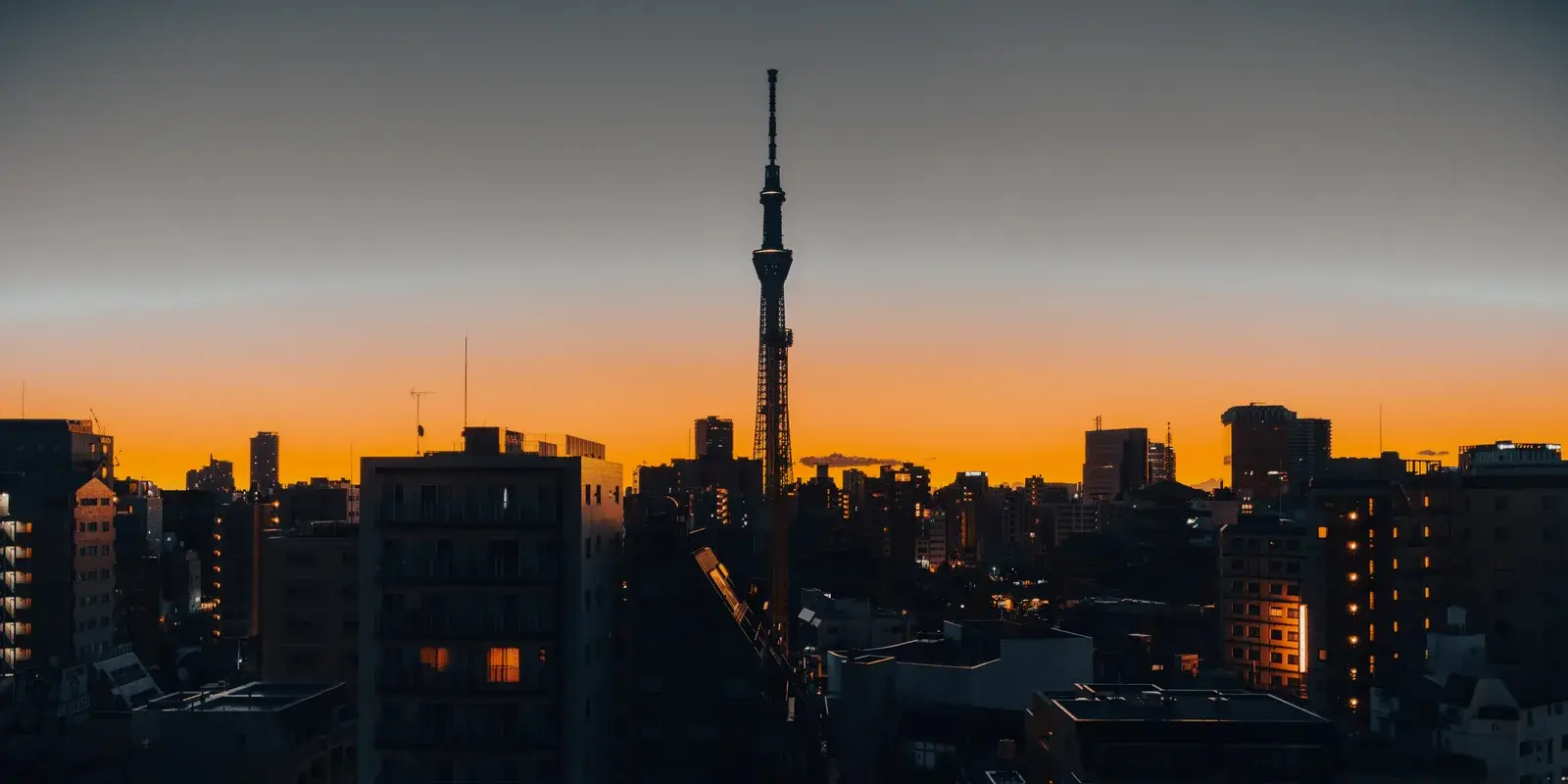
Is Tokyo Skytree Worth It? What Visitors Are Really Comparing It To
Ask whether Tokyo Skytree is worth it, and the answer you get back is rarely about Skytree. It's about Tokyo Tower, or the free observatory at the Metropolitan Government Building, or Shibuya Sky, or Mori Tower, or a rooftop bar someone found for the price of a drink. The 634-metre tower in Sumida is only one of half a dozen places in the city where you can pay for a skyline, and most of the online debate is really a spreadsheet argument about which view earns your yen.
Here is what actually happens when you sort the real voices by that argument. Worth it is the single largest answer, though a plurality, not a landslide, and most regretful voices are comparing Skytree to something cheaper or free that they found out about too late. Tokyo itself almost never runs that comparison. Its own complaints are the wait and the price, never a better view down the road.
Was it worth it? (in visitors' own words)
We gathered the voices of international travelers who have actually been up Tokyo Skytree and asked, in effect, was it worth it? Weighted by how strongly each opinion resonated with other readers, here is how they fell.
The regretful quarter has a pattern to it: it is almost never about the view being bad. It's about a view they'd been told was just as good, for less money. "Just FYI for next time," one visitor wrote, "save the cash... Tokyo Metropolitan Government Towers = just as good and free! No shopping mall mega crowds." Another compared three towers in one trip: "Skytree was a bit too crowded for my taste... if you have time, I would suggest Sunshine 60 as it was the most interesting imo." The alternative that comes up most often in that regret cluster isn't a rival building at all. It's a tower with the word free attached to it.
The visitor who wrote the fullest account of going up, waiting an hour for tickets, and staying forty minutes at the top ended with the line that captures the whole doubt: "You go to Tokyo Skytree for the name more than anything else." For a first Tokyo trip on a tight schedule, several travelers agreed that was reason enough to skip it. It was not reason enough for the 42% in green. "Yep I did it. Was epic," one wrote, "if the weather is good you can see Mt Fuji from Skytree as well (a bit far but visible)." Others made the exact opposite trade the doubters made, choosing Skytree precisely because the record height, not the cheapest ticket, was the point: "The Skytree is really in a league of its own in terms of overall height, if that sways you." And a few pointed out that the tower and the observation deck are not the same purchase. "You can fill out a day easily due to the amazing mall and so much to eat and see," one visitor wrote. Another put it more simply: "The mall and surrounding area is more interesting in my opinion. Plus you can combine it on the same day as Asakusa since they're pretty close to each other."
Where to buy: official site / Klook
Klook is an affiliate link: if you buy through it, we may earn a commission, at no extra cost to you.
How Tokyo itself feels about its own tower
Tokyo has its own answer to the same question, in reviews foreign guides rarely quote.
The red bar here is smaller than the visitors' one, and that gap is the most useful thing on this page. Japanese reviewers almost never run the free-versus-paid comparison that dominates the foreign doubt. One reviewer, who had lived in Tokyo their whole life and had somehow never gone up, wrote about the moment that changed their mind: "In my mind it was just a slightly fancier Tokyo Tower, but once we actually went up, the visibility from the observation deck and the entertainment value of Solamachi made me feel it was worth the high price." Another described switching allegiance from the older tower entirely: "I used to insist Tokyo Tower was 'the' symbol of Tokyo, but I've come to appreciate Skytree, which withstood the shaking of the Great East Japan Earthquake. In the early days it seemed unreliable, closing during strong winds, but these days seeing it from the plane makes me feel relieved that I'm back in Tokyo."
What fills that smaller red slice instead is logistics and price, told in specific, useful detail. One reviewer discovered that a timed reservation did not mean a timed elevator: "I thought once your reserved time came you could just get on the observation elevator, but actually at your reserved time you line up to get your ticket printed, then line up again for the elevator. In the end it took over an hour from our reserved time to actually reach the deck." Another went up during Golden Week and, when strong wind slowed the descent, ended up "standing in line for two whole hours to get from the gallery back to the ground. No place to sit, some people not keeping order." Weather gets its own honest share too. One reviewer, already holding a reservation, found no refund available when the deck turned white with cloud: "outside the glass was pure white, nothing visible... it just felt like we'd paid for an elevator ride." And a few locals name the ticket price outright: "There's not really anything to do once you're up there. The view is great, but above all the admission fee is very high. Once is more than enough." Even among the warm reviews, one reviewer learned before booking that reservations "you can't cancel due to health or weather," so they waited and booked at the last minute instead. This is the domestic version of the same hesitation, and underneath it the real question is which hour of which day you show up, and how much you're willing to pay for it.
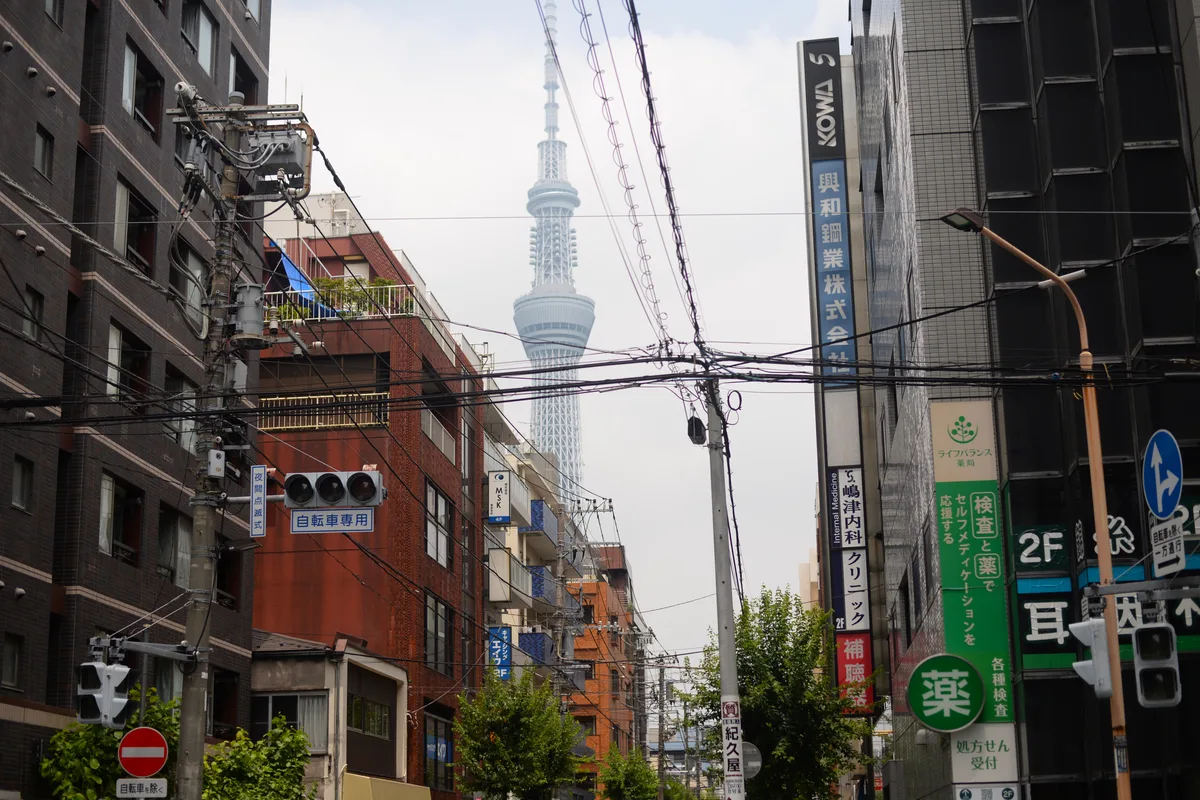
Before you go
What visitors answered
Buy tickets in advance?
86 people answered on Google Maps (October 1 – 9, 2026)
- Yes58
- No16
- Not sure12
How long they waited to get in
92 people answered on Google Maps (October 1 – 9, 2026)
- No wait31
- Up to 10 min20
- 10–30 min29
- 30–60 min6
- 1 hr or more6
These are answers to the questions Google Maps asks alongside a review, counted from the newest reviews of this place in every language. They are counts of answers, not a survey, and waits change with the day and the season.
What we wish you'd noticed
The earthquake mentioned above is the single fact that explains the whole honne gap. Construction had started less than three years earlier, in July 2008, and on 11 March 2011, Tokyo Skytree was still under construction, its steel frame already past 600 metres. The earthquake that struck northeastern Japan that day shook Tokyo hard enough that the unfinished tower's top is estimated to have swayed four to six metres. It came through without structural damage, and construction finished the following year, with the tower reaching its full 634-metre height on schedule barely a week after the quake. The Japanese government's own account of the event, published that December, put it in one plain line: Tokyo Skytree suffered no damage from the earthquake.
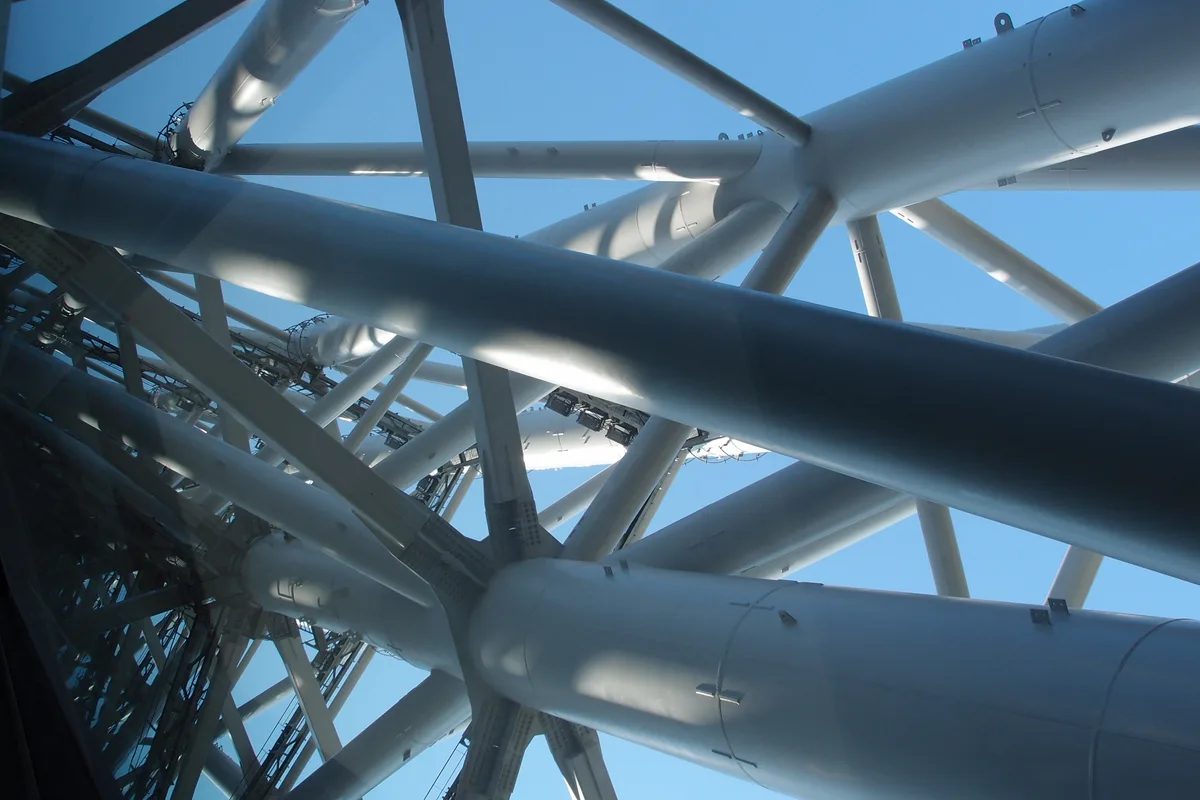
What helped it hold is a piece of engineering visitors rarely hear about on the way up. Running through the tower's core is a separate reinforced-concrete cylinder, 8 metres across and 375 metres tall, called the shinbashira, the same idea used in the central pillar of a thousand-year-old five-story pagoda. The steel tower body and the concrete pillar sway at different rhythms, and because they move out of step, one cancels a good share of the other's motion, cutting the tower's earthquake and wind sway by up to half. The reviewer quoted above, weighing Skytree against Tokyo Tower, is describing what that mechanism produced, without naming it.
None of this shows up in a foreign visitor's calculation of Skytree against the free Metropolitan Government observatory, and that is exactly why the two are hard to compare on price alone: they are different purchases. One is a free city view from a government office. The other is the tallest structure most people will ever stand inside, engineered around the mechanism above, with a shopping and dining floor built into the base that several visitors said was worth the trip on its own.
Doing it well, the way that avoids regret
A lot of what lands in the red bars above turns out to be about timing and information rather than the tower itself.
- Decide which deck you're paying for, and book it online in advance. An advance online ticket to the 350-metre Tembo Deck alone starts at roughly ¥1,800 for an adult; adding the 450-metre Tembo Galleria on top brings the combined ticket to about ¥3,000, and meaningfully more on peak dates, with the Galleria upgrade alone priced around ¥1,400 (pricing moves with demand and season, so check the day you book). Buying at the counter or a ticket machine on the day adds a ¥500 service fee per ticket, so booking ahead online saves money as well as time. The Deck floor, which includes the glass floor several visitors describe looking straight down through, is what most of the enthusiastic reviews above are actually describing. Save the Galleria upgrade for a clear day when the extra hundred metres will matter to you.
- A reservation isn't a guarantee of a quick elevator. One reviewer found their reserved time only booked a slot in the ticket-printing line, and it took over an hour past that to reach the deck. Budget slack either way, especially on weekends and holidays.
- Reservations can't be cancelled for weather, so booking late beats locking in a date early. Reviewers who watched the sky turn to fog after already reserving described a wasted afternoon; the ones who caught a genuinely clear evening called it the best hour of their trip.
- Time it for dusk, before the lights come on. Several of the warmest Japanese reviews describe timing the visit so the sunset toward Mount Fuji happens while they're at the top, with the city lights coming on underneath afterward; foreign reviewers report the same clear-evening payoff. Doors are open from 10:00 to 22:00, final entry 21:00, so a winter dusk before 5pm and a summer one closer to 7pm both fit inside a normal visit.
- Let the mall pull its weight. Tokyo Solamachi, connected at the base, has enough shops and food that pairing it with a nearby Asakusa temple visit turns a brief trip up the tower into a full, unhurried day.
- Aim for the quieter windows if you can. The New Year holidays produced long waits on both sides of this article's voices, and Golden Week did the same in the Japanese reviews specifically, occasionally over an hour each way.
Where to buy: official site / Klook
Klook is an affiliate link: if you buy through it, we may earn a commission, at no extra cost to you.
None of this makes the free observatory a mistake, and none of it makes Skytree a trap. They're two different afternoons. The reviewer who skipped Skytree for the government building got exactly what they came for, a good, honest, free view. The reviewer who paid for a ticket and can still describe the moment the city lights came on beneath them got something else: height, a tested piece of engineering, and a mall to wander afterward. Both afternoons are sitting there waiting, and the only real cost of picking the wrong one is a grey sky and a receipt.
Still deciding which Tokyo view actually earns a slot on a short trip? Start with what actually matters in Japan, or see how the same free-versus-paid question plays out at Shibuya Crossing and in Shinjuku, home of the government building everyone compares Skytree to.
Sources
- Tokyo Skytree: official ticket pricing: advance online Tembo Deck (350m) tickets from ¥1,800 for adults; combined Tembo Deck + Tembo Galleria (450m) tickets from ¥3,000; Galleria upgrade for existing Deck ticket holders ¥1,400 (written without thousand-separators: 1800 yen, 3000 yen, 1400 yen); a ¥500 per-ticket service fee applies to counter/machine purchases made on the day, and the site recommends booking ahead online to skip that fee. Prices are date and demand variable; verify on the day of booking.
- Tokyo Skytree: official site, opening hours: open from 10:00 to 22:00 daily, final entry 21:00 (subject to change on the day; verify before visiting).
- Tokyo Skytree: official construction and engineering guide, the Shinbashira Seishin system: the central pillar's dimensions (8m diameter, 375m tall) and how the dual-sway design reduces earthquake and wind motion by up to 50%.
- Government of Japan, "Highlighting Japan" (December 2011), on Tokyo Skytree and the Great East Japan Earthquake: the tower, then under construction and already past 600m, swayed an estimated 4 to 6m at the top on 11 March 2011 and suffered no damage.
- Sumida City official FAQ: Tokyo Skytree: construction began July 2008, completed February 2012, opened 22 May 2012.
- Asahi Shimbun (18 March 2011): Tokyo Skytree reaches its full 634m height on schedule, unaffected by the earthquake: corroborating account of the tower reaching its target height on schedule one week after the earthquake.
WMJS is written in Japan, in English, with AI help. We check every page, but English is not our first language. If a sentence reads oddly, tell us. One sentence is enough.
Thank you. A person reads every note.
How well do you know Japan?
Built from 635 public posts by Japanese people
Want to know more? Ask Japanese people
Have a follow-up question about this topic? We'll ask real Japanese people.
Voice Box →