
Is Kibune Worth It? An Honest Read on the Shrine, the Hike, and the Season
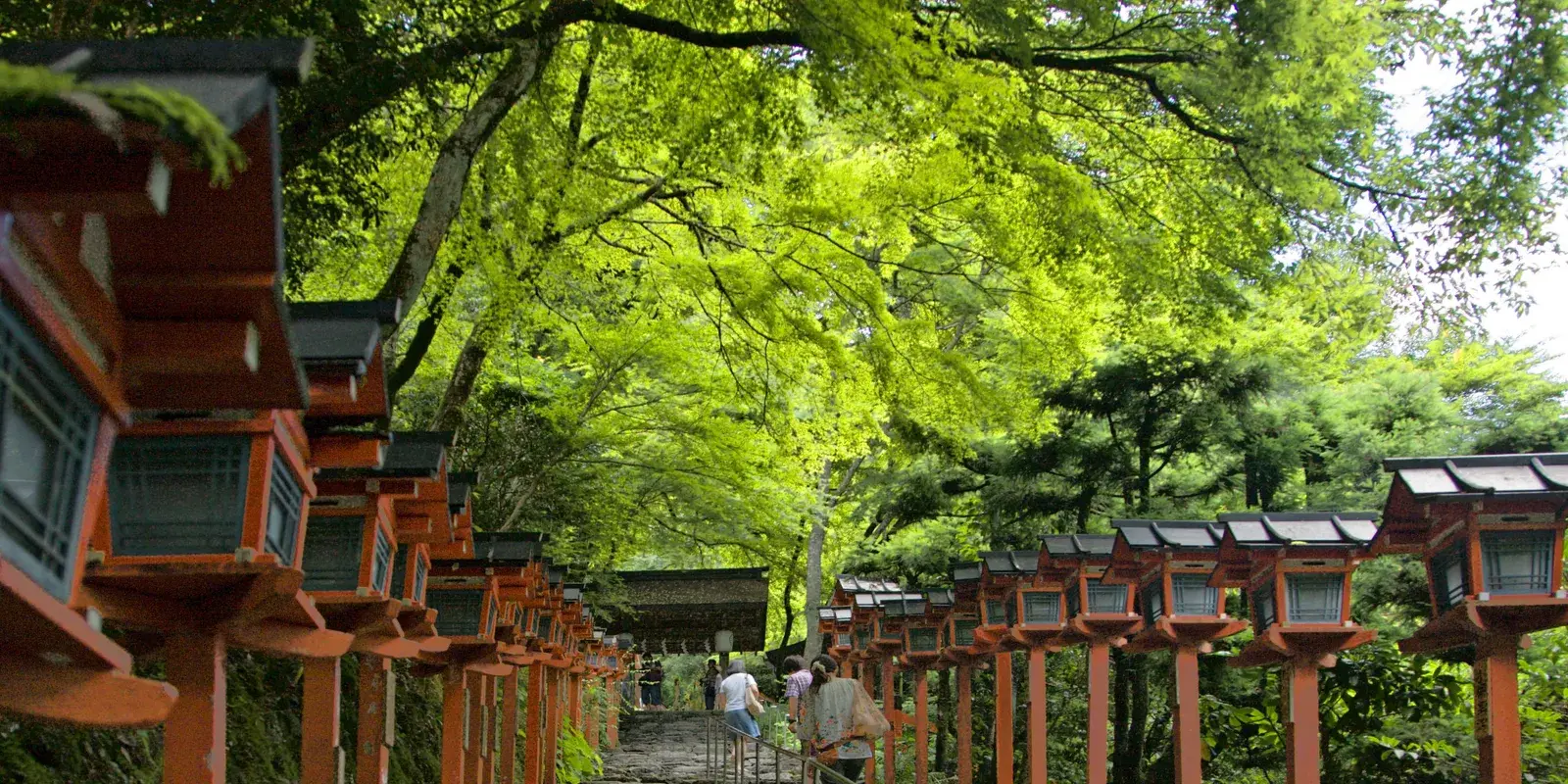
Kibune is a shrine village in a narrow river valley in the hills north of Kyoto. Kurama-dera, a temple on Mount Kurama just over the ridge, is linked to it by a forest path across the mountain, and the temple's own course for strong walkers runs over the mountain to Kibune Shrine. The voices we gathered are mostly about that pairing: the shrine with its lantern-lined stone steps, the temple on the mountain, and the walk in between.
Going by those voices, Kibune is worth it. Of the 45 voices from international travelers, 29 are about the walk, and their doubts are practical ones about it: how hard it is, which way to go, and how long it takes. The Japanese reviews cover both places, Kibune Shrine and Kurama-dera, and their complaints are about crowds, the climb, and the narrow road in.
We gathered voices from people who made the trip and sorted them by how the day landed. First, international visitors:
Now Japanese visitors, in their own reviews of the shrine and the temple:
What the two gauges are quietly saying
On the international side, the red bar is a single voice, and it is about the walk: "To be honest I was a bit disappointed by it. Kibune is a nice little town and Kuramadera temple is also nice, but the hike itself is not that appealing in my opinion. Mainly stairs." The middle bar is 17 voices, and 15 of them are about the walk and the planning around it: which way to go, how steep it is, whether to go alone, how long it takes, and what snow does to the path. The other two are about the riverside restaurants. One of those writers finds them "generally overpriced for what they offer, especially Nagashi Somen," and adds a line about the shrine itself: "If you're hiking Kurama-Kibune, I'd say it's worth it but not just for Kibune. Although their tori and stone stairs look great in pictures, there is not much more to it at the shrine. Kurama Temple is much more impressive."
The Japanese side is warmer, with 67% glad they came, and most of its doubts sit in the middle bar rather than the red. The middle bar holds reviews about the steep stairs and the climb up to Kurama-dera, the crowds, the narrow road, and the cost of the riverside meals. One reviewer found Kurama-dera's main hall, after more than a hundred stone steps, "a little anticlimactic" because its roof sits low. Having reached it in 35 minutes from the Niomon gate, stops for prayer included, the same reviewer called Kurama "an unexpectedly easy mountain." The red bar is three reviews: a Saturday of heavy rain on narrow roads, a 30-minute line to reach the worship hall, and a crowd so thick at the top of the steps that one visitor prayed at the sacred tree instead and headed home.
Why the people who love it, love it
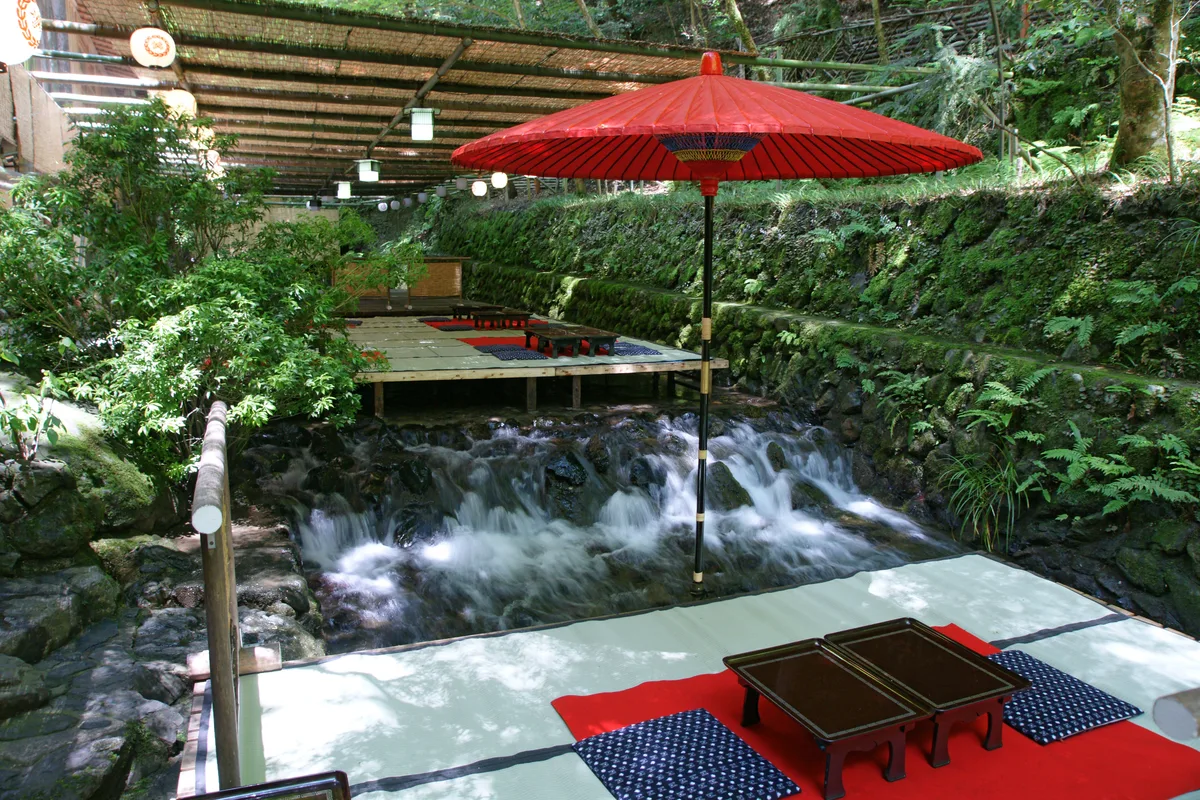
In summer the valley is cooler than the city, and the riverside restaurants set out kawadoko platforms over the stream. "It's nice that it's cooler than the town, too," one Japanese reviewer wrote. Another escaped city heat close to 40°C (104°F) at a riverside inn in Kibune and called it "a very cool, refreshing atmosphere, full of the season." A third ate a kawadoko dinner on a day above 30°C (86°F) and wrote, "It was so cold I even borrowed a jacket."
Winter can bring snow to the vermilion lanterns. "Getting to see Kibune in the snow was really lucky, and it made me so happy," one traveler wrote on a Taiwanese board. Another walked from Kurama Station over the mountain in thickening snow and, after nearly two and a half hours, reached Kurama-dera's west gate on the Kibune side: "I almost cried here. The downhill hell was finally over." That traveler plans to come back for the temple and shrine stamps. Autumn brings the maples. Six Japanese reviews, two of them by the same person, mention evening light-ups: three in summer, two in autumn, and one that doesn't say when. The shrine's Tanabata light-up ran from July 1 to August 15 in 2026, from sunset until 8 p.m.
Kibune Shrine (officially Kifune) is dedicated to the god of water, and a visit takes in three parts: the main shrine, the Yui-no-yashiro (the middle shrine), and the Okumiya, or inner shrine. Twelve of the 150 Japanese reviews mention the water fortune, a paper slip whose words appear when you float it on the spring water. One international reviewer on Tripadvisor described a half-day visit that was mostly about quiet, with no attractions as such but several places to stop for refreshments, many of them open only in summer.
What the walkers say
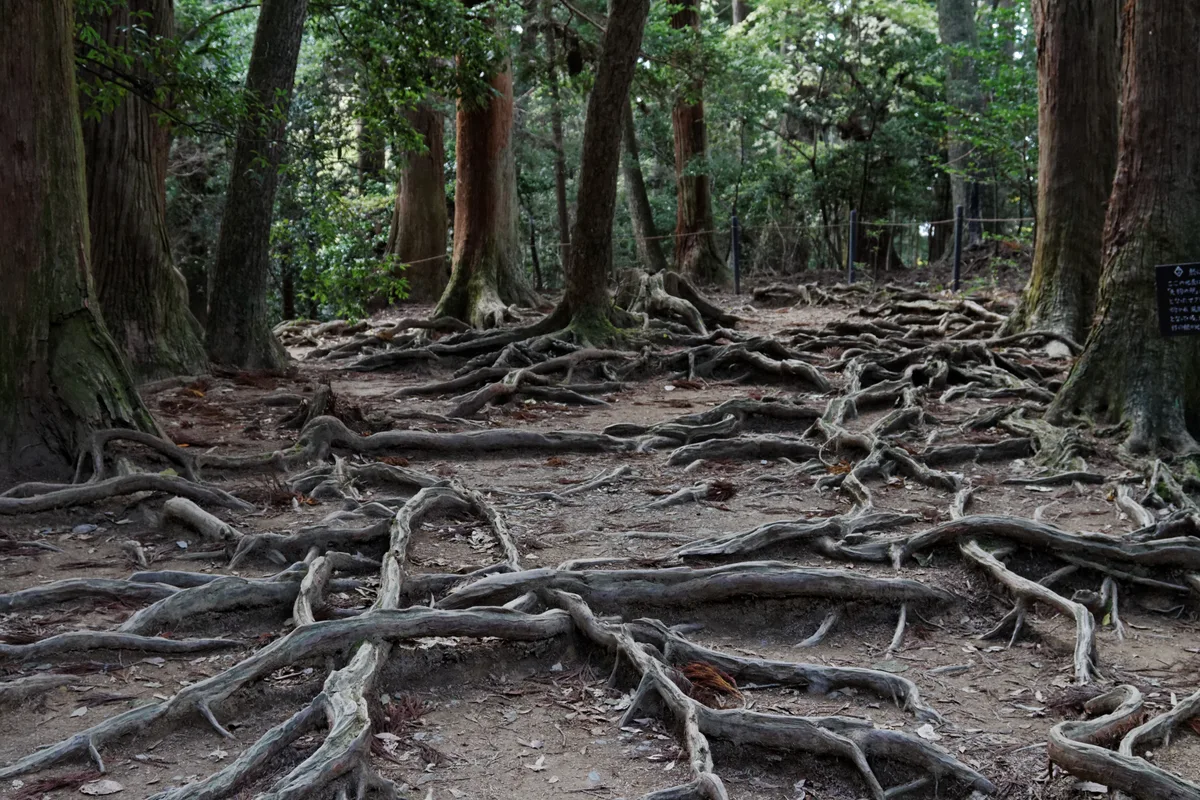
Thirteen of the 27 international voices that found the trip worth it describe walking over the mountain between Kurama-dera and Kibune, on a forest path where tree roots spread across the ground. A reply in one of the walking threads sums it up in a few words: "Very tiring but worth it." Another wrote, "I walked from Kibune to Kurama too. It was actually a bit tiring (it was summer, after all), but super worth it, and the scenery along the way is really beautiful." A Japanese reviewer who walked over from Kurama-dera for the first time described the whole day: the climb "was extremely tiring," the descent "felt like a runner's high," and on reaching Kibune Shrine, "I was a little moved. It was a hot summer day, but it was a really pleasant experience." If walks like this are what you travel for, the old Nakasendo post road between Magome and Tsumago is another.
Of the 21 international walkers who say which way they went, 15 went from Kurama to Kibune and 7 the other way (one person did both). "Most people walk from Kurama to Kibune; it's downhill the whole way," one board reply says, but going that way the route climbs first. Kurama-dera's own guide calls the walk its course for strong walkers: about 25 minutes up from the gate to the main hall, 30 minutes on to the Maoden hall over the ridge, then 20 minutes down to Kibune Shrine. Of the board members who walked from Kibune up to Kurama and say how it felt, three found it fine, one found it a bit tiring but worth it, and one wrote that their legs nearly gave out. A Japanese reviewer warns that the reverse course "is quite hard unless you're confident in your stamina," and another doesn't recommend it.
The welcomed way to do it
Kurama-dera's gate is a three-minute walk from Kurama Station. You can climb from the gate to the main hall on foot, 25 to 30 minutes by the temple's own estimates, or ride the short cable car part of the way. The cable car is ¥200 one way for adults, which the temple treats as a donation rather than a fare, and visitors pay a ¥500 offering for the upkeep of the mountain. The walkers we heard from took about an hour from the main hall to Kibune Shrine at the quickest, an hour and a half to two hours from the temple gate, and over two hours in snow. Real walking shoes help: one walker kept falling on a drizzly morning, and the reviewer who warned about the reverse course found the snowy crossing "a fantastical landscape" and calls waterproof shoes a must.
The season shapes the day. The kawadoko season runs roughly from May 1 to September 30 and varies by restaurant. In winter, three board members found the path harder or more worrying, and one Japanese reviewer who went in the cold wrote, in two separate reviews, that spring or autumn would be better.
Six voices call the riverside meals expensive: one found them "pretty extortionate and not worth it," and another walked past the restaurants because of the cost. One reviewer warns that some restaurants take reservations only, with no sign saying so. Another found a more casual way to sit over the water: some kawadoko serve just tea, with a seat charge of around ¥500.
Kibune Shrine is free to enter, and from May through November it opens at 6:00 a.m. Six Japanese reviews of the shrine tie the crowds to weekends, holidays, or the middle of the day, among them one who came on a Saturday to find every riverside restaurant and the parking lot full. Separately, one reviewer lined up about 30 minutes to reach the worship hall. Three found early morning quiet, among them a reviewer staying at an inn nearby who visited before breakfast, when only a few people had come to draw the sacred water. A fourth found it busy even early in the morning. Thirteen of the 150 Japanese reviews mention the narrow road up the valley, which has places where two cars cannot pass, and five suggest coming by public transportation rather than by car. Take the Eizan Railway to Kibuneguchi, then Kyoto Bus 33 to the Kibune stop and a short walk. You can also walk up from the station in about 30 minutes, but a board reply notes there is no sidewalk along the road, so watch for cars.
On the mountain, one board member passed signs warning of bears, wrote that going alone isn't advised, and then walked it alone anyway. Kyoto Prefecture asks people walking in or near the mountains to carry something that makes noise, such as a bell or a radio, to take extra care in the morning and evening, and to avoid going alone where possible. Kurama-dera's main hall is open from 9:00 a.m. to 4:15 p.m., and for most of the year the last cable car down leaves at 4:25 p.m., so a midday crossing keeps you within the temple's hours and away from the mornings and evenings the prefecture flags.
So, is Kibune worth it?
Yes, by these voices. Of 45 voices from international travelers, 27 (60%) found it worth it, and 13 of those 27 describe the walk between Kurama-dera and Kibune; the one disappointed voice found that walk mostly stairs. In 100 of the 150 Japanese reviews (67%), the writer was glad to have come, and the doubts in the rest are about the stairs, the crowds, the price, and the road in. Go early or on a weekday, choose your direction and your shoes for the walk, and pick your season by whether you want the kawadoko, the maples, or the snow.
Still deciding which famous places actually earn a slot on a short trip? Start with what actually matters in Japan.
Sources
- Kifune Shrine, official site: open from 6:00 to 20:00 (May 1 to November 30), free admission, the three-shrine visit (Hongu, Yui-no-yashiro, Okumiya), the water fortune, the Tanabata light-up (July 1 to August 15 in 2026, sunset to 20:00), and access via Eizan Railway to Kibuneguchi and Kyoto Bus 33.
- Kurama-dera, official site: Visiting: the ¥500 aizan-hi offering for the upkeep of the mountain (since April 1, 2023), the cable car donation of ¥200 one way for adults, and the Reihoden museum.
- Kurama-dera, official site: about 30 minutes on foot from the gate to the main hall, the main hall's opening hours (9:00 to 16:15), and the cable car hours (8:40 to 16:25).
- Kurama-dera, official site: Access: three minutes on foot from Kurama Station to the gate, and the strong walkers' course: about 25 minutes from the gate to the main hall, 30 minutes on to the Maoden, then 20 minutes to Kifune Shrine; the last cable car down at 16:25 (January to May and September to December).
- Kyoto City Tourism Association: Kibune Kawadoko: the kawadoko river-dining season, May 1 to September 30 (varies by restaurant).
- Kyoto Prefecture: About Bears (Japanese): carry a bell or radio when walking in or near the mountains, take extra care in the morning and evening, and avoid going alone where possible.
- Japan National Tourism Organization: Kifune-jinja Shrine: overview of the shrine and the Kibune valley.
WMJS is written in Japan, in English, with AI help. We check every page, but English is not our first language. If a sentence reads oddly, tell us. One sentence is enough.
Thank you. A person reads every note.
How well do you know Japan?
Built from 635 public posts by Japanese people
Want to know more? Ask Japanese people
Have a follow-up question about this topic? We'll ask real Japanese people.
Voice Box →