
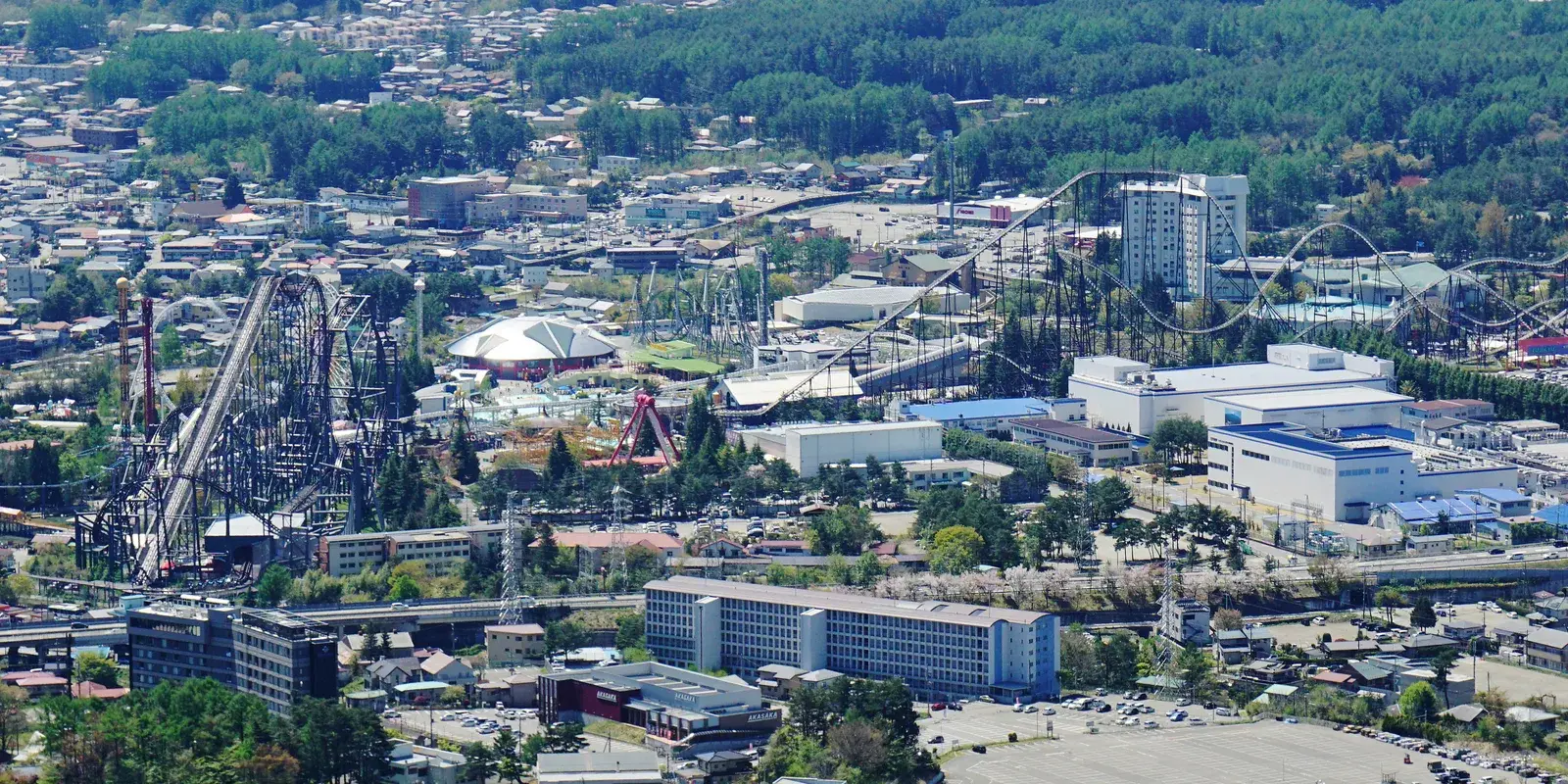
Is Fuji-Q Highland Worth It? What Riders on Both Sides of the Fence Actually Say
You've seen the photo: a roller coaster car frozen mid-drop with Mount Fuji floating behind it. That's Fuji-Q Highland's whole pitch in one image. What the photo doesn't show is the other half of the story that shows up the moment you start reading reviews: wait times that run longer than the board suggests, rides that go dark for inspection the day you arrive, and a free-admission system that can leave a family paying full price for a day they barely used.
Most of the complaints about Fuji-Q Highland, on both sides of the language, are about the day around the rides rather than a specific coaster. That one distinction is worth keeping in mind as you read the two gauges below.
Is it worth it? (in international visitors' own words)
We collected 62 voices from international visitors who have actually been to Fuji-Q Highland, writing on Reddit, TripAdvisor, and theme-park and travel forums.
Read through the 25 negative voices in that 40%, and most of them aren't faulting a specific ride. "Theres some really good rides but it should be called 'Fuji Queue Highland'." one visitor wrote, going on to talk about the lines and the language barrier rather than the coasters. Another's trip turned into three hours on a train with an extra limited-express ticket their transit card didn't cover: "Train access is deceptive." A third visitor's single trip report, which sits in the middle band, holds both reactions at once: a bus mishap on the way home, "I was 90 minutes from my hotel in Tokyo, the bus wasn't here... I genuinely contemplated a night on a bench in a bus station," alongside real disappointment with two of the rides earlier that same day, Zokkon and Fujiyama, and real enthusiasm for a third, Eejanaika, "completely different in every way... just so much fun!!" One visitor, one day, three different verdicts depending what you ask about.
Set the logistics aside and look at what most people say about the park's four signature coasters specifically, and the picture tilts firmly positive. One rider wrote: "Fujiyama is a total riot; the bizarre 90 degree banked turn sweeping along the ground, the Magnum-level insanity of the final airtime hills... Very underrated coaster imo." Another who'd read a stack of bad reviews first and went anyway: "We read a lot of bad reviews but thought, we would give it a go anyway... Such a good day and would 100 recommend going." And a visitor who pushed back directly on the park's reputation for slow operations: "They were doing an amazing job and even with strict safety regulations, they were making consistent efficient dispatches on every ride. The staff were extremely helpful and friendly."
How Japanese visitors feel about their own park
Fuji-Q Highland is a Japanese park first, built and staffed for Japanese visitors long before it became a stop on anyone's Tokyo itinerary, so what Japanese reviewers say about it, mostly writing for other Japanese readers rather than for tourists, carries its own weight.
That red bar, 39%, lands within a single point of the foreign one, 40%. Part of that match comes from where the Japanese voices were collected: 24 of the 37 red voices are minhyo reviews. What the two sides plainly share is the subject of the complaints, and that becomes obvious once you read the Japanese complaints next to the English ones. "ワンオペで回転率が非常に悪い...人気アトラクションは数時間待ちで乗るものが無さすぎる" ("One staff member running the whole ride, so turnover is terrible...the popular attractions have hours-long waits, so there's hardly anything you can actually ride," wrote a man in his 40s visiting with family), and "フジヤマ120分待ちならフリーパスの方がお得と判断してフリーパスを購入...結局フジヤマに乗れたのは14:45。4時間も待たされた" ("The board said Fujiyama was a 120-minute wait, so I bought the all-ride pass thinking it was the better deal...I didn't actually get on Fujiyama until 14:45. I was made to wait four hours"). Swap the language and these could sit next to the two foreign complaints above. Just as on the foreign side, the Japanese negative voices are rarely about a ride itself; they are mostly about waits, closures, and ticketing, plus something the foreign complaints rarely raise: the staff, short-handed or curt, in 21 of the 37.
A few Japanese reviewers describe the posted wait time specifically undershooting the real one, by hours in some cases, closer to a floor than a promise. That particular complaint doesn't turn up often on the foreign side, where the one review that raises the topic says the opposite, that posted waits ran about double the real ones. Whichever direction the gap runs on a given day, both corpora describe long waits on busy days.
A regular in her 40s, who treats the park as a pressure valve, shows what the green side looks like: "もう、私のストレス発散の場所!...決して近くないですが、年間3回以上は行きます!" ("This is where I come to blow off steam...it's not close, but I come more than three times a year.") And a visitor from Aichi prefecture shows what the red side looks like, arriving with a plan and running into a park that didn't cooperate with it: "事前にホームページで運休中かは確認したが当日チケット販売で運休だらけでびっくり...家族4人でパスポート代ドブに捨てた気分です" ("I checked the website beforehand for closures, but at the ticket counter that day there were closures everywhere. It felt like we threw our tickets for four people straight in the trash.")
Before you go
What visitors answered
Buy tickets in advance?
57 people answered on Google Maps (September 28 – October 19, 2026)
- Yes30
- No21
- Not sure6
How long they waited to get in
56 people answered on Google Maps (September 28 – October 19, 2026)
- No wait35
- Up to 10 min12
- 10–30 min3
- 30–60 min4
- 1 hr or more2
How long they stayed
57 people answered on Google Maps (September 28 – October 19, 2026)
- Up to 2 hr9
- 2–3 hr5
- 3–4 hr8
- 4–5 hr4
- 5 hr or more31
These are answers to the questions Google Maps asks alongside a review, counted from the newest reviews of this place in every language. They are counts of answers, not a survey, and waits change with the day and the season.
What we wish you'd noticed
One detailed foreigner's guide to the queue process describes a routine that repeats at every big coaster: a safety video with a call-and-response chant, free lockers, a metal detector, and a seatbelt that an attendant checks before asking you to check it yourself. None of that is a sign of slow or careless staff; it's the same sequence every time, and other reviewers independently describe the same extra safety checks as part of why the lines move slowly.
Admission is free; the rides are what you pay for, and the price moves by date. Fuji-Q Highland doesn't charge to walk in. Each of the big coasters costs 2,000 yen per ride individually, or you can buy a One-Day Pass priced dynamically by the park, officially listed at roughly 6,000 to 7,900 yen for an adult depending on the date, which is why two reviews from the same season can quote two different headline prices without either one being wrong. A newer paid option the park calls "Doppelganger" on its English site (分身くん in Japanese) lets you hold a virtual place in line for an attraction from your phone instead of standing in it, for the day's pass price plus 2,000 yen per person, bought online by the day before your visit.
Do-Dodonpa, the park's former acceleration record-holder, is permanently closed. It stopped running in August 2021 after a string of rider injuries, and Fuji-Q Highland formally announced in March 2024 that it would not reopen, citing the difficulty of fully eliminating the risk. The park has since announced a new large-scale splash coaster for 2027, a separate project rather than a direct replacement.
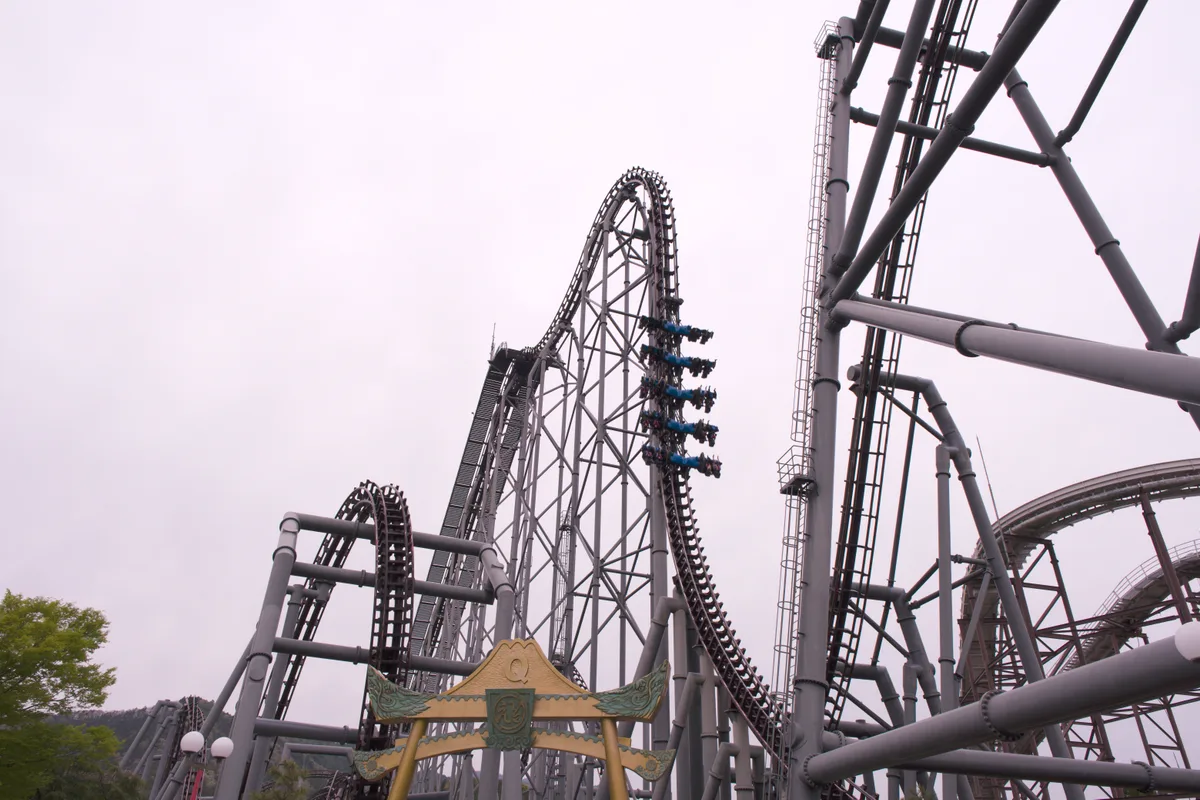
The age and health limits riders describe are specific, official, and listed by ride. Fuji-Q Highland's own attraction pages list, coaster by coaster, who can't ride: Eejanaika and Takabisha aren't available to riders 55 and older or under 125cm; Fujiyama isn't available to riders 65 and older or under 110cm. All three list diabetes, pregnancy, and heart conditions, among others, as grounds for exclusion, along with anyone the staff judge unsuitable. One older review describes a different kind of mismatch, a family turned away from a kids' ride over a mask exemption despite having contacted the park in advance, which reads like a pandemic-era mask rule rather than anything to do with the permanent ride restrictions above.
Doing it well, the welcomed way
Several of the happiest voices on both gauges mention the same short set of habits.
Decide what kind of day you're having before you buy a ticket. If you're here for the big coasters and can treat a long wait as the price of admission, the One-Day Pass makes sense, and plan around the few rides you care about most rather than everything on the map. If you're here for a relaxed day with young kids or older relatives, the free-admission, pay-per-ride approach, or the cheaper Thomas Land Pass, which covers only the Thomas Land rides, tends to fit better and cost less.
Check the live wait times and the day's attraction status on the official Q-chan app before you join a queue. The park's site lists each day's closed attractions, and the app shows real-time waits for the rest.
Arrive at or before opening, or buy early-entry admission where the park offers it that day. The first stretch after a priority opening is when the big coasters tend to run fastest.
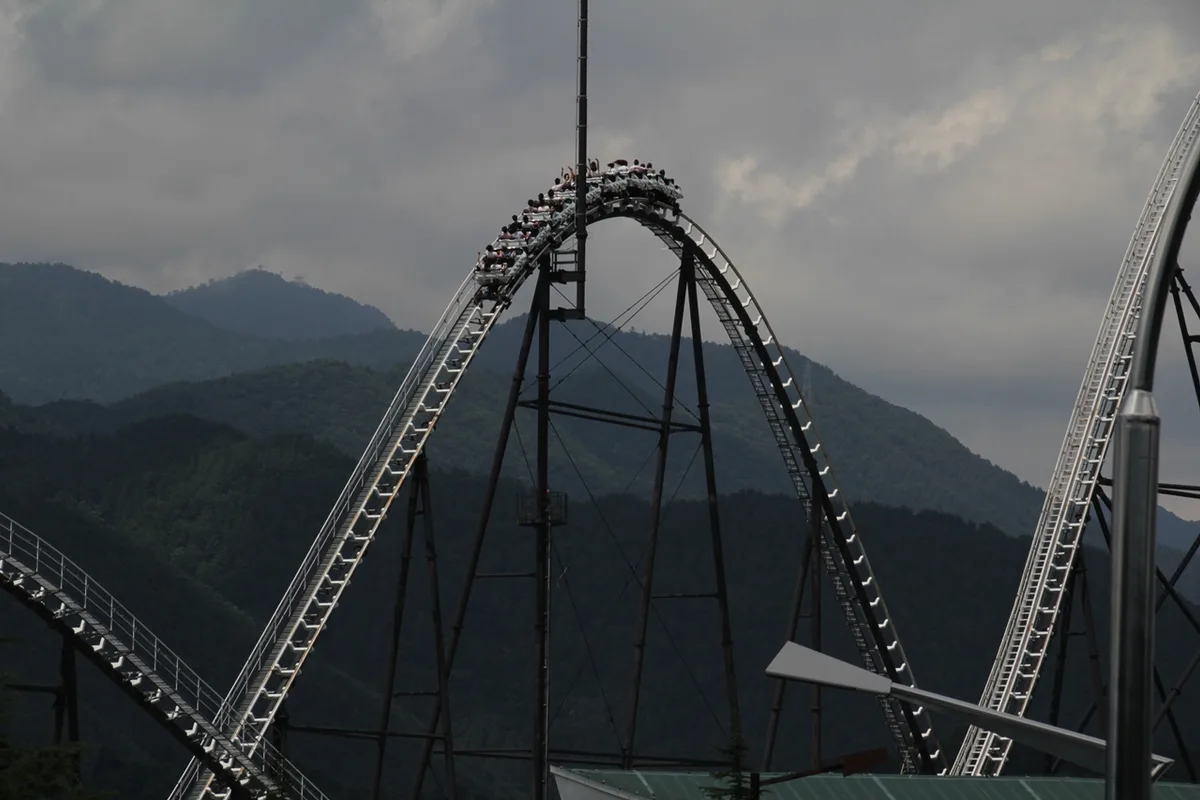
Give yourself more time than you'd plan for based on the posted wait, especially for Fujiyama and Eejanaika on a busy day. Treat the number on the board as a starting point rather than a promise, in either direction.
If anyone in your group is near an age limit or managing a health condition, check that specific attraction's page on the official site before you queue. The limits are listed ride by ride; confirming them ahead of time is the easiest way to avoid the disappointment a few reviewers describe.
Taken together, these are mostly about matching your expectations to a park that runs on its own operating logic. Get that part right, and the coasters themselves, on both sides of the fence, are the part most people come away glad they rode.
Looking for the practical side of visiting the wider Mount Fuji area, where Fuji-Q Highland sits? Start with the Mount Fuji guide, and for more "is it worth it" verdicts across Japan's biggest attractions, see what actually matters in Japan.
Sources
- Fuji-Q Highland official: Prices and Tickets: free park admission with pay-per-ride or One-Day Pass options; official adult One-Day Pass pricing (roughly 6,000–7,900 yen, varying by date).
- Fuji-Q Highland official: Eejanaika attraction page: ride price (2,000 yen), age limit (not available at 55 or older), height limit (125–200cm), and listed health exclusions including diabetes and pregnancy.
- Fuji-Q Highland official: Fujiyama attraction page: age limit (not available at 65 or older), height limit (110cm+), the same listed health exclusions, and the official description of the mountain view from the ride's highest point.
- Fuji-Q Highland official: Takabisha attraction page: age limit (not available at 55 or older), height limit (125cm+), and the same listed health exclusions.
- Fuji-Q Highland official: top page and news: "Live Operating Status" link listing which attractions are closed that day, plus the official Q-chan app showing real-time wait times; announcement of a new large-scale splash coaster for 2027.
- Yomiuri Shimbun, "Fuji-Q Highland's 'Do-Dodonpa' ends operation, six seriously injured with fractures: 'fully eliminating the risk is difficult'" (2024-03-13): official announcement that Do-Dodonpa, closed since August 2021, would permanently cease operation.
WMJS is written in Japan, in English, with AI help. We check every page, but English is not our first language. If a sentence reads oddly, tell us. One sentence is enough.
Thank you. A person reads every note.
How well do you know Japan?
Built from 635 public posts by Japanese people
Want to know more? Ask Japanese people
Have a follow-up question about this topic? We'll ask real Japanese people.
Voice Box →