
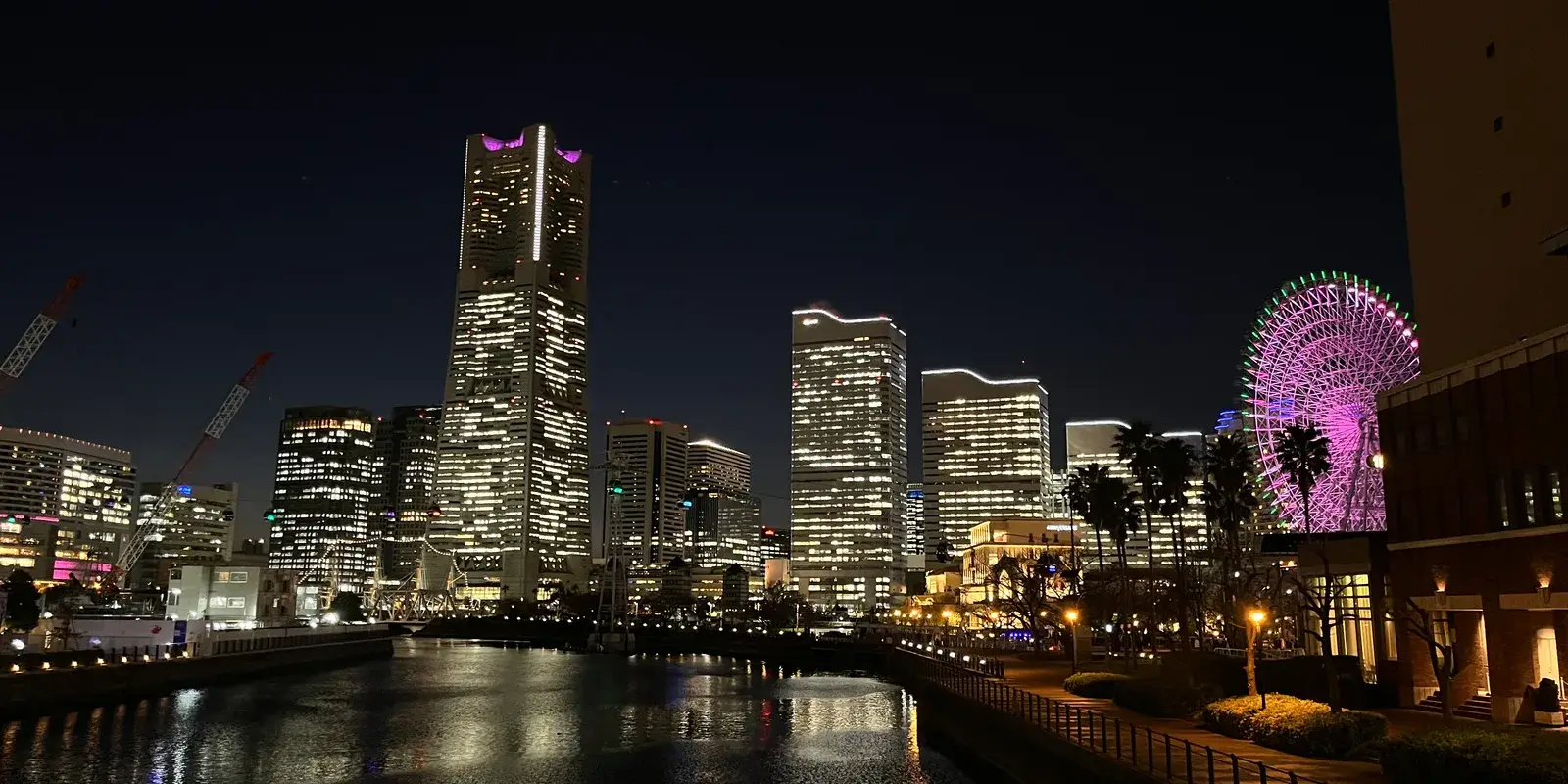
Is Yokohama Worth Visiting? What the "Nothing Here" Reputation Gets Wrong
Yokohama sits thirty minutes from Tokyo Station, and that single fact seems to decide everything about how people talk about it. Search for it on a Japan travel forum and the thread titles read like a trial: "So what's wrong with Yokohama?" "Yokohama (what's the catch?)" "Why does no one here go to (or recommend) Yokohama?" Even some of its own residents shrug at it. Gather what people actually say after they've been, though, and the picture looks less like a city nobody bothers with and more like a place that keeps clearing a low bar people set for it before they arrive.
Is it worth the trip? (in visitors' own words)
We gathered the voices of international travelers discussing Yokohama on Reddit and read them with one question in mind: was it worth it? Here is how they fell:
The red bar says something narrower than "disappointing." A visitor who lived in Yokohama for two years put it plainly: "There's nothing you can find only in Yokohama." Another, comparing it to the capital: "It was kind of boring compared to Tokyo." A third, asked point-blank what's wrong with the city, answered for the whole group: "There's nothing wrong with the place lol. The city just gets overshadowed by it's neighboring city, Tokyo, that's bigger and more well-known but Yokohama is a big enough city where you can find 90% of what you would find in Tokyo." None of these three call Yokohama bad. All three are really arguing about whether it earns a separate trip from the city sitting thirty minutes up the tracks.
The green bar is a different register, and it's the majority view by a wide margin. "Wanted to say a massive thank you for this," one traveler wrote after following a suggested waterfront route. "It gave us a beautiful day - potentially my favourite of the whole trip." Another: "Yokohama was one of my favorite parts of Japan. ... The view from the sky garden at Yokohama Landmark Tower was awesome, I enjoyed it much more than Tokyo Tower." The people who came back glad tend to describe a full, walkable day: harbor, warehouses, Chinatown, gardens, a ramen museum, and enough of it that a few say they wished they'd budgeted two days rather than an afternoon.
How Yokohama's own residents see it
The "it's basically Tokyo" argument is a visitor's argument. Almost nobody in Yokohama makes it. Japanese visitors and residents, in their own reviews of the city's landmarks, hold their own doubts, and those doubts are about entirely different, more concrete things.
Nobody in the red bar mentions Tokyo at all. Instead the complaints are about single afternoons at single places. A visitor to the Red Brick Warehouse, expecting the building she'd seen on social media, wrote: "I was shocked at how different it was from what I'd seen on SNS and TV. I was left thinking, huh? What am I even supposed to do here? Look at? There was nothing, so I gave up quickly and went to Chinatown instead." Another reviewer, caught in Yokohama Chinatown on a packed day: "It was so crowded I got tired out. I just lined up for whichever shop was closest." And the neutral middle bar has its own quiet honesty: one Yokohama resident admitted she barely visits her own city's most famous street, going only "when there's some kind of gathering" and once letting ten years pass between trips. Fondness for a place and actually finding time for it turn out to be two different things, even for people who could reach it by train in minutes.
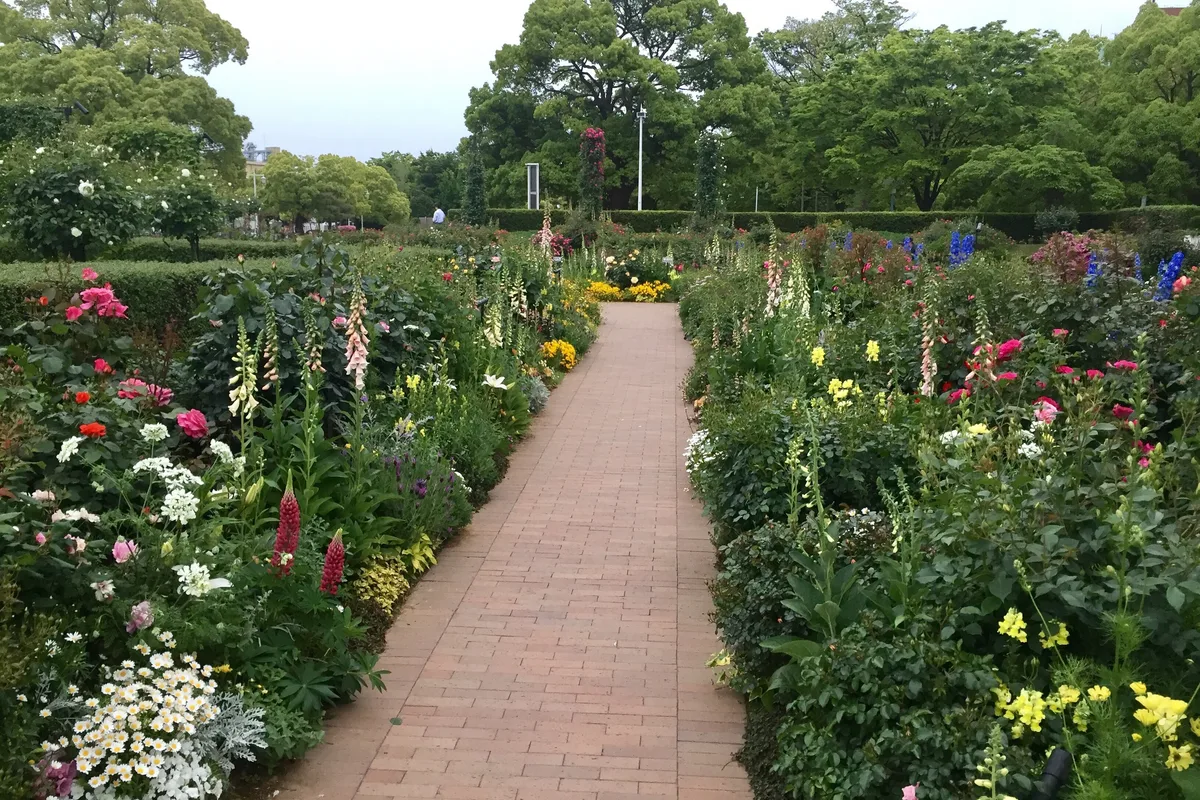
The green bar, meanwhile, carries real weight. At Yamashita Park, the harborside garden where much of that 70% concentrates, one visitor wrote simply: "If I lived in Yokohama I'd want to come for a walk here every single morning." Another, after forty years of coming back: "Walking through it while looking back on my life at the time, I felt all over again that this is one of my favorite places." This isn't a city locals are lukewarm about. It's a city where the affection runs deep enough that the handful of bad afternoons stand out precisely because they're the exception.
What we wish you'd noticed
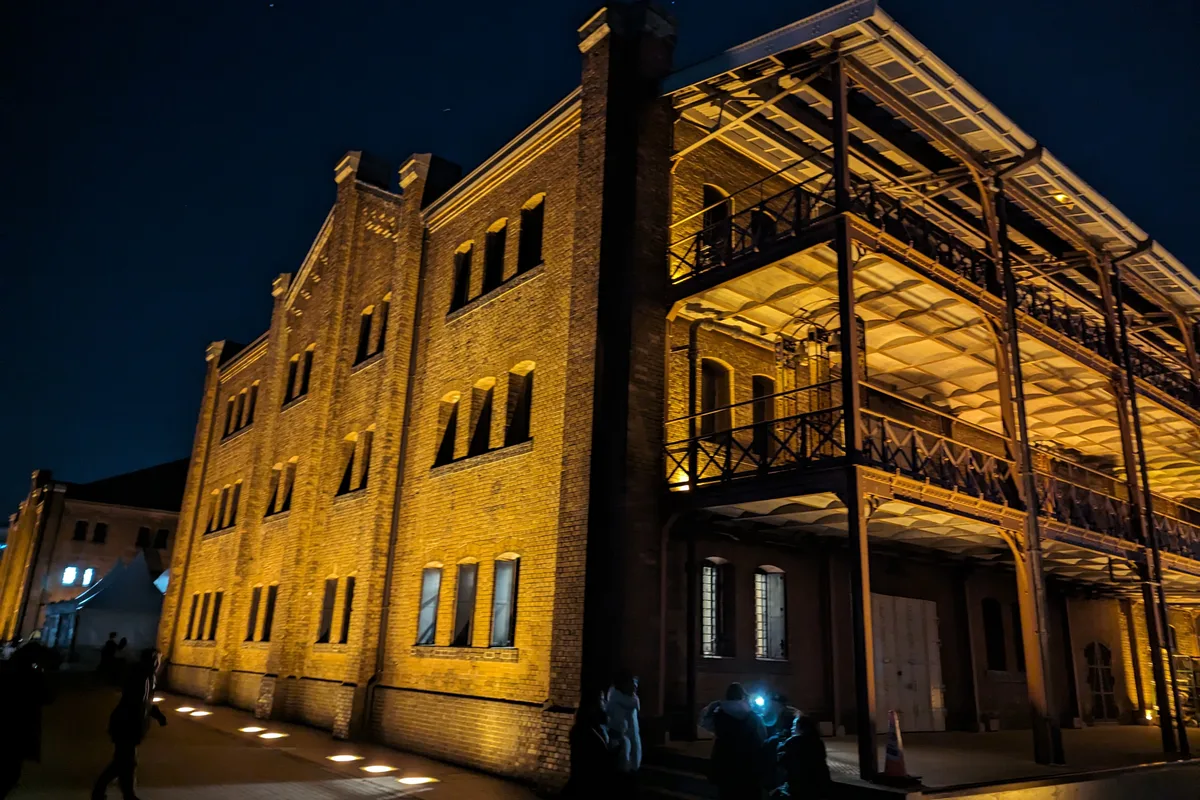
The same building splits opinion right down the middle, and it isn't about the building itself. The Red Brick Warehouse, an early-20th-century customs house at Yokohama Bay later converted into a complex of shops and restaurants, is one of the most-mentioned stops in both sets of voices, and most reviews on both sides are glowing: "Minato-Mirai and The Red Brick Warehouse was such a fantastic place to just pass a bit of time," one foreign visitor wrote, and a Japanese reviewer called it simply "stylish and lovely." But it's also the one place where a visitor showed up expecting a monument and found a shopping mall instead, and left within the hour. The warehouse rewards people who come for what it actually is: harbor views, a rotating calendar of markets and festivals, three floors of small shops. It disappoints the handful who came for what a photo told them it would be.
One cafe explains a very particular complaint. Inside the warehouse's second building sits "bills," the Australian cafe whose Sydney original earned a claim the chain has traded on ever since: the world's best breakfast. One Japanese diner walked in on that promise and walked out frustrated: "I went because it was billed as 'the world's best breakfast'... but the staff's flow just wasn't working — I raised my hand to order and no one came..." It's a small moment, but a useful one: much of the letdown that shows up in these reviews traces back not to Yokohama itself but to a promise made somewhere else, an old headline, a marketing line, a photo on a feed, that the actual afternoon then has to live up to.
The one thing both sides agree on doubting. Foreign and Japanese reviewers rarely land on the same complaint, which makes it worth noting when they do. Of the Cup Noodles Museum's paid "make your own noodle" workshop, one Reddit user wrote: "It was a very disappointing and underwhelming experience. I don't recommend it unless you REALLY want that custom cup noodle to take home." A Japanese reviewer, whose critique drew more agreement than any other Cup Noodles Museum review in our set, went further: "You don't actually get to make an original cup noodle. You just pay 500 yen to color in a cup, choose from one fixed soup and four toppings... as an experience, it has no real value. It's not a lesson in creative challenge, more a lesson in how to design something to make money, maybe." (The museum's own English site lists four soup options rather than one, so her frustration may have been with the pace of the queue as much as the choices on offer.) Most visitors on both sides still leave charmed by the museum's actual subject, the inventor Momofuku Ando and the improbable history of instant ramen. It's the paid add-on activity, specifically, that earns the rare shared eye-roll.
Doing it well, the welcomed way
None of the above adds up to skipping Yokohama. It adds up to a handful of small adjustments that tend to keep people out of the minority who left unimpressed.
- Walk the water first. The route that shows up again and again, from both visitors and residents, is the waterfront itself: Yamashita Park's gardens and harbor views, along the water to the Red Brick Warehouse, then on to Chinatown. "I loved walking around along the waterfront from Yamashita Park down to the Red Brick Warehouse," one visitor wrote, and it's one of the more frequently repeated pieces of advice in what we gathered.
- Let the Cup Noodles Museum be the Momofuku Ando story first, the craft activity second. The exhibits and the theater on his life are the part both sides genuinely enjoy. If the make-your-own workshop's paid, numbered-ticket queue is long or sold out, skip it without guilt.
- Go to Chinatown to eat, and consider going after five. A couple of Japanese reviewers separately mention shop staff calling out for customers, one warning newcomers to watch out for the pushier ones. One who went after 5pm called it a hidden sweet spot instead, with dinner at the restaurant she'd wanted, the buildings lit up, and takeout to finish back at the hotel. A few foreign visitors make a related complaint from the other direction, that the food in the most obvious spots is overpriced and touristy compared to Chinatowns elsewhere.
- Come for the port city rather than a second Tokyo. Most of the online doubt starts from a comparison Yokohama never volunteered for. Once you stop measuring it against Shibuya, what's left is a genuinely different city: Japan's second largest by the city's own count, a working port for more than a century and a half, with its own waterfront, its own Chinatown, and quieter hills above the bay that most day-trippers never climb.
The voices that came back glad describe roughly the same day, wherever they started: time on the water, an afternoon in the flowers at Yamashita Park, a warehouse that turned out to be a marketplace rather than a monument. Come for that day, rather than the one a headline promised, and Yokohama tends to deliver it.
Still deciding which famous places actually earn a slot on a short trip? Start with what actually matters in Japan.
Sources
- Yokohama Official Visitors Guide, Things to Do in Yokohama: official city tourism association confirmation that Yokohama, since opening its port about 150 years ago, has become Japan's second largest city.
- Yokohama Official Visitors Guide, Aka-Renga Soko (Yokohama Red Brick Warehouse): the warehouse's history as an early-1920s customs inspection house later converted into a shopping and events complex, and the "bills" cafe's own "best breakfast in the world" claim.
- CUPNOODLES MUSEUM YOKOHAMA, Official Information: official admission fee (500 yen for adults, free for high school age and younger) and the paid, numbered-ticket "My CUPNOODLES Factory" workshop, where visitors choose from four soup varieties and four toppings.
WMJS is written in Japan, in English, with AI help. We check every page, but English is not our first language. If a sentence reads oddly, tell us. One sentence is enough.
Thank you. A person reads every note.
How well do you know Japan?
Built from 635 public posts by Japanese people
Want to know more? Ask Japanese people
Have a follow-up question about this topic? We'll ask real Japanese people.
Voice Box →