
Is Shibuya Sky Worth It? What 87 Visitors and 83 Locals Actually Say
You book a 20-minute slot, watch the clock, and worry you're buying a rushed glimpse of Tokyo through glass. Then you arrive and learn that the 20 minutes was only ever your turn to walk through the door; once inside, nobody hurries you out. What actually decides your evening is something the booking page never mentions: the wind.
The short version: most people who go call it worth it. The ones who don't almost always got caught by one of two things: a rooftop that closed for weather with no warning, or a ticket system that fought them before they ever reached the elevator. Neither of those has much to do with the view itself, and both of them you can plan around.
Was it worth it? (in visitors' own words)
We gathered the voices of international travelers who have actually been to Shibuya Sky and asked, in effect, was it worth it? Here is how they fell.
That red bar is unusually wide for a rooftop with a 360-degree view of Tokyo. One visitor paid for a sunset slot, arrived on time, and still missed the sunset: "By the time I finally got to the rooftop… the sun had already set. […] I genuinely think they massively oversell tickets." Another did everything right and still lost the gamble: "We paid the money, showed up, then found out the outdoor portion of the place was closed due to high winds. So we were basically stuck inside which wasn't anything special. I won't be back, that's for sure." A third, after a 5,000-person queue and a fraud check that flagged them as a bot, called the whole process "a nightmare tbh."
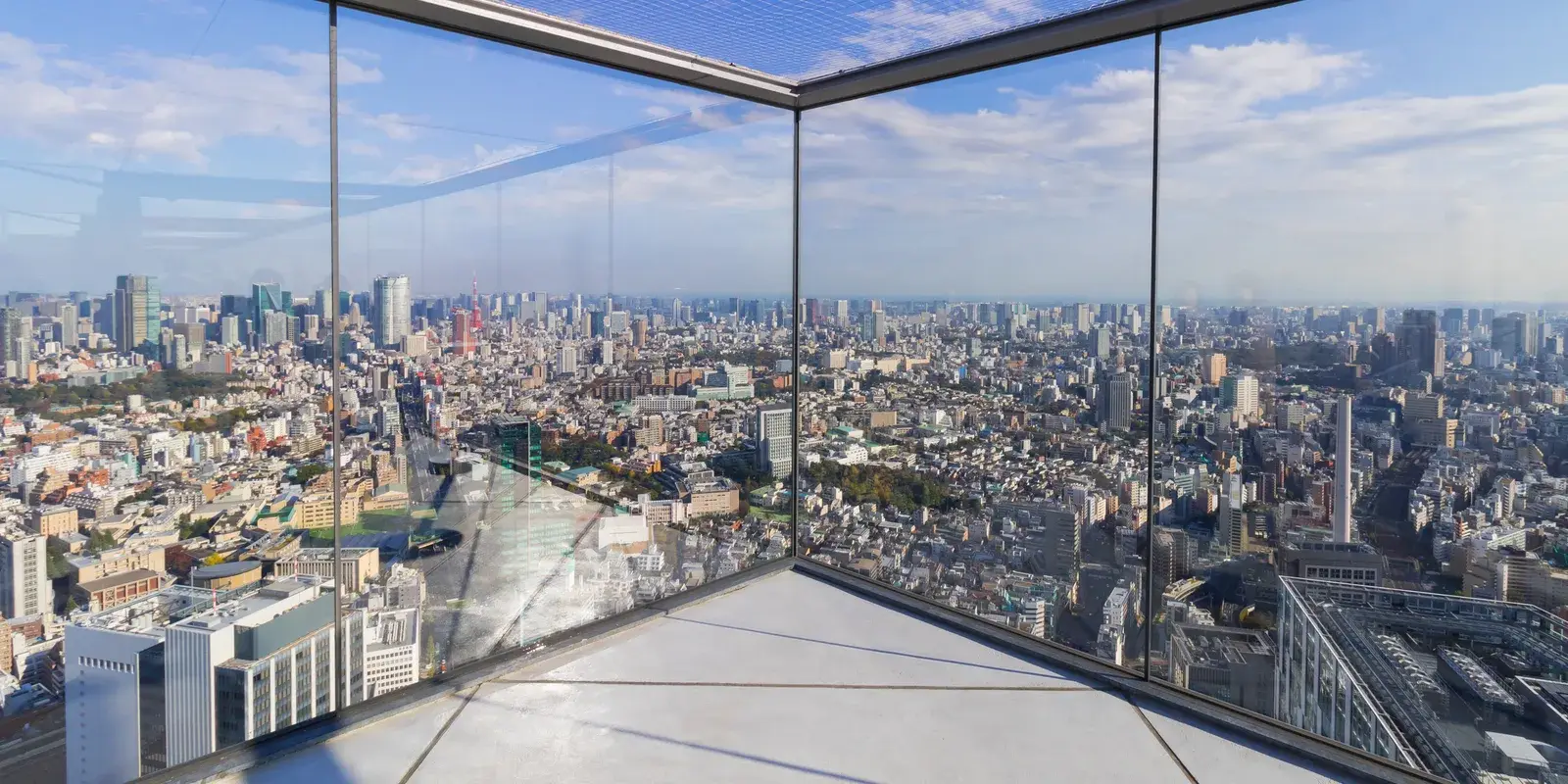
When the slot and the weather cooperate, though, the same building produces some of the most unreserved praise in our corpus. "Yes, best lookout I've ever been to... I love the view and energy on the rooftop," one repeat visitor wrote. Comparing it to Tokyo Skytree, another said simply: "Shibuya was hands down the best view." A more measured visitor, weighing it against every other observation deck she's tried, put it this way: "once you've been to one observatory deck you've been to them all, and that doesn't exclude Shibuya Sky... it had a great view of Tokyo tower in the skyline, but after experiencing it I probably would not have regretted missing it." Worth it, in other words, though for a fair chunk of visitors it stops short of essential.
Where to buy: official site / Klook
Klook is an affiliate link: if you buy through it, we may earn a commission, at no extra cost to you.
How the people who live with it feel
Japanese visitors and locals review the same building constantly, in jalan, 4travel, and TripAdvisor reviews written entirely in Japanese. Their picture is far calmer than the one above.
The gap is striking: 39% of foreign voices land in the red, against 8% of Japanese ones. The weather is the same for everyone up there; what differs is whether it comes as a surprise. One TripAdvisor reviewer states the logic outright, framing it as a fact of life: "As expected, a place like this gets different ratings depending on the weather. If it's reasonably clear, you can see all the way out... You really can take in all of Kanto. It's pricey, but I think it's worth going." Another, who ended up stuck indoors when the wind picked up, offers a workaround instead of a complaint: "Since there is no refund for reservations, it might be better to buy a ticket on the day." A visitor who has been four times says plainly that "the night view is more moving, but the refreshing feel and open atmosphere in daytime is also lovely," the kind of settled, seen-it-before appreciation that rarely shows up in a first-timer's one-shot review.
The Japanese reviews are also candid about the specific things that go wrong. One detailed 4travel review, four stars, reads almost like an operations audit: "Many people came not knowing they couldn't enter without a reservation. Front desk handling was poor and they couldn't process the walk-ins. As a result, even reservation holders couldn't enter on time and were overtaken by later arrivals... on the way out the elevator was crowded and I waited over 20 minutes." That is nearly the same complaint the foreign visitor above made about missing the sunset in the elevator queue. This reviewer still rated the visit a 4 out of 5, because for this reviewer the wait was simply a known cost of a view already worth it.
What we wish you'd noticed
The 20-minute window only controls the door. Every ticket lists an entry time in a 20-minute band, and almost every first-time visitor reads that as a time limit on the whole visit. One Japanese reviewer makes the actual rule explicit: "The time is only for organizing entry… it doesn't mean your viewing time is limited to 20 minutes; I could stay looking until satisfied." You can stay until closing (last entry 21:20, floor closes 22:30). The band only controls how many people arrive alongside you.
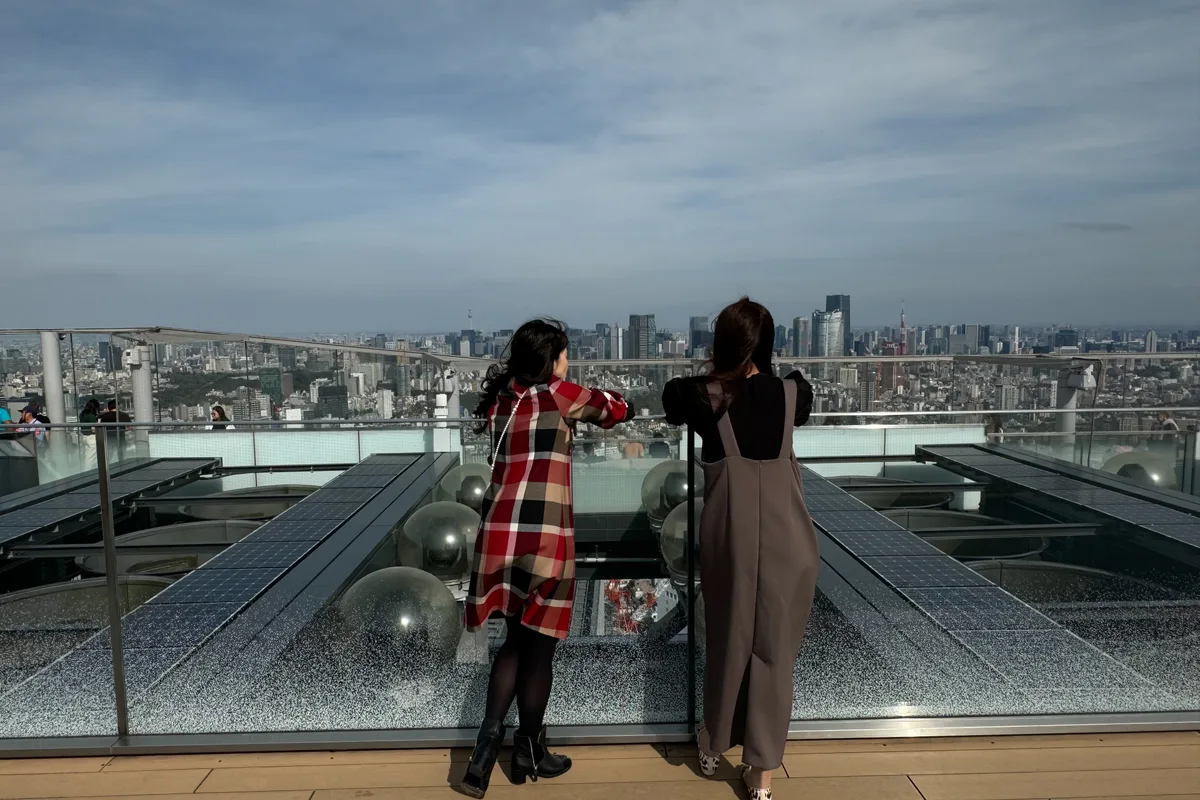
The rooftop can close with no warning. Shibuya Sky's own admission notice is blunt: "strong wind, rain, snow, an approaching thunderstorm, photochemical smog, or extreme heat" can close the outdoor deck "without prior notice," for everyone's safety. This is the single most repeated complaint in our voices, from the visitor stuck indoors on a clear-looking day to the reviewer who assumed there would be no refund and didn't even ask. If you only have one shot at this city, it's worth keeping a backup in mind: the 46th-floor indoor gallery stays open through all of this and still has the view, just through glass.
One ticket buys three different skylines. Because there is no time limit once you're inside, the visitors who rated the day highest were usually the ones who arrived well before their photographed moment and let the building change around them, daylight fading into sunset, sunset into the city lighting up. "You can get day time, sunset and night view all with 1 ticket," as one Reddit visitor put it. Arriving at the very last minute before sunset, on the other hand, is the single move behind most of the loudest complaints in this whole corpus.
Tickets open two weeks out, and the price now depends on the hour. As of this writing, an adult ticket bought online costs 2,700 yen for entry before 3pm and 3,400 yen after (the same-day counter charges more, 3,000 and 3,700 yen); once the web allotment sells out, the counter is sold out too. That two-week window is a recent change from what visitors describe as a previous four-week window. Several visitors describe watching the best slots vanish within the first minute of release, only for a fresh batch to reappear hours later, in one case about four hours after the original sellout. If your ideal slot shows sold out at the moment tickets drop, it is often worth checking back rather than assuming it's gone for good.
Doing it well, the welcomed way
None of this costs extra, and most of it just means arriving a little earlier than feels necessary.
- Book for well before your target moment rather than right at it. If you want sunset, aim to arrive 45 to 60 minutes early. That buffer covers the queue, the locker, and the elevator, and it is the difference between watching the sunset and watching the line for the elevator.
- Keep a backup plan for the weather. Wind, rain, and heat can shut the roof with no notice, and more than one visitor assumed a refund would follow and never even asked. The 46th-floor indoor gallery has the same skyline through glass and stays open regardless.
- Leave the bag at home, or plan for the locker. A phone, and a camera or binoculars if pocket-sized or on a neck strap, are what you can carry onto the roof; everything else, including bags, tripods, selfie sticks, food, and hats, waits in a coin locker (the 100-yen deposit is returned).
- Budget real time for the way down, too, especially at sunset. Visitors describe a 20 to 40 minute wait for the elevator when everyone leaves at once around sunset. It doesn't ruin the visit; it simply isn't in the brochure.
- If a slot shows sold out the moment tickets release, don't give up right away. More than one visitor watched a batch of slots reappear hours later.
- Dress for rooftop weather, colder than the street. The rooftop has no roof and no windbreak. It is reliably colder and windier than the street 229 meters below, even in seasons that don't feel like sweater weather at ground level.
Where to buy: official site / Klook
Klook is an affiliate link: if you buy through it, we may earn a commission, at no extra cost to you.
Do these, and you get the version the repeat visitors describe: an hour of watching the light change, with nowhere you need to be.
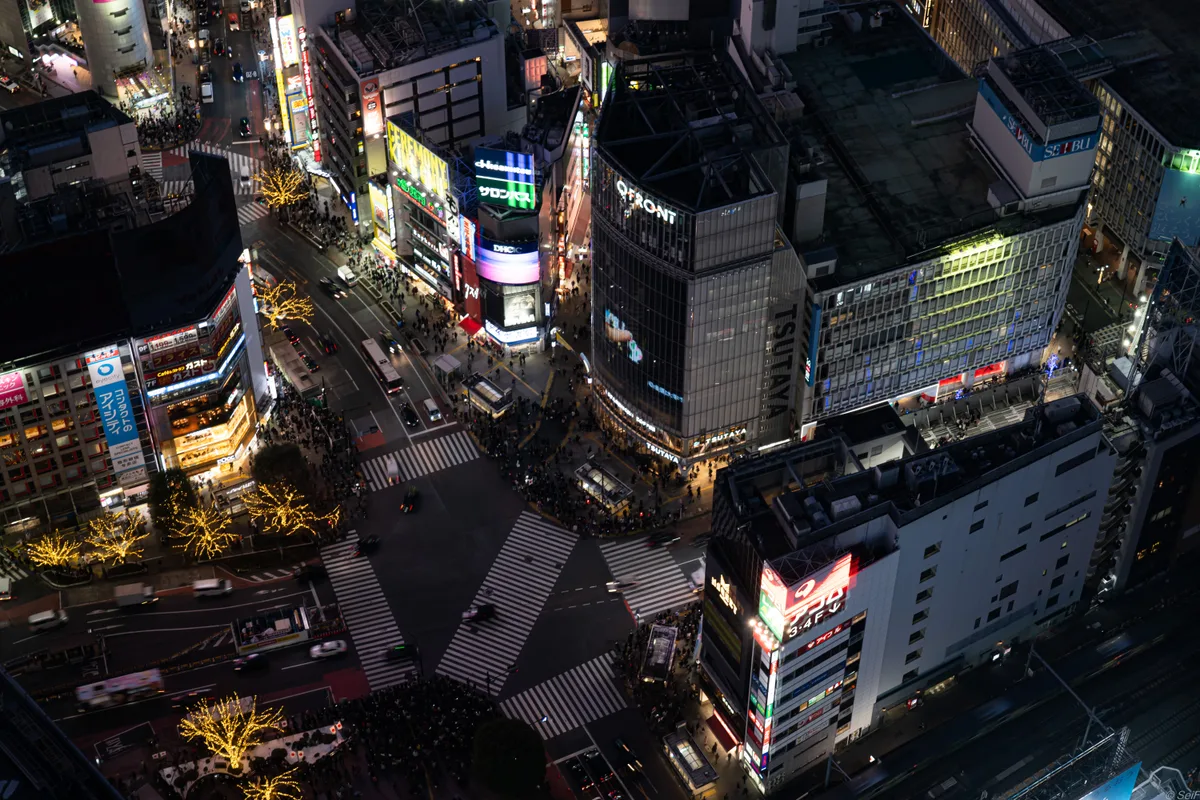
Strip away the ticket mechanics and the weather roulette, and what's left is a genuinely rare thing in this city: an open-air 360-degree deck, 229 meters up, with Shibuya's own crossing shrinking to a toy model below you and, on a clear day, Mount Fuji sitting on the horizon. Almost everyone who gets up there on a clear evening says so without hedging. Most of the regret in this corpus belongs to the people the wind, the queue, or the website turned back, and all three of those you can plan around.
Curious how Shibuya's other famous view, the crossing itself, holds up to the same test? Read is Shibuya Crossing worth it next, or start with what actually matters in Japan for the bigger picture.
Sources
- Shibuya Scramble Square, SHIBUYA SKY official ticket page (retrieved 2026-09-07): current adult ticket pricing (2,700 yen before 15:00 / 3,400 yen from 15:00 online; same-day counter tickets 3,000 yen before 15:00 / 3,700 yen from 15:00), two-week advance sales window, child ticket counter-only policy, and the rooftop weather-closure policy: the site states the rooftop can be closed for weather (strong wind, rain, snow, an approaching thunderstorm, photochemical smog, or extreme heat) without prior notice. Also covers late-arrival admission policy, carry-on restrictions, and annual passport new-sales suspension.
- Shibuya Scramble Square, SHIBUYA SKY official facility page (retrieved 2026-09-07): opening hours (10:00-22:30, last entry 21:20), the three-zone Sky Gate / Sky Gallery / Sky Stage layout, and current annual passport status.
WMJS is written in Japan, in English, with AI help. We check every page, but English is not our first language. If a sentence reads oddly, tell us. One sentence is enough.
Thank you. A person reads every note.
How well do you know Japan?
Built from 635 public posts by Japanese people
Want to know more? Ask Japanese people
Have a follow-up question about this topic? We'll ask real Japanese people.
Voice Box →