
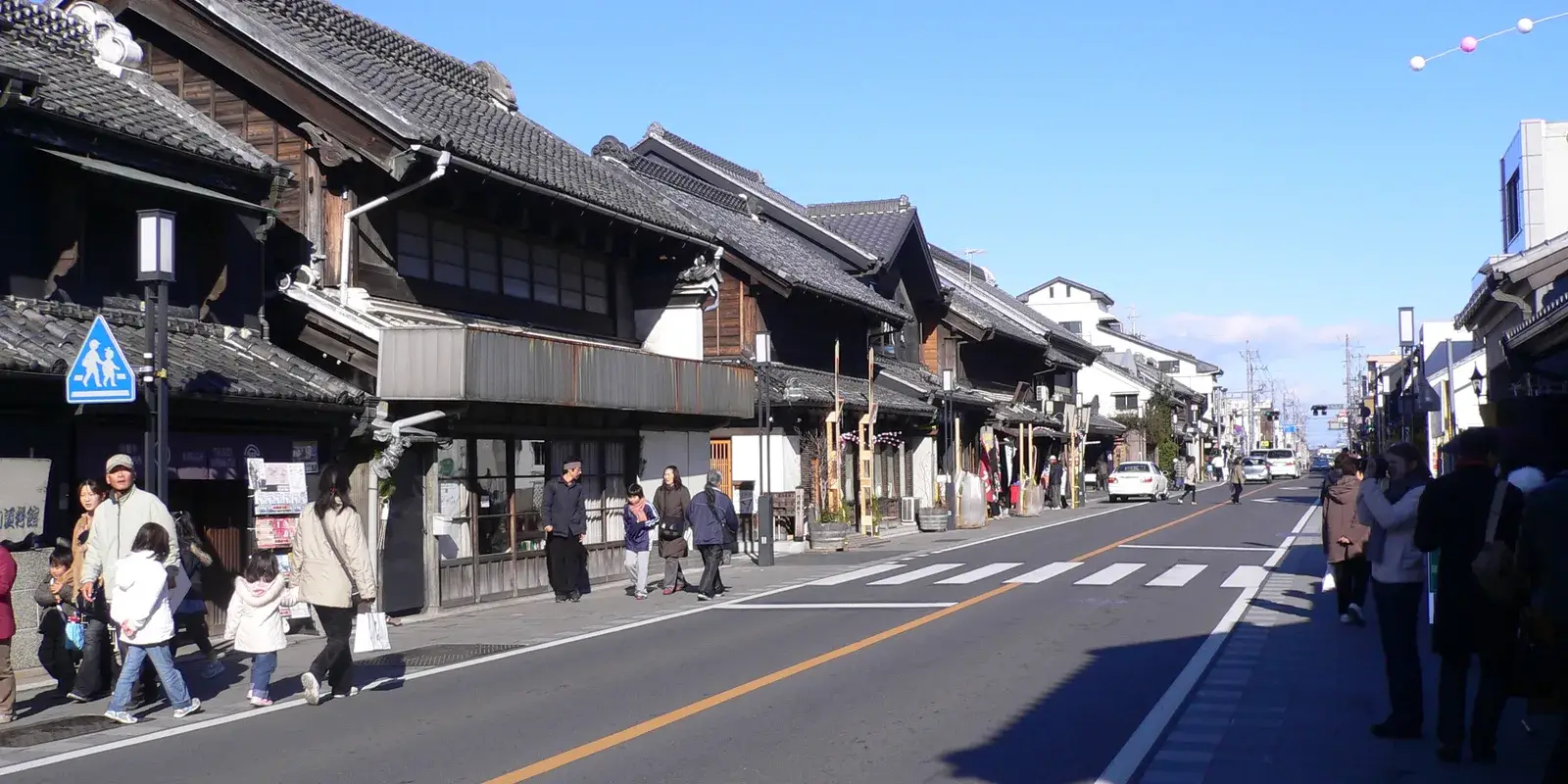
Is Kawagoe Worth It? Two Kinds of Visitor See the Same Street
The brochures call it "Little Edo," thirty minutes from Tokyo, and the photo is always the same: a row of dark wooden warehouses under a blue sky, nobody in the frame. You picture something close to a small city. Then you get off the train, walk twenty minutes past ordinary shopfronts, and arrive at one street. It is a genuinely beautiful street. It is also, unmistakably, one street. For some visitors that gap between the postcard and the place is the whole disappointment. For others, it is never a problem at all, because they never expected more than a street in the first place.
The honest short answer, from people who've actually made the trip, is yes for most visitors, and the ones who feel let down are almost always reacting to a mismatch in scale and travel time, not to the street itself. The rest of this page shows you the actual split in opinion, foreign and Japanese, and how to land on the happy side of it.
Is it worth it? (foreign visitors, in their own words)
We gathered voices from international travelers who have actually been to Kawagoe, on Reddit and TripAdvisor. Here is how they fell:
That red slice is the loudest one on this page. A visitor wrote it off entirely: "I was very disappointed with my recent trip to Kawagoe in March 2024... the city more so than anywhere else I visited in Japan feels hollowed out by car infrastructure." Another found the famous "thirty minutes" claim itself misleading: "I found that number to be quite misleading... And once you get there, it's really just one street with some tourist shops in old buildings." A third compared it directly against the places most Japan itineraries already include: "The edo district is small, and the rest is just a random city... Are you going to Kanazawa or Kyoto on the same trip? If so, Kawagoe is a waste of time unless you're super into edo period architecture."
In that same conversation, defenders showed up in even greater numbers: "I disagree—I really enjoyed my day trip to kawagoe! I found it walkable and easy..." wrote one. Another has been back roughly ten times over five years and pushed back hard on the "hollowed out" complaint: "on none of the 10(?) trips I've made there over the last five years has the place seemed 'hollowed out by car infrastructure.'" A third summed up the whole split without meaning to: "Don't set your hope extremely high. It is just a shopping street with some cool aesthetic and bunch of shops... I visited it 3 times already and I don't think I regret about it." Set the expectation correctly, in other words, and the same street stops disappointing people.
What Japanese visitors actually say
Kawagoe isn't a foreign discovery. It's a well-worn Kanto day trip that Japanese families, couples and retirees have been taking for decades, and their own reviews are candid in a different way.
Notice that red bar sits well below the foreign one, and that gap is the most useful thing on this page. In one Japanese Q&A forum, replies to why Kawagoe leaves some visitors underwhelmed are candid: "I think it's because the town is small in scale. If you go in with high expectations, you really will be disappointed," wrote one. Another reply to the same question went further: "Most people would say once is enough. Sure, the old townscape is there, but there are no historic sites, you don't feel the weight of history, and half a day is all it takes." A separate thread, weighing which sights in town were actually worth the walk, arrived at the same warning from a different angle: "raise your expectations too much and I think you'll be disappointed."
That is nearly the same complaint the foreign visitors made, arriving from a different direction. Most Japanese reviewers already know Kawagoe is a compact, single-street stroll, so they rarely feel cheated by it; the ones who do feel let down are the rare visitor who, like the disappointed foreigners, expected something bigger. What Japanese reviews flag far more often, and what barely registers in the foreign gauge, is a completely different worry: the street itself is not pedestrian-only, and the traffic feels dangerous when it's crowded. "The road is only divided from the sidewalk by a white line, so when it's crowded and people step around each other, cars pass frighteningly close," one reviewer wrote. Another described being turned away by several shops after asking for help during a family emergency, and called the town "cold," saying they would never go back. A third found it just as unsettling: "Cars kept driving and even parking right beside me, which felt dangerous... honestly it was a shock, and there was no room for a relaxed visit."
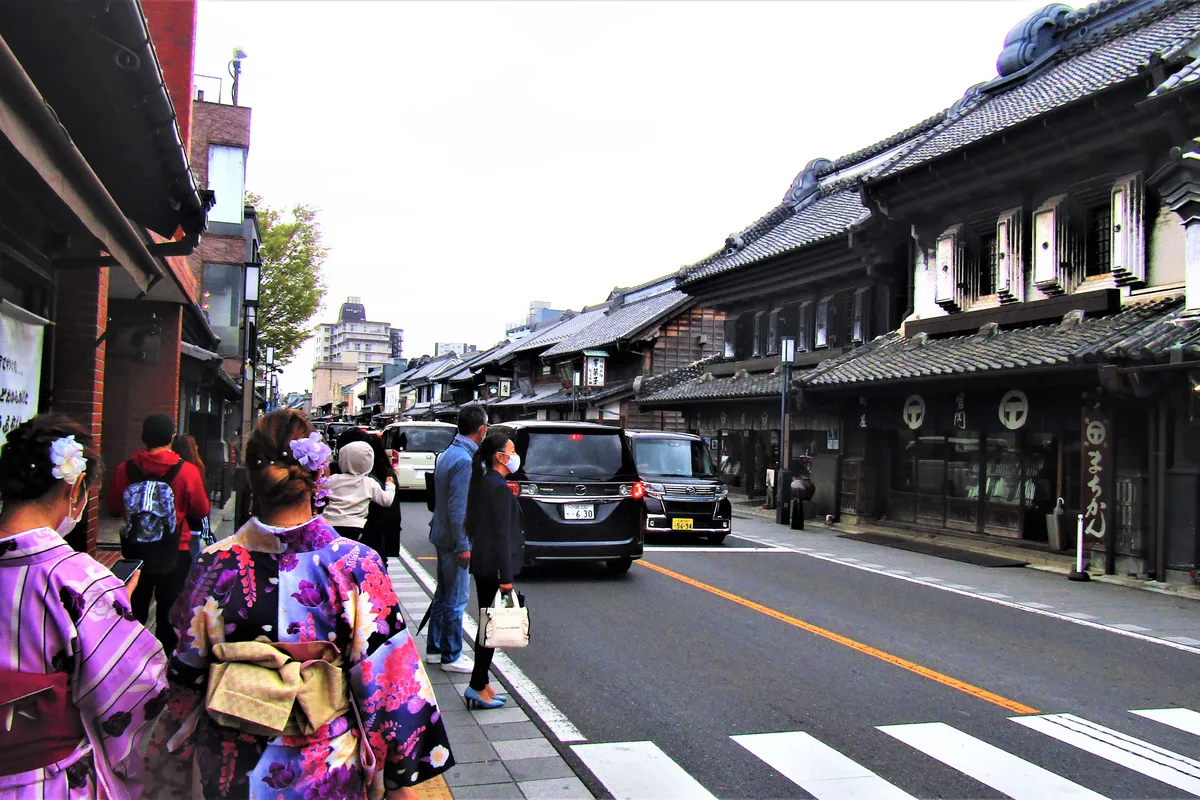
The actual gap: a street, not a city
Here's the fact that resolves most of the disappointment on both sides. Kawagoe's nickname, "Little Edo," refers to one preserved district, not the whole city: the Kurazukuri (warehouse-style) quarter, a few hundred meters of kura built after the Great Kawagoe Fire of 1893, which burned through a third of the town and pushed local merchants toward fireproof, thick-walled construction. One of the oldest survivors, the Osawa House, was built in 1792 and lived through that very fire; it's the reason the style spread. The area earned Japan's "Important Preservation District for Groups of Historic Buildings" designation in 1999, and it was named one of the "100 Selections of Japan's Beautiful Historical Scenery" in 2007. That history is rare this close to Tokyo. But it lives in a compact strip, not a district the size of Kyoto's old town, and a fast, uninterrupted walk down it and back takes well under an hour.
The "thirty minutes from Tokyo" line that trips people up is also true, and also narrower than it sounds. Japan's national tourism office confirms it: the fastest route is the Tobu Tojo Line express from Ikebukuro Station, a 30-minute ride. But that number covers the train alone, not the walk from Kawagoe Station into the old district, and it assumes you're already on that exact line. Come from anywhere else, and the trip runs longer, which is exactly what caught out the Reddit visitor who called the number "misleading."
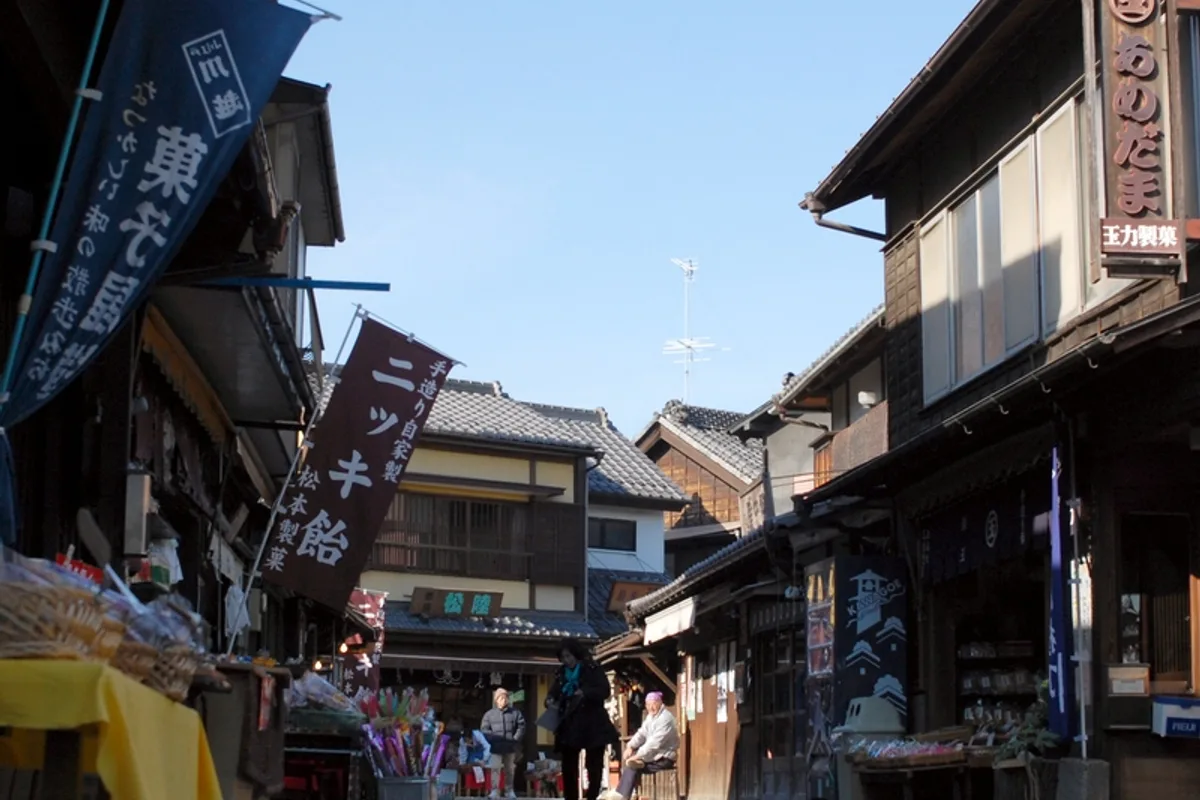
Once you've reset the scale, the street does what people came for. Kashiya Yokocho, the "Penny Candy Lane" branching off the main road, is worth the short detour on its own, and October's Kawagoe Festival, floats and lanterns descended from Edo's own Tenka Matsuri tradition, turns the same street into something closer to what the postcards promise. The building fronts really are that old, really did survive a fire that took out a third of the city, and are walkable start to finish in an afternoon. Come treating it as an afternoon, not a day you've cleared your whole itinerary for, and the odds tip firmly toward the 62% and 68% who'd go again.
Doing it the welcomed way
- Take the Tobu Tojo Line express from Ikebukuro if you can. It's the route the thirty-minute claim is actually measured from. Any other line or station adds real time, and that mismatch is a common source of disappointment in the foreign reviews.
- Give it an afternoon rather than a full day. Most visitors, foreign and Japanese alike, cover the Kurazukuri strip, Kashiya Yokocho, and a meal in well under half a day. Planning a whole day around it alone is what leaves people feeling like they've run out of things to do.
- Go on a weekday morning if crowds bother you. Weekend afternoons are when the sidewalk-versus-traffic complaint peaks on both sides of the language line; several Japanese reviewers specifically recommend an early, unhurried visit.
- Keep an eye on the road as closely as the storefronts. The street has no separated sidewalk in most stretches. Watch for car and bus traffic, especially with kids, rather than assuming a "pedestrian" atmosphere means pedestrian-only.
- Check shop hours before you commit the whole afternoon. Several visitors arrived very early or stayed past early evening and found shutters down; Kurazukuri runs on a shopkeeper's schedule rather than a 24-hour attraction.
- If you can, pair it with the Kawagoe Festival (the third weekend of October) or the candy lane's off-peak hours, rather than the crowded midday window most day-trippers default to.
Kawagoe was never trying to be a second Kyoto, and the visitors who show up expecting one are the ones who leave unhappy. Come for what it actually is, an old, walkable street that a fire in 1893 accidentally preserved, and the same place that disappoints a rushed afternoon trip rewards a well-timed one.
Deciding what else earns a slot on a Tokyo-area itinerary? Start with what actually matters in Japan, and for the fuller walking route through the warehouse district and candy lane, the Kawagoe guide is just below.
Sources
- Kawagoe City, Kurazukuri Townscape (蔵造りの町並み): the Osawa House (built 1792) survived the Great Kawagoe Fire of 1893, which burned a third of the town and prompted merchants to adopt fireproof kurazukuri construction; the district was designated an Important Preservation District for Groups of Historic Buildings in December 1999 and named to the "100 Selections of Japan's Beautiful Historical Scenery" in January 2007.
- Japan National Tourism Organization, Kawagoe Festival: the fastest route to Kawagoe is the Tobu Tojo Line express train from Ikebukuro Station, 30 minutes; the festival (third weekend of October) is influenced by Edo's Tenka Matsuri tradition; Kashiya Yokocho ("Penny Candy Lane") is in the historic Kurazukuri district.
WMJS is written in Japan, in English, with AI help. We check every page, but English is not our first language. If a sentence reads oddly, tell us. One sentence is enough.
Thank you. A person reads every note.
How well do you know Japan?
Built from 635 public posts by Japanese people
Want to know more? Ask Japanese people
Have a follow-up question about this topic? We'll ask real Japanese people.
Voice Box →