
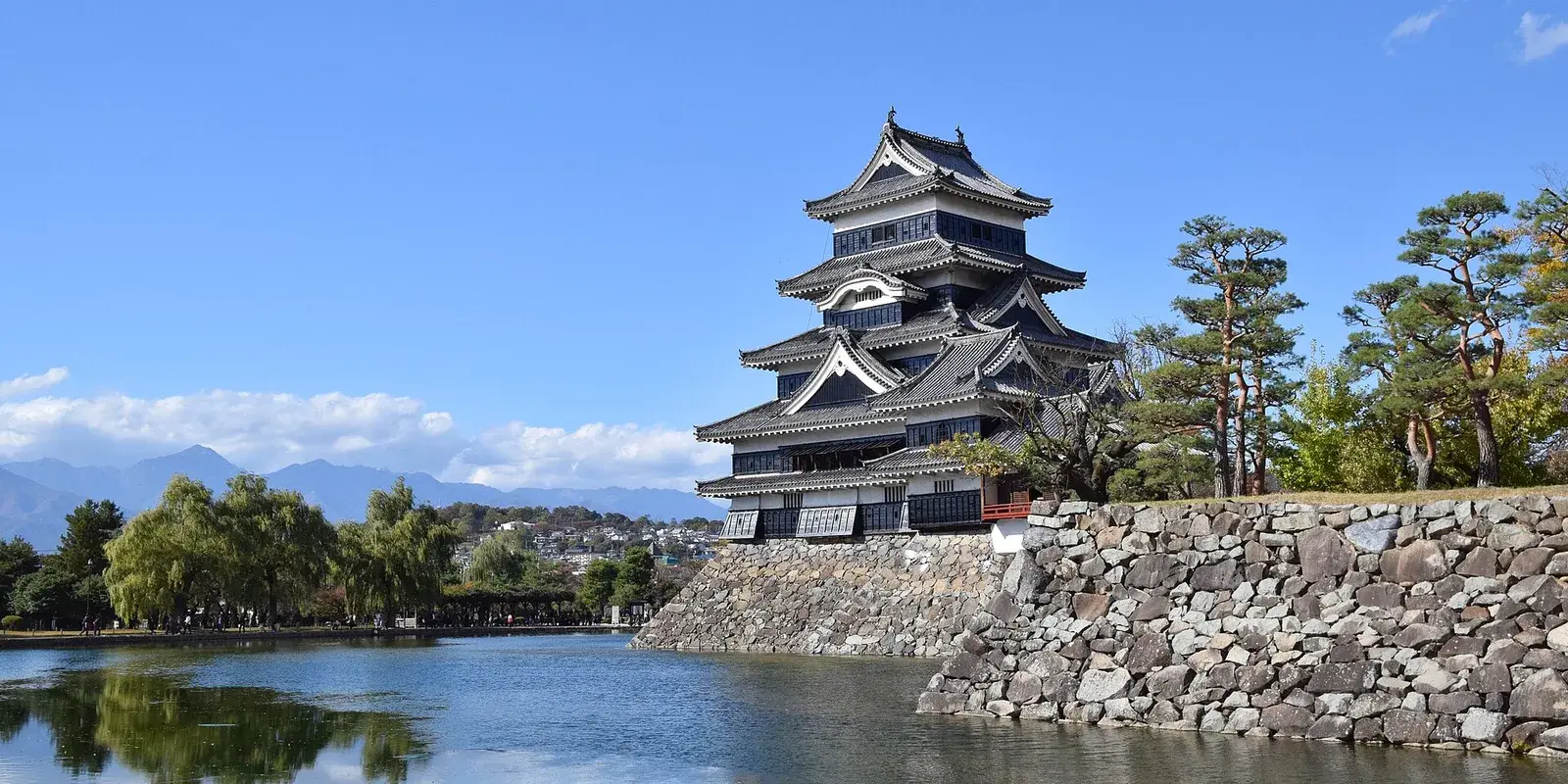
Is Matsumoto Castle Worth It? What Visitors Actually Say About One of Japan's Last Original Keeps
You have probably seen it in a single photo: a jet-black castle standing in still water, a wall of snow mountains rising behind it. It looks like the most Japanese thing imaginable. Then you open a map and notice the catch. Matsumoto sits off the main lines, a spur you choose on purpose, and reaching it can eat the better part of a travel day. So the forums fill with a narrower worry: is one castle worth the trek out there, and what do you do once you arrive?
Ask the travelers who actually made the trip, and the answer comes out quieter than the forums suggest: the people wrestling in these threads are almost never wrestling with the castle. They are wrestling with the trip around it. Once travelers actually stand in front of the black keep, regret is vanishingly rare. What separates a great day from a rushed one is how you build the day around it.
Is it worth it? (in visitors' own words)
We gathered the voices of international travelers who have actually been to Matsumoto, and read them with one question in mind: was it worth going? Weighted by how strongly each opinion resonated with other readers, here is how they fell:
Look at the shape of that. The red bar is tiny, barely one voice in thirty. But the middle bar is enormous, almost as large as the green. That is unusual, and it tells you exactly where the hesitation lives. When people weigh Matsumoto, they are weighing the calendar. One traveler did the arithmetic out loud: "it takes a little over 3 hours to go from Kanazawa to Matsumoto Castle then another 3-4 hours from Matsumoto to Tokyo by train... you'd spend at least 6-7 hours traveling that day. Doesn't seem worth it as just a stopover on a travel day." Another summed up the geography: "Matsumoto castle was nice, but it's not midway, it's a detour. You have to stop at Nagano and take a train to Matsumoto."
Now read the green. When people talk about the castle itself, the register changes completely. The single most-upvoted voice we found is not a careful maybe but a small confession of love: "I personally think Matsumoto Castle is worth a stop no matter what the itinerary is. I just really love that castle." Someone who gave it two nights called it "the highlight of my whole trip." And the traveler who summed up the town most honestly still landed on the castle: "not much to do but the castle is worth everything." The hesitation in these threads is a scheduling problem, plain and simple.
What the Japanese reviews show
Japanese reviewers add a layer the guidebooks rarely quote: what they write about the same black keep, in their own words.
The two red bars match, both tiny. But watch what happens to the middle. The visitors' hesitation band is 44 percent; the locals' is 12. That gap is the most useful thing on this page. Japanese reviewers do not agonize over whether the detour is worth it, because for them the castle is a destination in its own right. They go on purpose, and their reviews show what they came for. One wrote about the black exterior the moment it came into view: "黒い外壁のその姿を目にしたとき、思わず「かっこいい」と声に出るほどでした" ("when I saw its black exterior, I couldn't help but say 'cool' out loud"). Another kept circling back to the mountains: "雪をかぶった北アルプスを背に建っているお城はとても美しく、季節により印象が変わるのだなあと思いました" ("the castle standing against the snow-capped Northern Alps was very beautiful, and it made me realize how much the impression changes with the season").
You can even watch a local expectation land softly, in a review its writer rated only average. He had pictured something on the scale of Himeji: "姫路城のような大規模な城を想像していたため、門をいくつもくぐるのかと思っていましたが入門したらすぐ目の前に天守閣があり、敷地の狭さに拍子抜けしました。…ただ天守閣は素晴らしく、さすが国宝だけあり感動しました" ("I had imagined a large-scale castle like Himeji, so I thought I'd pass through several gates, but the keep was right in front of me, and I was a bit let down by how small the grounds were. Still, the keep itself is wonderful, and I was moved, it really is a National Treasure"). That is the whole Matsumoto experience in one voice. Go in expecting a sprawling fortress and the compact grounds surprise you; look at the keep itself and the surprise turns to awe.
What we hope you'll notice
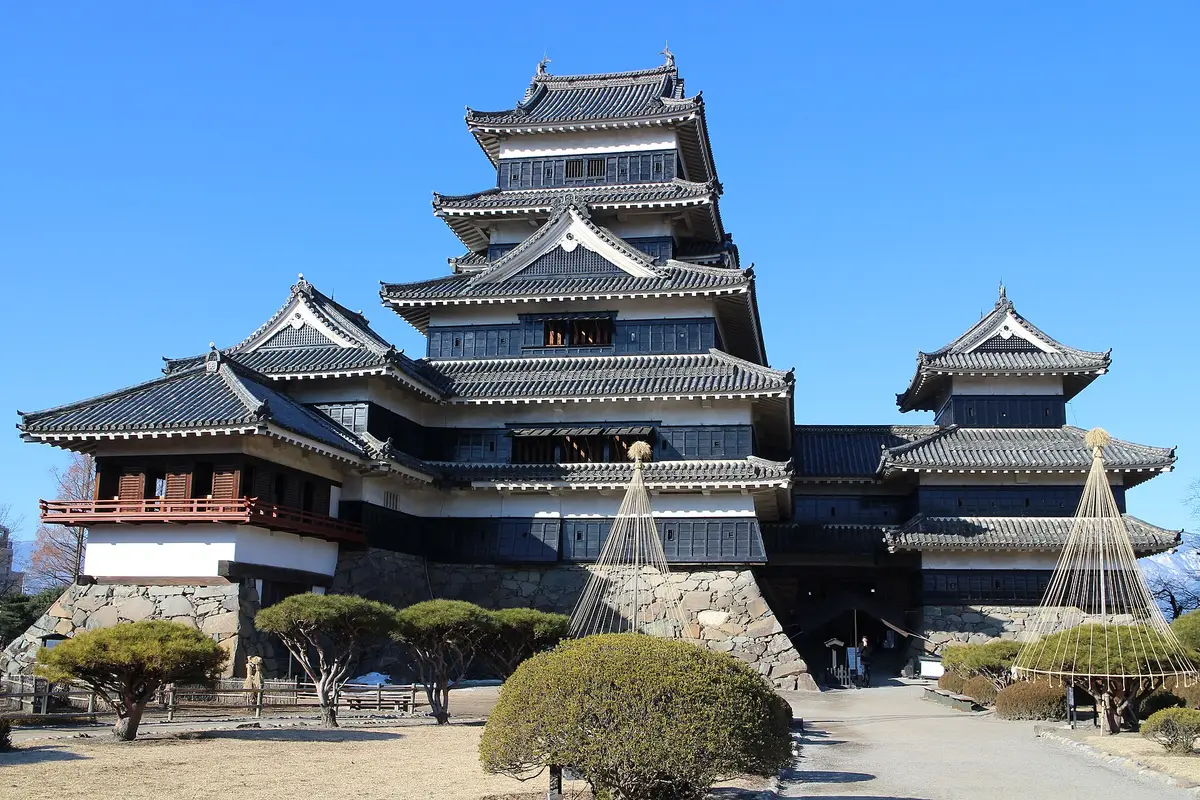
The black keep is the real thing. Matsumoto is one of only twelve original castle keeps still standing in Japan, and one of a small handful ranked as National Treasures. Its dark tower has never been rebuilt in concrete; the official record notes the walls have stood since they were first raised more than four hundred years ago, in the 1590s. A traveler who had toured several castles drew the line clearly: Osaka is a modern reproduction, while "Himeji and Matsumoto are original castles with the original interiors." That authenticity is also why the inside can feel spare. These were built as defensive towers rather than living quarters, so the same visitor says as much: "there isn't a lot of stuff inside the keeps themselves... the view from the top is impressive. Matsumoto has exhibits on the lower floors of the keep on historical Japanese firearms." Instead of furnished rooms, you climb inside four-hundred-year-old timber and look out the way a lookout once did.
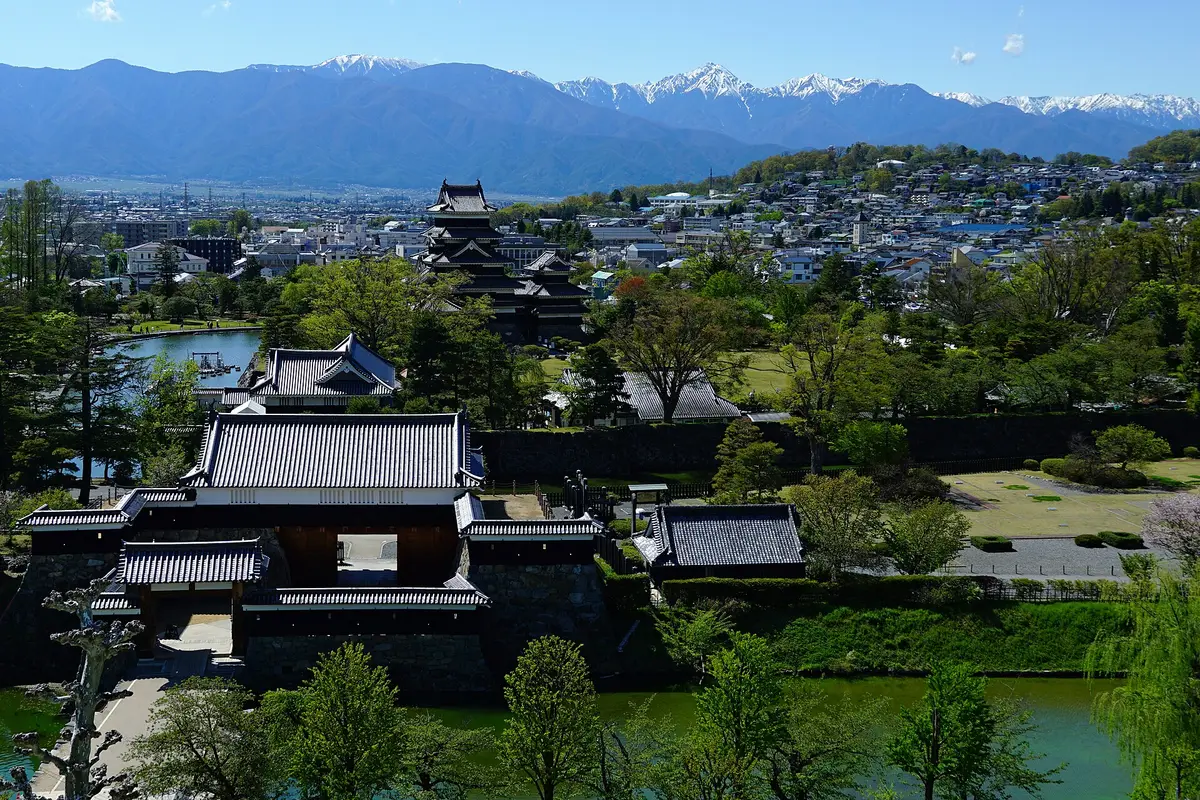
The castle anchors the day, and the town fills it out. The reviews that glow tend to describe the frame around the keep: the moat you circle at dawn, the old streets of Nawate and Nakamachi on the walk in from the station, and the winter light projection that Japanese reviewers happily note is free to watch. One traveler built a whole routine on it: catch sunset at the castle, sleep cheaply nearby, then "wake up early to catch the sunrise at the castle. You can't enter the castle itself that early but access to the park is 24 hours." Matsumoto rewards people who let the town hold the castle, rather than sprinting to a photo and back to the platform.
Travelers keep calling it the best base for the Alps. This is the quiet answer to the detour question. A regular visitor put it flatly: "what it's really good for is a base for journeys into the Japanese Alps. You have great places like Kamikochi and Hakuba a short daytrip away. There's also the postal town of Narai." Matsumoto's own tourism office frames the city the same way, ringed by Kamikochi and the highlands. The hours you spend reaching Matsumoto stop feeling wasted the moment the castle becomes a doorway rather than a dead end.
Giving the black keep its best day
Almost every rough day at Matsumoto traces back to one of two things: arriving at the wrong hour, or treating a detour like a drive-by. Both are easy to fix.
- Go early, and on a weekday if you can. The keep limits how many people are inside at once, so a weekend afternoon can mean a long wait outside and a slow shuffle up the stairs within. A local reviewer's advice matches the visitors' word for word: "お昼前頃から混んでくるので、午前中に行くのが良いと思います" ("it gets crowded from late morning on, so it's best to go in the morning"). Reviewers also note that booking a timed ticket online lets you skip the ticket line.
- Respect the stairs, and your knees. This is the one caution worth taking seriously. The official site describes the stairways as narrow and steep with high risers, and visitors are blunter: the steps are "more like ladders," and you climb in socks after leaving your shoes at the door. It is rewarding, and it is real work. As one traveler said kindly, "if you have bad knees you probably want to skip" the climb, even while the grounds stay a joy.
- In winter, bring an extra pair of socks. The keep has no heating, and you tour it in socks on old wood. A Japanese reviewer learned this the cold way and passed it on: wear double socks in the cold season. Small thing, real difference.
- Give it a night, or fold it into the mountains. The travelers who came away happiest almost all stayed over or treated Matsumoto as a base rather than a stopover squeezed between two long train legs. If your route makes it a six-hour travel day for one keep, the reviews say so. If it can be the launch point for Kamikochi, Hakuba, or a walk on the old Nakasendo road through Narai, the math flips.
Do these, and the day tends to look like the reviews that shine rather than the ones that sigh. The castle itself is rarely the risk. The only thing Matsumoto asks is that you arrive with the hours to meet it, and a morning to beat the crowd up those beautiful, brutal stairs.
So does it earn the detour? If you are hunting for one more castle to tick and grudge the travel time, maybe not, and a few voices will tell you as much. But come for the black keep against the snow, walk the old streets to reach it, and treat the town as your window on the Alps, and you will likely end up where most visitors do: a little surprised the detour became a highlight.
Trying to work out which famous places actually earn a slot on a short trip? Start with what actually matters in Japan. And to plan the climb, the timing, and the day around the black keep, the full Matsumoto Castle guide is just below.
Sources
- Matsumoto Castle Official Site: The Keep and Its Structure: the original, non-reconstructed keep is a National Treasure; the oldest extant five-tiered, six-storey keep, built in the Bunroku era (1593–1594), with walls unchanged for over four hundred years.
- Matsumoto Castle Official Site: Access and Hours: open 8:30 a.m. to 5:00 p.m. (last entry 4:30 p.m.); about a 15-minute walk from Matsumoto Station.
- Matsumoto Castle Official Site: FAQ: the keep's stairways are narrow and steep with high risers; visitors remove their shoes to climb.
- Visit Matsumoto (Official Matsumoto Tourism): Matsumoto Castle: the black "Crow Castle," a National Treasure that has endured four hundred years of wind and rain.
- Visit Matsumoto (Official Matsumoto Tourism): the old streets of Nawate and Nakamachi, and Matsumoto as a base ringed by Kamikochi and the highlands of the Japan Alps, roughly 2.5 hours from Tokyo.
WMJS is written in Japan, in English, with AI help. We check every page, but English is not our first language. If a sentence reads oddly, tell us. One sentence is enough.
Thank you. A person reads every note.
How well do you know Japan?
Built from 635 public posts by Japanese people
Want to know more? Ask Japanese people
Have a follow-up question about this topic? We'll ask real Japanese people.
Voice Box →