
Gion Matsuri: What Kyoto Locals Really Think When You Come to Watch
What you'll learn in this article:
- What 253 Japanese people said about coming to watch Gion Matsuri: where to stand for the procession, how to walk the yoiyama nights, whether you can get close to the floats, and whether Kyoto locals actually mind tourists
- Why the giant floats are called "moving museums," and why the chimaki everyone tells you to buy isn't food
- The honest truth about the crowds and heat, and the local "hidden spot" where you can watch the procession for free
Is Gion Matsuri worth attending, and do Kyoto locals mind tourists coming to watch? We read what 253 Japanese people wrote on five questions. The clear answer: come. Kyoto is proud to share its thousand-year festival. You can watch the floats turn for free, walk the lantern-lit yoiyama evenings, and receive a chimaki charm. The city's real strain is litter and crowds; your presence isn't the problem.
253 Japanese voices on one question: should you come to Gion Matsuri?
The answer: come and look up.
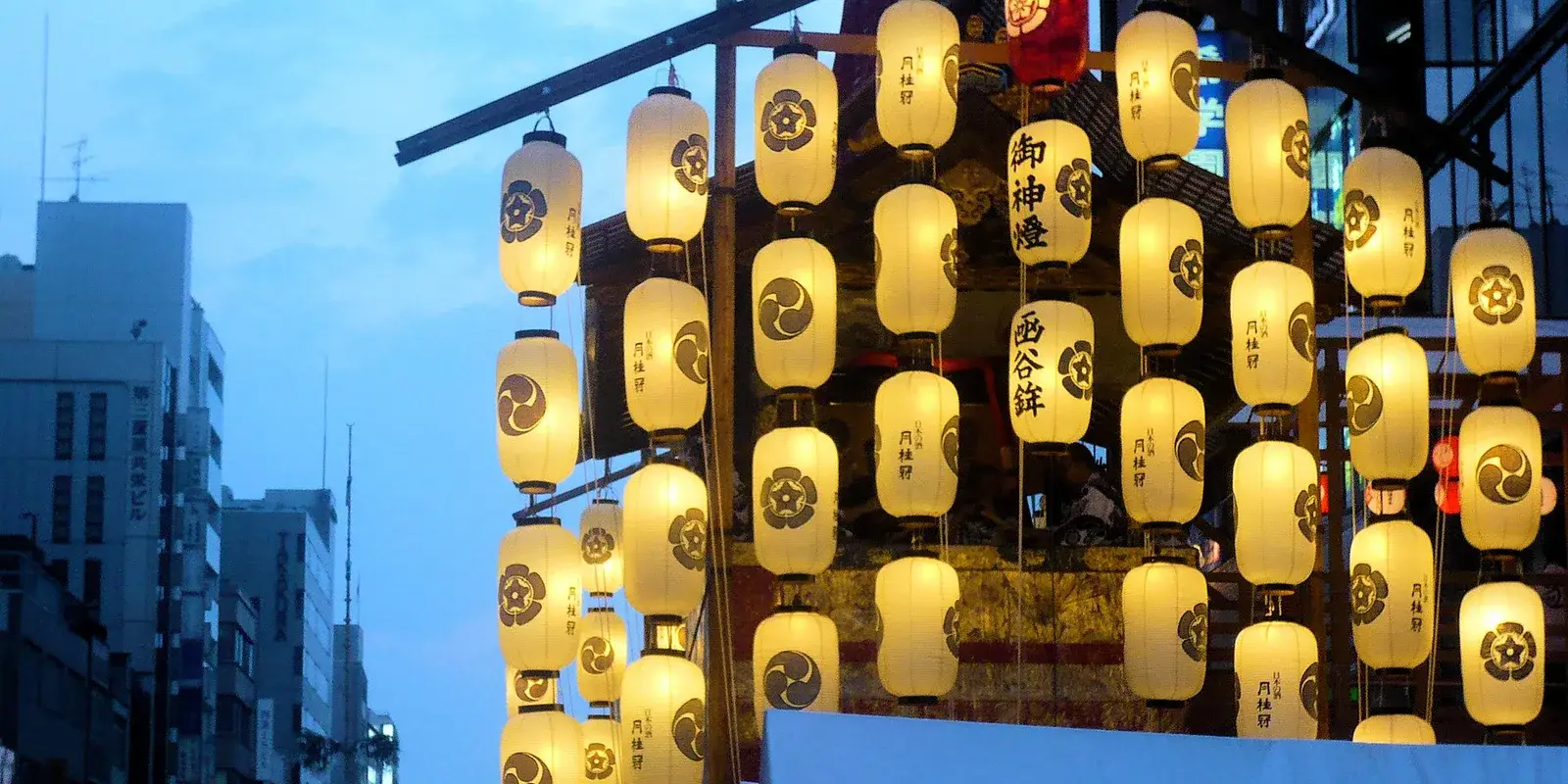
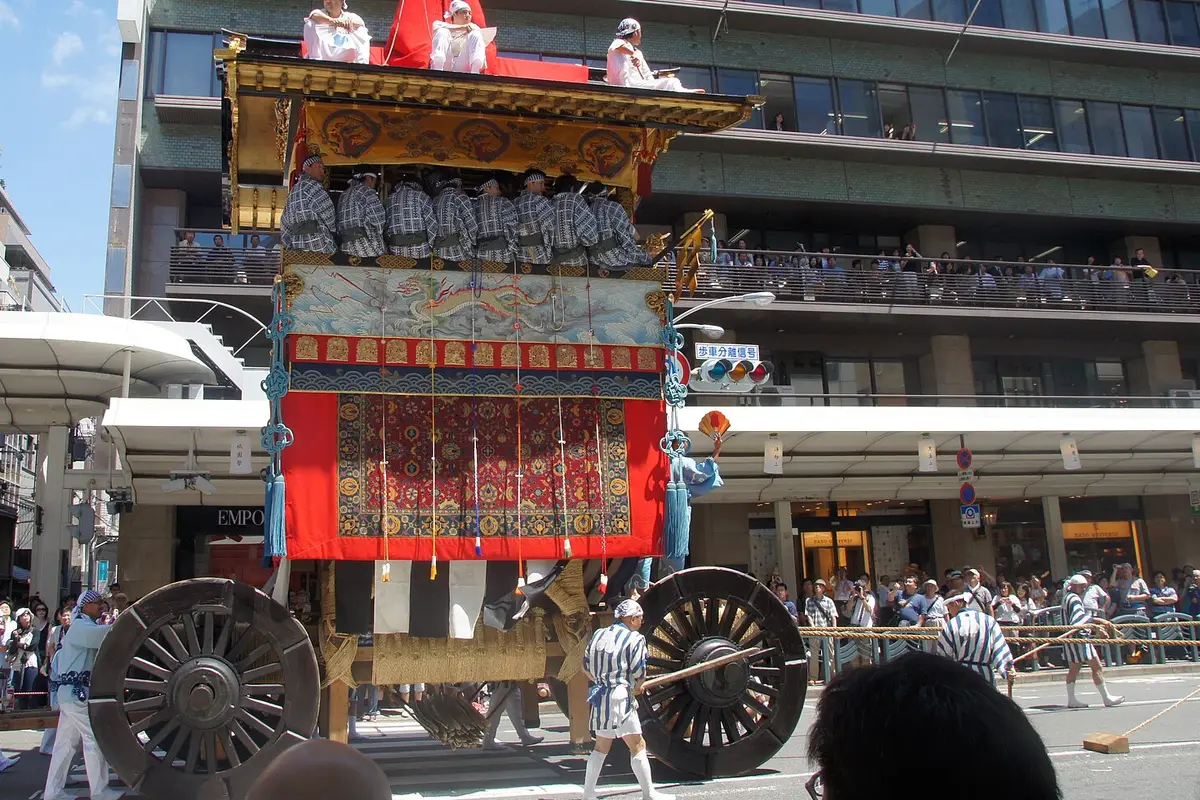
For the whole month of July, the center of Kyoto turns into something between a street fair and a sacred rite. Towering wooden floats, some over twenty-five meters tall and hung with tapestries centuries old, are pulled through the streets by teams hauling on ropes. In the evenings before they roll, the floats glow with tiers of lanterns, flute-and-bell music drifts down every block, and the smell of festival food fills the air.
It's Japan's most famous festival. And if you're planning to be in Kyoto in July, you might also feel a little hesitant: This is a thousand-year-old religious rite. Am I intruding? Where am I even allowed to stand? Can I get close to the floats, or is that rude? Will the locals quietly resent another tourist showing up?
We read what 253 Japanese people wrote about exactly these things: Kyoto residents, festival volunteers, float-town families, and first-time visitors. What they wrote is warmer, and a lot more practical, than the word "sacred" might make you fear.
Gion Matsuri is the event. The neighborhood it's named after — Kyoto's geisha district — is a year-round place with its own etiquette. If you also want to wander Hanamikoji and the Shirakawa canal, the geiko, the tea houses, and the photo manners there, that's a different walk: see our Gion flower-district guide. This article is about the July festival.
Quick Guide
| The question | What Japanese people wrote | |
|---|---|---|
| 🟢 Come | Do locals mind me watching? | 45% are openly proud to share it; many more are simply glad you came. The friction comes from litter and crowds. Carry your trash and you're exactly the guest they want. |
| 🟢 Walk it | Yoiyama (the festival eve nights) | 59% loved it. Lanterns, "kon-chiki-chin" music, food stalls. You don't need a ticket or a plan: just walk. Go early evening, or pick the calmer second round (ato-matsuri). |
| 🟢 Free is fine | Where to watch the procession | You don't need a paid seat. Locals quietly watch from narrow Shinmachi Street, where the floats pass close enough to hear them creak. The "tsujimawashi" (turning a float at a corner) is the moment everyone waits for. |
| 🟡 Yes, gently | Getting close to the floats | During yoiyama you can climb aboard some floats (often with a small chimaki purchase). The hanging textiles are museum-grade cultural property: admire, don't touch. |
| 🟢 It needs you | Who keeps it going | Students, outside volunteers, even foreign visitors now help pull the floats. Your respectful presence, and a chimaki bought from the kids, genuinely helps a festival that runs at a loss. |
The one thing to remember: Gion Matsuri isn't a closed ceremony you watch from behind a rope. It's a festival Kyoto has always wanted people to come and see. Show up, look up, and carry your trash home: that's the whole etiquette.
How We Gathered These Voices
We collected 253 Japanese-language posts across five questions: whether locals mind tourists watching (38 voices), the yoiyama eve-night experience (58), where to watch the procession (75), getting close to the floats (41), and how attitudes are changing across generations (41). We gathered them from public Japanese review sites, blogs, Q&A pages, and social posts, plus reporting from Kansai TV and other outlets, and official information from Yasaka Shrine, the Gion Matsuri Float Association, Kyoto City, and Japan's Agency for Cultural Affairs.
A quick note: This is not a controlled scientific survey. It's a collection of what real Japanese people said in their own words, on public platforms. Most festival guides give you a timetable. We wanted to show you what locals and past visitors actually felt standing in that July heat.
What Japanese People Actually Think: The Temperature Gauge
🟢 Do Kyoto Locals Mind You Watching? "It's Our Pride to Share"
This is the question that holds people back, and the answer is the warmest part of the whole festival.
Of 38 voices on how Kyoto people feel about visitors coming for Gion Matsuri:
For Kyoto people, this festival is not a tourist attraction bolted onto the city. It's something they grew up inside of, and they say so with real warmth:
この祇園祭に関わること、見ることを京都人は誇りにし、楽しみにしてきました。 We Kyoto people have always taken pride in being part of Gion Matsuri, and in watching it. We look forward to it all year.
神事でありながらその懐の深さと間口の広さこそが、祇園祭が長く続いている理由です。 Even though it's a Shinto rite, it's precisely its depth — and how wide it throws its doors open — that has let Gion Matsuri last so long.
That openness is the point. One resident, watching the crowds surge back after the quiet pandemic years, wrote:
ものすごい人だかりとその熱気を見て、コロナの世界から完全に抜け出した感じもして、ホッとした。やっぱり祭りっていいよな、と思いました。 Seeing the huge crowds and all that heat and energy, I felt we'd finally come all the way out of the COVID years, and I was relieved. Festivals really are something good, I thought.
So what about that 37% in the red? Here's the important part: almost none of it is "we don't want you here." It's exhaustion with the side effects of so many people: litter, packed buses, and the feeling that the crowds don't always help the neighborhood. A long-established Gion shopkeeper put the bind perfectly:
来ないでということはできないですし。来ていただいて、私たちも売り上げをいただいているので。でも市民努力では、もう無理な段階まで来ているのではないかなと思います。 We can't tell people not to come. They come, and we make our living thanks to that. But I think we've reached a point where citizens' own efforts alone just can't keep up. (Kansai TV)
The two complaints that come up again and again are litter and the sense that the crush isn't shared fairly:
ゴミが散らばっている状態を見た時は残念な気持ちになりました。ここは日本ですので、日本のルールをしっかりと守って頂きたいです。 When I saw the litter strewn around, I felt sad. This is Japan, so I'd really love people to follow Japan's rules properly.
京都市内に観光客が来ようが、こちとら一円も儲からんのよ。 However many visitors come to Kyoto, folks like us don't make a single yen off it.
If the crowds feel like a lot to you, know that plenty of Kyoto locals feel exactly the same and have made their peace with it. Their tongue-in-cheek survival tips were some of our favorites:
巡行はテレビで観るものです。クーラーのついた涼しい部屋で、京都テレビにて視聴してます。 The procession is something you watch on TV. I watch it on Kyoto TV from a cool, air-conditioned room.
You're not failing some sacred test. You're joining a hot, crowded, beloved summer ritual that even the locals find overwhelming, and that's part of the fun.
💡 The real surprise
Kyoto isn't tired of you. It's tired of litter and the crush. The single act that turns you from "another tourist" into "a welcome guest" is the smallest one: carry your trash home (there are almost no bins), and buy a snack or a chimaki from the neighborhood. That's it.
🟢 Yoiyama: The Lantern Nights Anyone Can Walk
Yoiyama is the festival's soul: the evenings before each procession, when the floats stand lit in the streets and the whole center becomes a slow, glowing river of people.
Of 58 voices on the yoiyama experience:
You don't need a ticket, a tour, or any knowledge of the floats. You just walk. That's what people loved most:
祇園囃子の音が鳴り響く中、建ち並ぶ山鉾を見たり、露天が並ぶ中を歩くだけでお祭りに参加した気分になれます。 With the Gion-bayashi music ringing out, just looking at the rows of floats and walking among the stalls makes you feel like you're part of the festival.
私は、夜の月鉾が大好き!なぜなら夜に灯る提灯が幻想的ですごく美しいんです! I love the Tsukihoko float at night! The lanterns lit up after dark are magical and so beautiful.
行かなきゃ夏が始まらないでしょ。 Summer doesn't even start until you go.
Even on a rainy year, the feeling holds:
雨の中、例年よりもはるかに尊いものを見ている気がした。どんな時も祇園祭はすごい。すごいのだ。 In the rain, I felt I was seeing something far more precious than in ordinary years. No matter what, Gion Matsuri is incredible. Truly incredible.
The neutral voices aren't unhappy; they're just the people handing you a plan. Their advice was remarkably consistent: go early, or go to the second round. The festival actually happens twice. The first procession (saki-matsuri, July 17) has the biggest crowds and the full street-stall, pedestrian-only nights. The second (ato-matsuri, July 24) is quieter and calmer:
子どもと一緒に祇園祭を楽しむなら、前祭よりも落ち着いた雰囲気の後祭が筆者のイチオシ! If you're enjoying Gion Matsuri with kids, my top pick is the calmer ato-matsuri over the saki-matsuri.
夕方にならずとも、昼間のうちから販売しているんです。混雑してごった返す前にお買い物したい方は、明るいうちにぜひ。 They're already selling things during the day, before evening. If you want to browse before it gets jam-packed, go while it's still light out.
And the 10% who found it too crowded? They're honest, and worth listening to:
夕方から18時から主要な道路が歩行者天国となり、屋台が並び、一気にものすっごい人混みとなったため、早々にわたしは離脱しました。 From 6pm the main streets become pedestrian-only, the stalls line up, and the crowds get insane all at once — so I bailed out early.
The trick the locals know: the crowds peak after 6pm on the busiest nights. Come in the late afternoon or on a quieter evening, and the same lanterns and music are all there, with room to breathe. While you wander, look for the byobu-matsuri, where old machiya townhouses open their fronts to show off heirloom folding screens. It's a quiet, generous touch that long-time visitors treasure.
🟢 Watching the Procession: You Don't Need a Paid Seat
The single most useful thing we learned: skip the paid grandstand. The best free spots are better, and they're where the locals actually go.
Of 75 voices on where to watch the yamaboko procession:
The grandstand seats sell out in minutes, cost money, sit out in full sun, and, surprisingly, often aren't the best view. The free roadside is plenty:
あえて有料観覧席を確保しなくても、結構どこからでもしっかりと巡行の様子を鑑賞できることもわかりました。 I learned that even without grabbing a paid seat, you can watch the procession just fine from almost anywhere.
Then comes the local secret, shared by people who grew up in the float neighborhoods:
実際に鉾町に住んでいる住民の多くは、人が溢れる四条通や河原町通、御池通などで山鉾巡行は見ません。地元が見るのは、ずばり新町通。穴場です。 Most people who actually live in the float neighborhoods don't watch the procession on the packed Shijo, Kawaramachi, or Oike streets. Locals watch from Shinmachi Street — that's the hidden spot. (Former float-town resident)
穴場の新町通では鉾が揺れてきしむ音も聞こえてくるから、臨場感が半端ない!! On the hidden-gem Shinmachi Street you can even hear the floats sway and creak — the sense of being right there is unreal!
On the narrow streets the floats pass close enough to touch the air they push. And everyone, local or visitor, is waiting for the same thing: the tsujimawashi, the moment a several-ton float is pivoted ninety degrees at a corner. The crew lays split, water-soaked bamboo under the wheels and hauls the whole thing around by hand. It's the heart of the day:
山鉾巡行最大の見せ場といえば交差点での「辻回し」。大きな拍手・歓声が沸き上がる。 The biggest highlight of the procession is the tsujimawashi at the intersection. Huge applause and cheers erupt.
成功の瞬間は観客から拍手が起こり、会場全体が一体感に包まれました。 At the moment it succeeds, applause breaks out from the crowd, and the whole place is wrapped in a feeling of unity.
That feeling, strangers clapping together for a thing well done, is what people came for. The neutral and red voices are honest about the cost of getting it: the famous Shijo-Kawaramachi corner is so packed you may not see; the wide paid-seat street bakes in the sun; and a Kyoto July is no joke.
四条河原町などは身動きが取れず、辻回しなど満足に見ることは望み薄。 At places like Shijo-Kawaramachi you can't move, so actually seeing the tsujimawashi is a long shot.
それにしても暑い。マシかなと油断していましたが、京都の夏はやっぱり暑かった。 Still, it's hot. I'd let my guard down thinking it'd be fine, but a Kyoto summer really is hot.
💡 How to watch, the local way
Pick a corner for the tsujimawashi or the narrow Shinmachi Street for a close-up; stand on the shaded side of the street; bring water and a hand fan; and consider the calmer second procession (July 24). You do not need a paid seat to be moved by this.

🟡 Can You Get Close to the Floats? Yes, Gently
You can get remarkably close to these floats, and on many of them, during yoiyama, you can actually climb aboard.
Of 41 voices on getting near the floats:
This surprises a lot of first-timers. The floats aren't roped off behind glass:
京都人は祇園祭や山鉾に誇りを持っているとは思いますが、幾つかの鉾は宵山の時なら一般人でも乗る事ができます。 I do think Kyoto people take pride in the festival and the floats — but during yoiyama, ordinary people can even board some of them.
1000〜1500円でチマキを買うと乗せていただけます。菊水鉾に鉾乗り体験です。 If you buy a chimaki for about 1,000–1,500 yen, they let you up. A float-boarding experience at Kikusui-hoko.
Which brings us to the chimaki, the thing everyone tells you to buy, and the thing most visitors completely misunderstand:
粽も口にするものしか知らなかった。 I'd only ever known chimaki as the kind you eat.
A Gion Matsuri chimaki is not food. It's a protective charm: a small bundle of reeds you hang above your front door to ward off illness and misfortune for the year, tagged with the words Somin Shorai shison nari ("a descendant of Somin Shorai"). The legend behind it is over a thousand years old. Each float offers its own, with its own blessing, and the children of the float neighborhoods sing them out from the meeting halls:
子どもたちの「ちまきどーですかーー」という掛け声とか、結構好きです。 I really like the children's calls of "Chimaki, how about a chimaki?"
The 39% "with the customs" voices are simply passing on the gentle rules. The most important one explains the deep reason behind the only real "don't." The floats are sacred, so traditionally you don't look down on them:
祭りと言ってもあくまで「ご神事」なので、神様を見下ろすことはいけないと昔の人は思っていたのだと思います。 Even though it's called a festival, it's fundamentally a sacred rite, so people of old believed you mustn't look down on the gods.
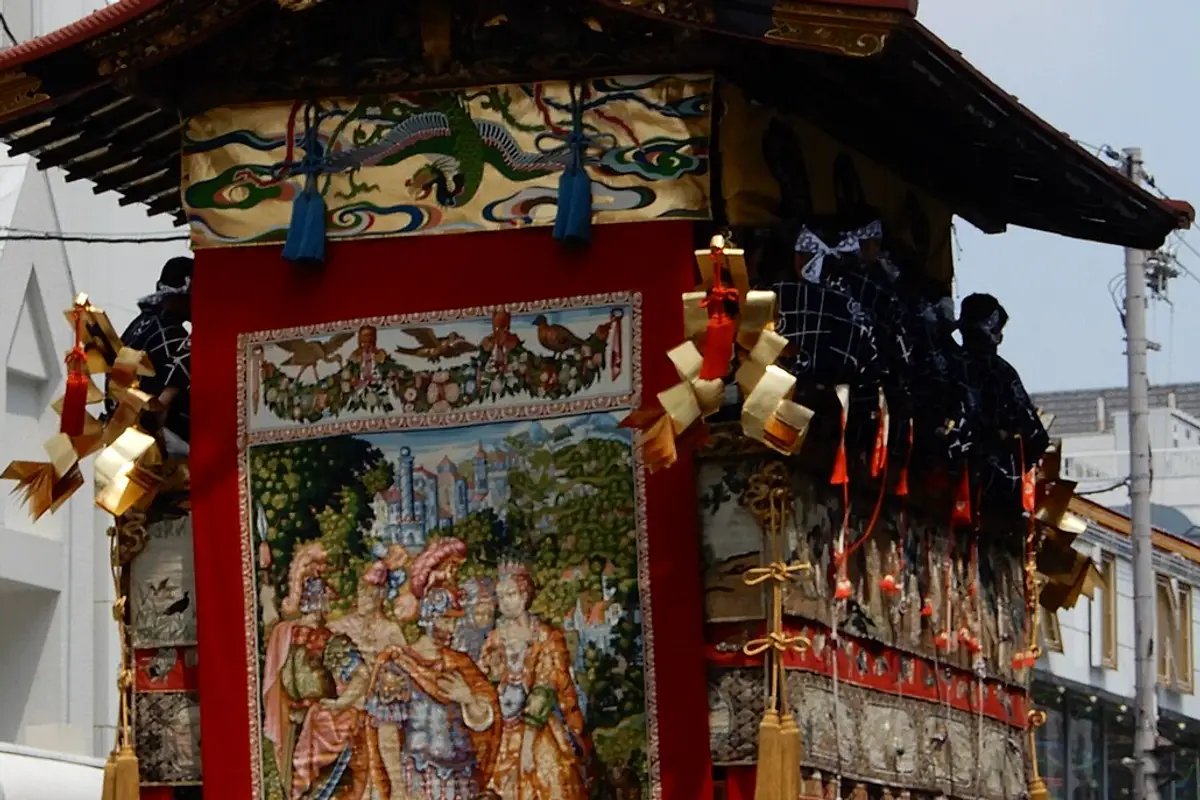
And those tapestries you'll want to touch? Twenty-nine of the floats are designated Important Tangible Folk Cultural Properties: the hanging textiles are, quite literally, a moving museum. That's why "don't touch" exists: not to keep you away, but because what you're looking at is centuries old. As one first-timer put it:
さすが「動く美術館」と呼ばれる山鉾、どれも豪華絢爛で目を奪われました! True to their name as "moving museums," the floats were all so lavish and dazzling I couldn't look away!
A small handful of floats still keep older customs: a few, like the lead Naginata-hoko, remain men-only for boarding. It's a living tradition that's still changing (more on that next), and it's simply part of the festival's texture rather than something aimed at you.
🟢 Who Keeps a Thousand-Year Festival Going?
Behind the spectacle is a quiet truth: this festival needs hands. And increasingly, those hands belong to students, outsiders, and even foreign visitors.
Of 41 voices on how participation is changing across generations:
Many of the float neighborhoods have almost no residents left; the city center emptied of homes long ago. So the people who pull the ropes now are often outsiders who simply wanted to be part of it:
京都の四条烏丸と言えば、ビジネスや金融の中心地で、全く住人がいないと。やはり人に集まってきていただかないと、成り立たない町内ですので。 Shijo-Karasuma is a business and financial district, with no residents at all. Without people gathering from outside, our float town simply can't function. (Float preservation society chairman)
University students now run whole float operations, and they describe it the way you might hope:
正直大変だった。そして正直参加して本当に良かった。そこでしか出会えなかったであろう人。そこでしか得られなかったであろう気持ち。 Honestly it was hard. And honestly, I'm so glad I took part. People I could only have met there. Feelings I could only have found there. (Outside volunteer float-puller)
This matters if you've ever wondered whether there's a place for you. Foreign visitors are already pulling these floats:
普段では見られない場所で山鉾巡行を見ることができたから、ボランティアに参加して本当に良かったです。外国人の参加も多く、南観音山でも5人以上いました。 I'm so glad I volunteered, because I got to see the procession from a place you normally can't. There were many foreign participants too — even on Minami-Kannon-yama there were more than five.
The "keep the form" voices in the red aren't hostile. They're the guardians, and they speak with love for the festival rather than against newcomers:
男、女ということではありません。祭りの伝統を守り、存続するために。 It isn't about male or female. It's about protecting the festival's tradition and keeping it alive. (Float preservation society official)
Even longtime traditionalists often come around. One townsperson who had opposed reviving a float's music for years finally admitted:
囃子方ができて若い人が集まってきて良かったやないか。 Now that there's a music group and young people are gathering — isn't that a good thing after all?
This is why your respectful presence is more welcome than you think. The float association runs at a loss every year; it earns nothing from spectators and pays millions for security and insurance so that visitors can watch safely. When you buy a chimaki, drop a coin, or simply show up and care, you're helping carry a thousand-year-old tradition one more year forward.
💡 The bigger picture
Gion Matsuri survived a civil war, plagues, and a pandemic. What it can't survive is indifference. The festival has quietly opened its ropes to anyone willing to help, which is exactly why a respectful visitor isn't a burden here. You're part of how it continues.
The Story Behind It All
Knowing one thing transforms the whole festival from "rules to follow" into "a story you're in on."
Gion Matsuri began in the year 869, when plague was sweeping the country. As a rite to drive the sickness away, sixty-six halberds, one for each province of old Japan, were raised, and portable shrines were carried out to pray for relief. That rite, the Gion Goryo-e, never stopped. Over a thousand years later, the towering floats you'll see are the descendants of those halberds. The whole of July is the festival; the two grand processions (July 17 and July 24, fixed dates every year) are its peak.
So when you stand on a Kyoto corner and watch a float groan around the turn while strangers clap, you're not a spectator at a show. You're standing inside a prayer for everyone's health that Kyoto has refused to let die for eleven centuries, and the city is genuinely glad you came to look up with them. The floats are recognized on UNESCO's list of the Intangible Cultural Heritage of Humanity, but to the people pulling the ropes, it's simpler than that. It's their summer, and they want to share it.
京都が大好きだから、前から祇園祭に参加してみたいと思っていました。現場で体験できてめっちゃ感動したのを覚えています。 Because I love Kyoto, I'd wanted to be part of Gion Matsuri for ages. I still remember how incredibly moved I was to experience it firsthand.
You don't have to pull a rope to feel that. Looking up is enough.
A Few Practical Things
When it happens: Gion Matsuri runs the whole of July. The two float processions are the highlight: the first is July 17 and the second is July 24, fixed dates every year, with the lantern-lit yoiyama evenings on the three nights before each. Routes and any road closures can still shift year to year, so check the official schedule before you go. (Yasaka Shrine and the Gion Matsuri Float Association publish the current program.)
Two festivals, not one: The saki-matsuri (around July 17) is bigger, livelier, and has the full street-stall, pedestrian-only nights. The ato-matsuri (around July 24) is calmer and easier with kids or if crowds aren't your thing. If you can only do one and want room to breathe, choose the second. July 24–25 is also when Osaka holds Tenjin Matsuri, another of Japan's three great festivals.
Getting there: The float district sits around Shijo-Karasuma and Shijo-Kawaramachi in central Kyoto, reachable by subway (Karasuma/Oike stations) or the Hankyu and Keihan lines. During the festival, expect packed buses; locals switch to the subway or simply walk. See Getting Around Japan for the basics.
Beat the heat: A Kyoto July is genuinely hot and humid. Bring water, a hand fan or folding fan, a hat, and stand on the shaded side of the street. This is the number-one thing past visitors wished they'd taken seriously.
What to wear: A yukata is lovely and very welcome at the festival, but ordinary summer clothes are perfectly fine, and far cooler if you're standing for hours. If you'd like to wear one, here's what Japanese people actually think about visitors in yukata (spoiler: they're delighted).
Food and chimaki: Festival food is meant to be eaten on the spot: pointing and saying "kore kudasai" (this one, please) is all you need, and most stalls are cash-only. The chimaki, remember, is a charm to hang at home rather than a snack. For the food-on-the-go culture, see Is It Rude to Eat While Walking?; at a festival, it's the whole point.
Trash: You won't find many bins. Carry a small bag for your rubbish and take it back to your hotel. After litter, this is the single thing locals most wish visitors would do, and it's the easiest way to be the guest they're glad they let in.
Photos: Photographing the floats, the procession, and the lit-up nights is welcome and encouraged. For the floats' precious textiles, look but don't touch. For pointing a camera at people, performers up close, or the private moments of float-town families, a little restraint goes a long way; see Photo Etiquette at Tourist Spots.
More Japanese Perspectives
If you're planning a summer trip, these cover related ground:
- Gion: Walking Kyoto's Flower District: The everyday neighborhood the festival is named after: geiko and maiko, the lanes, and how to visit a place still lived in
- How to Blend In at a Japanese Summer Festival: The broader etiquette of any matsuri: yukata, bon odori, food stalls, and joining in
- Awa Odori: The Festival You Dance In: If Gion is a festival you come to watch, Tokushima's Awa Odori is one you come to join; anyone can jump into a niwaka-ren drop-in group and dance, no costume or skill needed
- Japanese Fireworks Festivals: The other great summer ritual, and why shouting "tamaya" makes locals smile
- Tanabata Star Festival: Write a wish, hang it on bamboo: a gentler July tradition
- Is Japan Overtouristed?: The honest data behind Kyoto's crowds, and how to travel kindly through them
- Visiting Temples and Shrines: The Shinto background behind the rite at the festival's heart
Share Your Gion Matsuri Story
Have you been to Gion Matsuri? Did you find a good spot, climb a float, get caught in the crowds, or hear the kon-chiki-chin for the first time? Were you surprised by how welcome you felt?
We're collecting stories from visitors who've experienced this festival firsthand. Your experience helps the next traveler feel braver about going, and helps us understand what matters most.
Sources
Japanese Voices (253 posts across 5 questions)
We collected 253 Japanese-language voices from public review sites, blogs, Q&A pages, and social posts, plus news reporting. Representative sources include:
Do locals mind you watching (38 voices)
- Kansai TV (KTV): Gion-area report
- Bengoshi JP News: Kyoto overtourism feature
- Maidona News: Gion-area report
- Asagei: local business feature
- KyotoLove.Kyoto: Kyoto resident essay
- Gion Matsuri Gomi-Zero Project: about page
- Public Japanese review sites, blogs, and social posts
Yoiyama experience (58 voices)
- 4travel: yoiyama reviews
- KankoNoYado blog: congestion report
- KyotoKurasu: family guide
- Public Japanese review sites, blogs, and Q&A pages
Where to watch the procession (75 voices)
- KankoNoYado blog: hidden-spot report
- 4travel: procession travelogues
- Public Japanese review sites, blogs, and Q&A pages
Getting close to the floats (41 voices)
- Public Japanese blogs, Q&A pages, and review sites: first-hand accounts of boarding floats and receiving chimaki
Generational change (41 voices)
- Kansai TV (KTV): Kanko-hoko student float-bearers
- Hotozero / Ryukoku University: Gion as a living community
- Makuake: Float Association funding project
- Kyoto Sangyo University: student voices
- Public Japanese blogs, Q&A pages, and news reporting
Facts and Official Information
- Yasaka Shrine: Gion Matsuri origin (869 / Gion Goryo-e) and program: yasaka-jinja.or.jp and procession map (34 floats: 23 first procession, 11 second; 3 mikoshi)
- Kyoto City: UNESCO Intangible Cultural Heritage inscription (2009) and Important Intangible Folk Cultural Property designation: city.kyoto.lg.jp
- Agency for Cultural Affairs: Important Tangible Folk Cultural Property "Gion Matsuri Yamahoko," 29 floats, designated 1962: kunishitei.bunka.go.jp
- Gion Matsuri Float Association (Yamaboko Rengokai): official schedule: gionmatsuri.or.jp
- KBS Kyoto: the chimaki as a protective amulet (not food) and the Somin Shorai legend: kbs-kyoto.co.jp
Note on Quotations
Quotes from online platforms have been lightly edited for readability (fixing typos, formatting for clarity). The meaning and intent of each comment remain unchanged. Original sources are linked above.
This article is available in languages covering 95%+ of visitors to Japan (based on JNTO 2025 data). Need another language? Let us know through Voice Box.
WMJS is written in Japan, in English, with AI help. We check every page, but English is not our first language. If a sentence reads oddly, tell us. One sentence is enough.
Thank you. A person reads every note.
How well do you know Japan?
Built from 635 public posts by Japanese people
Want to know more? Ask Japanese people
Have a follow-up question about this topic? We'll ask real Japanese people.
Voice Box →