
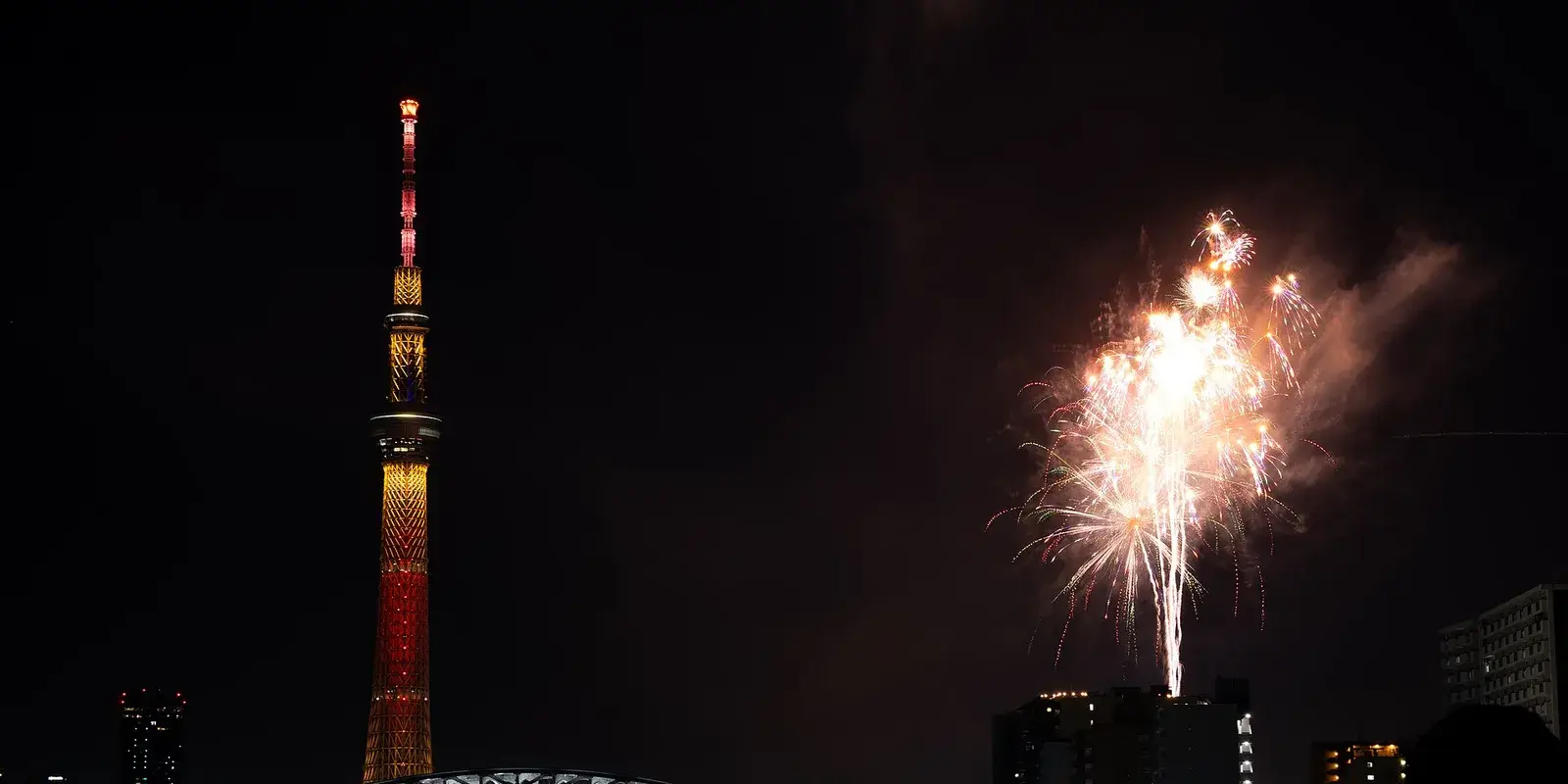
Japanese Fireworks Festivals: The Moments That Move Everyone Around You
What you'll learn in this article:
- What 275 Japanese people said about foreigners at fireworks festivals
- Why shouting "tamaya!" together creates a bond that transcends language
- The one yukata rule that actually matters (hint: it's not perfection)
- How the collective gasp at a firework tells you everything about Japanese culture
Do Japanese people want you at their fireworks festivals? We read what 275 of them wrote. The clear answer: yes, and it's not even close. 78% were happy to see foreigners in yukata, 80% loved sharing the emotional moment of watching fireworks together, and 62% felt genuine joy when visitors joined the "tamaya!" chorus. The one area where frustration runs high (spot claiming) is a frustration Japanese people share with each other, not directed at you.
If you're visiting Japan between July and August, there's a good chance you'll hear a deep boom echo across the evening sky, followed by a collective intake of breath from thousands of people around you.
That's a Japanese fireworks festival, and it might be one of the most connecting experiences you'll have in Japan: not because of the fireworks themselves, but because of what happens between you and the people sitting next to you.
We collected 275 real opinions from Japanese people about foreigners at fireworks festivals: shouting "tamaya!" together, wearing yukata, claiming a spot on the riverside, and sharing that moment when a firework opens and everyone goes quiet at the same time.
Here's what they wrote.
Quick Guide
| Moment | What Japanese People Said | |
|---|---|---|
| 🟢 Go for it | Wearing yukata | 78% positive. "It makes us happy when you enjoy our culture." Even if it's a little messy, that's charming rather than offensive. Strangers may even help you fix it. |
| 🟢 Go for it | Shouting "tamaya!" | 62% positive. It's an Edo-era tradition that's fading among young Japanese. When you shout it, you're helping keep it alive. |
| 🟡 Navigate carefully | Claiming a spot (basho-tori) | This frustrates everyone, including Japanese people. Arrive at the designated time, don't spread beyond your space, and clean up when you leave. |
| 🟢 Just be yourself | Getting emotional | 80% positive. The silent "wow" when a firework opens, tears during Nagaoka's memorial fireworks. Japanese people notice, and it moves them. |
The one thing to remember: Japanese fireworks festivals aren't a spectator sport. They're a shared emotional experience. You don't need to know the rules perfectly. You just need to be present, be moved, and let the people around you see that you feel it too.
How We Gathered These Voices
We collected 275 Japanese-language responses across five fireworks-related topics: the "tamaya!" shout (55 responses), wearing yukata (55 responses), spot-claiming etiquette (55 responses), shared emotional reactions (55 responses), and generational differences (55 responses). We gathered these voices from public Japanese Q&A sites, forums, and social posts, along with survey data from Ponta Research and WeatherNews, and articles from Japanese media including Toyo Keizai, Diamond Online, and NHK.
A quick note: This isn't a controlled scientific survey. It's a collection of what real Japanese people said in their own words, on public platforms. We wanted to show you what happens on their side of the blanket when you sit down next to them at a fireworks festival.
🟢 Wearing Yukata: "Please Wear It. We Love It."
The short answer: Japanese people overwhelmingly welcome foreigners in yukata.
Of 55 responses about foreigners wearing yukata to fireworks festivals, 78% were positive. And the positive responses weren't polite. They were enthusiastic.
外国人が浴衣を着てくれるのは素直に嬉しい。日本の文化に興味を持ってくれているんだなと思うと、こちらも温かい気持ちになる。 I'm genuinely happy when foreigners wear yukata. Knowing they're interested in our culture makes me feel warm inside.
全然不快じゃないですよ。むしろ日本の文化を楽しんでくれてありがとうという気持ちです。 Not uncomfortable at all. It's more like — thank you for enjoying our culture.
京都で外国人が浴衣を着て歩いているのを見ると、微笑ましいなと思います。着崩れていても、楽しそうにしている姿がいい。 When I see foreigners walking around in yukata in Kyoto, it makes me smile. Even if it's a bit disheveled — what matters is that they're having fun.
"But what about cultural appropriation?"
This came up in the data, and the answer from Japanese people was remarkably consistent: they don't see it that way.
文化の盗用?日本人はそんなこと気にしてないよ。外国人が着物を着てくれることを怒る日本人なんて見たことない。むしろ嬉しい。 Cultural appropriation? Japanese people don't think about it that way. I've never seen a Japanese person get angry about a foreigner wearing kimono. We're happy about it.
着物は世界では日本の民族衣装として知られていますが、外国の方が着てくれることに否定的な日本人はほとんどいないと思います。 Kimono is known worldwide as Japanese traditional clothing, but I think very few Japanese people are negative about foreigners wearing it.
The One Rule That Actually Matters
There is one thing Japanese people quietly notice: which side overlaps on top. Right side tucked under, left side on top, and that's correct. Left tucked under, right on top: that's how the deceased are dressed for funerals. Rental shops always dress you correctly, but if you're putting on your own yukata, remember: right under, left over.
Everything else? Not a big deal. Crooked obi? Charming. Walking a bit awkwardly in geta sandals? Relatable. And if things start coming apart, you might get a surprise:
外国人の友達が浴衣を着て花火大会に来た時、周りの日本人おばちゃんたちが「かわいいわね〜」って寄ってきて着付けを直してくれた。 When my foreign friend came to a fireworks festival in yukata, the Japanese grandmas around us came over saying "How cute!" and fixed the obi for her.
If you're interested in what Japanese people notice about clothing in general, What to Wear in Japan covers the full picture. The short version: Japanese people care far less about your outfit than you think.
💡 The bottom line on yukata
Wear it. Enjoy it. Don't stress about perfection. Just remember right-under-left-over, and you're golden. The other 99% of "getting it right" is simply having fun, and that's what Japanese people actually want to see.
🟢 Shouting "Tamaya!": Joining a 200-Year-Old Chorus
When a spectacular firework bursts open, you might hear the crowd shout "tamaya!", and if you join in, Japanese people notice.
Of 55 responses about foreigners shouting "tamaya!" at fireworks, 62% were positive, and the remaining responses were mostly neutral, not negative.
隅田川花火大会で隣にいた外国人カップルが「たまやー!」って叫んでてびっくりした。聞いたら日本のアニメで覚えたらしい。なんかすごく嬉しかった。 At the Sumidagawa Fireworks Festival, the foreign couple next to me was shouting "Tamaya!" I was surprised. They said they learned it from anime. It made me genuinely happy.
花火大会で「たまやー!」って一緒に叫んでくれる外国人がいると、日本の文化に興味を持ってくれてるんだなって思って嬉しくなる。言葉は通じなくても、花火を見上げて同じ掛け声を出す、あの一体感が好き。 When there are foreigners shouting "Tamaya!" together with us, I think "they're interested in our culture" and it makes me happy. Even without a common language, looking up at the fireworks and shouting the same cheer — I love that sense of unity.
The Story Behind the Shout
"Tamaya!" and "Kagiya!" are the names of two rival fireworks houses from Edo-era Tokyo. Starting in the early 1800s, crowds along the Sumida River would shout the name of whichever house launched the firework they liked more, like cheering for your favorite team.
花火の掛け声は江戸時代の「推し」文化。玉屋の花火が上がると「たまやー!」、鍵屋の花火には「かぎやー!」と観客が叫んで応援した。今で言うアイドルの推しコールみたいなもの。 The fireworks cheer was Edo-era "fan culture." When Tamaya's firework went up, the crowd shouted "Tamaya!" For Kagiya's, they shouted "Kagiya!" It was like a modern idol fan chant.
Here's the remarkable part: Tamaya only existed for 35 years. Founded in 1808 as a spinoff from the older Kagiya house, it was shut down in 1843 after a fire destroyed part of Edo. Yet more than 200 years later, people still shout "Tamaya!" far more often than "Kagiya!", a tribute to a fireworks maker whose art was so dazzling that his name outlived his business by two centuries.
「たまや~」の方が「かぎや~」より圧倒的に多いのは、花火の技術が勝っていたこと、語呂が良いこと、そして儚く消えた玉屋への江戸っ子の愛情があったからだとされている。 "Tamaya!" is shouted far more than "Kagiya!" because Tamaya's fireworks were better, the name rolls off the tongue more easily, and Edo people had a soft spot for the underdog who disappeared so quickly.
A Tradition That's Fading, and You Might Be Helping Save It
Here's something that might surprise you: many young Japanese people don't shout "tamaya!" anymore. Some don't even know what it means.
正直、最近「たまやー」って叫んでる人、あまり見ない。若い人は意味も知らないんじゃないかな。外国人が叫んでくれるなら、むしろ文化が残っていいのかもしれない。 Honestly, you don't see many people shouting "Tamaya!" lately. Young people probably don't even know the meaning. If foreigners shout it, maybe that's actually how the tradition stays alive.
外国人の友達に「たまやー」の意味を教えたら、江戸時代のファン文化じゃん!って大興奮してた。推し活みたいなものだよね、と言われて確かに、と思った。 When I explained the meaning of "Tamaya!" to my foreign friend, they got really excited — "That's Edo-era fan culture!" They said it's like oshi-katsu (supporting your favorite). I thought, yeah, that's exactly what it is.
うちの地元の花火大会に来てた外国人観光客のグループが、日本人のおじいちゃんに「たまやー」の意味と歴史を教えてもらってて、すごく盛り上がってた。おじいちゃんも嬉しそうだった。 A group of foreign tourists at our local fireworks festival was getting the history of "Tamaya!" explained by a Japanese grandpa. Everyone was excited. The grandpa looked so happy.
That last image (an elderly Japanese man teaching foreign visitors the 200-year-old cheer, both sides lighting up) might be the best summary of what WMJS is about.
💡 What "tamaya!" really means
When you shout "Tamaya!" at a Japanese fireworks festival, you're participating in the world's oldest fan chant: 200+ years of crowds cheering for a fireworks maker who was so good that his name outlived his career by two centuries. Shout it, and you'll feel the person next to you smile.
🟡 Spot Claiming: The Honest Truth About Basho-Tori
This is the one area where frustration runs high at fireworks festivals. Spot claiming is the flashpoint, and it's not aimed at foreigners.
Of 55 responses about spot-claiming etiquette, 42% were negative, 38% neutral, and only 20% positive. But the frustration was almost entirely directed at the system itself, and at other Japanese people.
必要以上に広大な場所を確保している人が目に付く。自分さえ良ければいいという心から生じるマナー違反で、多くの人が観覧場所を必要としている。 You notice people claiming far more space than they need. It's a manners violation that comes from a "me first" mindset, when so many others need a viewing spot too.
実行委員会が場所取りの日時を指定しているのに、それより前から場所取りをしている人がいる。 The organizing committee designates a specific time for spot claiming, but some people start claiming before that time.
What Actually Works
The basho-tori (spot-claiming) system at Japanese fireworks festivals works like this: people lay down blue tarps or picnic blankets to reserve space, often hours before the show. Each festival has its own rules about when claiming starts and how much space is allowed. Here's what Japanese people said works:
Do:
- Arrive at the designated claiming time (check the festival's website)
- Take only the space your group actually needs
- Have at least one person stay with your spot
- Bring a bag for your trash, and take everything with you when you leave
What earns appreciation:
- Keep your tarp to the size your group actually needs
- Stay with your spot (or take turns; someone should always be there)
- Respect the space of your neighbors, especially as the crowd grows
The good news? If you follow these simple guidelines, you'll earn genuine appreciation, because Japanese people themselves wish everyone would do the same.
For more on shared-space etiquette in Japan, The Unspoken Scorecard shows what Japanese people notice across all public spaces. And for the trash part specifically, Why Japan Has No Trash Cans explains the carry-out culture that makes Japanese events remarkably clean.
💡 Why the rules matter more than usual here
Fireworks festivals pack hundreds of thousands of people into riverbanks and parks. Space is precious. When someone (anyone) claims a reasonable spot, stays with it, and cleans up afterward, the people around them notice. It's shared-space consideration in its most concentrated form.
🟢 The Moment Language Disappears
This is the section where the data speaks loudest: 80% positive.
Of 55 responses about foreigners being genuinely moved by fireworks (the quiet "Oh...", tears, standing in silence), 80% of Japanese people described it as a deeply positive experience. This was the highest positive rate across all five viewpoints.
花火が上がった瞬間、隣の外国人が「Oh...」って小さく声を漏らして、そのまま黙って見上げてた。言葉がなくても感動が伝わってきて、こっちまでジーンときた。 The moment the firework went up, the foreigner next to me whispered "Oh..." and just gazed up in silence. Even without words, I could feel their emotion. It got to me too.
「日本人にとっては日常。僕たちからすれば夢の世界」というマレーシアからのコメント。確かに、当たり前と思っていた花火大会が、海外の人にとっては一生に一度の夢なんだ。 A comment from Malaysia: "For Japanese people, it's everyday life. For us, it's a dream world." It hit me — the fireworks festivals I take for granted are someone's once-in-a-lifetime dream.
「今まで観た中で一番綺麗な花火だった。日本の花火を観るといつも感動で涙が出てくる」という海外のコメント。日本人として嬉しいし、花火師さんにも伝えたい。 "The most beautiful fireworks I've ever seen. Japanese fireworks always bring me to tears." Reading that overseas comment, I felt proud as a Japanese person — and I want to tell the fireworks craftsmen.
Why Japanese Fireworks Hit Different
There's a technical reason Japanese fireworks feel different from fireworks in other countries. Japanese shells are spherical: they burst in perfect circles. Most fireworks around the world are cylindrical, creating less symmetrical shapes. Japanese shells are also hand-packed by artisans, with each color-changing layer placed by hand. The result is fireworks that bloom, change color, and then fade in a way that feels almost alive.
日本の花火は「派手なのにどこか繊細」。アメリカの花火とは異なる趣きがある。 Japanese fireworks are "flashy yet somehow delicate." They have a quality that's different from American fireworks.
The Wabi-Sabi Moment
Here's something that tells you a lot about Japanese culture: it's not just the explosion that moves people. It's the moment after, when the firework fades into darkness and silence returns.
日本人が特に心を奪われるのが、花火が消える瞬間。その儚さや切なさに、言いようのない感動を覚える。これは物事の移ろいや不完全さの中に美を見出す、日本の「わびさび」の精神。 What captivates Japanese people most is the moment the firework disappears. There's an indescribable emotion in that transience and wistfulness. It's wabi-sabi — finding beauty in impermanence and incompleteness.
If you find yourself sitting on a riverside blanket, watching fireworks fade into the summer sky, and feeling something you can't quite name, that's not just you being emotional. That's you experiencing the same feeling that has moved Japanese people for centuries. And the person sitting next to you? They know exactly what you're feeling.
💡 The most connecting thing you can do
You don't need to shout, wear yukata, or know any rules. Just be genuinely present. Look up. Let the firework take your breath away. The person next to you will feel it, and something invisible will connect you in that moment.
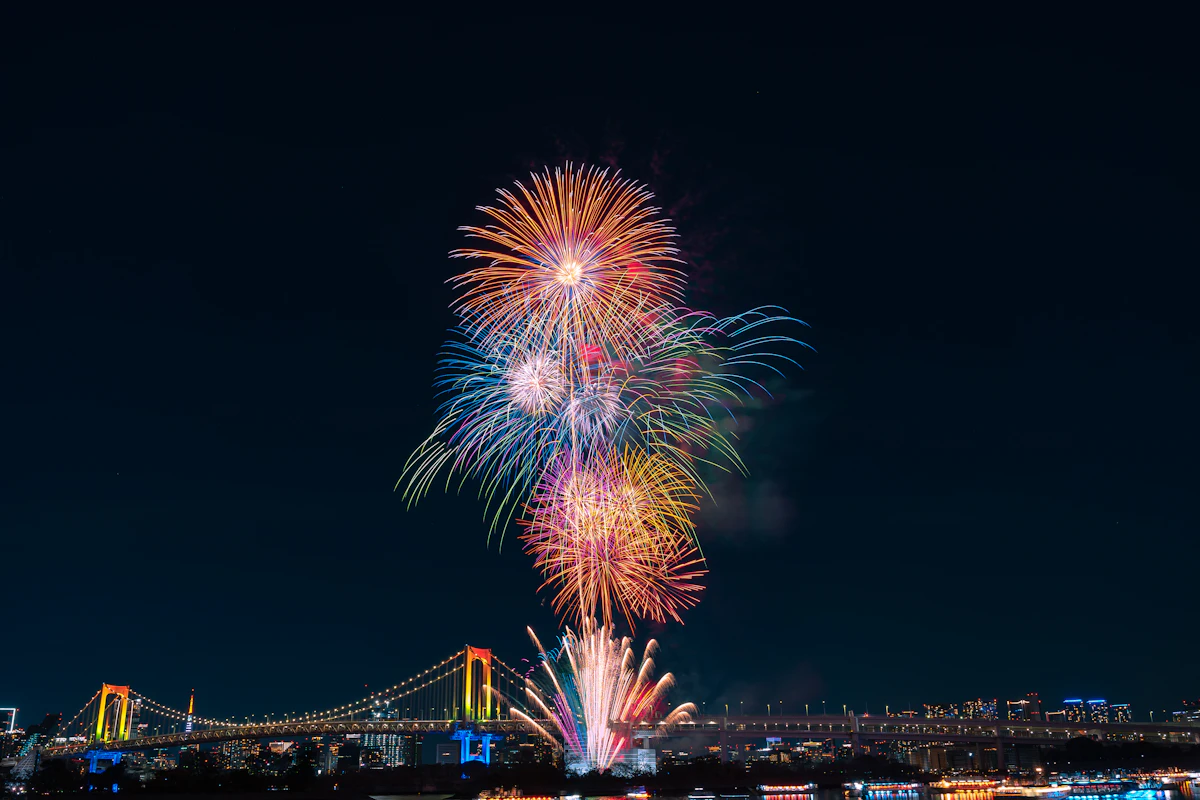
A Tradition in Transition
Fireworks festivals hold a special place in Japanese culture: at Osaka's Tenjin Matsuri, one of Japan's three great festivals, the fireworks are launched as an offering to a deity carried by boat down the river rather than as the main show. But the tradition is changing.
On the attendance side, the news is actually encouraging. Survey data shows that people in their 20s attend fireworks festivals most frequently (52.6%), contradicting the narrative that young people are abandoning the tradition. Fireworks remain one of Japan's most beloved summer experiences, with 85.4% of foreign residents rating them as their top summer activity.
But behind the scenes, the picture is more complex:
- Fireworks craftsmen are aging. There are only about 1,490 licensed fireworks workers in Japan, and the average age keeps rising. Young apprentices are rare.
- Festival cancellations are increasing. The most recent nationwide count, from Teikoku Databank, found roughly 49 fireworks festivals canceled in 2023 alone, not from COVID, but from rising costs, cleanup expenses, and the difficulty of organizing massive public events with shrinking volunteer pools. By July 2025, at least 28 more festivals had already confirmed cancellations for that year, so the pressure hasn't eased.
- The economics are shifting. About 80% of major fireworks festivals now offer paid seating, up from a small minority a decade ago. The free-viewing experience that defined generations of summer memories is slowly being priced out.
花火大会に行くとき誰と行くかは「夫・妻」が48.5%、「子ども」が36.5%で、友達と行く方より家族で行く方が多い。 48.5% attend fireworks festivals with their spouse, 36.5% with their children. More people go with family than with friends.
At the same time, young people are finding new ways to keep the tradition alive. Crowdfunding campaigns on CAMPFIRE and For Good have successfully funded several fireworks festivals that were at risk of cancellation. High school students are volunteering for cleanup crews. And the growing international interest in Japanese fireworks (the fact that you're reading this article right now) is itself a force that helps sustain these festivals.
Senko Hanabi: The Quiet Counterpart
Not all Japanese fireworks boom. There's a quieter tradition that's just as meaningful.
Senko hanabi (線香花火) are tiny sparklers: thin sticks that you hold and watch as a small ball of fire forms, grows, sparks outward in delicate branches, and then silently falls away. The entire experience lasts about 30 seconds.
For Japanese people, senko hanabi is summer distilled into a single moment. Families sit on verandas, friends gather in parking lots, couples share a quiet evening, all watching a tiny flame that everyone knows will end. The challenge is to keep it alive as long as possible. When it falls, summer feels a little closer to being over.
If you get the chance to do senko hanabi during your trip (at a ryokan, a friend's home, or even just a park), take it. It's the wabi-sabi of fireworks, and it connects you to a side of Japanese summer that the big festivals don't show.
The same quiet summer night that fills with booming fireworks has another face entirely: one of Japanese people standing in the dark, watching fireflies and never catching them. If the roaring crowd and the silent sparkler are two ends of the same evening, the firefly is the stillness in between.
Practical Tips for Your First Fireworks Festival
Getting there:
- Arrive early. Popular festivals attract hundreds of thousands of people. Train stations near the venue will be packed.
- Check the festival's official website for spot-claiming start times, prohibited items, and access routes.
- Expect to walk. Some festivals close roads to vehicles, so plan for a 15-30 minute walk from the station.
What to bring:
- A picnic blanket or small tarp (reasonable size for your group)
- A bag for trash: there are limited bins at most festivals
- Food and drinks from nearby convenience stores or the festival's food stalls (yatai)
- A small towel: summer humidity is real
- Cash: many food stalls don't accept cards
Enjoying yatai (food stalls):
- Festival food stalls are part of the experience: yakisoba, takoyaki, kakigori (shaved ice), cotton candy, grilled corn
- It's completely fine to eat while walking at festivals: this is one of the few contexts where eating while walking is expected and welcomed
- Prices are festival prices (expect to pay a bit more than usual)
After the show:
- The exodus is the hardest part. Hundreds of thousands of people funnel into train stations simultaneously
- Japanese locals recommend waiting 20-30 minutes after the finale before heading to the station
- Some people bring senko hanabi (sparklers) to enjoy while waiting for the crowds to thin
Photos:
- Taking photos and videos of fireworks is completely welcome: just be mindful of blocking the view of people behind you
- If you're photographing people, the usual courtesy applies: see Photo Etiquette at Tourist Spots
More Japanese Perspectives
Summer in Japan is a whole world. Here are related articles that connect to the fireworks experience:
- Why Japan Has No Trash Cans: The carry-out culture that keeps festivals clean
- Photo Etiquette at Tourist Spots: What Japanese people notice about cameras
- What to Wear in Japan: The full picture on yukata, casual wear, and what Japanese people actually notice
- Best Time to Visit Japan: Where fireworks fit in the annual calendar
Share Your Voice
Have you been to a Japanese fireworks festival? Did you shout "tamaya!"? We'd love to hear your experience.
Sources
Survey Data
- Ponta Research: 花火大会に関する意識調査 (Fireworks festival attitudes survey), research.ponta.jp
- WeatherNews: 花火大会に関するアンケート (Fireworks survey), weathernews.jp
- @Press: 在留外国人の夏の体験調査 2025 (Foreign residents summer experience survey), atpress.ne.jp
Cultural & Historical Sources
- All About 暮らしの歳時記: たまやー・かぎやーの由来 (Origin of tamaya/kagiya), allabout.co.jp
- オマツリジャパン: 花火大会マナー10ヵ条 (10 fireworks festival manners), omatsurijapan.com
- オマツリジャパン: 花火大会の歴史と掛け声 (History and cheers), omatsurijapan.com
- 北摂LABO: 玉屋の歴史 (History of Tamaya), hokusetsu-labo.com
Media Sources
- TV Tokyo「YOUは何しに日本へ?」長岡花火取材, tv-tokyo.co.jp
- ぐるなび みんなのごはん: 外国人インタビュー, r.gnavi.co.jp
- NewSphere: 着物と文化盗用 (Kimono and cultural appropriation), newsphere.jp
Industry Data
- 帝国データバンク: 花火大会に関する動向調査 (Fireworks industry trends, 2023: ~49 nationwide cancellations; 2025 mid-season update: 28+ confirmed by July), cited via scinex.co.jp (the original Teikoku Databank press page is no longer live)
- 総務省消防庁: 煙火消費許可事務取扱い (Fireworks licensing data), fdma.go.jp
Community Voices
- Public Japanese Q&A sites, forums, and social posts: first-hand opinions on fireworks festivals, yukata, spot-claiming manners, and foreign participation
Note on Quotations
Quotes from online platforms have been lightly edited for readability (fixing typos, formatting for clarity). The meaning and intent of each comment remain unchanged. Original sources are linked above.
WMJS is written in Japan, in English, with AI help. We check every page, but English is not our first language. If a sentence reads oddly, tell us. One sentence is enough.
Thank you. A person reads every note.
How well do you know Japan?
Built from 635 public posts by Japanese people
Want to know more? Ask Japanese people
Have a follow-up question about this topic? We'll ask real Japanese people.
Voice Box →