
Is Ryoan-ji Worth It? One Complaint Only Shows Up in the Japanese Reviews
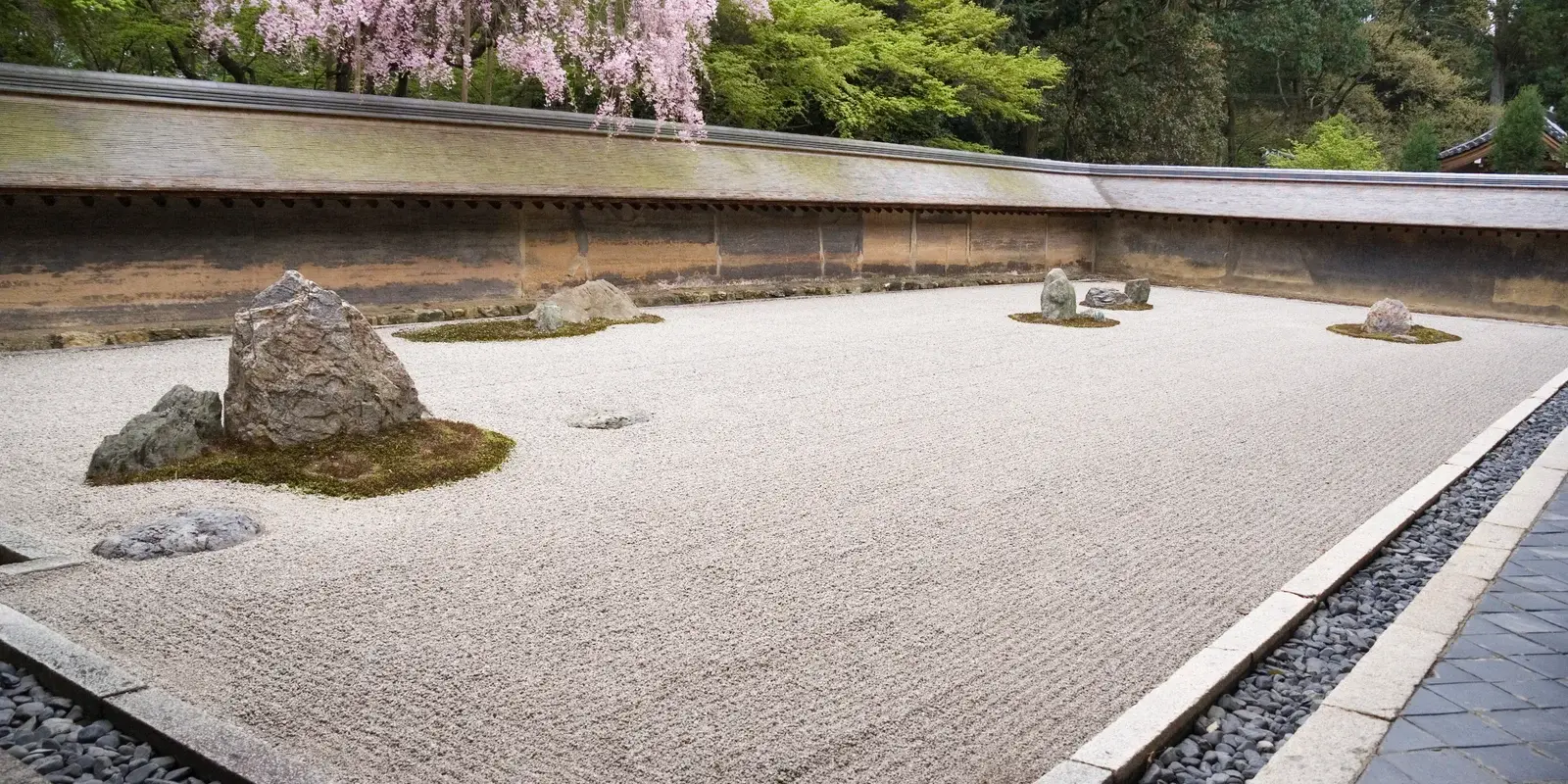
You have probably already seen the photograph: fifteen rocks resting in a rectangle of raked white gravel, nothing else in the frame. Kyoto's official travel guide calls Ryoan-ji's dry garden the most celebrated rock garden in Japan. Most of the voices we found, on both sides of the language line, landed on the warm side of the gauge below. A minority in each language didn't. Some of their complaints overlap: crowds, a garden whose meaning didn't land for them. One complaint shows up on only one side of the language line.
Is it worth it? (in visitors' own words)
We gathered the voices of international travelers who have actually been to Ryoan-ji. Here is how their reactions fell:
Of the 9 negative voices here, none mention the garden looking smaller than expected. "I don't really understand the hype about it," one wrote. "Just didn't find it interesting at all." Another was blunter: "To me, it's worthless... for me it is only a garden with four stones. To me, overrated." A third, visiting during a crowded spell, called it "nothing to offer."
Of the 27 positive voices, five describe sitting with the garden instead of just looking at it. "The rock garden was wonderful when you get to simply sit in silence and take in the precision," one wrote. Another described meditating on the garden for about twenty minutes and finding it "quite serene."
What Japanese reviewers say instead
Japanese visitors describe the same stones in their own reviews on travel sites. Of 129 voices, here is how they fell:
Of the 12 negative voices here, 6 describe the same specific letdown: the garden turned out smaller than they had pictured. "The garden is certainly beautiful," one wrote, "but it felt smaller and less striking than I'd imagined." Another: "the reality looked considerably smaller than what you see on television." A third called it "unexpectedly compact." Not one of the 9 negative foreign voices above mentions size. Two of the other complaints do cross the language line: crowds show up on both sides, and so does a garden whose meaning simply didn't land. The remaining Japanese complaints are one-off: litter left after autumn cleanup, a cold veranda in winter, non-public fusuma paintings.
What the rock garden is doing
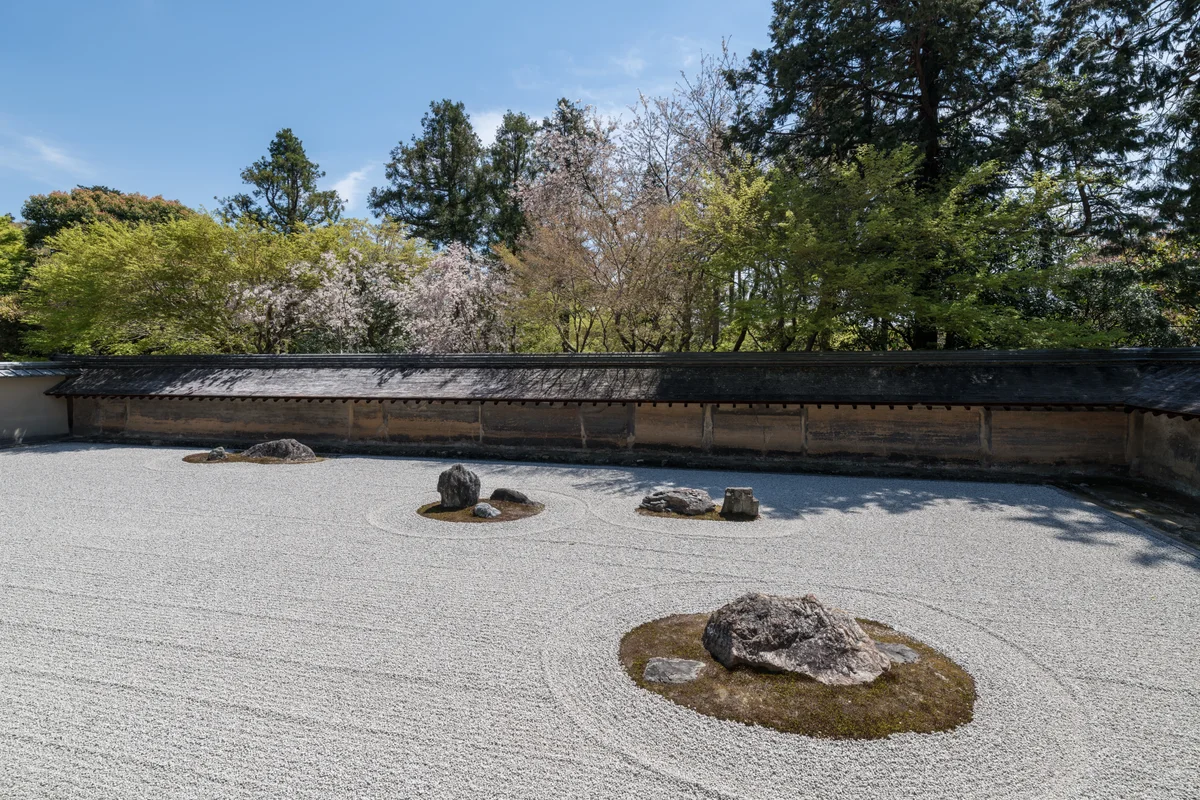
The rock garden fills a rectangle of raked white gravel, enclosed by an earthen wall, measuring about 248 square metres by the temple's own account, a little smaller than a tennis court. Fifteen stones sit inside it in small groupings, grouped by auspicious numbers that give the garden one of its other names, the "seven-five-three" garden. The temple was built in 1450 by the daimyo Hosokawa Katsumoto, but Kyoto's tourism authority says nobody knows for certain when the rock garden was added, who designed it, or what they had in mind. The same source calls it a "sermon in stone."
One detail is worth lingering for: Kyoto's tourism authority notes that from any viewing angle, you can never see all fifteen stones at once. One visitor counted it out for themselves: "No matter how many times I counted, from different angles, I could only ever see fourteen." One Japanese reviewer says they found a way around it: moving back from the main viewing spot toward the room behind it until, by their account, all fifteen came into view.
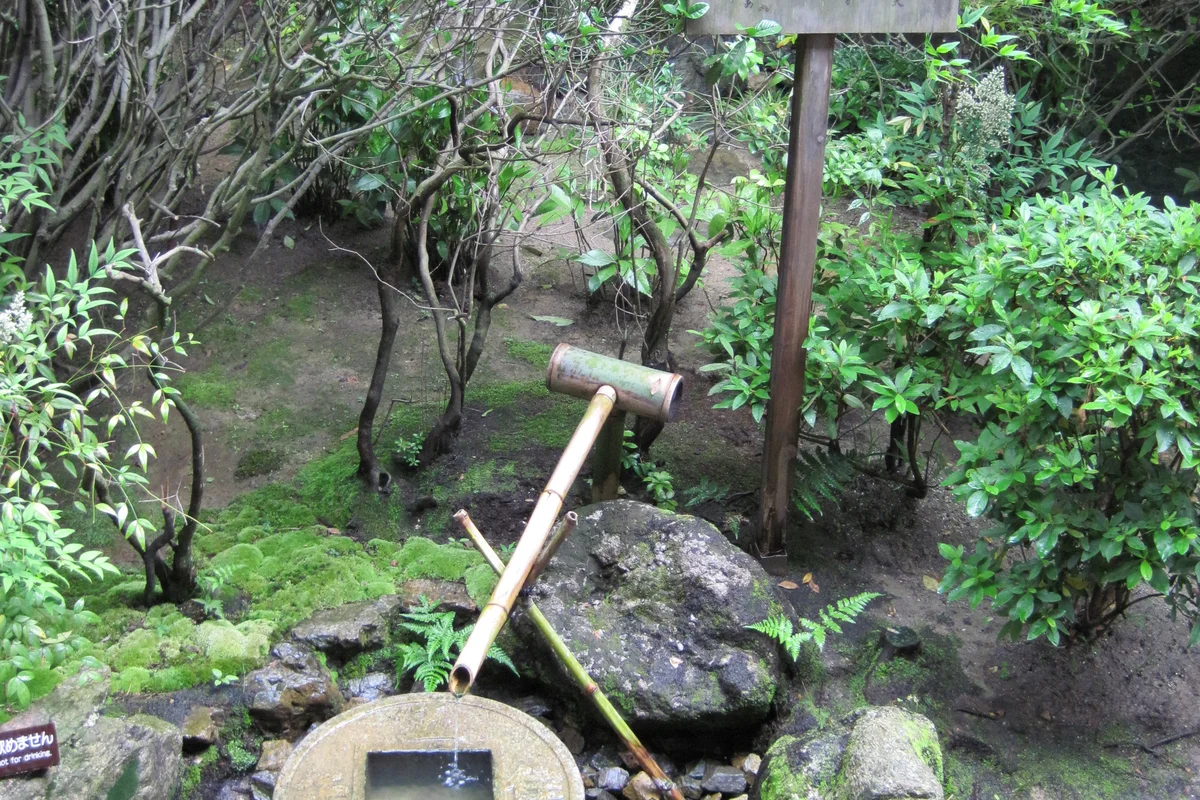
The garden is not the whole of Ryoan-ji, though the photograph makes it look that way. The grounds also hold Kyoyo-chi, a pond that is a highlight for visitors in autumn when the maples color the water. Near the abbot's quarters sits a stone water basin, a tsukubai, carved with four characters that together are read as ware tada taru o shiru, roughly "I have enough, just as I am." One Japanese reviewer calls the tsukubai "one of the things you really shouldn't miss" on the grounds.
Doing it well, the welcomed way
The temple opens at 8:00am from March through November and 8:30am in winter. "Make sure you arrive early (before 10 that is)," one visitor advised, "so you can enjoy the quiet and have the Zen garden for yourself."
Give the garden more than a glance. The visitor who called it serene sat with it for about twenty minutes, well past the time it takes to get the photo. Try counting the stones from a few different spots along the veranda. Landing on fourteen is the result the garden is famous for.
Lower the expectation you arrived with. If you are coming for a spectacle, this garden is quiet instead. If you already know the photographs, the stones in front of you may look smaller than the ones in your head. Either way, the pond and the tsukubai cost nothing extra.
Pair it with what is already nearby. Kinkaku-ji, the Golden Pavilion, is close enough that some visitors see both temples in the same visit.
In the end, 27 of the 40 foreign voices and 103 of the 129 Japanese voices landed on the positive side of their gauge. If the garden looks smaller than you pictured, the Japanese reviews say that happens to other visitors too, even though the foreign reviews never mention it.
Still deciding which famous places actually earn a slot on a short trip? Start with what actually matters in Japan.
Sources
- Kyoto City Official Travel Guide, Ryoan-ji Temple: the rock garden as the most celebrated in Japan and Japan's most famous "hiraniwa"; fifteen rocks enclosed by an earthen wall; no angle reveals all fifteen stones; built 1450 by Hosokawa Katsumoto; nobody knows for certain when the rock garden was made, who designed it, or what the designer's intentions were; Kyoyo-chi pond a highlight in autumn; "sermon in stone."
- Ryoan-ji Temple, official site, Puzzling Design: the rock garden measures 248 square metres; fifteen stones; also known as the "Seven-Five-Three" garden; the designer's intentions are unknown.
- Ryoan-ji Temple, official site, visiting hours and admission: opening hours by season and admission fees.
- Ryoan-ji Temple, official site, Guide of Grounds (境内のご案内): the stone tsukubai near the abbot's quarters, whose central square basin stands for the character 口 (mouth), shared by the four surrounding characters to be read as 吾唯足知 (ware tada taru o shiru).
- Kyoto City Official Tourism Navi, Ryoan-ji (龍安寺): 1994 UNESCO World Heritage inscription as part of the Historic Monuments of Ancient Kyoto; the rock garden enclosed on three sides by an earthen wall.
- UNESCO World Heritage Centre, Historic Monuments of Ancient Kyoto (Kyoto, Uji and Otsu Cities): World Heritage inscription covering the seventeen component sites of ancient Kyoto.
WMJS is written in Japan, in English, with AI help. We check every page, but English is not our first language. If a sentence reads oddly, tell us. One sentence is enough.
Thank you. A person reads every note.
How well do you know Japan?
Based on 51,218+ real Japanese voices
Want to know more? Ask Japanese people
Have a follow-up question about this topic? We'll ask real Japanese people.
Voice Box →