
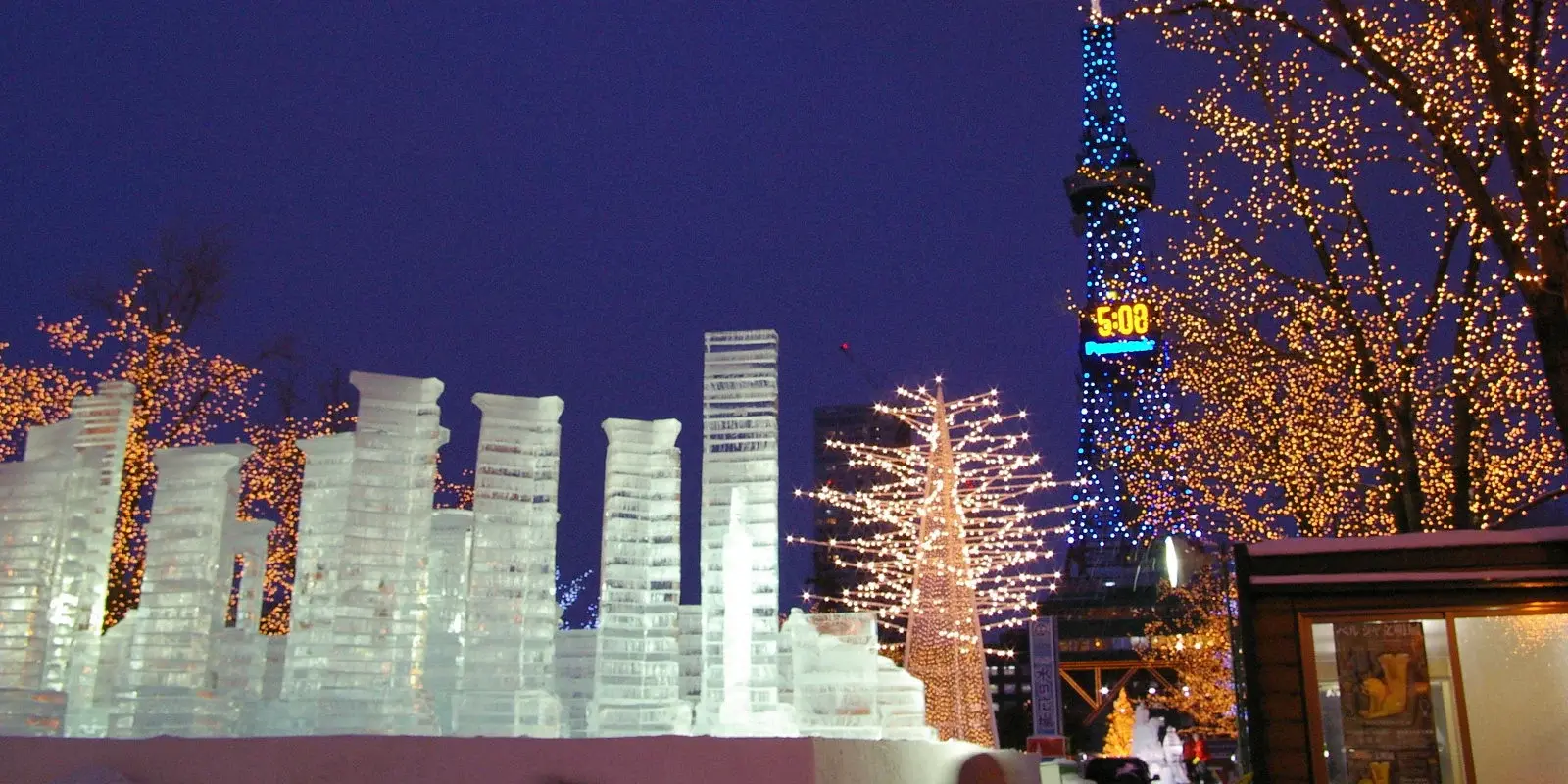
Is the Sapporo Snow Festival Worth It? Foreign Visitors Come Away Disappointed More Than Twice as Often
Odori Park fills with carved snow and ice every February, and the photos of it circulate for months before anyone actually books a flight. We gathered 60 voices from international visitors and 92 from Japanese visitors who have been there, and sorted what each group says about whether it was worth it. Most people in both groups were glad they went. But 23% of the foreign voices came away disappointed, against 9% of the Japanese ones. The complaint behind most of that gap isn't about the sculptures. It's about whether the trip itself, the flight, the hotel, the detour to Hokkaido, was worth making.
Is it worth it? (in visitors' own words)
We gathered the voices of international travelers who have actually been to the Sapporo Snow Festival. Here is how their reactions fell:
Some of the warmest voices here flew to Hokkaido for this alone and don't regret it. "The festival brought us to Hokkaido and it didn't disappoint," one wrote. Another, who traveled from Florida to meet a friend from Hawaii specifically for it, called the whole trip "beautiful." Of the 14 negative voices, 5 aren't really about the sculptures at all; they question whether the trip was worth making. "Certainly not if it's the only/main reason you'd be going to Hokkaido," one wrote. Another, who had lived in Sapporo, put it more bluntly: "It is 100% not a festival worth incurring huge expenses for in my experience." 3 more describe the gap between the hype and the reality: "it didn't quite live up to all the hype and was a bit overly commercial for me," one wrote, while another compared it to a hometown winter festival, "just more kawaii." 3 more are replies on a Taiwanese travel board, about the cost and crush of festival week itself: "Even the cheap hotel we found had such crowding that we couldn't even eat breakfast properly." One visitor put a finer point on the sculptures themselves: "the skill has been replaced with digital projection mapping," they wrote, though they added that the ice sculptures at the separate Susukino site were "spectacular." The remaining 2 mention food that was only okay, and crowds along with fewer large sculptures than they had hoped for.
What Japanese reviewers say instead
Japanese visitors describe the same park in their own reviews on travel sites, a public Q&A site, and a personal blog. Of 92 voices, here is how they fell:
Of the 8 negative voices here, 2 describe the same gap the foreign hype-complaints describe; for one of them, television had built it up. "I'd seen big sculptures on the TV news and expected the park to be full of them, but it wasn't really like that," one wrote. "Maybe four big ones, the rest were small, resident-made pieces." Another had wanted to make the trip once in a lifetime despite disliking the cold: "I'd probably built it up too much. I'd imagined the park full of huge sculptures, but the main ones were only four or five, with citizen-made pieces filling out the rest." 2 more say once was enough, including a reviewer who has since moved to Hokkaido and still isn't drawn to it: "I'm not that interested, and the locals don't seem interested at all either," they wrote, before going anyway because a family member was headed there. "You don't need to go out of your way for it, but going along for the ride is fine." One makes almost exactly the foreign complaint about digital projection mapping crowding out carved snow, comparing it with a previous visit about 15 years earlier. The last 3 are one-off: a visit on the final day when some sculptures had already started to crumble, a festival that felt more commercial than the reviewer expected, and the bluntest of the eight, a visitor who tied the festival's recent decline to staffing cuts at the Self-Defense Force's northern command and, even more, to sales booths being allowed into the festival, setting it beside Sapporo's own clock tower, a sight famous in Japan as a letdown.
The festival's history, and what it actually costs
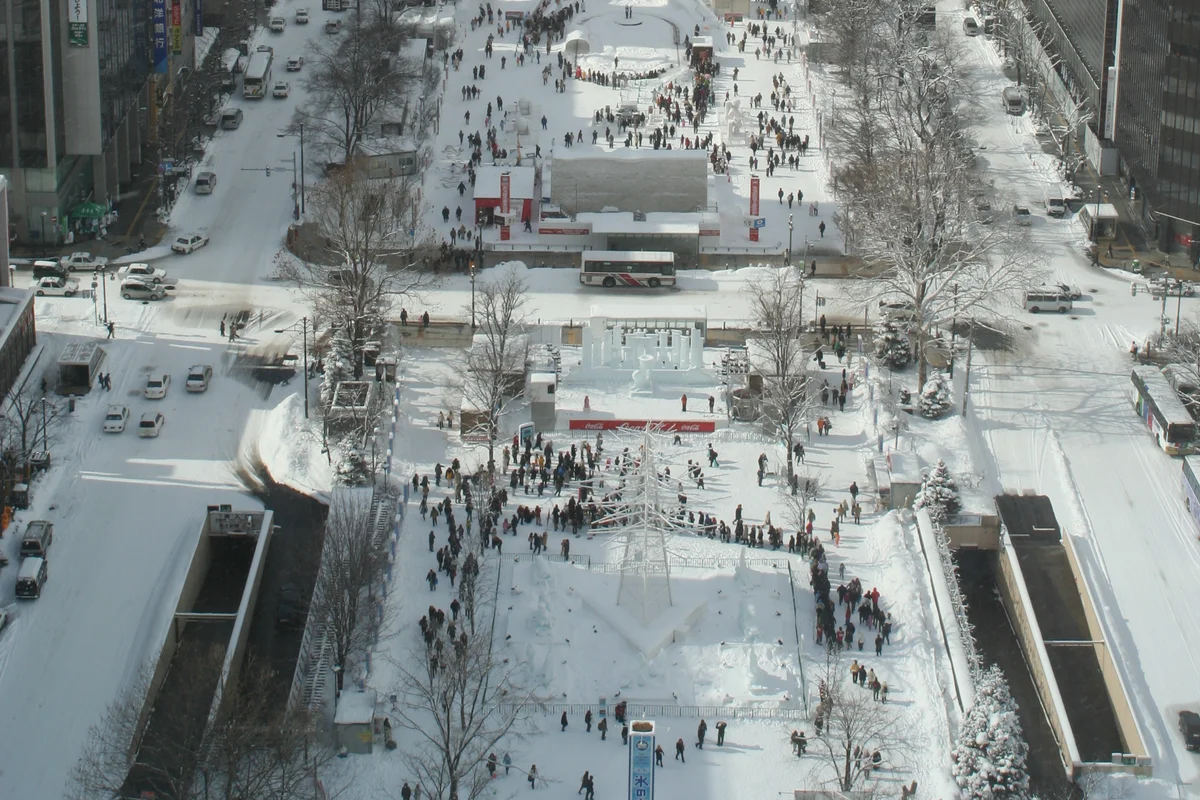
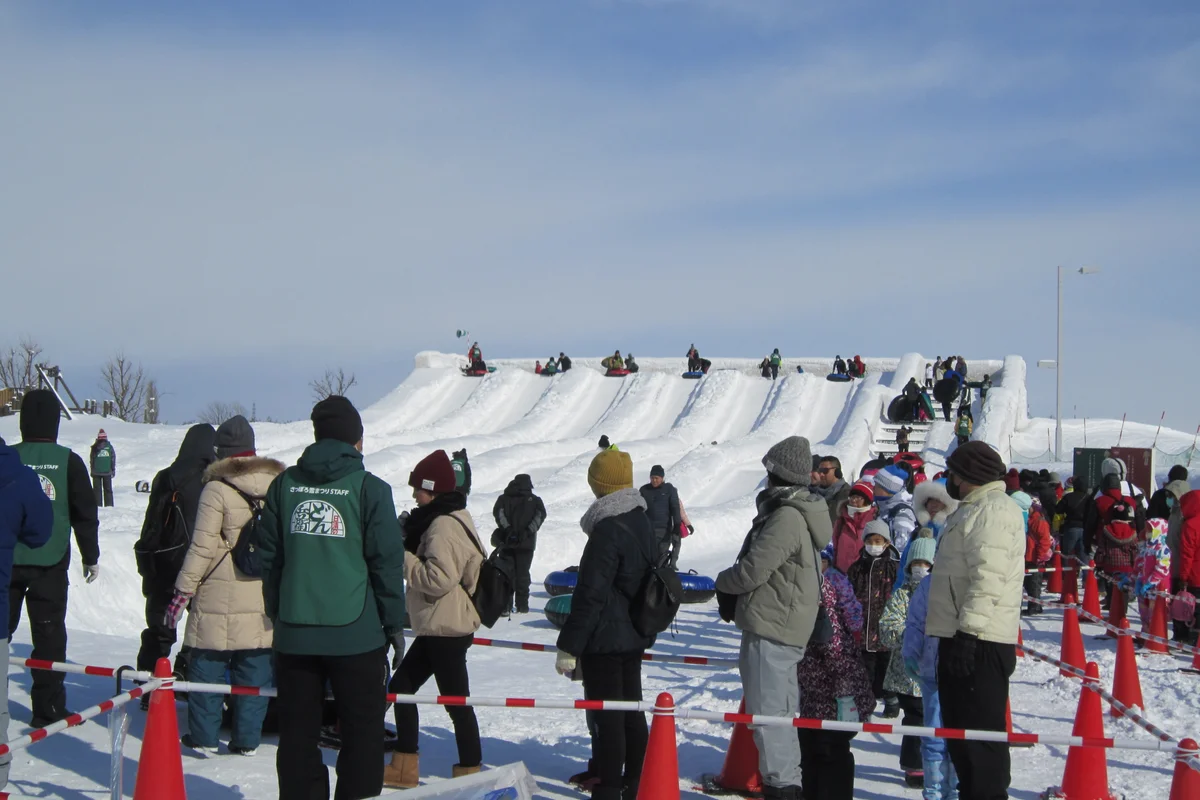
Local middle and high school students built the first six sculptures in Odori Park in 1950, for an event held as a trial with no promise of a second year. More than 50,000 people showed up anyway. The Japan Ground Self-Defense Force joined the effort in 1955, and the festival's official history credits that partnership with the building-sized sculptures visitors now expect; a 15-meter sculpture had already gone up two years earlier, built by a local high school. The International Snow Sculpture Contest began in 1974. By the most recent count, the 2026 festival drew about 2.5 million visitors across three sites: Odori Park, home to 136 sculptures this year, large and small; Susukino, where ice sculptures go up and are lit after dark; and Tsudome, a separate venue built for snow play and family activities. Admission to all three is free.
The large sculptures at Odori are built by a Ground Self-Defense Force unit and a civilian sculpting committee, with citizen groups and schools adding smaller pieces alongside them; since 1987, members of the public have also been able to volunteer on the large sculptures. Snow for the festival gets trucked in from around the city every January, and in genuinely low-snow years, from farther away: in 2007 from mountain areas outside town, and in a record-poor winter in 2020, from the foot of Mount Yotei. That variability is part of why one year's festival doesn't always match the one a visitor pictured from an earlier trip, or from television.
Doing it well, the welcomed way
Decide what the festival is for in your trip before you book around it. The foreign visitors who regretted it mostly made that call before they ever saw a sculpture, over the flight and the hotel. If Otaru, Asahikawa, or the ski fields around Niseko were already on your February itinerary, the festival itself adds no admission cost, though 7 voices across both groups mention hotel or flight prices rising during festival week. If Sapporo in February is the entire plan, weigh that against everything else a long-haul trip to Hokkaido could be spent on instead.
Odori and Tsudome can't be entered before the festival opens, but Susukino's ice sculptures go up about three days early and are worth a look mid-carving if you happen to be in town. Once it's running, see the main sculptures in daylight, when the carving and the scale are easiest to judge, and come back after dark: the illumination and projection mapping are a recurring highlight in the positive reviews above.
Carry a smaller picture into the park than the one in your head. The 2026 festival had 136 sculptures at Odori Park, and the Ground Self-Defense Force, one of the two teams behind the building-sized pieces that show up in most photos of the festival, built only 2 of them, out of 5 large ones. 2026 was the last year even that many: starting in 2027, the unit is scaling back to a single large sculpture a year, citing an increasingly tense international situation, though the festival's 2027 plan still lists 5 large sculptures at Odori. Most of what fills Odori Park is smaller: citizen-made pieces, food stalls, and increasingly, projected light rather than carved snow. That specific shift, away from carving and toward projection, is a complaint that surfaces independently in both language groups above.
Pack ice cleats for your shoes. The official shops, convenience stores, and station kiosks near the venues sell slip-on spikes for about 1,000 yen, cheap insurance against the packed, icy walkways between sculptures.
If you already live somewhere with real winters, temper what you expect from the snow itself. One reviewer originally from Winnipeg, Canada, compared it directly to their hometown's own winter festival: "it kind of felt like Festival du Voyageur, just more kawaii." For them, the food stalls ended up being the best part of the day.
Altogether, 41 of the 60 foreign voices and 58 of the 92 Japanese voices were glad they went. Among the 14 disappointed foreign visitors, 8 were weighing the cost and effort of the trip itself; among the 8 disappointed Japanese visitors, only 1 raised cost at all, and that visitor was remembering a trip made years before moving to Hokkaido.
Still deciding which famous places actually earn a slot on a short trip? Start with what actually matters in Japan.
Sources
- Sapporo Snow Festival, official site, History: founding in 1950 with six sculptures built by local students and roughly 50,000 visitors; a 15-meter sculpture built by Fushimi High School in 1953; the Self-Defense Force joining sculpture production in 1955; the International Snow Sculpture Contest launching in 1974; snow trucked in from farther afield in low-snow years, including 2007 (mountain areas such as Nakayama Pass and the Toyohira Gorge Dam) and a record shortage in 2020 (the foot of Mount Yotei and the Sorachi region); visitor totals of 2,389,000 in 2024, 2,327,000 in 2025, and 2,539,000 in 2026.
- Sapporo Snow Festival, official site, FAQ: the first festival held as a trial, with no guarantee of a second year; admission free at all three venues; large sculptures built by a Ground Self-Defense Force unit and a civilian sculpting committee, with 136 sculptures at Odori Park in 2026; citizens volunteering on the large sculptures since 1987; Odori and Tsudome closed to visitors before the festival opens, while Susukino's ice sculptures can be seen under construction from about three days before; anti-slip shoe spikes sold for about 1,000 yen at official shops, convenience stores, and station kiosks; snow transported from locations around the city starting each January 7.
- Sapporo Snow Festival, official site, 2027 dates announcement: the 2027 (77th) festival confirmed for February 4 to 11 at all three venues, with 5 large sculptures planned at Odori Park.
- UHB (Hokkaido Cultural Broadcasting), "陸上自衛隊が札幌市と雪像づくりで協定調印式": the Ground Self-Defense Force's 11th Brigade building 2 of the 5 large snow sculptures for the 2026 festival, its last year building 2, scaling back to 1 from 2027 onward to respond to an increasingly tense international situation.
WMJS is written in Japan, in English, with AI help. We check every page, but English is not our first language. If a sentence reads oddly, tell us. One sentence is enough.
Thank you. A person reads every note.
How well do you know Japan?
Based on 51,218+ real Japanese voices
Want to know more? Ask Japanese people
Have a follow-up question about this topic? We'll ask real Japanese people.
Voice Box →