
このページは日本語でも読めます。日本語で読む →
이 페이지는 한국어로도 읽을 수 있습니다.한국어로 읽기 →
這個頁面也有繁體中文版。閱讀繁體中文版 →
这个页面也有简体中文版。阅读简体中文版 →
หน้านี้มีภาษาไทยด้วยอ่านภาษาไทย →
Trang này cũng có bản tiếng Việt.Đọc bằng tiếng Việt →
Halaman ini juga tersedia dalam Bahasa Indonesia.Baca dalam Bahasa Indonesia →
Cette page existe aussi en français.Lire en français →
Diese Seite gibt es auch auf Deutsch.Auf Deutsch lesen →
Esta página también está disponible en español.Leer en español →
Questa pagina è disponibile anche in italiano.Leggi in italiano →
Where to go
Kyoto, beyond the first visit
Four days for a repeat trip that stays entirely in Kyoto: Fushimi Inari and Tofuku-ji at their own pace, the Philosopher's Path, Daitoku-ji next door to Kinkaku-ji, and Kurama and Kibune past where the day-trippers turn back
Last verified: 2026-07-21
Days
4, all inside Kyoto: for a returning visitor on a second trip, or a fifth
Best season
Any season works, though cherry-blossom and peak-autumn weekends undo a lot of the quiet this module leans on. I'd aim for the shoulder weeks just before or after those two peaks if quiet matters most to you
Base yourself
Demachiyanagi or the northern wards for atmosphere; Kyoto Station itself only if convenience matters more than quiet this time
Getting around
IC card for buses and the subway, plus the Eizan Railway for the one day that heads out to Kurama and Kibune
Who this plan suits
- First tripNot the focus
- Been beforeGreat fit
- With kidsNot the focus
- SoloGreat fit
- As a coupleGreat fit
- Gentle paceWorks well
When to goYear-round
Good in any season, though cherry-blossom and peak-autumn weekends work against the quiet this module leans on; the shoulder weeks just before or after those two peaks are the gentle recommendation.
If this isn't your first trip to Kyoto, you already know the feeling of checking off Kiyomizu-dera and Gion once and coming back anyway. This module is built for that return, the kind where you can stop covering ground and just live somewhere in the city for four days.
Looking through what repeat visitors and long-time Kyoto residents keep saying, on forums and blogs years apart from each other, the same three habits come up again and again. First, claim the morning: Ryoan-ji's stone garden all but empties out if you're through the gate before nine, the Philosopher's Path is close to silent before ten-thirty, and Fushimi Inari's gate corridor changes underfoot once the tour buses start arriving. Second, look one street over from the famous name: Daitoku-ji sits a short walk from Kinkaku-ji and stays quiet all day, and the wards north of the center, Kita, Kamigyo, Sakyo, have kept more of their older texture than the neighborhoods facing Osaka. Third, keep walking past the point where everyone else turns back: Fushimi Inari's gate corridor thins out well beyond the spot where the crowd stops to photograph it and turns around, and the mountain path from Kibune to Kurama goes almost silent right past the shrine, once the day-trippers who made it that far have turned back toward the city.
I've built four days around those three habits: Tofuku-ji and Fushimi Inari early, the Philosopher's Path threaded between its two temple bookends, Daitoku-ji next door to Kinkaku-ji, and a day that runs out to Kurama and Kibune, past the point where most day-trippers turn around. None of it repeats what the kansai loop already covers in Higashiyama and Gion; think of the two modules as different chapters of the same city, not the same day twice.
Where to base yourself
Our kansai module already walks through the ordinary trade-offs of where to sleep: Kyoto Station for transfers, Higashiyama for atmosphere. On a slower, repeat trip I'd weigh those same options differently, because you're not optimizing for one-seat rides to Nara and Osaka this time.
Demachiyanagi is where I'd point a returning visitor first. It's the spot where the Kamo and Takano rivers meet, a student neighborhood built up around Kyoto University and Doshisha, and the southern terminus of the Eizan Railway that carries you out to Kurama and Kibune on Day 4. It also sits close to the northern wards, and more than one long-time Kyoto commenter online has made the same point in different words: the north of the city has kept more of its older shape than the streets facing Osaka.
Higashiyama or Gion still work, especially if your first trip there was only a day visit. Waking up inside the lanes before the shops open is a different Kyoto than the one you saw with a day pack.
I'd skip Kyoto Station itself this time. It's genuinely the easiest spot for transfers, and more than one Kyoto resident I came across called the area around it flatly dull to actually live in for a few days. A slower trip doesn't need to optimize for transfers the way a first one does.
I don't have a written guide yet for Demachiyanagi as a neighborhood, or for the northern wards as a base, so I'm naming both honestly here instead of linking anywhere.
Demachiyanagi (base)
transit pivotKyoto Station
Tofuku-ji & Fushimi Inari
Nanzenji & Ginkaku-ji
Daitoku-ji & Kinkaku-ji
~28–31 minKurama & Kibune
Getting around & tickets
You'll already have an IC card if you did the kansai loop first; on a stand-alone Kyoto trip, any ICOCA, Suica, PASMO or similar card taps on every line and bus below. A few Kyoto-specific numbers are worth knowing before you plan the four days.
Kyoto City Bus is a flat fare regardless of distance (see the fact box), which is the easy way to reach Daitoku-ji, Kinkaku-ji, Ryoan-ji and most of the northern temples that don't sit on a train line.
There used to be a bus-only one-day pass, and it's gone. Kyoto City stopped selling it at the end of September 2023 and stopped honoring it entirely after March 2024, so if an old blog post or a well-meaning friend points you toward the bus pass, that ticket no longer exists. What replaced it is a combined subway-and-bus one-day pass, covering both subway lines plus every city bus route (and a handful of Kyoto Bus, Keihan Bus and West JR Bus routes), or a subway-only day pass if buses aren't part of your plan. Numbers for both are in the fact boxes; a few flat-fare bus rides can beat either pass on a lighter day, so it's worth doing the rough math first.
The Karasuma subway line is your route north. It runs the length of the city, and Kitaoji Station, partway up the line, is the transfer point for buses out to the Daitoku-ji and Kinkaku-ji area.
A direct city bus also runs from Kyoto Station itself. Routes 205 and 206 go straight to the Kitaoji bus terminal, Daitokuji-mae and Kinkakuji-michi with no transfer, so on a morning when you'd rather not think about connections, it's the one-seat option.
For Kurama and Kibune on Day 4, none of the passes above apply. That's a separate private line, the Eizan Railway, running out of Demachiyanagi; fares, times and its own day pass are in the fact box for that day.
Ohara, if you add it as a fifth day, is a different fare structure again (see extendMd). It charges by distance instead of the flat city-bus fare, so budget for two IC taps each way.
Tofuku-ji and Fushimi Inari, the long way
Kyoto's first-trip circuit puts you at Fushimi Inari's gate for a photo and moves you along. On a repeat trip I'd give the whole morning to this southern corner instead: starting at Tofuku-ji before its garden fills, then climbing Fushimi Inari well past the point where the crowd photographs the corridor and turns back. The day closes somewhere our kansai module doesn't send you, down by the river where the Kamo and Takano meet, at the hour the light goes soft.
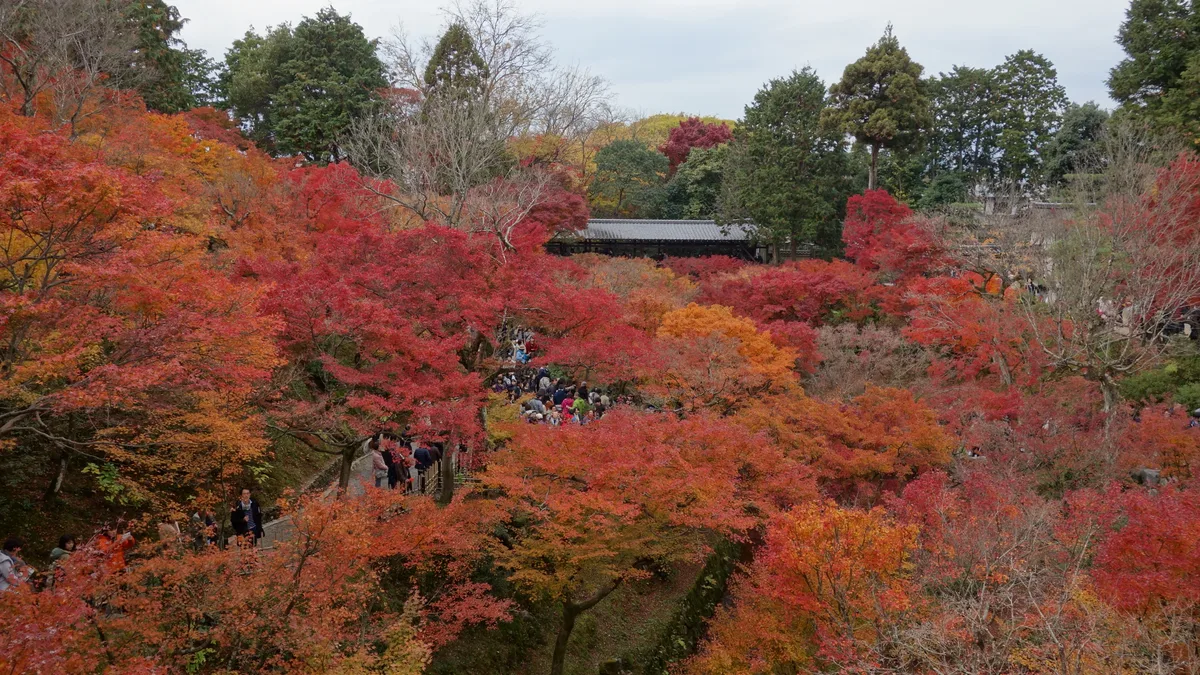
- 08:00Tofuku-ji at openingTofuku-ji sits a few stops south of Kyoto Station on the JR Nara Line or the Keihan Main Line, and it opens its garden before the day-trip buses arrive from town. Go for opening; the famous view over the Tsutenkyo bridge is a different place with almost nobody standing in it. Linked guide: Tofuku-ji.
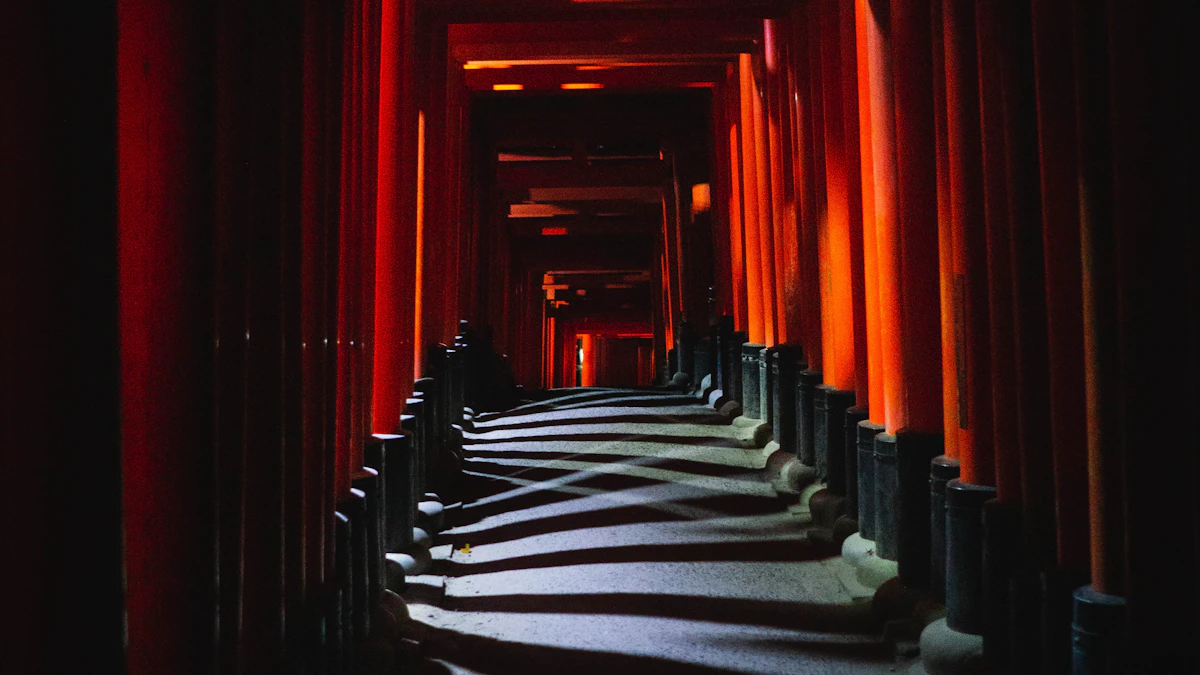
- 10:00Fushimi Inari, past the gate corridorOne or two stops further on the same lines lands you at Fushimi Inari. Our kansai module treats this as a short climb through the vermilion gates and back down; on a repeat visit I'd keep going, past the Yotsutsuji junction partway up, where the crowd thins with every flight of stairs and the view opens out over the Kyoto basin. Linked guide: Fushimi Inari.
- 13:00Lunch, then north along the riverAfter the climb down, find lunch near the station, then let Keihan's Main Line and its short Ōto Line extension carry you north along the city's east side. The line ends at Demachiyanagi; there's no need to rush the transfer.
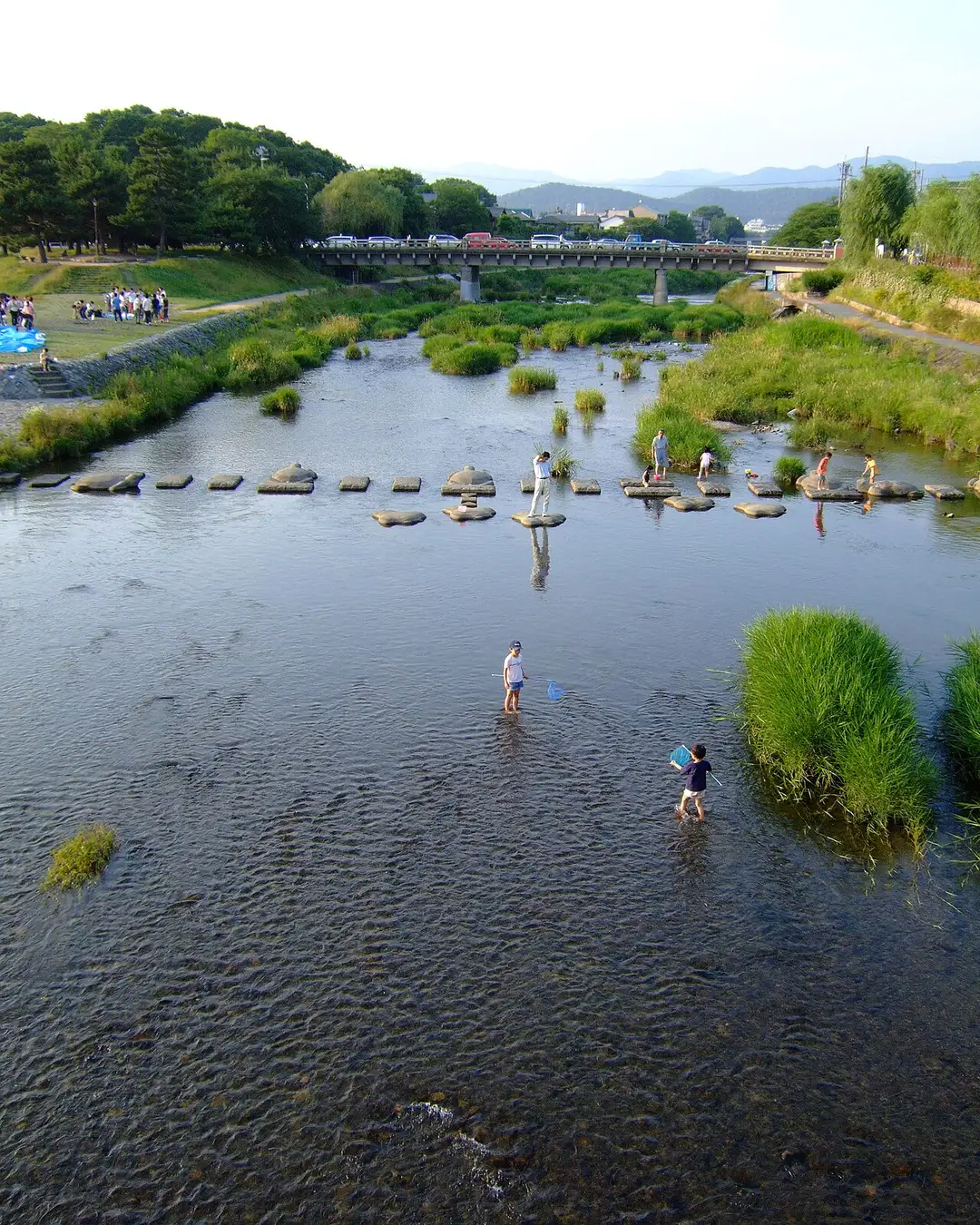
- EveningThe Kamogawa Delta at golden hourDemachiyanagi sits right where the Kamo and Takano rivers meet in a wide, shallow delta. Plenty of Kyoto residents just come here to sit on the flat stepping stones as the light drops; it costs nothing and needs no ticket.
The quiet spine behind Higashiyama, the Philosopher's Path
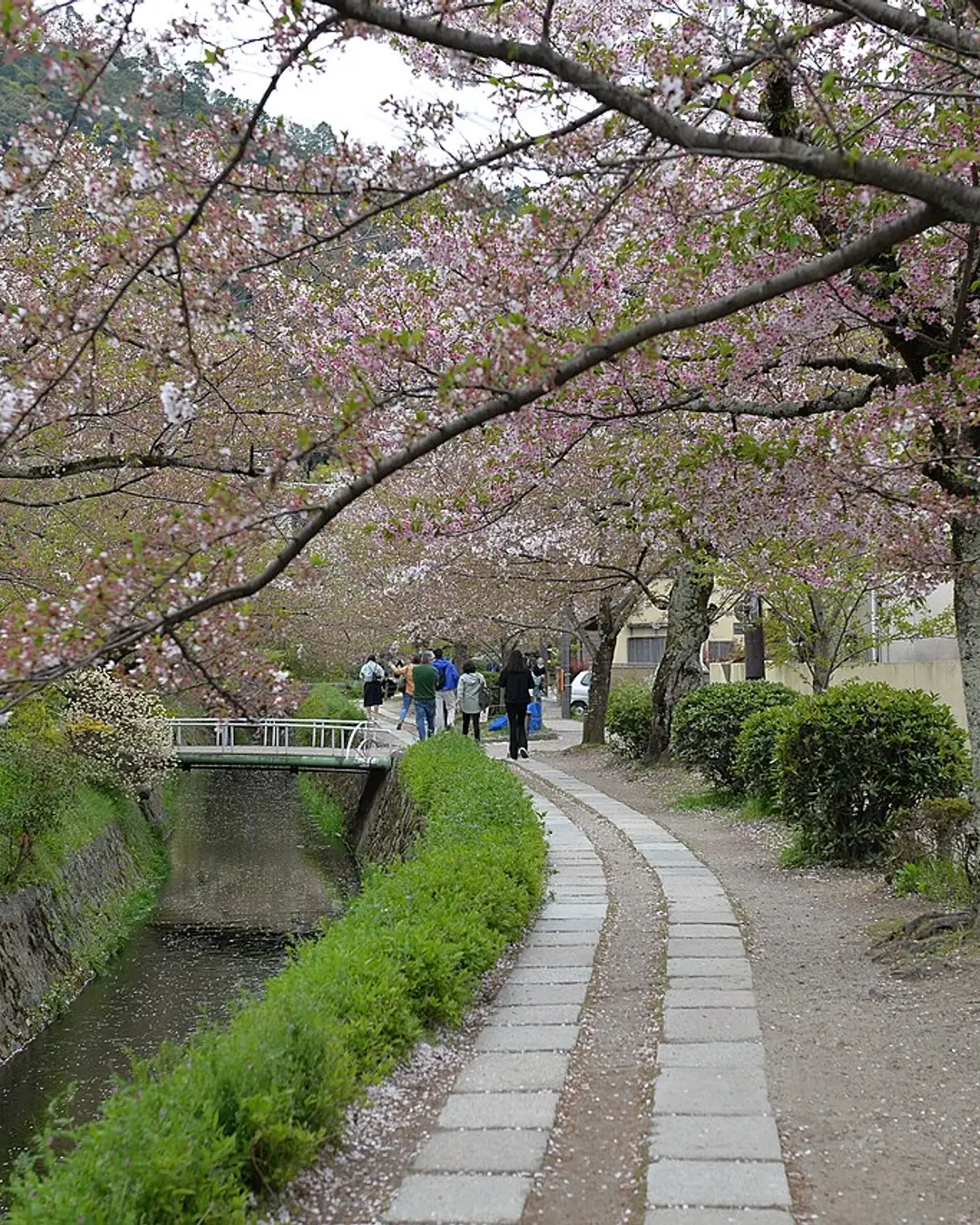
Kiyomizu-dera and Gion already get a full, careful day in our kansai module, so I'm not sending you back to either one here; a second Kyoto trip doesn't need the same lane twice. This day sits one valley over instead, along the canal at Nanzenji and the footpath that runs north from it. The path itself doesn't fill until late morning, and there's real room to walk slowly between the two temples that bookend it.
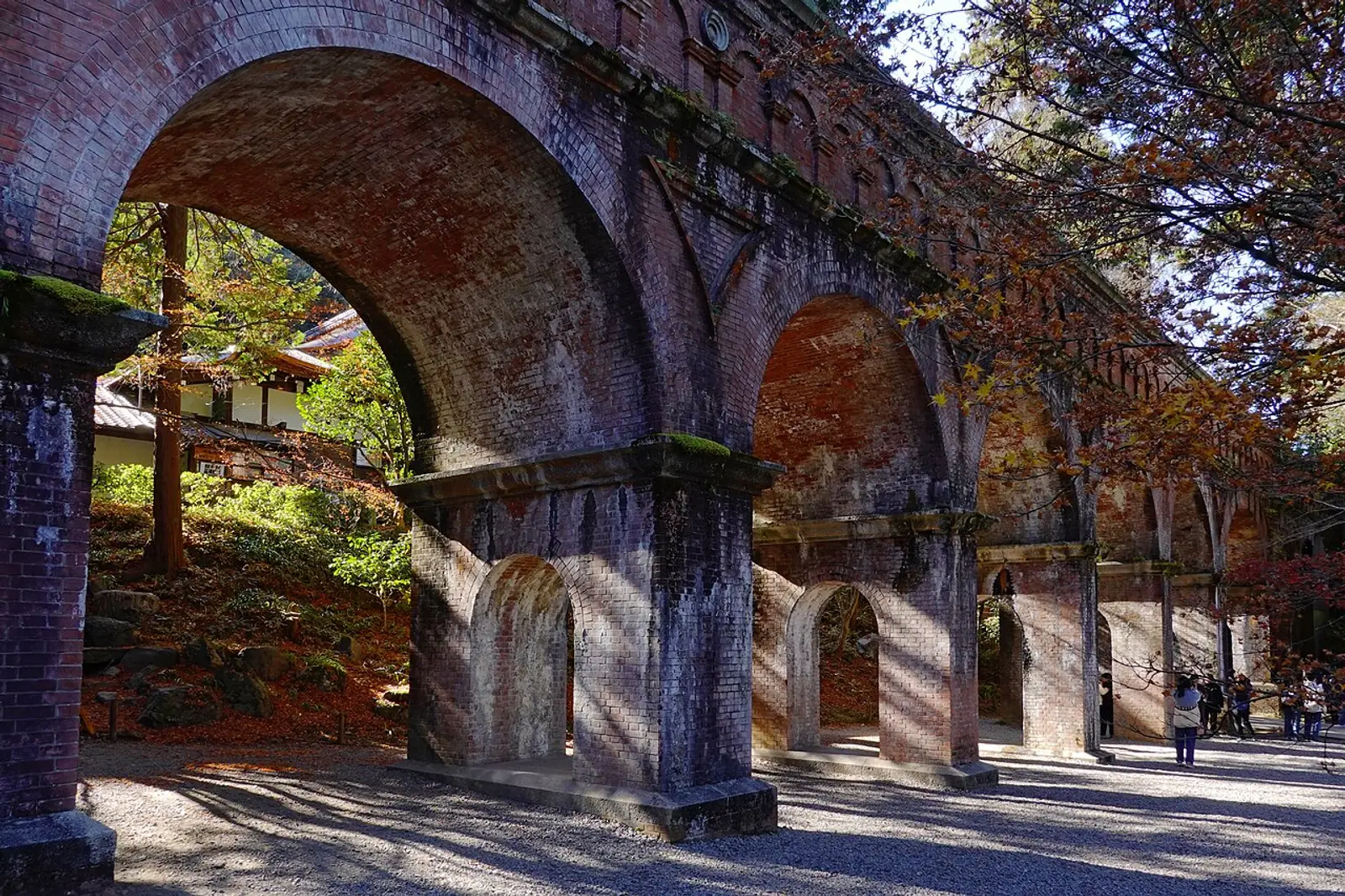
- 08:30Nanzenji and the aqueductNanzenji has no train station right outside it, but it's an easy walk from the Higashiyama or Keage stops on the Tozai subway line. Inside the grounds, the redbrick Suirokaku aqueduct still carries water across stone arches built into the hillside, a Meiji-era import standing quietly inside a Zen temple this early in the day.
- 09:15The Philosopher's Path, on footFrom Nanzenji's north gate, the Philosopher's Path follows a stone canal up to Ginkaku-ji, named for a Kyoto University philosopher who walked it while he thought. Outside the cherry-blossom and maple weeks, the path runs close to empty at this hour, filling in gradually from mid-morning onward as people arrive from Ginkaku-ji at the other end.
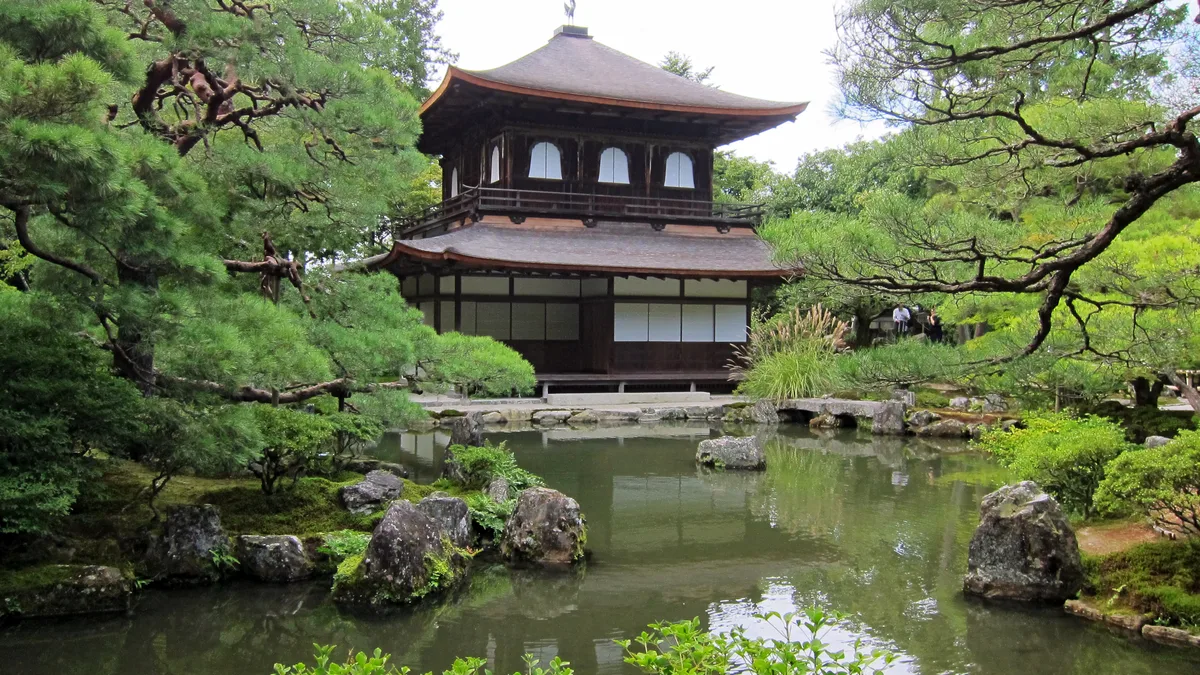
- 11:00Ginkaku-ji, arriving from its quiet sideThe path ends directly at Ginkaku-ji's gate, so you arrive the quiet way, on foot from the temple side, while most day-trippers are still coming up the shop-lined approach street from the bus stop. Linked guide: Ginkaku-ji.
- AfternoonOpen, on purposeI'd leave this open on purpose. Wander back through the quieter lower half of Higashiyama at your own pace, or just sit somewhere with coffee. Filling every day of a return trip is exactly the habit this module is trying to talk you out of.
Ryoan-ji before nine, then Kinkaku-ji and Daitoku-ji
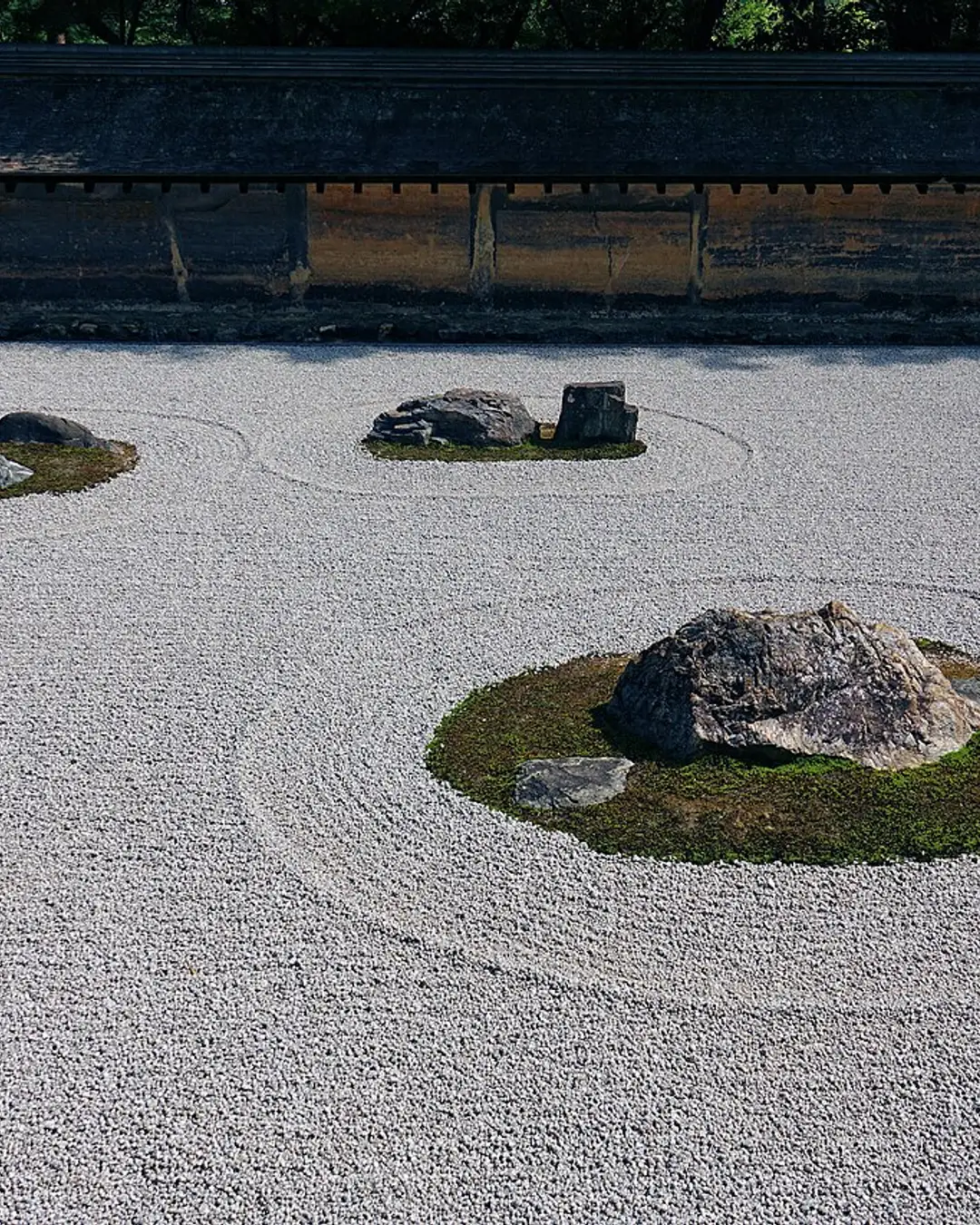
Ryoan-ji's stone garden is the reason to set an early alarm today: it's a genuinely different place in the half hour after opening than it becomes once the tour buses arrive. Kinkaku-ji's gold pavilion, the postcard nearly everyone already has from a first trip, gets a quick, satisfying stop on the way. Daitoku-ji's walled compound of sub-temples closes out the late morning; it stays quiet at pretty much any hour, which is exactly why it can go last today.
- 08:00Ryoan-ji before the tour busesRyoan-ji is a short bus or taxi ride from the Kinkaku-ji area, but today it comes first. Get there right at opening, generally around eight, though the exact hour can shift a little by season, well before the tour buses start arriving closer to nine. That gap is what buys the stone garden the kind of stillness it's actually known for. No guide written for Ryoan-ji yet; this is what the research turned up about it.
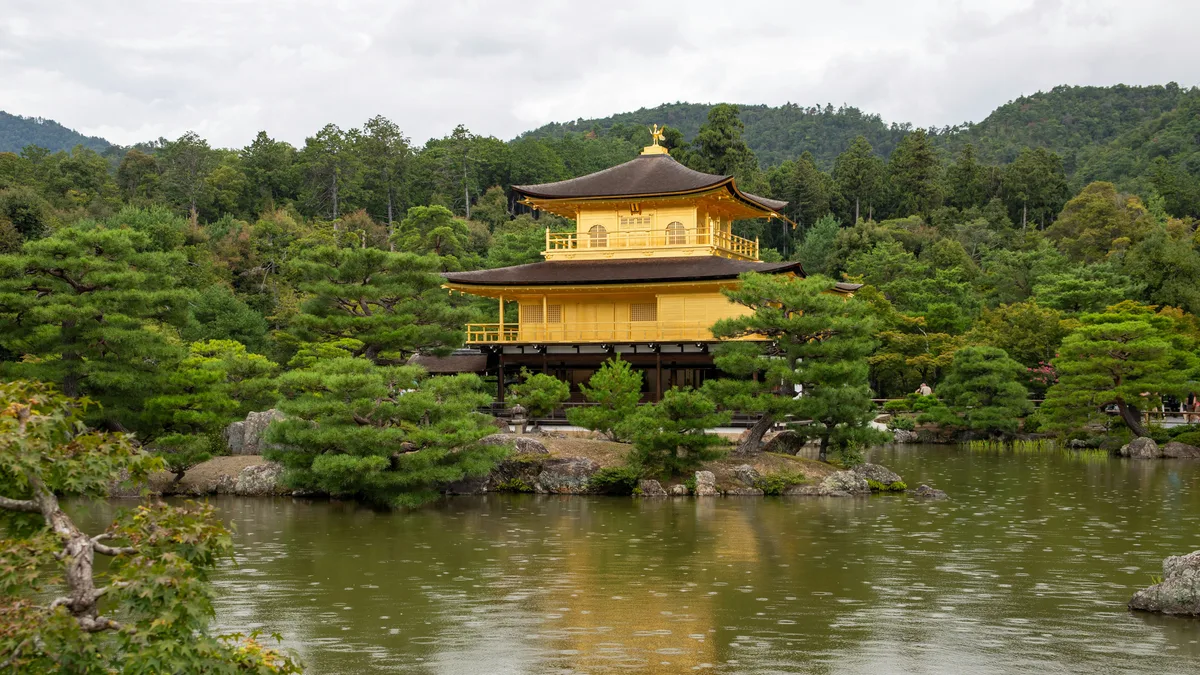
- 09:30Kinkaku-ji, quicklyFrom Ryoan-ji, backtrack a short bus or taxi ride to Kinkaku-ji, reached from the Kinkakuji-michi stop or the Daitokuji-mae stop on routes 205/206. The pond-circuit walk is short, and on a return trip I'd treat it exactly that way: one slow loop, the photo you came for, then move on before the tour groups packing in behind you start to press. Linked guide: Kinkaku-ji.
- 11:00Daitoku-ji's sub-temples, without the rushDaitoku-ji is a walled Zen compound with more than twenty sub-temples inside it, a short walk from Kitaoji subway station or the Daitokuji-mae bus stop off routes 205/206. Unlike the first two stops, it doesn't fill in as the morning wears on; only a handful of the sub-temples open to the public on any given day, and even those rarely feel busy no matter what time you arrive. Wander whichever gates happen to be open.
- AfternoonOpen, or the spare half-dayThree temples by midday is a full morning already. I'd let the rest of the day go unplanned, or use it as the spare half-day the shortDayMd section below talks about.
Out past where the day-trippers turn back, Kurama and Kibune
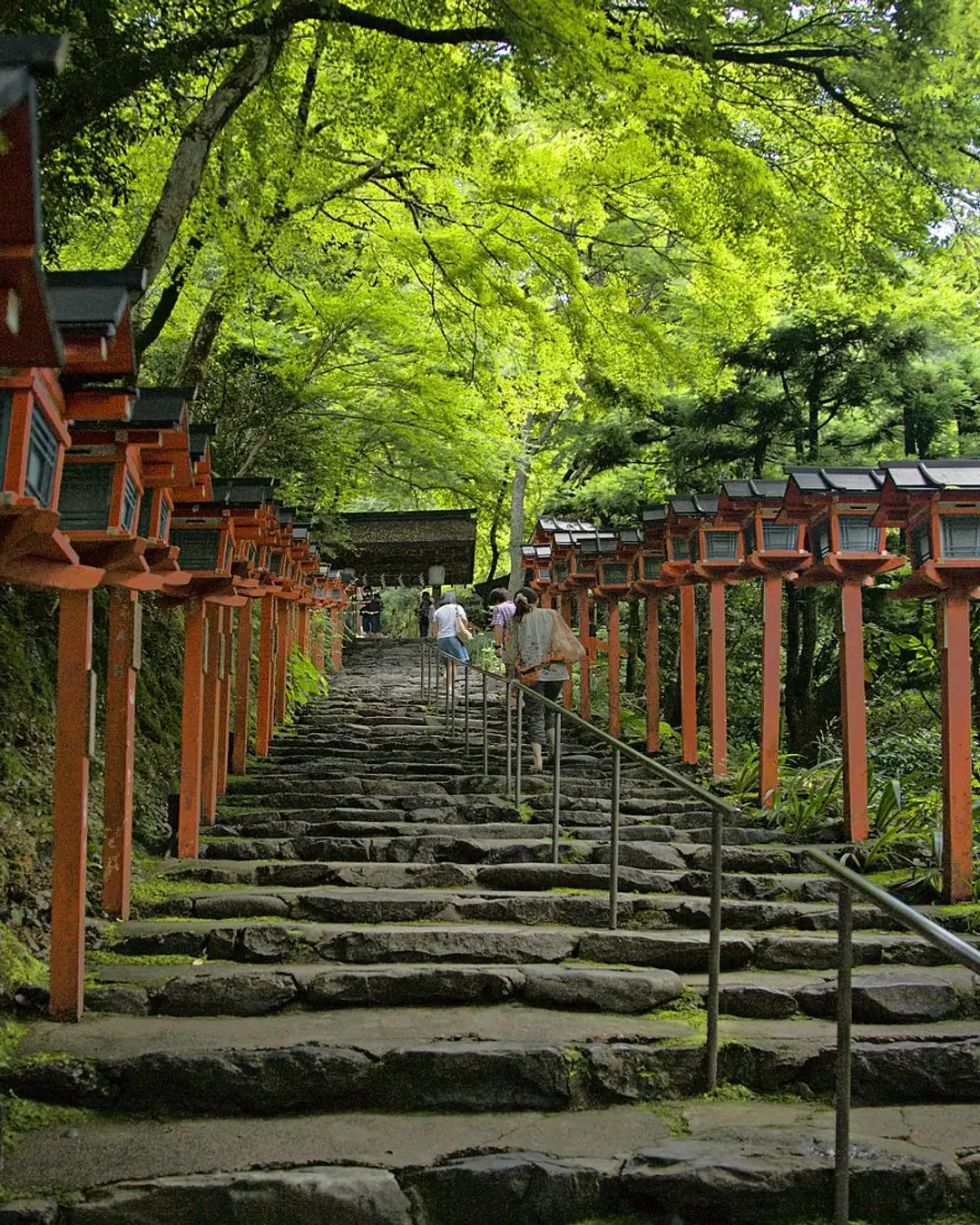
Demachiyanagi is where the Eizan Railway starts, a small two-line network that carries you out of the city and into the mountains in well under an hour. Most day-trippers who make it out this far get as far as Kibune Shrine and stop there; the quieter half of this day is what's past it.
- 09:00Demachiyanagi to KibuneFrom Demachiyanagi, the Eizan Railway's Kurama Line runs out to Kibuneguchi Station in daytime service; the shrine itself is a short uphill walk or a quick local bus ride from there. Fares and timing are in the fact box. Kibune Shrine sits along a narrow river gorge, and most visitors who come this far stop at the shrine and turn back toward the city.
- 11:00Past Kibune, into the quietThe mountain path connecting Kibune to Kurama climbs through forest the whole way and takes longer than the map suggests at an easy pace. Most of the crowd that made it to Kibune Shrine doesn't continue past it, so the trail tends to go quiet almost immediately once the shrine is behind you.
- 13:00Kurama-dera and the ride backKurama-dera sits partway up the mountain on the Kurama side, reachable by the path above or from Kurama Station. From there, the same Eizan line runs back to Demachiyanagi. If you'd rather do the day in reverse, start at Kurama and end at Kibune; either direction uses the same line and roughly the same time each way.
- EveningBack to the river, one more timeRide the Eizan line back into Demachiyanagi as the light goes. If you started this whole trip at the delta on Day 1, ending it there too isn't an accident. A repeat trip to Kyoto doesn't need a big finish, just one more quiet hour in a city you've already fallen for once.
If you have one more day
+1 dayIf a fifth day opens up, I wouldn't necessarily hand you a new name to add to the list; the thesis of this whole module is that a repeat trip rewards slowing down more than it rewards seeing more. A genuinely restful fifth day might just mean picking one place from the four above and going back at a different hour: Kinkaku-ji in a season you haven't seen it in, or the Kamogawa Delta well after dark, once the delta itself has gone quiet.
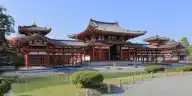
If you do want one new name, Uji comes up constantly as the next stop for people who've already done central Kyoto more than once, mainly for Byodo-in's Phoenix Hall and the surrounding tea country. I don't have a guide written for Uji yet, so consider it a name worth knowing, not a full fifth day I can back with the same research the rest of this module has.
If you're short a day
−1 dayIf you're tight on time, start by deciding what to cut. Kurama and Kibune go first; it's the one full day spent getting somewhere rather than being somewhere, and it's also the day most easily handed off to a future trip. Next, fold Daitoku-ji and Ryoan-ji into a single unhurried morning and treat Kinkaku-ji as optional in that compressed morning. What I'd protect no matter how short the trip gets is the early start: even a single morning at Fushimi Inari or the Philosopher's Path before nine does more for how the trip feels than an extra stop squeezed into the afternoon.
Extend from here
OnwardThis module assumes you've already done a first Kyoto trip, so it doesn't repeat Arashiyama, Nishiki Market, Nara or Osaka; those live in our kansai module, and it connects back cleanly onto this one if you want a Kansai day bolted onto the end.
Ohara is the next name for the same reason Kurama and Kibune are: it has a small farming-village feel, several notable temples including Sanzen-in, and it sits mostly outside what a first Kyoto trip goes looking for. I can't give you a firm bus fare or ride time for it, though. The Kyoto buses that run out there (routes 17, special-17, 18 and 10) charge by distance rather than the flat city-bus fare, and I couldn't pin down a static number for it that I'd stand behind, so budget a half day, tap your IC card on and off, and treat the fare itself as a small surprise you'll see on the card reader's display when you tap out.
WMJS is written in Japan, in English, with AI help. We check every page, but English is not our first language. If a sentence reads oddly, tell us. One sentence is enough.
Thank you. A person reads every note.
Good to know — fares & times
Kyoto City Bus, flat fare
Adult 230 yen per ride, cash or IC card, anywhere on the network. The practical way to reach Daitoku-ji, Kinkaku-ji and Ryoan-ji.
Kyoto City Transportation Bureau (official)as of 2026-07
Kyoto Subway 1-Day Pass (subway only)
Adult 800 yen, both subway lines, no buses included.
Kyoto City Transportation Bureau (official)as of 2026-07
Kyoto Subway & Bus 1-Day Pass
Adult 1,100 yen. Covers both subway lines, every Kyoto City Bus route, and some Kyoto Bus, Keihan Bus and West Japan JR Bus routes for the day.
Kyoto City Transportation Bureau (official)as of 2024-04 (page last updated)
Old bus-only 1-Day Pass (discontinued)
The former 700 yen bus-only day pass stopped being sold on September 30, 2023, and stopped being honored entirely after March 31, 2024. If an older source points you toward it, it no longer exists; use the combined subway-and-bus pass above instead.
Kyoto City Transportation Bureau (official)as of 2026-07
Karasuma Line (subway)
15 stations over 13.7 km, Kokusaikaikan to Takeda. Kitaoji Station, partway up the line, is the transfer point for the Daitoku-ji / Kinkaku-ji area.
Eizan Railway, Demachiyanagi to Kibune / Kurama
About 28 minutes to Kibuneguchi Station or 31 minutes to Kurama Station in standard daytime service, adult fare 470 yen either way. IC cards (ICOCA, Suica and others) work; the Japan Rail Pass does not cover this line. A one-day pass covering the whole network is 1,200 yen adult.
Eizan Electric Railway (official, English)as of 2026-07
Demachiyanagi Station
The Kyoto-side terminus of the Keihan Main Line's Ōto Line extension, and the starting point of the Eizan Railway. Sits right at the Kamogawa Delta, where the Kamo and Takano rivers meet.
Eizan Electric Railway; Keihan Railway (official)as of 2026-07
Kyoto's own area names for these stops
Kyoto City's tourism board groups Kinkaku-ji under the 'Kinkakuji, Omuro and Uzumasa' area, and Daitoku-ji under 'Kamigamo, Kitayama and Daitokuji'. Both sit in a separate zone from the central Kawaramachi and Karasuma district, which matches how removed they feel on the ground.
Kyoto City Tourism (official)as of 2026-07
Go deeper
8 min· 5 ch
Before you goWhile you walk
Tofuku-ji — The Maple Bridge Everyone Photographs, and the Zen Garden Almost No One Reads
A cultural audio guide to Kyoto's Tofuku-ji, verified against official sources: why the famous autumn maple bridge is a working monks' passage, the Zen garden almost no one reads, and how to visit.
Tofuku-ji
8 min· 5 ch
Before you goWhile you walk
Fushimi Inari Taisha: Ten Thousand Gates, Each One a Thank-You
The ten thousand vermilion gates at Fushimi Inari are thank-you notes you can walk through. A cultural audio guide verified against official sources: why the foxes are messengers not gods, why the summit has no view, and how to walk past the crowds.
Fushimi Inari Taisha
9 min· 6 ch
Before you goWhile you walk
Ginkaku-ji — Why the Silver Pavilion Has No Silver, and Why Japan Finds That Beautiful
Why the Silver Pavilion has no silver — a free audio guide to Ginkaku-ji, Kyoto, verified against official temple sources. Higashiyama culture and the art of restraint, the sea of silver sand, hours, admission (1,000 yen), access from Kyoto Station, and the Philosopher's Path.
Ginkaku-ji (Jishō-ji)
7 min· 6 ch
Before you goWhile you walk
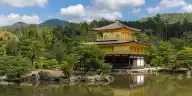
Kinkaku-ji — Why Everyone Stops at the Same Spot to Photograph the Golden Pavilion
An audio cultural guide to Kinkaku-ji, Kyoto's Golden Pavilion, verified against official temple sources. Why you view it from across the pond, what the gold really means, plus hours, admission, and access from Kyoto Station.
Kinkaku-ji (Rokuon-ji)
Read before you go
Combine with another plan
Kansai, an easy few days
Japan's older heart — Kyoto, Nara, Osaka — at a comfortable pace
Your second trip, going deeper
The trip after the golden route — fewer places, more present: one region you skipped, one city lived in, or one love followed clear across the country
Tokyo, beyond the first visit
Five neighbourhoods a repeat trip wants to live in, not tick off: Yanaka, Kagurazaka, Kuramae and Kiyosumi-Shirakawa, Shimokitazawa, and Shibuya and Shinjuku at a slower pace
Sources
- Kyoto City Transportation Bureau, bus fare and subway day pass
- Kyoto City Transportation Bureau, Subway and Bus 1-Day Pass
- Kyoto City Transportation Bureau, old bus 1-Day Pass discontinuation notice
- Kyoto Municipal Transportation Bureau, Karasuma Line route info (English)
- Eizan Electric Railway (official, English)
- Keihan Railway (official)
- Kyoto City Tourism (ja.kyoto.travel, official)