
Is Asuka Worth It? What Visitors and Locals Wrote
Asuka is a farming village south of Nara, where Japan first organized itself as a state in the late 6th to early 8th centuries. In July 2026, UNESCO added "the Ancient Capitals of Asuka and Fujiwara" to the World Heritage List. There is no train line through the middle of the village and no single building that photographs the way a castle or a torii gate does. What it has instead is a scatter of stone tombs, temple foundations, and rice paddies, best covered by bicycle.
We gathered 40 public posts by international visitors and forum commenters, and 126 reviews by Japanese visitors and locals. Most of the voices in both groups went before the UNESCO decision, so they describe a quiet Asuka rather than whatever Asuka looks like this autumn. Both groups raise the same worry from opposite directions: foreign visitors wonder whether they will get enough out of the stones without background reading, and Japanese visitors, some of whom first saw these murals in a school textbook, wonder whether the real tomb will look smaller than its fame.
Is it worth it? (in visitors' own words)
Of the 40 international voices, 20 are positive. One visitor who spent a day in Asuka on a trip from Nara wrote that it was "not touristy, incredibly scenic and peaceful, with lots of history and archaeology," and called the e-biking through rice fields and village streets "one of the most pleasant casual bicycling days I've experienced anywhere." On the same thread, another visitor who found out about Asuka through YouTube wrote: "I had such sweet interactions with Japanese people who wondered how I found out about Asuka." The first visitor, answering a question later in the thread, put Asuka and Nara in order: Asuka as "Act I" of early Japanese state formation, Nara as "Act II" on a grander scale, worth holding "in your back pocket for a day when you want to see beautiful rural scenery."
Sixteen voices say it depends. Five say what it depends on: whether you already have some interest in the history going in. On a Taiwanese forum thread comparing Asuka with the Ohara district near Kyoto, one commenter wrote: "For A (Asuka), you need more of a research/scholarly spirit to really feel it." Another, agreeing with that post, wrote that you should have interest in kofun culture first, "otherwise it'll really be very... very rural and quiet (= boring?)" Others call a single site a short stop rather than a trip of its own. A TripAdvisor reviewer who had already seen other tumuli in Asuka wrote: "It doesn't require a long visit and I wouldn't suggest going to Asuka just to look at it but if you are in town it is definitely worth seeing." A reviewer at Asuka-dera, the temple with Japan's oldest Buddha statue, called it "just an ordinary temple" apart from the statue.
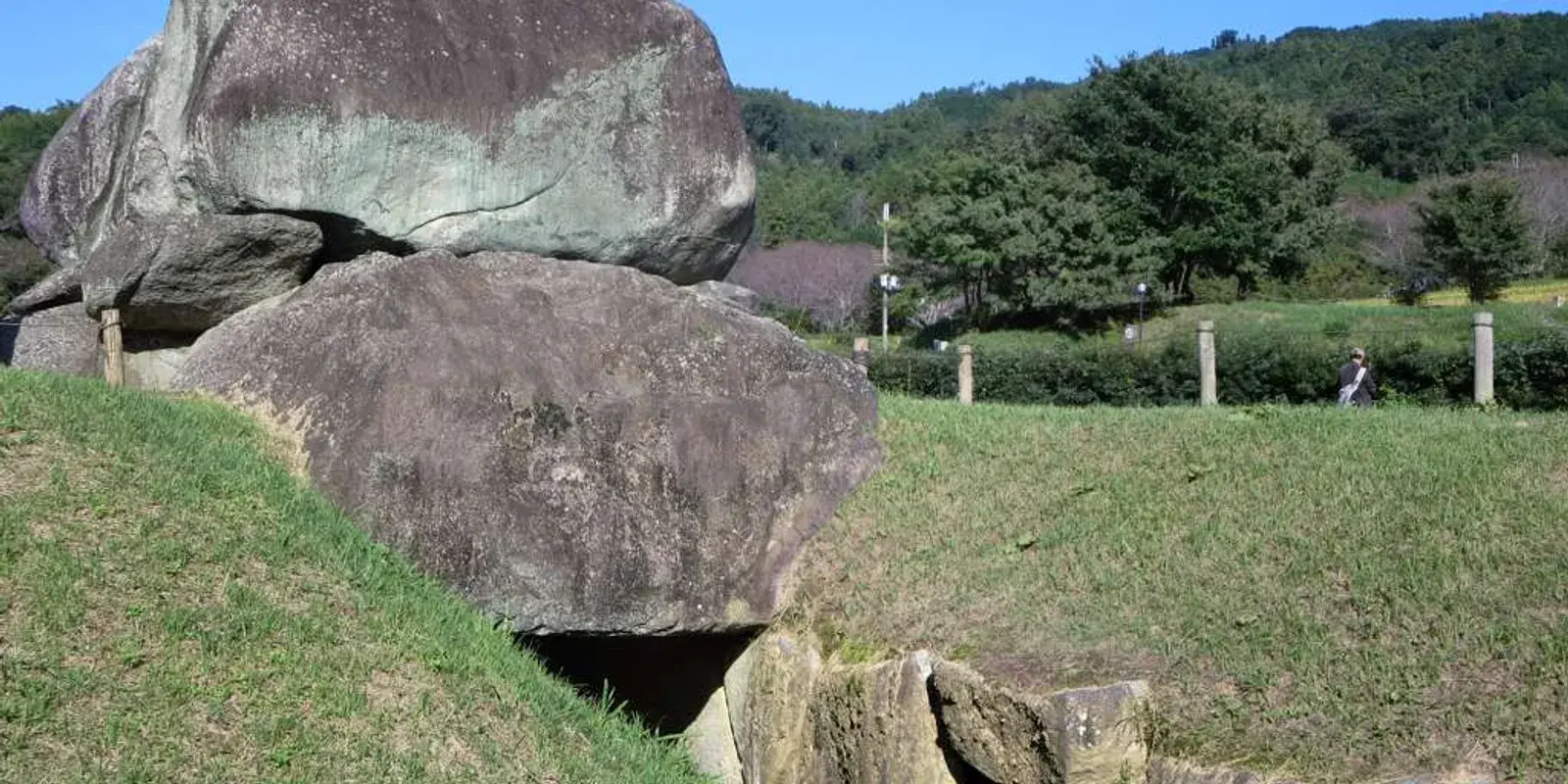
Four voices are negative. Two are about a single site rather than the trip as a whole. One TripAdvisor reviewer at Ishibutai wrote: "Not much apart of the tumb. Nothing else than the stones." The reviewer who had seen the other tumuli also reviewed the Takamatsuzuka Mural Hall: having already seen similar murals and a VR display elsewhere in the park, they wrote that the hall "didn't offer much extra... don't expect much more than you can see elsewhere." The other two are from the same Taiwanese thread. One commenter put it plainly: "I think if you're not interested in Japan's ancient history or ruins, Asuka might not be fun." Another called Asuka "really rough going" and half-joked that Yoshino, a different Nara mountain town, might have been the better choice.
What Japanese visitors and locals say
Of the 126 Japanese voices, 67 are positive. Almost none of them doubt that Asuka matters: it is where the Japanese state began, and the murals once held inside Takamatsuzuka Tomb, showing court women in color from the late 7th or early 8th century, are a national treasure. Someone who grew up nearby wrote that "new excavations and the mural at this site still move me, even now. I've visited many times with friends." Another reviewer, on the way from Ishibutai to Kitora Tomb, found Takamatsuzuka roughly at the midpoint, with a well-maintained park beside it, "perfect for a leisurely walk."
Eleven of the 126 voices are negative. The most common reason, in four of them, is Kitora Tomb or its newer, free exhibition hall, seen first, and two more found Takamatsuzuka Tomb smaller than they had expected. That second doubt also runs through neutral and even some positive reviews: in 10 of the 126, the reviewer found Takamatsuzuka smaller than they had pictured, in almost the same words. "The name is famous, but having seen Kitora Tomb first, I found it surprisingly small," wrote one reviewer at Takamatsuzuka. Another, at the same tomb, wrote: "Since the murals are so famous, I imagined a grand kofun, but in reality it was a cute little one." The first of these reviewers, writing separately about the mural hall after Kitora's free exhibition hall, felt it was "cramped on top of being paid." Another reviewer, at Takamatsuzuka Tomb itself, wrote more bluntly: "Maybe because I saw Kitora Tomb first, Takamatsuzuka Tomb looked very plain by comparison. And yet I was still charged admission, when Kitora is free." She added that she understood the fee funds preservation, but it still "left me with mixed feelings."
The stones and murals that earn the trip
What draws people back, on both sides of this gap, is rarely the grass-covered mound by itself. Ishibutai Kofun's stone chamber, built from about 30 megaliths with the largest stones weighing an estimated 77 tonnes, is hollow enough to walk into and look straight up at the ceiling stones. At Takamatsuzuka, the originals were removed from the tomb between 2006 and 2007 for conservation and have not been on public view since the last viewing of their restoration room in January 2025; the Takamatsuzuka Mural Hall instead displays a faithful copy painted under expert supervision soon after the 1972 discovery. Kitora Tomb's real murals are also out of the tomb, kept in the free Shijin no Yakata exhibition hall next door, and go on public display there for about a month at a time, free with advance booking: in 2026, from May 23 to June 21, August 1 to 30, and September 19 to October 18. The hall itself shows a full-scale model of the stone chamber year-round.
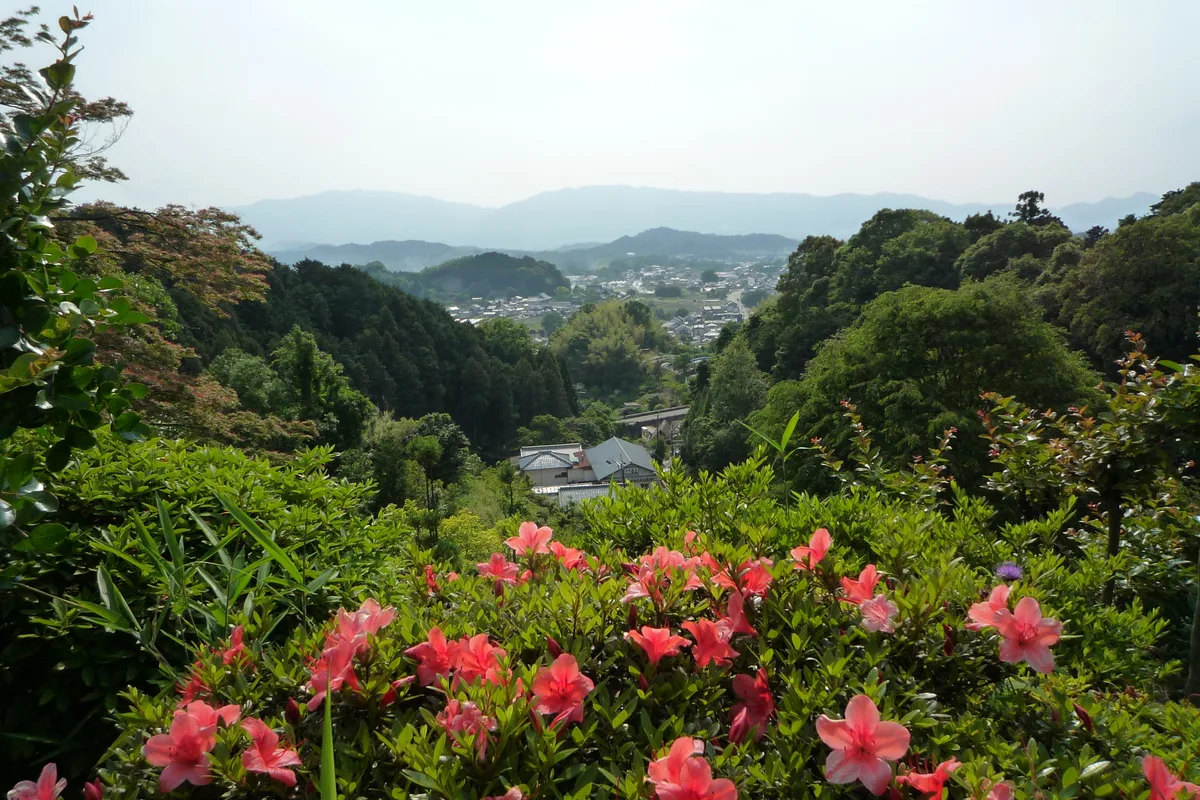
Asuka-dera, a short ride from Ishibutai, holds the Asuka Daibutsu, finished around 609 and the oldest Buddha statue in Japan still seated where it was first installed. Soga no Umako, a leading patron of early Japanese Buddhism, is believed to be buried at Ishibutai itself; his grandson Soga no Iruka is remembered by a small stone pagoda known as his "head mound," a short walk west of Asuka-dera. The Asuka Historical Museum, in the village, explains Asuka's sites and history with finds dug from them, and the Archaeological Institute of Kashihara's museum, a short ride away in Kashihara city, displays finds from sites across Nara Prefecture, from the Paleolithic, Jomon, and Yayoi periods through the Asuka period and later.
Doing it well, the welcomed way
Rent a bicycle at Asuka Station or Kashiharajingu-mae Station, ideally an electric one; the terrain is gently hilly rather than flat. A loop bus covers the main sites too, for anyone who cannot cycle.
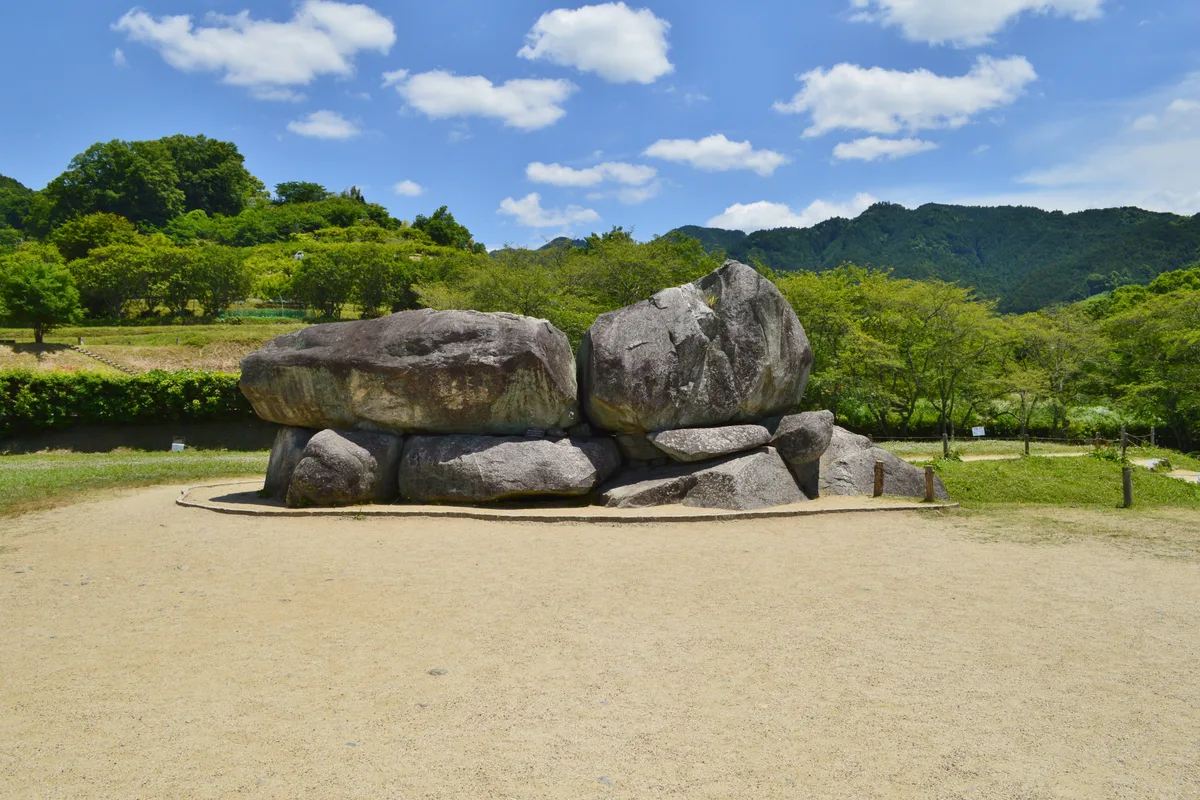
Decide on two or three sites before you set off rather than wandering without a plan. Ishibutai's chamber, one mural hall, and Asuka-dera's Buddha make a reasonable half-day; add the Asuka Historical Museum or the Kashihara museum if you want the wider context for what is in the ground here. One Japanese reviewer who joined a tour of the real mural restoration room at Takamatsuzuka called it "thrilling," and added that the museum nearby was "worth seeing" alongside it; pairing the mural hall or museum with the tomb itself, rather than picking one, is what that reviewer and a few others recommended.
Spring brings cherry blossoms around Ishibutai, and mid-to-late September brings higanbana, the red spider lilies in the Inabuchi terraced fields. Winter visitors can try Asuka nabe, a local hot-pot dish, and the village grows its own heirloom "ancient rice."
The honest shape of it
Line the two gauges up and the same worry runs through both, from opposite directions. Foreign visitors who need background reading to enjoy it, and Japanese visitors who find Takamatsuzuka plain next to Kitora, are reacting to the same thing: what Asuka offers is 1,400-year-old stonework and artifacts dug from these fields, not one dramatic sight. The visitor who called the day e-biking through the rice fields "one of the most pleasant casual bicycling days I've experienced anywhere" had gone mainly for the ancient historical and archaeological sites. The reviewer who called a tomb "surprisingly small" had happened to see its neighbor, Kitora Tomb, first. Come with some curiosity about the history already in hand, and the gauges above suggest you will likely feel closer to the first group than the second.
Still deciding which famous places actually earn a slot on a short trip? Start with what actually matters in Japan.
Sources
- UNESCO World Heritage List: Ancient Capitals of Asuka and Fujiwara (inscribed July 26, 2026)
- Agency for Cultural Affairs (文化庁), press release on World Heritage inscription
- Agency for Cultural Affairs: Takamatsuzuka and Kitora Tumuli
- Asuka Tourism Association, official tourism site
- Nara Prefecture official tourism guide, Asuka area
- Asuka Village official site: the bronze seated Shaka Nyorai (Asuka Daibutsu)
- Archaeological Institute of Kashihara, Nara Prefecture: museum guide
WMJS is written in Japan, in English, with AI help. We check every page, but English is not our first language. If a sentence reads oddly, tell us. One sentence is enough.
Thank you. A person reads every note.
How well do you know Japan?
Based on 51,218+ real Japanese voices
Want to know more? Ask Japanese people
Have a follow-up question about this topic? We'll ask real Japanese people.
Voice Box →