
Is Matsushima Worth It? The Bay That Left Japan's Greatest Poet With Nothing to Say
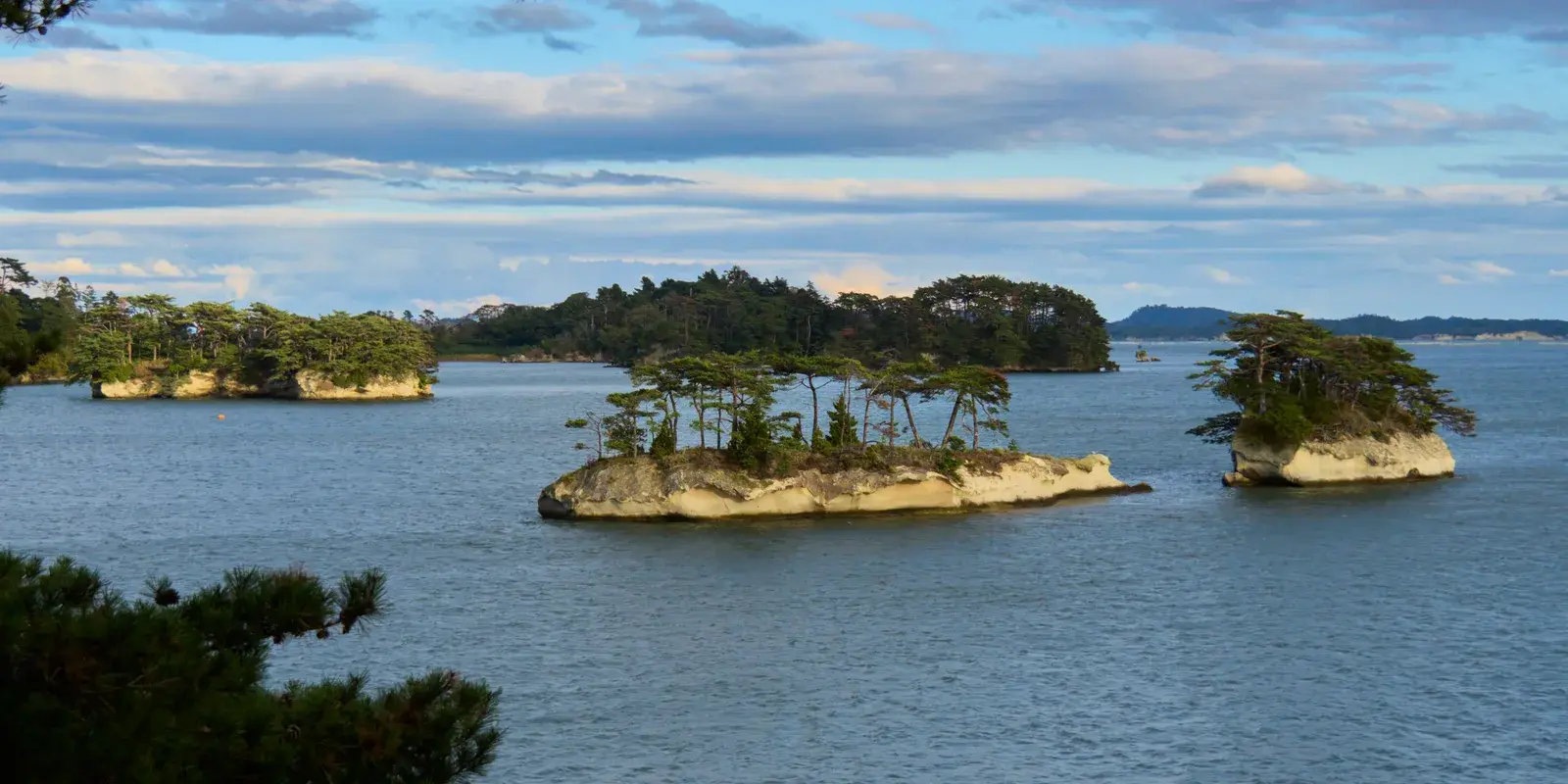
You arrive expecting one of "Japan's Three Great Views," and some part of you is braced for something cinematic: cliffs, a skyline, drama. What you find is a calm bay dotted with low, pine-tufted islands, a quiet waterfront, and a boat that loops around rocks it never actually lands on. It is easy to stand there and think, is this it?
The honest answer belongs to the people who actually went, and their verdict is clear but conditional: worth it, as long as you come to feel it rather than to rank it or to "do" it. The clearest clue is a strange and lovely one. In 1689 the poet Basho, the most celebrated writer Japan has ever produced, reached this bay on his famous journey north, sat before it, and wrote no haiku of his own. His silence was the review.
Was it worth the trip? (in visitors' own words)
The doubt in that red band is real, and it is almost always about expectation rather than the place. "It's easily the least scenic of the Three Views," one traveler wrote, genuinely puzzled about why it gets top billing. Another was honest in a gentler way: Matsushima is "beautiful at sunrise, though I do admit that the view is not particularly different from any coastal view." If you arrive primed for spectacle, low islands on flat water can read as a shrug, especially in the rain.
But listen to what the people who enjoyed it actually say, because it is never "it was spectacular." It runs quieter than that. "It's a lovely area, and I always enjoy the boat tour," one regular wrote; "I do think it's quieter and doesn't have much in the way of shopping/activities for tourists, but I definitely think it's worth going to." The very thing the doubters file as a complaint, that there is not much to do, is the thing the fans file as the point. And one visitor pushes back on the ranking itself: "Each location has its unique beauty, and hence it is unfair to rank them."
One more correction from a repeat visitor rescues a lot of first trips. The boat does not tour the islands the way most people assume. "Most of the islands are tiny; as far as I know, the ferries don't 'visit' the islands (which are empty), you're just sailing around them for different views." Knowing that in advance turns the cruise from a let-down into exactly what it is: a slow, pretty loop.
How the people who treasure it feel
Now turn the reviews over and read what Japanese visitors say, in their own words, about the same bay.
The warmth here is close to unanimous, and it helps to read past the star ratings to see why. For many Japanese travelers this is a once-in-a-lifetime visit to one of the three landscapes their culture has singled out for centuries, the same trio that includes the torii and mountain of Miyajima. "I've traveled to all of the Three Views of Japan," one wrote after the cruise; "every one of them is truly wonderful."
And yet, quietly, the very same crack appears. One reviewer, sitting on the boat, put the foreign doubt into almost the same words: you view the islands "from a distance, so it's not that moving. If you expect it to live up to being one of the Three Views of Japan, you'll feel a bit let down." When a lifelong local and a first-time foreign visitor arrive at the identical sentence, you can trust it. Matsushima does not overwhelm. It settles.
Two honne notes are worth carrying with you. The first is the weather, which is the single biggest variable: "if it were sunny the scenery and mood would be the best," one wrote on a grey, cold day, and nearly every lukewarm review shares that same sky. The second is tender. Older visitors keep mentioning that you can no longer feed the gulls from the boat. One grandparent had promised a three-year-old exactly that, then learned it had been stopped because the birds' droppings were killing the very pine trees that make the islands what they are. "It took away one of my grandchild's pleasures," they wrote, "but I found it an understandable measure." That small, sad rule holds the whole spirit of the place: the pines come first.
What we wish you'd noticed
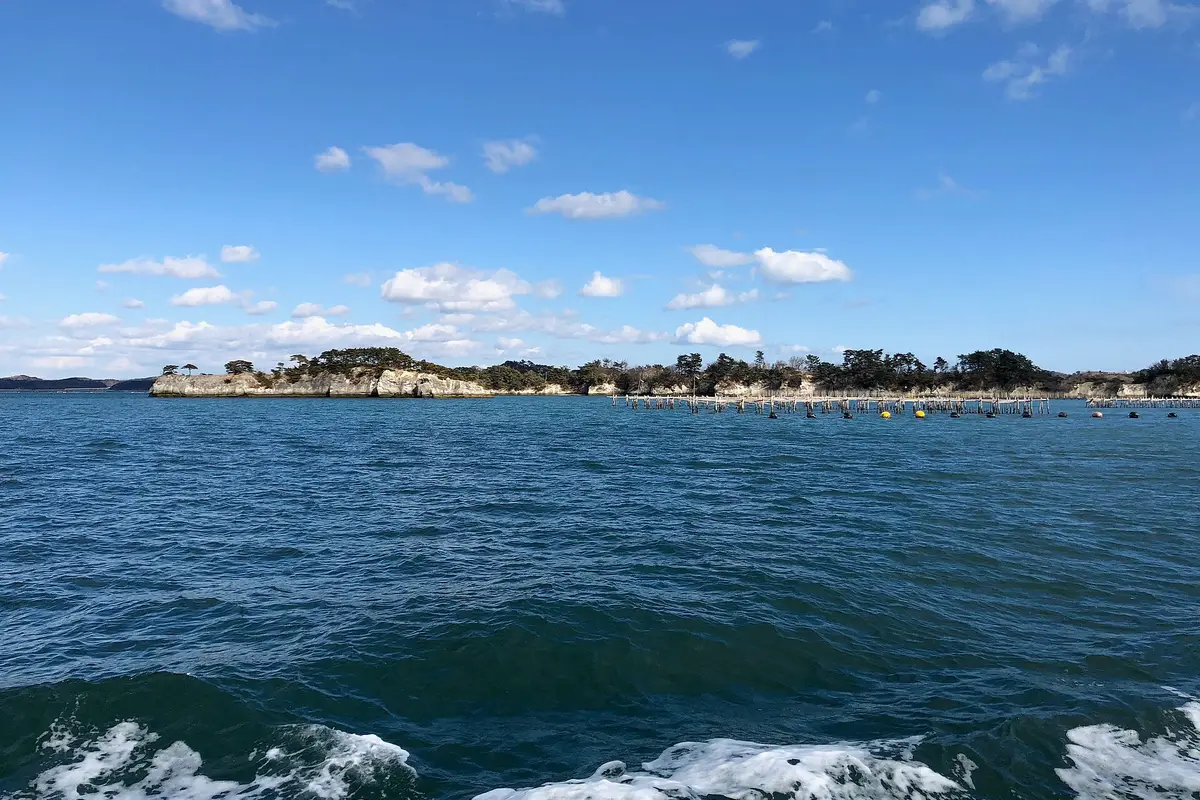
The islands are a composition to gaze across rather than a list to tick off. There are about 260 of them, low and pine-crowned, scattered across a bay so sheltered that the islands themselves softened the 2011 tsunami before it reached the town. You are not meant to conquer them or tally them. You are meant to let your eye wander across them the way you would read a long, quiet scroll. That is why "there's not much to do" keeps surfacing, and why it is the wrong yardstick for this particular place.
Basho's silence is the instruction. The famous verse everyone quotes about Matsushima was not actually written by Basho at all; scholars attribute it to a later author. Basho himself, standing here, was reportedly too moved to compose and left only his travelling companion's poem. So when you catch yourself lifting your phone to prove the view was worth it, that is the moment to lower it and simply look. The greatest poet in the language already warned you that words would fall short.
The best of the day is often on foot. Plenty of seasoned visitors skip or downgrade the cruise and love the day regardless: "you get excellent views of the islands just from the town itself." The unhurried walk from the station past a line of gardens and shrines to Zuiganji, the great Zen temple Date Masamune rebuilt from imported timber, is the day for many. Step inside its grounds and the shift is almost physical, the bustle of the waterfront giving way to a deep, cool quiet.
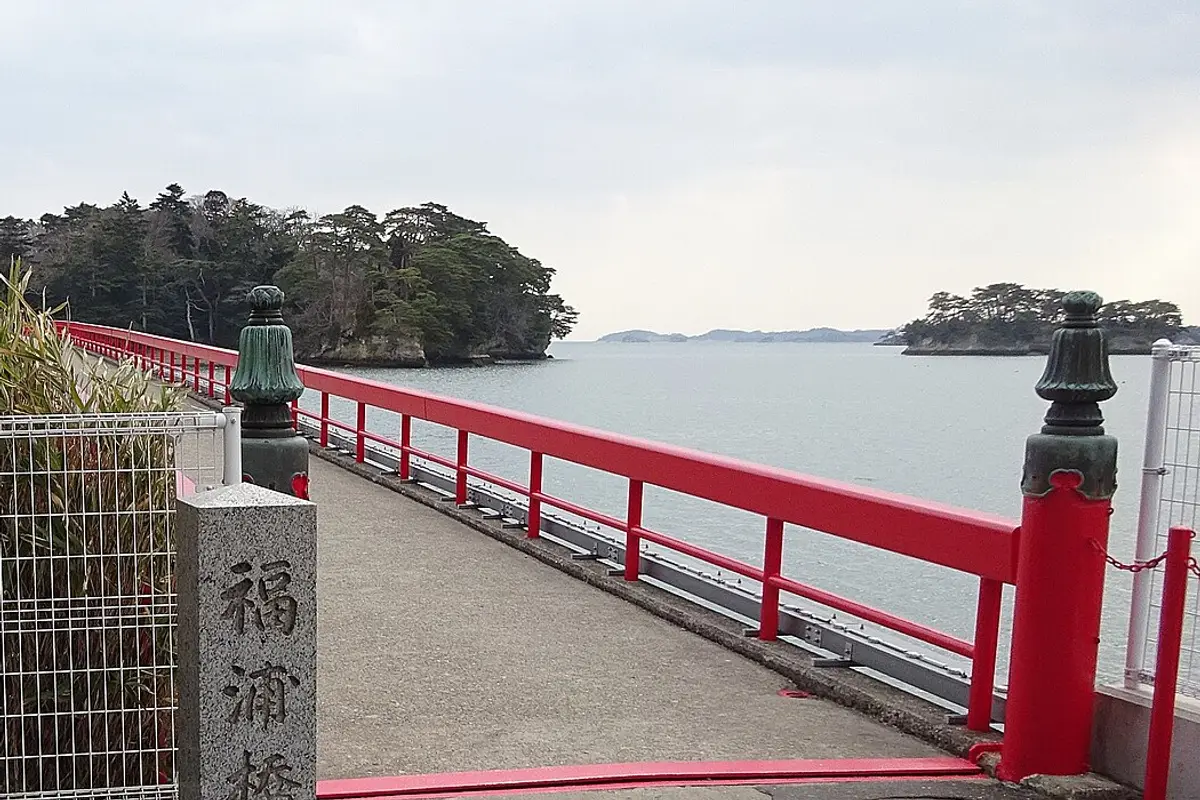
Cross to Fukuurajima. The long vermilion footbridge out to this small botanical island wins over even the skeptics. "In Matsushima, definitely go to the little island which is connected by a bright red bridge," one wrote. Another crossed it at dusk with family and called it "some of the best views in Japan (and there is a lot of competition)."
Doing it well: the welcomed way
- Get off at the right station. The bay is a short stroll from Matsushima-Kaigan Station on the Senseki Line. Matsushima Station on the Tohoku Main Line sounds like the right stop but leaves you a long way from the water, and this single mix-up sends more first-timers on a long, needless walk than they ever expect.
- Chase a clear sky, or a low sun. Since almost every disappointed voice went on a grey day, treat the forecast as part of the plan. A bright winter morning, or the light around sunrise and sunset, is when the flat bay comes alive; visitors single out dawn from the Fukuura Bridge and the Saigyo-modoshi-no-matsu hilltop as the finest moments of all.
- Take the boat for the ride itself. Sit outside or by a window, expect a gentle fifty-minute loop past the rocks rather than a landing tour, and it delivers exactly that. If you would rather not queue, the town-side and hilltop views are free, and many say just as good.
- Give it more than a rushed hour. The visitors who felt let down almost always sprinted in and out between trains; the ones who loved it walked slowly, ate the local oysters, and let the bay be quiet. If you can, stay a night, because the day-trippers thin out by late afternoon and the waterfront exhales.
- Let the gulls be, and enjoy the pines. Feeding was stopped to save the trees that are the entire point of the view. Watching the islands keep their green is the better souvenir.
Do these, and Matsushima tends to give you the day the warm reviewers describe rather than the one the hurried, rain-soaked visitors do. It was never going to shout. This is a low, patient, horizontal kind of beauty, the sort a fast traveller misses and a slow one remembers for years. Come on a clear morning and walk it slowly, and the bay will do to you what it once did to Basho.
Still deciding which famous places actually earn a spot on a short trip? Start with what actually matters in Japan. And for the deeper story of Basho's silence, the lord who planted the trees, and the temple built of imported timber, the Sendai and Matsushima audio guide is just below.
Sources
- Matsushima Tourism Association (official): Matsushima as one of the Three Views of Japan, the roughly 260 pine-covered islands, the bay cruises, and the note that the islands shielded the bay so that 2011 tsunami damage was relatively limited.
- Matsushima Tourism Association notice on gull feeding: feeding the black-tailed gulls has been prohibited since April 1, 2014, because the droppings were killing the pines of Matsushima Bay, and the boat companies cooperated with the measure.
- Three Views of Japan (Nihon Sankei), official site: Matsushima, Amanohashidate and Miyajima as the three views praised by the Confucian scholar Hayashi Gaho in 1643, and the pine-clad islands that have drawn admirers for over a thousand years.
- JNTO: Matsushima: the roughly 260 islands of Matsushima Bay, the instruction to alight at Matsushima-Kaigan Station on the Senseki Line rather than Matsushima Station, and the hilltop Matsushima Shidaikan viewpoints.
- Zuiganji Temple (official English): the Zen temple rebuilt by Date Masamune between 1604 and 1609 with master craftsmen from the Kinai region, its main hall and living quarters designated National Treasures.
- Yamagata University Museum: Basho's Narrow Road at Matsushima: that Basho recorded no haiku of his own at Matsushima, leaving only his companion Sora's verse; the scholarly reading that his silence expressed admiration; and that the popular verse attributed to him was written by a later author.
- Tohoku Tourism: Fukuurajima: the vermilion Fukuura Bridge to the botanical island of Fukuurajima and its roughly 250 plant species.
WMJS is written in Japan, in English, with AI help. We check every page, but English is not our first language. If a sentence reads oddly, tell us. One sentence is enough.
Thank you. A person reads every note.
How well do you know Japan?
Based on 51,218+ real Japanese voices
Want to know more? Ask Japanese people
Have a follow-up question about this topic? We'll ask real Japanese people.
Voice Box →