
Is Ghibli Park Worth It? Foreign and Japanese Visitors Mind Different Things
One of the threads we read is a flat verdict: don't bother. A few lines below it, someone is describing a recreated bedroom, down to the door handle. Both of them had been.
We read 159 accounts from at least 125 different people: 115 comments from international visitors on Reddit, and 44 reviews written in Japanese on Jalan and 4travel. The two groups land on similar verdicts, and then name completely different things as the hard part of the day.
Is it worth it? (in visitors' own words)
Here are the 115 international voices, all from people who actually went, each one counted by how strongly it landed with other readers.
The largest single verdict is a conditional, and so is the most upvoted comment in the set. It comes from someone who lives near the park, went once on the full Premium pass, enjoyed it, and would not return. They are weighing it against the Ghibli Museum in Mitaka:
"Ghibli Park is for people who want to see recreations of the architecture pictured in the movies & to take photos with statues of the characters and on recreated sets from the films. I live close by so I went once and enjoyed it, despite the high cost, but one day was enough to see absolutely everything there (Premium ticket) and I wouldn't want to go back again. [...] There's a lot of people who don't enjoy one or the other because they're getting billed as "must dos" for every traveler out there and people don't come in with the right expectations."
Expectation is the word that keeps returning when people explain what went wrong for them.
What the disappointment is actually made of
Queues and the photo sets run through sixteen of the let-down comments, written from fifteen different accounts. The shape is usually the same: they had pictured wandering around inside a film, and found a sequence of recreated scenes with a line in front of each one.
"Not even remotely worth it. It's basically just a series of lineups to take a photo. I thought it would be more like wandering around freely inside a ghibli movie, but it was more like, "here's the room from scene you might remember, wait in line for 40 minutes to take a picture of it.""
Another, who wanted the park to work and found it hadn't:
"For me, Ghibli is a huge brand that could've made for a very interesting and lively park. This could be a huge thing for fans and non-fans alike. Instead, the Ghibli Park felt very underwhelming."
"The queues were terribly managed, there seemed to be a very strange choice in what to highlight and what not to highlight, and the only part of the park that actually had the music was the store in the warehouse."
Inside that red band nobody has a good word for the food. The journey is raised about as often as the food, and it is the one worry here that gets settled at the itinerary stage: the park is about 45 minutes out from Nagoya Station, by the Higashiyama subway and then the Linimo, and several of these voices describe Nagoya as a detour from the route they had planned, and whether the city's own castle earns that detour is a separate question. That one is not confined to people who disliked the day. A Ghibli fan whose own verdict sits in the middle band wrote this:
"I think Ghibli Park is a really fun experience if you are going to be in the Nagoya area on your trip anyway, but it's not something I would only go to Nagoya for, personally. [...] To a non Ghibli fan, it's honestly probably not worth it, it's fairly commercial and outside of the novelty of the reconstructed sets, it doesn't particularly have a lot to offer imo."
The ticket is the third of them, and it is what quietly shapes the whole day, because Ghibli Park does not sell a single gate ticket. Of the two passes sold to overseas buyers, the Standard covers three of the five areas. The Premium covers all five and every building interior, and among those two passes only the Premium opens Hill of Youth and Dondoko Forest, which is where Satsuki and Mei's house from My Neighbor Totoro stands. (Buyers inside Japan have three further options, including per-area tickets and the Satoyama Day Pass.) A Japanese reviewer who took the cheaper pass laid the trade-off out:
"大さんぽ券でいきました。万博跡地とあって、広大な敷地をひたすら歩く、まさに散歩です。各エリアの建物に入るにはプレミアムチケットでないと外から見るだけ。チケット価格は倍近く違うので、ためらいますが、何度も行くわけではないし、プレミアムチケットが絶対に良いと感じました。"
"We went with the O-Sanpo (Standard) day pass. Being the former Expo site, it's a vast area where you basically just walk and walk. Truly a stroll. To enter the buildings in each area you need the premium ticket, otherwise you can only view them from outside. The ticket price is nearly double, so it's tempting to hesitate, but since you're not going to visit many times, I felt the premium ticket was definitely worth it."
How Japanese visitors describe the same day
Jalan and 4travel carry 44 Japanese reviews of the same park. The bars sit differently.
Where the two sides genuinely differ
About a third of each group came away unhappy. Cost, food and queues run through both bands. One thing does not cross at all.
Of the 38 comments in the foreign red band, none names the staff. Three mention the photography restrictions: two found them frustrating, and the third listed the ban and added, in the middle of an otherwise scathing review, "(which is okay)". A fourth describes the enforcement without naming anyone, objecting to being "asked and controlled for the same ticket for 100 times, and to be treated like a primary school kid".
Of the 12 Japanese voices in the red band, eight are about the staff, and they come from seven different reviewers. Two describe being corrected on the spot: one for carrying a parasol into Satsuki and Mei's house, one for sitting on a brick wall in a spot where, he writes, there were no benches. Four are about the manner of the exchange, with no rule involved at all. The last two are about the sheer number of things not allowed, and about feeling watched while keeping track of them. Here is the parasol:
"何も知らなかったから持ち込んだだけなのに注意されて不愉快だった [...] 初めて行く人は知らないことばかりなのでスタッフのあたりまえを押しつけずに事前に教えてください"
"I hadn't known, I just brought it in, and getting scolded for it felt unpleasant. [...] First-time visitors don't know any of this, so please don't just assume it's common sense. Tell us in advance."
One of the four, who says she has been to the park five times or more, wrote that at Kiki's room in the Okino Residence, each time she moved on, a staff member immediately re-tidied the items she had just been looking at:
"ジブリパークには5回以上行っていますが、こんなに圧と不快感を感じたのは初めてでした。優しく話しかけてくれるスタッフの方と、このような不快なスタッフの方の差が激しいです。"
"I've been to Ghibli Park five times or more, but this was the first time I felt this much pressure and discomfort. The gap between the staff who kindly talk to you and staff like this who make you uncomfortable is huge."
The feeling is not confined to the red band. One reviewer who rated the day a flat three out of five wrote, in full:
"スタッフは言葉遣いは丁寧だが、すごく監視されている圧を感じる。子供を怪我させない為だったりするのかも知れないが、気になって嫌だった。"
"The staff are polite in how they speak, but I felt a strong pressure of being watched. It might be to prevent children from getting hurt, but it bothered me and I didn't like it."
Both readings sit in the corpus at once. Among the handful of international voices that touch the rules at all, two are glad of them, and one credits the staff for what makes the rooms fun:
"They are interactive, with each area having unique secrets to discover tucked away in a drawer, or only revealed with a black light. Yes, you can’t take pictures inside these areas, but they are perfect for exploring and seeing what treasures you can find. The staff encourages you to open EVERYTHING."
Some of the Japanese friction is about timing, and the reviewer with the parasol asked for exactly one thing: to be told beforehand. Some of it is not: three argue with the rules themselves, over the photography bans, the stroller ban inside the Grand Warehouse, and the brick wall he was moved off. The rules those complaints turn on are short, and they are in the list below.
What we wish you'd noticed
The warmest voices dwell on small detail. They hardly mention the size of the place at all. What they describe is a single hinge. One wrote about Satsuki and Mei's house being "so lovingly recreated in exact detail down to the door to the attic where the door handle slid across to open", and about Kiki's room twice over: her room at home in the Okino Residence, and the room she lived in above the bakery, rebuilt in another part of Valley of Witches.
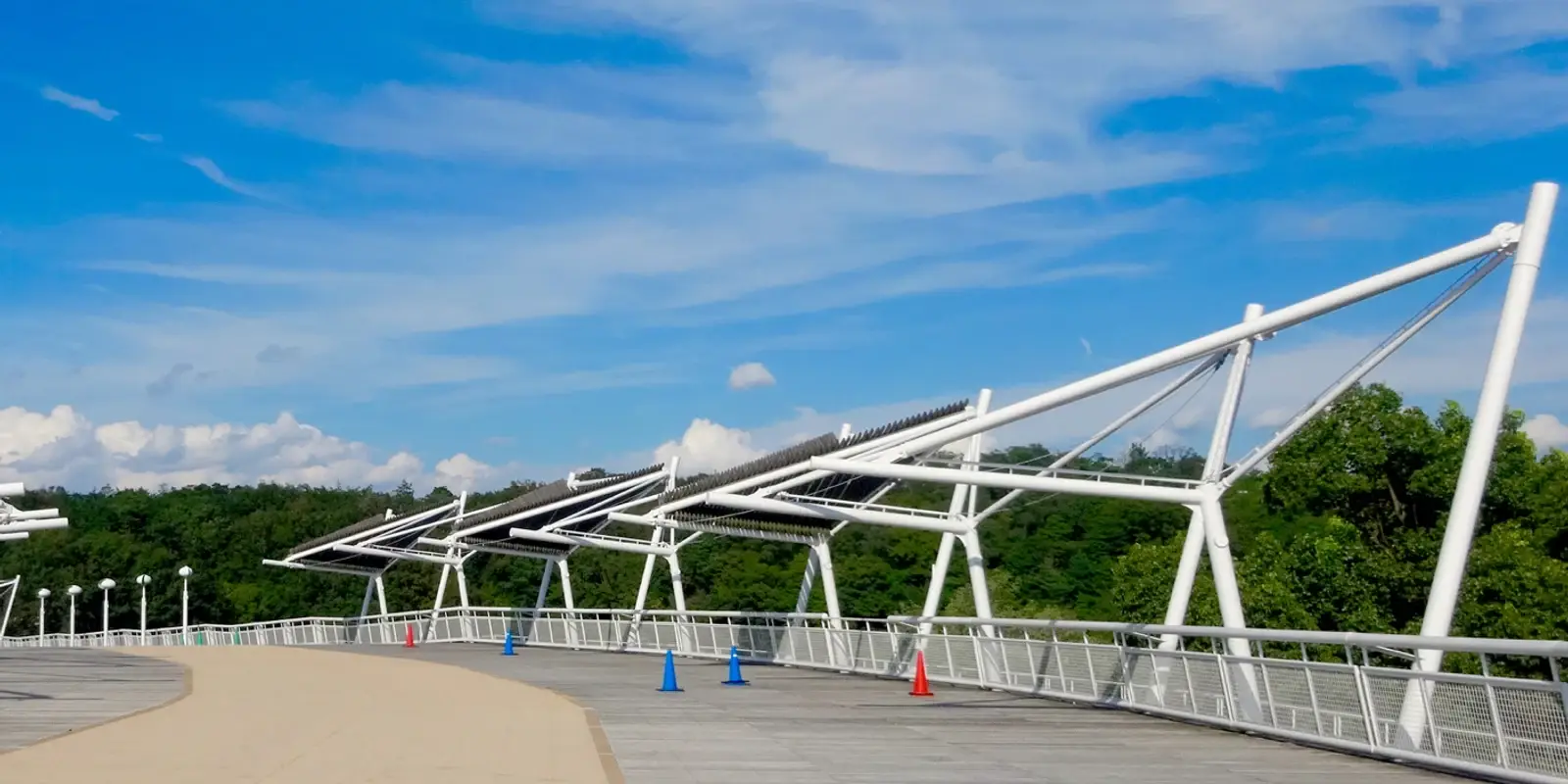
The surrounding park is free, and it is genuinely a park. Ghibli Park's five areas are scattered across Expo 2005 Aichi Commemorative Park, which Aichi Prefecture keeps open with no admission charge. Two Japanese reviewers came with no ticket at all and had a good day; one of them deliberately went on a closing day and walked the grounds. If you are travelling with someone who has never seen a Ghibli film, they are not stranded outside a gate.
There is no music in the woods, and that surprises people. Five comments, from four accounts, miss it, and one of those accounts noticed that the only place with a soundtrack was a shop. One visitor took the silence as the point: "If they piped repetitive music into the woods like it was Disneyworld it wouldn’t feel as eerily natural. I don’t think immersion is the point so much as inviting you to consider how the films evoke reality through environmental detail."
There are small games hidden in the grounds. One grandmother wrote about arriving two hours before her Grand Warehouse slot with her granddaughter and spending the wait hunting the "forgotten items" left on benches around Hill of Youth and Dondoko Forest. They found about five. Her closing line is that her granddaughter has not found them all yet and absolutely wants to go back.
Doing it well: the welcomed way
- Pick the pass by which houses you want to stand inside. The O-Sanpo Day Pass Premium (¥7,300 on weekdays, ¥7,800 at weekends and on holidays, half for children aged 4 to 12, plus a service charge when the tickets are issued) opens all five areas and every interior. The Standard (¥3,300 and ¥3,800) covers Ghibli's Grand Warehouse, Mononoke Village and Valley of Witches. Only the Grand Warehouse has an assigned entry time, which you choose when you buy; you cannot go in early, and you need to be inside within an hour of your slot. Tickets go on sale two months ahead, on the 10th at 2 p.m. Japan time, and once bought they cannot be changed or refunded.
- On the Standard pass, the same-day tickets are a two-step errand, so start it early. The walk-in houses inside Valley of Witches need a ticket bought on the day: Okino Residence ¥400, The House of Witches ¥400, Howl's Castle ¥1,000, half for children. Since 1 July 2026 the process runs on exchange vouchers, handed out near the Ticket Hut in Valley of Witches from park opening, earliest purchase times first. The voucher prints a purchase time, and you come back to the Ticket Truck at that time, and no later than 4:30 p.m., to buy the ticket itself. Numbers are limited and sales stop when they sell out. Premium holders skip all of this.
- Four small things are good to know before you walk in, and knowing them is quietly appreciated. Photography is prohibited except in certain locations, which in practice leaves most building interiors out; where it is allowed, no flash indoors, and tripods and extending selfie sticks stay in the bag. Umbrellas, parasols and strollers wait outside the buildings, so a baby carrier is the easy answer with a small child. Large bags and suitcases are not accepted, and the lockers sit in the surrounding public park rather than the Ghibli areas. Drinks belong outdoors, in the plazas and walkways, and lids stay closed inside the exhibition rooms. One Japanese reviewer asked to be told these before walking in; others met the photography and stroller rules on the day and disagreed with them.
- Ask the staff things. Two Japanese reviewers make the same point: one guessed the sparse signage in the Grand Warehouse is meant to make you wander, and advised simply asking whenever you are unsure; another wrote that it was lovely to see staff answering in English. Two of the critical Japanese reviews stop to say that other staff were kind, one adding that the gap between the kind ones and the staff member she met that day was huge.
- Tell the person coming with you what the day is. There is almost nothing to ride: a carousel and a flying machine in Valley of Witches, both for an extra fee, plus a few things reserved for children aged twelve and under, including the Cat Bus Room and Children's Town in the Grand Warehouse, Dondoko-do in Dondoko Forest and Lord Okkoto in Mononoke Village. The day is a long walk through woods with the recreated buildings set in it. Two international voices say plainly that someone who is not a fan would probably find it underwhelming; the visitors who describe a good day, on both passes, are the ones who arrived holding that picture.
Where to buy: official site / Klook
Klook is an affiliate link: if you buy through it, we may earn a commission, at no extra cost to you.
Before you leave an area, check the re-entry rule for your pass. On Premium you can re-enter any area, with the Grand Warehouse open to you again only after 3 p.m., and the wristband that makes this work has to be collected by noon. On Standard, Valley of Witches is the one area you can go back into at all, so once you walk out of the Grand Warehouse you are out of it for the day. The park's own guidance is that Hill of Youth and Dondoko Forest are busiest from 4 p.m. until closing, and it recommends the morning or early afternoon for both walk-in areas.
Two decisions here are made weeks before you arrive: which pass you buy, and what you tell the person coming with you. Those two come up more than anything else in the accounts we read, on both sides of the middle band. And what the warmest of them dwell on is rarely the scale of the place. It is the door handle one of them found still slid across the way it does in the film.
The Ghibli Park audio guide below has the layout, the route out from Nagoya, and what waits in each of the five areas. If you are comparing it against Japan's big commercial theme parks, whether Universal Studios Japan is worth it splits its foreign and Japanese visitors along the same cost line. If you are still weighing this against everything else on a short trip, what actually matters in Japan is the wider view.
Sources
- Ghibli Park official tickets, overseas purchase: the two O-Sanpo Day Passes (Premium ¥7,300 weekday / ¥7,800 weekend and holiday, written without thousand-separators: 7300 yen / 7800 yen; Standard ¥3,300 / ¥3,800, written without thousand-separators: 3300 yen / 3800 yen) and the service charge added at issue, which areas and building interiors each covers, the assigned entry time for Ghibli's Grand Warehouse and the one-hour window, the noon deadline for wristband pickup, the same-day ticket prices for Okino Residence ¥400, The House of Witches ¥400 and Howl's Castle ¥1,000 (written without thousand-separators: 400 yen / 400 yen / 1000 yen), the two-months-ahead sale on the 10th at 2 p.m. Japan time, the guidance that Hill of Youth and Dondoko Forest are busiest after 4 p.m., the per-pass re-entry rules, the extra-fee carousel and flying machine, the facilities limited to children aged twelve and under, and that bookings cannot be changed or refunded. Last verified: 2026-08.
- Ghibli Park official notice, 29 June 2026: changes to the purchasing process for same-day tickets in Valley of Witches: from 1 July 2026, exchange vouchers are required for all three designated buildings, are distributed near the Ticket Hut from park opening with the earliest purchase times first, and are exchanged for the actual ticket at the Ticket Truck from the time printed on the voucher until 4:30 p.m., with limited numbers. Last verified: 2026-08.
- Ghibli Park official FAQ: photography prohibited except in some locations and never with flash indoors, tripods or extending selfie sticks; strollers and umbrellas not allowed inside the buildings with a baby carrier recommended instead; large bags and suitcases not accepted, with lockers located in the surrounding park; drinks to be taken outdoors or outside the exhibition rooms with lids kept closed; the domestic-purchase-only ticket options, including area tickets and the Satoyama Day Pass. Last verified: 2026-08.
- Aichi Now, Aichi Prefecture official travel guide: Expo 2005 Aichi Commemorative Park (Moricoro Park): the host park is free of charge to enter, with paid parking and its own facilities including the Aichi Children's Center.
- Linimo, Aichi Rapid Transit (Aichi Prefecture): access: approximately 45 minutes from Nagoya Station to Ghibli Park via the Higashiyama Subway Line and the Linimo.
- JNTO, Japan National Tourism Organization: Ghibli Park: the park's framing as a walk-in park set inside the Expo grounds rather than a ride-based theme park.
WMJS is written in Japan, in English, with AI help. We check every page, but English is not our first language. If a sentence reads oddly, tell us. One sentence is enough.
Thank you. A person reads every note.
How well do you know Japan?
Based on 51,218+ real Japanese voices
Want to know more? Ask Japanese people
Have a follow-up question about this topic? We'll ask real Japanese people.
Voice Box →