
Is Kochi Castle Worth the Trek to the Far Side of Shikoku?
Kochi sits at the bottom of Shikoku, the island most first trips skip, and the castle is famously not a giant. So the honest question travelers ask is rarely whether the castle is good. It is whether it earns the long detour to reach it. One person on a travel board put the doubt in plain words: "is it worth a huge detour into Kochi for?"
The people who make the trip almost never regret the castle itself. The regret, when it shows up, is about how they went: a rushed, mistimed day that never let the place land. And the Japanese who grew up with this castle barely hesitate at all, because they know the one thing the distance hides. This is the only castle in Japan where the whole inner castle, keep and palace together, survived intact.
Is it worth the trek? (in visitors' own words)
We gathered the voices of international travelers who have actually made it to Kochi, from English-language travel boards, and read them for one question: was it worth it? Weighted by how strongly each opinion landed with other readers, here is how they fell.
Look closely and the green and the neutral band are answering slightly different questions. The green is about the castle and the city once you are there. Travelers call Kochi "a calm and authentic place" and are quietly surprised to find "we felt like we were only a handful of tourists," the opposite of a Kyoto crush. The doubt in the neutral band is almost never is the castle any good. It is is it worth going this far, and the people who love the place say the distance out loud. One called Kochi "the most interesting city in Shikoku" in the same breath as admitting "it's also much further away from everything else. Much further." Another, weighing a short trip, landed on the honest verdict that it is "another favourite city of mine but with only 3 days, it probably wouldn't be worth it."
The thin red slice is worth reading carefully, because it is not really about the castle. The traveler who came away "so bored and disappointed" explained exactly why, and every reason was a plan, not a place: the sights were farther from downtown than expected, the weather was gray, and as the same reviewer put it, "We also weren't there on a Sunday for the Sunday market." The verdict that followed, "in hindsight I wish we had skipped Kochi," is the sound of a good place caught on a bad day. The most upvoted reply in that whole thread came from someone pushing back: "I feel the need to defend it because I've been there twice and enjoyed it both times," with a one-line fix for the disappointment, "you just have to do your research and have some patience."
How the people who grew up with it feel
Here is the layer a guidebook skips: what Japanese visitors write about the same castle in their own reviews. The warmth runs much higher, and the doubt about the distance simply is not there.
Set the two gauges side by side and the interesting gap opens. Foreigners spend a fifth of their doubt on whether the trip is worth it. The Japanese reviews spend almost none, and the reason is the thing they name again and again. One visitor caught it exactly: they "knew it was one of the 12 castles with a surviving original main keep, but I was moved to learn it's the only castle in Japan where the entire honmaru building complex still survives." That is the fact the distance hides from a first-time planner.
The candor in these reviews is the useful part. A local castle-goer wrote the sentence a brochure would cut. Though it is called a palace, "it's not lavish; it feels rather plain," they noted, and then finished the thought anyway: "but it's a precious historical heritage, so it's worth visiting." The single most critical voice in the whole set said the quiet part too, that "since it's a castle, it feels about the same as any other," before adding that "when I got to the top floor, the view was nice." That voice is real and it belongs on the page. It sits beside a much larger group who name the very same modest size and reach the opposite conclusion, treasuring the place precisely because so little of it was ever lost.
What actually makes the trek worth it
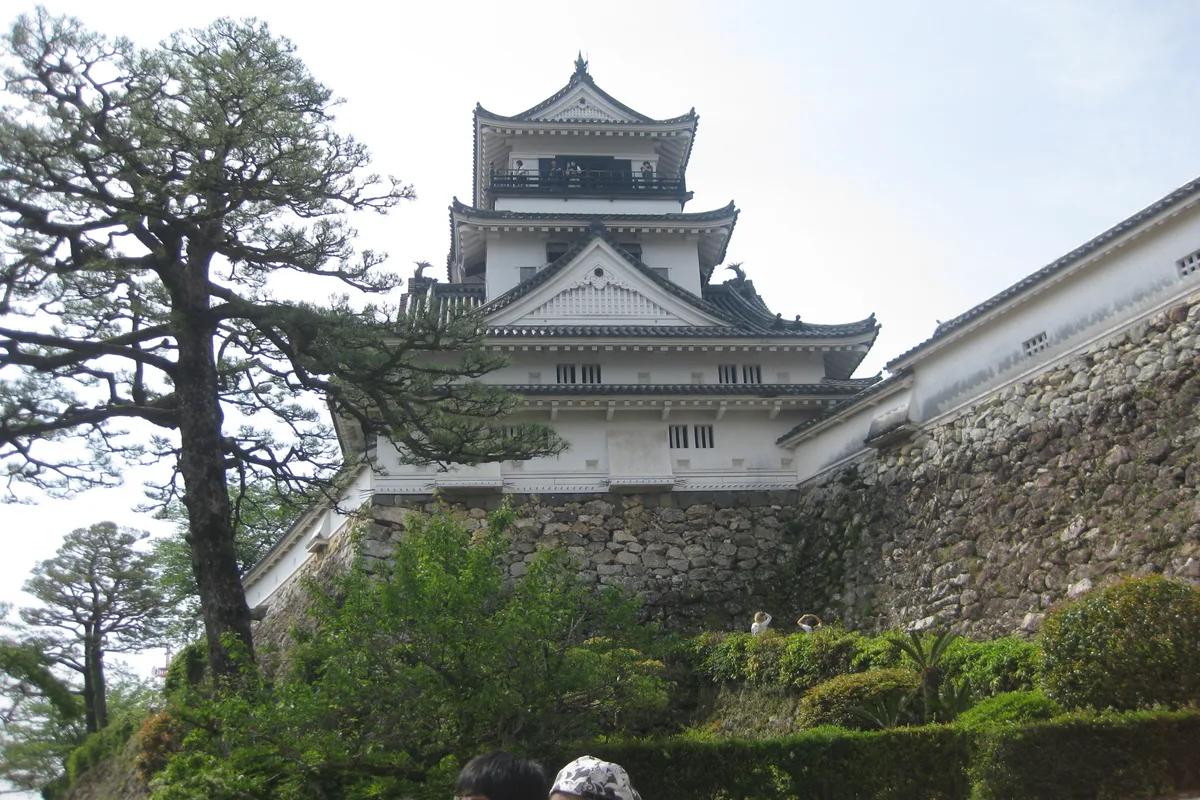
It is the only complete one left. Twelve original keeps survived into the modern age, and at almost every one you climb a lonely tower on an empty hill, because the palace where the lord actually lived is long gone. Kochi is the exception. The keep and the honmaru goten, the palace at the heart of the castle, both still stand, joined together, the only complete group of original main-castle buildings left in the country. A traveler summed up the whole reframe in one line: the keep "may be smaller than other better known castles," but this is "the only Japanese castle that kept both its original keep AND the original living palace." What you come for here is the complete set.
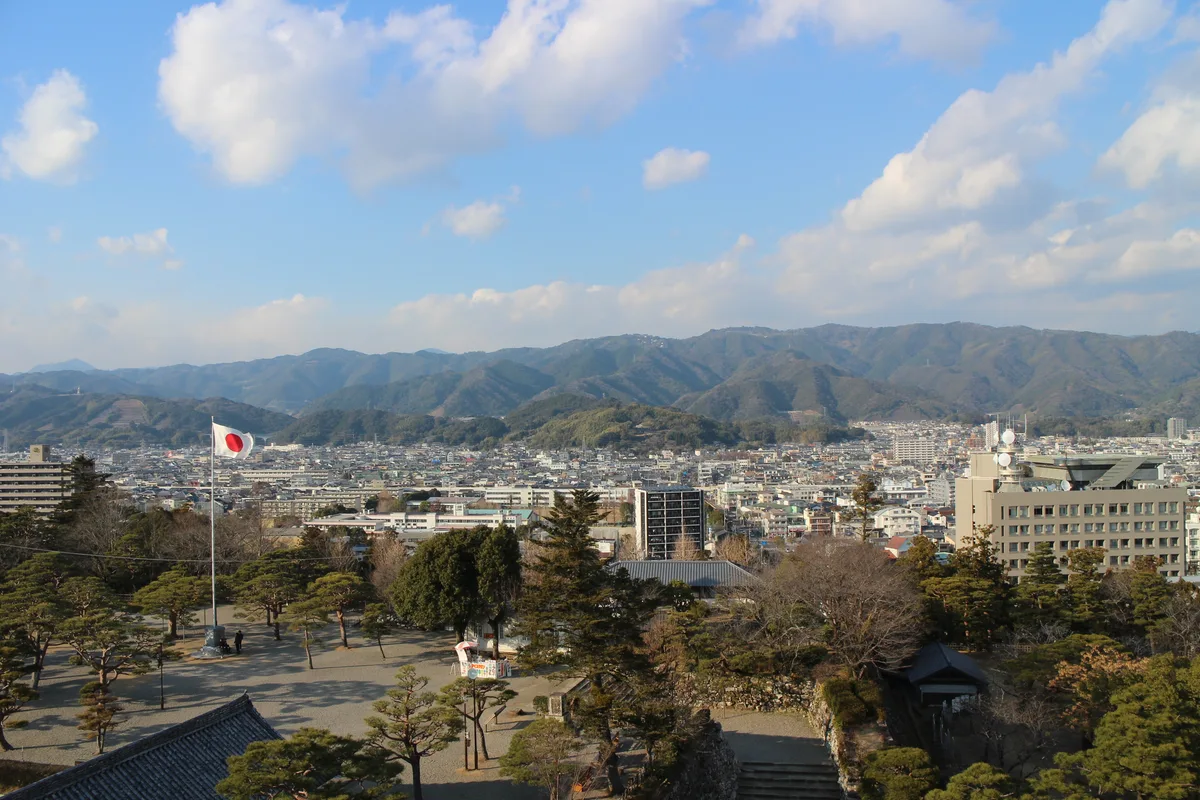
You climb the real wood, then step out above the city. This is Edo-period timber, never rebuilt in concrete, so the stairs inside are steep and ladder-like the way they always were. At the top the keep does something most towers do not allow: a railed wooden gallery runs right around the outside of the top floor, and you can walk out into the open air and circle the whole of Kochi below. Reviewers who found the climb hard still reach for the same word for that moment. One who had to admire the keep from the bottom of the stairs still called it "the beautiful main keep." The payoff is the view, and nearly everyone names it.
Its history is a rebuilding as much as a survival. In 1727 a fire swept the castle town and took almost everything, the keep included; only the main gate came through. What you walk today was built back over the twenty-five years that followed, in the old way, the present keep finished in 1749 and kept standing ever since. So the castle did not merely dodge time. A whole domain spent a quarter century putting it back, palace and tower together, and held onto it for the next three centuries.
Doing it well: the welcomed way
Everything above turns into a short, forgiving plan, and it is built around the one truth both gauges share: the castle is easy, and the trip is what you plan for.
- Give Kochi a night, not a rushed afternoon. The disappointment in the red band came from a mistimed day trip. An overnight lets you catch the castle unhurried, eat the local katsuo no tataki properly, and not gamble the whole visit on the weather of a single afternoon.
- Aim for a Sunday if you can. The 300-year-old street market runs from the castle's gate every Sunday morning, and more than one let-down came down to arriving on the wrong day. If your dates cannot bend, Hirome Market near the castle is open daily for the same local food.
- Come at opening for calm. Japanese reviewers who met a crowd say the fix plainly: one who found it busy simply advised "going right when it opens." Early is quiet, and the morning light on the keep is the best of the day.
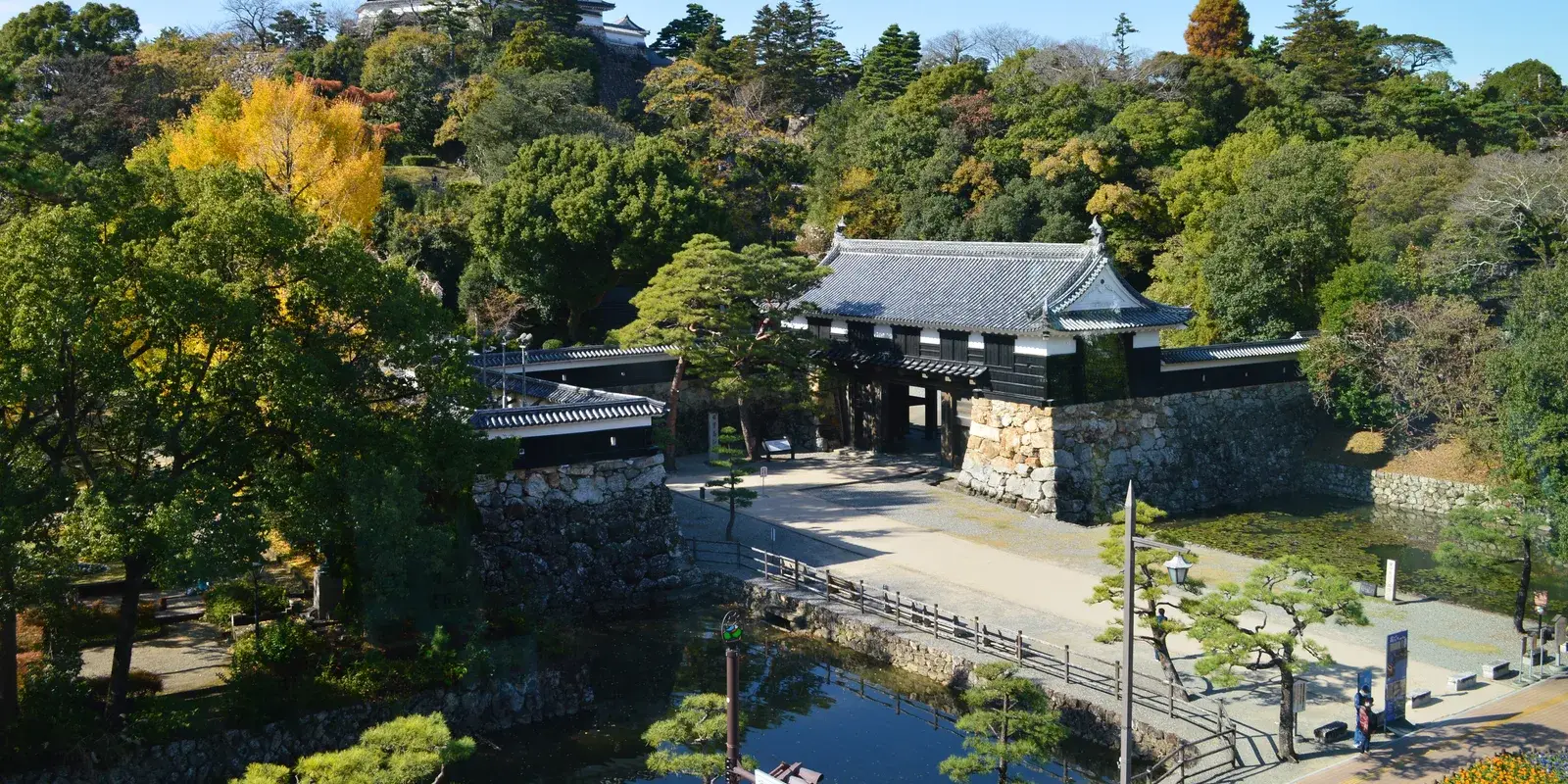
- Decide up front whether you are climbing the keep. The walk up through the grounds is a gentle slope; the stairs inside the keep are the steep part. You do not have to climb them to enjoy Kochi. The Otemon gate view, the stone walls, and the palace are reached without the keep's ladder-stairs, and plenty of visitors love the day and skip the top.
So, is it worth the trek? The castle is small, it sits a long way out, and a badly planned day can leave you flat. And still, at the end of the journey is the one place in Japan where a whole Edo-period castle survived, palace and keep together, in a city that meets you with some of the warmest welcome and best food in the country. Give it a night rather than a rushed detour, and travelers who plan it that way rarely count the distance against it.
If you want the deeper story of the castle itself, the surviving palace, the stone rain-gutters built for Kochi's downpours, and the quiet kindness the founding legend rests on, our cultural guide to Kochi Castle walks you through it.
Still working out which famous places actually earn a slot on a short trip? We counted sixty of them one at a time. Start with what actually matters in Japan.
Sources
- Kochi Castle official site: Fees and hours (利用料金・開館時間). Open 9:00 to 17:00 (last admission 16:30), closed December 26 to January 1; adult (18 and over) ¥500, under 18 free with student ID; one ticket covers both the keep and the Kaitokukan palace. Last verified 2026-08.
- Kochi Castle official site: Highlights (見どころ). Kochi as one of the twelve surviving original keeps (現存天守十二城); the honmaru palace connected to the keep, a form that "survives only at Kochi Castle"; the Otemon-and-keep framed view; the surviving defensive details.
- Kochi Castle official site: History (歴史). Construction begun by Yamauchi Kazutoyo in 1601; the great fire of 1727 that left only the Otemon; rebuilding from 1729, the present keep completed in 1749.
- Kochi City: Kochi Castle cultural-property record. Official statement that Kochi is the only castle in Japan where the entire honmaru palace survives.
- Agency for Cultural Affairs: National Cultural Properties Database. Important Cultural Property designation of the Kochi Castle structures, including the Kaitokukan.
- JNTO (Japan National Tourism Organization): Kochi Castle. Kochi Castle as one of the oldest castles in Japan and a Top 100 Japanese Castle, in central Kochi City.
- Kochi City: Sunday Market (日曜市). The market held every Sunday since 1690 along Otesuji from the Otemon gate.
- Hirome Ichiba, Official (hirome.co.jp). Unlike the Otesuji street market, Hirome Ichiba near the castle is open daily, with hours set shop by shop.
WMJS is written in Japan, in English, with AI help. We check every page, but English is not our first language. If a sentence reads oddly, tell us. One sentence is enough.
Thank you. A person reads every note.
How well do you know Japan?
Built from 635 public posts by Japanese people
Want to know more? Ask Japanese people
Have a follow-up question about this topic? We'll ask real Japanese people.
Voice Box →