
Is Hitachi Seaside Park Worth It? Yes, Say Most Visitors, If You Catch the Right Week
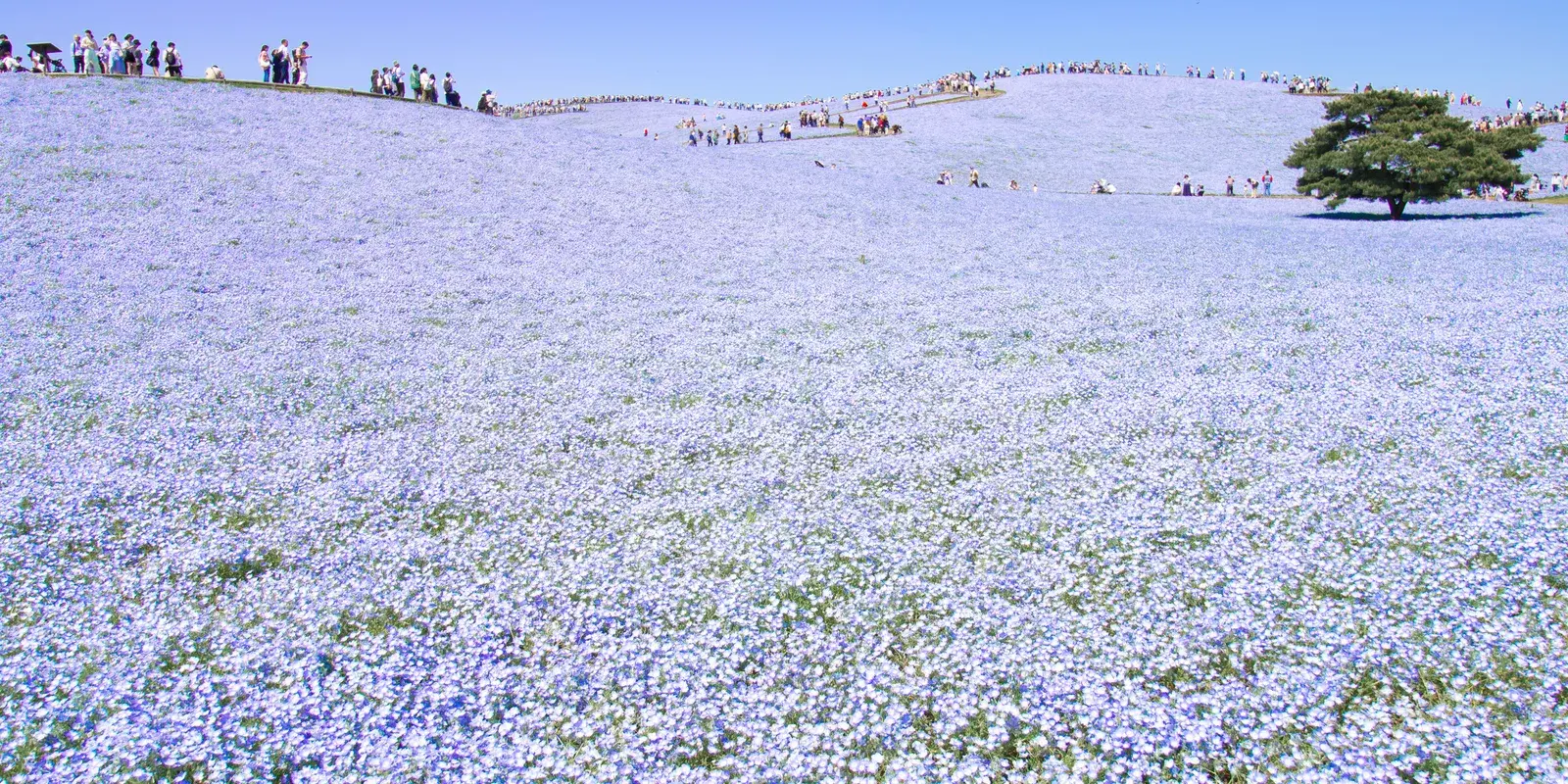
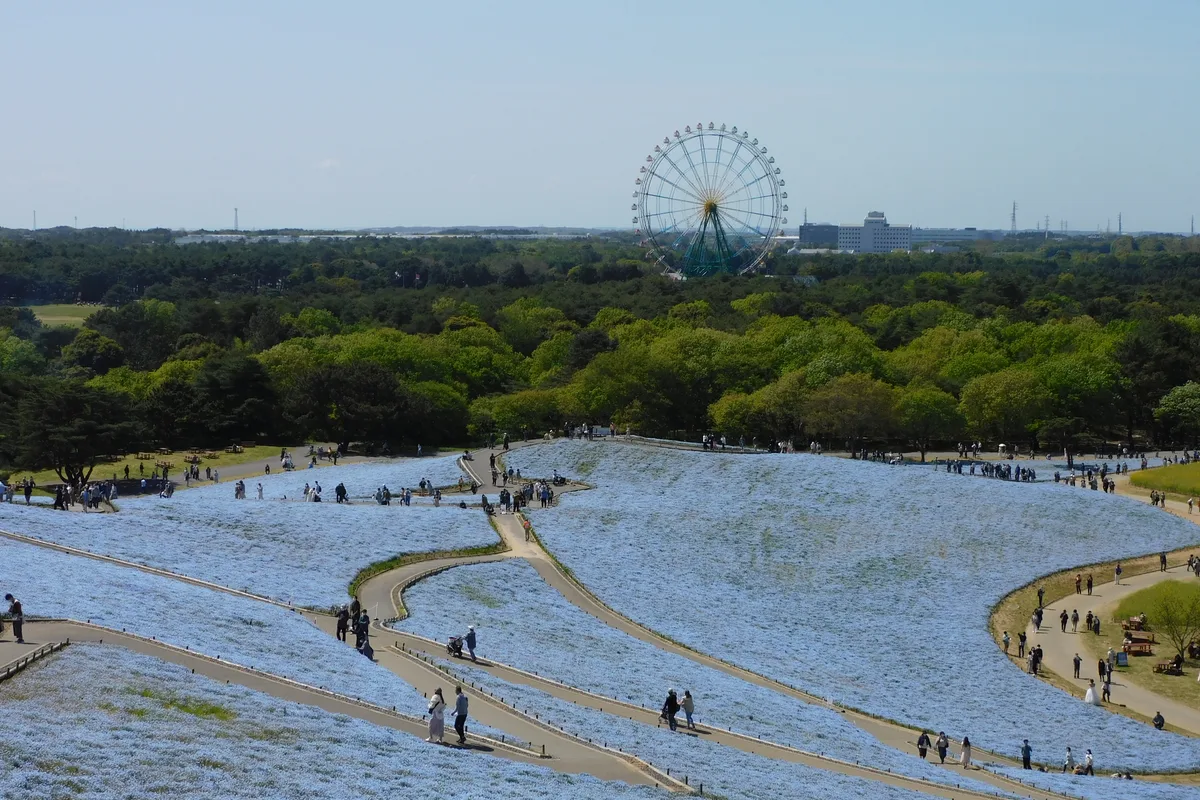
The blue hill is the photo everyone has seen: a slope of 5.3 million baby-blue nemophila rolling down toward the Pacific, a Ferris wheel just visible behind the trees. Then someone plans the two-hour trip up from Tokyo for the wrong week and finds a green field with a gift shop. On Reddit, one traveler weighing which flower park to pick summed up the whole risk in a single line: "The flower parks are only worth it if the flowers you're interested in are in full bloom... pretty sure your choice will be made for you by the botanical gods."
Six in ten visitors we heard from say it was worth it outright, and almost every disappointed one in our corpus tells the same story: they arrived between the flowers.
What international visitors say once they have been
Of the 53 voices we gathered from foreign speakers, on Reddit and TripAdvisor, here is how they fell:
One traveler who lined the trip up well calls it, flatly, "Hands down the most beautiful park I've ever been to. Would absolutely go again." Their secret was checking ahead: "The park posts an updated flower schedule to their website, and the peak bloom of these flowers only last a week. I got super lucky my trip lined up with the peak bloom days." A TripAdvisor reviewer from Seattle put the trade-off just as plainly: "It is definitely a unique attraction which makes the money justifiable, but it's worth analyzing season you're going as apart from few days in the year most of the year there is nothing interesting to see."
Most of the red band is that same mistake in different words. "I just recently visited Hitachi seaside (only the yellow flowers were there a week ago, no blue or red flower fields yet) so I'd say skip for now," wrote one visitor who checked in before the nemophila had opened. Another, who came in early September between the two big seasons, put it bluntest of all: "Early September is not the time to go to this park." Someone who was living in Ibaraki Prefecture at the time, and had seen it firsthand, put a finer point on the letdown even while calling the park pretty: "...the sea of blue flowers was very pretty but if you Google pictures of them, that's pretty much what I got lol." A smaller handful of the doubts have nothing to do with timing: one visitor loved what they saw but questioned the two-hour trip from Tokyo for this park alone, "unless one has plans to go somewhere not too far from here."
What Japanese visitors and locals add
The Japanese reviews carry the same story, told by people who go back most years and notice exactly when the park changes underneath them.
Of the 156 voices we gathered from Japanese speakers, on jalan and 4travel, here is how they fell:
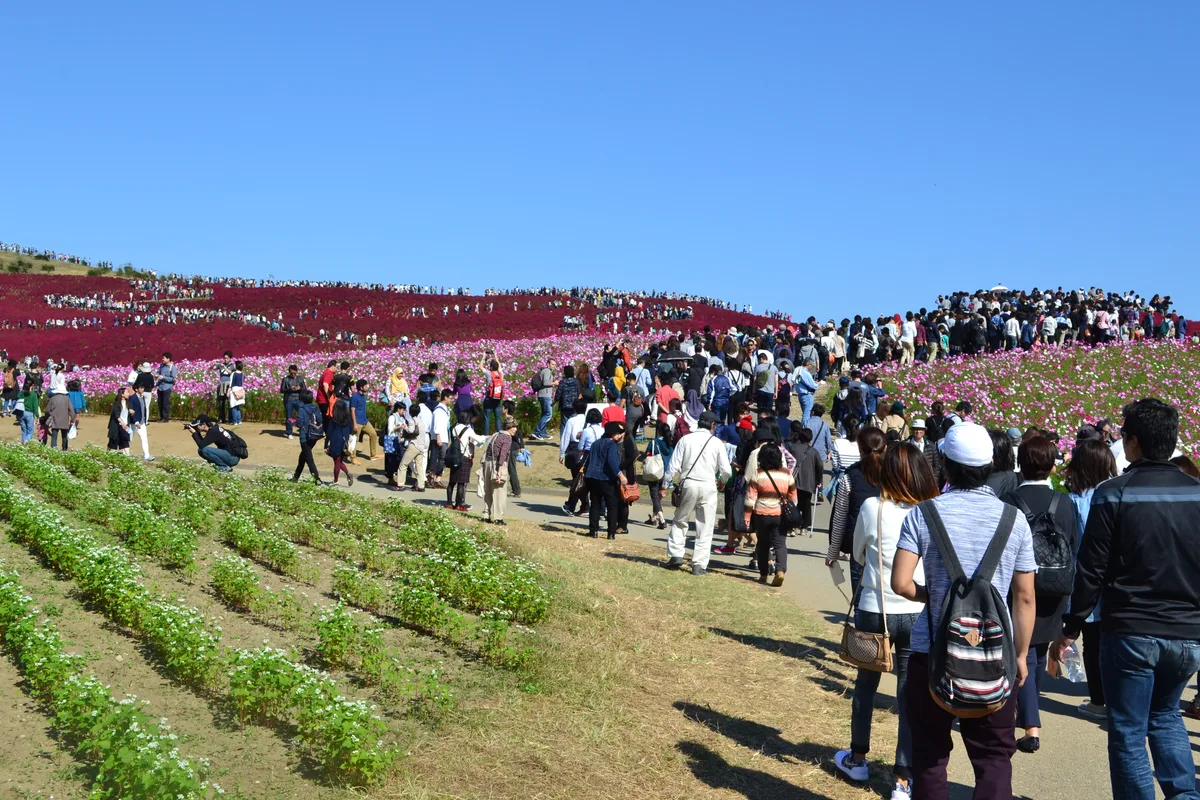
The green band is gratitude aimed at people the visitor never meets. "I go see the nemophila and the kochia's autumn color every year," one reviewer wrote (translated). "Thanks to the staff who maintain it, we get to see that stunning view, grateful." The same review adds the practical warning that separates a good day from a wasted morning: "during the season the parking lot fills up, so unless you go quite a bit earlier than opening, you'll end up waiting in a traffic jam."
The red band is larger here than in the foreign gauge, and it comes from people who return often enough to notice a bad year. One visitor timed a return trip to recreate an earlier, dazzling one, and found the hill only 70 to 80 percent open, patched with bare ground (translated): "about 40% of the total was ground rather than flowers, which was disappointing... It's almost painful to think first-time visitors will come away thinking, 'oh, so this is all Hitachi Seaside Park's nemophila is,' not such a big deal." Another arrived three days after the park had cut the autumn-red kochia down to the roots, a routine the park schedules but does not announce far in advance (translated): "I thought I'd still make it since the peak runs to early November, but it was a huge letdown. I wish they'd at least post the removal date on the website."
What people fall for
Strip out the timing complaints from both gauges and what is left is remarkably consistent. People reach for the same few words: stunning, unforgettable, once-in-a-lifetime. A visitor who caught the kochia at its reddest, even on a trip where the nemophila were still green, wrote simply, "Would love to return during spring again!" A Japanese reviewer used the return trip itself as the yardstick (translated): "even crowded, it's genuinely worth seeing."
The disappointment across both languages is almost always a matter of timing, and the timing has a specific, checkable answer. Hitachi Seaside Park's own flower team posts bloom updates through the nemophila and kochia seasons, and its March 2026 forecast states plainly that the true peak, somewhere inside the whole mid-April-to-early-May window, typically runs about a week to ten days in a normal year. Check that report before buying a train ticket, and you have picked your two weeks on purpose rather than by chance.
The welcomed way to do it
Check the flower report before you commit to a specific date. The park updates its bloom forecast through the season, moving from "began to bloom" through "in full glory" to "the peak is gone" in a matter of days. A trip booked against "April to May" or "mid-October" is a coin flip; a trip booked against that week's actual report has good odds.
Go early, especially in the two flower seasons. Gates open at 9:30, and the main car park fills fast once the hill is in bloom. The reviewer who thanked the staff for the view also warned that arriving even a little late in season means a wait in traffic before you even park. A weekday morning near opening avoids most of both crowd and delay.
Expect a seasonal fee in the two peak weeks, and know what it buys. Standard admission is ¥450 for adults the rest of the year; during the peak nemophila and kochia windows the park adds a ¥350 fee, which it puts toward richer flower plantings, extra rest areas, and temporary information points for the crowd it knows is coming.
Give yourself the whole day, and consider a bicycle. The park's open grounds cover roughly 237 hectares across seven areas, which is why the walk from the entrance to Miharashi Hill surprises people who pictured a compact garden. A rental bicycle or the park's own Seaside Train covers the distance without turning the visit into a hike, and leaves time for the Ferris wheel and rides that visitors keep describing as an unexpected bonus.
Stay on the paths through the flower beds. The park's own rules ask visitors not to pick the flowers, and not to step into fenced-off beds for a closer photo.
If you can only go off-season, go for the quiet. Winter and midsummer visitors describe empty paths and no lines for rides, which some visitors prefer. Food trucks and some seasonal shops close along with the flowers, so it makes for a calmer, sparser day than the famous one.
A simple lens for deciding
Six in ten voices, foreign and Japanese alike, call Hitachi Seaside Park worth the trip outright, and most of the rest describe a good park visited at the wrong moment rather than a bad one. That is a problem you can route around: check the bloom report, go early on a weekday, and give the whole grounds a full day.
If the flowers do not line up with your dates, the honest move is to reschedule, or to go in expecting a very large public park with a Ferris wheel in it.
Deciding which of Japan's famous sights actually earn a place on a short trip? Our hub on what actually matters when choosing places in Japan gathers every gauge we have made.
Sources
- Hitachi Seaside Park Official Website, Miharashi Hill: describes the hill's yearly cycle, nemophila mid-April to early May, kochia planted after and turning red in autumn, cut down in November once its color peak passes, then reseeded with nemophila for the following spring.
- Hitachi Seaside Park Official Website, press release (PDF), 2026-03-06: states that the peak of the nemophila's best-viewing window ("見頃のピークは例年、1週間~10日程となります") typically lasts about a week to ten days in a normal year.
- Hitachi Seaside Park Official Website, press release (PDF), 2025-04-24: about 5.3 million nemophila planted across roughly 4.2 hectares of Miharashi Hill.
- Hitachi Seaside Park Official Website, Admission Fees: standard admission ¥450 (adult) / ¥210 (65+) / free for middle-school age and under; a ¥350 seasonal fee applies during the peak nemophila and kochia windows, funding richer flower plantings, extra rest areas, and temporary information points; standard-car parking is ¥600 per day.
- Hitachi Seaside Park Official Website, Opening Hours: gate hours by season (9:30-17:00 most of the year, 9:30-18:00 in high summer, 9:30-16:30 in winter); closed on Tuesdays (the next weekday if a holiday), December 31-January 1, and a closure running from the day before the first Tuesday of February through that Friday, except during four windows when it opens daily: spring (late March-May 31), summer (late July-August 31), autumn (October), and the New Year stretch (late December-early January).
- Hitachi Seaside Park Official Website, Access by Train and Bus: JR Joban Line limited express from Tokyo Station to Katsuta Station, about 85 minutes, then a local bus from Katsuta Station's east exit, roughly 15 to 30 minutes depending on which park entrance.
- Hitachi Seaside Park Official Website, Barrier-Free Map (PDF): the park's open grounds cover approximately 237 hectares across seven areas.
- Hitachi Seaside Park Official Website, Park Rules: visitors are asked not to pick plants and not to enter "no entry" or fenced-off areas, including the flower beds.
Visitor voices in this article are quoted verbatim from public reviews and discussions by international visitors (Reddit, TripAdvisor) and Japanese visitors (jalan and 4travel reviews), collected in September 2026. Japanese voices are shown in translation. The percentage gauges summarize every usable first-hand voice we collected; they are a reading of real voices without the controlled sample a survey would have.
WMJS is written in Japan, in English, with AI help. We check every page, but English is not our first language. If a sentence reads oddly, tell us. One sentence is enough.
Thank you. A person reads every note.
How well do you know Japan?
Based on 51,218+ real Japanese voices
Want to know more? Ask Japanese people
Have a follow-up question about this topic? We'll ask real Japanese people.
Voice Box →