
Is Amanohashidate Worth It? What Travelers and Japanese Visitors Actually Say
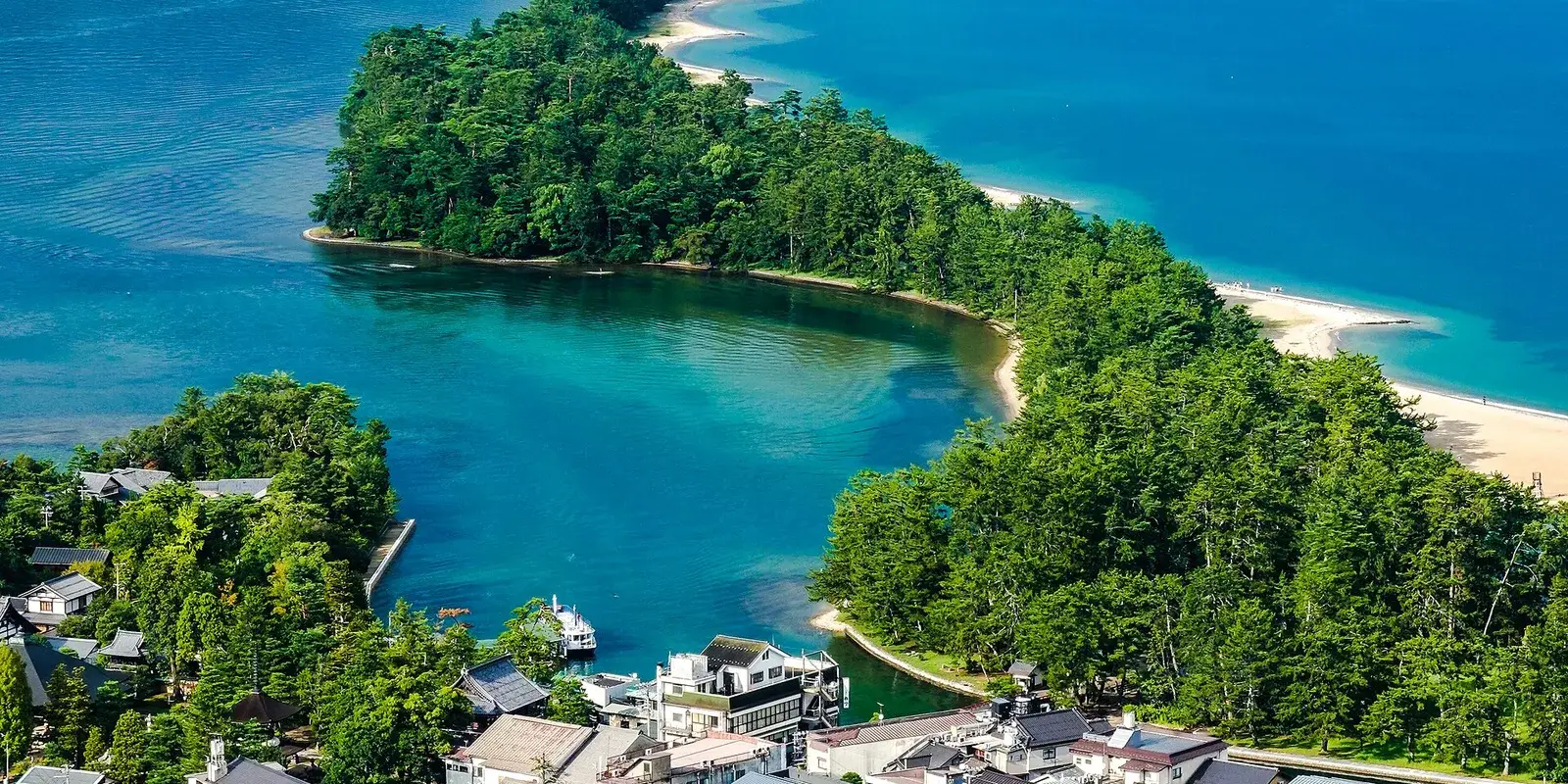
A 3.6-kilometer strip of pine-covered sand splits a bay in half, and the entire reputation of the place rests on what happens when you bend over and look at it upside down through your own legs. That's matanozoki, and it's the reason this sandbar became one of the Three Views of Japan centuries ago. Getting there takes over two hours from Kyoto. So: is the detour worth it?
Short answer: yes, for most people. The doubt that does exist is rarely about the view itself; it's almost always about time, weather, and what you do with the rest of the day once you've had your upside-down look.
Is it worth the detour? (In travelers' own words)
We gathered real voices from international travelers discussing the trip, from Reddit threads about planning the visit and from TripAdvisor reviews, roughly half from each. Counted by sentiment, here's how the room splits.
The thin red band is almost never about the sandbar itself. It's usually a math problem: "There is no point rushing to Amanohashidate if you only have 4 hours there. This is especially so if you intend to visit Kasamatsu Park. You will hardly have any time to see anything!" Or a travel-time calculation that only pays off if you stack the day with other stops: "Amanoshidate is cool but nothing crazy. I wouldn't recommend going there via train from Kyoto unless you are planning on going to Kinosaki-onsen and Tottori Dunes after it." One visitor who deliberately came on a quiet weekday found the opposite problem: "Not much to do aside from viewing the sandbar... We visited on a weekday to avoid weekend crowds and it was actually too quiet. Half the shops and restaurants were shut and the place had a slight deserted feel to it. Sight of the sandbar is awesome and there are a couple of temples, bike rental, and an amusement park with a few basic rides on offer..."
The green band tends to come from people who gave it more than a glance. One traveler, on the fence about the travel time after standing the whole way on a last-minute train ticket: "...it ended up being my favorite day of the trip! The chair lift is really fun and the view is stunning. But the best part was renting bikes and cycling across the sandbar and along the water to Aso Seaside Park and back!" Another, who stayed overnight during sakura season: "I really loved it... It's very chill and calm, beautiful and peaceful. Very romantic. I did stay the night and it gets very quiet after the tourists leave..." Well over half of the satisfied travelers in this corpus mention walking, cycling, or boating across the sandbar itself as part of what made the day, worth keeping in mind when you plan your own visit.
What Japanese visitors, in their own words, think
Most guides skip the other half of the picture: how Japanese visitors rate the same sandbar, in their own reviews on jalan and 4travel.
The Japanese red band is even thinner than the foreign one, and it's a mixed bag rather than one single complaint: a dirty restroom, souvenir shops that happened to be shuttered on one visitor's particular visit, a pricey holiday parking lot. But one voice titled a three-star review "期待はずれ" ("not quite what I'd hoped"): "日本三景ということで、期待してたが、そうでもなかった" ("Since it's one of the Three Views of Japan, I expected more, but it wasn't quite that special"). Another climbed to the Nariai-ji viewpoint and walked the pine grove below it, only to conclude: "遊歩道には何も無くて少しがっかり、やはり高台から景色を楽しむ観光地です" ("there was nothing along the walking path, so I felt a little let down. This really is a place for enjoying the view from up high").
That last line matches what most of the enthusiastic Japanese reviews say too. One, comparing both viewpoints, put it plainly: "高いところからがよく見える。。傘松公園とビューランドからの景色が最高です。下から見ているだけでは、ただの松林" ("it's best seen from up high. The views from both Kasamatsu Park and Viewland are the best. Seen only from ground level, it's just a pine forest"). But that's not the whole picture either: satisfied visitors also describe the sandbar itself as part of the reward, like the one who rented a bicycle, rode through the pine grove, and stopped to feed the seagulls once the boat back had pulled away from the dock: "凄く楽しかったです" (it was really fun). Or the one who returned after twenty-five years and was relieved to find "松並や砂浜に立つと昔のままでとても懐かしく感じました" (standing among the pines and on the sand, it felt just as nostalgic as ever).
The view from the hill, and the walk that fills the rest of the day
Both gauges point at the same shape from different angles. Seen flat, at ground level, without climbing to a viewpoint, Amanohashidate genuinely can look like "just a pine forest" on a strip of sand, as the Japanese voice above put it. Ride the lift up and bend over into matanozoki and the same pine-covered sandbar resolves into what it's named for: a bridge to heaven, or a dragon rising into the sky. The five-minute payoff at the top is real, and it's why most people come.
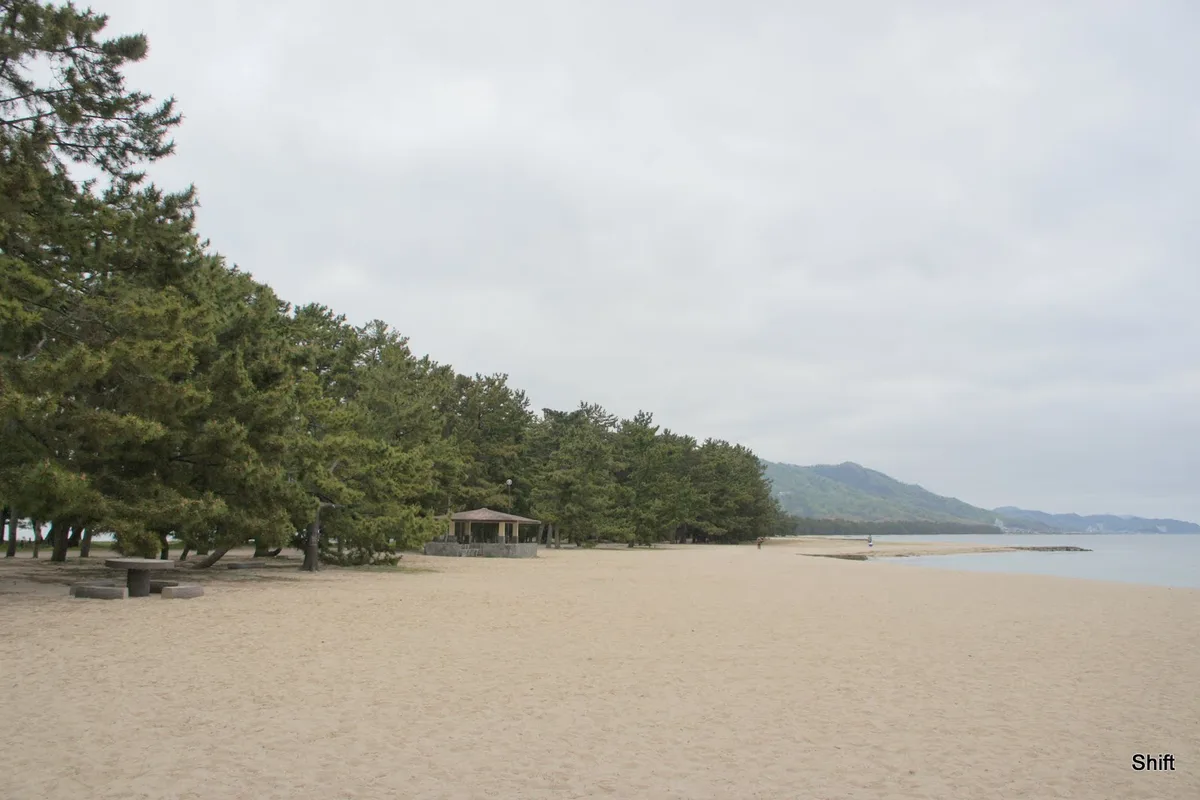
But the hilltop view is a five-minute payoff, and it isn't the whole day. What fills the rest of it, for the travelers in this corpus who called the day memorable, is usually the sandbar itself: a free, car-free, 3.6-kilometer walk (about 50 minutes end to end) or bike ride (about 20 minutes) through roughly 6,700 pine trees, past a small shrine and a rotating bridge.
There are two hilltop viewpoints, each giving a different angle on the sandbar:
- Amanohashidate Viewland, on the Monju (south) side near the train station, is reached by chair lift or monorail (¥1,000 adults / ¥500 elementary-school-age children) and gives the view called Hiryukan, the "Flying Dragon View." It also has a small amusement park, making it the easier choice with kids.
- Kasamatsu Park, on the north side, is reached by cable car or chair lift (¥800 round trip / ¥400 one-way for adults) and gives Shoryukan, the "Rising Dragon View." This is the spot where matanozoki itself began.
Reviewers on both gauges mention doing one or the other, and some do both, from opposite ends of a walk or bike ride across the sandbar in between.
Doing it the welcomed way
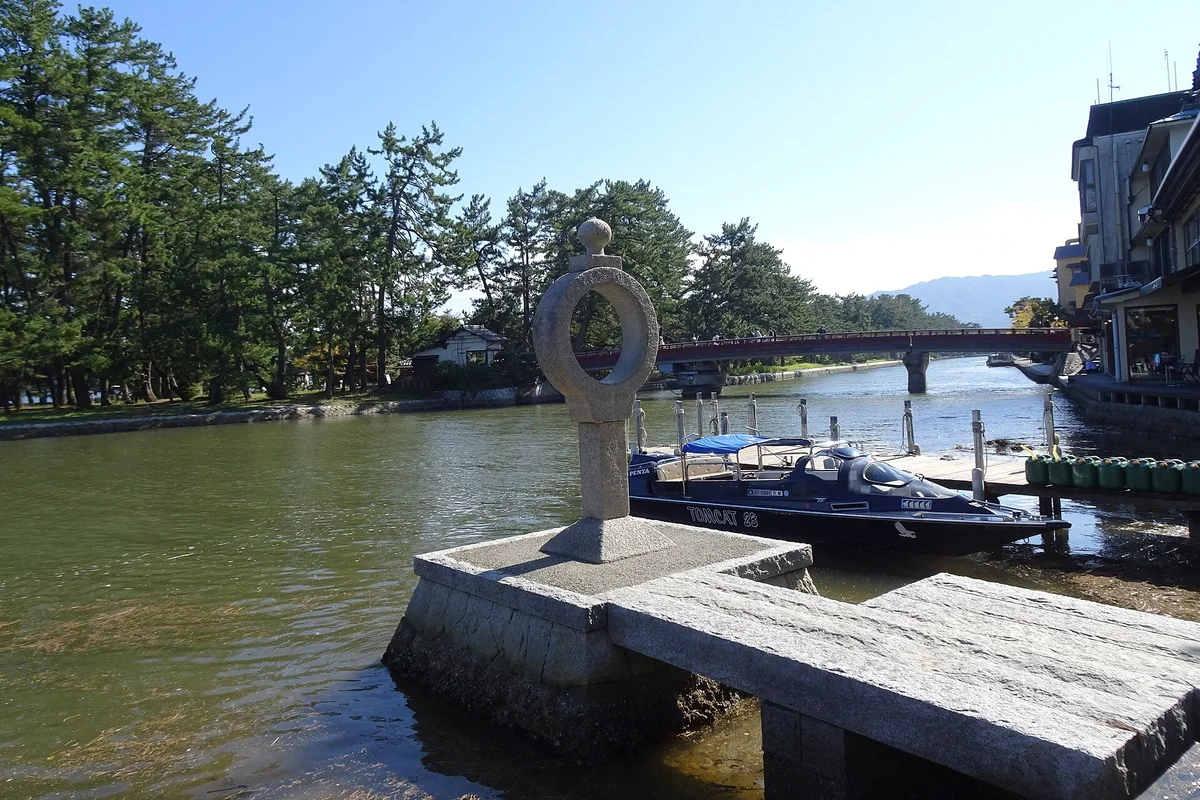
- Walk or cycle at least part of the sandbar. Take the bicycle, boat, or bus back the other way; several travelers specifically mention going up by one route and back by another to see the sandbar from both water level and the hills.
- If you truly only have a few hours, that's still fine. Pick one viewpoint and commit to it fully; several travelers who tried to fit everything into a short window said afterward that they wished they'd slowed down.
- Consider Ine, or an overnight stay. The fishing village of Ine, with its waterside boathouses, is further up the coast by bus. Some travelers who added it called it a highlight; others found the extra bus connection too tight to be worth the stretch on a day trip, so weigh it against your schedule rather than treating it as automatic. Visitors who stayed overnight, whether in Ine or Amanohashidate itself, described a calmer, quieter place once the day-trippers left.
- Check the weather if your schedule lets you pick a day. Several of the warmest reviews mention a clear day, though a few visitors enjoyed it in fog or light rain too.
- On the pass question: the Kyoto Tango Railway line into Amanohashidate isn't covered by the standard nationwide JR Pass, but several travelers note that the regional JR West Kansai Wide Area Pass does cover the whole route from Kyoto or Osaka; check which pass you're holding before you buy a separate ticket.
Sources
- Amanohashidate Tourism Association, Amanohashidate: sandbar dimensions (3.6km long, 20–170m wide), approximately 6,700 pine trees, free admission, no vehicle access (national park), walking time (~50 min) and cycling time (~20 min) one way.
- Amanohashidate Tourism Association, Amanohashidate Viewland: admission fees (¥1,000 adult / ¥500 child, defined as middle-school age and up / elementary-school age respectively), lift and monorail access, the "Hiryukan" (Flying Dragon View) name, seasonal operating hours.
- Amanohashidate Tourism Association, Kasamatsu Park: cable car and lift fares (¥800 round trip / ¥400 one-way, adult), the "Shoryukan" (Rising Dragon View) name, and its history as the birthplace of matanozoki.
WMJS is written in Japan, in English, with AI help. We check every page, but English is not our first language. If a sentence reads oddly, tell us. One sentence is enough.
Thank you. A person reads every note.
How well do you know Japan?
Based on 51,218+ real Japanese voices
Want to know more? Ask Japanese people
Have a follow-up question about this topic? We'll ask real Japanese people.
Voice Box →