
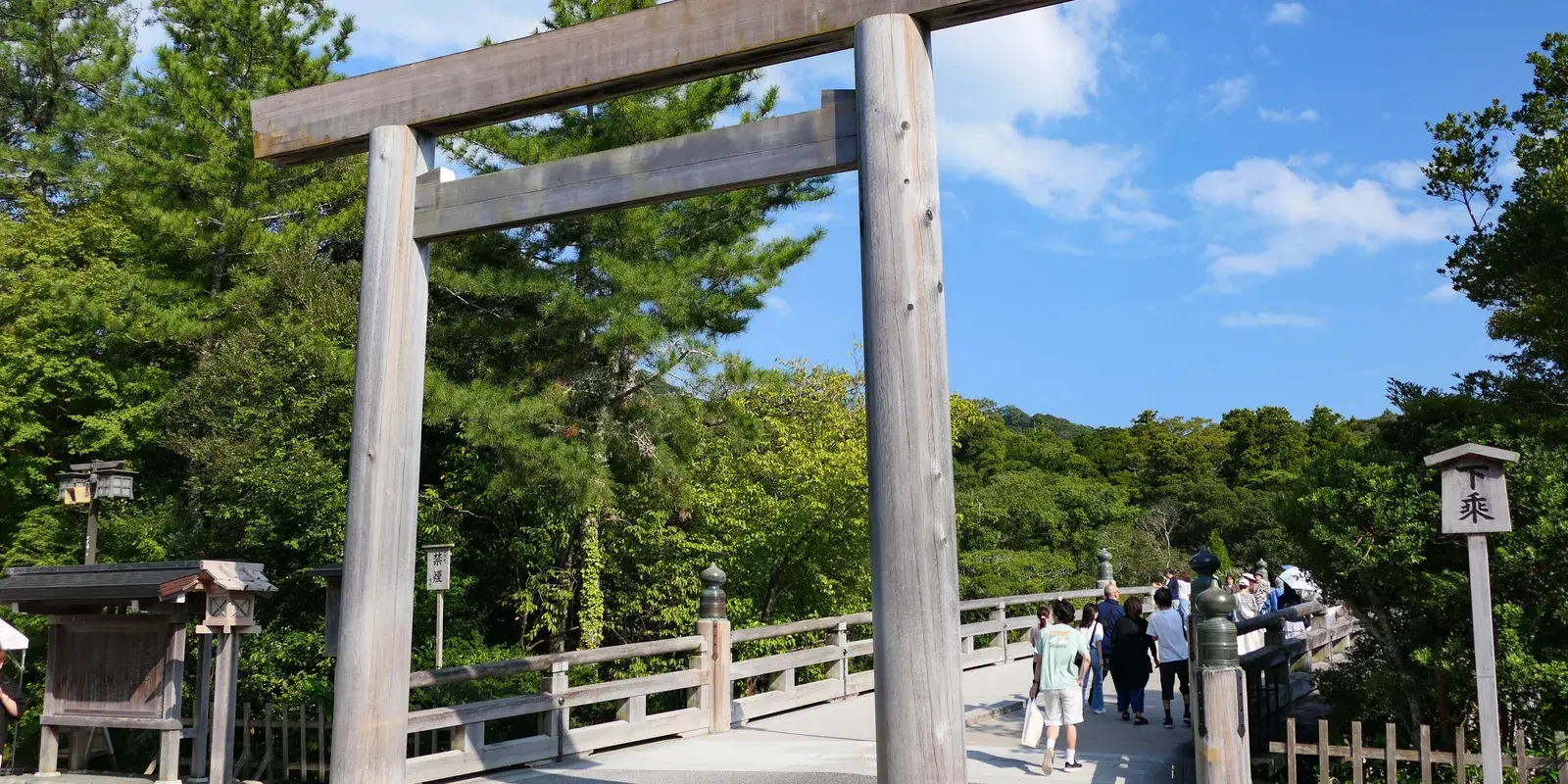
Is Ise Jingu Worth It? What Travelers and Japanese Pilgrims Really Say About Japan's Most Sacred Shrine
Ise Jingu is not on the way to anywhere. It sits down in Mie, off the Golden Route, reached most easily by a private railway your Japan Rail Pass won't cover. So before most people go, they ask a very practical question: is it worth the detour? And then they read something that gives them pause. At the holiest shrine in Japan, you cannot actually see the shrine. The main sanctuary stands behind a row of tall wooden fences; you bow at a gateway hung with a white silk curtain, and that is as close as anyone gets. A long way to go, it can seem, to stand in front of a fence.
Here's the short version, and everything below fills in the why: yes, but not as a sight to tick off. The few travelers who feel let down came to see a building and get their money's worth. The ones who treasure it, and almost everyone who actually goes does, came for the other thing: the forest, the river you rinse your hands in, the walk, the warm old street outside, and the quiet act of simply being there. You don't go to Ise to see something. You go to be somewhere.
Is it worth it? (in travelers' own words)
We gathered the voices of international travelers who have weighed, or made, the trip to Ise, and asked, in effect, was it worth it? Weighted by how strongly each voice resonated with other readers, here is how they fell:
Look first at the red bar. It is almost not there, about one traveler in fifty. The thing people quietly dread about Ise, a long detour to a shrine you can't even see, almost never actually lands once they go.
Now look at the big middle band, because it is not disappointment; it is deliberation. Read what is in it and you hear the same handful of questions over and over: "is it sensible to go to Ise just as a day trip without spending the night?" "is there enough to do to fill a full day?" "is it really feasible to take a day trip from Osaka?" The Ise question was never "is it any good." It was always "is it worth the detour, and how much of a day do I give it." That is a how question wearing a whether costume.
And the people who do raise the famous catch, that you can't see the inner shrine, mostly answer it themselves, in the same breath. "You can't see much of the inner shrine," one wrote, "but you can walk through the forest and look at the outer shrine area." Another: "The main shrine is hidden behind a fence. It's so sacred you're not allowed to look at it. That said, it's set in stunning grounds with huge old cedar trees everywhere." The caveat and the reframe arrive together.
Even the lone red voice is worth reading closely, because it is really a sorting hat. It comes from someone who takes a pilgrimage to Ise every October and who still says, honestly, that "it's mostly hidden due to its sacredness, and the forest isn't nearly grand or big enough to make up for it for most tourists … Ise is a lot of time and effort for very subtle gains. I struggle to recommend it enthusiastically unless someone's REALLY into learning about Shinto." He has named the whole divide in one paragraph. Ise rewards the person who came for the subtle thing, and underwhelms the person who came to get their money's worth, and he is generous enough to tell you which one you need to be.
The travelers who loved it prove it from the other side, and they keep using the same correction. "The shrine is mostly impressive due to the size of the grounds and the tranquility," one wrote, "but don't expect some breathtaking buildings." "The shrines aren't the most grand you'll see over there, but their history, subtleness and location was worth it for me." And the plainest verdict of all, from someone who burned most of a day getting there and back: "This was my favorite part of visiting Japan. It took my brother and me most of the day to get there … and it was absolutely rewarding."
How Japan feels about it
Here is the layer the detour-math misses entirely: what Japanese visitors say, in their own reviews, about that very same hidden shrine.
Look at the red bar. Across 98 Japanese reviews, it never leaves zero: not one came away feeling let down. That is the most useful contrast on this page, and it is not because Japanese visitors are easy to please; it is because none of them came to do detour-math in the first place. They did not ask "is it worth it." For a Japanese visitor, Ise is O-Ise-mairi, a pilgrimage, often the trip of a lifetime. "It took me sixty-eight years to finally make the pilgrimage to Ise. The solemnity within the shrine was a sensation I'd never experienced before." "A long-held wish, fulfilled … rather than 'once in a lifetime,' I thought, go twice, three times." You do not cost-justify a thing like that.
And here is the single most useful sentence on this page. It comes from a Japanese visitor, speaking about the exact fact that foreign travelers list as the letdown: "Whenever I go to a shrine I usually take photos, but here photography was not allowed. I felt the dignity of the gods." Same fence. Same rule. To the traveler doing the math, it reads as you can't see anything. To the pilgrim, the not-seeing is the thing. The reverence at Ise was never about looking at a holy object. One visitor put the feeling plainly: "The instant you step through the torii, you feel your back straighten."
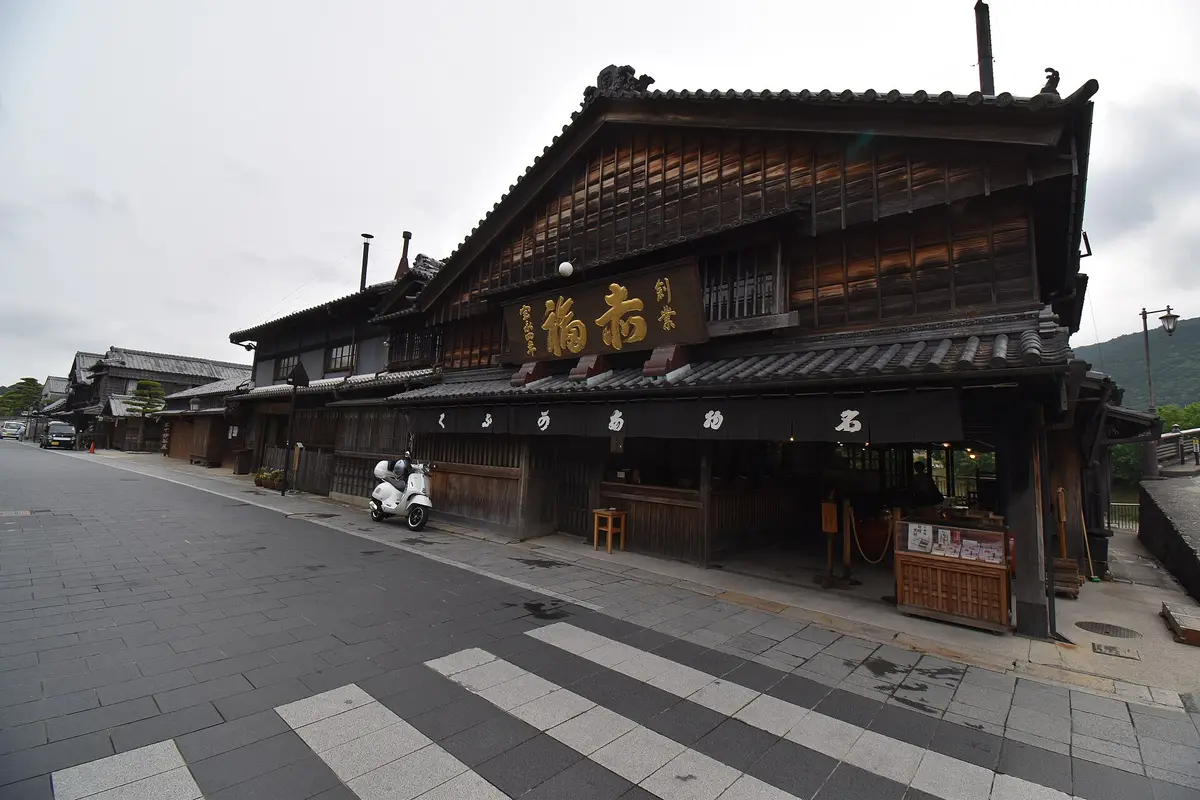
The treasured majority come back for the parts that don't photograph at all: the gravel, the cedars, the river. "I come to worship every year. The sound of the gravel and the pleasant breeze feel as if they cleanse the heart." "No matter how many times I visit, my feelings become refreshed, and I think, I'll do my best again." And no one regrets the warm half of the day: "We put our hands together at the shrine and prayed, then walked through Okage Yokocho, ate Akafuku and Ise udon, and fully savored the atmosphere."
Where the honne edge shows at all, it sits entirely in that middle band, and it is purely about timing, never worth. "Even in the morning, the crowds were more intense than before; I think it's best to visit right around when it first gets light." "Some parking lots were already full by late morning, best to head out early." Not "was it worth it." Only "when."
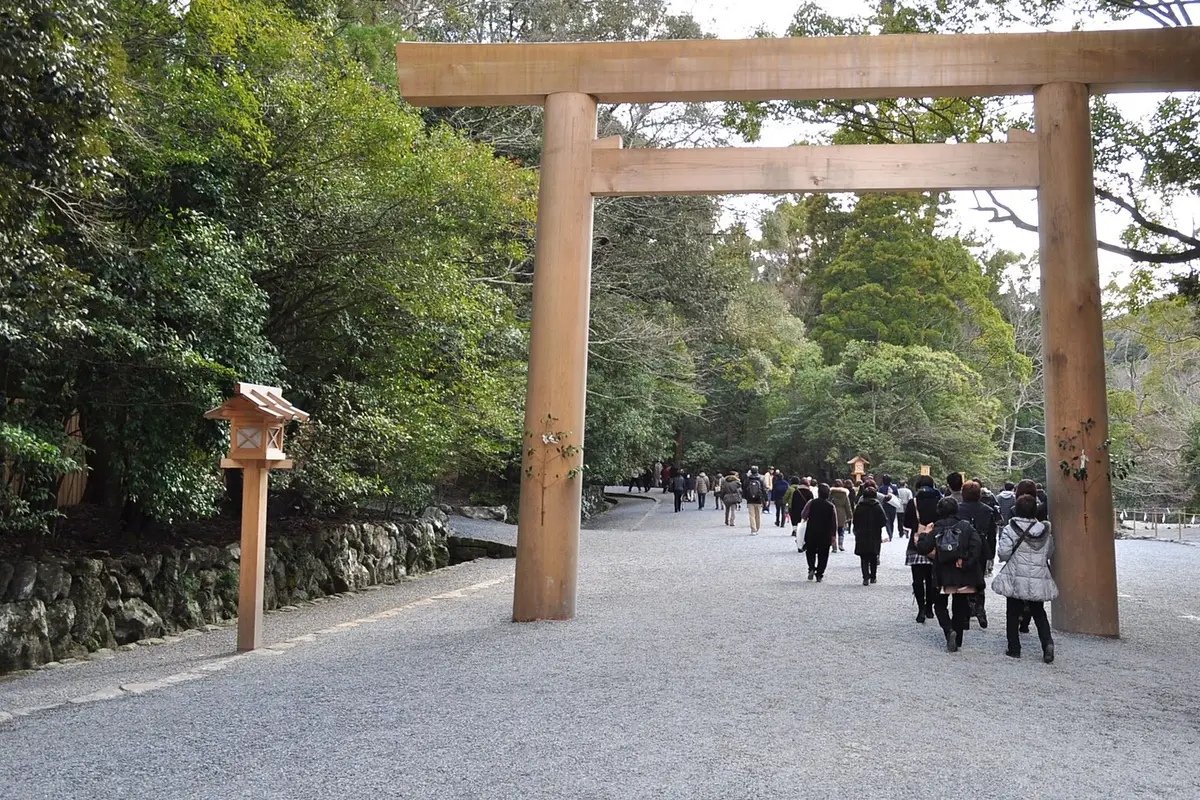
What we wish you'd noticed
You are not meant to see it, and that is the design, not a shortfall. The main sanctuary sits at the top of stone steps, behind a series of plain wooden fences. You bow at a gateway hung with a white silk curtain; beyond it is a courtyard you may not enter or photograph, and a sacred mirror said to rest deep inside, unseen by anyone. And the building itself, if you could see it, would surprise you with how little it asks: unpainted cypress, a roof of thatch, posts set straight into the earth. No vermilion, no gold, no carved dragon. If you have just come from the lacquered, gilded temples of Kyoto, that restraint can read as "nothing here." It is the opposite: it is a different aesthetic doing its job perfectly. The plain wood is reverence, not a budget.
Beside the shrine is an empty rectangle of white gravel, the most important thing at Ise, and the easiest to walk straight past. That swept, fenced, waiting plot is where the shrine stood twenty years ago, and where it will stand again twenty years from now. Every two decades, for some thirteen centuries, the main sanctuaries have been taken down and built completely new on the plot beside them: the ceremony is called Shikinen Sengu. The most recent, the sixty-second, was in 2013; the next will move the goddess to her new home in 2033. The Japanese word for the idea is tokowaka, forever new. The point was never to keep the building; it was to keep the knowing: the carpenter who learns the joints by cutting them, handed living from one generation to the next, so the craft is never more than twenty years from being practiced again. (Even the cypress is part of the plan: the shrine planted a forest a century ago for rebuildings two hundred years from now.) Time your trip near a rebuild, and you can watch one of the world's oldest buildings raised brand new.
The street in front of the shrine is not a tourist trap bolted on, it is the pilgrimage, completed. Cross back over the bridge and the hush gives way to something warm and loud: Oharaimachi, the old shrine-front town, and the lane of stalls called Okage Yokocho, smelling of grilled skewers, of Ise udon in its dark broth, and of Akafuku, the soft red-bean rice cake people have bought near this shrine for three hundred years. In the age of the samurai, a journey to Ise was the trip of a lifetime, and the towns along the way fed and sheltered travelers, often for free, as their own offering of thanks. Worship and the warmth of the road were never separate things here. So when you finish at the shrine and step into the street for something hot and something sweet, you are not leaving the pilgrimage. You are completing it, the way it has always been completed.
Making the visit count
Everything above resolves into a few moves that turn the "long detour to a fence" visit into the one people wait their whole lives for.
- Go early, the calm is the experience. The grounds open early, around first light, and the visitors who arrive then describe near-solitude before the day fills up. "I worshipped before sunrise; in the pitch dark, even so, many people were worshipping, in a different sense, both body and mind felt braced." By late morning the lots fill and the approach gets busy, especially on weekends and holidays. The quiet that is the whole point is easiest to find at dawn.
- Outer Shrine first, then Inner. By custom you begin not at the famous Inner Shrine but at the Outer, greeting Toyo'uke, the deity who has prepared the sacred meals for some fifteen hundred years, before Amaterasu, the guest of honor. There is no strict rule, but it is the old way, and many Japanese visitors note it as the proper order. A bus links the two in under twenty minutes (they are not within walking distance). Keep to the left of the path at the Outer Shrine, and to the right at the Inner.
- Give it a half to a full day, and do all three. As one regular put it bluntly: "if you're not doing at least outer, inner, and Oharaimachi on the same day, you're probably wasting your trip." Most people reach Ise on the Kintetsu line from Nagoya, Osaka, or Kyoto, a private railway the Japan Rail Pass doesn't cover, which is part of the detour-math everyone does. Base yourself in Ise or nearby Toba if you can, and don't cram it: "Ise shouldn't be rushed or squished in, it's a really beautiful place to take in slowly."
- Rinse your hands in the river. Past the Uji Bridge at the Inner Shrine, the forest path bends down to the Isuzu River. Instead of a stone basin, you may crouch at the clear, cold water's edge and cleanse your hands there, a small act people have performed on this bank for centuries.
- A bow at the bridge, gratitude at the top. Many people pause and give a slight bow before stepping onto the Uji Bridge, which marks the line between the everyday world and the sacred one. At the sanctuary, the form of prayer is simple: two deep bows, two claps, one more deep bow. The main sanctuary is traditionally a place for gratitude rather than personal requests; there is a separate hall in the grounds set aside for wishes, and anyone is welcome to pray, whether or not you follow Shinto.
- Put the camera away past the steps. Photography stops at the foot of the main sanctuary. The taut, dignified quiet you came for is made of everyone choosing to honor it, and, as one Japanese visitor found, the not-photographing is where the feeling actually begins.
Is it worth it? If you are measuring a detour against a building you can photograph, Ise will lose that math, and you'll have company, though far less than you'd fear: about one traveler in fifty. But come the way the whole country has come for centuries, for the forest and the river, for the rebuilt-forever shrine you bow to without seeing, and the warm street that has fed pilgrims for three hundred years, and you'll understand why a man can wait sixty-eight years to stand here, and walk away calling it a feeling he had never known before.
Still deciding which famous places actually earn a slot on a short trip? Start with what actually matters in Japan, and for a chapter-by-chapter walk from the Outer Shrine to the Uji Bridge, the Isuzu River, and the empty plot waiting beside the sanctuary, the Ise Jingu audio guide is just below.
Sources
- Ise Jingu Official, About Jingu (English): Jingu is revered as the spiritual home of Japan and stands at the head of the country's roughly 80,000 shrines; the Inner Shrine (Naiku) enshrines Amaterasu-Omikami, the Outer Shrine (Geku) enshrines Toyo'uke-no-Omikami, deity of food, clothing and shelter.
- Ise Jingu Official, The Thought of Shikinen Sengu: the main sanctuaries are rebuilt brand new on the adjacent plot every 20 years, a tradition continued for some thirteen centuries; the idea of tokowaka ("forever new") keeps the buildings, treasures and the craft itself renewed rather than preserved.
- Ise Jingu Official, The 63rd Shikinen Sengu: the most recent rebuilding was the 62nd, in 2013; the 63rd is scheduled for 2033, with preparatory rituals leading up to it.
- Ise Jingu Official, How to Tour Jingu (model course): the customary order is to visit the Outer Shrine (Geku) first and the Inner Shrine (Naiku) afterward; the two are a few kilometres apart and linked by bus.
- Ise Jingu Official, Etiquette and Manners: keep to the left of the approach at the Geku and to the right at the Naiku; photography is not permitted beyond the foot of the main sanctuary steps.
- Ise Jingu Official, Worship / Prayer (English): the form of worship is two bows, two claps, one bow; the main sanctuary is for gratitude, with a separate hall for personal requests; anyone is welcome to pray.
- Ise Jingu Official, Uji Bridge and the Isuzu River: the cypress Uji Bridge over the Isuzu River marks the threshold to the sacred precinct and is itself rebuilt for each Sengu; the Isuzu riverbank serves as a place of purification (Mitarashi).
- Ise Jingu Official, The Forest (Japanese): Jingu tends an extensive forest and began planting, a century ago, the cypress timber intended for rebuildings two hundred years in the future.
- Ise Jingu Official, Access (English): access to Ise is primarily via the Kintetsu and JR lines to Iseshi / Ujiyamada stations, then local bus between the shrines.
- JNTO (Japan National Tourism Organization), Ise-jingu Shrine, Inner Shrine (Naiku): Ise Jingu is one of Japan's most important and revered Shinto sites, set in ancient forest along the Isuzu River in Mie Prefecture.
- Ise City Tourism Association, Oharaimachi & Okage Yokocho (English): the historic shrine-front street and the Okage Yokocho lane of shops and food stalls before the Inner Shrine, including Ise udon and the long-established Akafuku.
WMJS is written in Japan, in English, with AI help. We check every page, but English is not our first language. If a sentence reads oddly, tell us. One sentence is enough.
Thank you. A person reads every note.
How well do you know Japan?
Built from 635 public posts by Japanese people
Want to know more? Ask Japanese people
Have a follow-up question about this topic? We'll ask real Japanese people.
Voice Box →