
Is Mount Aso Worth It (Even If the Crater Is Closed)? What Visitors Actually Found
Is Mount Aso worth it if the crater is closed? Most of the posts we collected say the trip was worth it (46 of 69 posts by international travelers and 68 of 90 Japanese reviews), and the only 2 let-down posts were written before the trip, by travelers who had just read that the crater was closed. Among the posts that say it depends, 12 of 21 international posts and 13 of 22 Japanese reviews point to the weather or the state of the crater. As of October 2026, the Japan Meteorological Agency has kept Aso at eruption alert level 2 since September, so the area within about 1 km of the Nakadake crater stays closed, and the Aso Volcano Disaster Prevention Council shows the current crater restrictions at aso-volcano.jp.
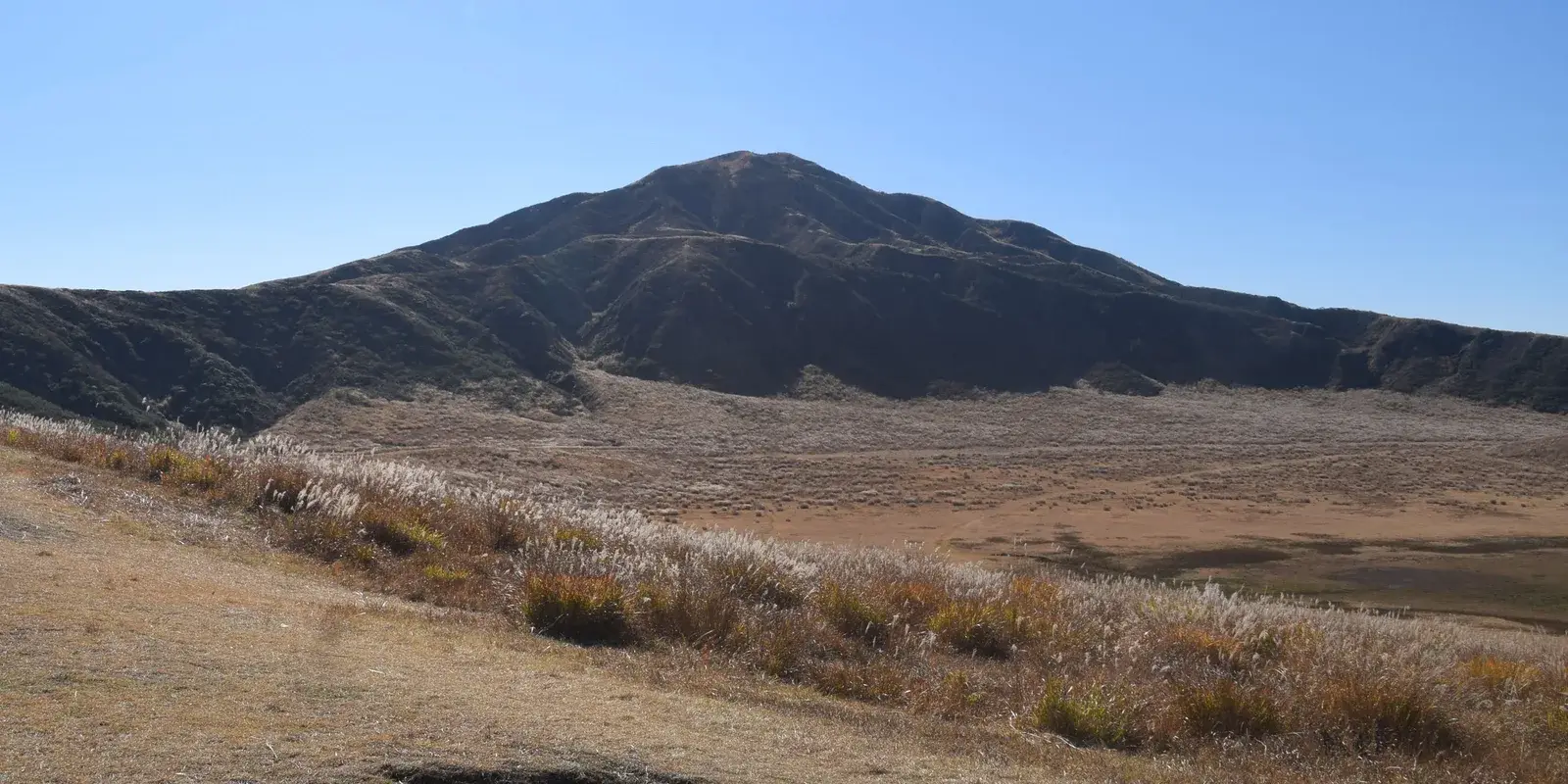
You've read the warning: Mount Aso's active crater, Nakadake, closes without much notice when it breathes out too much volcanic gas or its alert level rises. So you picture driving hours into the mountains of Kyushu, only to find a rope across the road. The crater was never really the point, though. The thing you came to stand inside is the caldera, the vast green bowl all around the smoking vent, and that is open every single day.
Is it worth the trip? (in visitors' own words)
We gathered the voices of international travelers writing about Mount Aso on Reddit, from trip reports to replies posted while still planning, and asked, in effect, was it worth it? Counting each voice once, here is how they fell:
Look at that red sliver, and then look closer, because it's the most reassuring thing on the page. The two voices in it aren't people who went and felt cheated. They're people who read that the crater was shut and were talking themselves out of the trip before they'd left. "I'll have to reconsider going," one wrote; "I didn't realize that it was closed," said the other. The dreaded wasted day is almost entirely a fear held before arriving. Among the travelers who actually went, the disappointment mostly evaporated.
What they found instead was the caldera. "Daikanbo lookout was heavenly. Kusasenrigahama was very picturesque. Mt Aso volcano caldera felt like something from LOTR," wrote the most-upvoted voice by far. Another: "those caldera views are unreal. Felt like I was on another planet. The Daikanbo lookout alone was worth the trip." One traveler's regret was the opposite of not enough: "We spent 3 days in Aso and seriously I think it wasn't long enough!" And the single most useful clarification of the whole doubt came quietly, with only a couple of upvotes: "The Aso crater is the entire valley, roughly 30 km across. The volcanic bit that's sometimes closed is just the mountain in the center. It's nice if it's open but there's more than enough else to see (and eat!)."
That is the reframe in one sentence. The question was never really is Aso worth it. It's which Aso did you come for (the vent, or the bowl).
Guided day tours: Klook / GetYourGuide
Klook and GetYourGuide are affiliate links: if you book through them, we may earn a commission, at no extra cost to you.
How Japanese visitors feel about the same volcano
Here is the layer most guides skip: what Japanese visitors say, in their own reviews, about the same mountain. For many of them Aso is not a bucket-list gamble but a place they come back to: 18 of the 90 reviews mention an earlier visit or regular trips.
The red bar here isn't small. It's empty. Ninety reviews, and not one of them says the place wasn't worth it. That, more than any rave, is the honest answer to your doubt. But notice how they hold the crater, because that is the map that shows you why the disappointment doesn't happen to them. Several of them write about reaching the rim as luck rather than something owed: 6 of the 90 reviews use words like lucky or fortunate for it. "I was lucky to be able to see the crater," one writes. "I'd heard that depending on gas and wind direction it can be closed off." Another, turned back by the gas again on a return more than ten years after the first try: "The second time was a no-go too... I keenly felt how hard sightseeing is when nature is your counterpart. Too bad!" Two stars, a shrug, and still not a word that the trip wasn't worth it. And one visitor who finally made it in: "On my third try in life, I finally made it in. In the past it was off-limits... There's no doubt this is one of the places you should visit in Japan."
Read them together and the lesson is plain. Among the reviewers who have been before, 4 of those 18 reviews describe earlier trips when the crater was closed, and they came back anyway; for them the crater is a gift the mountain gives on the days it allows. One reviewer put the reward in the simplest words: at the rim you "feel the land, feel the earth." You do not need the vent open to feel that.
What we wish you'd noticed
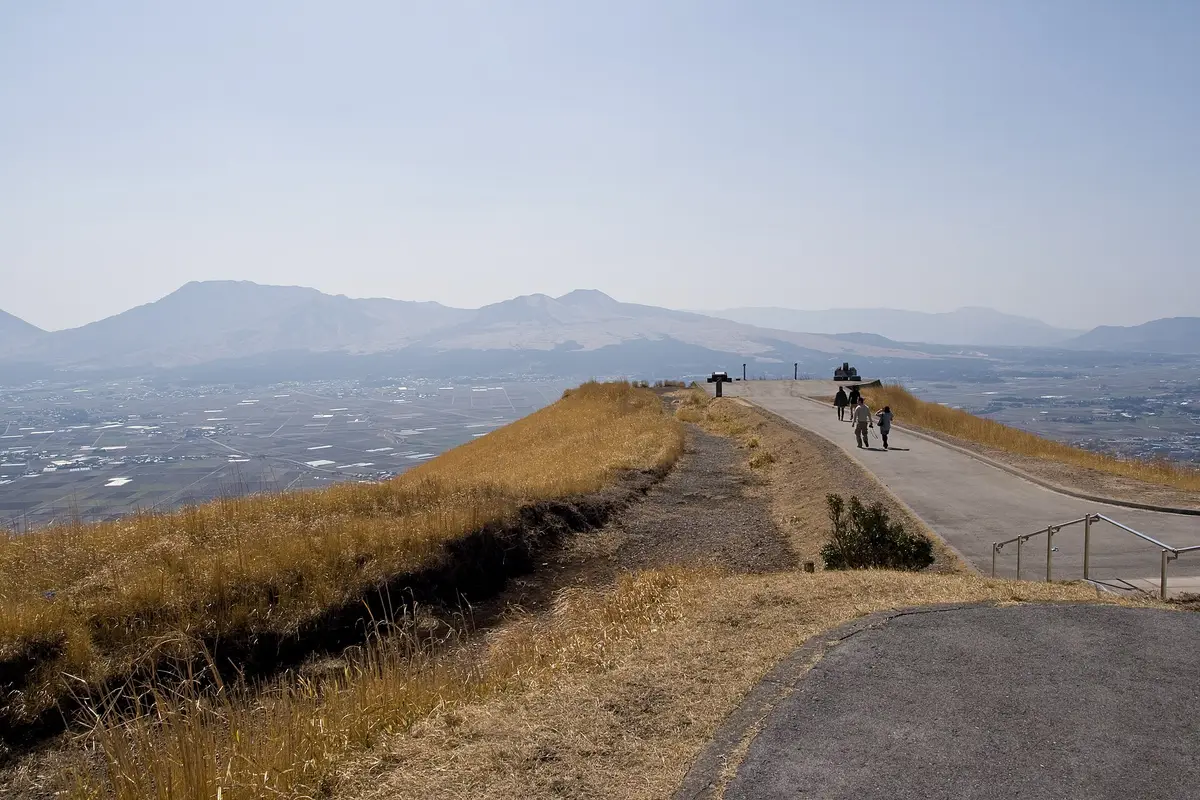
You are not climbing a volcano. You are standing inside one. From the northern rim lookout at Daikanbo, 936 meters up, you don't look up at Aso; you look down into it, across a basin so wide it holds farms, a railway, and three towns and villages where about 40,000 people live. The Aso caldera is around eighteen kilometers one way and twenty-five the other, among the largest in the world, and Japan's environment ministry notes that the grassland across it, kept up by people for a thousand years, is the widest in Japan. That view depends on nothing but the weather. It is, on its own, the answer to whether you should come.
The green bowl is the destination the crater distracts you from. Drive up toward the peaks and the land opens into Kusasenri, a kilometer-wide, grass-floored crater where horses graze beside still ponds below the cone of Eboshidake, one of the best-known sights of Aso, and, like Daikanbo, open whether or not the vent is. Some visitors count the getting-there as part of the joy: "the drive is also absolutely beautiful," one said, and 4 of the Japanese reviews praise the drive or ride up as well. One witty traveler summed up the whole paradox of a closed crater in a caldera this size: "There is simultaneously too much and no volcano."
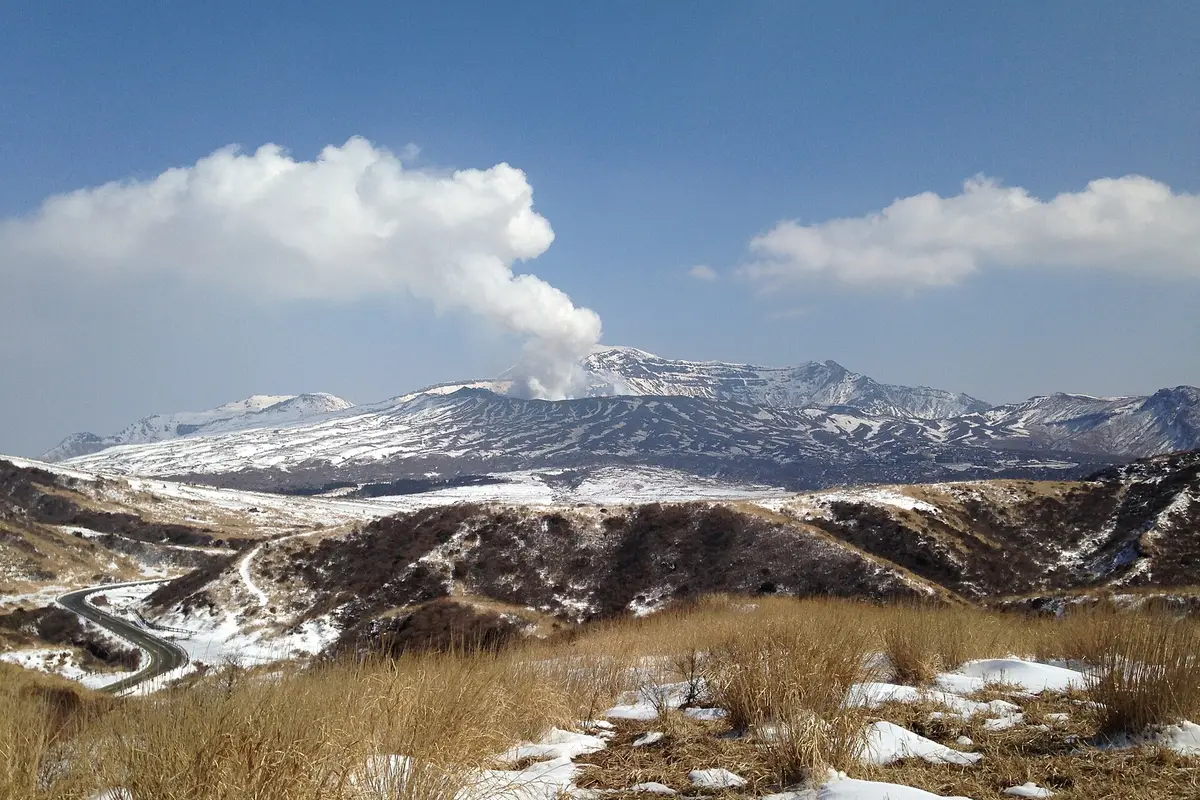
A closed vent means the volcano is keeping its promise rather than breaking yours. Whether you can approach Nakadake is decided day by day by the mountain, by how much gas it's exhaling and the official eruption alert level, and when the level rises, the area within roughly a kilometer of the crater closes. Because the gas is genuinely hazardous, people with asthma or heart or bronchial conditions are asked not to approach the rim even when it's open. This isn't your trip going wrong; it's what living beside a working volcano actually looks like. The people of Aso publish the day's status precisely because they plan around it, and borrowing their patience is the surest way to enjoy the place.
Doing it well: the welcomed way
Everything above resolves into a handful of moves that turn "the crater might be closed" from a dealbreaker into a footnote.
- Check the alert level first, and build the day around the caldera rather than the vent alone. Before you set out, look up the day's crater-access status (the Aso Volcano Disaster Prevention Council publishes it) and the eruption alert level (from the Japan Meteorological Agency). Then build your day around Daikanbo, Kusasenri, the drive, and Aso Shrine, and treat the rim as a bonus you might be handed. "It can be worth it, but don't over index on it," as one traveler put it. "Make sure you have a flexible plan and/or manage your expectations properly."
- Give it more than a dash. For some travelers the regret was time rather than the crater: one wished three days had been longer, and another, arriving late in the morning, could only pick one place. The rim lookout and the crater lie in opposite directions from Aso Station, so a rushed half-day forces a choice; a full day, or a night in the bowl, lets you have all of it. If you can only pick one thing, make it the rim at Daikanbo.
- Come by car if you can. The road is part of the reward. Aso is wide and its sights are far apart, and visitors say the drive up, through the rim and the grassland, is itself one of the best parts. If you'd rather not drive, the Sanko bus and the crater shuttle can still string the day together; it just asks for a little planning.
- If the rim is open, go gently. Reaching the crater is by a toll road (around ¥1,000 for a car) or a short shuttle bus from the Aso-sanjo terminal, and only when the road is open. Shelters stand near the edge in case the wind shifts; if an announcement asks you to move back, move. Seeing a working volcano breathe is a rare thing, and it's given, never guaranteed.
- Let the weather have a say. High and open, the rim can vanish into fog, and the same fog makes the roads hazardous. Don't push through it. If the top is socked in, drop down onto the caldera floor: the shrine, the small towns, a red-beef lunch, and a quiet onsen are all good weather, and the view is often back the next day.
Guided day tours: Klook / GetYourGuide
Klook and GetYourGuide are affiliate links: if you book through them, we may earn a commission, at no extra cost to you.
Do these, and the day tends to go the way the heart-lifted reviewers describe rather than the way the anxious pre-trip forum posts fear. The crater isn't the test you pass or fail. It's one stop inside a caldera made by giant eruptions, with towns on its floor, and the bowl, the rim, the grass, and the drive are all still there, whatever the mountain decides that morning.
So: is Mount Aso worth it if the crater is closed? The Japanese reviewers answered without a single dissenting voice, and the travelers who came away glad almost all say the same thing back: come for the caldera, check the mountain's mood, hold the vent lightly, and Aso gives you the Earth either way.
Still deciding which of Japan's big natural sights actually earn a slot on a short trip? Start with what actually matters in Japan. For the full story of the caldera, the grassland kept alive by fire, and the crater you visit only when the mountain allows, the Mount Aso guide is just below.
Sources
- Aso Volcano Disaster Prevention Council: Crater Access & Safety: the live crater-access status; the area within about one kilometer closes when the eruption alert level rises. Checked 2026-10-19 (October 2026): the current restriction notice reads "Level 2 Eruption Warning. The area within 1km from the crater is off-limits" (first-stage restriction), and the 2026-09-01 notice says the level was lowered to 2 on September 1, 2026, with the road open as far as the Aso-sanjo plaza from September 2.
- Japan Meteorological Agency: Aso Volcano Activity: the official eruption alert level that governs whether the crater can be approached. Checked 2026-10-19 (October 2026): eruption alert level 2 (crater-area restriction), issued on September 1, 2026 and still in force in the October 16, 2026 commentary, with the warning covering about 1 km from the Nakadake first crater.
- Aso City Official: Crater Viewing & Toll Road Fees: the Aso Volcano Park Road toll (about ¥1,000 for a car; written without thousand-separators, that is 1000 yen), opening seasons and hours, that access is suspended during volcanic regulation, and the gas warning: crater viewing is refused to people with asthma, bronchial or heart conditions, or who feel unwell. Checked 2026-10-19 (October 2026): the page says the park road is closed for now, so crater viewing is not possible for the time being.
- Aso City Official: Mount Aso: about 40,000 people living on the caldera floor, with fields, a national road and a railway, in three municipalities (Aso City, Takamori and Minamiaso); the Kusasenri side volcano on the north slope of Eboshidake.
- Kumamoto Prefecture Tourist Federation: Daikanbo: a peak of the northern outer rim, about 936 m high and about 400 m above the Aso valley below.
- Kumamoto Prefecture Tourist Federation: Kusasenrigahama: the grassland about 1,100 m up, with grazing horses and a view of the smoking Nakadake crater; the 785,000-square-meter grassland and its ponds seen from the Kusasenri lookout.
- Aso Geopark: Official (UNESCO Global Geopark): the caldera's dimensions (about 18 km by 25 km, among the world's largest), made by giant eruptions between about 270,000 and 90,000 years ago, and the farmland of the Aso valley seen from Daikanbo.
- Ministry of the Environment: Aso-Kuju National Park: the grassland, the widest in Japan, kept up by people's use for a thousand years, and the coexistence of people and the volcano.
- JNTO / National Parks of Japan: Aso-Kuju: standard English terms (Mount Aso, Aso Caldera, Daikanbo Lookout, Nakadake, Komezuka), the akaushi cattle raised on the grasslands, and that it is sometimes not possible to approach the crater.
- Sanko Bus: Aso Crater Shuttle: the crater shuttle bus from the Aso-sanjo terminal (about 5 minutes one way, connecting with the route bus from Aso Station), run without a guarantee of crater viewing. Checked 2026-10-19 (October 2026): the notice updated on 2026-09-02 says the shuttle is suspended while the park road is closed.
WMJS is written in Japan, in English, with AI help. We check every page, but English is not our first language. If a sentence reads oddly, tell us. One sentence is enough.
Thank you. A person reads every note.
How well do you know Japan?
Built from 635 public posts by Japanese people
Want to know more? Ask Japanese people
Have a follow-up question about this topic? We'll ask real Japanese people.
Voice Box →