
Japan's Rainy Season: What Japanese People Actually Think About Tsuyu
What you'll learn in this article:
- How Japanese people honestly feel about tsuyu, and why they love and hate it at the same time
- What 312 Japanese voices said about rain, tourists, and the beauty most visitors miss
- The invisible rain infrastructure that quietly takes care of you
- What happens when you tell a Japanese person "rain makes Japan beautiful"
What is Japan's rainy season really like? We collected 312 public posts by Japanese people. The honest answer: 45% find real beauty in tsuyu, but 34% openly hate it. Japanese people aren't pretending rain is wonderful. They're holding both feelings at once: the headaches and the hydrangeas, the mold and the moss. When you understand this duality, a rainy day in Japan stops being a setback and becomes something you share with the people around you.
If you're looking at your weather app and seeing nothing but rain clouds over Japan, take a breath. You're about to experience something that most visitors miss entirely. Not despite the rain, but because of it.
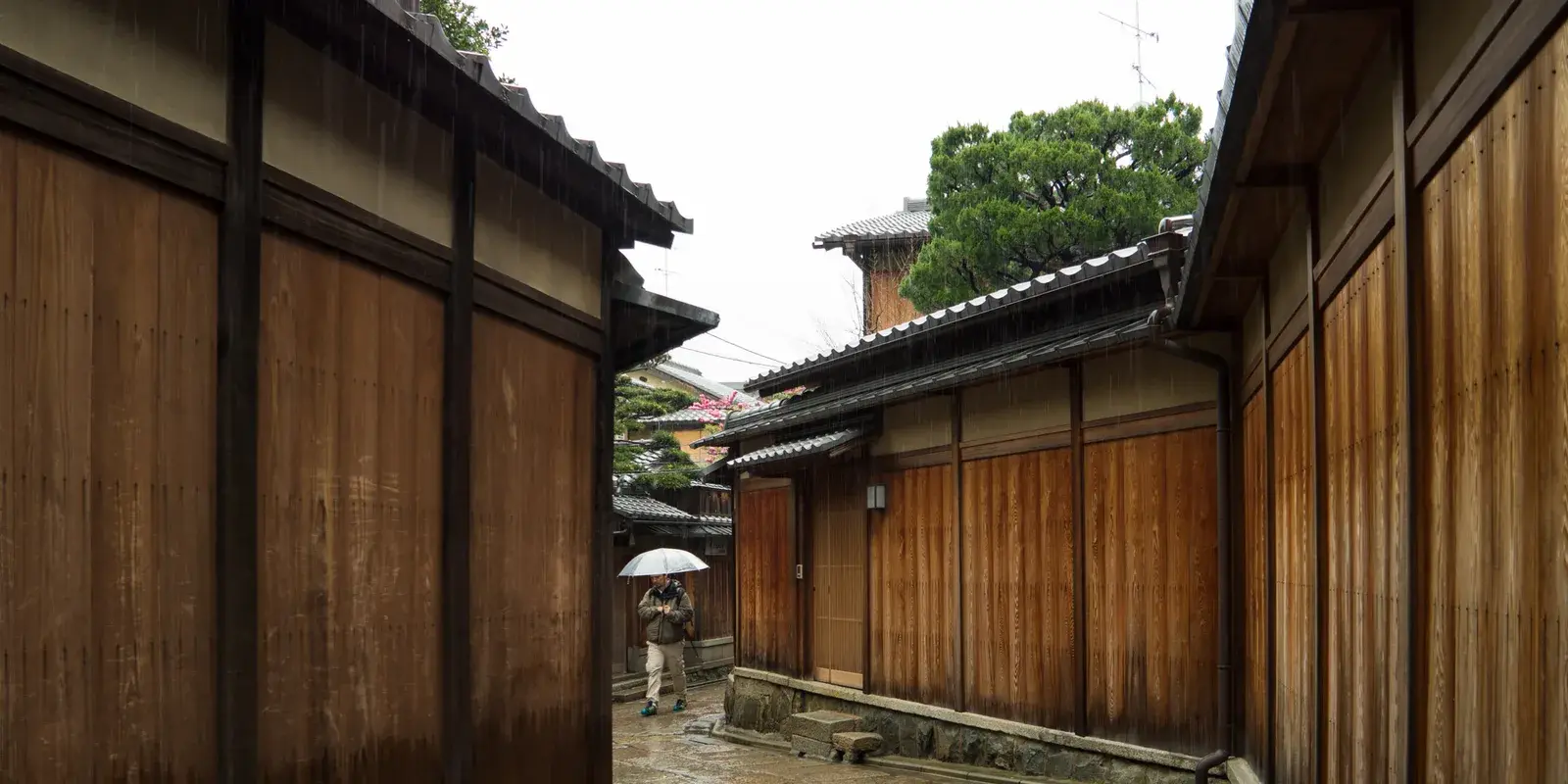
Here's what nobody tells you: Japanese people themselves have a complicated relationship with tsuyu (梅雨), Japan's rainy season that stretches from early June to mid-July. They complain about the humidity. They get headaches from the low pressure. Their hair goes wild and their laundry never dries. And yet, in the same breath, they'll tell you about the way rain makes moss glow green, the sound of drops on a tile roof at night, the hydrangeas that only bloom this way because of the rain.
That duality is the key to understanding tsuyu. And once you get it, your rainy days in Japan will feel very different.
Quick Guide
| What to Know | What Japanese People Said | |
|---|---|---|
| 🟢 You're welcome | 81% of Japanese voices welcomed tourists during rainy season. They want to help you enjoy it rather than pity you for being here. | "We'd love for visitors to experience Japan's seasons, including tsuyu." |
| 🟡 They get it | Japanese people hate the humidity too. You're not alone in finding it tough: 34% openly dislike tsuyu. The discomfort is real and shared. | "The healing effect of rain sounds is canceled out by low-pressure headaches. Net zero!!" |
| 🟢 Hidden beauty | 45% find genuine beauty in rain. Rain transforms familiar places into something you can't see any other time. Many Japanese people have favorite rainy-day moments. | "Plants touched by raindrops reveal their beauty in unexpected moments." |
The one thing to remember: Japanese people hold two feelings about tsuyu at once, and that's the point. The rain is uncomfortable and beautiful. When you share that understanding, you're not just tolerating the weather. You're experiencing Japan the way Japanese people do.
How We Gathered These Voices
We collected 312 Japanese-language responses across four rainy-season topics: honest feelings about tsuyu (80 responses), reactions to tourists visiting during rainy season (62 responses), the beauty of rain and how foreigners' appreciation affects Japanese people (80 responses), and generational differences in rain perception (90 responses). Sources include public Japanese Q&A sites, forums, and social posts, alongside news media and published surveys.
A quick note: This isn't a controlled scientific survey. It's a collection of what real Japanese people said in their own words, on public platforms. Most travel guides tell you "bring an umbrella." We wanted to show you what Japanese people actually feel about the season you're visiting in, and it turned out to be far more nuanced than "good" or "bad."
The Honest Truth: Japanese People Both Love and Hate Tsuyu
Let's start with something that might make you feel better: Japanese people find tsuyu genuinely difficult too.
Of 80 responses about how they honestly feel about the rainy season:
The complaints are real and specific:
低気圧で体調が悪くなりますし、髪もくせ毛なので大変なことになります。移動の際に少しでも濡れるのも嫌です。洗濯物も干せなくて困ります。 The low pressure makes me feel sick, and my curly hair becomes impossible. I hate getting even slightly wet when I'm out. And the laundry never dries.
雨が嫌いです。とにかく嫌いです。 I hate rain. I just hate it.
But here's what makes tsuyu fascinating: the same people who complain often have a "but..."
梅雨はじめじめするし、洗濯物も乾かないし、髪もうねるし大嫌いですが、唯一お気に入りの傘を使えることだけは梅雨の楽しみです。 Tsuyu is humid, the laundry won't dry, my hair goes wavy, and I hate it — but the one thing I look forward to is getting to use my favorite umbrella.
雨音にはヒーリング効果があるけど、それを打ち消すくらい低気圧の気象病でダウナーになるので プラマイぜろ!! Rain sounds have a healing effect, but the low-pressure weather sickness cancels it out completely. Net zero!!
とにかく湿気が嫌です。ただ、梅雨の時期にあまり雨が降らないと夏の渇水が恐ろしいので、適度に降ってもらえればという気持ちもあります。カタツムリは可愛いので大歓迎ですが、ナメクジが増えるのはちょっと……。 I really hate the humidity. But if it doesn't rain enough during tsuyu, we'll face water shortages in summer, so part of me wants it to rain just enough. Snails are cute and welcome — but slugs, not so much...
💡 The duality is the point
Japanese people aren't performing "love of rain" for cultural points. They really do struggle with the humidity, the headaches, and the endless dampness. But many of them, sometimes the very same people, also find something in the rain that nothing else gives them.
And then there are the voices that truly love it:
雨めちゃくちゃ好きです。雨の音に癒されれ、雨の匂いにいやされ、雨降ってる雰囲気に癒され、ほんまに最高に雨が好きです。 I absolutely love rain. The sound heals me, the smell heals me, the atmosphere of rain heals me. I genuinely, truly love rain.
梅雨好きです。なので梅雨明け前になると悲しくなります。 I love tsuyu. So I actually feel sad when it's about to end.
梅雨が嫌いって人は多いですが私は好きです。雨降ってる日に散歩に行くと普段とは違った発見があったりします。 Most people hate tsuyu, but I like it. When I go for a walk on a rainy day, I discover things I'd never notice otherwise.
One voice captured something that might change how you feel about getting caught in the rain:
あれ、梅雨が嫌なんじゃなくて、濡れるのが嫌なだけだったのかも。 Wait — maybe I don't actually hate tsuyu. Maybe I just hate getting wet.
濡れるのは嫌いですが、家の中から見る雨景色は好きです。 I don't like getting wet, but I love watching the rain from inside.
That distinction matters. Much of the discomfort of tsuyu is physical: humidity, dampness, hair trouble. But the season itself, the sounds, the light, the way everything looks, that part, many Japanese people quietly treasure.
What Japanese People Think When Tourists Visit in the Rain
Now for the question you're probably wondering about: do Japanese people feel sorry for tourists who visit during rainy season?
Of 62 responses about foreign visitors during tsuyu:
The overwhelming response isn't pity. It's warmth.
せっかくなら、日本を訪れる外国人にも日本の四季の移ろいを味わってもらいたいですよね。 If they're here, we'd love for visitors to experience the changing of Japan's seasons — including tsuyu.
梅雨にまつわる日本の自然や風物詩を外国人には「日本ならではの文化」として興味深く感じてもらえるのではないでしょうか。 The nature and seasonal traditions of tsuyu could be something visitors find genuinely interesting as a uniquely Japanese culture.
One voice captured the tension many Japanese people feel, and how they resolve it:
日本には「せっかく来たのに雨でガッカリさせてしまった」という感覚がある一方、茶室での静かな雨音を愛でる文化もある。梅雨の良さを英語で伝えることで、外国人旅行者も楽しんでもらえる。 In Japan, there's a feeling of "they came all this way and we disappointed them with rain." But we also have a culture of appreciating quiet rain sounds in a tea room. If we can share what's good about tsuyu, visitors can enjoy it too.
💡 They're not feeling sorry for you
The most common response from Japanese people isn't "poor tourists." It's "let me help you enjoy this." They share indoor spots, recommend hydrangea viewing, and offer practical umbrella advice, because they sincerely want you to have a good time, rain or not.
And their practical advice is actually useful:
傘で事足りますよ。日本は熱帯地域ではないのでバケツをひっくり返したようなスコールは降りません。6月は雨季だけど数週間のことですし、雨の日はテーマパークが空くという良い面もあります。 An umbrella is all you need. Japan isn't tropical, so you won't get bucket-pouring downpours. June is the rainy season, but it's only a few weeks — and the upside is that theme parks are empty on rainy days.
コンビニで折り畳み傘が安く購入できますよ。安いのにすごく軽いし、なんと言っても丈夫なので驚くと思います。 You can buy a folding umbrella cheaply at any convenience store. They're surprisingly light for the price, and honestly, you'll be amazed at how sturdy they are.
雨が降ってもきれいなのは鎌倉。平日なら混雑も少ないし、檑亭で庭園を見ながら食事するのもいいですよ。 Kamakura is beautiful even in the rain. On weekdays it's not too crowded — try Raitei, where you can eat while looking out over a garden.
If you're wondering about the best times to visit Japan overall, including how tsuyu fits into the bigger picture, Best Time to Visit Japan covers that in detail with data on crowds, prices, and local sentiment by month.
The Rain That Only Japan Has
Here's something that helps explain why Japanese people can hold both "I hate humidity" and "rain is beautiful" at the same time: Japan has one of the world's richest vocabularies for rain.
A Latvian man living in Japan once posted a list of Japanese rain words online. His reaction went viral:
日本語の雨の呼び方が果てしなさ過ぎて泣いてる The number of ways to say "rain" in Japanese is so endless I'm crying.
Japanese has words for rain you can hear but can't see (kirisame, 霧雨), rain that falls like threads of silk (kinusame, 絹雨), rain that arrives with blossoms (harusame, 春雨), rain that catches you on a clear day (tōriame, 通り雨), and dozens more. Some estimates put the count at over 400 distinct expressions.
But what made the post truly viral was the Japanese response:
ヤバい、半分くらいは今初めて意味を知った。勉強になった。 Wow — I'm just now learning the meaning of about half of these for the first time.
それだけ知ってる時点で、日本人である私より日本語(の雨の表現を知っている)。 The fact that you know this many already means you know more Japanese rain words than I do — and I'm Japanese.
There's something beautiful happening here: a foreigner's amazement helped Japanese people rediscover something they'd stopped noticing about their own language. This pattern, the outside eye revealing what's been hidden in plain sight, came up again and again in our research.
日本人は雨を美しいと感じる感性がある。雨に多数の名前が付いているのは日本くらいじゃないのか。 Japanese people have a sensibility that finds beauty in rain. I don't think any other language has given rain this many names.
西洋作品は飽くまでも舞台装置としての雨であって、雨自体を美しく描写しているわけではない。日本の作品には雨に物憂げな美しさも、鬱屈とした美しさも、色艶やかな美しさも感じる。 In Western works, rain is a stage prop — it sets a mood but isn't itself portrayed as beautiful. In Japanese works, rain carries melancholic beauty, subdued beauty, vivid beauty.
This isn't just poetic tradition. It shows up in everyday life during tsuyu:
雨に映えるあじさいや街路樹の木々を見るとさわやかな気持ちになります。 Seeing hydrangeas and street trees looking their best in the rain gives me a refreshing feeling.
雨滴に濡れた植物は、ふとした時にその美しさを見せるのでたびたび驚かされます。 Plants touched by raindrops reveal their beauty in unexpected moments — I'm always surprised by it.
紫陽花は雨とセットだからいいんだと思うんだが。 Hydrangeas are beautiful precisely because they come with rain. That's the whole point.
The hydrangeas (ajisai, 紫陽花) are tsuyu's signature. They only reach their most vivid blues, purples, and pinks when the rain keeps coming. In Kamakura, Kyoto, and hundreds of temples across Japan, the rainy season transforms gardens into something that doesn't exist in any other month. One foreign visitor put it simply: "Seeing hydrangeas in the rain is my reason for visiting Japan."
For the flower itself: why it only looks this beautiful in the rain, which ajisai temples to visit, and why the colors shift, see Hydrangeas in Japan (Ajisai).
Japan's Invisible Rain Infrastructure
One reason rainy days in Japan feel different from rainy days elsewhere: Japan has quietly built an entire infrastructure around rain.
A French YouTuber living in Japan made a video about the small plastic bags that Japanese supermarkets provide at their entrances, so you can slip your wet umbrella into a sleeve and avoid dripping on the floor. His reaction:
日本のこういう工夫が好きすぎる。 I love these little Japanese innovations so much.
The Japanese response was telling:
当たり前すぎて何も思ってなかったわ 新しい発見 気づきをありがとう。 This was so normal to me that I'd never thought about it. Thank you for the fresh perspective.
This keeps happening. Japan's rain infrastructure is invisible to Japanese people because they've never known anything else. But for visitors, it's a small marvel:
- Convenience store umbrellas: Every konbini sells clear vinyl umbrellas for about ¥500-700. They're functional and ubiquitous. You'll never be caught without an umbrella in Japan for more than a five-minute walk.
- Umbrella stands: Most shops, restaurants, and public buildings have umbrella racks at the entrance. Some have locking systems. The expectation is that you'll leave your wet umbrella before entering.
- Umbrella bags: Department stores and supermarkets provide plastic sleeves so your umbrella doesn't drip inside. One foreign visitor called the locking umbrella stand system "genius"; the post got 250,000 likes.
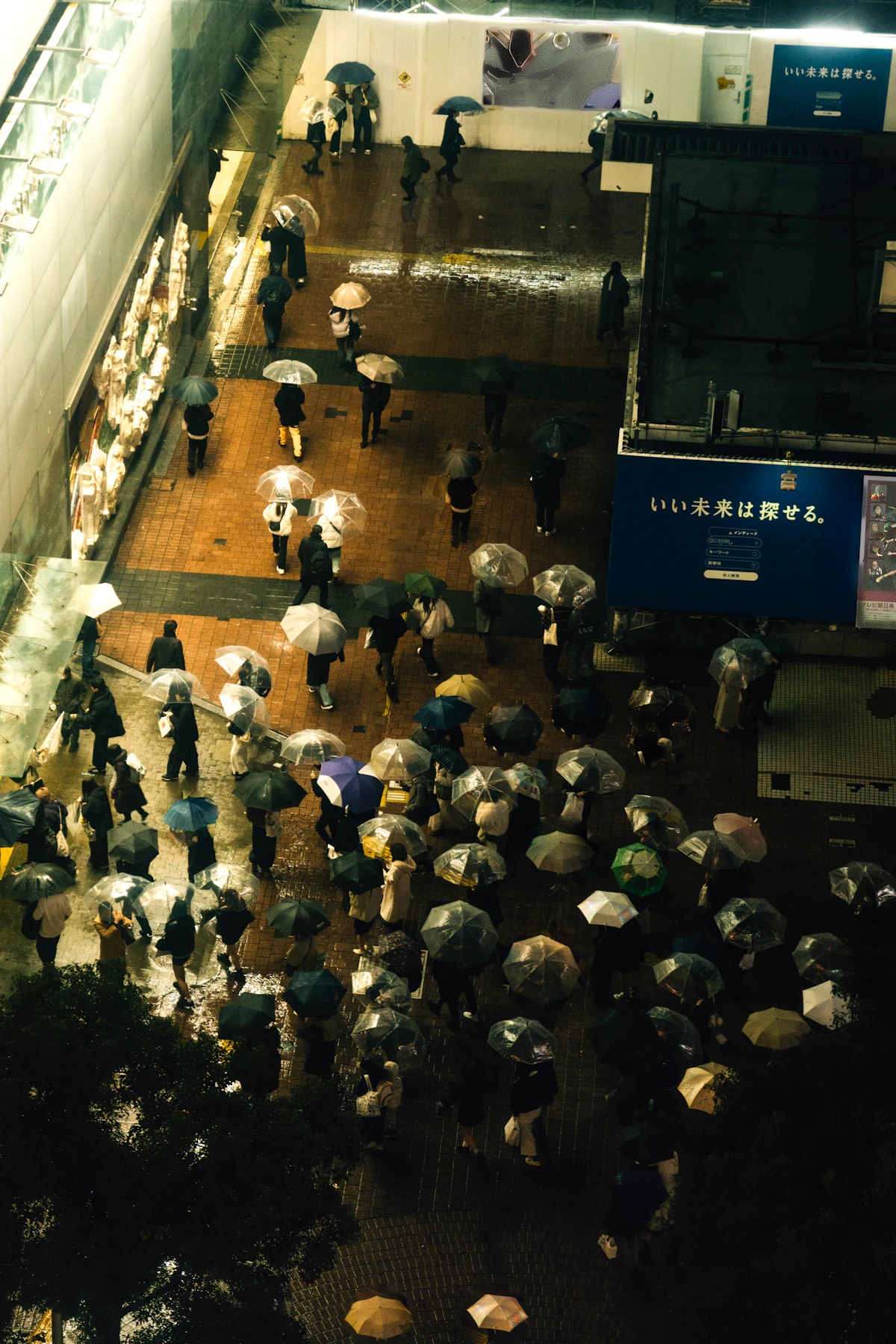
- Transparent umbrellas: Japan's iconic clear umbrellas aren't just cheap: they let you see where you're going in crowded spaces. Japanese people describe rainy-day crowds as kasa no hana ga saku (傘の花が咲く), "umbrella flowers blooming."
日本人の傘文化は、単なる雨対策ではなく、美的配慮や社会的マナーを含む文化的習慣である。 Japanese umbrella culture isn't just rain protection — it's a cultural practice that includes aesthetic consideration and social courtesy.
There's also kasa-kashige (傘かしげ): the gesture of tilting your umbrella away from someone when you pass them on a narrow sidewalk, so they don't get dripped on. It's one of the small, invisible courtesies that make up Japan's social fabric. You can read more about these kinds of quiet gestures in our article on omoiyari.
💡 You're taken care of
Japan's rain infrastructure means you'll never be truly stranded. Umbrellas appear everywhere, buildings accommodate wet weather seamlessly, and even the social customs account for rain. You don't need to prepare for rain in Japan. Japan has already prepared for you.
When You Say "Rain Makes Japan Beautiful"
Here's the part we didn't expect to find: when foreigners express appreciation for rainy Japan, it truly moves Japanese people.
Of 80 responses about foreign reactions to rain in Japan:
This was our strongest finding across all four research topics. When visitors notice the beauty that Japanese people have stopped seeing, the glistening moss, the rain on a temple roof, the hydrangeas in full bloom, something shifts.
日本が梅雨を嫌がっているのは知ってますよ。でも外国人の私には、しとしとと降り続ける雨に日本情緒を感じるんです。 I know Japanese people don't like tsuyu. But as a foreigner, I feel something deeply Japanese in that steady, gentle rain.
A foreign visitor posted that rainy Tokyo felt "like Blade Runner," and that they couldn't explain why, but they loved it:
理由はうまく言えないんだけど、東京の雨の日が大好きなんだ。 I can't quite explain why, but I love rainy days in Tokyo.
Others went further:
本当に、日本の雨ほど美しいものは無いと思うよ。 Honestly, I don't think anything is as beautiful as rain in Japan.
紫陽花を見に日本に行くのが目標の1つ。 Visiting Japan to see hydrangeas is one of my life goals.
But the most interesting voices came from the Japanese side: people who watched foreigners' reactions and saw their own culture with fresh eyes:
当たり前すぎて何も思ってなかったわ 新しい発見 気づきをありがとう。 It was so normal to me I'd never thought about it. Thank you for helping me see it again.
改めて「日本人は世界に類を見ない傘好きなんだなぁ」と感じます。 It made me realize again — Japanese people really do love umbrellas like no one else in the world.
And then there were the beautifully honest contrasts:
そろそろ梅雨か。その後は地獄の夏だ。 Ah, tsuyu is coming. And after that, the hell of summer.
梅雨のほうが地獄だ...毎年大雨で被害がでる。 Tsuyu IS the hell... every year, heavy rain causes damage.
These voices aren't contradicting the appreciation. They're showing you the complete picture. Japanese people can acknowledge that tsuyu is genuinely difficult while still feeling a quiet pride when someone from outside sees beauty in it. That tension is honest, and it's real.
💡 Your appreciation matters
When you notice something beautiful about rain in Japan, say it. You're not being naive or touristy. You're offering Japanese people something valuable: a fresh perspective on a season they've learned to endure. The most common response wasn't "you don't understand real tsuyu": it was "thank you for helping me see it again."
💬 What do you think?
Japanese readers: How do you feel about this?Visitors: Have you experienced this in Japan?
Share your voice →The Generation Gap
Our research across 90 voices revealed that tsuyu itself has changed, and different generations are experiencing fundamentally different rainy seasons.
Younger people (20s) suffer the most, and love it the most. Surveys show that 20-somethings report the highest rates of mood decline and physical distress during tsuyu. But the same age group also has the highest percentage of self-described "tsuyu lovers" (17%). They cope differently: ASMR rain sounds, indoor hobbies, gaming, and the quiet pleasure of having an excuse to stay home.
The practical generation (30s-40s) worries about laundry, mold, and food going bad. Their relationship with tsuyu is less emotional and more logistical: the concerns of people running households.
Older people (60s+) have a different tsuyu in their memory. Several voices recalled a gentler rainy season:
畑仕事をするようになってからは、雨も必要だと思うようになりました。 After I started farming, I came to see rain as something necessary.
昔の日本家屋はそもそも作りが違います。南側はほぼ全面掃き出し窓で全部開いて解放する事ができました。暑くてもせいぜい32~33℃くらいだった気がします。 Old Japanese houses were built differently. The south side was almost entirely sliding doors you could open up completely. Even at the hottest, I think it was maybe 32-33°C.
And here's the detail that surprised us most: the rain itself has changed. The gentle, steady drizzle, shitoshito (しとしと), that older generations associate with tsuyu has increasingly given way to violent downpours. The Japanese word guerrilla gōu (ゲリラ豪雨, "guerrilla downpour") was coined around 2008 as extreme rainfall events became more frequent. For younger people, tsuyu doesn't mean a poetic drizzle. It means flood warnings and evacuation alerts. Yet the gentle side of the season still has its own quiet rewards: it's on these warm, humid nights right after the rain that fireflies appear, tracing slow lines of light through the dark.
湿度の高い梅雨が日本人の感性を作ってきたのかもしれません。 Perhaps the humid tsuyu has shaped the Japanese sensibility over centuries.
This generational shift means the person you're talking to about rain might have a very different relationship with it depending on their age. An older person might share a memory of childhood tsuyu with real warmth. A younger person might relate more to your complaints about humidity, and then surprise you by showing you their favorite ASMR rain channel.
Your Rainy Day in Japan: A Practical Guide
Japanese people gave us plenty of concrete advice for visitors. Here's what they recommended:
What to bring (or buy):
- A folding umbrella from any convenience store (¥500-700, surprisingly sturdy)
- Quick-drying shoes or waterproof ones: wet feet are the biggest discomfort
- A small towel (tenugui or handkerchief): Japanese people always have one during tsuyu
What to do:
- Temple and garden visits: Rain brings out colors you won't see in sunshine. Moss glows green. Stone paths glisten. Kyoto's bamboo groves and Kamakura's hydrangea temples are at their most atmospheric
- Museums and indoor markets: Japan's museum infrastructure is world-class and designed for rainy days. Covered shopping streets (shōtengai) let you explore for hours without getting wet
- Cafés and tea rooms: The Japanese concept of listening to rain from inside (amayadori, 雨宿り, literally "sheltering from rain") is a deliberate practice, something people do by choice. Find a window seat
What to say:
- "Ame no hi mo ii desu ne" (雨の日もいいですね): "Rainy days are nice too, aren't they?" This simple phrase can open a warm conversation
- Compliment the hydrangeas if you see them: they're tsuyu's pride
- If someone apologizes for the weather (sumimasen, ame de... すみません、雨で), let them know you're enjoying it. It really does surprise them
What to know:
- It doesn't rain every single day during tsuyu. There are breaks between the rain, sometimes several dry days in a row
- Hokkaido doesn't have a traditional tsuyu season. If rain really isn't for you, consider heading north
- June has the 5th-fewest visitors of any month. Kyoto hotel occupancy drops to 66%. Prices fall. The crowds thin dramatically
- For detailed data on visitor numbers and the best travel windows, see Best Time to Visit Japan
More Japanese Perspectives
Exploring how Japanese culture works in different areas of life:
- Omoiyari: Japan's Culture of Quiet Consideration: The invisible courtesy that umbrella-tilting comes from
Have you experienced rainy season in Japan? Did the rain change how you felt about Japan, or did it reveal something you didn't expect?
Sources
Japanese Voices (312 responses across 4 topics)
Honest feelings about tsuyu (80 responses)
- Public Japanese Q&A sites, forums, and social posts: first-hand opinions on whether people love or hate tsuyu
- Survey data: Nagasaki Keizai Web regional tsuyu survey
Reactions to tourists during rainy season (62 responses)
- Public Japanese Q&A sites, forums, and social posts: first-hand opinions on hosting foreign visitors during rain
- Travel media: るるぶ, MATCHA, じゃらん
- News media: Nikkei, Newsweek Japan
- Weathernews: seasonal tourism features
- TOKYO MX: tourism segments
Rain beauty and cultural appreciation (80 responses)
- grapee: ラトビア出身アルトゥル氏の日本語雨表現ツイート
- すらるど: 海外反応まとめ(紫陽花・傘文化・雨の日本)
- Public Japanese Q&A sites, forums, and social posts: first-hand opinions on foreigners' reactions to rain and umbrella culture in Japan
- LIVE JAPAN: 外国人梅雨インタビュー
- LINE DROPS: 日本の傘文化
- bite-JAPAN: 傘をさす日本人、ささない外国人
- TOKYO MX: 日本の傘が世界から注目
Generational differences (90 responses)
- Published surveys: tenki.jp (2016 tsuyu survey), kaden.watch, litalico
- Public Japanese Q&A sites, forums, and social posts: first-hand opinions on how the rainy season has changed across generations
Visitor Statistics
- Japan National Tourism Organization (JNTO) 2025 data: monthly visitor numbers
- Japan Tourism Agency: accommodation occupancy rates by prefecture
- JapanUp! magazine: The Vinyl Invasion. Clear vinyl umbrellas sold at convenience stores typically cost 500 to 700 yen. Last verified 2026-09.
Note on Quotations
Quotes from online platforms have been lightly edited for readability (fixing typos, formatting for clarity). The meaning and intent of each comment remain unchanged. Original sources are linked above.
- https://works.manaby.co.jp/column/80752-2
- https://nagasaki-keizai.jp/survey/researchan/11415
- https://gakumado.mynavi.jp/gmd/articles/50203
- https://news.allabout.co.jp/articles/o/29650/
- https://ameblo.jp/mkt-t0304/entry-12284098592.html
- https://www.hontaka.jp/hiroba/?p=7423
- https://food-mylife.com/3082.html
- https://kblog.benesse.ne.jp/digitalmyvision/ikinuki/012143/
- https://www.come2.jp/staff_blog/jinsei/%E4%BB%8A%E5%B9%B4%E3%82%82%E5%B0%91%E3%81%97%E9%AC%B1%E9%99%B6%E3%81%97%E3%81%84%E6%A2%85%E9%9B%A8%E3%81%AE%E5%AD%A3%E7%AF%80%E3%81%AB%E5%85%A5%E3%82%8A%E3%81%BE%E3%81%97%E3%81%9F%EF%BC%81.html
- https://onwainc.co.jp/to-ieba/rainy-season/
- https://rieko-lifesupport.com/%E6%A2%85%E9%9B%A8%E3%81%AF%E5%AB%8C%E3%81%84%EF%BC%81%EF%BC%9F/
- https://kotaro2018.com/weather/calm-reason/
- https://www.rarejob.com/englishlab/column/20170518/
- https://weathernews.jp/s/topics/201905/280145/
- https://www.otsukaresama-deshita.com/culuture_history/%E6%97%A5%E6%9C%AC%E3%81%AE%E6%A2%85%E9%9B%A8%E3%81%AB%E3%81%A4%E3%81%84%E3%81%A6%E7%9F%A5%E3%82%8D%E3%81%86%EF%BC%81/
- https://saitorai.com/1161/
- https://www.trans-euro.jp/TAex/2019/06/26/%E6%97%A5%E6%9C%AC%E3%81%AE%E6%A2%85%E9%9B%A8/
- https://human.sankei.co.jp/guide/blog/inbound-vol-21/
- https://www.linedrops.jp/column/post-3237-2-2-2-2-2/
- https://kaigaidogayaku.doorblog.jp/archives/28719158.html
- https://shizukatabi.com/guide/rainy-season-spots
This article is available in languages covering 95%+ of visitors to Japan (based on JNTO 2025 data). Need another language? Let us know through Voice Box.
WMJS is written in Japan, in English, with AI help. We check every page, but English is not our first language. If a sentence reads oddly, tell us. One sentence is enough.
Thank you. A person reads every note.
How well do you know Japan?
Built from 635 public posts by Japanese people
Want to know more? Ask Japanese people
Have a follow-up question about this topic? We'll ask real Japanese people.
Voice Box →