
Are the Tottori Sand Dunes Worth It? A 'Desert' That Splits Visitors and Warms Locals
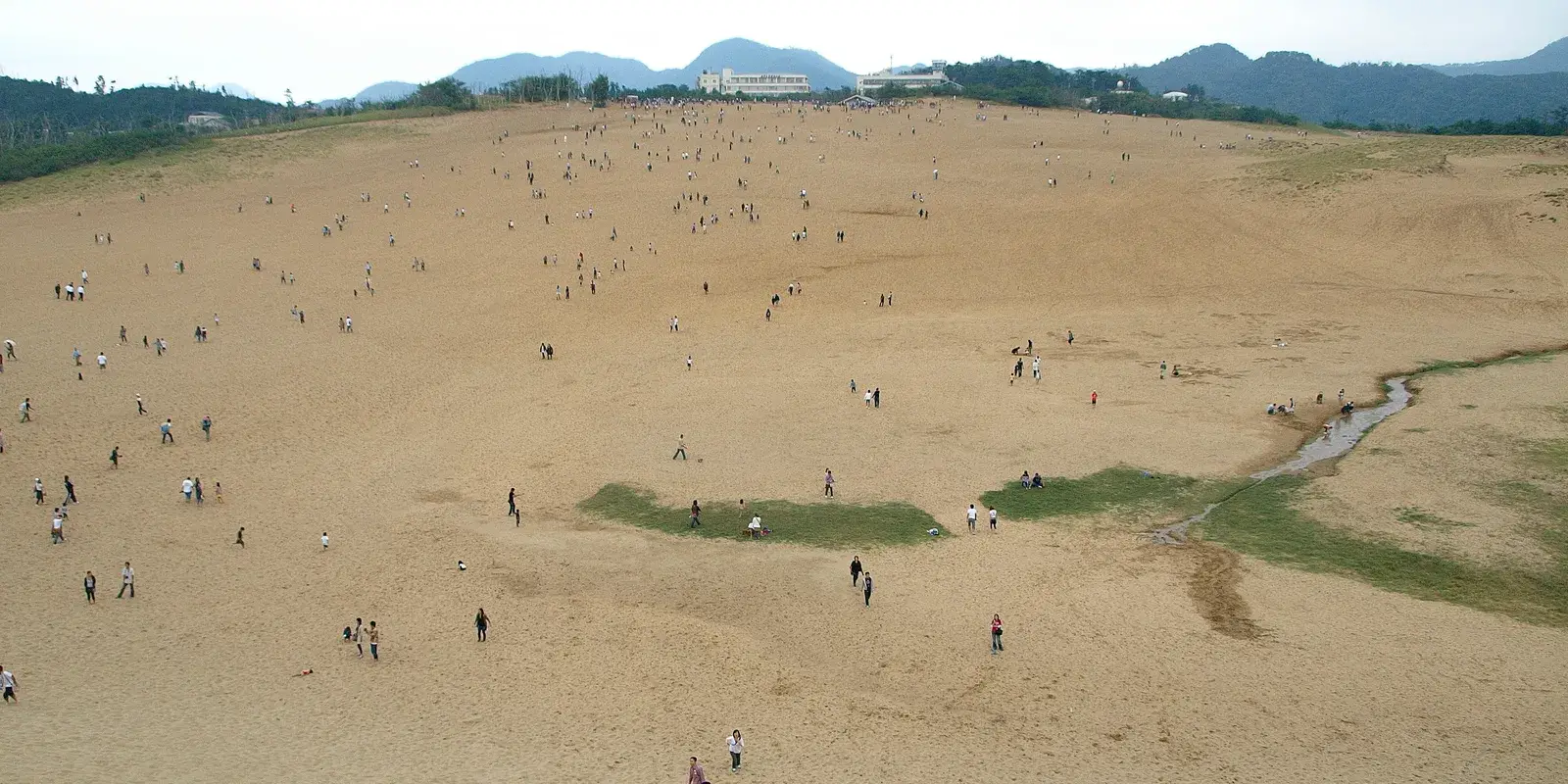
The photos promise a Sahara: rippling gold, a camel, a lone figure on a high ridge. So people picture a desert, book a slow ride down the San'in coast to one of Japan's least-connected corners, and step over the first big ridge to find the Sea of Japan waiting below them. The sand runs only about 2.4 kilometres deep before it meets the water. Whether it earns a place on your trip turns out to depend mostly on how far you are travelling to reach it.
We read what two groups wrote with the same question in mind, and found two different answers. The two answers pull in opposite directions, and that gap is exactly what makes the dunes worth thinking through before you spend the travel time.
Is it worth the trip? (in visitors' own words)
The bar that matters here is the middle one. For a large share of international visitors the dunes are neither a triumph nor a bust, they are a maybe, and the maybe is almost always about distance and expectation rather than the place itself. One traveller laid out the whole debate in a single review: "the Tottori Sand Dunes are essentially a beach with more sand than usual... if you venture to the less-traveled areas, you can experience a sense of seclusion and privacy... Whether it's worthwhile to travel all the way to Tottori for that experience is debatable. If you're in the area, by all means, go for it."
Read the doubters closely and a pattern shows up: almost nobody calls the dunes ugly. They call the trip long. "Sand dunes are ok, probably not for it alone though," one wrote; "if you are driving, and is on the way, it would not hurt." The sharpest voices go further, one flatly: "Tottori is not worth the time or money. Spend your time somewhere else." And the visitors who came away glad usually arrived with the right expectation or a second reason to be there. "Worth it," one explained; "the difference is this is next to a seaside so it does have a very different feel. I also love the museum with all the sculptures." Another had built a route around it: "Tottori was non-negotiable for me... the sand museum exhibition was breath taking."
How the people who live nearby feel
Here is the other set of voices, and it leans the opposite way. These are Japanese visitors writing their own reviews of the dunes and the museum beside them.
The warmth runs higher and the doubt runs quieter, partly because these are people who already decided to come. But listen for why they are glad, because it speaks straight to the visitors' maybe. Over and over, the surprise is the very one the sceptics brace for, turned inside out. "I arrived at Tottori Sand Dunes with no information at all and was shocked," one reviewer wrote. "I had imagined it would just be a beach with sand spread along the coast, but it was completely different, which surprised me." What reads as a flat beach turns strange and enormous once you are standing in it.
Their honest caveats are worth more than their praise, because those are the parts you can plan around. The dunes get hot: one visitor made a long-awaited trip in midsummer and admitted "it was extremely hot... I'd planned a 1-hour course but cut it short because of the heat," before adding that they still fully enjoyed it and would go back in another season. The wind can bite, too, and the big ridge is a real climb in loose sand. The single most repeated piece of local advice is a time of day: "I'd heard it gets congested, so I arrived at 7am," one reviewer wrote, closing with, "I'd recommend going early morning if you can."
What the pictures leave out
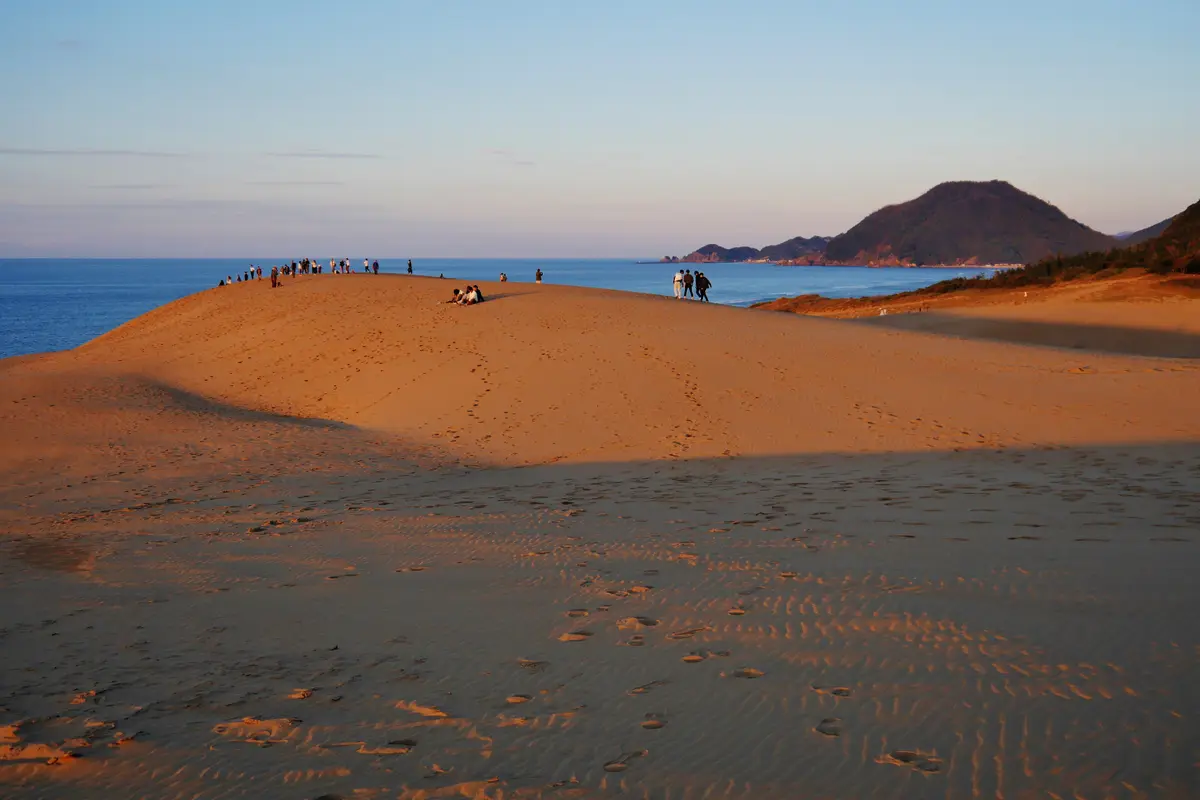
What looks like a desert is a coastline. The far side of the big ridge, the Uma-no-Se, is where the sand crests and the Sea of Japan opens out below you, the waves breaking at the foot of the slope. The dune field runs roughly 2.4 kilometres north to south and 16 kilometres east to west, among the largest in Japan, and it is free to walk into at any hour. Come at either end of the day, when low light rakes across the ripples and the heat has lifted.
The Sand Museum is the part nobody expects to love. A short walk from the dunes stands the only museum in the world built for sand sculpture. Artists from around the globe carve a single theme each year out of nothing but sand and water, and when the show closes it is all crushed back into dune, so what is on display now genuinely cannot be seen later. The 2026 to 2027 theme is Spain, and adult admission is ¥800. Plenty of Japanese reviewers walked in expecting a gimmick and walked out stunned. One put it simply: "I normally never go to art museums, but this one overwhelmed me."
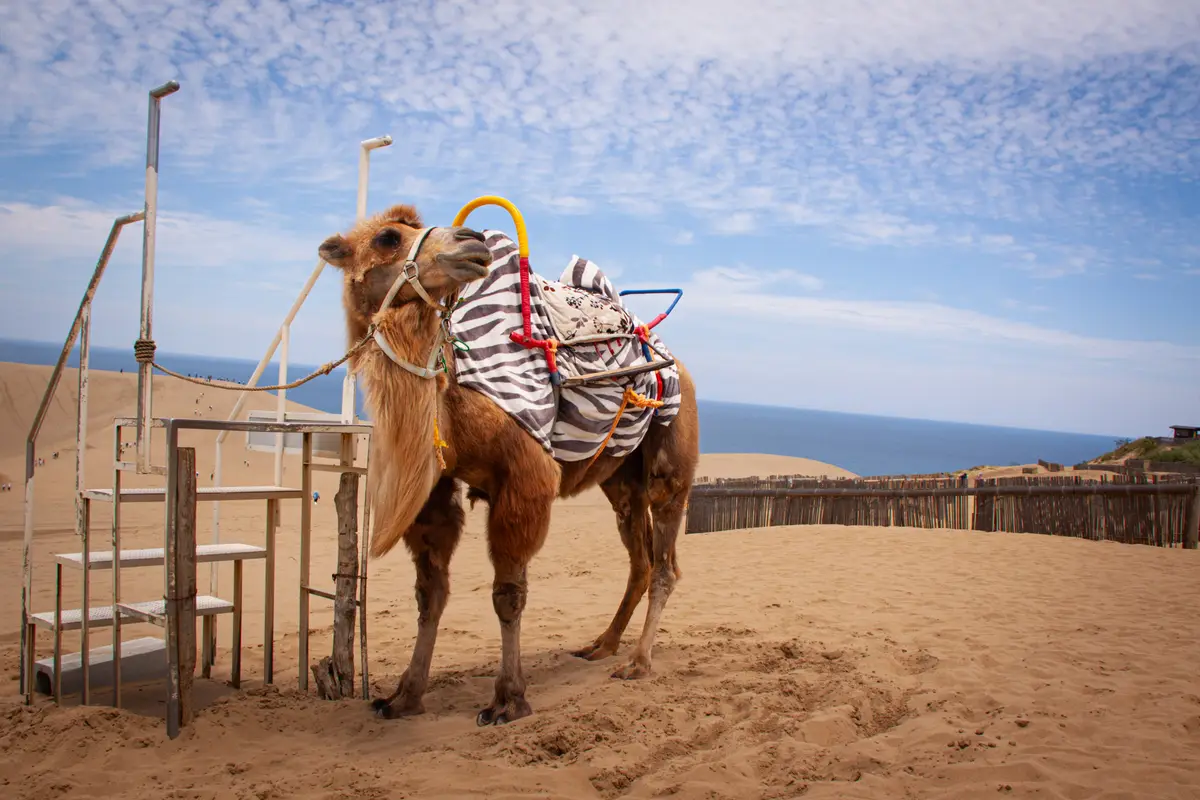
There is more to do than look. In the tourist stretch you can photograph or ride a camel, sandboard the slopes, or paraglide off the ridge. Most locals recommend going barefoot for the climb, and there is a footwash at the entrance for exactly that, so bring sandals or shoes you are happy to carry.
Doing it well, the welcomed way
- Come early. The car park fills, the coach tours land mid-morning, and the sand bakes by noon. A 7 to 8am arrival buys you a cooler, quieter, more photogenic hour, and it is the tip locals repeat most.
- Cross the ridge instead of turning back at the top. Most people stop at the crest of the Uma-no-Se for a photo and head back. The far side is where the dune drops away to the water and the crowd thins to almost no one.
- Give it half a day, and give the museum an hour. Treated as a twenty-minute photo stop, the dunes can underwhelm. Folded together with the Sand Museum and the shoreline, they fill a real half-day.
- Dress for sand, sun and wind. The powder gets into everything, there is no shade, and a strong day will sting. Carry water and shoes you do not mind emptying out afterward.
- Answer the detour question honestly. If you are already on the San'in coast, near Kinosaki, Izumo or Matsue, the voices lean strongly toward yes. If you are weighing a special trip from Tokyo or Kyoto, the reviews are split, and only your own itinerary can break the tie.
So, worth it? The split is real, and it comes down to one thing: how far you are going out of your way. Arrive expecting a strange, vast coastline, add the museum and the sea, beat the midday heat, and, as the reviewers who came away glad keep saying, it is the visitors who knew what they were walking into who end up moved by it.
Weighing which famous places actually deserve a slot on a short trip? Start with what actually matters in Japan. Along the San'in coast the dunes pair naturally with Izumo Taisha and the hot-spring town of Kinosaki Onsen.
Sources
- Tottori Sand Dunes Visitor Center (official, San'in Kaigan National Park): the dunes as a coastal formation in a national park, opening information, and the walking, guided-tour and activity options on site.
- Tottori Sand Dunes Sand Museum (official): the world's only museum dedicated to sand sculpture; the 17th exhibition "Sand World Tour: Spain" runs April 24, 2026 to January 3, 2027, open 9:00 to 18:00 (last entry 17:30), adult admission ¥800, each year's works demolished back into sand when the show ends.
- Japan National Tourism Organization (JNTO), Tottori Sand Dunes: one of the largest sand dunes in Japan, about 2.4 km north to south and 16 km east to west along the Sea of Japan, with camel rides, sandboarding and paragliding.
WMJS is written in Japan, in English, with AI help. We check every page, but English is not our first language. If a sentence reads oddly, tell us. One sentence is enough.
Thank you. A person reads every note.
How well do you know Japan?
Based on 51,218+ real Japanese voices
Want to know more? Ask Japanese people
Have a follow-up question about this topic? We'll ask real Japanese people.
Voice Box →