
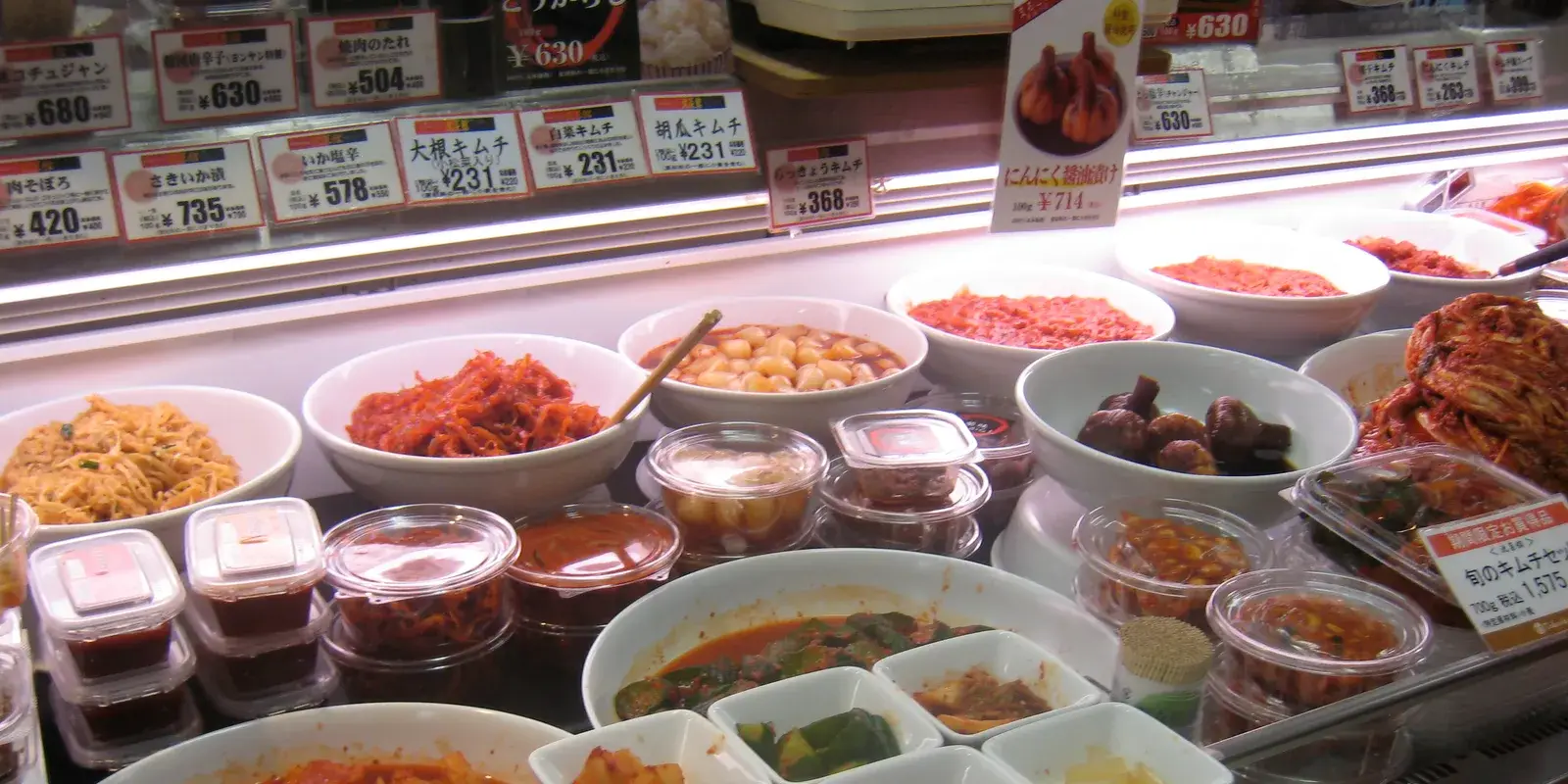
Depachika: What Japanese People Really Think About Samples, Discounts, and All That Wrapping
What you'll learn in this article:
- What 237 Japanese people actually said about depachika behavior — free samples, half-price stickers, and elaborate gift wrapping
- Why the things that make you feel guilty (sampling without buying, hunting for discounts, declining the wrapping) are things Japanese people do too
- The one simple trick that turns the gram-by-gram counter from confusing into easy
If you're planning a trip to Japan and the basement food hall of a department store (the depachika) feels a little intimidating, take a breath. You're going to love it, and you're going to be just fine.
We collected 237 real opinions from Japanese people across Q&A forums, news media, social posts, and blogs to find out what they actually think about the things visitors worry about down there: Is it rude to taste a sample and walk away? Is hunting for the closing-time discount embarrassing? Is all that careful wrapping too much, and can you say no? The short answer is warm: almost everything you feel guilty about, Japanese people feel and do too.
What do Japanese people really think about tourists in depachika food halls? We read what 237 Japanese people wrote. The clear answer: sampling without buying is fine (a polite "thank you" and a smile is all you need), buying half-price items at closing is something staff genuinely welcome — one called discount-hunters "saint customers" — and you can absolutely ask for simpler wrapping. The only things that bother people are taking many samples with no intent to buy, or demanding a discount before the sticker goes on. Enjoy it like a local.
Quick Guide
| Situation | What Japanese People Said | |
|---|---|---|
| 🟢 Relax | Tasting a sample, then leaving | No obligation to buy. "I don't think you have to buy just because you sampled. I just say 'thank you' and move on." A polite word is plenty. |
| 🟢 Relax | Buying half-price / discounted food | Staff love it. One called discount-buyers "saint customers" because it prevents waste. Many Japanese families are proud "half-price hunters." |
| 🟢 Relax | Asking for simpler wrapping | Completely fine. Even department stores now print "please help us with simple packaging." Just say "it's for myself, simple is fine." |
| 🟡 Good to know | The polished, attentive service | A small nod or "arigatō" is all staff hope for. Some shoppers find the attention a lot — you're free to keep it light. |
| 🟡 Good to know | Buying by the gram at the counter | The price is per 100g, not for the whole tray. Surprising at first, easy once you know — and you can order by piece, or any amount. |
| 🔴 Worth knowing | Over-doing it | Taking many samples with no intent to buy, or reserving food and demanding the discount sticker, are the only things that genuinely bother people. |
The one thing to remember: Depachika runs on a quiet, generous logic. Samples exist so you can decide; discounts exist so good food isn't wasted; the wrapping exists because someone took pride in it, and you're allowed to gently decline any of it. Japanese people sample without buying, hunt for half-price stickers, and ask for simpler packaging all the time. You're not a tourist being tested. You're a shopper enjoying the same counters everyone else does.
How We Gathered These Voices
We collected 237 Japanese-language responses across six depachika topics: free samples (36 responses), closing-time discounts (47), gift wrapping (41), polished service (35), navigating the counters (52), and how attitudes differ by generation (26). We gathered these voices from public Japanese Q&A sites, major web media, curated comment threads, personal blogs, and message boards.
A quick note: This isn't a controlled scientific survey. It's a collection of what real Japanese people said in their own words, in their own language, on public platforms. No English-language guide has put together this range of Japanese perspectives on the depachika experience before, and we think that matters.
This is, at heart, a guide to a place and how to move through it kindly: a close cousin to our look at the unwritten rules of Japanese convenience stores. Let's walk the counters together.
🟢 Free Samples: Is It Rude to Taste and Not Buy?
The honest answer: no. Sampling exists so you can decide, and a polite word is all anyone hopes for.
Of 36 responses about tasting samples without buying, the feeling was relaxed. People taste, say thank you, and move on without guilt.
What came through most clearly is that the people behind the counter don't expect a sale:
試食をしたら買わなくてはいけないとは特に思っていないので、普通にごちそうさまですとだけ言って立ち去ります。 I don't feel you have to buy just because you sampled, so I simply say "thank you for the food" and move on.
以前に試食販売のバイトをしたことがありますが、販売する側も試食したからと言って買ってもらえるとは思っていなかったので、そんなに気をつかう必要はないと思います。 I used to work doing sample demos, and even the sellers don't expect you to buy just because you tasted. There's no need to worry so much.
買わなくても試食は問題ありません。試食の目的は味を知ってもらうことなので、感想をもらえるだけでも企業にとっては利益になります。 Sampling without buying is no problem. The whole point is to let people know the taste — even just getting your reaction is valuable to the company.
Here's the part that might melt the guilt entirely: Japanese people feel exactly the same hesitation you do. One person admitted they avoid sample tables altogether because they feel bad walking away:
試食販売員がいる通路は、買わないと申し訳ない気持ちになるので避けてしまいます。 I end up avoiding aisles with sample sellers, because I feel sorry if I don't buy anything.
So if you'd like to taste, taste. A "oishii desu, arigatō" ("it's delicious, thank you") on your way past is genuinely welcome: one shopper said they call out a compliment loud enough for others to hear, just to help the seller a little. The only voices that turned critical were aimed at people taking three, four, five helpings as a free meal. Tasting to decide is exactly what the sample is for.
💡 What Japanese people want you to know
"Even the sellers don't expect you to buy just because you tasted." Sampling exists so you can decide. A smile and a thank-you is all anyone hopes for.
🟢 Closing-Time Discounts: Is Hunting for the Half-Price Sticker Embarrassing?
The truth: not at all. The people stocking the shelves are quietly cheering you on.
Of 47 responses about chasing the closing-time discount, the warmth was striking, including from the staff themselves.
This was the single warmest finding in the whole article. A supermarket worker put it plainly:
半額シールを貼ってあるものから率先してご購入いただけるととても嬉しいです。ロス(廃棄)になると処分するにも費用が発生しますので、すべての商品を売り切りたいのです。値引きシールが貼ってある商品を買われるお客様は、こちらからしたら神客なんです。 We're genuinely happy when you grab the discounted items first. Waste costs us money to dispose of, so we want to sell everything. From our side, customers who buy the marked-down items are "saint customers."
It's not just a feeling. It's the official picture, too. Japan threw away 4.61 million tonnes of food in fiscal 2024, split almost evenly between households (2.24 million tonnes) and businesses (2.37 million tonnes), and the government's Consumer Affairs Agency lists "discounting at the right time" and "selling as marked-down items" as front-line ways to cut that number. Buying the half-price bentō isn't just thrifty; it's the system working as designed. (We dig into the same instinct in Can You Take Food Home in Japan?)
And ordinary shoppers? Many are proud of it:
うちの家族は全員が半額商品ハンターです。 Everyone in my family is a half-price-item hunter.
恥ずかしくもなんともないでしょう。半額など割引シールがついているものを買うのは、省資源やゴミの削減に貢献しているので尊敬に値します。 There's nothing embarrassing about it. Buying discounted items helps save resources and cut waste — it's worthy of respect.
So where does the line actually sit? Not at buying. At demanding. The behavior people quietly judge is grabbing items before the markdown and pressing staff to discount them:
値引き時間前からカゴの中に商品を入れて、店内をブラついて値引き時間になったら、しれっと商品を差し出して値下げ要求してるよ。そっちの方が恥ずかしいよね。 Some people put items in their basket before discount time, wander around, and then casually present them demanding the markdown. That's the embarrassing part.
Walk up to what's already stickered and take it to the register with a clear conscience. You're not being cheap. You're being kind to the planet and to the shop.
💬 What do you think?
Japanese readers: How do you feel about this?Visitors: Have you experienced this in Japan?
Share your voice →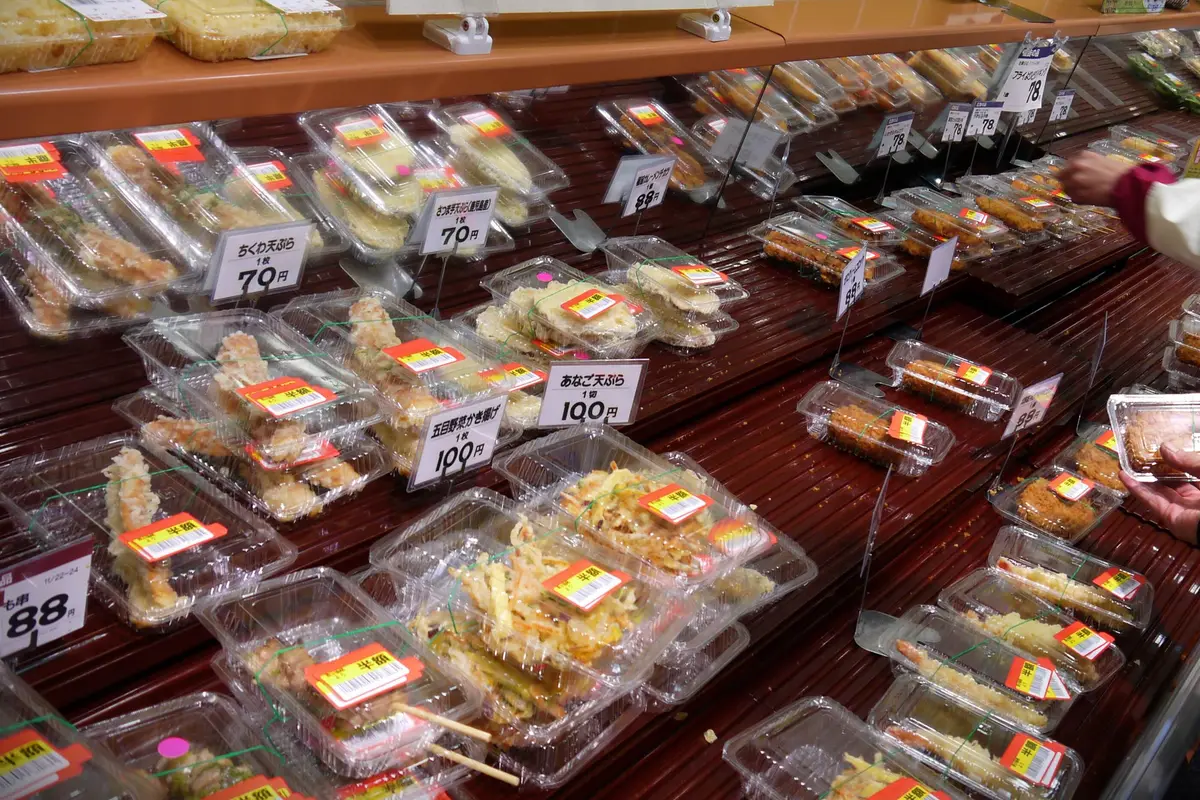
🟢 The Wrapping: Is It Too Much, and Can I Say No?
Here's the reassurance: yes, you can ask for simpler wrapping, and these days, even the stores encourage it.
Of 41 responses about the famously careful packaging, opinion was genuinely split, and that split is good news for you.
If a single carefully wrapped cookie ever made you feel guilty, you're in good company. Plenty of Japanese people wish for less, especially for everyday purchases:
自分用のはごく簡単でいいんだけどさ。プレゼントなら過剰とか思わないのにね…。 For my own use I'd be happy with the simplest wrap. For a gift I wouldn't call it excessive, though.
簡易包装でいいから安くしてほしい。 I'd rather have simple packaging and a lower price.
And the practical magic words exist. At a counter, you can simply say it's for yourself:
対面販売のところだったら、「自宅用なんで簡単で構いません」って言う。 At a staffed counter, I just say "it's for home, so simple is fine."
今どき、百貨店であっても取り寄せの場合は「簡易包装にご協力ください」などとあるくらい。 These days even department stores will say "please help us with simple packaging."
That last point is real policy, not just a feeling. Japan's department store association has run a "smart wrapping" campaign since 2006, encouraging shoppers to choose elaborate wrapping for gifts and a simple sticker for everyday items: a direct response to packaging waste, alongside the nationwide plastic-bag charge introduced in July 2020. Asking for less is something the industry itself now invites.
But here's the tender other half: for some people, that careful wrapping is a craft they're proud of.
百貨店の店員さんが手早く斜め包みしている姿って憧れますよね!あの人たちは1日に何十個ものギフトを斜め包みしている、もはや斜め包み職人みたいな人達。 Watching department store staff do that quick diagonal wrap is something to admire — they wrap dozens of gifts a day, like true wrapping artisans.
So both things are true. If you want it kept simple, say so. You'll relieve a third of the country. And if you let them wrap it beautifully, know that you may be giving a craftsperson a small moment of pride. One thing this isn't about is the meaning of a gift itself. That lives in a different, lovely place, which we explore in The Gift That Isn't About the Gift.
🟡 The Polished Service: How Am I Supposed to Respond?
The reassuring truth: a small nod or a quiet "thank you" is everything the staff are hoping for. You really don't have to match their bow.
Of 35 responses about depachika's attentive, bowing, see-you-to-the-door service, most people landed on something simple and kind.
The advice that came up again and again was almost disarmingly light:
店員さんとのやり取りも「一期一会」。ささいなことですが、店員さんへの態度に気を遣ってみてほしい。会釈ひとつなら気軽にすることができます。 An exchange with a shop clerk is a once-in-a-lifetime meeting too. It's a small thing, but try being thoughtful toward staff — even just a little nod is easy to give.
お辞儀されたらこちらもついしてしまいますよ。ある意味、それで普通なのではないでしょうか。 When they bow, I just bow back without thinking. In a way, isn't that perfectly normal?
And one staff member wrote that a single word of thanks lands deeper than you'd guess:
お客さんからの何気なく言われた感謝の言葉は、一見どうでもいいように思えて意外とグッサリと心に刺さる。「ありがとう」と声をかけてもらえると、次も頑張れる心の燃料になる。 A casual word of thanks from a customer seems trivial but actually strikes deep. Being told "thank you" becomes fuel to keep going.
This is the same warmth we map across all of Japanese retail in The People Behind Omotenashi and Why Japanese Service Feels Different, and the takeaway here is delightfully low-pressure. You don't need to learn a choreography. A nod, a smile, an "arigatō": that's the whole language.
One honest note for the 29%: some Japanese shoppers find a lot of attention tiring too. If a clerk's enthusiasm ever feels like a bit much, you're not being cold by keeping your reply brief. That feeling is shared by locals.
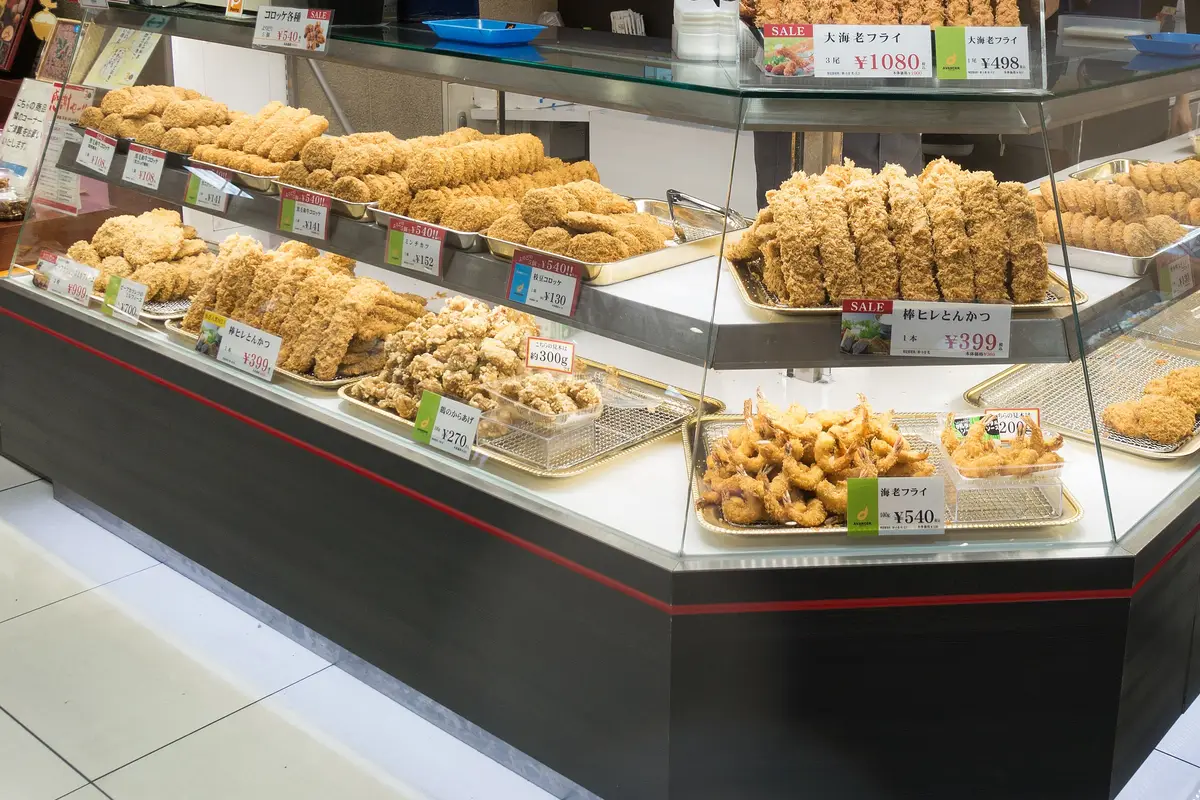
🟡 Navigating the Counters: Buying by the Gram, Paying Store by Store
The one trick that fixes everything: the price you see is usually per 100 grams. Not for the whole tray. Know that, and the depachika becomes easy.
This was the topic with the most genuine confusion, and the most reassuring fix. Of 52 responses, more than half described being puzzled at first.
The classic surprise is the gram price. Many Japanese people have made exactly the mistake you're worried about:
角煮を買ったとき千円だと思ったら3500円取られて目が点になった。 I thought the braised pork was ¥1,000, then got charged ¥3,500 — my eyes went wide.
100gがどれくらいか分からないし、グラム指定してもたいてい多めで高くなってしまう。 I don't know how much 100g is, and when I order by gram it usually ends up more — and pricier — than I expected.
Here's the fix, straight from the people behind the counter: you don't have to think in grams at all.
100グラム単位で買わなきゃいけないってことはありません。50でも60でも、110でも120でも、一個・一枚だけでも是非ご注文ください。 You don't have to buy in 100-gram units. 50, 60, 110, 120 — or even just one piece — please order however you like.
グラムでご注文いただいても、個数をご指定いただいても、どちらでも構いません。分からないことがあったら販売員に何でも聞いてください。 Order by gram or by the piece, whichever you prefer. If you're unsure of anything, just ask the staff.
100グラムだけ買うのは決して恥ずかしい事なんかじゃありません。卵一つが約50gなので、手のひらに二つ載せて重量の感覚を覚えておくといいですよ。 Buying just 100 grams is nothing to be shy about. One egg is about 50g, so picture two in your palm to get a feel for the weight.
So the playbook is simple: point at what looks good, ask "how much is one portion?" or just say "about this much," and let them weigh it. You can always say "a little less, please." (Worried the staff won't understand you? They're reading your gestures and your smile far more than your grammar, and you can relax about the language entirely with Do I Need to Speak Japanese in Japan?)
One more practical quirk: in a depachika, each shop often rings you up separately, so you may pay several times as you go. Many halls also have a central register, but knowing whether to carry cash or card smooths the whole trip, since a few counters still prefer cash.
デパ地下は個別の店舗が多くて店名入りのビニール袋も多いですが、集中レジもあります。 Depachika has lots of individual shops and store-branded bags, but there are central registers too.
The Generation Gap: Why the Same Counter Looks Different to Different People
One pattern ran quietly under everything: a lot of what feels like "Japanese culture" is actually shifting between generations, and knowing that makes the whole hall easier to read.
On one side, many older shoppers grew up with a certain expectation of careful service and careful wrapping as simple good manners:
おもてなしや施しは真心をこめて最高レベルを受けるのが当然だと思ってます。三波春夫の「お客様は神様です」って言葉を真に受けて育ってます。 I think it's only natural to receive hospitality at the highest level. I grew up taking the phrase "the customer is god" to heart.
ご年配の方のご自宅に伺ってお渡しするので、包装なしだと「きちんと感」がないように受け取られるのでは、と心配になる。 Since I'm visiting an older person's home to hand it over, I worry that without wrapping it won't feel "proper" to them.
On the other side, younger shoppers increasingly treat simple packaging and discount-buying as the obvious, even virtuous, choice:
会計時に「レジ袋・割りばし・ストローいりません」と、その都度伝えています。 At checkout I tell them each time: "no bag, no chopsticks, no straw, thanks."
半額シールの食べ物は何も恥ずかしいことではなく、買わないでいたら廃棄されちゃうやん、食品ロスからお店を救うヒーローじゃないか。 There's nothing embarrassing about half-price food — if no one buys it, it gets thrown out. You're a hero saving the shop from food waste.
You can even feel the shift on the staff side, where younger workers sometimes quietly push back on the "customer is god" expectation. None of this is a rule you need to memorize. It's just permission. Whatever you instinctively feel is "reasonable and kind" almost certainly matches how a great many Japanese people, especially younger ones, feel too.
The Bigger Picture
Looking at all 237 responses together, a gentle logic emerges, and it's the opposite of "a place full of rules to get wrong."
Almost everything down there is generosity, not a test. Samples exist so you can decide before you buy. Discounts exist so good food reaches someone instead of the bin. The wrapping exists because someone learned to do it beautifully. The bow exists because the staff were trained to care. None of it is a trap. When you understand why each thing is there, the anxiety quietly dissolves, the same way it does across What Actually Matters, our map of which Japanese etiquette points truly count.
The line is almost never where visitors fear it is. People don't mind you sampling. They mind someone treating samples as a free buffet. People don't mind you buying the discount. They mind someone bullying staff into discounting early. The boundary is never the thrifty or curious shopper; it's the person who pushes past omoiyari, the consideration for others that holds the whole hall together. Stay on the kind side of that line, which is easy, because it's where you already are.
Japanese people feel everything you feel. They feel guilty walking away from a sample. They feel a flicker of self-consciousness at the half-price counter. They wish the cookie came with less plastic. They've been startled by a gram price. You are not an outsider fumbling through an unfamiliar ritual. You're one more person enjoying one of the most delicious places in Japan, feeling exactly what the person beside you feels.
💡 The shift that changes the whole hall
Samples exist so you can decide. Discounts exist so food isn't wasted. The wrapping exists because someone is proud of it. Depachika isn't a test you can fail — it's generosity you're allowed to accept, or gently decline.
If the depachika is part of your first few days, Your First Week in Japan walks you through the other small moments you'll meet, one day at a time.
Share Your Experience
Have a depachika story: a sample that became your favorite snack, a half-price triumph, a gram price that made your eyes pop? We'd love to hear it. Your voice helps us build a bridge between cultures, and we may update this article with new perspectives.
Share your experience on Voice Box →
Sources
Primary Research Data
- WMJS depachika research data (237 Japanese-language responses collected June 2026)
- Free samples: 36 responses
- Closing-time discounts: 47 responses
- Gift wrapping: 41 responses
- Polished service: 35 responses
- Navigating the counters: 52 responses
- Generational differences: 26 responses
Factual Sources (statistics and policy)
- Ministry of Agriculture, Forestry and Fisheries / Ministry of the Environment / Consumer Affairs Agency — Japan's food loss estimate for FY2024 (4.61 million tonnes; households 2.24M, businesses 2.37M), published 30 June 2026: https://www.maff.go.jp/j/press/shokuhin/recycle/260630.html
- Consumer Affairs Agency — food loss reduction measures (timely discounting, selling as marked-down items) under the Act on Promotion of Food Loss Reduction (2019): https://www.caa.go.jp/policies/policy/consumer_policy/information/food_loss/promote/
- Japan Department Stores Association — the "smart wrapping" campaign (launched 2006) encouraging simple packaging for everyday items, as reproduced by the Ministry of the Environment: https://www.env.go.jp/recycle/yoki/b_4_other/b_4_3_mybag/pdf/panel_08.pdf
- Ministry of the Environment — Containers and Packaging Recycling Act overview: https://www.env.go.jp/recycle/yoki/a_1_recycle/index.html
- Ministry of Economy, Trade and Industry — nationwide plastic shopping bag charge from 1 July 2020: https://www.meti.go.jp/policy/recycle/plasticbag/plasticbag_top.html
- nippon.com (based on Japan Department Stores Association data) — food as the largest category of department store sales (27.4% in 2023): https://www.nippon.com/ja/japan-data/h02178/
Opinion Collection Sources
The following sources were used to collect Japanese people's opinions and sentiments. These are not cited as factual authorities but as places where real Japanese people expressed their views.
- Public Japanese Q&A sites, curated comment threads, major web media, message boards, and personal blogs — first-hand opinions on samples, discounts, wrapping, service, and navigating depachika
- https://kufura.jp/family/human-relations-family/178430
- https://www.moneypost.jp/783690
- https://www.j-cast.com/2024/08/12490463.html
- https://woman.mynavi.jp/article/150324-155/
- https://www.moneypost.jp/976952
- https://www.moneypost.jp/559567
- https://www.koukouseishinbun.jp/articles/-/8907
- https://www.j-cast.com/2018/02/17321243.html
- https://www.walkerplus.com/special/fandomplus/article/1208088/
- https://hint-pot.jp/archives/180085
- https://business.nikkei.com/atcl/report/16/011900197/011900003/
Note on Quotations
Quotes from online platforms have been lightly edited for readability (fixing typos, formatting for clarity). The meaning and intent of each comment remain unchanged. Original sources are linked above.
WMJS is written in Japan, in English, with AI help. We check every page, but English is not our first language. If a sentence reads oddly, tell us. One sentence is enough.
Thank you. A person reads every note.
How well do you know Japan?
Built from 635 public posts by Japanese people
Want to know more? Ask Japanese people
Have a follow-up question about this topic? We'll ask real Japanese people.
Voice Box →