
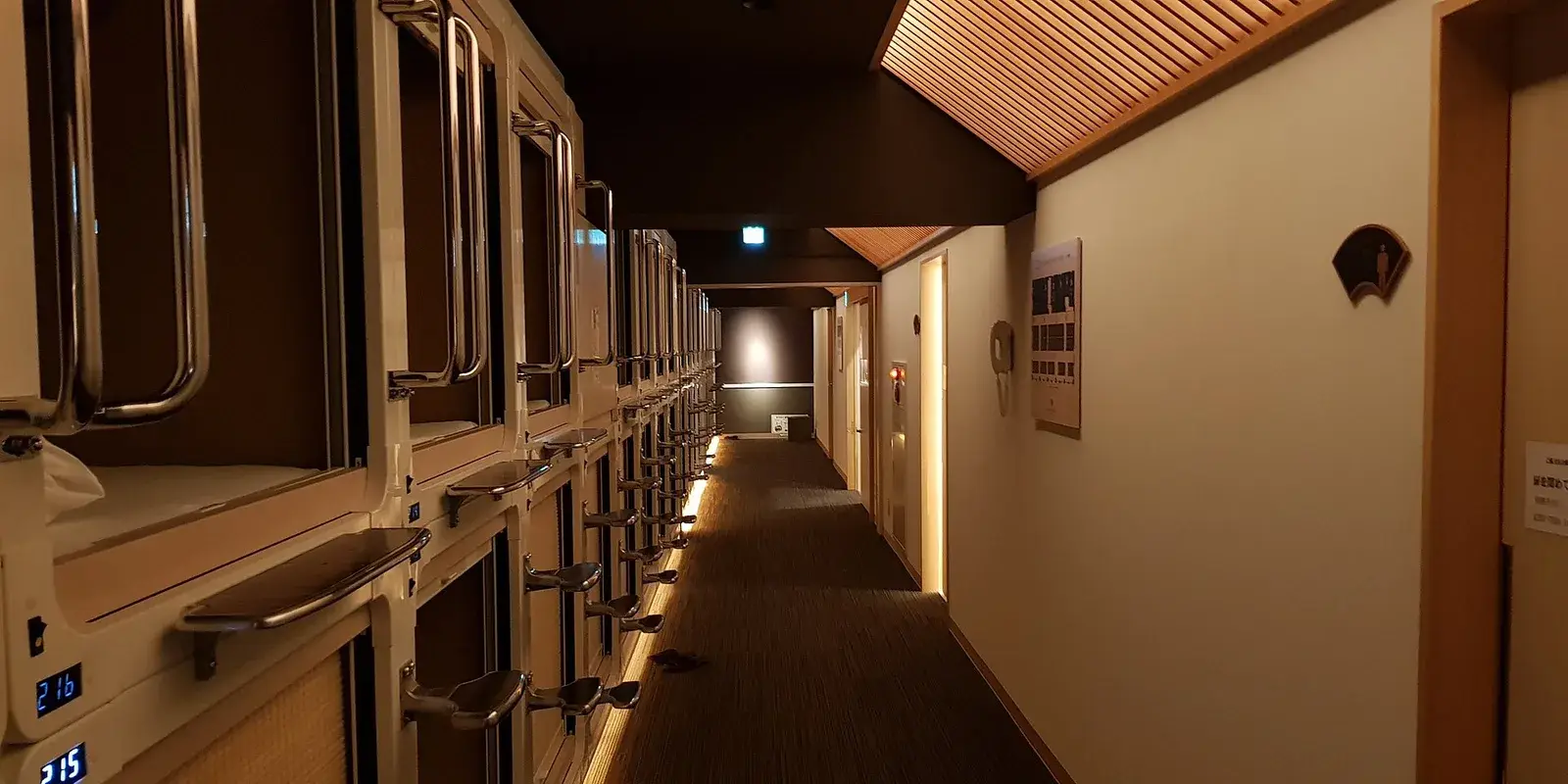
What's It Really Like to Stay in a Japanese Capsule Hotel?
What you'll learn in this article:
- What 187 Japanese guests and staff said about staying in a capsule hotel
- Why the quiet you're imagining is far more relaxed than it looks
- How the whole thing actually works: check-in, luggage, baths, privacy, sleep
If you're thinking about a capsule hotel and feeling a little nervous (a thin curtain instead of a door, strangers sleeping an arm's length away, a room you can't stand up in), take a breath. You're going to be fine. A lot of Japanese people felt exactly the same way before their first night, and almost all of them came out saying it was more comfortable than they expected.
We collected 187 real voices from Japanese people (first-timers, regulars, late-train commuters, and even capsule hotel staff) to find out what actually happens inside, and what actually matters to the people around you. The short version? Nobody expects you to be perfect. Bring earplugs, keep your phone on silent, and you already know the most important "rule."
What's it really like to stay in a Japanese capsule hotel? We read what 187 Japanese guests and staff wrote about it. The reassuring answer: the silence you're picturing isn't tense perfectionism. Most people simply bring earplugs and treat a bit of snoring as otagai-sama (we're all in this together). The curtain isn't a security flaw either; it's a curtain by law, with a locking locker for your valuables. Come prepared for the small stuff, and the rest takes care of itself.
Quick Guide
| What people worry about | What Japanese people said | |
|---|---|---|
| 🟢 Relax | The sleep & noise | Earplugs are basically assumed. Snoring is treated as otagai-sama: "you'll hear it, and you might be the one snoring too." |
| 🟢 Relax | The shared baths & lounge | Spacious public baths, free amenities, comfy lounges. Most people loved this part. Just avoid the morning rush at the sinks. |
| 🟡 Good to know | Check-in & the flow | Often a self-service machine. Easy once you know the steps, though even Japanese guests freeze for a second at the screen. |
| 🟡 Good to know | Your luggage | A suitcase usually won't fit the locker. Big bags go to the front desk; valuables go in your locked locker. |
| 🟡 Good to know | Privacy behind a curtain | The curtain doesn't lock; that's simply how the law defines the room. The real safety system is the locker, women-only floors, and cameras. |
The one thing to remember: A capsule hotel runs on a quiet, shared understanding that nobody has to be perfect; they just have to be considerate. Earplugs in, alarm on vibrate, bags packed the night before. That's it.
How We Gathered These Voices
We collected 187 Japanese-language voices across six aspects of the capsule-hotel experience: the sleep and noise (24 voices), the shared baths and lounge (42), luggage and valuables (26), privacy and safety (35), check-in and the flow (29), and how the whole image has changed over the years (31). They came from public Japanese Q&A sites, hotel review pages, blogs, and social posts, including a few from people who work the front desk.
A quick note: This isn't a controlled scientific survey. It's a collection of what real Japanese people said in their own words, on public platforms. No English-language travel guide has put together this range of Japanese perspectives on capsule hotels before, and we think the lived-in detail is exactly what helps you walk in relaxed.
Walking In: Check-In, Shoes, and the Flow
The short answer: it's a simple sequence, and you don't need much Japanese, though even Japanese first-timers stop and stare at the machine for a second.
Of 29 voices about checking in and finding your way around, most people landed on "fine once you know the steps." The wobble is almost always the first thirty seconds at the self-service screen.
Here's the flow almost everyone described. You step inside and take your shoes off first; they go into a small locking shoe box, and at many places you hand that shoe-box key to the front desk in exchange for a wristband key (the same kind you get at a public bath).
館内に入るとまず靴を脱ぎ、鍵のかかる靴箱へ。チェックイン時に靴箱の鍵をフロントに預けます。フロントでは、まさにお風呂やさんにあるような腕につけるタイプの鍵を借ります。 When you go in, you take your shoes off first and put them in a locking shoe box. At check-in you hand that shoe-box key to the front desk, and in return you borrow a wristband-type key — just like at a public bath.
(Taking your shoes off at the entrance is one of the first small rituals you'll meet all over Japan; here's why removing your shoes makes Japanese people smile.)
Many newer places use a self-service machine that reads the QR code from your booking and prints a card. It's easy, but don't feel silly if you hesitate. One Japanese guest described freezing at an English-language screen:
チェックインに必要なQRコードを読み取り機に読ませて、予約情報を確認。基本英語、しかも小さい文字で書いてある。英語で書かないとあかんのか?と3秒ほど戸惑ったが、思いっきり日本語漢字で指でサインして、チェックイン完了。 I scanned my QR code and it pulled up my booking. The screen was basically all in English, in tiny letters. I froze for three seconds — "do I have to write in English?" — then just signed boldly in kanji with my finger, and check-in was done.
If a Japanese person can be thrown by the English screen, you certainly don't need flawless Japanese for the Japanese one. (Do you even need to speak Japanese?: short answer, far less than you'd think.) People also pass along small, kind tips, like writing your name in katakana if the machine struggles with it, and double-checking which elevator goes to your floor.
One worry that comes up a lot: will it be pitch dark, or glaringly bright? You're in control. Inside the capsule, the light is usually on a dial you set yourself, and the sleeping area as a whole stays dim at night.
カプセル内では中の照明は個別に入切出来ます。TVやラジオのボリュームつまみみたいになっていて明るさもコントロール出来る場合が多いです。カプセルルームがある部屋は寝室として共用スペースとは区画され、夜間は足元灯など最低限の照明以外は暗さを保っています。 Inside the capsule you control your own light — often it's a dial, like a TV or radio volume knob, so you set the brightness. The sleeping room is partitioned off from the shared spaces, and at night it stays dark except for low floor lighting.
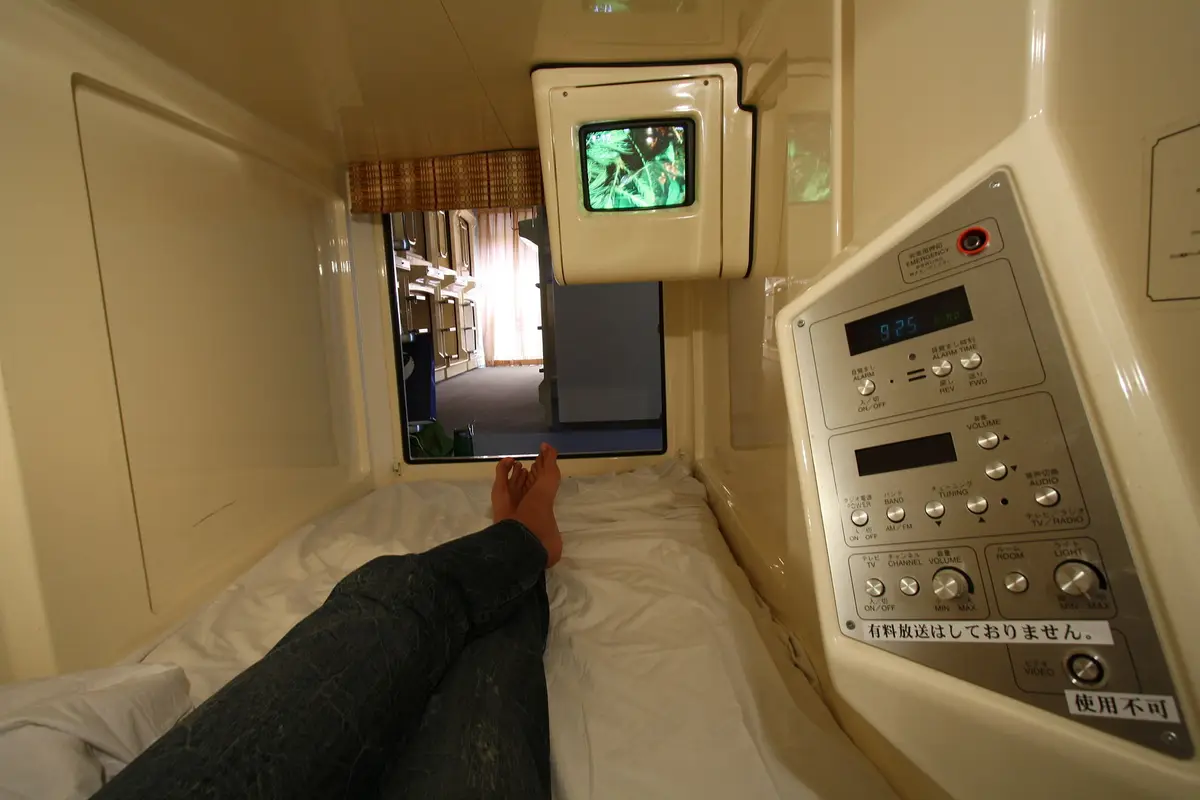
Your Luggage: Where Does the Suitcase Go?
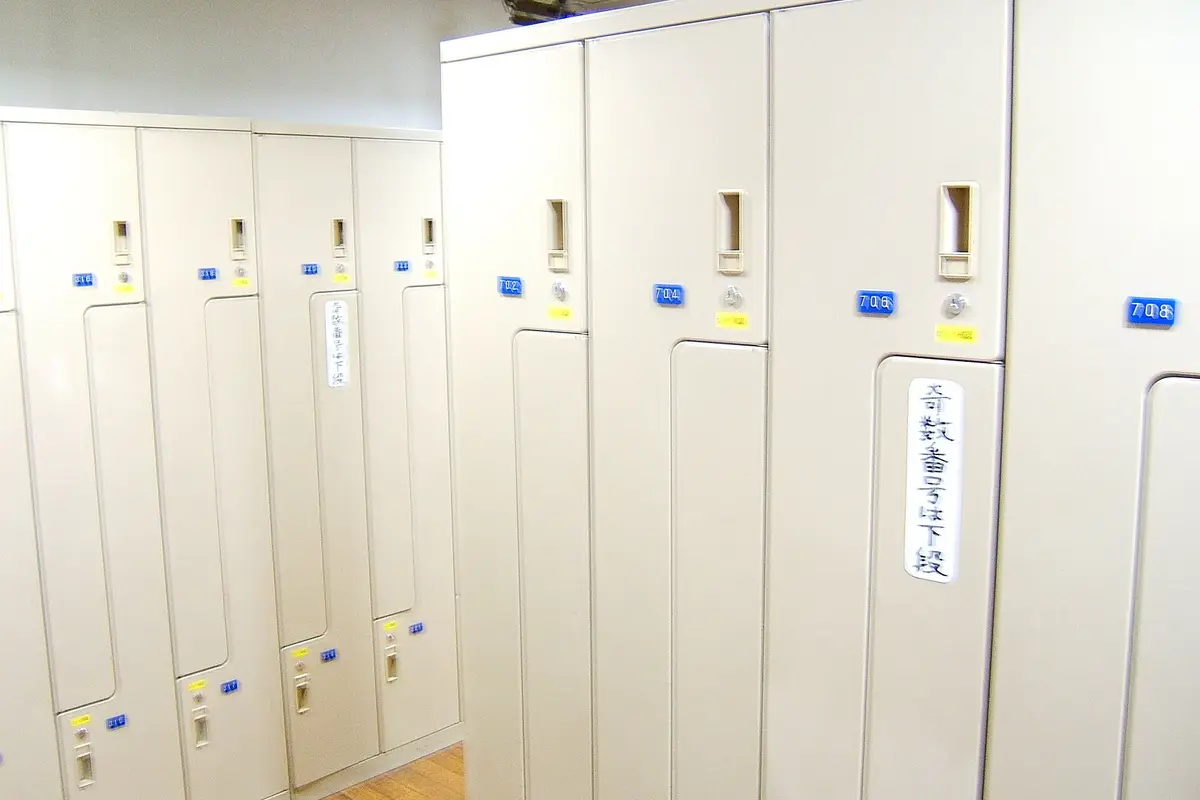
This is the one practical thing worth planning for: a big suitcase usually won't fit your locker. Across 26 voices, the message was calm and consistent: there's always a system, it just varies by hotel.
The lockers are sized for a day bag rather than a checked suitcase:
ロッカーの横幅、高さがとても狭く、その横幅では小型のスーツケースが入らずに困りました。布製でしたので、中の衣類を外に出し、ぺちゃんこにしてようやく押し込みました。 The locker was so narrow in both width and height that even my small suitcase wouldn't fit. It was soft-sided, so I pulled the clothes out and squashed it flat to barely cram it in.
So big bags go elsewhere, and that's completely normal. People described roughly three patterns, which is why "just ask at the front desk" is the universal advice:
カプセルホテルってその施設によってルールが全然違います。1)2泊分先払いすれば、ロッカーに荷物を置きっぱなしにできるホテル。2)一泊ごとにカプセルとロッカーの位置が変わるので、フロントで預かってくれるホテル。3)荷物は全て持って出ないといけないホテル。だいたいこの3パターン。 Capsule hotels' rules differ completely by place. (1) Pay for both nights up front and leave your bags in the locker. (2) The locker changes each night, so the front desk holds your bag. (3) You take everything with you. Roughly these three patterns.
A front-desk hold is the reassuring default for a suitcase:
キャリーケースをフロントで預かってくれるので安心でした。 It was reassuring that they held my carry-case at the front desk.
For valuables, the rhythm regulars use is simple: everything important goes in your locked locker, and you keep a little pocket money on you for the vending machines.
財布は常にロッカーです。ただ、自販機用に500円程度は別の小銭入れに入れて持ち込んでます。 My wallet always goes in the locker. I just keep about 500 yen in a separate coin purse for the vending machines.
Planning your route between cities with a big case? Our guide to getting around Japan covers luggage forwarding (takkyūbin) and coin lockers. Sometimes the easiest move is to send the suitcase ahead and arrive at the capsule hotel light.
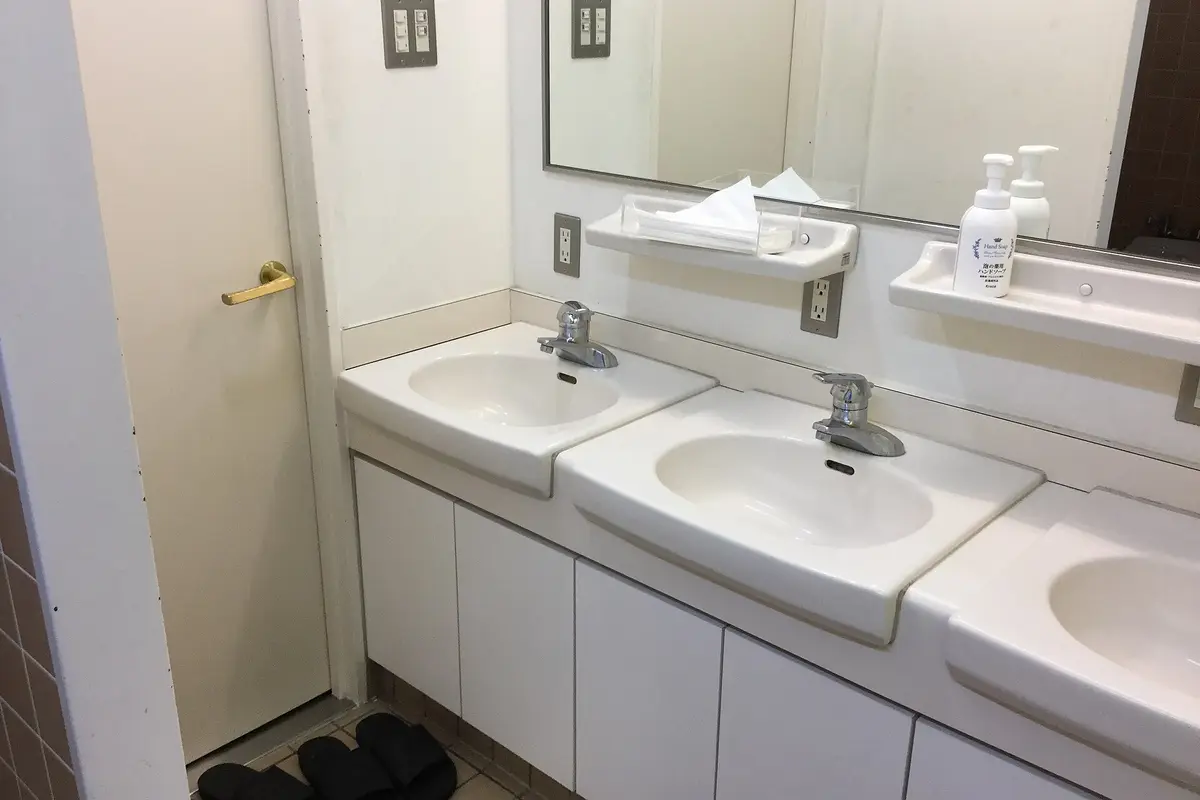
The Shared Spaces: Baths, Lounge, and the In-House Wear
Here's the part most people actually enjoyed. Of 42 voices about the communal areas, the large majority were warm: spacious public baths, generous amenities, comfy lounges to read or work in.
A capsule hotel is really built around its shared facilities. You change into the in-house wear (almost always provided), head to the big bath, relax in the lounge, then climb into your pod to sleep. Many people singled out how well-stocked it all is:
心配だったドライヤーも5、6個あったし、私はお風呂に入った時は誰もいなかったので、シャワーもドライヤーも貸し切りでした。 I'd worried about the dryers, but there were five or six. When I bathed, no one else was there, so I had the showers and dryers all to myself.
大浴場は広い方で、リラックスできた記憶があります。無料Wi-Fiやコンセントも完備されていて嬉しかったです。 The public bath was on the large side and I remember really relaxing. Free Wi-Fi and outlets everywhere too, which I appreciated.
The in-house wear isn't really optional, and it's nice to know in advance:
カプセルホテルで館内着が無いのは経験したことが無いですね。マナーというか、着ないとダメ!って感じです。館内着の下は自由です。 I've never seen a capsule hotel without in-house wear. It's less "etiquette" than "you simply wear it." What you have on underneath is up to you.
The one bit of friction, and it's a small one: the morning rush at the sinks and dryers, when everyone is getting ready before check-out. The fix locals use is wonderfully low-tech:
朝の洗面台は混む。当たり前。だから私は早く起きる。朝7時までには起きるようにしている。 The morning sinks get crowded. Of course they do. So I get up early — I make sure I'm up by 7.
The public bath itself follows the same easygoing manners as any Japanese sentō or onsen, and if that part makes you nervous, you're in good company. We dug into exactly what bathers do and don't mind in what Japanese bathers actually think. For the capsule hotel specifically, the only shared-space etiquette that really matters is the everyday kind: don't hog the dryer, tidy up after yourself, and keep your voice down late at night.
💡 What a capsule hotel actually is
It's not a tiny cheap room. It's a spacious shared bathhouse and lounge, with a private pod that exists only for sleeping. Once you see it that way, the whole design makes sense.
Privacy and Safety: Just a Curtain, Is That Okay?
This is the worry that came up most in posts by people staying solo, especially women: your pod closes with a roll-down curtain or panel instead of a locking door. Of 35 voices, the reassuring news is that the people who'd actually done it many times were the calmest, but they're also upfront about where to stay alert.
The most experienced voices were strikingly relaxed:
自分は100回以上カプセルに泊まったことありますが、そんな経験も話も聞いたこと無いです。監視カメラもありますし、大声を出せばすぐ隣に聞こえます。それより金の管理だけは気を付けたら? I've stayed in capsules over 100 times and never once heard of anything like that. There are security cameras, and if you shout, your neighbor hears you instantly. Just be careful with your money, that's all.
Women who use them regularly pointed again and again to the women-only floors, which feel like a different building entirely:
男性フロアと女性フロアもきっちり分けられていて、各フロアでは入口でリストバンドをかざさないと中に入れません。女性1人でも不安を感じることはありませんでした。 The men's and women's floors are completely separate, and you can't get onto a floor without tapping your wristband at the entrance. Even staying alone as a woman, I never felt uneasy.
And the curtain itself? Once you understand the locker handles your valuables, most people stop thinking about it:
どこもロールカーテンしかないですね。鍵も掛けられません。でも、大抵は宿泊者一人ずつに鍵付きのロッカーがあるので、貴重品はそこへ入れればOKです。 Everywhere just has a roll-down curtain — no lock. But there's almost always a locking locker for each guest, so you put your valuables in there and you're fine.
Here's the real talk, too, because that's what helps you actually stay safe: a few voices warned against false security: a women-only floor isn't a force field, and the one place to keep your guard up is the open changing/locker area rather than your pod. That's no reason to avoid capsule hotels; it's the same common sense you'd use in any shared space anywhere. (Japan's habit of building infrastructure around solo travelers, capsule hotels included, is something we explore in why Japan wraps around solo travelers.)
💬 What do you think?
Japanese readers: How do you feel about this?Visitors: Have you experienced this in Japan?
Share your voice →The Sleep: Noise, Snoring, and the Earplug Truce
Now the heart of it: the thing first-timers lie awake worrying about. What if I make a noise? What if someone else does? Of 24 voices on sleeping and sound, here's the relief: the room isn't a tense, breath-holding library. It runs on a gentle, shared understanding that some sound is unavoidable, and almost everyone arrives ready for it.
First, the structural reason it's not whisper-silent, and why nobody expects it to be. A capsule isn't soundproof by design:
防音はほとんどありません。カプセルホテルは法律上「簡易宿所」なので、防災上、通常のホテルのようなしっかりした扉などをつけてはいけないことになっています。 There's barely any soundproofing. By law a capsule hotel is "simple lodging," so for fire-safety reasons it isn't allowed to have solid doors like a normal hotel.
Because everyone knows this walking in, the prevailing attitude is otagai-sama: we're all in the same boat. Earplugs aren't a complaint; they're the ticket of admission:
耳栓を持っていきます。自分も知らないうちにすごいかもしれないし、カプセルではあり得ることって割り切ります。 I bring earplugs. I might be a loud snorer myself without realizing it — at a capsule hotel, this kind of thing just happens, so I let it go.
私自身もいびきをしますが、クレームを言われたことはありません。泊まっている人は、いびきが聞こえるのは当たり前だと思っています。 I snore myself, but I've never had a complaint. People staying here take it for granted that you'll hear some snoring.
Even the front desk frames it the same way: gently, and without blaming anyone:
自店舗では、耳栓をお願いする形で対応しています。いびき程度であれば、カプセルホテルの構造上仕方ないと思いますし、現実的には耳栓が精一杯かと思います。 At our place we handle it by offering earplugs. A bit of snoring is unavoidable given how a capsule hotel is built, and realistically, earplugs are the best we can do. — Capsule hotel staff
We won't pretend it's perfect. A real share of people, about one in five, said snoring cost them sleep, and that's worth knowing so you come prepared:
カプセルだからしょうがないけど、斜め上の人のいびきが気になって寝られませんでした。耳栓はあるけど、あまり効果がなかったです。 It's a capsule hotel so it can't be helped, but the snoring from the person diagonally above me kept me awake. There are earplugs, but they didn't help much.
So here's the part that's actually in your hands, and it's tiny. The sounds people ask you to avoid aren't snoring (nobody can help that); they're the controllable ones:
とにかく静かに。荷物をゴソゴソさせたり、アラームを鳴らしたりは論外です。 Just be quiet — rustling through your bags or letting an alarm go off is really out of the question.
That's the whole etiquette of sleeping here: set your alarm to vibrate, pack your bag the night before so you're not rustling at dawn, and use the earplugs. Do that, and you're not just avoiding trouble: you're the considerate neighbor everyone hopes for.
💡 The mindset that makes it work
Earplugs aren't a sign something's wrong. They're the ticket of admission. Snoring is otagai-sama: you'll hear it, and you might be the one doing it. The only sounds you're asked to control are the avoidable ones: alarms and rustling bags.
Who Actually Stays Here? (It's Not Who You Think)
If your mental image of a capsule hotel is a grim row of bunks for drunk salarymen who missed the last train, that's a real memory, but it's increasingly an old one. Of 31 voices about how the image has changed, a striking majority described being pleasantly surprised.
You can hear the surprise in real time:
ここ本当に「カプセルホテル」なの?!もはやちょっと狭いだけの部屋じゃん…… Wait, is this really a "capsule hotel"?! At this point it's basically just a slightly small room…
The starting point, though, was often reluctance, which makes the turnaround all the sweeter:
これまでカプセルホテルというと「終電を逃した男性が泊まる場所」と考えていました。女性でも安心して泊まれる所があるとは聞いていましたが、積極的に利用しようとは思えませんでした。 I'd always thought of capsule hotels as "a place for men who missed the last train." I'd heard there were ones where women could stay safely, but I never felt like actively choosing one.
And then there's the unexpected charm so many people discovered: the snug pod as a kind of grown-up secret base:
この狭さがなんだか落ち着く。窮屈なほど「自分だけのスペース」って感じがしませんか?小さい頃に秘密基地を作って遊んだことを思い出すような…… The smallness is somehow calming. The tighter it is, the more it feels like "a space that's only mine," doesn't it? It reminds me of building secret hideouts as a kid…
The few who held onto the old image admitted as much too ("sounds like it'd smell," "above 3,500 yen I'd just take a business hotel"), and that candor is part of the picture. But the broad arc people described is unmistakable: from cheap last resort to a stay people choose on purpose, for the sauna, the design, the solo-time, or simply to spend their travel money on the trip instead of the bed.
2000年代後半ごろから「怖い、汚い、不便」というイメージを打ち砕いて、「楽しい、清潔、便利」というイメージに塗り替えたカプセルホテルが増えています。インバウンド客や女性客に向けて進化しているんです。 Since the late 2000s, more and more capsule hotels have overturned the old "scary, dirty, inconvenient" image and rewritten it as "fun, clean, convenient" — evolving toward foreign visitors and women.
The Bigger Picture: How a Capsule Hotel Actually Works
Step back, and the capsule hotel stops looking like a quirky cheap bed and starts looking like a beautifully logical piece of how Japan works.
It was born as a refuge rather than a novelty. The world's first capsule hotel, Capsule Inn Osaka, opened in 1979, right by Umeda Station, designed by the celebrated architect Kishō Kurokawa. The idea came from a sauna owner who wanted somewhere proper for customers who'd missed the last train to sleep. That origin still explains everything: capsule hotels cluster around major stations, priced for a working person who just needs a clean bath and a safe few hours of sleep before morning. When you stay in one, you're not in a tourist gimmick; you're in the same refuge a tired commuter relies on.
The "rules" aren't national character. They're the room's design. It's tempting to think the calm comes from some innate Japanese discipline. It doesn't. It comes from the space itself and a shared understanding of how to live in it. The curtain is a curtain by law (the capsule is legally "furniture," which is also why your valuables get a locking locker instead). The quiet isn't tense perfectionism; it's otagai-sama plus a pair of earplugs everyone agrees to wear. The flow (shoes off, into the bath, into the pod) separates the loud, social part of the building from the silent, sleeping part. Strip away the mystique and it's just thoughtful design that lets strangers share a night gracefully.
You're treated as one of the crowd rather than an outsider. The salaryman after a long night, the student traveling solo, the woman on a budget weekend, the tourist chasing the sci-fi aesthetic, and you: you're all just guests of the same little system. Nobody's grading your form. The most reassuring thing in all 187 voices wasn't a rule at all; it was how ordinary the whole thing is to the people who use it. If you'd like to experience Japan's other iconic stay (the one built around a host's hospitality rather than a shared bath), see what it's like staying at a ryokan.
More Japanese Perspectives
Curious about other parts of daily life in Japan? These articles explore what Japanese people actually think, based on hundreds of real voices.
- Why Japan Wraps Around Solo Travelers: the invisible infrastructure, from counter seats to capsule hotels, that quietly keeps you comfortable on your own.
- What Japanese Bathers Actually Think: the real, relaxed truth about public-bath etiquette, straight from the people in the water.
Share Your Experience
Stayed in a capsule hotel, or working up the courage to? We'd love to hear how it went. Your voice helps us build a bridge between cultures, and we may add new perspectives to this article.
Share your experience on Voice Box →
Sources
Primary Research Data
- WMJS capsule hotel research data (187 Japanese-language voices collected June 2026)
- The sleep & noise: 24 voices
- Shared baths & lounge: 42 voices
- Luggage & valuables: 26 voices
- Privacy & safety: 35 voices
- Check-in & the flow: 29 voices
- The changing image: 31 voices
Factual Sources (Tier 1–2)
- Nippon.com, "Capsule Hotels" (history, design, and evolution): https://www.nippon.com/en/features/jg00001/capsule-hotels.html
- Hotel Business Act (旅館業法), e-Gov Japan (legal classification of capsule hotels as kan'i-shukusho / simple lodging): https://laws.e-gov.go.jp/law/323AC0000000138
- "Capsule hotel," Wikipedia (origin: Capsule Inn Osaka, 1979, Kishō Kurokawa): https://en.wikipedia.org/wiki/Capsule_hotel
- "カプセルホテル," Wikipedia (legal classification; capsule treated as furniture, hence no lock; separate locking lockers): https://ja.wikipedia.org/wiki/%E3%82%AB%E3%83%97%E3%82%BB%E3%83%AB%E3%83%9B%E3%83%86%E3%83%AB
Opinion Collection Sources
The following are places where real Japanese people shared their experiences of staying in capsule hotels. They are not cited as factual authorities, but as sources of first-hand voices.
- Public Japanese Q&A sites: first-hand questions and answers on noise, privacy, luggage, and check-in
- Hotel review pages (Jalan, Rakuten Travel guest reviews): first-hand stay reports
- Personal blogs, essays, and social posts: first-hand accounts of staying in capsule hotels
Note on Quotations
Quotes from online platforms have been lightly edited for readability (fixing typos, formatting for clarity). The meaning and intent of each comment remain unchanged. Original sources are linked above.
WMJS is written in Japan, in English, with AI help. We check every page, but English is not our first language. If a sentence reads oddly, tell us. One sentence is enough.
Thank you. A person reads every note.
How well do you know Japan?
Built from 635 public posts by Japanese people
Want to know more? Ask Japanese people
Have a follow-up question about this topic? We'll ask real Japanese people.
Voice Box →