
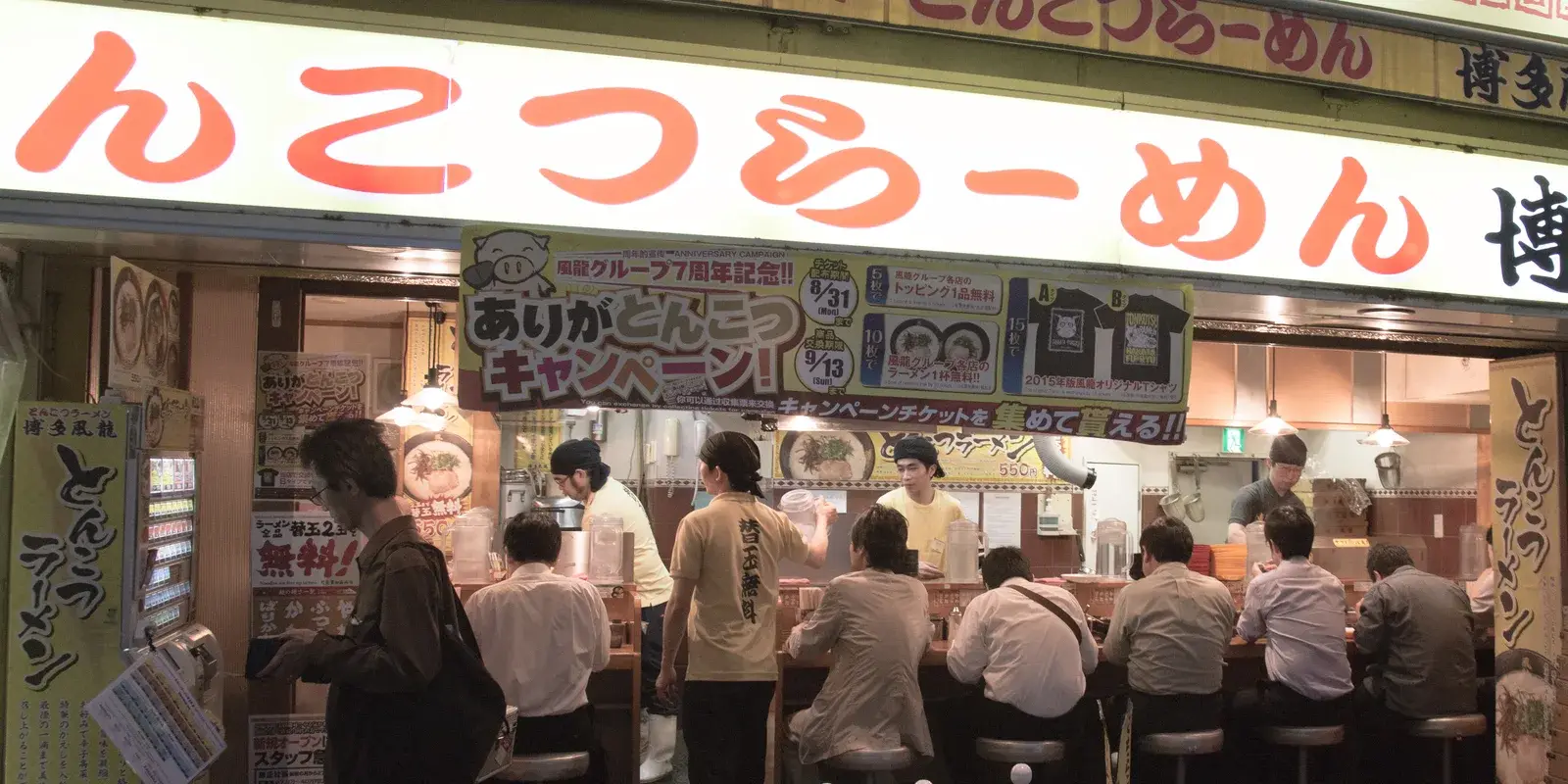
The People Behind Omotenashi: What Japanese Service Workers Actually Think
What you'll learn in this article:
- What 432 Japanese people said about whether their hospitality is real or performance
- Why staff get nervous when you walk in, and why it's not about you
- The one small gesture that stays with Japanese service workers for years
Is Japanese hospitality real or just performance? We collected 432 public posts by Japanese people, many of them service workers. 42% call it performance, but the feeling deepens the moment a guest responds warmly. 97% described being deeply touched by foreign guests who said "gochisousama" or tidied their table. Meanwhile, 90% feel anxious when foreign guests arrive, yet 49.6% of workplaces provide zero training. Your reaction completes the loop.
You've probably experienced it. The convenience store cashier who smiles and bows as she hands you your bag. The restaurant host who races to seat you. The hotel staff who remembers your room preference from last time. Japanese service feels different, and it is.
But here's what no travel guide tells you: the people delivering that service are real human beings with real feelings. They feel pride, pressure, anxiety, and real warmth, sometimes all in the same shift. We collected 432 public posts in which Japanese people (service workers, restaurant staff, hotel employees, and everyday observers) wrote about what's actually going on behind the counter. What they wrote might surprise you.
Quick Guide
| Situation | What Staff Actually Think | |
|---|---|---|
| 🟢 Relax | Their smile | It's more complex than "real or fake." Most staff say the feeling deepens when customers respond warmly: your reaction completes the loop. |
| 🟢 Relax | "Irasshaimase!" | You don't need to respond. But if you smile or give a small nod, only 1 in 10 customers does that, and it makes their day. |
| 🟡 Good to know | "We can't modify that" | It's rarely about inflexibility. It's about food safety, allergen liability, and a chef's belief that changing the dish changes the experience. |
| 🟡 Good to know | Staff nervousness | If staff seem tense when you walk in, they're not annoyed. They're worried about giving you the same quality service they'd give anyone. |
| 🟢 Warmth | Small gestures | "Gochisousama," tidying your table, making eye contact: these aren't expected, and that's exactly why they stay with staff for years. |
The one thing to remember: Japanese hospitality isn't performed at you. It's offered to you. And the people offering it are paying attention. Not to whether you follow every rule perfectly, but to whether you see them as people too.
How We Gathered These Voices
We collected 432 Japanese-language responses across six hospitality topics: whether omotenashi is real (62 responses), the "irasshaimase" greeting (67), menu modification refusals (96), staff anxiety with foreign guests (65), what touches staff most (70), and generational change (72). Sources include public Japanese Q&A sites, forums, and social posts, along with articles from Japanese media.
A quick note: This isn't a controlled scientific survey. It's a collection of what real Japanese people said in their own words, on public platforms. Many are service workers speaking candidly about their jobs. Most English-language articles define omotenashi as a concept. We wanted to show you the people who actually practice it, and what it costs them.
The First Question Everyone Asks
Is Japanese hospitality genuine, or is it all an act?
This is the question that comes up again and again on travel forums. "The service is incredible, but... is it real?" It's a fair question. And the honest answer is more interesting than a simple yes or no.
We read what 62 Japanese people, many of them current or former service workers, wrote about whether omotenashi comes from the heart or the manual.
Yes, you're reading that right. The largest group, 42%, said it's mostly performance. Before you feel disappointed, keep reading. Because what "performance" means in Japanese service culture is not what you think.
営業スマイル得意。でも裏じゃボロクソに客の悪口言う I'm great at the work smile. But behind the scenes, I say terrible things about customers.
That's blunt. And it's real. The term eigyō sumairu (business smile) is something every Japanese service worker knows. It's a skill, like pouring a perfect beer or folding a napkin into a crane. It doesn't mean the person behind it is empty.
心が無くなってきていることです。昔は、お客様も穏やかで優しく、おもてなしをする側もその人の為にしたいと思って心を込めていました The heart is disappearing from it. In the old days, customers were gentle, and we genuinely wanted to serve them with feeling.
But here's where it gets interesting. The same workers who called it performance also described moments where the performance became real:
私は接客業経験者ですが自分を利用者の立場に置き換えて何をしてほしそうなのか推測して実行する事がおもてなしの心だと感じています I've worked in service. Omotenashi, to me, is imagining yourself as the guest — guessing what they'd want — and doing it.
お客様の思っている要望などを察して、さりげなく提供する。そして、押し付けがましくならないように Sensing what the guest wants before they say it, and offering it quietly — without being pushy.
And then there's this, from a hotel staff member:
客室内のメモパッドに『お世話になりました。ありがとうございます』と書かれていると一日のやる気が違います! When I find "Thank you for everything" written on the room's memo pad — it changes my entire day.
That's the key. The smile may start as a skill, but it becomes genuine in the moment a guest responds. One French visitor discovered this firsthand: what he assumed was shakojirei (social pleasantry) turned out to be sincere, suggesting Japanese hospitality can be more real than even the Japanese themselves realize.
💡 The real answer
Omotenashi isn't simply real or fake. It's a trained skill that becomes genuine through connection. The smile starts as professional craft. Your response is what gives it heart.
The "Irasshaimase" Moment
You know the one. You push open the door of a restaurant, and suddenly "IRASSHAIMASE!" rings out: the entire staff shouts in unison. You freeze. What do you do? Do you bow? Say something back? Pretend it didn't happen?
You're not alone. This is one of the most universally confusing moments for visitors to Japan. And here's the good news: you don't need to do anything.
We read what 67 Japanese people (including shop staff, restaurant workers, and everyday customers) wrote about what "irasshaimase" actually means to them.
First, the thing visitors worry about most: no, you don't need to reply.
外国人の友達が一番最初に覚えた言葉、いらっしゃいませ。どこへいっても言われてなんて返したらいいか、わからないらしい My foreign friend said "irasshaimase" was the first Japanese word she learned — she heard it everywhere and had no idea how to respond.
Most customers, Japanese and foreign alike, don't respond at all. Staff know this and expect it:
私は飲食店の店員側だけど、挨拶を返してくれるのは全体の1割ぐらい。 I'm a restaurant worker. Only about 1 in 10 customers acknowledge the greeting.
But here's the twist. That 10% who do respond? They make staff truly happy:
店員側です。こんにちはって言って会釈でも笑顔でも、何かしらで返してくれると、素直に嬉しく思います。 I'm on the staff side. If someone says "konnichiwa" back, or even just smiles or nods — I'm genuinely happy.
The greeting itself can be a source of stress for staff. Some voices described being required to shout it at maximum volume:
居酒屋の体育会系のお兄さんが「ぅいらっしゃいませぇぇぇぇ!!!」と声量マックスで叫び続けるという接客スタイルのラーメン屋に入ってしまったときは、恐怖のあまり半泣きになりながらラーメン食べて速攻店を出た。 I walked into a ramen shop where the staff screamed "IRASSHAIMASE" at maximum volume nonstop. I ate my ramen in near-tears and left as fast as I could. (Japanese customer)
That's a Japanese person describing their own reaction. Even within Japan, the volume can be startling. So if you flinch, you're in good company.
The cultural origin is simpler than you might think. "Irasshaimase" literally means "please come in": it evolved from the calls of Edo-period market vendors. Today, it serves as an acknowledgment: we see you, you're welcome here. In some contexts, it also functions as a subtle shoplifting deterrent, since the greeting signals "staff are aware of you."
💡 What to do
Nothing is required. A smile, a nod, or a quiet "konnichiwa" back puts you in the rare 10% who respond, and staff notice. But ignoring it entirely is also completely normal.
When They Say "We Can't Change That"
You've heard the stories. A visitor asks to remove one ingredient. The waiter apologizes and says no. On TripAdvisor, the review reads: "So much for Japanese hospitality."
This is one of the most misunderstood friction points between visitors and Japanese restaurants. And it has nothing to do with not caring about you.
We collected 96 Japanese voices (from chefs, restaurant staff, food safety experts, and customers) about why Japanese restaurants resist menu modifications.
Look at that yellow bar. The majority reason isn't stubbornness or pride. It's safety and operations. Over half of all voices pointed to practical reasons that have nothing to do with ego.
アレルギーは命に関わってくるので器具も使い分けるとか完璧なアレルギー対応が出来ないなら心苦しいくてもお断りするのが1番 Allergies can be life-threatening. If we can't offer perfect allergen control — separate equipment and everything — it's kinder to decline than to risk it.
This is the voice travel forums never surface. The refusal isn't indifference. It's the opposite. Staff who say "we can't" are often saying "we won't risk your health by doing it halfway."
But craft does play a role too. Some chefs see their menu as a complete composition rather than a collection of interchangeable parts:
コースでは重たくなりすぎないように軽やかな一皿を挟みます。最後まで美味しく召し上がっていただくための『リズム』こそが、コースの醍醐味です We insert a light dish between heavier courses to prevent fatigue. That rhythm — designed so you enjoy every bite to the last — is the whole point of a course meal.
それを曲げてまで客の意見を採用する必要があるのか。その料理は自分の料理ではなく、他人の料理だ。 If I change it for the customer, it's no longer my dish — it's theirs.
And the underlying philosophy is different from "the customer is always right":
客はお金を払って物やサービスを受ける。店はお金の分だけ物やサービスを提供する。つまり、どちらが上でも下でもない。 The customer pays and receives service. The shop provides service and receives payment. Neither is above the other.
This equality, provider and guest on the same level, is actually at the heart of original omotenashi philosophy, long before it became a marketing buzzword. The tea ceremony concept: host and guest are equals, each with a role to play. When a chef says "I can't change this," they're not placing themselves above you. They're treating you as an equal who came to experience their craft. You can feel the same logic in how modern Japanese venues are designed: even the timed, reserved entry at attractions like teamLab's digital-art museums is a form of hospitality, quietly limiting numbers so that each guest gets room to take it in.
💡 What to do
If you have allergies, mention them clearly and early: many restaurants will suggest alternative dishes rather than modify existing ones. The phrase "arerugī ga arimasu" (I have allergies) opens doors. And if they still say no, it's because they're taking your safety seriously rather than ignoring you. Our article on your first izakaya has more on navigating Japanese restaurant customs.
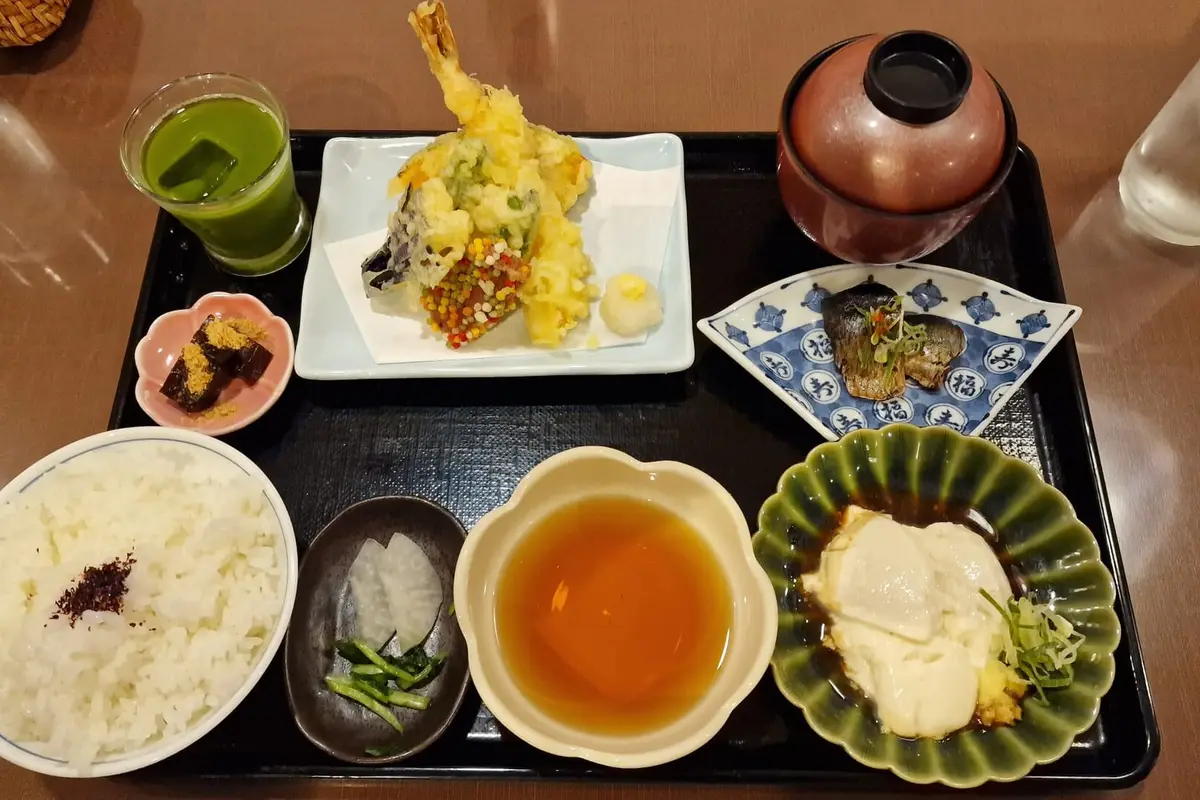
What Staff Are Actually Feeling When You Walk In
Here's something visitors often sense but misread. You walk into a restaurant, and the staff member at the entrance seems... tense. Their smile tightens. They hesitate. You might think: Do they not want me here?
The truth is almost always the opposite.
A 2024 industry survey of 439 service workers found that approximately 90% report some level of anxiety when serving foreign guests. And 73% rate their own English as "broken" or "halting." And the part no one talks about is this: 49.6% of workplaces provide zero tools or training for foreign customer service. Staff are left to figure it out alone.
The anxiety isn't about English. It's about something deeper:
ドリンクが届くまで遠くから私のことずっと睨んでて...なんとかオーダー取れて...呼吸困難になるほどに悲しかった。 They glared at me from across the room while waiting for their drink... I finally managed to take the order... I was so sad I could barely breathe. (Female restaurant staff)
英語話せるけど、パート中に大勢の外国人が来て面倒くさくなりそうなら、英語分からないふりする。頑張って対応しても私の時給は増えないし I can speak English, but when a big group of foreign tourists comes in during my shift, I pretend I can't. I don't get paid more for the extra effort.
That second voice reveals a structural problem. Staff anxiety isn't just a language issue. It's a labor issue. Many service workers are part-timers earning minimum wage, expected to deliver world-class hospitality in a language they were never trained in, with no additional compensation. Our companion piece Do Japanese people really want tourists? gathers 71 more voices from service workers naming that same cost directly, alongside the reward of a guest who says thank you and means it.
But when communication works, even imperfectly, something shifts:
心をこめて接してそれが伝わったときにうれしい When I serve someone with my whole heart and it actually gets through — that's happiness. (Male service worker, 30s, Niigata)
This connects directly to what we found in our article on whether you need to speak Japanese: the "help freeze" phenomenon. Staff who seem cold are often frozen by anxiety rather than indifference. Understanding this changes everything about how you experience Japanese service.
💡 What this means for you
Staff tension isn't rejection. It's performance anxiety. Slowing down, using simple phrases, and smiling goes further than perfect Japanese. If you notice someone struggling, patience is the greatest gift you can give. You're not a burden. You're someone they want to help but don't know how to reach.
What Actually Makes Their Day
After reading about anxiety and pressure, you might wonder: is there anything visitors do that genuinely makes Japanese service workers happy? The answer came through louder and clearer than any other finding in our research.
We collected 70 voices from service workers about their most memorable moments with foreign guests.
97%. When Japanese service workers talk about foreign guests who touched them, they light up.
And here's what matters: it's almost never about speaking perfect Japanese or following every rule. It's the small things.
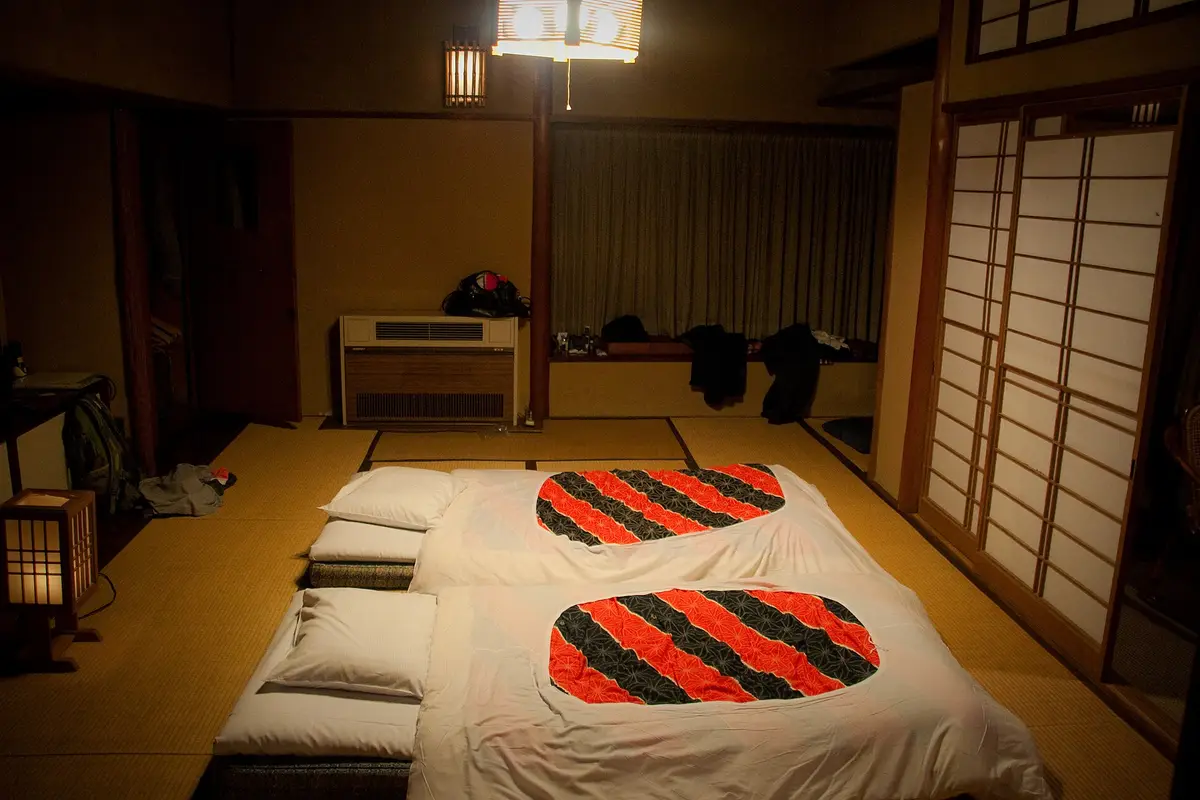
外国人はチェックアウト時に掃除してゴミをまとめ、布団を畳む。シーツを外すのを手伝おうかと言う人もいる。日本人は出ていく時にゴミを散らかし布団はぐちゃぐちゃ Foreign guests tidy up at checkout — fold the futon, bag the garbage, some even offer to strip the sheets. Japanese guests? They leave everything in chaos. (Ryokan staff)
That might surprise you. In this ryokan worker's experience, foreign guests are actually more considerate than domestic ones. The effort isn't expected, and that's precisely why it lands.
こういうことばかりあると、たまに一生懸命日本語で伝えようとする外国人には、めちゃくちゃ親切にしたくなる After dealing with difficult situations, when a foreigner tries hard to speak Japanese — I just want to go out of my way for them.
カタコトでも単語の羅列でも、その人が一生懸命伝えようとしたお客さまはみんなニコニコしながら『アリガト』って帰って行った。 Every guest who tried to communicate — even in broken words — left smiling and said "Arigato."
And then there's this story from a bartender, who captured something deeper:
英語はまだ拙かった時期でした。文法も発音もあやふやで、正直自信なんてなかった。でも相手の表情を見て、目を見て、ゆっくり話すことに注力した。チップを置いてくれた理由は英語力ではなく、安心してもらえたこと、親しみを持ってもらえたこと My English was poor — grammar shaky, pronunciation uncertain. But I focused on their face, their eyes, speaking slowly. The tip wasn't about English skill. It was about making them feel safe and welcome.
The guest's response, in English: "No, it's for you. You made me feel really welcome."
Two people, neither speaking the other's language well, connecting through attention and care. That's omotenashi, not as a concept, but as a lived moment between two human beings.
The pattern across all 70 voices is remarkably consistent. What touches staff isn't:
- ❌ Perfect Japanese
- ❌ Knowing all the rules
- ❌ Tipping (which can actually cause confusion; see our tipping article)
What touches staff is:
- ✅ Saying "gochisousama" (thank you for the meal) when leaving
- ✅ Tidying up after yourself, even a little
- ✅ Making eye contact and smiling
- ✅ Trying, even imperfectly
- ✅ Seeing them as a person, not a service machine
💡 The simplest way to give back
You don't need to learn elaborate customs. Say "gochisousama" when you leave a restaurant. Make eye contact. Smile. Tidy your table a little. These tiny acts put you in a category that Japanese service workers remember, not because they expect it, but because so few people do it.
The Generation Shift
Omotenashi isn't static. It's changing, and the direction might surprise you.
We collected 72 voices spanning multiple generations about how attitudes toward hospitality are evolving. The most unexpected finding: young service workers are often described as more considerate than their older counterparts.
若い子たちは、こっちが店員の立場なのに お会計終わったら ありがとうございますとか、頭下げてくれたり お客さんなのに良い子が多いなー Young customers bow and say thank you after paying — even though I'm the one serving them. Such good kids.
Meanwhile, the generation that grew up with the phrase "okyakusama wa kamisama desu" (the customer is god) is increasingly seen as the source of friction:
おもてなしや施しは真心をこめて最高レベルを受けるのが当然だと思ってます。三波春夫の『お客様は神様です』って言葉を真に受けて育ってます。 I was raised believing "the customer is god" — and I take it literally. (Person in their 50s–60s)
Younger managers are pushing back:
「お客さまは神様」なんて考えは時代遅れだと思う。従業員の負担になる対応は取らせない The idea that "the customer is god" is outdated. I don't let my staff take on service that harms them. (Young manager, 20s–30s)
And there's a structural argument too:
高度人材を最低時給で使えた時代のせいで勘違いしてるけど本来最低時給で使える人間ってそのレベル People are confused because we once got premium service at minimum wage. That was the anomaly — not the standard.
供給側のステート(感情状態)を崩してまでサービスするのは社会のバランスを欠いている Demanding service that destroys the emotional wellbeing of the provider is a social imbalance.
What's emerging isn't a decline in omotenashi. It's a recalibration. The younger generation isn't less caring; they're redefining what care means. They believe hospitality should be mutual: that the server's wellbeing matters too. And many of them are creating service experiences that feel warmer precisely because the pressure is lower.
For visitors, this shift is actually good news. The omotenashi you'll experience in 2026 is increasingly coming from people who chose to be kind, not people who were forced to perform.
What All of This Means
Across 432 voices, one pattern emerged over and over: omotenashi isn't a trait. It's a choice.
It's not that Japanese people are genetically polite or culturally programmed to serve. It's that individual workers (many underpaid, most undertrained for international guests, some exhausted by demanding domestic customers) choose, again and again, to care.
The convenience store cashier whose smile starts as eigyō sumairu but becomes real when you smile back. The restaurant worker who declines your modification because she's more worried about your safety than your satisfaction score. The bartender with broken English who focused on your eyes instead of your words. These aren't expressions of a national characteristic. They're individual acts of care, performed by people who deserve to be seen as people. It's the same quiet truth you can read in the things Japan is proudest of: the towering stone walls of Osaka Castle were dragged into place by ranks of anonymous laborers four centuries ago, and the keep you photograph today was rebuilt in 1931 with donations from ordinary citizens. Even now, craftspeople at Kumamoto Castle are numbering and re-laying its earthquake-fallen stones by hand, one by one, over decades. The finished thing gets admired; the people behind it rarely do.
Original omotenashi, the concept born in the tea ceremony, was built on equality. Host and guest, each with a role, neither above the other. The modern service industry has often distorted this into one-way servitude. But in the moments that matter, when a guest says "gochisousama" and means it, when a visitor tidies their ryokan room, when two people find a way to communicate without a shared language, the original spirit returns.
Understanding this changes how you experience Japan. Not because you'll follow more rules, but because you'll see the person behind the service. And that's the thing about omotenashi: it was never about you being a perfect guest. Always, it was about two people choosing to meet each other halfway.
As one service worker put it: seeing a guest try, even imperfectly, is what makes the job worth doing. Your effort is noticed. Your warmth is returned. And the gap between "performance" and "genuine" disappears in the space between two people who decided to care.
Share Your Experience
Have you had a memorable moment with Japanese service staff, something that felt genuinely warm, or a time when you weren't sure what to do? We'd love to hear about it.
Your stories help us build a more complete picture of what Japanese hospitality really looks like, from both sides of the counter.
Sources
Japanese Voices (Public Platforms)
All Japanese-language voices were collected from publicly accessible platforms during May 2026:
- Public Japanese Q&A sites, forums, and social posts: first-hand opinions on omotenashi, the "irasshaimase" greeting, menu modification, serving foreign guests, memorable moments with foreign guests, and generational change in hospitality
Additional web articles from: PRESIDENT Online, Diamond Online, cookbiz, j-cast, BuzzFeed Japan, Gendai, PR Times, Nikkan SPA!, and others
Survey Data
- IIBC (International Business Communication Association), 2024: Survey of service industry workers on foreign customer interactions and English proficiency
- RURA, 2024: Survey of 439 service workers on anxiety levels when serving foreign guests
Related WMJS Articles
- What Happens When You Tip in Japan?: Why service isn't motivated by tips
- Staying at a Ryokan: What your host wishes you knew
- Do I Need to Speak Japanese?: The "help freeze" phenomenon
- Your First Izakaya: Navigating Japanese restaurant customs
- When You Try to Speak Japanese: What staff are really thinking
- Why Japan Returns Almost Everything: The system and soul behind lost-item returns
Note on Quotations
Quotes from online platforms have been lightly edited for readability (fixing typos, formatting for clarity). The meaning and intent of each comment remain unchanged. Original sources are linked above.
- https://hint-pot.jp/archives/210287
- https://ddnavi.com/review/381633/a
- https://gendai.media/articles/-/57672
- https://milltalk.jp/boards/21599
- https://hidakashimpo.co.jp/?p=27420
- https://www.j-cast.com/kaisha/2015/08/11242388.html?p=all
- https://www.koukouseishinbun.jp/articles/-/8907
- http://bakemono.jp/reading/blog/culture/3320/
- https://miolena.com/irasshaimase/
- https://legare-hair.com/blog/irassyaimase/
- https://kaikore.blogspot.com/2018/08/tokyo-restaurant-strict-members-only-policies.html
- https://cookbiz.jp/soken/knowhow/allergy_210509_mc/
- https://www.inshokuten.com/research/result/show/VzWip-Ni3WQQqGu5lB7wwCvjj4eRxOf_ws4Acxr3tySysdVgEw/
- https://yamatogokoro.jp/column/fooddiversity/48249/
- https://happy-quinoa.com/veganism-japan/
- https://www.explore.com/1873218/japan-restaurant-substitution-what-tourists-should-know/
- https://livejapan.com/ja/article-a0004472/
- https://www.sushidou2019.com/wasabi-history/
WMJS is written in Japan, in English, with AI help. We check every page, but English is not our first language. If a sentence reads oddly, tell us. One sentence is enough.
Thank you. A person reads every note.
How well do you know Japan?
Built from 635 public posts by Japanese people
Want to know more? Ask Japanese people
Have a follow-up question about this topic? We'll ask real Japanese people.
Voice Box →