
Autumn Food in Japan: What to Eat and What Locals Think of It
Key Takeaways:
- Chestnuts are in season in September and October, according to the agriculture ministry, and sweet potatoes are harvested from September to November, according to Fukui Prefecture's agriculture department
- Of the 46 posts about autumn-only flavors, 23 are from people who look forward to them and 14 from people tired of them
- On eating a whole grilled fish such as sanma, the 74 posts are close to even: 26 are from people relaxed about a messy plate and 28 from people who say a neat plate matters. Ten of those 28 are from people self-conscious about their own eating
- Three posts from 2013 to 2017 suggest asking a sweet potato truck for an amount, such as 500 yen's worth, though two of four posters who describe asking for 1,000 yen's worth got less than they expected. Of the 42 posts from people put off by roasted sweet potatoes from trucks, stalls and shops, 34 are about price
- Of the 44 posts about people from abroad enjoying Japanese food, mostly autumn food, 23 are warm reactions. Five of the 8 in the red bar are about money
What is there to eat in Japan in autumn? In the 345 public posts we collected, Japanese people write about roasted sweet potatoes, salt-grilled sanma (Pacific saury), chestnut rice and Mont Blanc cakes, persimmons, and autumn-only sweet potato, chestnut and pumpkin sweets. Of the 46 posts about the autumn-only flavors, 23 (50%) are from people who look forward to them and 14 (30%) from people tired of them.
Quick Guide
| Topic | What Japanese People Said | |
|---|---|---|
| 🟢 | Autumn-only flavors | 23 of 46 posts from people who look forward to them, 14 from people tired of them |
| 🔴 | Sweet potato trucks | 42 of 100 posts from people put off, 34 of them by price; 11 about kind sellers |
| 🟡 | Eating a whole grilled fish such as sanma | 26 of 74 from people relaxed about a messy plate, 28 from people who say a neat plate matters |
| 🟢 | People from abroad enjoying Japanese food | 23 of 44 posts warm; 5 of the 8 in the red bar about money |
| 🟡 | Generations | 31 of 81 neutral observations; 13 about coming to love an autumn food as an adult |
What's in Season in Autumn
The weeks when a food is at its best are called shun (旬). In autumn, that includes sweet potatoes and chestnuts.
According to Fukui Prefecture's agriculture department, sweet potatoes are harvested from September to November, and an enzyme in the potato, amylase, turns starch into maltose and works well at about 40C to 70C. Long heating also makes the starch soft and sticky, and as the potato loses water its sweetness becomes more concentrated. Oita Prefecture's agricultural research center found that after one to two months in storage, the flesh of the Beniharuka variety goes from floury to moist and gets sweeter. In the posts, people buy yaki-imo, roasted sweet potatoes, from trucks, supermarkets and convenience stores.
The agriculture ministry puts the chestnut season in September and October, and Japan grew 16,200 tonnes of chestnuts in 2025, about a quarter in Ibaraki, northeast of Tokyo. In the posts they turn up in Mont Blanc, a cake topped with piped chestnut cream, and in chestnut rice. The persimmon harvest totaled 179,600 tonnes the same year, and some of the posts are about dried persimmons, hoshigaki.
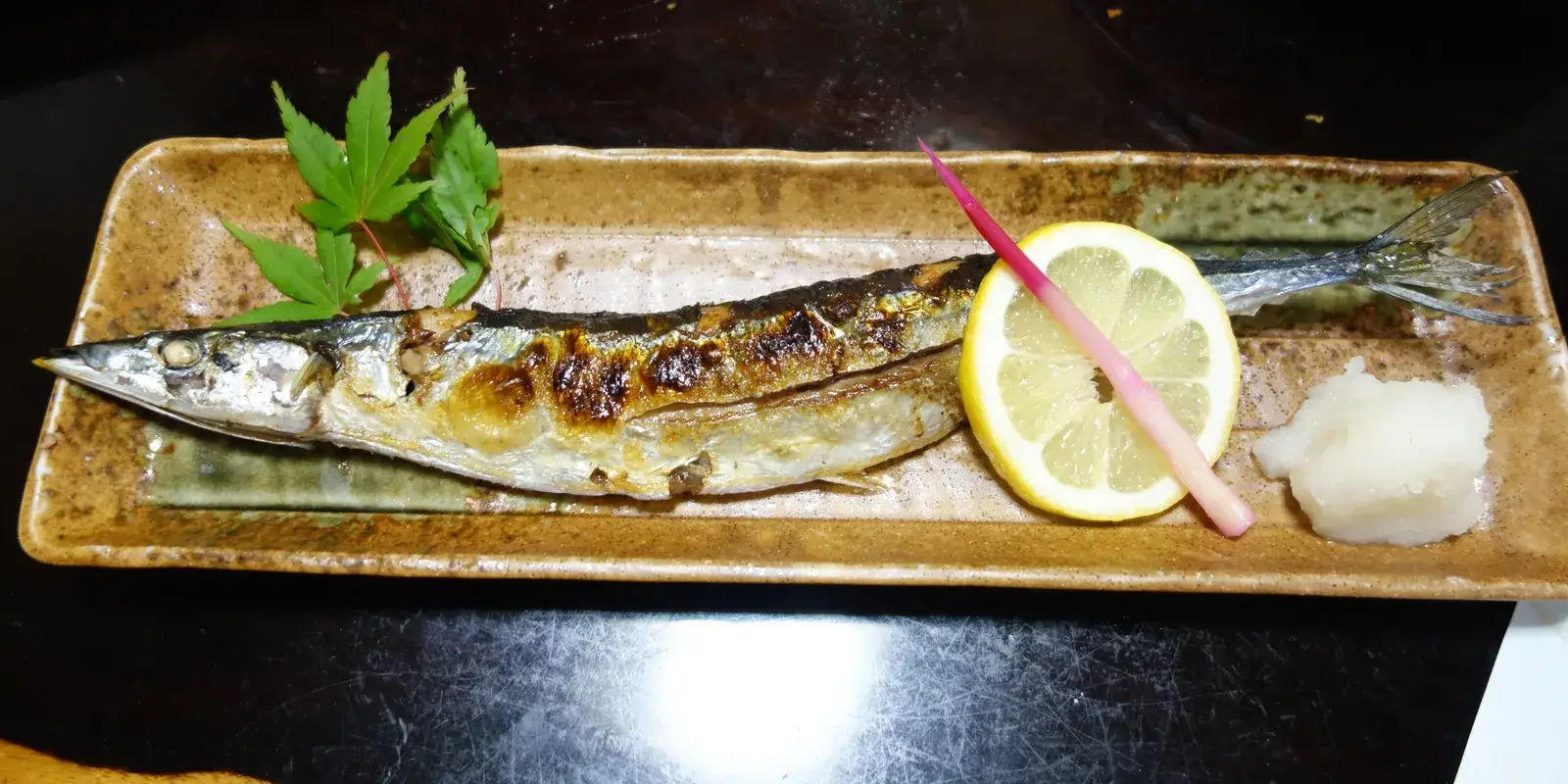
Sanma, the Pacific saury, is written with the characters for autumn, sword and fish (秋刀魚). In the posts it is grilled with salt and served whole, with grated daikon radish.
Rice from the current year's harvest is sold as shinmai (新米, new rice). A bag can carry that label only if the rice was packed, or polished and packed, by 31 December of the harvest year.
How We Gathered These Voices
We collected 345 Japanese-language posts across five autumn food topics: autumn-only flavors such as sweet potato and chestnut sweets (46 posts), roasted sweet potatoes from trucks and shops (100), eating a whole grilled fish such as sanma (74), people from abroad enjoying Japanese food, mostly autumn food (44), and how autumn food differs between generations (81). The posts were written between 2006 and 2026 on public Japanese discussion boards, Q&A sites, a parenting forum, news-site comment sections, compilations of social media posts, blogs and personal essays, under YouTube videos, and in the comment sections of blogs that translate foreign reactions to Japan. We collected them in October 2026, and when we took two excerpts from one essay, we counted it once.
These posts are a collection of what Japanese people chose to write, not a scientific survey. People on anonymous boards are more likely to post when they feel strongly either way, people asking on Q&A sites have a question or a worry to begin with, and comments under a YouTube video are more likely to follow the video's angle. Each gauge note gives its own counts for these sources. Harvest and catch figures come from government bodies, listed under Sources.
Autumn-Only Flavors
The earliest 2026 post we collected on these flavors is from late August, and it is about a chestnut cake. One writer described autumn in one line.
秋になるとあっちもこっちもさつまいもとかぼちゃだらけ In autumn it's sweet potato and pumpkin everywhere you look.
Of the 46 posts we collected about these flavors:
Fourteen of the 23 posts in the green bar use the words "every year." Sixteen of the 46 are about moon-viewing (tsukimi) items, 14 of them a burger with an egg inside, which posters buy from fast-food chains in early autumn.
さっそくお昼に食べたよ!月見バーガーは毎年食べてる Had one for lunch already! I eat the moon-viewing burger every year.
年に1回の楽しみ、って毎年言うてる。言うてるけど、去年、数えたら10個食べてた。 Every year I say it's my once-a-year treat. I say that, but last year I counted, and I'd eaten ten.
Four of the 14 posts in the red bar make a distinction. Their writers like sweet potato, chestnut and pumpkin as foods and object to some of what is made from them.
かぼちゃ、栗、さつまいも←好き かぼちゃ味、栗味、さつまいも味←嫌い Pumpkin, chestnut, sweet potato: like. Pumpkin flavor, chestnut flavor, sweet potato flavor: dislike.
One writer buys them anyway, every year.
自分の中で毎年恒例なんだけど、苦手な自覚が十分あるのにこの時期になると芋、栗、かぼちゃのスィーツが美味しそうに見えちゃって買って後悔してる It's become an annual thing for me. I know full well I don't like them, but at this time of year the sweet potato, chestnut and pumpkin sweets look so good that I buy them and regret it.
An essay writer who looks forward to the season has a rule of eating a single Mont Blanc each autumn.
ああ、今年も秋が来たな、と。甘すぎるモンブランひとつで、季節の扉が開くような感覚がありました。 "Ah, autumn's here again," I thought. One too-sweet Mont Blanc, and it felt like the door to the season had opened.
The Sweet Potato Truck
Posters describe small trucks that drive through neighborhoods in autumn and winter selling ishi-yaki imo, stone-roasted sweet potatoes, while playing a recorded call. Running after one comes up in 6 of the 31 posts in the green bar.
こないだ近所に来た! 石焼きいも~おいもだよ~ 早くしないと行っちゃうよ~って外から聞こえて ま、待ってぇ!!ってなってつい買いに追いかけたw It came by my neighborhood the other day! "Stone-roasted sweet potatoes, sweet potatoes here, hurry or I'll be gone," I heard from outside, and before I knew it I was going "W-wait!" and running after it.
Of the 100 posts we collected about roasted sweet potatoes:
One poster had assumed a potato cost 100 yen.
1本100円って勝手な思い込みで 車追いかけて 「1本下さい。」 って言ったら「500円です。」って言われて衝撃受けました。 1本にしといてよかった〜!! I'd assumed it was 100 yen a potato, chased the truck, said "One, please," and was told "That's 500 yen." I was stunned. Thank goodness I only asked for one!
Eight posts explain that sellers charge by weight or set no fixed price, and three suggest asking for an amount instead of a number of potatoes. One, from 2013, puts it simply.
グラム単位なんだから五百円分下さいって言えば売ってくれるよ。 They sell by the gram, so if you say "500 yen's worth, please," they'll sell you that.
Another, from 2017, suggests naming a smaller amount.
一本いくらですか?と聞くと高いけど、300円でありますか?と聞くと、結構大きいのくれたりする。子供たちが冬時々買う。 If you ask "How much is one?" it's expensive, but if you ask "Do you have one for 300 yen?" they sometimes give you a pretty big one. My kids buy them now and then in winter.
Four posters describe asking for 1,000 yen's worth. Two of them got less than they expected, and two were happy with what they got.
Eleven posts describe sellers who were glad to see a customer, gave a discount or added a little extra.
…時々遭遇するから買う事があって、中々買う人が来ないのか私が「すみません…」と言うと、おじさんビックリして喜んでくれた たいていの石焼き芋屋は嬉しそうに接客してくれる …I come across them now and then, so I sometimes buy one. When I said "Excuse me…", the man looked surprised and pleased, maybe because not many people stop him. Most sweet potato sellers seem happy to serve you.
An essay from early October 2026 describes briefly thinking the price was high, buying one anyway, and what the seller said about the season.
「650円でさせてもらってます〜」 謙虚そうな焼き芋のおじさん。正直『高っ』と思ってしまったが、そんなのは一瞬。 … 「今はまだ秋の始めなので、ホクホクした焼き芋になってます。ここからだんだんねっとりした芋が食べられるようになってきますよ」とのこと。 … 最初は高いと思ったもののこれは650円の価値あったなあと思った。 "I'm doing them for 650 yen." A modest-looking sweet potato man. Honestly, I thought "that's expensive," but only for a second. … He said, "It's still early autumn, so they're the fluffy kind right now. From here on you'll start getting stickier ones." … I'd thought it was expensive at first, but it was worth the 650 yen.
Eleven of the 100 posts compare truck potatoes with the ones sold at supermarkets, discount stores and convenience stores, on price or taste. For where to eat one, see our piece on eating while walking in Japan.
Eating a Whole Grilled Fish Like Sanma
In the posts, sanma comes with its head, tail, bones and guts. Of the 74 posts we collected about eating a whole grilled fish such as sanma:
Ten of the 28 posts in the red bar are from Japanese people self-conscious about their own eating, and three of them avoid eating grilled fish in front of others.
恥ずかしながら食べられません I'm embarrassed to say I can't eat it neatly.
食べれない… だから外では焼き魚とか頼まないようにしてる 家や家族との食事はまあいいかなって汚いまま食べてる I can't… so I try not to order grilled fish when I eat out. At home, with family, I figure it's fine and eat it messily.
Seven of the 74 posts are comments under a video about foreign tourists struggling with grilled fish. Three are warm and three explain or give tips. The seventh says neat eating shows how you were raised, adding that some Japanese people can't manage it either and that it's hard for anyone who doesn't use chopsticks every day.
悪戦苦闘してでも、日本式料理を堪能してくれてて良き。… Even if it's a struggle, it's lovely that they're enjoying Japanese food. …
今は魚は刺身だけでなく、焼き魚、煮魚と 外国人の人々も魚にトライしていますね、日本人も魚には苦手な人がいます。魚も🐟🦑🐙色々食べていますね These days people from abroad are trying not only sashimi but grilled and simmered fish too. Some Japanese people aren't good with fish either. They're eating all kinds of seafood, too.
Eighteen posts are about other people's plates. One links a sanma plate to how someone was brought up.
”家庭の躾”がわかる目安 サンマの食後を見るとよくわかるよ A way to tell how someone was brought up: look at what's left after they eat a sanma.
Five posters reject the idea.
魚を綺麗に食べられることからわかるのは、その人が「魚を綺麗に食べられること」だけだよな All you learn from someone eating a fish neatly is that they can eat a fish neatly.
Four posts offer tips, one of them from the posts about generations.
- One commenter advises starting while the fish is hot, because once it cools the bones no longer come away.
- Another commenter, writing under a TV news report about fish, was taught by their grandmother to take off the head, open the fish from the back, hold the tail and pull out the backbone, so fewer bones are left behind.
- One poster gathers the guts in one place and tucks them under the backbone. Four other posts note that picking around the guts is what makes a plate look messy.
- One poster says it's fine to use your other hand when the fish is awkward, since you can wash your hand afterwards, while another finds people picking out bones by hand irritating.
Here is one of the 26 posts in the green bar, from a thread started by someone who struggles with sanma.
まぁ、美味しく頂くという心があれば良いと思います Well, as long as you eat it gratefully and enjoy it, I think that's fine.
When People From Abroad Enjoy It
Of the 44 posts we collected in which Japanese people react to people from abroad enjoying Japanese food, mostly autumn food such as sanma, sweet potatoes and persimmons:
Eight of the 23 posts in the green bar are under TV news reports about tourists, including these two.
外国人が日本の旬の食べ物を味わっている様子を見て旅を楽しんでいてくれて嬉しいな。 It makes me happy to see visitors tasting Japanese food in season and enjoying their trip.
さんまの塩焼きの良さをわかってくれるなんて、嬉しい I'm so glad they get how good salt-grilled sanma is.
Five of the 8 posts in the red bar are about money. This one is under a report on wealthy visitors.
日本食は独特、唯一無二の存在だと思います。 しかし難点は世界的に見ても高額なことです。 裕福な外国人が食べている日本食、残念ながらわれわれ日本人はなかなか食べることができません。 I think Japanese food is unique, one of a kind. The drawback is that it's expensive even by world standards. Sadly, the Japanese food wealthy foreigners are eating is food we Japanese rarely get to eat.
Twelve of the 44 are comments on a Japanese blog's translation of a Reddit post by a foreigner proud of eating sanma neatly. In ten of the 12, the commenter admires it, and three of those say they can't do it themselves.
自分もそうだが綺麗な焼き魚の食べ方が出来無い日本人は一定数居るから本当にこの方は素晴らしいと思う。 A fair number of Japanese people can't eat a grilled fish neatly, me included, so I think this person is really impressive.
One June day, an essay writer saw a tall foreign man buy three roasted sweet potatoes at a local supermarket. The writer is clear that the rest, including who he might be shopping with, was imagined, and that these thoughts came while finishing the shopping.
日本のさつまいもを好きになってくれた彼ら。 そんなことを考えて私は、小さく日本を好きになった。 … べつに、私が焼き芋を生み出して、スーパーで彼に直接手渡ししたわけじゃないんだけれど、それでも彼が、焼き芋をきっかけに日本を楽しんで、好きになってくれたらいいな、なんて思いながら買い物をした。 Here were people who'd come to love Japanese sweet potatoes. Thinking about that, I came to like Japan a little more myself. … It's not as if I invented roasted sweet potatoes, or handed one to him at the supermarket myself. Still, I did my shopping hoping that, starting with roasted sweet potatoes, he'd enjoy Japan and come to like it.
The Generation Gap
Of the 81 posts we collected about how autumn food differs between generations:
Thirteen of the 81 describe coming to love an autumn food as an adult: sanma and other grilled fish, sanma guts, persimmons, dried persimmons. Eleven of those 13 say they disliked it, or were tired of it, when they were young.
子供の頃あんなに秋刀魚が嫌いだったのにおっさんになった今は美味すぎる、なぜだ!大根おろしたっぷり掛けてビールと最高に合う As a kid I hated sanma so much, and now that I'm a middle-aged guy it's unbelievably good. Why?! With loads of grated daikon, it's perfect with beer.
酒飲みのおじいちゃんがハラワタまで食べてて、私は苦くて無理で食べてもらってた。アラフォーになってから新鮮な秋刀魚の塩焼きのハラワタ初めて美味いって分かった。 My grandfather, a drinker, used to eat the guts too. They were too bitter for me, so I'd give them to him. Only around 40 did I finally understand how good the guts of a fresh salt-grilled sanma are.
Fifteen are from people who remember when sanma was cheap. One commenter read "Meguro no Sanma," an old story about sanma, aloud at a library and found that, for children who think of sanma as expensive, it needed some explaining.
目黒のサンマの読み聞かせを以前図書館で行ったが、秋刀魚が高級魚だと認識している子どもたちには当時は秋刀魚が下魚だったことを事前に教えておかないと話が伝わらなかったんだよなぁ… I once did a reading of "Meguro no Sanma" at a library. To children who think of sanma as an expensive fish, the story didn't make sense unless I first explained that back then it was a cheap, common fish.
Seven are from people worried about children and young people: that they don't eat sanma or bony fish, or don't know what's in season. Others write about sharing seasonal food with family.
旬の食材を使ってご飯を作り、祖母と一緒に食卓を囲む。 そんな何気ない時間が、私にとっては何よりの幸せだと感じています。 Cooking with ingredients in season and sitting down to eat with my grandmother. Those ordinary moments are what make me happiest.
Matsutake, the pine mushroom, comes up too. Three people in their twenties and thirties wrote that they had eaten it only a handful of times, or never.
Trying It Yourself
In the posts, autumn-only sweets turn up at convenience stores, cafés and cake shops. Posters buy from a truck by calling out to the driver, something one poster on a parenting forum admits to feeling hesitant about. And posters order sanma at izakaya (Japanese pubs) and set-meal restaurants.
Share Your Experience
What did you eat in Japan in autumn, and did anything surprise you? Tell us through Voice Box, and we'll add real visitor experiences to this article.
More Japanese Perspectives
- Why Japanese People Eat Eel in Summer explains Japan's summer eel custom.
- Autumn Leaves in Japan covers how Japanese people feel about autumn leaf viewing.
- Why Your Compliments Are Changing Japan explains what happens when you tell a cook "oishii" (delicious).
- Your First Izakaya is a gentle guide to a first visit to a Japanese pub.
- Depachika covers department-store food halls: samples, discounts and all that wrapping.
Sources
Primary research data
WMJS autumn food research data: 345 Japanese-language posts written between 2006 and 2026 and collected in October 2026 from public Japanese discussion boards, Q&A sites, a parenting forum, news-site comment sections, compilations of social media posts, blogs and personal essays, YouTube comments, and the comment sections of blogs that translate foreign reactions to Japan.
- Autumn-only flavors: 46 posts
- Roasted sweet potatoes from trucks and shops: 100 posts. The yen amounts in that section (asking for 500 yen's worth or 1,000 yen's worth, and the 100 yen, 300 yen and 650 yen in the quotes) are what individual posters wrote between 2007 and 2026, not current prices.
- Eating a whole grilled fish such as sanma: 74 posts
- People from abroad enjoying Japanese food, mostly autumn food: 44 posts
- Generational perspectives on autumn food: 81 posts
Every individual post is stored with its own source URL in this site's research data.
Government sources
- Fukui Prefecture, Agriculture, Forestry and Fisheries Department, Distribution and Sales Division: Fukui food education magazine, October 2020, sweet potato issue (PDF). Sweet potatoes are harvested from September to November. The amylase in the potato turns starch into maltose and works well at 40 to 70C; long heating makes the starch soft and sticky, and water loss concentrates the sweetness. Potatoes kept in controlled storage after harvest get sweeter.
- Oita Prefectural Agriculture, Forestry and Fisheries Research Center: Research Now vol. 17, 3 June 2013 (PDF). After one to two months of storage, the flesh of the Beniharuka variety changes from floury to moist and becomes sweeter.
- Ministry of Agriculture, Forestry and Fisheries (MAFF): aff magazine, October 2019, "Let's eat chestnuts". Chestnuts are in season from September to October.
- Ministry of Agriculture, Forestry and Fisheries (MAFF): Crop statistics, 2025 harvest of European pears, persimmons and chestnuts, 14 April 2026 (PDF, preliminary figures). Chestnuts 16,200 tonnes (Ibaraki 26%); persimmons 179,600 tonnes.
- Fisheries Agency: Change and allocation of the total allowable catch of Pacific saury for the 2026 management year (draft), April 2026 (PDF). Reference table 3, compiled from NPFC statistics, gives Japan's saury catch as 18,318 tonnes in 2021, 18,064 in 2022, 24,464 in 2023, 38,726 in 2024 and 64,831 in 2025.
- Osaka Prefecture: Labeling rules for rice. Rice may be labeled shinmai (new rice) only if it was packed, or polished and packed, by 31 December of the year it was harvested.
Note on Quotations
Quotes from online platforms have been lightly edited for readability (fixing typos, formatting for clarity). Some quotes are shortened, and … marks where text was left out. The meaning and intent of each comment remain unchanged. Each original post's URL is kept in our research data.
This article is available in languages covering 95%+ of visitors to Japan (based on JNTO 2025 data). Need another language? Let us know through Voice Box.
WMJS is written in Japan, in English, with AI help. We check every page, but English is not our first language. If a sentence reads oddly, tell us. One sentence is enough.
Thank you. A person reads every note.
How well do you know Japan?
Based on 51,218+ real Japanese voices
Want to know more? Ask Japanese people
Have a follow-up question about this topic? We'll ask real Japanese people.
Voice Box →