
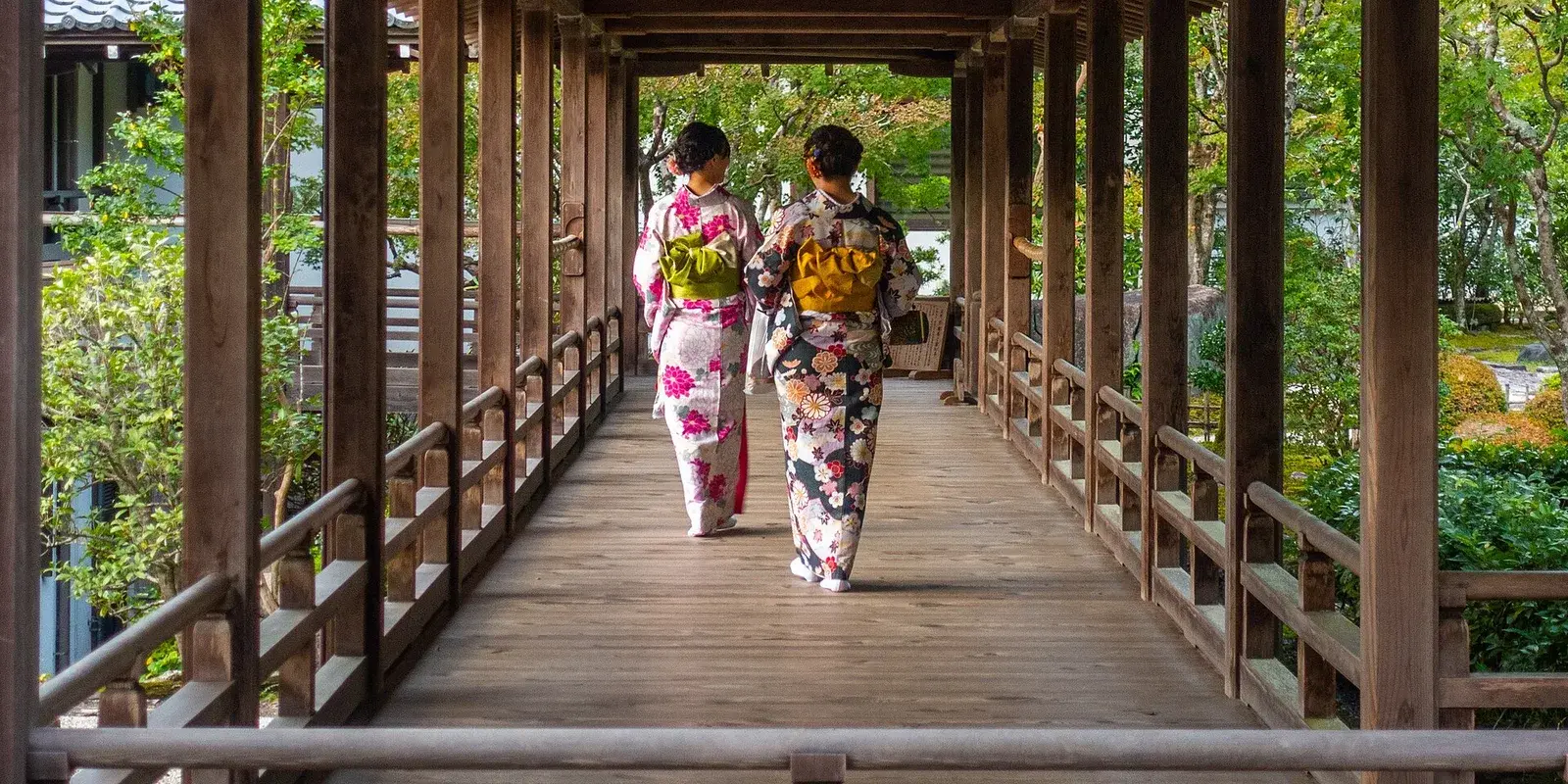
Is It Cultural Appropriation to Wear a Kimono in Japan? What Japanese People Actually Think
What you'll learn in this article:
- What more than 175 Japanese people wrote about whether a foreigner in a kimono is appropriation or appreciation
- Why Japan's own officials have invited the whole world to wear it
- The one thing that actually changes how a kimono "reads," and it isn't who you are
Is it cultural appropriation to wear a kimono in Japan? We collected more than 175 Japanese voices on this exact question. The clear answer: it's welcomed, not resented. About 76% see a visitor in a kimono as appreciation, and only 6% object. The concern that does exist isn't about who wears it, but how. Worn with a little care, a kimono reads as respect.
More than 175 Japanese voices on one question: When a visitor puts on a kimono: is it appreciation, or appropriation?
You've probably seen the headlines. A museum cancels a kimono try-on event after protests. A celebrity names a shapewear line "Kimono" and the internet erupts. Somewhere along the way, a quiet worry settled in: I'd love to wear a kimono in Kyoto, but is that disrespectful? Am I taking something that isn't mine?
It's a thoughtful question. The fact that you're asking it already says something good about you. So we did what we always do: instead of guessing, we went and read what Japanese people write on Japanese-language forums, Q&A sites, and social media about how they actually feel when they see a foreign visitor in a kimono.
The gap between the online debate and the feeling on the ground turned out to be enormous. And the part that surprises most visitors is this: the loudest "appropriation" conversation has mostly happened outside Japan.
Quick Guide
| The worry | What Japanese people said | |
|---|---|---|
| 🟢 Relax | "Is wearing it appropriation?" | About 76% welcome it as appreciation. "I want Westerners to wear kimono too; everyone looks lovely in it." |
| 🟢 Relax | "What if I wear it imperfectly?" | A slightly loose fit barely registers. "As long as it's clear you love it, that's what matters." |
| 🟡 Good to know | "Does deportment matter?" | To a thoughtful minority, yes, though it's about carrying yourself with a little care rather than about permission. |
| 🟢 Relax | "Is renting it just a shallow photo-op?" | Kyoto's own city government gives discounts to people in kimono, tourists included. The industry wants you. |
| 🔴 Worth knowing | "Is there a line?" | Yes, though it's about intent (mocking it, or stripping it for profit) rather than your nationality. |
The one thing to remember: In Japan, the question isn't whether you're allowed to wear a kimono. It's whether you're wearing it with the culture or at it. Show up with curiosity and a little care, and you're not appropriating anything; you're being welcomed in.
How We Gathered These Voices
We collected more than 175 Japanese-language responses about foreign visitors wearing kimono, drawn from public Japanese Q&A sites, forums, and social posts, online discussion threads, Japanese residents on Reddit, and media comment sections. We also drew on official statements from the City of Kyoto and reporting on the high-profile "appropriation" controversies.
A quick note: This isn't a scientific survey. It's a collection of what real Japanese people said, in their own words, on public platforms. We wanted to show you the honest temperature of the conversation inside Japan, which often looks very different from the conversation abroad.
The Question Japanese People Keep Answering
One of the threads we read began with a foreign visitor asking, in Japanese: "I'm not Japanese, but I'd love to wear a kimono. Would that be uncomfortable for Japanese people?" The answers poured in, and almost none of them said yes.
Of 79 voices that spoke directly to the appropriation question:
The warmth in the positive responses was hard to miss:
大歓迎。涙が出るほどうれしい。 Wholeheartedly welcome. It makes me so happy I could cry.
西洋の人にも着物を着て欲しいし、誰が着た着物姿もキュートよ。 I want Westerners to wear kimono too, and everyone looks lovely in it, no matter who.
A point that came up again and again was a kind of gentle fairness. Many felt it would be strange to object:
自分たちは洋服を着るのに、外国人が着物を着るのを怒るのは違うと思うから怒らない。 We wear Western clothes ourselves, so getting angry at foreigners wearing kimono would be hypocritical. That's why I don't.
外国人が着物を着たくらいでアイデンティティがゆらいだりしない。 Our identity doesn't waver just because a foreigner wears a kimono.
And several people pointed out, with some bemusement, that the strictest "appropriation" voices tend not to come from Japan at all:
外国人は日本人の和服姿には寛容なのに、むしろ白人の和服姿には厳しい。逆だよねって思う。 People abroad are relaxed about Japanese in traditional dress, yet stricter on white people wearing it. It feels backwards to me.
The small share who objected did exist (voices like "kimono belongs to us Japanese"), and we're not pretending they don't. But they were a clear minority, and notably, they were objecting to the idea of an outsider in a kimono rather than to anything a real visitor had done.
💡 The real surprise
The "appropriation" debate that feels so charged online barely registers as a worry inside Japan. The dominant response to a visitor in a kimono isn't suspicion. It's a quiet thank you for loving something we love. Many Japanese people are genuinely moved by it.
Kyoto Said It Out Loud
If you want the clearest possible answer to "whose kimono is it?", you don't have to read between the lines of forum posts. You can read it in an official letter from the City of Kyoto.
In 2019, when a celebrity tried to trademark the word "Kimono" for a shapewear brand, the mayor of Kyoto, Daisaku Kadokawa, published an open letter. He didn't argue that kimono belongs only to Japan. He argued almost the opposite:
The name "Kimono" is the asset shared with all humanity who love Kimono and its culture — therefore it should not be monopolized.
He explained that Japan was working to have kimono culture recognized on UNESCO's Intangible Cultural Heritage list precisely because it is loved by Japanese and non-Japanese people alike, and that something so loved "should be shared with those who love it."
Read that again, because it reframes everything. The objection in that famous case was never "foreigners shouldn't wear kimono." It was "a single company shouldn't lock up the word and strip it of meaning." The wearing? Kyoto's own government calls that sharing, and welcomes it.
So What Do They Care About?
Here's where it gets interesting. When Japanese people do have a reaction beyond "yes, please," it's almost never about whether you have permission. It's about how you carry yourself once you're wearing it.
Of 75 voices that spoke to the "how you wear it" question:
For most people, intention was everything:
好きで着てくれているのが伝われば、多少着付けが甘くても全然いい。気持ちの問題。 As long as it comes across that they're wearing it because they love it, a slightly loose fit is totally fine. It's about the heart behind it.
And here's a detail that should melt the anxiety entirely: the people most likely to nitpick how anyone wears a kimono have a nickname in Japan, the "kimono police" (kimono keisatsu), and Japanese people don't like them either.
着物警察がコメントしてきたら、黙って即ブロでいい。鬱陶しいだけ。 If the "kimono police" show up in your comments, just silently block them. They're nothing but a nuisance.
着物文化が廃れたのは、ああいう人たちのせいでもあるよね。自分たちで好きなものを潰していくスタイル。 Kimono culture faded partly because of those people — the habit of slowly crushing the very thing you love.
In other words: the strict, gatekeeping voice you're afraid of isn't the voice of Japan. It's a voice that Japanese people themselves push back against. The dominant feeling is far closer to we're just happy you're here in it. Some even noted that visitors who take a moment to learn can carry a kimono beautifully:
着物を着る外国人の方が、最近は日本人より所作がきれいなことすらある。ちゃんと習って来てる人もいるからね。 These days some foreigners in kimono carry themselves even more gracefully than Japanese people — some actually come having learned properly.
💡 What actually earns warmth
Not perfect technique. Care. A kimono worn by someone who's clearly delighted to be in it lands as respect, every time, even if the obi sits a little crooked. The "right way" to wear a kimono, in the way that matters most to people, is gladly.
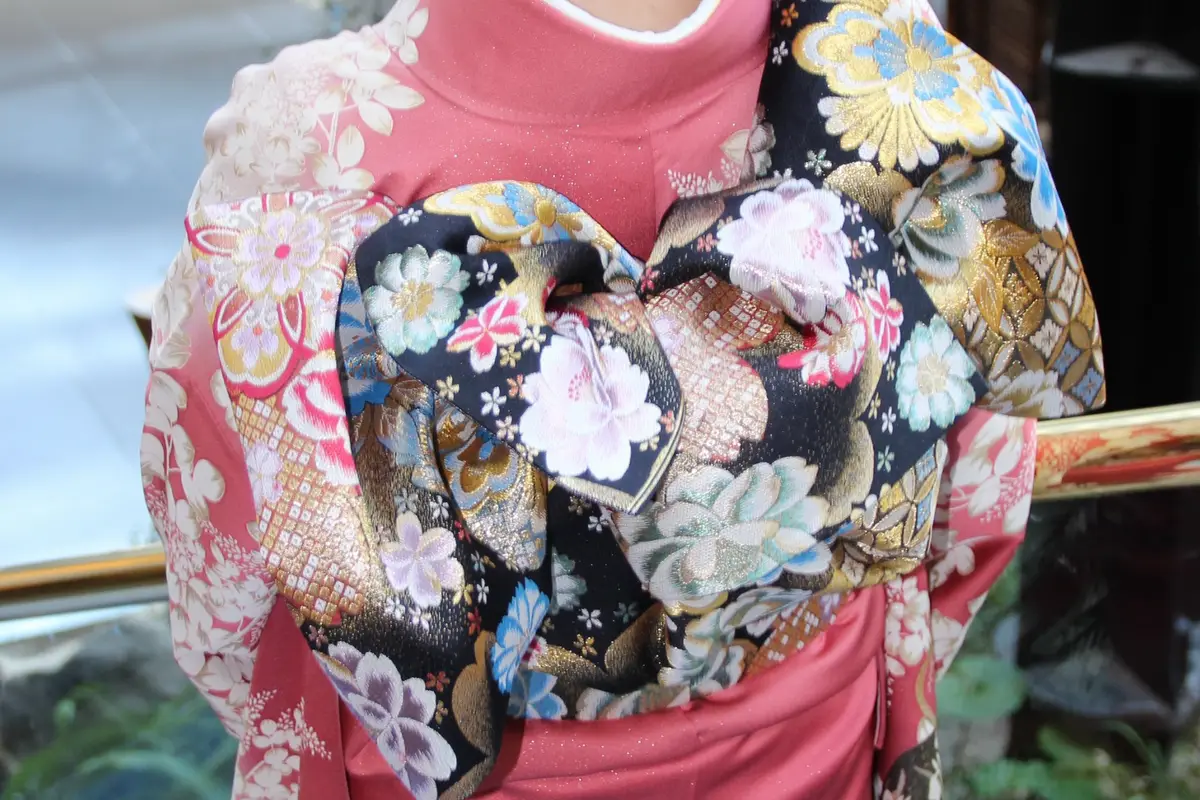
Where Is the Line, Really?
We promised to be honest, so let's name the one 🔴 that's real. There is a way to wear a kimono that some Japanese people find uncomfortable, but it has nothing to do with your passport. It's about intent and context.
The line isn't who wears it. It's whether you're wearing it with the culture or at it:
問題なのは着物そのものを着ることじゃなくて、文化の文脈を全部はぎ取って商売の道具にすること。 The problem isn't wearing a kimono itself — it's stripping away all the cultural context and turning it into a commercial tool.
That's the thread that connects the famous controversies. The 2015 museum try-on event and the 2019 shapewear-naming case both became flashpoints abroad, and in both, the sharpest reactions came from the diaspora rather than from Japan. (For Japanese-Americans, that sensitivity has deep roots: there's a painful history of families being pressured to abandon cultural markers like the kimono. The concern, where it exists, comes from love and loss rather than gatekeeping.) Inside Japan, the reaction was strikingly different. At that museum, Japanese counter-protesters, including older women in kimono, actually showed up to defend the event, one holding a sign that read, in effect, "I am not offended by people wearing kimono."
So the practical line is simple, and it's an easy one to stay on the right side of:
- Wearing a kimono because you find it beautiful and want to experience it? That's appreciation. Welcomed, warmly.
- Treating it as a joke, a costume to mock, or a logo to slap on a product stripped of meaning? That's the part people object to, and it has nothing to do with renting one for a lovely day in Kyoto.
- Heading somewhere genuinely ceremonial (a tea ceremony, a formal occasion, a temple ritual)? Just carry yourself with the same quiet respect you'd bring to any sacred space. That's not a kimono rule. It's a being-a-good-guest rule.
If you're renting a kimono to walk through Gion, photograph the autumn leaves, and feel a little bit of old Japan for an afternoon, you are nowhere near that line. You're doing exactly what Kyoto invited you to do.
Why Japan Is So Glad to See You in It
There's a deeper reason the warmth runs as strong as it does, and it's worth understanding.
Kimono are vanishing from everyday Japanese life. The kimono retail market peaked at roughly ¥1.8 trillion in 1981; by 2025 it had fallen to about ¥203 billion, shrinking to roughly a ninth of its former size in four decades, according to the Yano Research Institute. Today, most Japanese people wear kimono only for ceremonies, if at all. The grandmothers who once taught their granddaughters how to tie an obi are aging out, and that knowledge isn't passing down the way it used to.
So when a Japanese person sees you, a visitor, walking down the street in a kimono, you're often doing something many young Japanese people no longer do themselves. That's why the reaction is so often emotional rather than territorial.
着物の国に生まれたのに、こんなすてきな着物を着ないなんてもったいない。 It's such a waste — to be born in the land of kimono and never wear something this beautiful.
Kyoto understood this years ago. To help keep the tradition (and the craftspeople behind it) alive, the city encourages people to wear kimono by offering discounts at temples, museums, on the subway, and at participating restaurants, and tourists in rented kimono are included. Renting a kimono for the day isn't taking something from the culture. In a small, real way, it's helping carry it forward.
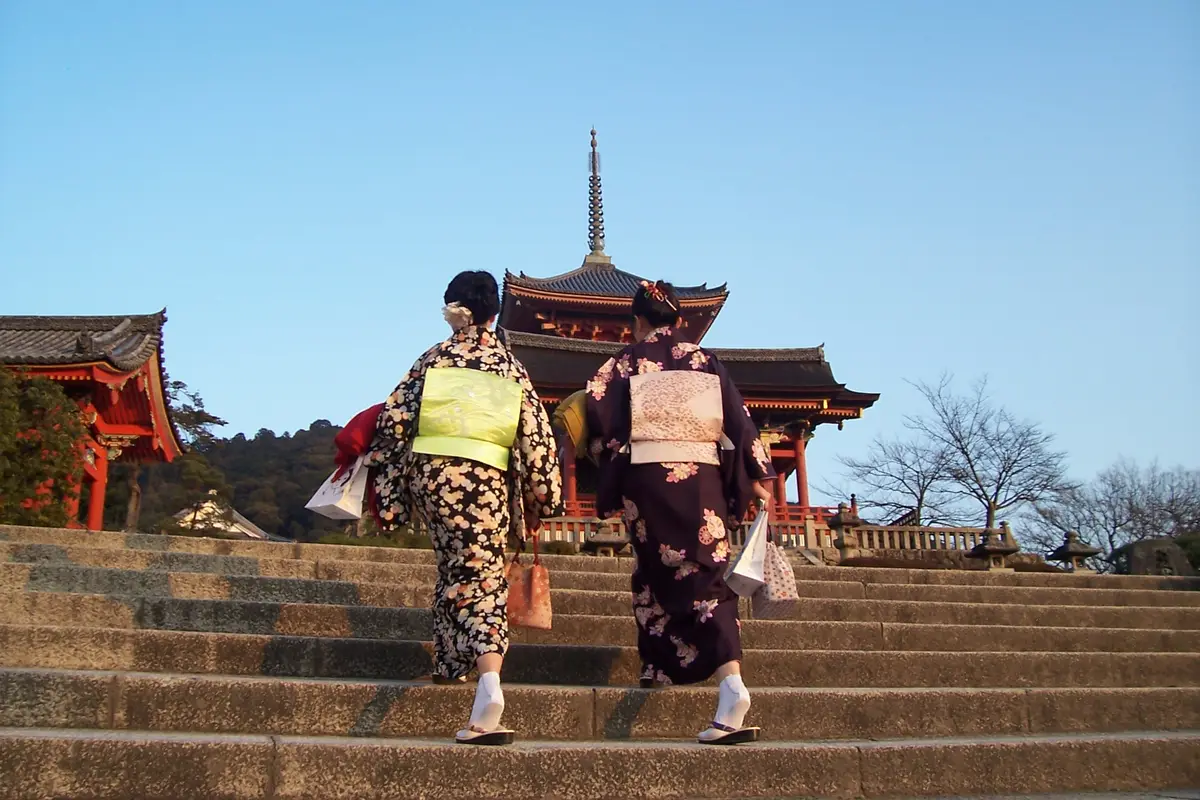
A Few Gentle, Practical Notes
You don't need to be an expert. But if you'd like the experience to feel even better:
- Just rent one. Kyoto and Asakusa are full of shops, many with English-speaking staff, at prices that vary by shop and season. They'll dress you properly, which takes care of nearly every "am I doing this right?" worry. (If you'd like a higher-quality experience, ask for natural-fiber options or a mid-range shop.)
- Don't stress about perfection. A loose collar or a slightly off obi is invisible to almost everyone, and if something really slips, there's a good chance a kind stranger will quietly help.
- One thing genuinely worth knowing: the left side crosses over the right (right side against your body first). Reversed is how the deceased are dressed. Your rental shop will get this right for you; it's just nice to understand.
- Carry yourself with a little care. Not stiffly. Just gladly. That's the whole secret.
If you want to go deeper on the mechanics (the left-right rule, what happens if it comes loose), we've written a whole companion piece on that worry.
More Japanese Perspectives
This article is part of a series on what Japanese people actually feel when visitors try to connect with their culture:
- Why Your Yukata Doesn't Have to Be Perfect: the sister piece on what Japanese people think when your yukata is a little messy (spoiler: 55% want to help).
- What to Wear in Japan: the full dress-code picture, from shorts to sacred spaces, across five everyday situations.
- How to Blend In at a Japanese Summer Festival: yukata, bon odori, and why communities are more welcoming than ever.
- What Japanese People Wish You Knew: the gestures that genuinely land, straight from Japanese voices.
Your Voice Matters
Have you worn a kimono in Japan, or held back because you weren't sure it was okay? What did it feel like? Did a stranger smile, help, or say something kind?
Every perspective helps us build a more complete picture of what really happens when cultures meet, and helps the next nervous visitor feel a little braver.
Sources
Official Statements and Institutions
- City of Kyoto: Open letter from Mayor Daisaku Kadokawa (June 28, 2019) on the "Kimono" trademark, describing kimono as "the asset shared with all humanity who love Kimono and its culture."
- Yano Research Institute: kimono retail market survey (announced 2026): retail market ¥1.8 trillion peak (1981) → ¥203 billion in 2025 (95.8% of the prior year).
Media and Reporting
- The Boston Globe: coverage of the 2015 "Kimono Wednesdays" event at the Museum of Fine Arts, including the Japanese counter-protesters who supported it.
- artnet News: "Boston Kimono Controversy Rages On."
- Japan Today: "Kyoto mayor posts letter to Kim Kardashian explaining what kimono really is."
- 訪日ラボ (honichi.com): "文化の盗用とは?" on appreciation versus appropriation and the kimono-naming case.
- NewSphere: "KIMONOは誰のもの?「文化の盗用」と感謝の違いを考える."
- Record China: reporting and comment threads on foreigners' kimono deportment.
Voices from the Public
- Public Japanese Q&A sites, forums, and social posts: first-hand opinions on whether foreigners wearing kimono is welcomed or an "imposition," the "kimono police," and appreciation versus appropriation.
Note on Quotations
Quotes from online platforms have been lightly edited for readability (fixing typos, formatting for clarity). The meaning and intent of each comment remain unchanged. Original sources are linked above.
This article is available in languages covering 95%+ of visitors to Japan (based on JNTO 2025 data). Need another language? Let us know through Voice Box.
WMJS is written in Japan, in English, with AI help. We check every page, but English is not our first language. If a sentence reads oddly, tell us. One sentence is enough.
Thank you. A person reads every note.
How well do you know Japan?
Built from 635 public posts by Japanese people
Want to know more? Ask Japanese people
Have a follow-up question about this topic? We'll ask real Japanese people.
Voice Box →