
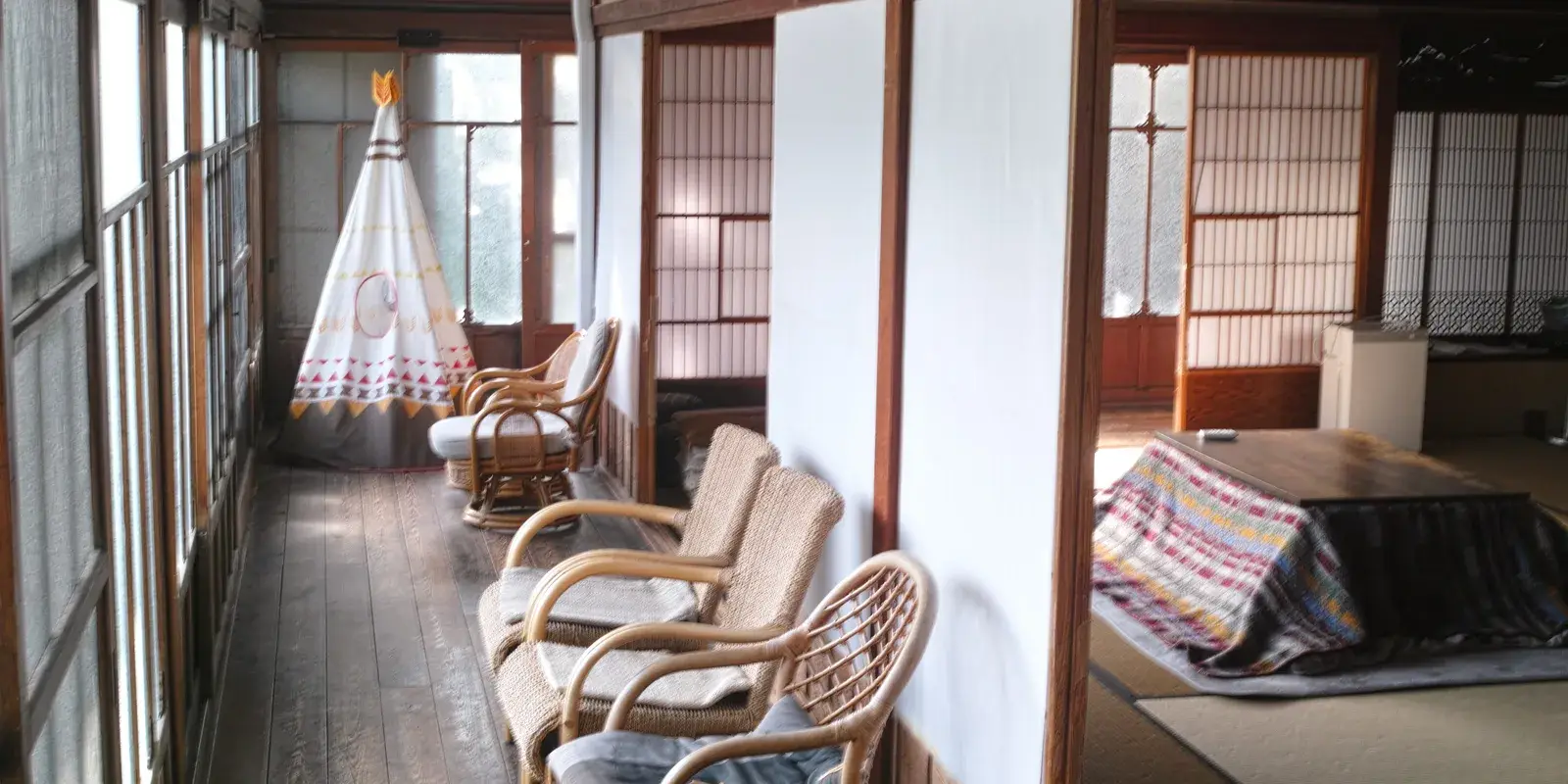
Surviving Japan's Winter: The Cold Is Indoors, Not Outside
Key Takeaways:
- The cold you have to plan for in Japan is the cold inside buildings, and it doesn't track latitude the way you'd expect
- Japanese homes were designed around summer humidity, so heating one room at a time is ordinary and the windows leak warmth. Homes started since April 2025 have to meet insulation standards, but the hotel or guesthouse you book probably predates that
- The local answer is to warm the body directly: thermal inner layers, stick-on heat pads, hot water bottles and a long soak in hot water
- Of the 42 voices we collected about advice for winter visitors, six talk about feet or socks and five about coats. One traveller warns about temples in particular, where your shoes come off at the door
Why are Japanese houses so cold in winter? We collected 259 Japanese voices, and they point at the building instead of the weather: houses designed around summer humidity, insulation that was skipped, and heating that warms one room at a time. A national study that measured about 2,200 detached homes found living rooms averaging above 18C in only four of the 43 prefectures it could compare, and the lowest average of all was in Kagawa, on the mild Seto Inland Sea.
If you're planning a winter trip, you've probably looked at a forecast for Tokyo or Kyoto, decided it looks manageable, and moved on. It is manageable. The cold this article is about is the cold inside. Japan's winter runs roughly from December to March.
This article is built on 259 voices from Japanese people writing about their own winters: what their houses are actually like, what they wear indoors, what they eat, where they go to warm up, and what they tell people who are coming. All of it is usable the moment you land.
Quick Guide
| Topic | What Japanese People Said | |
|---|---|---|
| 🟢 | What to expect | People who move from Hokkaido to Tokyo or Kyoto say they get colder. One Hokkaido resident, on Kyoto: "Winter in Kyoto is seriously cold." |
| 🟡 | Why it happens | Thin insulation and heating one room at a time come up again and again. The researcher behind the temperature study points at insulation; the contractor interviewed alongside him points at the windows. |
| 🔴 | What to do about it | Six voices talk about feet or socks, five about coats. Thick socks matter especially at temples, where you take your shoes off and stand on cold wood. |
How We Gathered These Voices
We collected 259 Japanese-language comments across six winter topics: what indoor cold is actually like (48 voices), the warming items people use (42), the places people go to warm up (43), what Japanese people tell winter visitors (42), warming food and drink (42), and how the experience differs by generation (42). They come from public Japanese-language discussion boards, Q&A sites, blogs and compilations of public social media posts, collected in September 2026.
This is not a controlled scientific survey. It is a collection of what Japanese people said in their own words, in their own language, mostly to each other. Where this article gives a measured number, the source is a government study or a news organization, and the links are in the Sources section at the end.
The Cold Is Indoors
A research team led by Professor Toshiharu Ikaga of Keio University put temperature loggers in about 2,200 detached homes across Japan and recorded the living room every ten minutes for two weeks in winter, counting only the hours when residents were at home. Then they grouped the results by prefecture. Four prefectures came in above 18C. The other thirty-nine did not.
Kagawa came last at 13.1C. It sits on the mild Seto Inland Sea, it rarely sees snow, and its homes were the coldest of the 43 prefectures compared. The project began in 2014, and these prefecture-level results were reported in 2023.
Ikaga's own explanation for the gap is insulation. The milder the region, the less insulated housing has spread there, and he puts adoption in Kagawa at around ten percent.
The World Health Organization recommends a minimum indoor temperature of 18C in cold seasons. Most of the prefectures in that study sat below it.
Of the 48 voices we collected on indoor cold:
The middle bar is the one to read carefully. Most of those voices are comparing one part of Japan with another, usually how cold the inside of a building gets. One of them has stopped noticing it altogether.
まぁでもこれがデフォルトだからべつに気にしたことないな Well, this is the default, so I've never really thought about it.
本当寒いよね。一軒家だけど、お風呂とかこれ外なの?!ってくらい寒い。 浴室暖房欲しい It really is cold. We're in a house, and the bathroom is so cold you wonder if you're outside. I want bathroom heating.
今朝暖房つける前の室温2度でした…関東。家の中の息が白かった This morning before I turned the heating on it was 2C in the room. Kanto. My breath was white inside the house.
Twenty of those 48 voices bring the north into the comparison.
北海道は室内暖かいからね 今もTシャツでアイス食べてる Hokkaido is warm indoors. I'm eating ice cream in a T-shirt right now.
東北人だけどわかる ガンガン石油ストーブとか焚いて部屋の中ぬくぬくにするから 関東の友達の部屋とか行くとエアコンだけで凌いでて さむっ…!よくこれで暮らせるね?ってなる I'm from Tohoku and I get it. We run kerosene stoves hard and keep the room toasty, so when I visit a friend's place in Kanto and they're getting by on an air conditioner alone, I think: that's cold. How do you live like this?
関西から北海道に越してきたけど 室内、建物内は関西の方が寒い 建物の構造が違うんだろうな I moved from Kansai to Hokkaido, and indoors, inside buildings, Kansai is colder. The structure of the buildings must be different.
One voice, comparing Japan with Germany, put it in a sentence:
ドイツに比べたら日本の冬too coldではまったくないなw 冬晴れって天気良いし明るいしむしろ日本の冬最高。問題は家の中が寒いこととコートがやたら薄いことや。 Compared to Germany, Japan's winter isn't "too cold" at all. The clear winter weather is lovely and bright, honestly Japan's winter is great. The problem is that it's cold inside the house and the coats are weirdly thin.
Why the Buildings Are Like This
Two explanations come up. The older one is that the priority was always summer.
湿気対策で熱が籠らないようになってるんじゃないの Isn't it built so heat doesn't get trapped, as a defense against humidity?
湿気の多い日本は、夏の風通しを重視して家を造れというのが古来からの定説です。 土地柄、木や紙(襖や障子)で家を造るからなんでしょうね。 In humid Japan, the old rule has always been to build for summer airflow. It's because we build with wood and paper, sliding screens and shoji, for this climate.
The rule they're quoting is from the fourteenth century. Section 55 of Tsurezuregusa says that a house should be built for summer, because in winter you can live anywhere. It came up in these conversations too, affectionately and with some exasperation.
徒然草で、家は夏の気候に合わせて建てろ。壁を薄くして、開け放しにして涼を取れるようにしろ。冬は締め切ってガンガン暖房を焚けば良い、って言ったのが悪いと思いますw。 I blame Tsurezuregusa for saying build houses for the summer climate, keep the walls thin, open them up to catch the breeze, and in winter just close them and crank the heating.
The thin walls and the cranked-up heating are that reader's embellishment. Kenko wrote the first half.
The other explanation is the window, and for this one the evidence comes from the specialists. In the broadcast report on Ikaga's temperature study, a renovation contractor names the quick fix: double glazing, a second pane, or swapping an aluminium frame for resin, which conducts heat far less readily. Changing the windows alone can raise a room by three to five degrees.
In the conversations, people are a step downstream from that, living with the windows they have.
関東ですが、二重窓でもサッシに結露つくので、樹脂サッシがおすすめらしいです。毎日寝室の結露ふくのが地味に面倒。凄く後悔。 I'm in Kanto. Even with double windows, the frames get condensation, so apparently resin frames are the thing to get. Wiping the bedroom condensation every day is quietly annoying. I really regret it.
ほんとそれなです。京都でアパート探した時に「二重窓じゃないんですか?」って聞いて大笑いされた道民が通ります。 そして雪があると暖かいはマジです。 Exactly this. Hokkaido native here. When I was apartment hunting in Kyoto and asked "aren't these double windows?" they laughed at me. And yes, it really is warmer when there's snow.
うちは今、エアコンの暖房設定温度が22℃なのに室温が16℃です。 Right now my air conditioner is set to 22C for heating and the room is 16C.
The other part is a habit. Heating here usually warms the room you're in and stops there.
部屋が暖かいだけでも幸せ 他の部屋寒すぎる Just having one warm room is happiness. The other rooms are far too cold.
That's why a Japanese bathroom, hallway or entrance can feel shockingly cold even in a comfortable home, and why one voice here has put a small heater in the changing room. Things are moving: homes whose construction starts on or after April 2025 have to meet national energy efficiency standards, which include insulation. That changes what gets built from now on. The hotel, the guesthouse or the 1970s apartment you may be staying in this winter went up under the old rules.
The Japanese Warming Toolkit
Everything in this section works on one principle: warm the body, and let the room be cold.
Of the 42 voices we collected on warming items:
Heated inner layers
Uniqlo's Heattech is the one that comes up by name, and it comes in more than one weight.
バイク乗りはユニクロの超極暖ヒートテック長袖とタイツ、ヒートテック靴下を買うべきよ。 これらがあるのとないのとでは冬の日の体感温度にだいぶ差が出てくるよ If you ride a motorbike you should buy Uniqlo's Ultra Warm Heattech long sleeve and tights and the Heattech socks. Having them or not makes a real difference to how cold a winter day feels.
It isn't universally loved, and the reason matters if you're walking all day.
ヒートテックは汗すごくかくタイプには冷えて地獄だし、汗全然かかないタイプには発熱しないし、まあ癖強ですから。… Heattech is hell for people who sweat a lot because it goes cold on you, and it doesn't generate heat for people who don't sweat at all. It's a fussy product…
The explanation people give is that the fabric reacts to moisture from your body, so sweating through it and then standing still leaves you colder than when you started. Cotton is the alternative named for skin that objects to synthetics, at Muji and at Belle Maison. Workman, the work-wear chain, comes up for merino wool.
ヒートテック等の化学繊維インナーでチクチクしてしまう人におすすめな無印の「あったか綿」シリーズ。オーガニックコットンなので乾燥しにくく、汗も吸ってくれるので着心地最高です For people who get itchy from synthetic thermal inners like Heattech, I recommend Muji's "warm cotton" line. It's organic cotton so it doesn't dry your skin out, and it absorbs sweat. The feel is the best.
今更すぎるけど無印の冬用インナーめちゃくちゃ良い…! ユニクロのヒートテックは動けば発熱して保温してくれるけど、無印はもとからあったかい。 しかも綿100%だから肌着にアクリル系が合わない人でもおすすめできる! Late to this, but Muji's winter inners are really good. Uniqlo's Heattech generates heat when you move and holds it, but Muji is warm to start with. And it's 100% cotton, so I can recommend it even to people who can't wear acrylic next to the skin.
Stick-on heat pads
Kairo are thin disposable pads that heat up when you open the packet. The voices are specific about where they go.
カイロ 早朝のパートしてるんだけどカイロのおかげで乗り切れた 肩甲骨と肩甲骨の間に貼ると本当に温かい Kairo. I work an early morning part-time job and they got me through it. Stuck between the shoulder blades, they're really warm.
冷えを感じる部分が優先 腹・首→背中→モモというような感じで胴体に近い部分優先です。 Prioritise wherever you feel the cold. Stomach and neck first, then back, then thighs. Closer to the torso first.
One safety point, stated plainly in one of these threads and easy for a visitor to miss:
…貼るカイロは 肌がかぶれる原因になりますので、 肌に直接貼ることは避けてください 下着などの衣類に貼って使用してください …Stick-on kairo can irritate your skin, so please avoid putting them directly on skin. Stick them to clothing such as underwear.
Hot water bottles and heated bedding
If your room is cold at night, this is the category to know about. One winter camper puts a plastic yutanpo at a bit over a thousand yen from a home centre.
ホームセンターで千円ちょいで買ったプラスチックの湯たんぽを昨冬の雪上キャンプで使いましたが、もう快適で可愛くて(笑)。 寝る前に熱湯を入れてカバー着けると「ちょっと熱い(触れないわけじゃない)」程度、ですので靴下履いて寝袋で使うならちょうどって感じ。 朝まで余裕で暖かく、何なら夕方までそのままでほんのり暖かいくらい。 I bought a plastic hot water bottle at a home centre for a bit over a thousand yen and used it winter camping on snow. It was comfortable and honestly cute. Fill it with boiling water before bed and put the cover on and it's "slightly hot but not untouchable," which is just right with socks in a sleeping bag. Still comfortably warm in the morning, and still faintly warm by evening if you leave it.
Electric blankets and electric foot warmers do the same job. One voice raises what to watch for with any of them, a low-temperature burn:
寝てる時に気づかずずっと足にあたってるとなるよ。 高温やけどより深いからよくないらしい。 だから使うとしてもタイマーで消えるように設定した方がいい。 It happens when it rests against your foot all night without you noticing. Apparently it goes deeper than a high-temperature burn. So even if you use one, set a timer to switch it off.
Japan's product safety agency lists disposable heat pads, hot water bottles, electric foot warmers and electric blankets among the products behind low-temperature burns, which reach the dermis or deeper. For electric foot warmers and hot water bottles its advice is specific: switch it off, or take it out of the bed, before you sleep.
One person summarised their winter as a list, and it reads like an inventory of a Japanese home in January.
・こたつ ・湯たんぽ ・あったか系インナー ・ライトダウン ・着る毛布 ・貼るタイプのカイロ ・もこもこスリッパ(これだけでも全然違う。暖かかった) ・カセットコンロ Kotatsu. Hot water bottle. Thermal inners. Light down jacket. Wearable blanket. Stick-on heat pads. Fluffy slippers (these alone make a huge difference, they were warm). Portable gas stove.
Note the light down jacket. Two of these voices wear one indoors.
ユニクロのウルトラライトダウンは 部屋の中でも大活躍してます。ありがとう Uniqlo's Ultra Light Down is a huge help inside the house too. Thank you.
Where Japanese People Go to Warm Up
Twenty-two of the 43 voices here are about a bath, a public bath or a hot spring.
A bath in Japan is a heating strategy as much as a wash, and people say the public version holds longer than the one at home. The reason they give for it is folk wisdom rather than physics, but the effect is what they report.
温泉や銭湯で脚を伸ばして浸かる。 家で入るよりポカポカも長持ちする。 Stretching your legs out in a hot spring or a public bath. The warmth lasts longer than a bath at home.
家庭のガス沸かしより銭湯は油系燃料で沸かすので芯からあったまりますね~! Public baths heat with oil-based fuel rather than home gas, so you warm up right through to the core.
そりゃええでね。露天風呂もいいぜ。外は吹雪、湯舟はほっかほかダ。たまらね~。 It's great. Outdoor baths too. Blizzard outside, tub piping hot. Irresistible.
One Tokyo resident counts the ones within reach:
都内だけど、徒歩チャリ圏内に5軒以上銭湯あるのでその日の気分で選んでる。 I'm in Tokyo and there are five or more sento within walking or cycling distance, so I pick by how I feel that day.
Not everyone is enthusiastic about them.
銭湯ってなんか小汚い Sento feel kind of grubby to me.
Someone in the same conversation answered that directly, which is worth knowing before you decide.
そうかな?流行りの下手なスーパー銭湯より綺麗だよ!みんな、綺麗に使ってるから。 Really? They're cleaner than a lot of the trendy spa complexes. Everyone keeps them clean.
One voice describes the changing room at a sauna complex:
そしてさぁそろそろ帰るかと 脱衣所に戻ると どこからか隙間風がヒュ〜 さっむー。 サウナとお風呂で温まったのに なんだかもう冷えてきた。 Then when I think it's time to head home and go back to the changing room, a draught comes whistling in from somewhere. So cold. I warmed up in the sauna and the bath, and I'm already getting cold again.
If you'd like to try one, the practical side is short. In Tokyo, the price of an ordinary sento is capped by the metropolitan government, and since 1 August 2026 the cap for adults, meaning anyone 12 or over, has been 600 yen. Each prefecture sets its own cap, so prices outside Tokyo can differ. Tokyo's bathhouse association suggests bringing a towel, soap and shampoo in a small bag, and adds that you can also arrive with nothing: most sento sell small bars of soap, shampoo and towels, and some charge separately for the sauna.
Neither source mentions tattoos. If you have one, it's worth asking the bath before you go in.
Three name the kotatsu instead, a low table with a heater underneath and a quilt over the edges. They describe it as a place.
こたつから1歩も出ずずーっと何か食べてる I don't take a single step out of the kotatsu, I just keep eating.
You can sit at one without owning one. The covered river boats in Yanagawa are built around them.
Asked where you can warm up for free, one person answered with the obvious:
大型のショッピングセンターetc…ですかね^^; 冬に限らず夏でも特に「これ」と言った用事のなさそうな年配の方々がよく店内のベンチに座っておられます(笑) Large shopping centres, I suppose. Winter or summer, you often see older people with no particular errand sitting on the benches inside.
And in Sapporo, the underground walkways change where people walk in winter.
基本的な雪の日は体感的には道外のほうが寒い。風が強いので…。が、やはり猛吹雪は別格に寒いです。 ただ、道民はそんな日に外には出ないし、札幌は地下道も充実しているので冬は地上を歩く人のほうが少ない。 On an ordinary snowy day it actually feels colder outside Hokkaido, because of the wind. A full blizzard is another matter. But Hokkaido people don't go out on days like that anyway, and Sapporo's underground passages are extensive, so in winter fewer people walk at street level.
What Japanese People Tell Winter Visitors
When Japanese people answer someone planning a winter trip, a third of the voices are warm or protective in tone. Sixteen of the 42 name a specific piece of gear.
Of the 42 voices we collected on advice for visitors:
One of these conversations started with a Kyoto resident pointing out that January is a quiet month in the city, and that visitors are appreciated then.
京都。1月は本当に観光客が少ないので、来たらむしろ感謝されますよ。 Kyoto. January really does have few tourists, so if you come you'll be appreciated.
What follows in that conversation is all about the cold.
ただし冬の京都は冷え込みが激しく、実際の気温以上に冷えるので、足元暖かくして来てください。足のつま先が死にます。… But winter in Kyoto gets sharply cold, colder than the actual temperature suggests, so come with your feet kept warm. Your toes will die…
寒いんじゃなくて「冷たい」のよね冬の京都は。 その辺覚悟してお越しいただきたく Winter in Kyoto isn't "cold," it's "chilling." Please come prepared for that.
その通りではあるけど、雪国の寒さや関東の空っ風とは質の違うクソ寒さと、隙間風だらけの木造建築物が多い観光地なので、オススメはしません 防寒対策はしっかりと。 True, but it's a different quality of awful cold from snow country or the dry Kanto wind, and it's a sightseeing city full of draughty wooden buildings, so I wouldn't recommend it. Do your cold-weather preparation properly.
Of the 42 voices in this topic, six mention feet, socks or toes and five mention coats or outer layers. One traveller connected it to something a visitor wouldn't think of.
2月に京都行きました! 底冷えするから厚手のレギンスにウールの靴下はいてった お寺とか靴脱ぐところもあるから靴下は 登山並に装備していくといいですよ I went to Kyoto in February. It chills you from the ground up, so I wore thick leggings and wool socks. There are temples where you take your shoes off, so treat your socks like mountaineering gear.
You'll take your shoes off at temples, then stand on cold wood, sometimes for a while. Two of those six voices are specifically about socks.
Four of the 42 voices talk about the shoes themselves. Two ask for shoes that are easy to walk in, one warns that the wrong pair leaves you frozen from the soles to the calves, and the one that mentions snow country picks shoes by destination.
靴は殆ど履き慣れたスニーカー。 他は… 札幌雪まつりならUGGのブーツ。 旭川とかの氷まつりは滑らないブーツ。 Mostly sneakers I'm used to. Otherwise… UGG boots for the Sapporo Snow Festival. Non-slip boots for the ice festivals in places like Asahikawa.
Sapporo's fire bureau, which publishes a yearly count of people taken to hospital by ambulance after falling on snowy roads, gives advice along the same lines. Wear shoes that don't slip easily and take small steps. On icy pavement, put the whole sole down with each step, lifting your feet only slightly, and leave enough time that you don't have to hurry.
The most detailed reply in the set covers the rest of the body.
これは確かにそうなので、ぽみさんも1月中旬に行くことが多い。 ただインナーに ・ヒートテック(onホッカイロ) ・裏起毛ストッキング ・毛糸のパンツ(inホッカイロ) ・モコモコ靴下(靴下用ホッカイロ) は必須かな…。気温にもよるけど。 アウターは『首』の付く部位は隠すことを意識して。 This is true, so I often go in mid-January too. But for inner layers: Heattech with a heat pad on top, fleece-lined stockings, wool underlayers with a heat pad inside, fluffy socks with sock heat pads. Those are essential, I'd say, depending on the temperature. For outerwear, think about covering the parts with "neck" in the name.
That last line turns on a feature of the language. In Japanese the wrists are tekubi, hand-necks, and the ankles are ashikubi, foot-necks. The advice is to cover all three.
There's one more piece of advice, and it changes what you pack more than how much.
案外車内や室内は暑いから、脱ぎ着ができるのがおすすめです。 Trains and indoor spaces are surprisingly hot, so I recommend things you can take off and put back on.
Department stores, trains and shops in northern Japan are heated hard.
北海道では外寒すぎて死ぬと思って建物に入ると暑すぎて死ぬ 特にデパートはマフラーなんかしてたら汗だくだよ In Hokkaido you go inside thinking you'll die of cold outside, then you'll die of heat indoors. In department stores especially, if you're still wearing a scarf you'll be drenched in sweat.
The voices reach the same conclusion from the cold end and the hot end. Layers you can strip off in ten seconds serve you better than one very warm coat.
Heated air is also dry air. One voice from Tokyo puts the two complaints side by side.
東京は暖炉で温まることができなくてエアコンしかないから家に居ても本当に寒くておとといなんか死にそうになったエアコンだと肌乾燥するし... In Tokyo you can't warm up by a fireplace, there's only the air conditioner, so it's really cold even at home. The day before yesterday I thought I'd die. And the air conditioner dries out your skin...
Japan's National Institute of Occupational Safety and Health explains the dryness. Apart from the Sea of Japan coast and northern Japan, Japanese winters get little rain, and heating pushes indoor humidity down further. When the institute measured large offices around Tokyo in the winter of 2013, humidity was below 40% for 30 to 40% of working hours, and staff reported dry or itchy skin and a dry or sore throat significantly more often than in summer. It notes that a humidifier can help in a small room such as one at home, and suggests a mask to keep the throat moist.
What to Eat and Drink to Warm Up
For a traveller, the easiest answer is a convenience store. Someone working through the question of warming food on a Q&A board arrived there too:
コンビニで売っているすぐに食べられるものなら、おでんか焼き鳥(たれ)以外の揚げ物ですかね。 If we're talking about things you can buy ready to eat at a convenience store, I'd say oden, or the fried items other than sauce-glazed yakitori.
Of the 42 voices we collected on warming food and drink:
Sit-down food follows the same logic. Nabe, oden, pork miso soup, nabeyaki udon: hot, wet and slow to cool.
豚汁 冷めにくいものは、お腹の中でも冷めにくいよね Pork miso soup. Things that stay hot for a long time stay hot inside you too.
やっぱりうどん あんかけとかにしたらさらに温まる。冷凍うどん使えば簡単だし。 Udon, definitely. Make it with a thickened broth and it warms you even more. Frozen udon makes it easy.
Ginger is named in ten of these 42 voices, more than any other single ingredient: in amazake, in ginger tea, or grated into whatever is already cooking.
あらゆる物に生姜入れる I put ginger in everything.
甘酒に生姜をすりおろして入れると、おいしいし温まるよ。 Grate ginger into amazake and it's delicious and warming.
Not everyone is persuaded.
生姜って本当に体温まる? 実感として分からないなぁ。 Does ginger actually warm you up? I can't feel it, personally.
The Generation Gap
Older Japanese people describing winter in the countryside make the present day sound comfortable.
Of the 42 voices we collected on generational memory:
地方では昭和40年くらいまでは暖房器具は炭火か豆炭の炬燵と火鉢です。寝る時には湯たんぽや豆炭あんかを入れることもありました。寒いのは寒いけど冬はそういうものだと思っていたので特に寒いとは感じなかったです。 In the countryside until about 1965, heating meant a charcoal or briquette kotatsu and a brazier. At bedtime we sometimes put in a hot water bottle or a briquette foot warmer. It was cold, but we thought that was what winter was, so we didn't especially feel cold.
私は昭和50年代生まれです。 中学までは、 ・居間に画像のような大型ガスヒーターと正方形のコタツ ・隣の台所に小さい電気ストーブ ・寝室は誰の部屋も何も無しでした。… I was born in the Showa 50s. Until junior high we had a big gas heater and a square kotatsu in the living room, a small electric heater in the kitchen next door, and nothing at all in any of the bedrooms…
The Showa 50s run from 1975 to 1984.
昔の子供も着ぶくれるのはカッコ悪いと敬遠したが、大人から「伊達の薄着はダメ」と叱られた。 Kids back then avoided bulking up in layers because it looked uncool, and adults told us off with "no dressing thin for vanity."
That phrase, date no usugi, means dressing lightly to look good and paying for it.
In those houses the stove was also the cooker, and a whole generation remembers it that way.
ばあちゃんが存命の頃冬に遊びに行くといつも石油ストーブの上におでんが置いてあって腹減った時に勝手に食っていいよって言われてたの思い出した。 When my grandmother was alive, whenever I visited in winter there was always oden sitting on top of the kerosene stove, and she'd tell me to help myself whenever I got hungry.
Then there's the other end of the timeline.
ここ3年以内くらいに建った家はどこも断熱きちんとされてるから冬は暖かいし夏は涼しいよ Houses built in the last three years or so are all properly insulated, so they're warm in winter and cool in summer.
Both descriptions sit in the same set of voices, which is the honest answer to what a Japanese building feels like in winter. It depends on when it was built. That matters when you book. A listing that mentions insulation, double glazing or a heated floor is telling you something.
What to Pack and What to Do
One voice in this collection says outright that they wouldn't recommend a winter visit. The rest of that conversation is about what to bring. The adjustment is small.
- Thin layers you can remove. Trains, shops and northern buildings are heated hard, so one very warm coat works against you.
- Thick socks. Your shoes come off at the door of temples.
- Shoes with grip if you're heading to snow country. On ice, Sapporo's fire bureau advises small steps with the whole sole down.
- A packet of kairo. Stick them to clothing instead of skin.
- A thermal inner layer if you feel the cold. Uniqlo, Muji and Workman all sell them.
- Something over the neck, wrists and ankles. That is how one of these voices puts it: cover the parts with "neck" in the name.
- Hot water in the evening. The hotel bath, a neighborhood sento, or an onsen. It's the local habit, and people say the warmth holds longer than a bath at home.
And if your room is colder than you expected at night, nothing has gone wrong and the building isn't broken. You're having the same winter that 259 voices were describing to each other, and most of this page is what they do about it.
Share Your Experience
Have you spent a winter in Japan? What surprised you, and what do you wish you'd packed? Tell us through Voice Box, and we'll add real visitor experiences to this article.
More Japanese Perspectives
- Surviving Japan's Summer covers the opposite season, where the same building logic works in your favor.
- The Best Time to Visit Japan has the month-by-month picture if you're still choosing dates.
- Winter Illuminations in Japan is what Japanese people actually do on cold December evenings.
- Japanese New Year: What to Know explains what closes, what opens, and what the first days of January feel like.
Sources
Primary research data
WMJS winter research data: 259 Japanese-language voices collected in September 2026 from public Japanese Q&A sites, discussion boards, blogs and compilations of public social media posts.
- What indoor cold is actually like: 48 voices
- Warming items people use: 42 voices
- Places people go to warm up: 43 voices
- What Japanese people tell winter visitors: 42 voices
- Warming food and drink: 42 voices
- Generational perspectives: 42 voices
Every individual comment is stored with its own source URL in this site's research data.
Government, research and news sources
- Ministry of Land, Infrastructure, Transport and Tourism (MLIT): Interim report on the effect of home insulation on residents' health, second report, 25 January 2018. The Smart Wellness Housing national study, a five-year project planned to cover about 1,800 homes and 3,600 residents, had surveyed 1,680 homes and 3,441 residents before renovation as of the end of FY2016. Residents of colder homes had higher morning blood pressure and significantly more abnormal electrocardiogram and arteriosclerosis findings.
- KSB Setonaikai Broadcasting: Are Kagawa's homes the coldest in Japan? Living rooms about 7C colder than Hokkaido, 18 January 2023. Reports prefecture-level results from the same Smart Wellness Housing project at a later cut-off, led by Professor Toshiharu Ikaga of Keio University: about 2,200 detached homes, measured every ten minutes for two weeks in winter while residents were at home, living-room averages above 18C in only four prefectures, Kagawa lowest at 13.1C. Four prefectures with too few homes in the sample were excluded from the comparison. Professor Ikaga attributes the gap to insulation, saying that the milder the region the less insulated housing has spread, and putting adoption in Kagawa at around ten percent. The same report quotes a renovation contractor on window retrofits: replacing aluminium frames with lower-conductivity resin, or adding a second pane, can raise a room by three to five degrees.
- World Health Organization: WHO Housing and health guidelines, 2018. Recommends a minimum indoor temperature of 18C in cold seasons.
- National Institute of Technology and Evaluation (NITE): Product safety bulletin on low-temperature burns, 28 November 2023. Lists electric foot warmers, hot water bottles, heated toilet seats, electric blankets and disposable heat pads among the products involved, notes that low-temperature burns reach the dermis or deeper, and advises switching off or removing the item before sleeping.
- Yoshida Kenko, Tsurezuregusa, section 55, in Haruo Sato's modern Japanese translation at Aozora Bunko: a house should be built for summer, because in winter one can live anywhere.
- Ministry of Land, Infrastructure, Transport and Tourism (MLIT): Energy efficiency standards for buildings. Compliance with national energy efficiency standards, which include insulation performance, is required for homes whose construction starts on or after April 2025.
- Tokyo Metropolitan Government: Public bath admission fee cap, press release, 21 July 2026. Sets the cap on admission to Tokyo's public bathhouses (sento, covered by the Price Control Ordinance) at 600 yen for adults aged 12 and over, up from 550 yen, effective 1 August 2026. Ages 6 to 11 stay at 200 yen and children under 6 at 100 yen.
- Tokyo Sento Association: How to use a sento and Sento Q&A. Suggests bringing a bath towel, a towel, soap and shampoo, and notes that most sento sell small soaps, shampoo and towels, so you can also come with nothing; some sento charge separately for the sauna. The Q&A explains that each prefecture's governor sets the bath fee under the Price Control Ordinance.
- Sapporo City Fire Bureau: Ambulance transports after falls on snowy roads, updated 1 April 2026. Publishes yearly figures on ambulance transports after falls on snowy roads, and advises non-slip shoes, small steps, putting the whole sole down on icy surfaces while lifting the feet slightly, and not hurrying.
- National Institute of Occupational Safety and Health, Japan (JNIOSH): Low humidity in winter offices: conditions and countermeasures, JNIOSH News No. 75, 5 December 2014. Notes that outside the Sea of Japan coast and northern Japan, Japanese winters are dry and heating lowers relative humidity further. In 2013 measurements in large Tokyo-area offices, 30 to 40% of working hours were below 40% relative humidity, and dry or itchy skin and a dry or sore throat were reported significantly more often than in summer. Says a humidifier can help in a small room such as a home, and suggests a mask to keep the throat moist.
Note on Quotations
Quotes from online platforms have been lightly edited for readability (fixing typos, formatting for clarity). The meaning and intent of each comment remain unchanged. Original sources are linked above.
This article is available in languages covering 95%+ of visitors to Japan (based on JNTO 2025 data). Need another language? Let us know through Voice Box.
WMJS is written in Japan, in English, with AI help. We check every page, but English is not our first language. If a sentence reads oddly, tell us. One sentence is enough.
Thank you. A person reads every note.
How well do you know Japan?
Based on 51,218+ real Japanese voices
Want to know more? Ask Japanese people
Have a follow-up question about this topic? We'll ask real Japanese people.
Voice Box →