
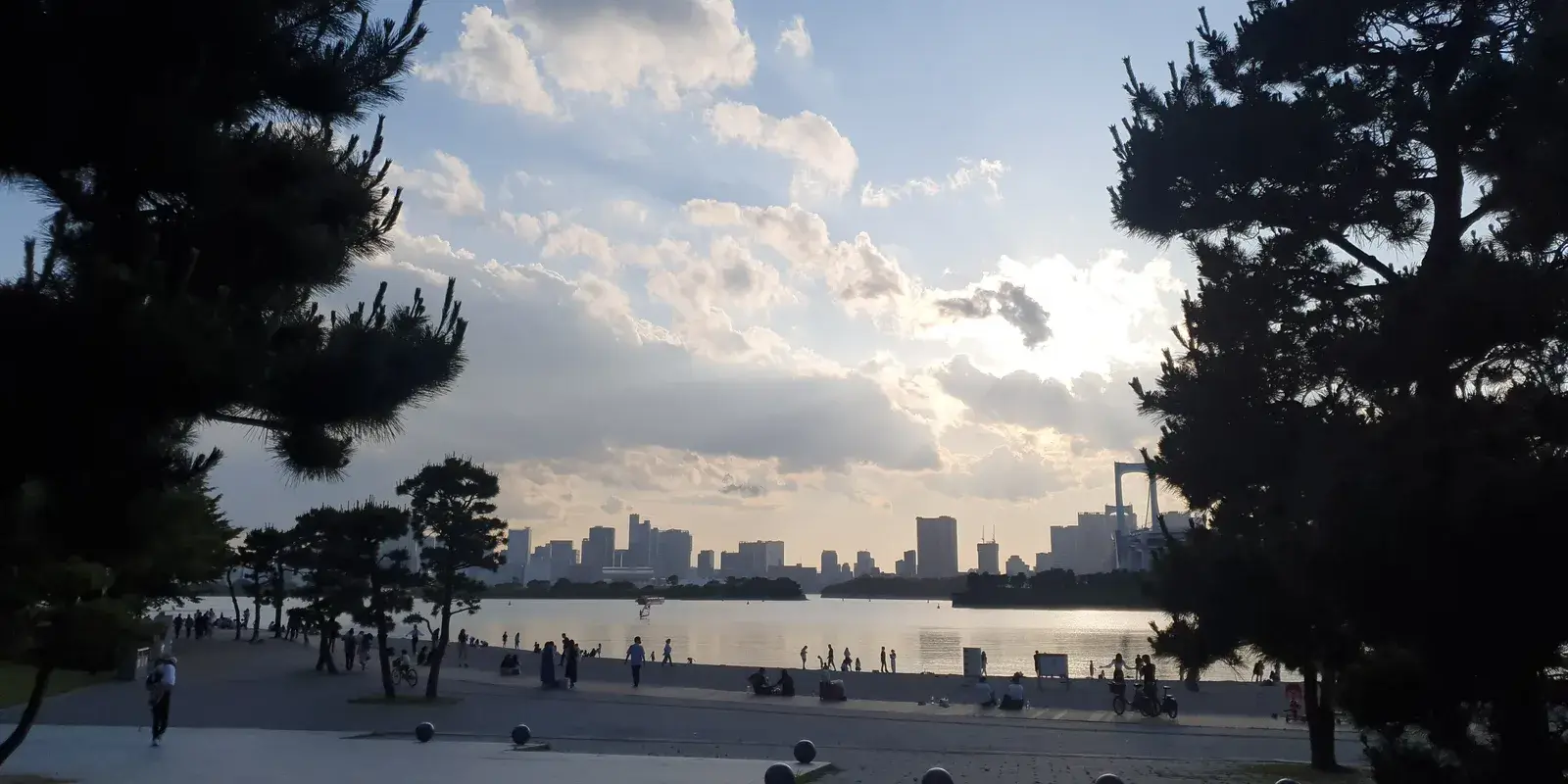
Is Odaiba Worth It? What 169 Real Visitors Say
You arrive expecting the postcard: a neon skyline across the water, a giant robot standing guard, a rainbow-lit bridge stretching out to the rest of Tokyo. Then you ask a Tokyoite what's good in Odaiba and get a wince instead of a recommendation. "There's nothing there anymore," they say, or "it used to be better." So which is it, a futuristic bayside playground or a place that ran out of steam without anyone announcing it?
Short answer first, because you can decide the rest of your afternoon around it: most first-time visitors still find a full, worthwhile day there. The people who feel let down are almost always comparing it to an Odaiba that no longer exists.
Is it worth a visit? (in visitors' own words)
We gathered voices from international travelers discussing Odaiba on Reddit, people asking for day-trip advice, comparing notes after a visit, arguing about whether it's still worth the trip. Here is how those 74 voices fell.
The sharpest complaints all come from one kind of person: someone who went before. "I used to love going there for conferences about once a year from 2008 onwards. Venus Fort was a bizarre wander, ToyotaWeb had cheap rides inside," one visitor wrote, before noting most of that is simply gone now. Another, blunter: "It's like a big concrete wasteland of walkways." A returning visitor put the current visit at a fraction of the old one: "Odaiba can be done in half a day or less. It used to be a full day, but a bunch of things closed for redevelopment a couple of years ago."
But that's the minority report. The larger group, arriving with no memory of what Odaiba used to hold, still finds plenty: DiverCity's shops, teamLab Planets a short trip away, Tokyo Joypolis, the Miraikan science museum, an actual sandy beach a short walk from a Tokyo train line. "There's several reasons many international visitors visit Odaiba," one traveler wrote, listing the beach, the Sumida River boat tours that end there, and the shopping malls. Another called it simply "my favorite place to be in Tokyo." Even one of the most frustrated voices, mid-complaint about the ongoing construction, ended on the same note everyone eventually reaches: "Odaiba should be a destination again after it's all done" once the current building work wraps up.
What the people who remember it say
Guides rarely show you what Japanese visitors and Tokyo residents actually say about Odaiba, in their own words, on Japanese Q&A boards and jalan reviews of the Marine Park itself. It's a more pointed conversation than the one foreign travelers are having, and it explains exactly where that red slice above comes from.
The Japanese red bar is nearly twice the width of the foreign one, and the reason isn't that Odaiba treats locals worse. It's that locals have a longer memory to measure it against. "No new facilities have opened. Venus Fort and the Ferris wheel are gone, the Museum of Maritime Science isn't running either," one answer on a Japanese Q&A board reads. Another put it flatly: "There's really nothing in Odaiba, huh. It's surprisingly shabby for being in Tokyo." A third, who grew up nearby, traces a longer arc and lands somewhere calmer: "When I was in elementary through middle school, it felt even more deserted than now." Her actual conclusion, after cataloguing what came and went over twenty years, is that Odaiba has always been "a half-baked tourist spot." It never really changed; it was always this. That's a hometown's honest accounting of a skyline that used to promise more.
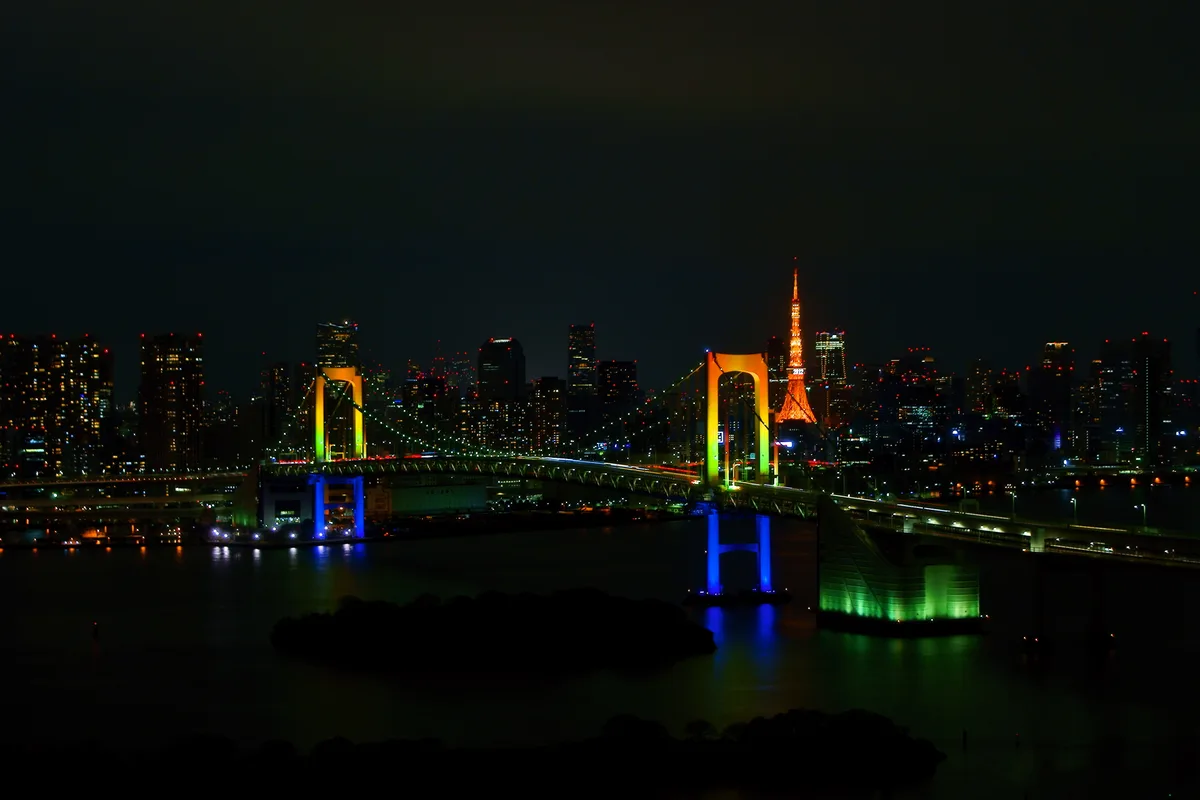
And plenty of the same reviewers still go, and still love it. "On a clear winter day, it's perfect for relaxing while taking in the cityscape," wrote one, while another described the Marine Park as "one of the spots in Tokyo where you can really breathe out." One woman in her sixties wrote that "the night view of the Rainbow Bridge from Odaiba Marine Park is the best," the same view that shows up in review after review as the one thing that never gets old. The warmth is real. It's simply pointed at what's still standing.
What we wish you'd noticed
The decline is real, dated, and mostly a single construction project. Between late 2021 and August 2022, Odaiba lost a run of attractions in one redevelopment sweep: the Toyota Mega Web showcase and Zepp Tokyo closed at the end of 2021, VenusFort's 22-year run ended March 27, 2022, and both the 115-metre Giant Sky Wheel and teamLab Borderless, then only four years old, closed August 31, 2022, to make way for a large-scale rebuild of the site. That's what every Q&A-board answer above is actually mourning. It's a specific, dated project, not a slow fade, and teamLab didn't vanish when it closed in Odaiba: it reopened as a permanent exhibit at Azabudai Hills in central Tokyo in February 2024. teamLab Planets, a separate exhibit, remains open in Toyosu, one stop away.
Something did open back up, and it's recent. Odaiba Seaside Park now hosts Tokyo Aqua Symphony, a free outdoor fountain, light, and music show that opened in March 2026. If your only research is an older Reddit thread or a Japanese Q&A-board answer from a year or two ago, you won't know it exists yet, which is exactly why so many of the "nothing new here" complaints above are already a little out of date.
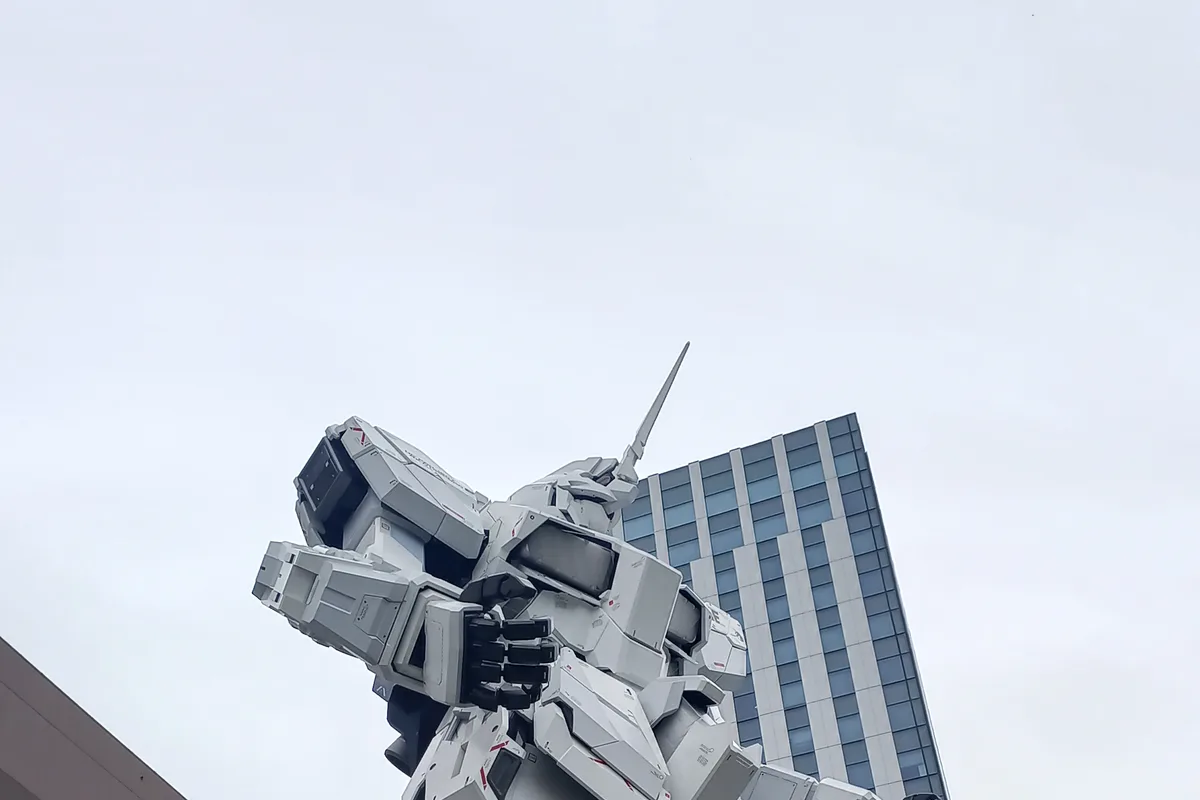
One landmark just changed again, three days before this was written. The life-size Unicorn Gundam that anchors half the positive quotes above stood outside DiverCity Tokyo Plaza from September 2017. Its display ended on August 31, 2026, after nearly nine years, with a new "Gundam Landmark" project announced but not yet dated or located. If you came here planning your day around seeing it, that plan needs updating; if a future visitor reads this a year from now, check what's replaced it before you go. It's a small, almost funny proof of the whole point of this page: Odaiba rewards checking the date on your information.
What's still there is more than a rumor of a mall. DiverCity Tokyo Plaza, AQUA CiTY, and DECKS Tokyo Beach are all open; DECKS holds Tokyo Joypolis and the LEGOLAND Discovery Center, plus Odaiba's arcade and Showa-retro corners. The Miraikan science museum, the Statue of Liberty replica (a temporary 1998 tribute to French-Japanese relations, made permanent in 2000), and the Rainbow Bridge itself, walkable in about 30 minutes, are all unaffected by any of the above. None of it closed. It was simply overshadowed, in the retelling, by what did.
Doing it well, the welcomed way
- Let go of the Venus Fort era before you arrive. If you never saw the old Palette Town, you have nothing to be disappointed by. Treat Odaiba as it looks today; the 2010s photos still circulating online are out of date.
- Check what's current before you plan around any one landmark. The Gundam statue is the clearest example: it was there for nine years, then it wasn't. Confirm opening status, especially for anything free-standing outdoors, close to your travel date.
- Check whether Tokyo Aqua Symphony is running that evening. It's free and new, at Odaiba Seaside Park.
- The waterfront is what people keep coming back for. In both gauges above, the single most-loved thing by a wide margin is simply the water: the sand, the sea breeze, the Rainbow Bridge lit up after dark. None of that was part of the 2022 closures.
- Go at golden hour or after dark for the bridge. Reviewers on both sides of the language line single out the same window, roughly sunset through early evening, as when the view earns its reputation.
- Budget half a day unless you're adding the beach and a meal. Several visitors who'd been before put the redeveloped area at three to four hours; pair it with Toyosu or another nearby waterfront stop.
- If you're chasing 90s and 2000s nostalgia specifically, adjust the plan. That version of Odaiba is gone for good. What replaced it is smaller, but it isn't empty.
The grief above belongs almost entirely to people who saw what stood there before, whether that's a shopping mall closed in 2022 or a robot removed last week. Most first-time visitors still walk out at dusk with roughly the picture they came for: a wide bay, a lit-up bridge, and a Tokyo skyline that looks nothing like the rest of Tokyo.
Planning the rest of a Tokyo trip? Toyosu and Tsukiji and Shibuya Crossing get the same honest-numbers treatment here, and what actually matters in Japan is a good place to begin.
Sources
- GO TOKYO (Tokyo Metropolitan Government), A guide to Odaiba – Tokyo's entertainment island: official area guide (updated September 1, 2026); Tokyo Aqua Symphony fountain show opened at Odaiba Seaside Park in March 2026; Statue of Liberty replica erected 1998, made permanent in 2000; Rainbow Bridge walk takes about 30 minutes; current facilities including AQUA CiTY, DiverCity, DECKS Tokyo Beach, Tokyo Joypolis, LEGOLAND Discovery Center, and Miraikan.
- GO TOKYO, teamLab Planets TOKYO: official listing confirming teamLab Planets TOKYO remains open in Toyosu.
- teamLab, official Tokyo page: teamLab Borderless is a permanent exhibit at Azabudai Hills, Tokyo, reopened February 9, 2024.
- GUNDAM Official Website, announcement (2026-05-15): the life-size Unicorn Gundam statue at DiverCity Tokyo Plaza, on display since September 2017, ended its display at the end of August 2026; a "Gundam Landmark" project was announced with details to follow.
- The Mainichi, "Tokyo's VenusFort mall in Odaiba holding farewell events ahead of March 2022 closure" (2021-11-05): VenusFort opened 1999, closed March 27, 2022, as part of the sequential closure of the Palette Town complex.
- Time Out Tokyo, "These major Tokyo attractions are closing down permanently in 2022" (2022-01-17): Mega Web Toyota City Showcase and Zepp Tokyo closed end of 2021; teamLab Borderless (opened 2018) and the 115-metre Giant Sky Wheel, both part of Palette Town, closed August 31, 2022.
WMJS is written in Japan, in English, with AI help. We check every page, but English is not our first language. If a sentence reads oddly, tell us. One sentence is enough.
Thank you. A person reads every note.
How well do you know Japan?
Built from 635 public posts by Japanese people
Want to know more? Ask Japanese people
Have a follow-up question about this topic? We'll ask real Japanese people.
Voice Box →