
Is Ginzan Onsen Worth It? What the Photograph Doesn't Show You
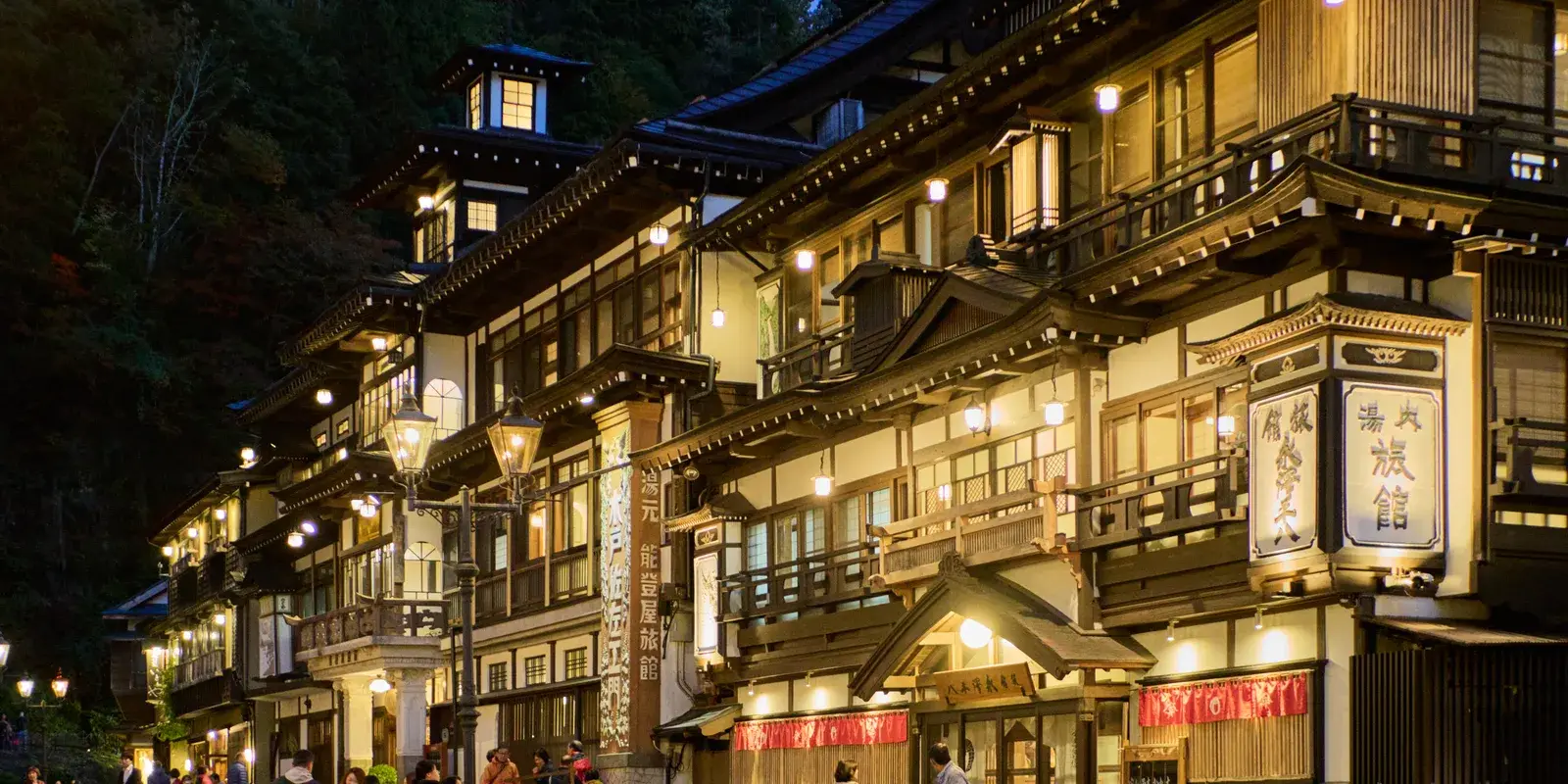
Ginzan Onsen sits deep in the mountains of Yamagata, at the end of a trip that runs about three hours and twenty minutes by Yamagata Shinkansen from Tokyo to Oishida Station, then another 35 minutes by bus into the hills, with buses running only about once an hour. Almost nobody who has actually been disputes that the row of Taisho-era ryokan along the Ginzan River, lit by gas lamps once the sun goes down, is one of the prettiest sights in the country. The argument that actually plays out in the reviews turns on something else: whether you came for the photograph or for the evening, because at Ginzan those turn out to be two different trips.
Cars do not reach the town itself. The gaslights and the absence of motor vehicles are part of what keeps the atmosphere intact, and in practice that means parking at Taisho Roman-kan, a rest stop and shop a short drive before the valley, then walking in or riding a shuttle the rest of the way. For a few months each recent winter, that everyday arrangement has been formalized into a car-restriction and park-and-ride demonstration, with timed shuttle buses fixed at six round trips an hour carrying roughly 180 people an hour each way. Obanazawa City ran the most recent demonstration from December 20, 2025 to January 31, 2026, and the local ryokan association took it over from February 1 through March 1, 2026; the city's own notice confirms it ended on schedule that day, and as of the page's last update in April 2026, no dates had been posted for a repeat this coming winter. Check the official notice fresh before you plan a snow-season trip, since the exact dates and rules have moved season to season.
Is it worth it? (in visitors' own words)
We gathered the voices of international travelers who have actually been to Ginzan Onsen and asked, in effect, was it worth the trip out? Weighted by how strongly each opinion landed with other readers, here is how they fell.
Read the shape of it and the split makes more sense than the numbers alone suggest. The green third is almost entirely people who stayed the night. One traveler called the winter view "the only thing I have seen in life that I can describe as truly breathtaking" and, after nearly talking themselves out of the trip over the inconvenience, decided "it was one of the most rewarding sights and experiences I've had." Another, weighing a rushed overnight against cutting the visit short, put it plainly: "if Ginzan is calling you, it's worth it…", especially, they added, in autumn when the gorge colors are at their best. A third, who went years ago before a rail pass got more expensive, wrote that a night of soft snow "was magical and so very worth it, and I'm not even a big Ghibli fan."
The neutral third has already made peace with the town itself. What they're doing instead is arithmetic on a single evening: whether the trains and the wait are worth it for the hours you actually get. One traveler mapped out an entire day-trip train schedule down to the minute and then admitted "I'm not sure if visiting an onsen town for what amounts to 5 hours tops is worth that much hustle, even if we are talking out as picturesque as Ginzan Onsen." Another was blunter about the trade-off: "Ginzan Onsen is only worth it in winter (with snow) and if you can get an overnight stay, with the utter madness of the crowds these days."
The red third mostly says that same math came out badly for them. A visitor who compared it directly to Fushimi Inari wrote that it was "absolutely packed. When I say packed I mean Fushimi-Inari packed, we literally had to queue in our cars to get into the parking lot!" Another called it "Completely soulless. Everything there exists to suck money from tourists…" A third, weighing repeat onsen towns against each other, landed on "Ginzan is definitely a one night an GTFO ryokan town." One skeptic also pushed back on the town's most famous rumor, arguing that "all claims about inspiring Spirited Away seem to be self-claimed for PR, rather than being true." That is a fair caution: the film's actual inspirations are disputed, and Ginzan's own drama credential, a shoot for the NHK series Oshin, needs no embellishment.
Look around
See it at street level
Along the Ginzan River, facing the Notoya inn about 50 m ahead.
Street View shows one day. Crowds, construction and seasons change the scene.Open in Google Maps ↗
How the people soaking beside you feel
English-language guides tend to lean on the Reddit threads alone. Add in the reviews Japanese visitors leave on jalan and 4travel, in their own words about the same streets, and the picture shifts.
Japanese reviewers almost never ask whether Ginzan is worth going to. One visitor, describing an afternoon-to-evening visit in careful detail, wrote it out as a plain fact rather than an opinion: "During the day, the hot spring town was extremely crowded with day-trip tourists, including many from overseas. In the evening, after the day-trippers left, overnight guests in yukata came out and many were seen photographing the lit-up townscape. The night view of the hot spring town has a beauty all its own." Another described the same transition in fewer words: "I soaked my feet in the footbath while watching the Hanagasa Ondo dance. The illuminations matched the inn beautifully and I was captivated."
Their neutral band is built almost entirely from logistics. Parking fills fast on holidays, so many visitors get redirected straight to the shuttle from Taisho Roman-kan before they ever reach the valley. Shops keep short hours; more than one reviewer arrived to find the tofu shop already sold out or the souvenir stores shuttered for the night. And a good number simply wish they had timed the crowds better, arriving before the tour buses at midday or after them in the early evening.
The honest letdowns cluster around one specific frustration: bathing. Several visitors wanted to soak in the actual hot spring as day-trip guests and discovered how little of the town supports that. One wrote plainly, "An overnight stay wasn't possible, so I thought I'd at least try a day-use bath, but it turns out most of the ryokan no longer offer that." Another, on a visit built around a single public bathhouse, said "there was only one day-use bathing facility, and it had no charm", calling it simply "a plain public bath. It was disappointing." A smaller number of complaints were about crowding itself, an aging public restroom that hadn't been touched in years, or an unhelpful moment at the tourist information counter. Read together, the complaints have less to do with whether Ginzan is worth the trip than with which trip you actually booked.
The same coin, seen from two sides
Set the two gauges beside each other and a pattern falls out. The foreign traveler stands outside the decision and asks whether an evening under gas lamps is worth the shinkansen, the transfer, and the odds of a crowded photograph. The Japanese reviewer, who mostly made that call long ago, spends the review instead on the part that actually determines whether the trip lands: get there before the day-trip crowd or after it clears, expect to park outside town and ride in, and don't count on bathing unless you have booked a room. Both sides are answering the same underlying question. The foreign gauge argues about whether. The Japanese gauge, almost without meaning to, keeps handing over the how.
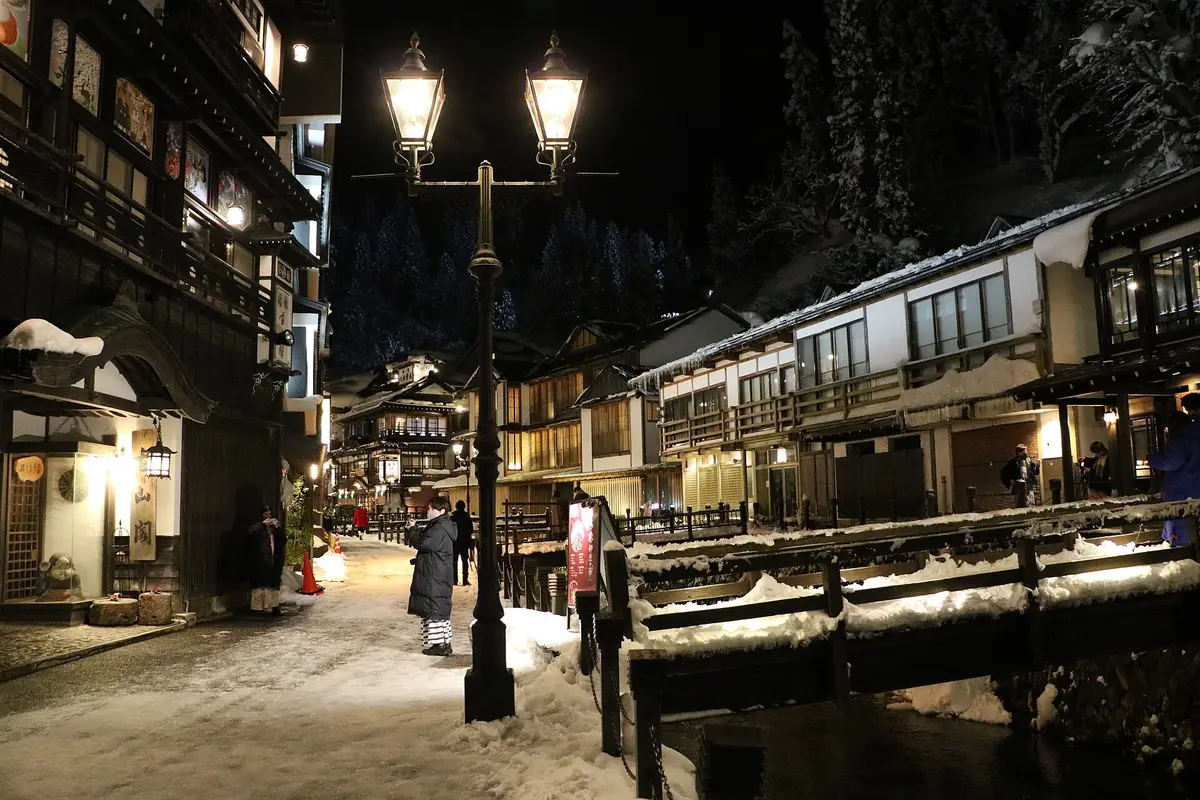
And the how turns out to matter more than usual here, because the two experiences on offer are genuinely not the same trip. A day visitor gets the row of wooden ryokan, the river, and the famous photograph, which is real and does not need an asterisk. An overnight guest gets that plus the hour after the shops close, when the crowd thins toward the parking lot, the gas lamps take over from daylight, and the street becomes, as one visitor put it, a scene "reminiscent of Spirited Away" whatever its actual inspiration. One traveler who arrived late worried they had missed their chance and instead found "the famous hot spring street and waterfall illumination seem to run late": even past 8pm on a weekday, they wrote, "tourists were coming and going like a festival." For most of the people who write about it afterward, the night itself is the whole point of going.
What we wish you'd noticed
The bath is usually not on offer for day-trippers. This is the detail that catches people out. Most ryokan reserve their baths for overnight guests, and the town has only one public bathhouse most reviewers mention, open for a short midday window. If soaking in the hot spring matters to you as much as the view does, that alone may decide whether you should book a room.
No car actually reaches the town, in any season. The narrow valley and its riverside road were built for foot traffic long before anyone worried about tour buses, and even outside the seasonal restriction period you park at Taisho Roman-kan and either walk the last stretch or ride the shuttle in. As one visitor summed up the geography, "the mountain roads leading to it are also quite narrow, with no transportation options other than cars."
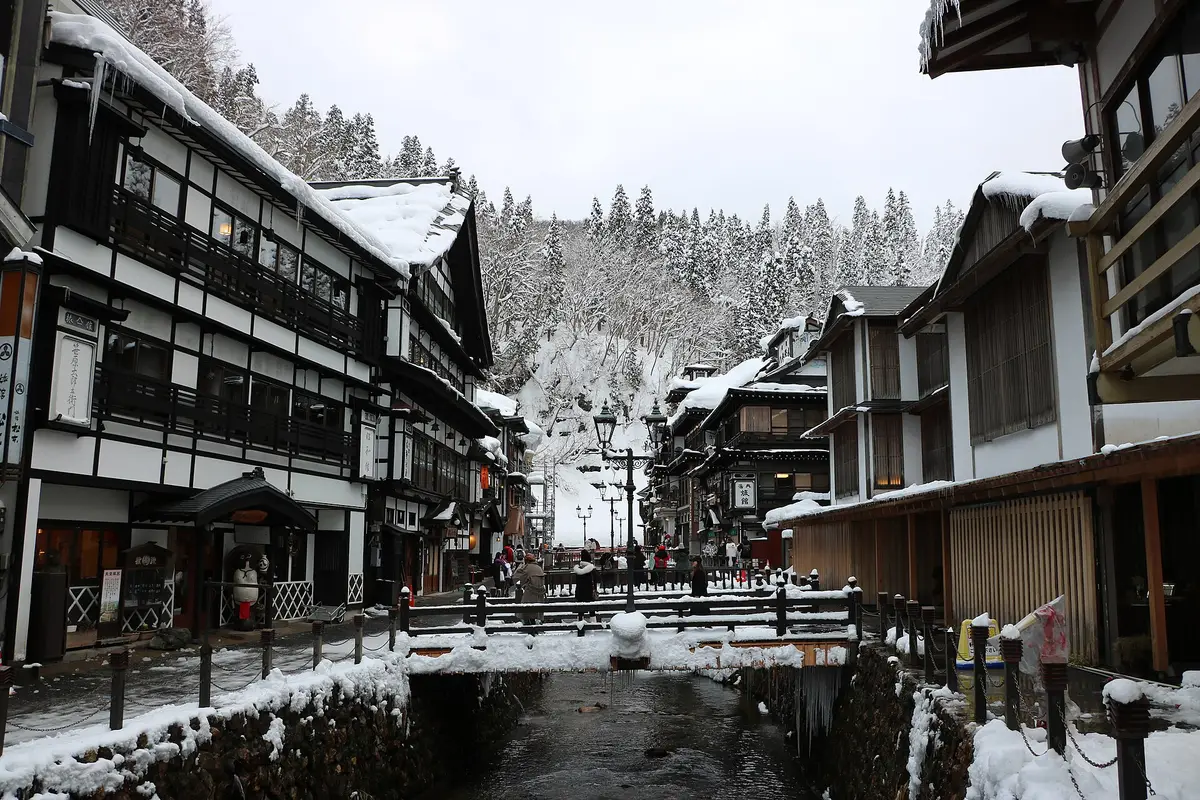
Winter sometimes adds a formal park-and-ride on top of that. In the 2025-26 season it ran December 20 to March 1, with timed shuttles capped at about 180 riders an hour each direction, run first by Obanazawa City and then handed to the local ryokan association for the final month. Whether it returns, and on what dates, is worth confirming on the official notice board before you build a winter itinerary around it.
Oshin is the real filming credit; the other movie is a rumor. The NHK morning drama Oshin used the town as a location decades ago and is the reason many older Japanese visitors recognize it on sight. The Studio Ghibli comparison that circulates online is popular but unconfirmed, and at least one traveler in our research pushed back on it directly as marketing rather than fact.
Bring cash, and check shop hours before you plan your afternoon. Souvenir shops and the tofu stand keep short, sometimes unpredictable hours, several visitors mentioned paying by cash only, and more than one arrived to find the thing they wanted to try had already sold out for the day.
Getting the evening right
- Decide day trip or overnight before you book anything else. Treat them as two genuinely different experiences, each worth planning for on its own terms.
- If the night view is the reason you're going, stay the night. The gas-lit street after the day-trip crowd clears is what most of the strongest reviews, in both languages, are actually describing.
- If you want to bathe and you're not staying over, call ahead. Day-use bathing here is limited to a small handful of options and short hours, unlike some other onsen towns where every ryokan takes walk-ins.
- Build in slack for the shuttle and the walk. Between the shinkansen connection at Oishida, the infrequent local bus, and the walk in from Taisho Roman-kan, the last mile takes longer than the map suggests, especially in winter.
- Treat any seasonal car-restriction dates as provisional. The rules and dates have already changed once between recent seasons, so check the official notice close to your travel dates rather than planning around a schedule you saw months earlier.
The postcard version of Ginzan, gas lamps doubled in the river at dusk, is only ever available to whoever is still there once the shops shutter and the day-trip buses have pulled out. Come earlier and leave before dark, and you still get the same beautiful row of wooden buildings, the river, the walk, just under a different light. The reviews gathered here are mostly people sorting out which of those two visits they actually wanted, and by their own account most of them were glad to know the difference before they booked.
Weighing an onsen town against your itinerary? Start with what actually matters in Japan.
Sources
- Travel Japan (JNTO), Ginzan Onsen (Official): access from Tokyo (Yamagata Shinkansen to Oishida, about 3h20m, then a 35-minute bus), the Taisho-era riverside ryokan, and the gaslights and absence of motor vehicles in the town center
- Obanazawa City, Ginzan Onsen car-restriction demonstration result (Official): confirms the winter 2025-26 car-restriction and park-and-ride demonstration ran December 20, 2025 to March 1, 2026 and ended on schedule
- Ginzan Onsen Car-Restriction Demonstration Project Secretariat, Obanazawa City (Official): the Taisho Roman-kan park-and-ride site, the demonstration period (autumn and winter 2025-26), the December 20-January 31 city-run and February 1-March 1 ryokan-association-run split, and the fixed shuttle schedule of six round trips per hour at roughly 180 riders per hour each way; page last updated April 2026 with no dates yet posted for a repeat
- Government of Japan, "Highlighting Japan" (Official, Cabinet Office public relations magazine, January 2024 issue): confirms Ginzan Onsen's snowy townscape as the filming location for the NHK morning drama Oshin
WMJS is written in Japan, in English, with AI help. We check every page, but English is not our first language. If a sentence reads oddly, tell us. One sentence is enough.
Thank you. A person reads every note.
How well do you know Japan?
Built from 635 public posts by Japanese people
Want to know more? Ask Japanese people
Have a follow-up question about this topic? We'll ask real Japanese people.
Voice Box →