
Is Atami Worth It? What Visitors and Locals Actually Say About Its Most-Doubted Sight
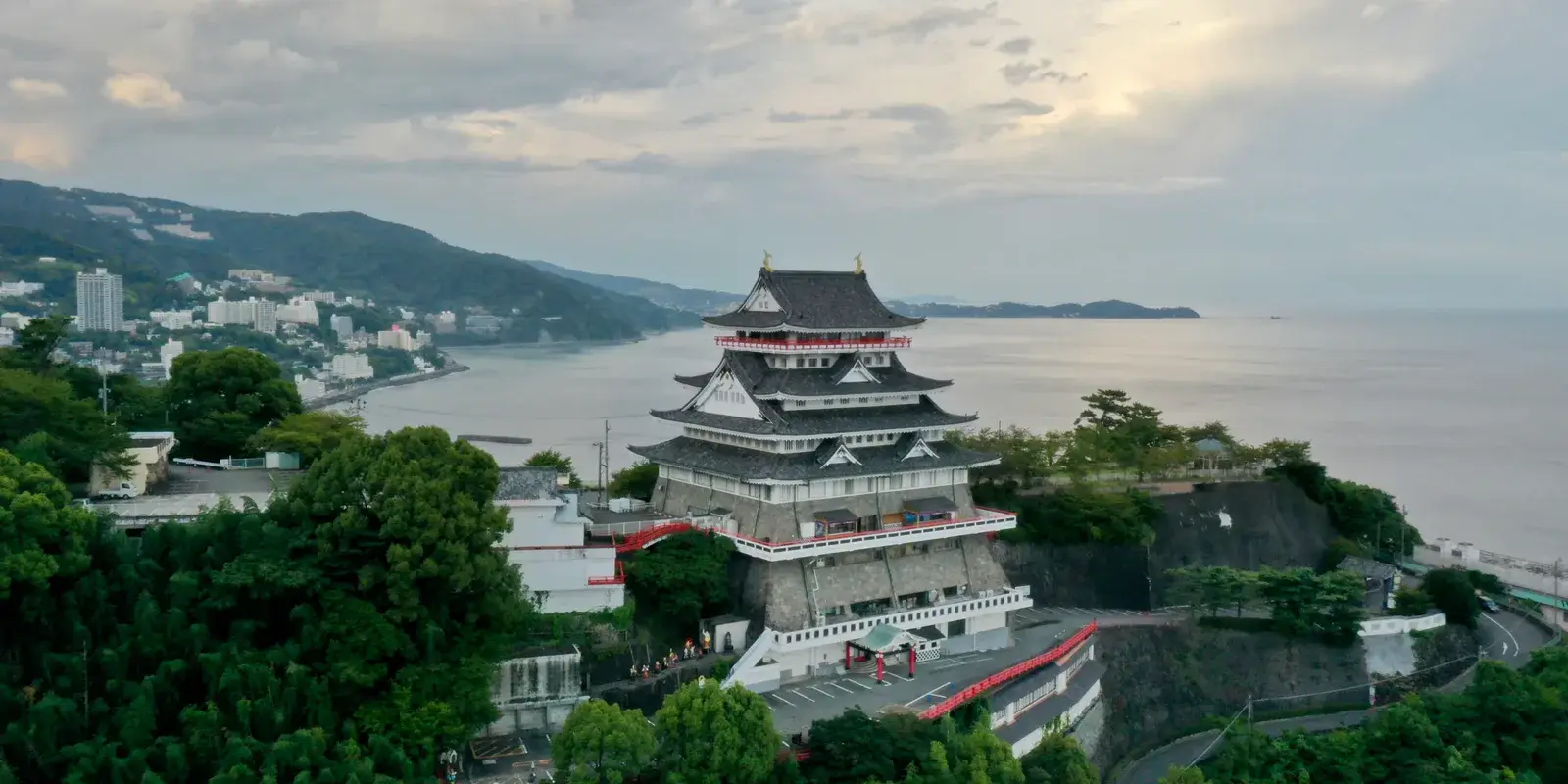
Many visitors learn only once they get up close that Atami Castle is not a historical castle. Unlike many concrete rebuilds that stand on historical castle sites, there was never a castle on this hill until 1959. So the question people ask on Reddit and TripAdvisor is rarely "is the castle authentic" and more often "is Atami worth the trip at all."
Foreign travelers who wrote about Atami on Reddit and TripAdvisor, and Japanese visitors who left their own reviews on Jalan and TripAdvisor, mostly agree that the sea view makes the trip worthwhile once you know what the castle is. Foreign travelers add the onsen town and the retro streets; Japanese reviewers add the free arcade under the castle. Where they differ is how many came away disappointed. About one in five foreign voices did. Among Japanese voices it was one in twenty.
Is Atami worth it? (in visitors' own words)
About one in five foreign visitors were disappointed, and most made the same complaint: it is not a real castle. "It's not really a castle and it's not really worth the trip," one TripAdvisor reviewer wrote, adding that the monkey show right outside the castle was the one thing they really did not like. Another dismissed the keep as "a poor reconstruction of what was perceived to be originally there," though, as the national tourism body notes, there was never an earlier castle here to reconstruct. A visitor from London put it more bluntly: "its not a real castle." Not every red voice is about the castle, either. One reviewer found it "barely worth the fee," and one visitor to the MOA Museum of Art simply found the exhibits did not resonate.
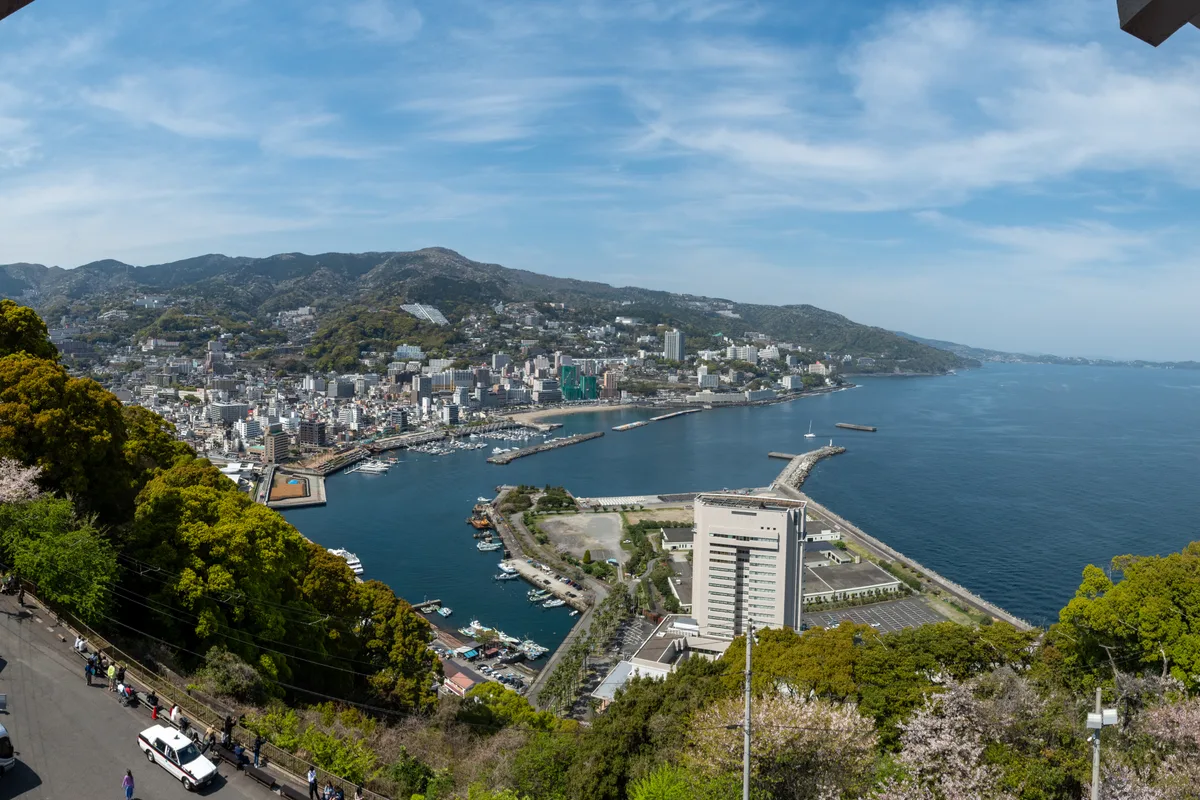
Visitors in the green and neutral groups wrote more warmly, and mostly about the town. One traveler, on a 12-day trip that included Atami, described it as "a bit of a time capsule of Japanese tourism, bursting with exuberant 20th century architecture in various states of rust and revitalization." The same traveler, in a separate post a while later about choosing an onsen town, described watching Atami change over repeated visits: "the town has changed a lot... lots of nice restaurants, dessert shops, and bars have opened up... I can recommend it with fewer caveats now." Another visitor, unimpressed by the crowded downtown beach compared with Hawaii or Bali, still wrote that the draw in Atami, for them at least, was the onsen. Even people who found the castle thin usually found something else worth the detour: the hot springs, the retro seaside strip, and the sea view from the top, which almost nobody disputes.
What Japanese visitors add (the honne)
The red slice among foreign visitors was 22%. Among Japanese visitors it was 5%. The two sets of voices are not built the same way: the foreign side includes 20 Reddit comments about the town, none of them negative, while the Japanese side is mostly Jalan reviews of the castle and the MOA museum, so the percentages are not a like-for-like comparison. Every foreign letdown in this set came from a TripAdvisor review written after the visit. Most of the gap, in their own words, comes from what each group expected before arriving. A handful of Japanese reviewers mention, matter-of-factly, that it was built for tourism in 1959; most do not bring up its history at all and simply write about the view and the games. One reviewer put it like this: "It gives the impression of a Showa-era tourist spot. It's not a real castle, but the keep stands proudly on the high ground, and the view of Atami's town and sea from here is nice. You can also learn some history. Our family originally likes shrines/temples and castles, but surprisingly we ended up enjoying the game corner too" (translated). Several went in expecting little, or expecting an ordinary castle, and were won over by the view and the free basement games.
Some Japanese reviewers name a similar letdown. "The view and scenery are nice, but somehow it's a castle that leaves you feeling a bit sad. Other than the keep, I think it's boring" (translated), wrote one, who added that it looks best from a distance or during the fireworks. One castle-loving family asked their taxi driver how the castle came to be built, and came away deflated: "I was a little disappointed. Only the view from the rooftop was good. For castle lovers like us, it was a letdown" (translated). On the Japanese side those voices are simply outnumbered, both by people who already knew what kind of place it was before they went, and by the free basement arcade, which many Japanese reviewers mention more warmly than the exhibits upstairs. "I went without expecting much," one visitor admitted, "but I enjoyed it a lot and stayed a long time... you could get your money's worth from the admission fee just from the game center" (translated).
What we wish you'd noticed
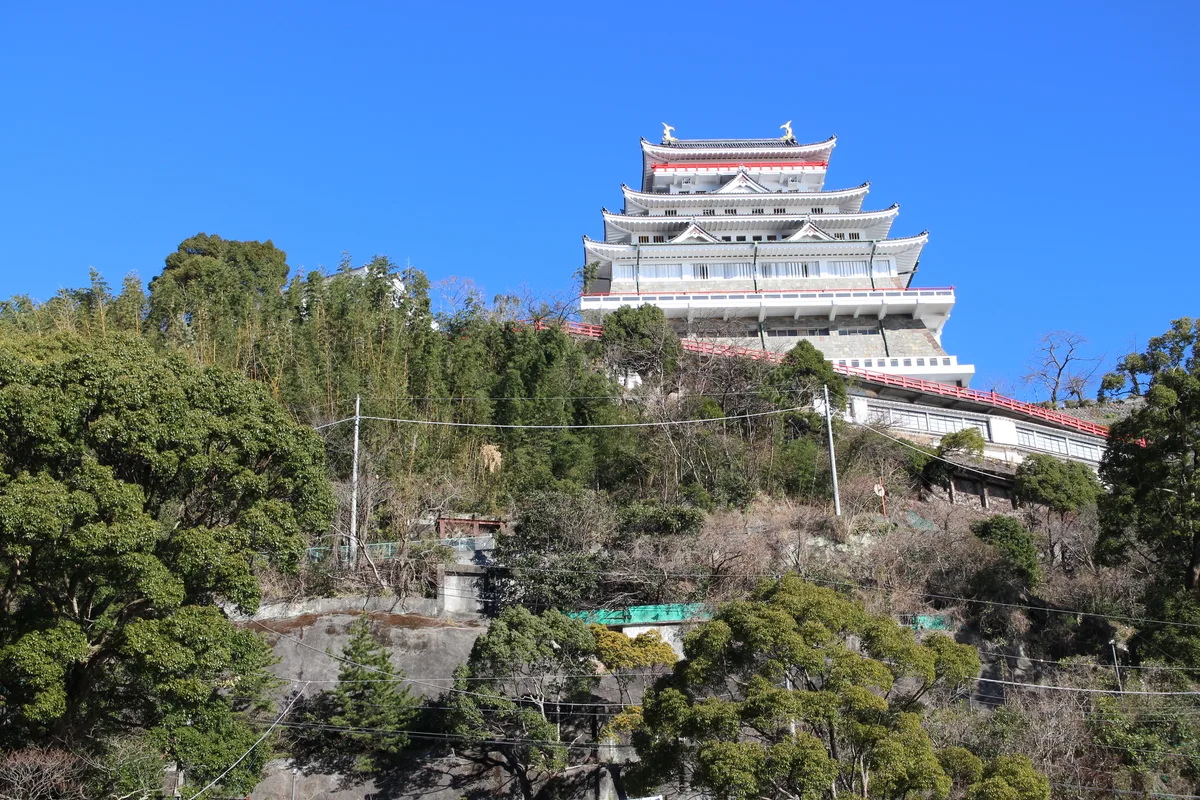
The "fake castle" complaint is true, and the official sources say so openly. Japan's national tourism body describes Atami Castle as a building that "looks deceptively historic" even though it "is one of Japan's newest castles, only dating back to 1959," modeled on the Momoyama architectural style but "not a modern reconstruction of an earlier structure." It was raised, in the tourism body's words, "just to ride the wave of Atami's tourism heyday, and it has always served purely as a tourism facility." The castle's own website tells the same story: according to the operator, the Sengoku-era Hōjō clan who once ruled this coastline wanted to fortify this hilltop and never managed to, and the building visitors climb today only went up in 1959.
The tourism body and the operator both present it as a viewpoint and an entertainment facility. It sits 120 meters above sea level, per both the tourism body and the operator, and the observation deck's 360-degree view reaches Izu Oshima on a clear day, according to the city tourism association. Roughly 200 cherry trees on the grounds, per Shizuoka Prefecture, bloom into a well-known local hanami spot each spring. Inside, alongside armor and sword displays and a room of Edo-period ukiyo-e, including a shunga (erotic art) floor that visitors describe as off-limits to under-18s, there is a sea-view footbath, free massage chairs, and a fully free video-game arcade in the basement that Japanese reviewers single out, again and again, as the real reason to stay past the observation deck. Admission is 1,200 yen for adults, cash only, per the castle's own price list updated in July 2026, or 2,000 yen with a combination ticket for the neighboring Trick Art Maze (Torikku Āto Meikyūkan).
Doing it well, the welcomed way
Decide what you are going up for before you buy the ticket. People who came hoping for a samurai-era fortress were usually the ones who felt let down. People who came for the sea view, the retro theme-park atmosphere and the free arcade tended to enjoy it, per these reviews, and often stayed longer than planned. Several Japanese reviewers came with small children; one grandparent looking for somewhere a two-year-old could play found "a slide, ball pool, and play equipment" included in the castle admission and stayed two hours (translated). Having yen in cash ready at the ticket window keeps the line moving, since admission is cash only, per the operator.
Plan the ride up with the current bus situation in mind. The Yu-Yu sightseeing loop bus that older guides recommend has been suspended on all routes since October 11, 2025 (still the case as of September 2026), according to Atami City and the operator, Tokai Bus. The reliable ways up are the Atami Ropeway, reached by the bus bound for Atami Port and Korakuen from bay 7 of the Atami Station bus terminal (about 10 minutes to the Korakuen terminus), or a taxi. Check for any resumption before you plan around the bus.
Cherry blossom season runs late March to early April for the roughly 200 trees on the grounds. Crowds vary: one reviewer who went late in the day found the castle sparsely visited, and one family found it uncrowded even during Golden Week, while others describe waits at the basement games and a full parking lot. Families with young children may want to know in advance that the shunga floor is marked for adults only, according to visitors, and easy to route around once you know. And several visitors mention enjoying the sea view for free from the grounds outside the castle.
A simple lens for deciding
Reviewers in both languages tend to reach the same conclusion. The castle has little real history to show, and the people who enjoyed it most were the ones who came for the view and the games rather than for history. Among the travelers who wrote about the whole town, not just the castle, the onsen, the retro streets and old inns, and the sea come up far more warmly than the keep itself, so give Atami more than an afternoon if you can.
Still deciding what belongs on a short Japan itinerary? Start with what actually matters in Japan.
Sources
- Japan National Tourism Organization (JNTO), Atami Castle: official government tourism body describing Atami Castle as looking "deceptively historic" while dating only to 1959, built purely as a tourism facility rather than a reconstruction of an earlier structure, standing 120 meters above sea level.
- Atami Castle official site, About Atami Castle (熱海城について): the operator's own account that the Sengoku-era Odawara Hōjō clan wanted to fortify this hill but never did, and that the current building was constructed in Showa 34 (1959) in Momoyama-period style, 120 meters above sea level, with five exterior tiers.
- Atami Castle official site, Guide and fees (ご利用案内): the operator's price list updated July 2026: adults 1,200 yen, combination ticket with the Trick Art Maze 2,000 yen, cash only.
- Shizuoka Prefecture, Atami Castle cherry blossom listing (熱海城): official prefectural data on approximately 200 Somei-Yoshino cherry trees and bloom season (late March to early April).
- Atami City Tourism Association, Atami Castle (熱海城): official city tourism association listing for the 360-degree view reaching Izu Oshima, opening hours (9:00-17:00, last entry 16:30) and parking.
- Atami City, Yu-Yu sightseeing loop bus (湯~遊~バス): city notice, updated October 8, 2025, that all Yu-Yu loop bus services are suspended from October 11, 2025 until further notice.
- Tokai Bus, Yu-Yu bus (湯~遊~バス): the operator's notice of the all-route suspension from October 11, 2025.
- Atami Ropeway, Access: from bay 7 of the Atami Station bus terminal, the bus bound for Atami Port and Korakuen, about 10 minutes to the Korakuen terminus for the ropeway's lower station.
Visitor voices in this article are quoted verbatim from public reviews and discussions by international travelers (Reddit and TripAdvisor) and Japanese visitors (Jalan and TripAdvisor), collected in September 2026. Japanese voices are shown in translation. The percentage gauges summarize every usable first-hand voice we collected about Atami Castle, the MOA Museum of Art and the town; they summarize real voices and are not a survey.
WMJS is written in Japan, in English, with AI help. We check every page, but English is not our first language. If a sentence reads oddly, tell us. One sentence is enough.
Thank you. A person reads every note.
How well do you know Japan?
Based on 51,218+ real Japanese voices
Want to know more? Ask Japanese people
Have a follow-up question about this topic? We'll ask real Japanese people.
Voice Box →