
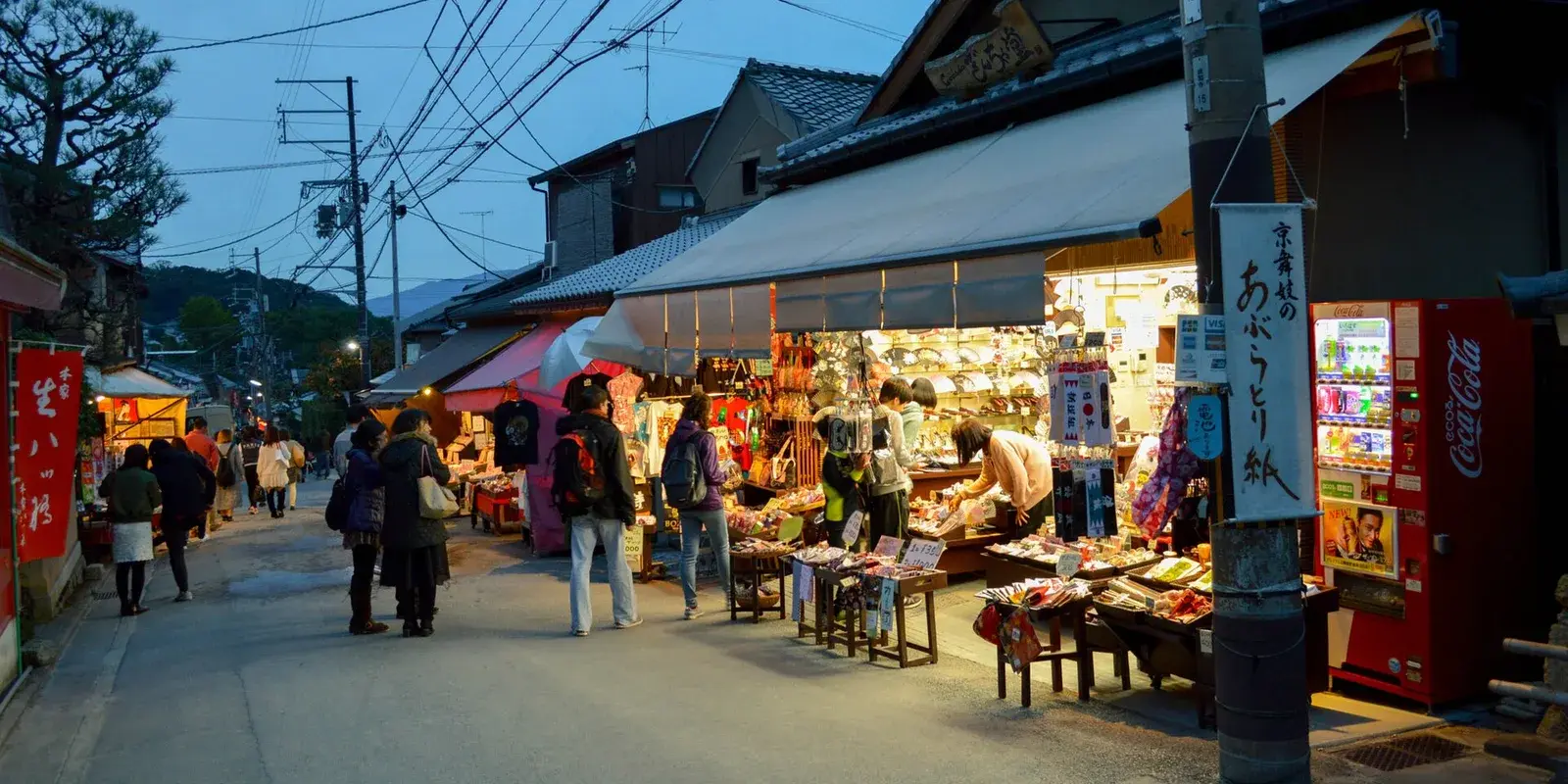
Do Japanese People Really Want Tourists? The Honest Answer
What you'll learn in this article:
- What Japanese people wrote across five angles on welcoming visitors, from pure joy to genuine fatigue
- How welcome and tiredness show up side by side, sometimes in the same post
- What the posts ask of visitors, such as following local manners or learning a little Japanese
Does Japan welcome tourists? Of the 90 posts we collected in which Japanese people write about welcoming visitors, 33 (37%) are positive about them, 35 (39%) are negative, and 22 (24%) are mixed or neutral. Of the 67 posts about where the strain of tourism comes from, 24 find the crowding itself hard to bear, 10 of them about city buses, while 12 say individual visitors aren't the problem. We searched for both sides on purpose, so these counts cannot say how common each feeling is.
If you're planning a trip to Japan, there's a decent chance one worry is sitting quietly underneath all the others: am I actually wanted here, or am I just being tolerated? Headlines about overtourism make it sound like the whole country is exhausted. Travel guides make it sound like everyone is thrilled to see you. Neither is quite true.
We wanted the real answer, so we collected 335 Japanese-language responses from public platforms. Not a single opinion, but a spread of them, from the same country and often the same people. What we found wasn't a split between "welcoming Japan" and "hostile Japan." It was something more human: welcome and tiredness sitting inside the same person at the same time, and a set of small conditions that decide which one you get to see.
Quick Guide
| Angle | What Japanese People Said | |
|---|---|---|
| 🟡 | Welcome and fatigue coexist | Of 90 posts, 33 (37%) are positive about visitors, 35 (39%) are negative, and 22 (24%) are mixed or neutral. |
| 🟢 | The conditions of welcome | Of 52 posts on what makes a visitor welcome, 24 (46%) are positive about visitors and 20 (38%) are negative. 7 of those 20 ask visitors to follow local manners or learn some Japanese. |
| 🟡 | It's the numbers, not you | Of 67 posts on where the strain comes from, 12 (18%) say individual visitors aren't the problem, 31 (46%) discuss it in general terms such as how crowds concentrate, and 24 (36%) find the crowding itself hard to bear, 10 of them about city buses. |
| 🟡 | The people who serve you | Of 71 posts about serving visitors, 22 (31%) are positive about it and 28 (39%) are negative, 19 of them describing a burden such as language strain, longer interactions or thinning patience. |
| 🟡 | Welcome shifts by generation | In one Tokyo ward's survey, people in their 20s were almost twice as favorable toward rising foreign-resident numbers as people 70+ (52.9% vs. 26.9%). A grandmother priced out of a trip she'd dreamed of for years shows the sharper edge of that gap. |
The one thing to remember: the fatigue you might sense in a crowded city isn't a verdict on you. It's a reaction to volume and to a small number of visible behaviors, and both are things a considerate traveler simply isn't part of. Meet a few basic conditions, and the door to genuine welcome is already open.
How We Gathered These Voices
We collected 335 Japanese-language responses across five angles: whether welcome and fatigue coexist in the same people (90 responses), what conditions make visitors feel genuinely welcome (52 responses), whether the strain is about visitor numbers rather than individual visitors (67 responses), how service workers who deal with visitors directly actually feel (71 responses), and how the sense of welcome differs by generation (55 responses). We gathered these from public Japanese Q&A sites, forums, blogs, and social platforms, alongside a Shinjuku Ward multicultural-coexistence survey and a nationwide consumer survey.
A quick note: this isn't a controlled scientific survey. It's a collection of what real Japanese people said, in their own words, on public platforms. Coverage articles tend to flatten this into "Japan is tired of tourists." We wanted to show the texture underneath that headline, including the parts that don't fit a simple story.
🟡 Welcome and Fatigue, Living in the Same Person
The honest structure isn't "welcoming people" versus "hostile people." It's both feelings, in the same person.
Of 90 responses on whether Japanese people feel genuine welcome, fatigue, or both toward the current wave of visitors:
The clearest, simplest version of the welcome side:
日本で楽しそうにしてる外国人を見るのが好きなんですが、東京の観光地で観光客がいっぱいいるのってどこら辺でしょうか? I like seeing foreign visitors looking like they're having a great time in Japan. Where in Tokyo are the sightseeing spots most full of tourists right now?
And the clearest version of the strain:
外人だらけ。 疲れませんか? It's full of foreigners everywhere. Doesn't that get tiring?
But the voices that matter most here are the ones that hold both feelings in a single breath:
嫌いじゃないよ! 来てもらえるおかげで地元の商売も成り立ってるし、楽しんでいって欲しいしまた来てほしいなって思うよ。(ただし良識ある観光客に限る) I don't dislike it! Local businesses survive because visitors come, and I genuinely want them to enjoy themselves and come back. (As long as they're considerate about it.)
うざいなあっていう一時的な感情は否定できないけど、そのおかげで生活できてるし成り立ってる面もあるので感謝してます I can't deny the occasional "ugh, this is annoying" feeling, but my livelihood depends on it too, so I'm genuinely grateful.
That second quote earned an unusually large amount of agreement from other commenters. It's the kind of comment that lands because everyone quietly recognizes the same split feeling in themselves. One writer, describing a hot-spring town, put the coexistence even more plainly:
温泉の泉質は最高だし、コンビニのおばちゃんも、お昼を食べたピザ屋さんの店員さんも優しくて感じが良かったが、正直『もう来ることはないかも』と思ってしまった。 The hot spring water was wonderful, the woman at the convenience store was kind, the pizza place staff were friendly. But honestly, I found myself thinking "I probably won't come back."
訪日観光客が過去最多。町はにぎやか、でも暮らす私はちょっと疲れている。 Visitor numbers have hit a record high. The town feels lively, but as someone who lives here, I'm a little tired.
Even the most tired-sounding voices we found rarely reject visitors outright. One resident, quoted in local reporting, put it as bluntly as anyone did:
「正直言うて、もう来てほしありません」 "Honestly, I don't want any more people coming."
That voice is real and worth taking seriously. It's the 39% in the gauge above. But it sat alongside dozens of others describing the exact same crowded streets with warmth, gratitude, or a shrug. The difference wasn't the visitors. It was the day, the crowd size, and, as the next two sections show, a set of specific, learnable conditions.
💡 It's not two Japans
There isn't a "welcoming Japan" and a "tired Japan." There's one country where most people feel some version of both: grateful for what visitors bring, worn out by how many of them there sometimes are. That isn't a contradiction. It's just what living somewhere popular feels like.
🟢 The Conditions of Welcome
The "conditions" for genuine welcome are not complicated, and most visitors already meet them.
Of 52 responses specifically about what separates a warmly-received visitor from a resented one:
The top-voted response to a public Q&A question asking "are foreign tourists really bad-mannered?" laid out the conditional-welcome structure almost perfectly:
多くの外国人観光客さんはちゃんとルールを守りますし、配慮を忘れてはいません。日本=キレイで皆がルールを守っている国である、みたいな印象が強いためだと思います。もちろん全ての行動が文化的に正しいかと言われると厳しいけど、それでも日本のことをリスペクトしながら行動してくれている感じが伝わってきます。そうやって配慮してくれる人がいる一方で品性に欠ける行為をする人がいるのも事実。そういう人たちが目立ってしまうから「海外客はマナーが悪い」という風潮が広がってしまっているんですよね。 Most foreign tourists really do follow the rules and stay considerate. I think it's because Japan has this strong image of being clean and rule-following, so people try to respect that. Not every action is culturally "correct," sure, but you can feel that most people are trying to be respectful of Japan. That said, there are people who behave poorly, and it's true. Because they stand out, it creates this impression that "foreign visitors have bad manners," even though that's not really the majority.
When people did describe frustration, it was almost always about specific, nameable behaviors rather than visitors as a category:
低身長者が使う踏み台の上に座りながら スマホを操作する若い観光客 ・電車の中で大声で電話、雑談(複数回) ・某ディスカウントストアにて 店内を無断撮影(他の日本人客も居るのに) 全員では無いけどそう言う人って余計に目立ってしまう。 Sitting on the step-stool meant for shorter shoppers while scrolling a phone. Talking loudly on the phone or chatting on the train (multiple times). Taking photos inside a discount store without asking, even with other Japanese customers around. It's not everyone, but people like that stand out disproportionately.
Others pushed back on the idea that this is a "foreigner" problem at all. It's a manners problem, full stop:
旅行者のマナーなんてどこの国でもそんなもん もちろん良くはないけど、日本人も他国で迷惑かけてるよ Traveler manners are like that in every country. Not great, sure, but Japanese tourists cause plenty of trouble abroad too.
And one commenter made the case that the responsibility isn't entirely one-sided, that a quiet, direct word in the moment usually works:
日本人がその場で注意しないのも悪いと思う。英語で並べとか注意したらだいたい通じるし。事なかれ主義が奴らを図に乗らせてるんじゃない? I think it's partly on Japanese people too, for not saying anything in the moment. Even a simple "please line up" in English usually gets through. Isn't it our own conflict-avoidance that lets it slide?
The pattern across all 52 responses is remarkably consistent. Nobody is asking for perfection. The recurring conditions were small and concrete: follow posted rules, keep your voice down in shared spaces, ask before photographing people, don't hold up a line. None of it requires fluent Japanese or deep cultural study. It requires the same baseline courtesy you'd show anywhere, applied with a little extra attention. What Actually Matters breaks this down further, and Your First Week in Japan covers the basics day by day.
💡 The bar is lower than you think
The conditions Japanese people actually describe aren't about mastering etiquette. They're about the same baseline courtesy you'd show anywhere: rules, volume, asking before photos, applied with a bit of extra attention. That's the whole "test."
🟡 It's the Numbers, Not You
When Japanese people explain their own fatigue in their own words, they rarely blame the visitor standing in front of them.
42 Million Visitors already covers the infrastructure data behind Japan's visitor surge in detail. What's worth adding here is smaller and more personal: how Japanese people themselves explain the frustration, unprompted.
Of 67 responses specifically addressing whether the frustration is about visitor numbers or about visitors themselves:
One of the clearest statements of this whole article's core idea came from someone answering "do you actually want foreign tourists gone?":
お金落としてくれる短期観光客は歓迎ですよ。99.99%は人が多いというだけの観光客です Short-term visitors who spend money are welcome. 99.99% of the "problem" is just that there are a lot of them.
The frustration that does exist is usually pointed at infrastructure. A recurring complaint was about buses in popular cities:
市バスは観光客で満杯になってるから地元民が乗れない。 The city buses are so packed with visitors that residents can't get on.
Even that frustration gets redirected toward the system once people think it through:
『観光客が多いこと』そのものを否定することではない。キャパシティを把握せず、コントロールしないまま人が集中する構造が問題なのである。 This isn't about denying that there are a lot of visitors. The real problem is a structure where crowds concentrate without anyone tracking or managing capacity.
A few voices pointed to causes that have nothing to do with visitor behavior at all, currency exchange rates among them:
10年前(2015年1月)の『1ドル120円』くらいに戻れば、旅行客も減ると思う If the exchange rate went back to around ¥120 to the dollar, like ten years ago, I think visitor numbers would drop on their own.
And one commenter pointed out something quietly generous: the behaviors people complain about, like carrying a lot of luggage or moving slowly through a station, aren't really about being a tourist at all:
日本人でも公共交通機関で旅行しようとすれば荷物が多くなります。 Even Japanese people end up with a lot of luggage when they travel by public transportation.
That's the pattern worth carrying with you: when Japanese people reach for a reason, they reach for a bus schedule or an exchange rate before they reach for a complaint about you. For a closer look at how Japan is managing that capacity (daily caps, dual pricing, accommodation taxes), Is Japan Overtouristed? covers the policy side of this same story.
💡 A bus doesn't hold a grudge
Ask Japanese people what's actually straining, and the answer is usually a number, not a person: bus capacity, hotel supply, an exchange rate. Not a character flaw in anyone stepping off a plane.
🟡 The People Who Serve You
Service workers who deal directly with visitors carry the clearest version of "welcome and tired at once" of anyone in this data.
Of 71 responses from people working in hotels, restaurants, retail, and transit about their experience serving international visitors:
On the rewarding side, one part-time worker described a moment that stuck with them long after the shift ended:
『あなたの接客はよかったわ、もしスイスに来ることがあったら案内したいわ』そう言われ抱きつかれました。日本人相手の接客にはない感動がありました。 "Your service was wonderful. If you ever visit Switzerland, let me show you around." She said that and hugged me. It was a kind of moving moment I never get serving Japanese customers.
Another described turning a language gap into something closer to a game, matching English back to a customer mid-conversation and quietly celebrating small wins:
日本語だと理解するのに時間が掛かるかな?誤解しないかな、という内容は英語で話す。すると相手もスラスラ英語で返してくる。「よし!ナイス判断!」と心の中でガッツポーズ。 If something might take too long to explain in Japanese, or risk being misunderstood, I say it in English instead. Then they answer fluently back in English, and inside my head I'm pumping my fist, "yes, good call!"
But the burden side is just as real, and it's specific: language strain, physical crowding, and a sense that the job itself has quietly changed shape. One person who spent 24 years working at a hot-spring shop described why they finally left:
ど田舎の温泉で寮に入って売店係としてコツコツ働いてましたが、外国語が習いに行っても話せるようにならず、インバウンドが増えて肩身が狭くなってきたため24年勤めてましたが退職しました I worked steadily at a rural hot-spring shop for years, living in the staff dorm. I tried to learn a foreign language but never got fluent, and as international visitors kept increasing, I started feeling more and more out of place. After 24 years, I left.
Another described the physical reality of a shift when the vast majority of customers are visitors:
観光客の90%以上が外国人。バイトのエプロンをつけた途端に外国の観光客さんたちに詰め寄られ、時には服を引っ張られ、もみくちゃにされ、日本の文化どころじゃない。 Over 90% of the customers are international visitors. The moment I put on my part-time apron, I'd get swarmed. Sometimes my clothes got pulled, I'd get jostled in the crowd. Nothing like the polite image of Japanese service culture I'd imagined.
And one comment cut straight to a structural complaint about front-desk work handling international guests at part-time wages:
ほんとだよ安ホテルのフロントで外国人対応なんて、パートでやりたくない。正社員がやるべき Seriously, handling international guests at a budget hotel's front desk shouldn't be part-time work. That should be a full-time employee's job.
Read together, these 71 voices describe something more specific than "hospitality" or "burnout." They describe the cost side of a job that can also be genuinely rewarding. For what pulls people toward that job in the first place, the mindset behind Japanese hospitality itself, The People Behind Omotenashi goes deeper into what service workers say drives them.
💡 The reward and the cost are real, and separate
A worker who finds a hug from a grateful visitor genuinely moving can, weeks later, feel worn down by a language barrier or a crowded shift. Neither feeling cancels the other out. It's simply what a demanding, human job looks like from the inside.
🟡 Does Age Change the Welcome?
One visitor tried to bring her 84-year-old grandmother to a mountain temple lodging the grandmother had dreamed about for years. The price had gone from roughly ¥10,000 a night to ¥60,000–70,000.
ちょっと吐き出すんだけど、84歳になる祖母が私が以前友達と高野山の宿坊体験に行ったのをすごく羨ましがってて、行きたがったから連れて行くことになったんだけど2022年にはどこも一泊一万円代だったのに、今年行こうと思って調べたら一泊6万円とか7万円とかザラで、3人で一泊40万円越えも普通に出てきてマジでびっくりした。 I need to vent a little: my 84-year-old grandmother was so envious when I went to a temple lodging in Koyasan with friends a while back that she wanted to go herself, so we planned a trip. In 2022, rooms there were still around ¥10,000 a night. This year, I checked and most places were ¥60,000–70,000 a night, with three people easily running past ¥400,000 for one night. I was genuinely shocked.
That's the sharpest edge of the generation question, and it isn't about attitude at all. It's about who can still afford the version of Japan they grew up loving.
Of 55 responses on how the sense of welcome shifts across generations:
A Shinjuku Ward survey on living alongside foreign residents, reported by Diamond Online, put a number on the attitude gap: among people in their 20s, a combined 52.9% said they view the increase favorably or somewhat favorably. Among people 70 and older, that number was 26.9%, roughly half. Treat this as one Tokyo ward's read rather than a national figure. It's a real local gap. It shouldn't be read as proof of a nationwide one.
20~29歳では「好ましい」と「どちらかといえば好ましい」を合わせると52.9%。70歳以上では26.9%。 Among people in their 20s, "favorable" and "somewhat favorable" combined reached 52.9%. Among those 70 and older, it was 26.9%.
The number resists a simple story, too. One writer, self-identifying as having grown up in rural Japan with almost no exposure to foreign visitors, described genuine frustration despite being young:
私は平成の地方生まれなので、地元に外人はほとんど居なかったため、大人になって自由に動けるようになった今、東京の街中や全国各地の観光地の外人の多さにかなり驚きました。せっかくお金をかけて旅行に来たのに混雑していて何も楽しめませんでした。 I grew up in rural Japan, where there were almost no foreign visitors, so now that I'm an adult and free to travel, the sheer number of foreign visitors in Tokyo and tourist spots nationwide genuinely surprised me. I spent money to travel and couldn't enjoy anything because of the crowds.
And one of the warmest generational moments in the entire collection came from an unexpected place: an older receptionist, handling multiple languages at once with quiet competence.
久しぶりにラブホテル行ったら、ラブホですら外国人観光客がいっぱいでびっくりした!欧米人のファミリーと英語で会話してたロビーのおばぁちゃんにもびっくりした!おばぁちゃん、英語中国語韓国語が必要って言ってた。 I hadn't been in a while, and even at a hotel like that, it was full of foreign visitors! I was also surprised by the older woman at the front desk chatting away in English with a Western family. She said she needs English, Chinese, and Korean these days.
A broader nationwide survey found something worth sitting with too: a majority of people across every age group sense a real gap in how visitors and residents experience the same spaces:
67.2%の人が「訪日観光客と日本人で感覚が違う」と感じていることがわかりました。 67.2% of respondents said they feel there's a real gap between how tourists and Japanese people experience things.
Age plays a real role here, and the grandmother in Koyasan is proof it isn't only a feeling. But it's tangled up with income and geography too. Where You're Most Welcome shows how much that welcome still depends on where in Japan you are.
What Japanese People Actually Want You to Know
Read all five angles together, and the most useful thing to take from 335 voices isn't "come" or "don't come." It's that welcome in Japan runs in both directions, and it's already moving toward you before you've done anything to earn it.
Start with the anxious question underneath this whole article: am I actually wanted here, or just tolerated? The honest answer is that the fatigue some Japanese people feel is aimed at volume and at a visible few behaviors, almost never at the ordinary, considerate visitor reading this sentence. A worker who spent 24 years serving visitors and a shopkeeper who called the increase "annoying but I'm grateful for it" weren't describing you. They were describing a crowd. You are not a crowd.
外国の列車なら荷物置き場がある。日本はそれがないからとても不便。外国人が悪いんじゃなく、JRが悪い Trains abroad have luggage racks. Japan's don't, which makes things genuinely inconvenient. That's not visitors' fault. That's on JR.
What flips that fatigue into something warmer isn't complicated: follow the posted rules, keep your voice down in shared spaces, ask before photographing someone, ease off a little when things are crowded. That's the whole test, and the data shows most visitors already pass it without realizing they were being tested.
But the more interesting discovery, buried under all five gauges, is that the warmth isn't unconditional charity flowing one way. It's an exchange, and it runs both directions. The service worker who got hugged by a grateful Swiss customer, the shop clerk moved by a stumbling "thank you" in Japanese, the shopkeeper whose business survives because visitors keep showing up: none of them described their patience as sacrifice. They described it as something they got something back from. Welcome in Japan has a price of admission, and it's smaller than most anxious visitors assume. Pay it, in the small, ordinary ways this article describes, and the data says you're not just tolerated. You're one half of something that's actually working.
More Japanese Perspectives
Curious about other aspects of how Japan is experiencing its own popularity? These articles explore what Japanese people actually think, based on hundreds of real voices.
- Is Japan Overtouristed?: the data side of this same story. What 343 residents say about crowding measures, daily caps, and dual pricing, and whether they're working.
- 42 Million Visitors: Are Japanese People Happy About It?: why welcome intensity depends heavily on where you go, from packed Tokyo hotels to rural prefectures actively asking for more visitors.
- The People Behind Omotenashi: what actually drives Japanese service workers to go the extra mile. The mindset behind the hospitality this article's service-worker voices describe the cost of.
- Where You're Most Welcome: a data guide to the parts of Japan where visitors are wanted the most, and why.
Share Your Experience
Have you felt genuinely welcomed in Japan, or wondered if you were more tolerated than wanted? We'd love to hear your story. It helps build a more honest bridge between visitors and the people who live here.
Share your experience on Voice Box →
Sources
Primary Research Data
- WMJS "conditional welcome" research data (335 Japanese-language responses collected July 2026)
- Welcome and fatigue coexisting in the same people: 90 responses
- Conditions of welcome (what earns genuine warmth): 52 responses
- Whether the strain is about numbers vs. individual visitors: 67 responses
- Service workers' direct experience with international visitors: 71 responses
- Generational differences in the sense of welcome: 55 responses
Statistical Data
- Shinjuku Ward (Tokyo) Multicultural Coexistence Survey (FY2023), as reported by Diamond Online. Favorability toward increased foreign residents by age group (20s: 52.9% favorable/somewhat favorable; 70+: 26.9%). A ward-level survey rather than a national one.
- Cited via https://diamond.jp/articles/-/388254
- PR TIMES nationwide consumer survey on perceptions of inbound tourists (n=1,000, teens through 60s). 67.2% perceive a gap in how tourists and residents experience the same spaces
Opinion Collection Sources
The Japanese-language voices quoted throughout this article were gathered from public Japanese Q&A sites, discussion boards, blogs, and social platforms across all five angles (welcome and fatigue coexisting, conditions of welcome, the numbers-versus-you question, service workers' experience, and generational differences). These are not cited as factual authorities but as places where real Japanese people expressed their own views on visitor welcome and fatigue, in their own words.
- The Koyasan shukubo price example in the "Does Age Change the Welcome?" section (roughly ¥10,000 a night in 2022, rising to ¥60,000–70,000 this year; written without thousand-separators, that is 10000 yen rising to 60000-70000 yen) comes directly from one of these quoted responses, describing a personal family trip. It is a first-hand account, not a verified market statistic.
One additional column source informed the numbers discussion: Yamatogokoro field-note column.
Note on Quotations
Quotes from online platforms have been lightly edited for readability (fixing typos, formatting for clarity). The meaning and intent of each comment remain unchanged. Statistical citations are linked above; the individual opinion platforms are described, not linked, per this site's sourcing policy for anonymous public forums.
WMJS is written in Japan, in English, with AI help. We check every page, but English is not our first language. If a sentence reads oddly, tell us. One sentence is enough.
Thank you. A person reads every note.
How well do you know Japan?
Built from 635 public posts by Japanese people
Want to know more? Ask Japanese people
Have a follow-up question about this topic? We'll ask real Japanese people.
Voice Box →