
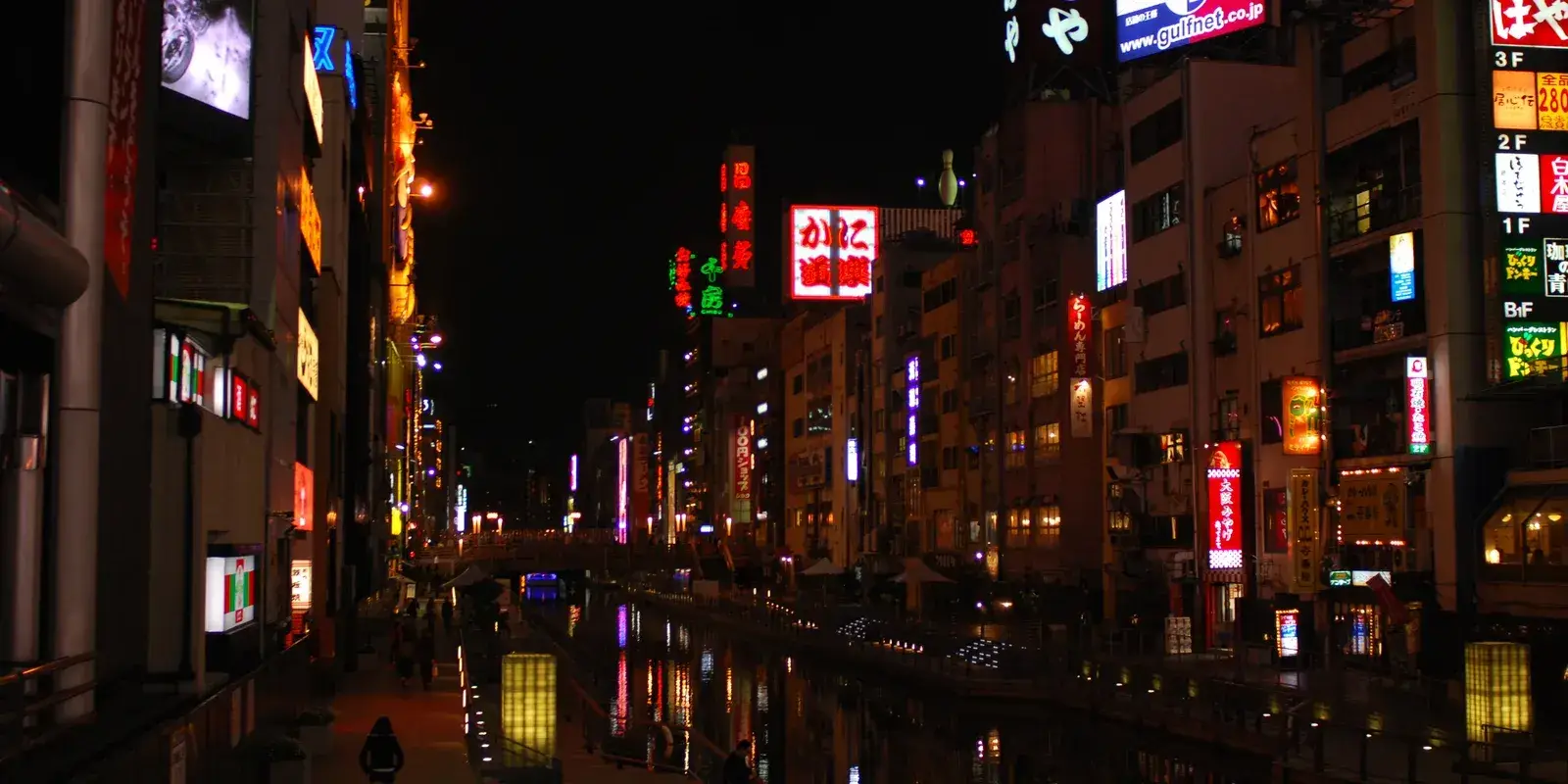
Is Dotonbori Worth It? What Visitors (and Osaka Locals) Actually Think
You have seen the photo a hundred times: the running Glico man, the giant mechanical crab, a canal full of neon, a bridge full of people with their arms in the air. So you arrive expecting the beating heart of Osaka, and within ten minutes you are shoulder to shoulder in a river of strangers, paying tourist prices for takoyaki that was better somewhere you can't remember, wondering if you fell for a postcard.
Here is the short answer, and the rest of this article simply walks through the neon, the crowds, and the takoyaki behind it: yes, it's worth it, but as a sight, not a meal. The people who leave disappointed almost always came expecting Osaka's best food on this one street. The people who love it, including most Osakans, come for the neon and the spectacle, take the photo, and eat one street back.
Is it worth it? (in visitors' own words)
We gathered the voices of international travelers who have actually been to Dotonbori and asked, in effect, was it worth it? Weighted by how strongly each opinion resonated with other readers, here is how they fell:
Look at the shape of that. It isn't a place people love or hate. It's a place that rewards or disappoints depending on what you came for. The biggest band in the middle says the quiet part out loud. One traveler, much-upvoted, put the whole thing in two sentences: "Dotonbori is much more of a sightseeing/photo spot than anything else, even within Osaka, it isn't exactly known or renowned for the food. I wouldn't call it overrated as something to go see, but anyone who has 'the best meal of their trip' there has missed out."
The ones who felt let down nearly all describe the same avoidable thing: they treated the main strip as a restaurant. "It's a tourist area that caters to tourists, not locals," one wrote; "it's fun to take pictures of, but no, you're not going to get good food there." Another, more bluntly: "Dotonbori felt like an actual tourist trap. Probably the only tourist trap I didn't like in Japan." And the fix arrives, again and again, from the travelers themselves: "Good food is literally everywhere, except the tourist traps. The nearby streets are full of bustling restaurants, bars full of locals and no waiting."
And the people who loved it tend to agree with the critics on the facts and disagree on the verdict. A visitor from New York: "the area gave me Times Square vibes; I approached it for what it was and enjoyed it for that... I had so much fun waving at folks while doing the river tour." The Times Square comparison comes up over and over, from fans and skeptics alike, and it's the most useful thing anyone says: nobody goes to Times Square for dinner. They go to stand inside the lights.
How Osaka itself feels about it
Here is what the postcards never capture: what Japanese visitors and locals say, in their own reviews, about the same street. It is warmer, and it quietly explains the whole let-down above.
Notice that the Japanese red bar is less than half the visitors' one: 11% against 27%. That gap is the most useful thing on this page. It isn't that locals are easier to please; it's that they come for the right thing. "I love Dotonbori! There are always tons of people and you almost get lost," one writes, before the obligatory instruction: "taking a photo with one leg raised (the Glico pose) is a must." For them it's the backdrop, the stage, the kuidaore spirit lit up in neon. "By day you can enjoy shopping, gourmet food, and the river cruise; by night the neon and the townspeople give it a completely different atmosphere," one says. They are not expecting the meal of their life on the bridge. They take the photo, soak up the chaos, and (this is the key) they already know where to eat.
You can hear the strategy inside their reviews. "It was so crowded we just took in the atmosphere, snapped photos," one writes of bringing a friend; "there are so many takoyaki, okonomiyaki and kushikatsu shops you get lost, so you need to research in advance," says another. The honest hard moments they do name are about the street straining under its own popularity (the crowds before you can walk, the litter, the few toilets), and a candid few will tell you outright: "I wouldn't recommend it to people who dislike crowds." That's not a place being bad. That's a place being honest about being loved by too many people at once.
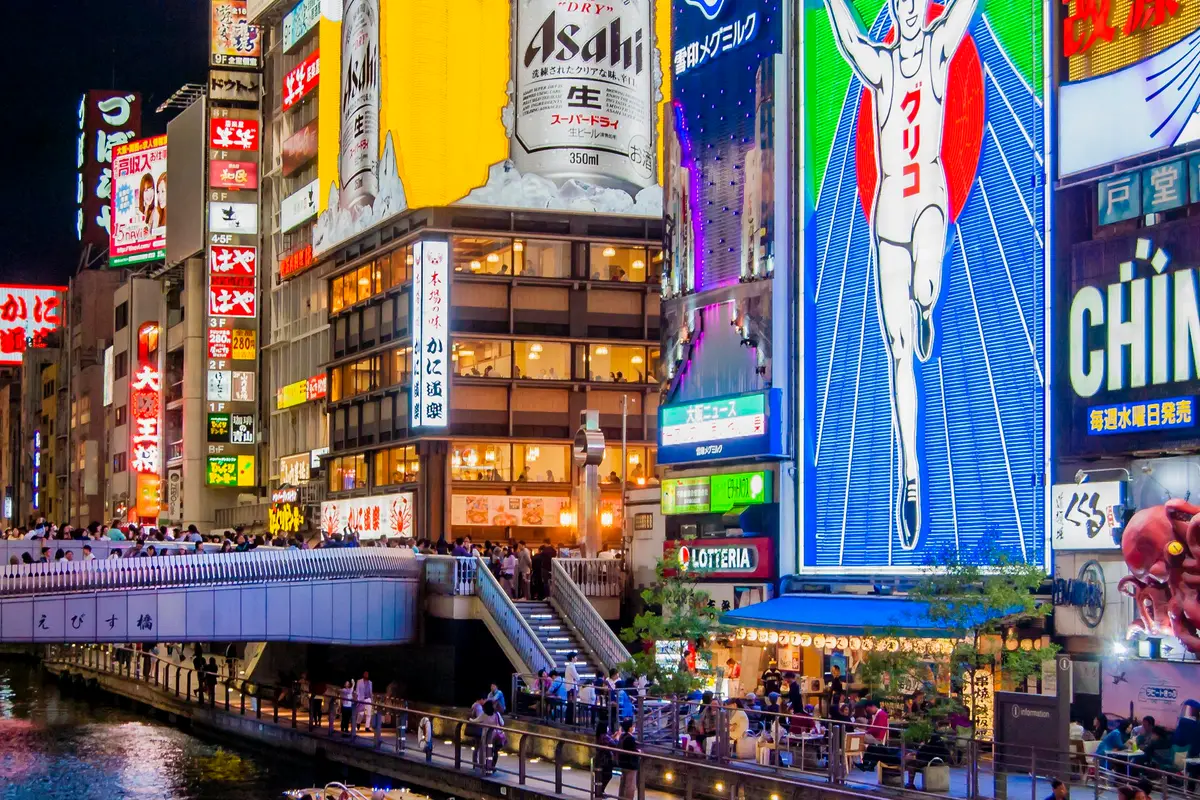
What's actually worth seeing
If you come for the right things, they're genuinely here.
The neon at night, reflected in the water. This is the thing the photos can't quite hold. The signs that tower over the street (the running Glico man, a fixture over this bridge since 1935 and now some 140,000 LED chips of him) fall into the canal as ribbons of light, and from the Tonbori River Walk down at water level it doubles into a second, upside-down city. Several visitors who shrugged at everything else stop to admit the lights are "scenic as heck... gorgeous if you're into that."
The spectacle itself, taken as spectacle. Dotonbori has been Osaka's stage for four hundred years (the city's tourism office still calls it Japan's Broadway), and the giant three-dimensional signs, the street performers on the bridges, the sheer kinetic noise of it are the point rather than a distraction from it. The fans and the critics agree it's "chaotic," "a cool vibe in the evenings... it gets livelier as it gets later." You don't have to love crowds. You do have to come knowing it's a carnival.
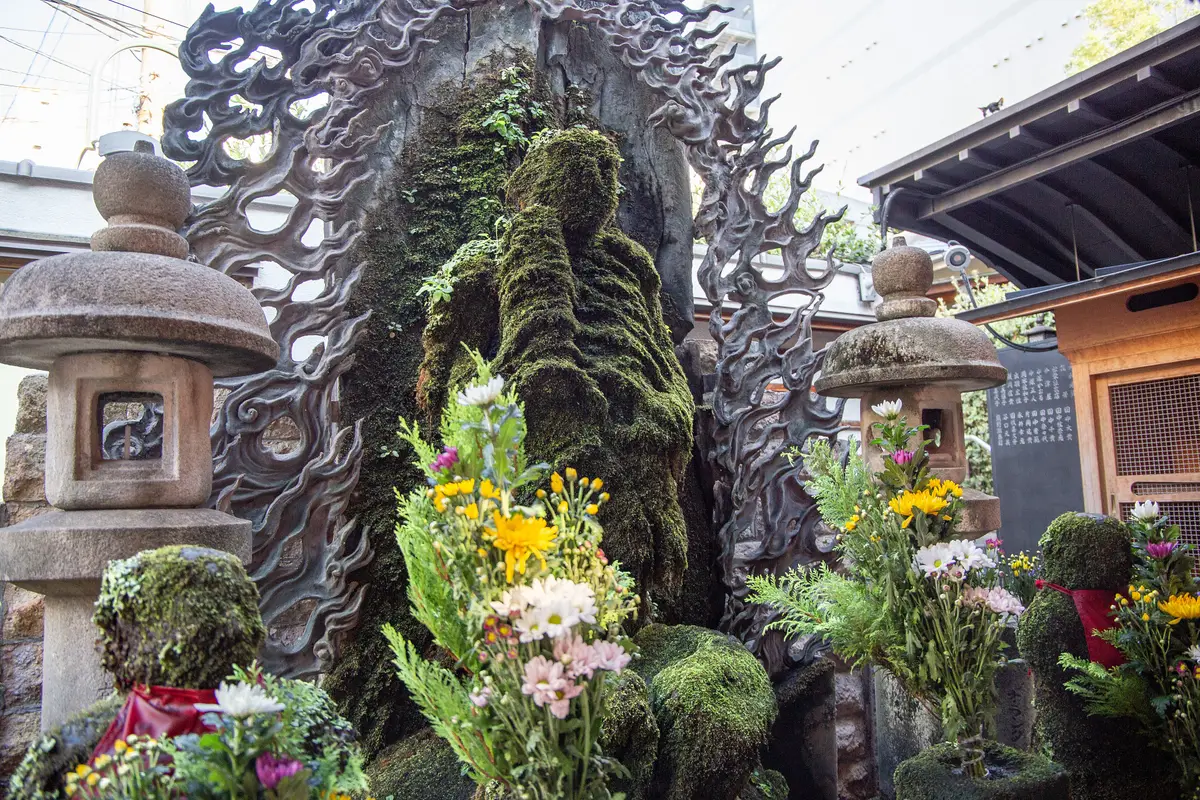
The quiet lane hidden right behind it. A few steps south of the canal the neon simply stops and you're in Hozenji Yokocho, a stone-paved alley of tiny old counters where a moss-covered statue glistens because passers-by have ladled water over it in prayer for generations. It's the answer to the question Dotonbori raises without meaning to: whether a street this loud can hold anything still. It can, one turn away.
Come at Dusk, Eat One Street Back
Everything above resolves into a handful of moves that turn the 27% let-down into the 37% who left glad.
- Come for the sight, not the supper. Walk the bridge, take the Glico-pose photo, see the lights on the water, and plan your actual meal somewhere else. This single reframe is what separates almost every happy visitor from every disappointed one.
- Eat one street back. The travelers and the locals say exactly the same thing: the calmer side lanes, Hozenji Yokocho, and the neighborhoods a stop or two away are where the food (and the people eating it) actually are. If you do snack on the strip, treat it as a snack (one takoyaki, one skewer) rather than the meal you'll remember.
- Go at dusk, and don't wait for midnight. The lights come into their own right after sunset, and the energy peaks in the early evening. Visitors are often surprised that it winds down earlier than its reputation (many shops shutter around eight and the late-night hours can feel oddly quiet), so the magic hour is dusk rather than 1 a.m. For the running man almost to yourself, a weekday late morning is bright and nearly empty.
- Decide in advance where to eat. The most common local tip is also the simplest: with hundreds of near-identical shops competing for a passing crowd, look up one or two places before you go rather than picking the one with the loudest tout. "Be wary of anyone unusually eager to lead you somewhere you didn't ask to go" is advice both visitors and Osakans give.
- Take the crowds as part of the picture. On a weekend evening you will be shoulder to shoulder; that is Dotonbori, rather than a failure of it. If crush really isn't your thing, see it briefly and let the quiet lane behind it be where you linger.
Do these, and the evening tends to go the way the delighted reviewers describe rather than the way the let-down ones do. The street isn't lying to you. It's a four-hundred-year-old showcase that decided appetite was a virtue and put its whole personality into neon, and the visitor who comes to stand inside the lights, and eats where the locals eat, is the one Osaka sends home grinning.
So: Is Dotonbori Worth It? The food on the strip is overpriced, the crowds are real, and one Osakan in nine will tell you, honestly, that it's grown a little too loved for comfort. And still: a canal of neon four centuries in the making, a running man who has kept running since your grandparents were young, and a quiet praying lane one turn away. Come at dusk, come for the sight, eat one street back, and Dotonbori gives you exactly what it's always given Osaka: a good time, out loud, with everyone.
Still deciding which famous places actually earn a slot on a short trip? Start with what actually matters in Japan, and for the full walk from the Glico bridge to the shared-sauce counters and the quiet lane behind, the Dotonbori audio guide is just below.
Sources
- Osaka Official Tourism Guide (OSAKA-INFO): Dotonbori: kuidaore framing, "Japan's Broadway," the giant three-dimensional food signs, and the konamon (takoyaki, okonomiyaki, kushikatsu) the street is known for.
- Dotonbori Shotenkai (Merchants' Association): About Dotonbori: the canal's four-century history as a theater town, the naming after Doton, and the street's role as Osaka's stage.
- Ezaki Glico: The Dotonbori Glico Sign (Official), the current (sixth) running-man sign: lit in 2014, roughly 140,000 LED chips, 20 m tall; the first sign dates to 1935.
- JNTO (Japan National Tourism Organization): Dotonbori: the Glico Man over Ebisubashi, the Tonbori River Walk and cruises, kuidaore, and access; an evening-and-photo sightseeing area.
- Osaka Official Tourism Guide (OSAKA-INFO): Hozenji Yokocho: the cobblestone lane of small counters just south of Dotonbori, its quiet Naniwa atmosphere, and the water-ladled Mizukake-Fudo statue.
WMJS is written in Japan, in English, with AI help. We check every page, but English is not our first language. If a sentence reads oddly, tell us. One sentence is enough.
Thank you. A person reads every note.
How well do you know Japan?
Based on 51,218+ real Japanese voices
Want to know more? Ask Japanese people
Have a follow-up question about this topic? We'll ask real Japanese people.
Voice Box →