
What Makes Japan Smile
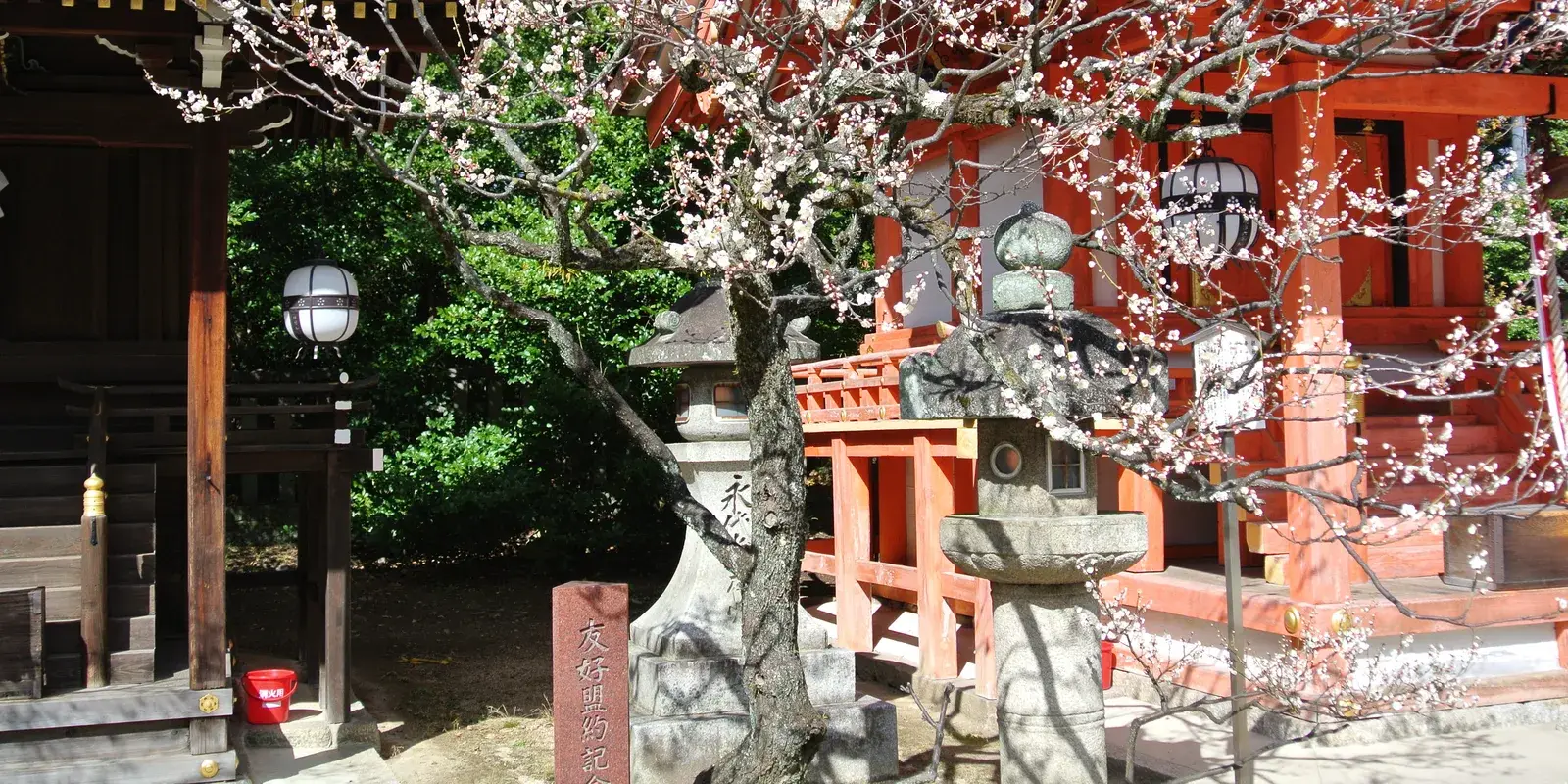
Plum Blossoms in Japan: When Ume Bloom, Where to Go, and How Japanese People See Them
Key Takeaways:
- On the Japan Meteorological Agency's 1991–2020 averages, the plum tree it observes in Tokyo opens on 22 January, about two months before the cherry (24 March). In Sapporo, the two open two days apart
- The opening date can move by weeks: in Mito, the plum opened on 26 February in 2025 and on 3 February in 2026
- We collected 253 public posts by Japanese people about plum blossoms. Of the 114 posts about how they see the plum, 74 (65%) are from people fond of it, and 36 of the 114 mention its scent
- Of the 58 posts from people who went to see plums, 21 are from writers who arrived before or after full bloom on at least one visit
- In 15 of the 253 posts, the writers say they have mixed up plum with cherry, peach or apricot, or can't easily tell them apart
When do plum blossoms bloom in Japan? In most of the country, weeks before the cherries. On the Japan Meteorological Agency's averages, Tokyo's plum opens on 22 January and Kyoto's on 22 February, and Kairakuen's plum festival and Kitano Tenmangu's plum garden run into late March. We collected 253 public posts by Japanese people about plum blossoms. Of the 58 posts from people who went to see them, 35 (60%) are from people glad they went.
The plum tree the Japan Meteorological Agency observes in Mito opened on 26 February in 2025 and on 3 February in 2026, 23 days apart.
If your trip falls in February or March, you may arrive too early for the cherries (sakura) but in time for the plums (ume). You don't need to know the varieties, or even be sure which tree is which, to enjoy them.
Quick Guide
| Plum blossoms in Japan | What the dates and posts show | |
|---|---|---|
| 🟢 When they open | Late January to February; late April in Sapporo | Japan Meteorological Agency averages for 1991 to 2020 in Tokyo, Fukuoka, Mito, Osaka and Kyoto. In these five cities, the cherries open one to two months later. |
| 🟢 Festival and garden dates | Into late March | Kairakuen's festival runs from mid-February to late March, and Kitano Tenmangu's plum garden is usually open until late March. |
| 🟡 The date moves | By weeks | Mito's plum opened 23 days apart in 2025 and 2026, and Kyoto's 17 days apart. |
| 🟡 Missing full bloom | 21 of 58 posts | That many posts from people who went are from writers who arrived before or after full bloom on at least one visit. |
| 🟢 Where to see them | Five places to start | Kairakuen, Kitano Tenmangu, Dazaifu Tenmangu, Yushima Tenmangu and Osaka Castle Park. |
| 🟢 Telling them apart | Look at the stalk | A plum flower has almost no stalk. Cherry flowers grow several to a bud on long stalks. |
| 🟢 Worth going | 35 of 58 posts | That many posts from people who went are from people glad they went. |
| 🟢 The plum itself | 74 of 114 posts | That many posts about how people see the plum are from people fond of it, and 36 of the 114 mention its scent. |
| 🟢 With age | 13 of 40 posts | In these, the writers say they came to like plums, or flowers such as the plum, or to see what is good about them, as they got older. |
When and Where to See Plum Blossoms
The table gives the Japan Meteorological Agency's average opening dates for six cities, for 1991 to 2020. Each plum date is the first day the Agency's sample tree, a white plum, had five or six flowers open, so the trees in a garden may be ahead of it or behind it.
| City | Plum opens (average) | Cherry opens (average) |
|---|---|---|
| Tokyo | 22 January | 24 March |
| Fukuoka | 31 January | 22 March |
| Mito | 3 February | 30 March |
| Osaka | 13 February | 27 March |
| Kyoto | 22 February | 26 March |
| Sapporo | 29 April | 1 May |
Hokkaido is different. The Hokkaido Government's flower guide says that there, the plum and the cherry bloom at about the same time. The same guide notes that the plum opens and falls slowly, unlike the cherry.
Five places known for their plums, with figures from their own official pages where they give them:
- Kairakuen, Mito: about 3,000 plum trees in some 100 varieties. The Mito Plum Festival is held every year from mid-February to late March. According to the garden, its six famous trees, the Mito rokumeiboku, bloom from mid-February (Tsukikage) to mid-March (Kōnan-shomu).
- Kitano Tenmangu, Kyoto: about 1,500 trees in 50 varieties. The plum garden is usually open from early February to late March, and the Baikasai festival, with an outdoor tea ceremony, is held on 25 February.
- Dazaifu Tenmangu, Fukuoka: some 6,000 trees in about 200 varieties. The Tobiume, the tree of the shrine's legend, opens first. For the approach and the grounds, see our Dazaifu Tenmangu guide.
- Yushima Tenmangu (Yushima Tenjin), Tokyo: known for its plums since the Edo period.
- Osaka Castle Park: a plum grove of 1,245 trees in 105 varieties, according to OSAKA-INFO, Osaka's official tourism guide.
Around 3 February there's also Setsubun, and in 2026 Kitano Tenmangu was one of the shrines that held bean throwing for it. Hours, fees, festival dates and the state of the bloom all change, so look at each place's own page a few days before you go.
How We Gathered These Voices
We gathered 253 Japanese-language posts about plum blossoms from 168 web pages: Q&A sites and discussion boards, two travel review sites, personal blogs and public collections of social posts. They are grouped under four questions: how people see the plum (114), going to see plums at a garden, grove, shrine or festival (58), the plums at Tenmangu shrines (41), and plums and age (40). No post appears under two questions. Where a page shows who wrote a post, each writer counts once. On anonymous boards and some review sites, we can't always tell.
Nobody was sent a questionnaire. These are posts people had already written. Under each question we looked for warm posts and critical ones, but people who like the plum may be more likely to write about it. So read each percentage as a share of this collection, rounded so that each gauge adds up to 100, and not as a measure of opinion across Japan.
We also looked for posts about photographing plum trees and touching their branches. There were 23, too few for a gauge, and they are covered in the section on photos and branches.
The Temperature Gauge
Each of the four questions has its own gauge, showing how warmly the writers feel.
🟢 How Japanese People See the Plum
The 114 posts in this gauge are about how their writers see the plum: whether they like it, how it compares with the cherry, and whether they can tell the two apart.
On a Q&A site, someone who picks the white plum explains why.
どちらかというと梅(白梅)です。寒い中に、香り高くきりっと咲いているのが好きです。桜はさほど香りませんからね。 If I had to choose, the plum, the white plum. I like the way it blooms so crisply in the cold, with such a strong scent. Cherries don't smell of much, after all.
Thirty-six of the 114 posts mention the plum's scent. In its explainer on the history of the cherry, the Ministry of Agriculture, Forestry and Fisheries makes the same comparison, describing the scent of most cherries as faint and the plum's as very strong.
Twelve of the 114 bring up the crowds, the noise, or the eating and drinking at cherry-blossom viewing, or say plum viewing is quieter. A blogger on note, a Japanese blogging platform, writes about the difference.
桜は人気者だから、桜を楽しもうとなるとどうしても人が多くてごみごみしたところに行かざるを得ない。…梅は、もう少し静かに佇んでいて一人でぼーっと眺めることもできる。すき。 The cherry is popular, so if you want to enjoy cherries you end up having to go somewhere crowded and cramped. … The plum stands a little more quietly, and you can gaze at it idly on your own. I like that.
The cherry has its fans here too. In one answer, the writer picks the cherry for the evening parties, then adds that the peach comes first of all, because the cherry always looks a little dull.
桜。梅の季節はまだ寒い。昼間の観梅でもせいぜいうどんを食べたくなるくらい。少々寒くても桜の花見は夜の宴会が楽しめますから。 Cherry. In plum season it's still cold. Even plum viewing in the daytime gets you no further than wanting a bowl of udon. With cherry viewing you can enjoy a party at night, even if it's a bit chilly.
Another answer picks the cherry for the flowers themselves.
桜です 梅は近くで見るとかわいらしいと思いますが、桜は遠くから見ても近くから見てもきれいで惚れ惚れしてしまいます。 Cherry. I think the plum is sweet when you see it up close, but the cherry is beautiful from far away and from close up, and I can't stop admiring it.
In 15 of the 253 posts, the writers say they have mixed up plum with cherry, peach or apricot, or can't easily tell them apart. A blogger in Ōita writes about the trees at home.
この家に来た当初、「家に桜の木が6本もある!家でお花見ができるなんて…贅沢だなあ…。」なんて思っていました。しかし、よくよく見ると元日に木の枝に、もうピンク色の蕾が見えるではありませんか…。どうもこの木々は梅の木でした。 When I first came to this house, I thought, "Six cherry trees at home! Cherry-blossom viewing in my own garden… what a luxury." But when I looked closely, there were already pink buds on the branches on New Year's Day… These trees, it turned out, were plums.
The blogger on note quoted above has a way of checking.
白梅は、一瞬桜かと見まがうことがある。時期的に間違わないでしょう、っていう至極まっとうなつっこみはさておき、どっちかな、と近づいてみて香りを確かめて初めて梅だと認識するのが白梅なのだ。 A white plum can pass for a cherry for a moment. Leaving aside the perfectly reasonable objection that you couldn't confuse them at that time of year, the white plum is the one I only recognize as a plum once I've gone up close, wondering which it is, and checked the scent.
💡 How to tell a plum from a cherry
A plum flower has almost no stalk and grows singly from each bud, so it sits close to the branch. Cherry flowers grow several to a bud on long stalks. In common varieties, each cherry petal has a notch at the tip, while a plum petal is rounded.
🟢 Visiting a Plum Garden
Fifty-eight posts are from people who went to see plums at a garden, grove, shrine or festival. Among the places they went are the Atami Baien garden, the Soga plum groves, the Ogose plum grove, Kairakuen in Mito and the plum grove at Osaka Castle.
In 21 of the 58 posts, the writers arrived before or after full bloom on at least one visit. One of them went on a Sunday after hearing that a plum festival had started. The writer goes on to say that only five or six trees had flowers.
まだ寒い日が続いてますが、梅まつりが始まったと言う事で日曜日に急遽出かけてみました。もう開花してるのかぁ?楽しみにして現地に到着したのですが、まだ蕾もカチカチで咲いてない(T_T) It's still cold, but the plum festival had started, so on Sunday I set off on the spur of the moment. Would they be open yet? I got there full of hope, but the buds were still rock hard and they weren't blooming (T_T)
At the Osaka Castle grove, a visitor who found it only about 30 percent open still had something to enjoy.
今年も大阪城の梅林に梅の花を見に行ってきました。行ったタイミングが少し早くてまだまだ蕾が多く残る3分咲き程度でした。満開に違い梅林を楽しみにしていただけにちょっと残念でした。行った日は天気も良くて花見日和、咲いている綺麗な梅の花を楽しむことが出来ました。 This year again I went to see the plums at the Osaka Castle plum grove. I went a little early, and with lots of buds still closed it was only about 30 percent in bloom. I'd been looking forward to a grove close to full bloom, so I was a little disappointed. But the weather was lovely that day, perfect for flower viewing, and I enjoyed the beautiful plum blossoms that were out.
On 2 February, as the Soga festival was starting, another writer went for the first time.
2月2日 曽我梅林の梅まつりが始まるということで、初めて行きました。ただタイトルにも書いた通り、まだちょっと早かったです。…ただおかげでまだ駐車場は空いており、のんびり見て回れました。 I went to the Soga groves for the first time on 2 February, since the plum festival was starting. As my title says, though, it was still a little early. … Thanks to that, the car park still had plenty of space, and I could take my time looking around.
In Kyoto, the Meteorological Agency's tree opened on 11 March in 2025 and on 22 February in 2026, 17 days apart.
💡 You can still see plums in March
The latest of Kairakuen's six famous trees, Kōnan-shomu, blooms in mid-March, and Kitano Tenmangu's plum garden is usually open until late March.
In 12 of the 58 posts, the writers mention the cold. A reviewer of the Soga groves gives this advice.
こちらは広い土地にたくさんの梅が埋まっていて満開の時は美しいです。満開の時は寒いので防寒して行った方がいいです。 It's a big piece of land full of plum trees, and it's beautiful in full bloom. It's cold when they're in full bloom, so wrap up warm.
A blogger at the Osaka Castle grove went more for the scent than for the sight.
香りを言葉で表現するのは難しいけれど、私には、「甘い」というより「爽やか」に感じました。匂いに集中すると、梅林全体がうっすらと香りに包まれていて、とてもいい気分。 The scent is hard to put into words, but to me it felt fresh rather than sweet. When I concentrated on it, the whole grove was faintly wrapped in it, and it felt very nice.
🟢 Plums at Tenmangu Shrines
Tenmangu shrines enshrine Sugawara no Michizane, prayed to as the god of learning, and Dazaifu, Kitano and Yushima Tenmangu are all known for their plums. Dazaifu Tenmangu, in Dazaifu, where he was exiled, tells the legend of the Tobiume, a plum tree so fond of him that it flew from Kyoto to join him overnight.
The 41 posts in this gauge are about the plums and plum season at Tenmangu shrines: Dazaifu, Yushima, Kitano and a few others.
Nine of the 41 posts mention praying for exams or giving thanks for passing one, ema (wooden prayer tablets), or students praying. A parent wrote about a morning at Yushima.
高校受験に向かう子を見送った後、合格祈願を名目に湯島へ向かう。朝8時過ぎに到着したが、多くの人が参拝に訪れていた。…今、湯島天神では、梅の木々が見頃をむかえ、澄んだ青空、朝の空気によく映える。 After seeing my child off to a high school entrance exam, I headed for Yushima, with praying for success as my excuse. I arrived just after 8 in the morning, and a lot of people were already there to pray. … At Yushima Tenjin the plum trees are at their best right now, and they look lovely against the clear blue sky in the morning air.
A Fukuoka blogger reached Dazaifu Station after 9 in the morning.
太宰府駅には9時台に到着したので、いつもより人は少なめでしたが、それでも朝早くから観光客・参拝客が多かったです。境内に入ると、梅が咲いている木が多く、ふわっと梅の香りがしました。 I got to Dazaifu Station sometime after 9, so there were fewer people than usual, though even that early there were plenty of sightseers and worshippers. Inside the grounds many of the trees were in bloom, and the scent of plum drifted over.
Someone who goes to see the Dazaifu plums almost every year found the train and the approach far more crowded than usual.
毎年のように、太宰府の梅を観に行ってるけど、こんなに電車混んだことないよ😅 太宰府に着いて、参道を歩くも、人だらけですよ💦 人多いの、苦手なんですよね。…人は多かったけど、梅がとても綺麗で、よかったです♪ I go to see the Dazaifu plums almost every year, but I've never seen the train this packed 😅 When I got to Dazaifu and walked up the approach, it was all people 💦 I'm not good with crowds. … There were a lot of people, but the plums were very beautiful, so that was good ♪
🟢 With Age
Forty posts link the plum to age or a time of life, or come from writers who give their age.
In six of the 40 posts, the writers say plum viewing, or the plum itself, is seen as something for older people, or notice that many people at plum viewing are older. One of them asked about it on a Q&A site.
皆様は梅の花を見に行きますか?私は行く事が多いですが、桜の花見ならわかるけど梅の花を見るなんて婆臭いとかなり笑われます。変ですか? Do you go to see plum blossoms? I often do, but people laugh at me a lot, saying that cherry-blossom viewing they could understand, but going to look at plum blossoms is what old ladies do. Is that strange?
A reply on the same page starts like this.
梅も見に行きますよ。全然変じゃないです。 I go to see the plums too. It's not strange at all.
In 13 of the 40 posts, the writers say they came to like plums, or flowers such as the plum, or to see what is good about them, as they got older. A writer of 50 describes the change.
若い頃は梅見なんて、おばあちゃんになってから、そう思っていました。50歳になった今は楽しみになっているから、不思議です。 When I was young, I thought plum viewing was for when I'd become an old lady. Now that I'm 50, I look forward to it, which is funny.
A self-described twenty-something, asking about going to see plums, cherries and autumn leaves, wrote this.
20代なのですが、若い人はあまりいないですね。いても酒飲み宴会で多いです。私も20くらいまでは全く興味なかったですが、20くらいから急に好きになりまして。 I'm in my twenties, and there aren't many young people, are there? The ones who are there are mostly having drinking parties. I wasn't interested at all until I was about 20 either, but then all of a sudden I came to like it.
On a discussion board, one writer admits to a long-standing mix-up.
40になるまで桜と梅の区別もつかなかったよ I couldn't even tell cherry from plum until I was 40.
A Little History, and How the Plum Is Observed
The plum came to Japan from China. In the same explainer on the history of the cherry, the Ministry of Agriculture, Forestry and Fisheries says that plum and peach were both ornamental plants brought over from China and prized by the aristocracy, and that in the Heian period people began to turn to the cherry, which grew everywhere, for ceremonies and seasonal events.
The name of the present era, Reiwa, comes from a passage in the Man'yōshū that mentions plum blossoms. When the government announced the name on 1 April 2019, the Prime Minister's statement said it was taken from words in the Man'yōshū, Japan's oldest collection of poems, describing a fine month in early spring, with clear air, a gentle wind and the plums in bloom. The statement also spoke of the plum blossoms that announce spring after the harsh cold and bloom magnificently.
The Japan Meteorological Agency records the plum's opening each year, along with the cherry's. It describes the white plum it observes as having flowers with almost no stalk, about 25 millimeters across, usually with five white petals. The opening date moves north, from Okinawa in mid-January to northern Tōhoku and Hokkaido in April and May.
Photos and Branches
In one of the 23 posts we found about photographing plum trees and touching their branches, a photographer at a crowded spot thanks an older photographer who made room. Four writers describe photographers blocking the paths, and three were upset that someone had broken off, or tried to break off, a branch. Our article on photo etiquette at tourist spots covers the places where people wait their turn for a picture.
Share Your Experience
Did you catch the plums in bloom, or arrive a week early? Which garden or shrine was it, and what did the air smell like?
Share your experience on Voice Box →
More Japanese Perspectives
Other pages for a February or March trip:
- Is Dazaifu Tenmangu Worth It?: visitors' and Japanese reviewers' verdicts on the shrine, its garden and its plums.
- Osaka Castle: our guide to the castle and its park, with the plum grove and the cherry garden.
- Surviving Japan's Winter: why Japanese homes are cold inside, and the heat pads, hot water bottles and hot drinks people rely on.
- Visiting Temples and Shrines: the purification fountain, photos, clothing and offering coins.
- When to Visit Japan: month-by-month weather, crowds and visitor numbers, including February.
Sources
Primary Research Data
WMJS plum blossom research data, 253 Japanese-language posts collected November 2026 from 168 web pages:
- How people see the plum: 114 posts
- Visiting a plum garden: 58 posts
- Plums at Tenmangu shrines: 41 posts
- Plums and age: 40 posts
A further 23 posts about photographing plum trees and touching their branches were collected separately and are not in the gauges.
Factual Sources (Tier 1)
- Japan Meteorological Agency, phenological observations, plum flowering (cumulative records and 1991–2020 averages): average opening dates for Tokyo, Fukuoka, Mito, Osaka, Kyoto and Sapporo: https://www.data.jma.go.jp/sakura/data/ruinenchi/001.csv
- Japan Meteorological Agency, phenological observations, cherry flowering (cumulative records and 1991–2020 averages): https://www.data.jma.go.jp/sakura/data/ruinenchi/004.csv
- Japan Meteorological Agency, plum flowering dates for 2025 and 2026: Mito 26 February 2025 (23 days later than average) and 3 February 2026; Kyoto 11 March 2025 and 22 February 2026: https://www.data.jma.go.jp/sakura/data/phn_000.html
- Japan Meteorological Agency, how plum flowering is observed: the white plum sample tree, the five-or-six-flower definition, the flower with almost no stalk, and the spread from Okinawa to Hokkaido: https://www.data.jma.go.jp/sakura/data/ume2020.pdf
- Ministry of Agriculture, Forestry and Fisheries, aff March 2023, "The history of the cherry in Japan" (Japanese): plum and peach as ornamental plants from China; the turn to the cherry in the Heian period; one flower per bud on a short stalk for the plum and several on long stalks for the cherry; the faint scent of most cherries and the strong scent of the plum: https://www.maff.go.jp/j/pr/aff/2303/spe1_02.html
- Hokkaido Government, "Ume" flower guide (Japanese): notched cherry petals and rounded plum petals in common varieties; the plum opening and falling slowly; plum and cherry blooming at about the same time in Hokkaido: https://www.pref.hokkaido.lg.jp/kn/tkn/hana/flower/hk003.html
- Prime Minister's statement on the new era name Reiwa, 1 April 2019, attached to a Ministry of Internal Affairs and Communications notice (Japanese): https://www.soumu.go.jp/main_content/000612239.pdf
Official Shrine, Garden and Tourism Pages
These are cited only for each place's own facts: the number of trees and varieties, the season and the festival dates.
- Kairakuen, Ibaraki Prefecture, plums of Kairakuen (Japanese): about 3,000 trees in some 100 varieties; the Mito Plum Festival from mid-February to late March; the six famous trees from Tsukikage in mid-February to Kōnan-shomu in mid-March: https://ibaraki-kairakuen.jp/zukan/
- Kitano Tenmangu, plum garden (Japanese): about 1,500 trees in 50 varieties linked to Sugawara no Michizane; the garden usually open from early February to late March; the Baikasai and its outdoor tea ceremony on 25 February: https://kitanotenmangu.or.jp/guidance/baien/
- Dazaifu Tenmangu, "Tenjin-sama and the plum" (Japanese): some 6,000 trees in about 200 varieties; Michizane's exile to Dazaifu and the Tobiume legend; the Tobiume opening first: https://www.dazaifutenmangu.or.jp/about/tenjinsama-ume
- Yushima Tenmangu, official site (Japanese): known for its plums since the Edo period; a shrine to Sugawara no Michizane as the god of learning: https://www.yushimatenjin.or.jp/
- OSAKA-INFO, Osaka's official tourism guide, Osaka Castle Park: a plum grove of 1,245 trees in 105 varieties: https://osaka-info.jp/en/spot/osaka-castle-park/
Opinion Collection Sources
We took these posts from Japanese Q&A sites and discussion boards, two travel review sites, personal blogs and public collections of social posts. They are not cited as factual authorities. Each is a writer's own account of the plum, a visit to a plum garden or shrine, or how their feelings about the plum have changed.
Note on Quotations
Quotes from online platforms have been lightly edited for readability, fixing typos and formatting for clarity. The meaning and intent of each comment remain unchanged.
WMJS is written in Japan, in English, with AI help. We check every page, but English is not our first language. If a sentence reads oddly, tell us. One sentence is enough.
Thank you. A person reads every note.
How well do you know Japan?
Built from 635 public posts by Japanese people
Want to know more? Ask Japanese people
Have a follow-up question about this topic? We'll ask real Japanese people.
Voice Box →