
How Japan Works
Is Oshino Hakkai Worth It? What Visitors From Abroad and From Japan Say
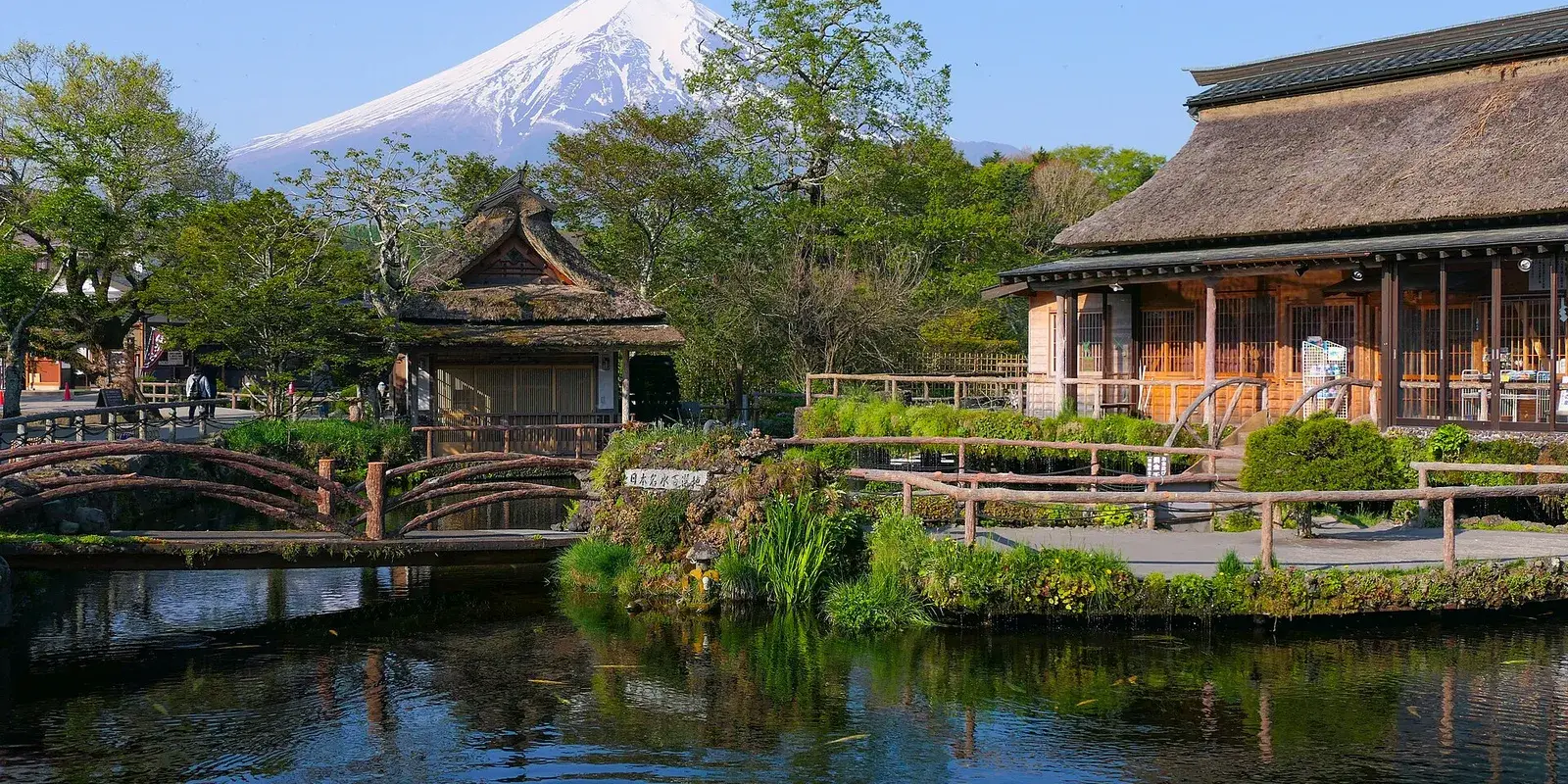
Oshino Hakkai is a group of eight spring ponds in the village of Oshino, at the foot of Mount Fuji, and people planning a day around Fuji may be deciding whether to stop. We gathered 449 reviews and posts from people writing about their own visits. Of the 244 voices from abroad, 171 (70%) were glad they went. Of the 205 voices from Japan, 143 (70%) were glad they went. People from abroad and people from Japan mostly agree about Oshino Hakkai.
People who were mixed or let down also give similar reasons. Of the 73 voices from abroad who were mixed or let down, the crowds are the complaint mentioned most often, and the same is true of the 62 from Japan. Several reviewers who arrived around 7:00 or 8:00 describe a much quieter place. The view of Fuji depends on the clouds, and the ponds are smaller than some people expected. The village says the ponds can be seen at any hour, except Sokonukeike, which is inside a paid museum open from 9:00 to 17:00, and that walking to all eight takes about 1.5 to 2 hours.
Is it worth the trip? (in visitors' own words)
We read reviews and posts by people from abroad and sorted them by how the writer felt after the visit. Of the 244 voices, 114 are TripAdvisor reviews of visits from 2017 to 2026, 115 are Google Maps reviews posted in 2026, and 15 are posts on a Taiwanese forum. Eight of the forum voices come from two threads asking whether the place is overrated, so more of them are critical than in the other groups.
Some glad visitors write about how clear the water is. A visitor on a tour in November 2019 wrote that "I almost got dizzy and felt like was hypnotised because I can clearly see the fishes swimming around like they're flying." Others write about the village or the stop as a whole. A reviewer writing in French in 2026 called it "Village de cartes postales" (a picture-postcard village) and added "Vaut le détour même si la météo ne vous permet pas de voir le mont fuji" (worth the detour even if the weather doesn't let you see Mount Fuji). "Oshino Hakkai was easily the highlight of our Mt. Fuji day trip", another wrote in 2026. Visitors on a private tour arrived before 8:00 on the way to their first main stop, found few people, and wrote that, given those conditions, "it was worth the stop, but I can understand it not being worth it when crowded."
Some people with mixed feelings liked the ponds and were unhappy with the crowds and shops around them. "The main pond was amazing. I felt like staring at it for a long time", one reviewer wrote in 2019, and went on to say "this place has become too touristy and that made me feel sad." Another stopped with a guide for under an hour and wrote "I was glad we went as we were in the area, but don't make a special trip." In October 2026, a reviewer called it a "Beatiful place, but too overcrowded by tourists" and concluded "I think one could skip the visit". Some mixed voices are about the view. "Crowded and not impressive when mt fuji is not visible", one person wrote after a second visit.
Twenty of the 244 voices are in the red band. Sixteen of them mention the crowds. "It's like the ponds are an afterthought, not the star of the show as they should be", wrote a visitor who came in March 2026, and added "The shops and food stalls are all quite nice, but, the natural aspect is obliterated." Another wrote "So many people." and "We left after 10’ walking around." Three say the ponds or the place are small. On the Taiwanese forum, one poster who stopped on a trip around Fuji wrote "就幾個小池塘加上一堆觀光客" (just a few small ponds and a pile of tourists), and said of the souvenir shops "感覺比池子還多" (it feels like there are more of them than ponds). One visitor who came in May 2018 found the water murky that day and wrote "it looks like an ordinary pond."
What Japanese visitors say
Japanese visitors have also written about Oshino Hakkai, and this is how they felt.
Some glad visitors from Japan also write about the water. "覗き込むと深い透明な水に大きなニジマスが悠々と泳ぎ、そのまわりには美しい緑鮮やかな水草が踊るように揺れている。ずっと見ていたくなりました。" (When you look in, large rainbow trout swim leisurely through the deep clear water, with beautiful bright green water plants swaying around them as if dancing. I wanted to keep looking at it), a jalan reviewer wrote. Another came with low expectations: "正直、近くまできたから一応行ってみる?くらいの気持ちで行ったのですが、行って良かったです。" (Honestly, I went thinking we might as well since we were nearby, and I'm glad I did), and "あれほど綺麗な湧水をみたのは初めてです。" (it was the first time I'd seen spring water that beautiful).
Japanese reviewers with mixed feelings mention the crowds, and some say the place has changed. One Google Maps reviewer who went on a crowded weekday wrote "日本の風景を楽しむというより、風景の博物館に来ている感じでした。" (it felt less like enjoying Japanese scenery and more like visiting a museum of scenery), and still concluded "インバンド用ですが、きれいなので見る価値はあると思います" (it's aimed at inbound tourists, but it's beautiful, so I think it's worth seeing). A jalan reviewer returning after a long time wrote "昔、訪れた時のなんとなく神秘的な感じは全く感じませんでした(笑)" (I didn't feel at all the somehow mysterious air I remember from long ago, lol). Others found less to see than they expected. "2、30分の散策で、ん?見終わった?となりました。" (After a 20 or 30 minute stroll, I thought, huh, have I seen it all?), wrote a reviewer who had planned a half day. Another found little beyond the water. On a weekday in November 2021, when almost no shops were open, a TripAdvisor Japan reviewer stayed about 30 minutes and wrote "水が出てキレイだけど、それだけ。" (the water comes up and it's clean, but that's all).
Some reviewers write about the crowds and how busy it has become, and they don't all feel the same way about it. A reviewer returning after about 30 years was surprised by how much it had changed, and wrote "活気に満ちており楽しい時間を過ごせました。" (it was full of energy and I had a good time). Another, on a very crowded weekday, wrote "泉は綺麗でしたが、もう行かなくていいなと思いました" (the springs were beautiful, but I felt I didn't need to go back).
Twenty of the 205 voices are in the red band. About half of them mention the crowds, and four mention coins in the ponds. Others write about money, about how staff spoke to them or about a place that has changed. One reviewer reports a rice bowl topped with grilled squid at 2,800 yen. Another reviewer wrote "昔は、のどかで水が綺麗な印象でしたが雰囲気が全く変わってしまっていて残念でした。" (in the past my impression was of a peaceful place with beautiful water, but the atmosphere had completely changed, which was disappointing).
What we wish you'd noticed
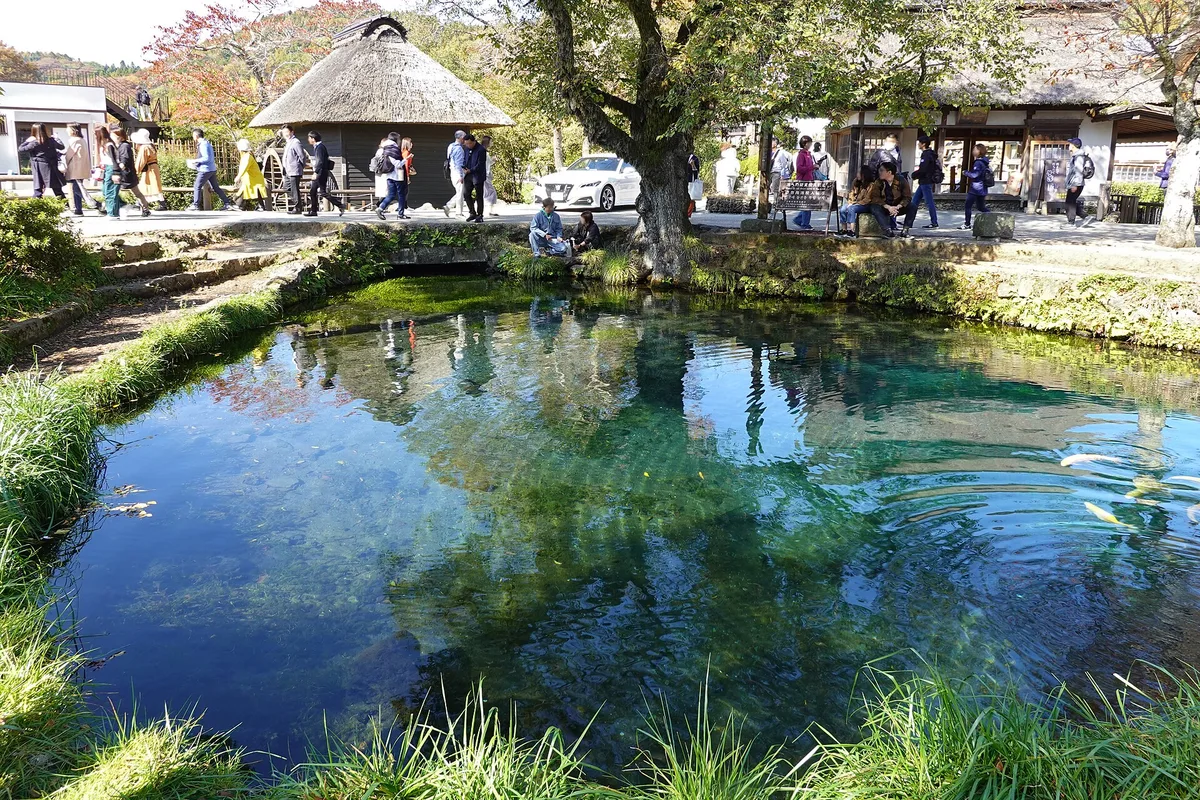
The large clear pond in the middle of the village is Nakaike, and it is not on the village's list of the eight ponds. A TripAdvisor Japan reviewer wrote that it is "人工池で、「八海」の1つでは無いとのこと" (a man-made pond, and apparently not one of the eight). Reviewers place it beside a souvenir shop. Wakuike is nearby, and more spring water comes out there than at any of the other seven, according to the Yomiuri Shimbun. Several reviewers describe the area around these two ponds, with its shops, as the most crowded part.
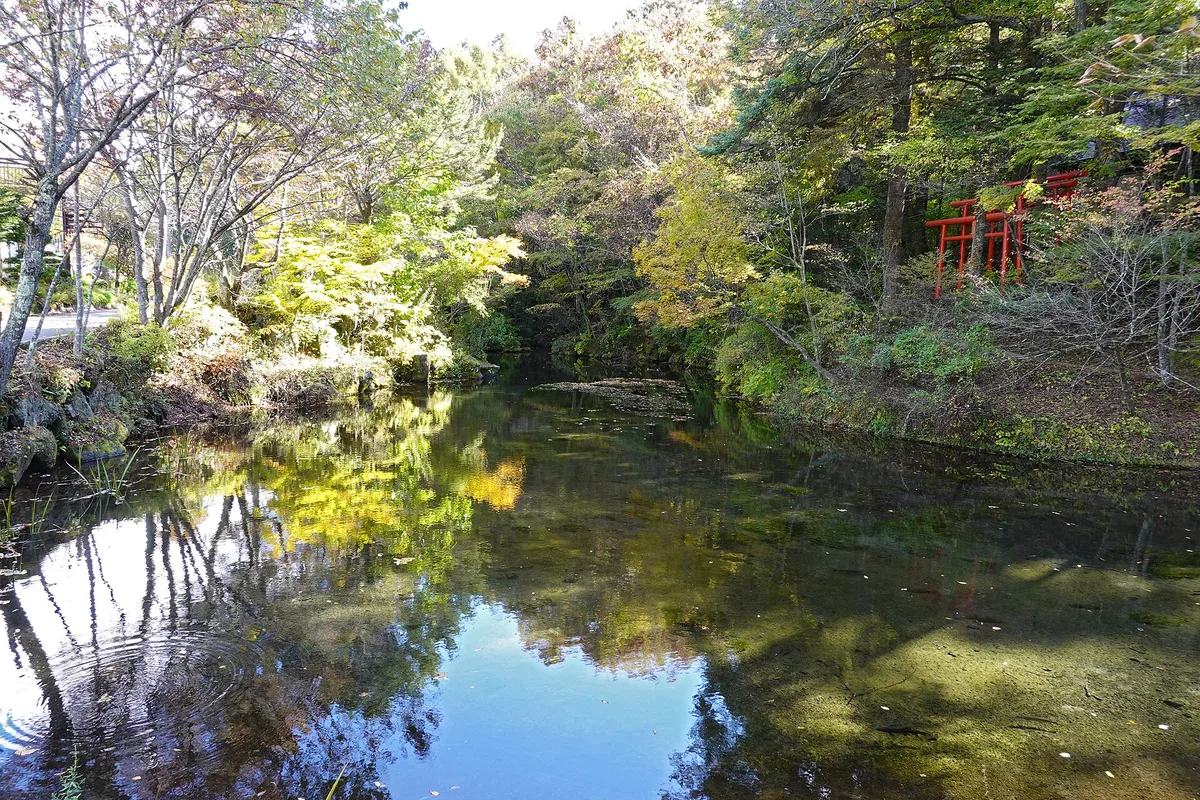
The eight ponds are scattered, and a Japanese reviewer found a pond a little farther out somewhat emptier. The village says walking to all eight takes about 1.5 to 2 hours. Sokonukeike is inside the Hannokibayashi Museum grounds and needs a ticket, and reviewers put Deguchiike about 1 km from the center. A reviewer in May 2025 who recommends Deguchiike wrote "静かで池・緑・神社と気持が落ち着きます。" (it's quiet, and the pond, the greenery and the shrine calm you). Another felt the view there wasn't remarkable enough for a casual visitor to make the extra trip.
The water comes from snow and rain on Fuji, filtered through lava underground for decades, according to Yamanashi Prefecture. The ponds were designated a national natural monument in 1934 and are part of the Mount Fuji World Heritage property, inscribed in 2013. The village says the ponds can be seen at any hour because it treats them as natural scenery, with a fee only for Sokonukeike. The Yomiuri Shimbun reports that several million people visit each year.
Leaving coins in your pocket is appreciated here. The village's notice asks visitors to keep coins and litter out of the ponds, and a village official told the Yomiuri Shimbun that the ponds have no coin-wishing tradition. The newspaper reports that about 50,000 coins were collected over ten years, starting with volunteer divers in 2016, and that there is concern corroding coins may affect the water. "Although it is mentioned that you should not throw coins to the ponds, it is plenty", one reviewer wrote in October 2026. In 2026 the village raised funds to install a conservation box at Wakuike, so if you see it and would like to leave a coin, you can put it there.
Doing it well, the welcomed way
The village lists a bus of about 25 minutes from Fujisan Station and a highway bus of about 140 minutes from Shinjuku. In May 2019, one reviewer took a bus of about 30 minutes from Kawaguchiko Station. Please check the Fujikyu Bus route timetable on the day.
Several reviewers came early and found it quiet. One who went at 6:30 wrote "観光客はほとんどおらず、地元の方がお散歩していました。" (there were almost no tourists, and local people were out for a walk). Another, who came at about 7:00 during Golden Week, Japan's spring holidays, found it very quiet with few people, and noted that the food stalls weren't open yet. On December 30, a reviewer found the parking lots empty at 8:00, tour groups arriving by 9:00 and a line at the photo spots by 10:00. Coming early doesn't always mean a quiet visit, though. A reviewer posting in April who arrived around 8:00 found tour buses already there.
Later in the day, the voices split. One visitor from the UK wrote that "the big groups disappeared near the end of the day and then things were exceedingly pleasant", while a Japanese reviewer who stayed nearby found crowds in the evening and again at 9:00 the next morning. The village lists shop hours as 8:30 to 17:00 in summer and 9:00 to 16:00 in winter.
When the center is crowded, some people walk away from it. One reviewer wrote that they "walked a bit off to the side areas and found a quiet spot", and the reviewer who stayed nearby left the main route to walk along the river and wrote "川も綺麗で人もいなくて" (the river was also beautiful and no one was there). In cherry season, a visitor in April 2024 wrote of "the amazing view of the fully boomed cherry trees on both sides of a river", with Fuji in the background.
Reviewers describe the Hannokibayashi Museum, the paid grounds around Sokonukeike, as quieter, and they differ on whether it's worth paying for. The village lists adult admission at 300 yen, 150 yen for children and 100 yen for small children, with hours from 9:00 to 17:00. "We visited the museum on site which was very peaceful and had no crowds", one visitor wrote, and a reviewer writing in Japanese who saw Fuji clearly there and liked Sokonukeike wrote "お金を払う価値ありでした。" (it was worth the money). Another Japanese reviewer wrote "池だけで言うと本当に普通に池なので" (as a pond alone, it's really just an ordinary pond), and said it depends on whether the other ponds already satisfy you.
If seeing Fuji matters to you, check the forecast before you go. "富士山が見えるかどうかで、満足度が大きく変わる観光地だと思います。" (I think how satisfied you are here changes a lot depending on whether you can see Fuji), wrote one reviewer who visited on a rainy day. A reviewer writing in June 2026 said you can see Fuji clearly in the morning and clouds cover it in the afternoon, and another found the opposite on a September day. A visitor from South Africa who never saw the mountain still called it "a must visit". At the end of October, a Japanese reviewer watched the sky turn red behind Fuji at about 17:00.
If you drive, there is no public parking. The tourist association suggests a private lot a little farther out, because the narrow lanes near the center back up on weekends and holidays, and says most of those lots are within a 10-minute walk of the center. Reviewers report 300 yen at some lots and 500 yen at others, and some lots are unattended, with a box where you pay the fee yourself. Several drivers describe people walking in the lanes, so listening for cars and stepping aside makes it easier for them. One reviewer described lots in the front yards of homes, and another described the way to Deguchiike as passing between houses, so keeping to the lanes and to the lot you've paid for is considerate to the people who live there.
Prices surprise some people. The Google Maps reviewer who called it a museum of scenery also found corn and drinks at more than 1.5 times the usual price, and a small kusamochi, a mugwort rice cake, at 150 yen, while a jalan reviewer found souvenir prices fairly low. Another jalan reviewer wrote that shops a little away from the main pond are a bit cheaper. One reviewer found "Everything we went to was cash only", so it may help to bring some.
Reviewers say you can fill your own bottle with spring water for free or buy an empty one nearby. One saw people drinking from the ladle and asks for care with hygiene, so a bottle may be the easier way. If you have small children with you, a reviewer writing in Japanese notes that some ponds have no fence or netting. The reviewer who described the way to Deguchiike also mentions high-voltage wires around the fields and asks parents to keep children from touching them. One visitor warned that "many dropped their phones into the ponds while taking photos due to the crowd moving about", so keep a firm grip on yours near the water.
If you'd like the stories behind each pond, the village lists the Furusato Oshino guides, who lead a walk of about two hours, at 3,000 yen per Japanese-speaking guide or 4,000 yen per guide speaking another language, plus 300 yen per person if the walk includes Sokonukeike. Walks are generally for groups of five or more, though smaller groups can ask. The village says the tourist association takes bookings, generally at least six days ahead.
Planning your time around Fuji? The Mount Fuji guide covers the area, is Mount Fuji worth it collects voices on the mountain itself, and is Hakone worth it does the same for the hot spring area nearby. For how we think about choosing what to do in Japan, see what actually matters.
Sources
- Oshino Village, What are the hours of Oshino Hakkai? (忍野八海の営業時間はいつですか), page dated November 27, 2023: the ponds open at all hours as natural scenery, and Sokonukeike inside the Hannokibayashi Museum, open from 9:00 to 17:00, with admission of 300 yen for adults, 150 yen for children and 100 yen for small children.
- Oshino Village, How long does a visit take? (忍野八海見学の所要時間はどれぐらいですか), page dated November 27, 2023: about 1.5 to 2 hours on foot for all eight ponds.
- Oshino Village, Shop hours around Oshino Hakkai (忍野八海周辺の売店の営業時間はいつですか), page dated November 27, 2023: shop hours of 8:30 to 17:00 in summer and 9:00 to 16:00 in winter.
- Oshino Village, Furusato Oshino guides (ふるさと忍野案内人観光ガイド), page dated November 27, 2023: the list of the eight ponds, guide fees of 3,000 yen and 4,000 yen per guide, 300 yen per person for Sokonukeike, group size and booking rule.
- Oshino Village, Access to Oshino Hakkai (忍野八海へのアクセス) and Access guide (忍野村へアクセスガイド), pages dated November 27, 2023: bus routes and travel times.
- Oshino Village, Request to protect Oshino Hakkai (忍野八海の環境保護に関するお願い), page dated November 27, 2023: the request to keep coins and litter out of the ponds, and the ponds as part of the World Heritage property.
- Oshino Village, Coins to the conservation box project (「投げ込まれるコインを、環境保全協力箱へ」プロジェクト), July 22, 2026: the 2026 fundraising for a conservation box at Wakuike.
- Oshino Tourist Association, Parking and traffic during holidays, August 10, 2026 and Parking during holidays, May 1, 2026: no public parking, private lots, and walking in from lots farther out.
- Yamanashi Prefecture, Oshino Hakkai (忍野八海), page dated March 13, 2017: snow and rain filtered through lava for decades, and the eight springs.
- Agency for Cultural Affairs, Oshino Hakkai (忍野八海), Cultural Heritage Online: the 1934 designation as a natural monument.
- UNESCO World Heritage Centre, Fujisan, sacred place and source of artistic inspiration: the property and its 2013 inscription.
- Yomiuri Shimbun, Coins at Oshino Hakkai (世界遺産「忍野八海」、大量の投げ銭に困ってます), April 6, 2026: about 50,000 coins collected over ten years, no wishing tradition at the ponds, Wakuike's flow, and several million visitors a year.
- Fujikyu Bus, Route buses (路線バス): route bus information and timetables.
Reviews and posts are voices, so they aren't listed as sources here. Dates and prices in them are as the reviewers gave them: visits or posts from 2018, 2019, 2021, 2024, 2025 and 2026, parking at 300 and 500 yen, and a rice bowl at 2,800 yen.
WMJS is written in Japan, in English, with AI help. We check every page, but English is not our first language. If a sentence reads oddly, tell us. One sentence is enough.
Thank you. A person reads every note.
How well do you know Japan?
Built from 635 public posts by Japanese people
Want to know more? Ask Japanese people
Have a follow-up question about this topic? We'll ask real Japanese people.
Voice Box →