
Is Arima Onsen Worth It? What Visitors and Locals Wrote
If you are looking up Arima Onsen, you may already have read about Kusatsu, Kinosaki, Hakone, or Gero. You may want to know which of these towns to choose for a single night. Arima is part of Kobe itself, in the city's Kita (North) Ward. According to Hyogo Prefecture's tourism site, it is under an hour from the city center.
We gathered public posts by 92 international visitors and forum commenters, and by 73 Japanese visitors and locals. Most posts in both groups are positive, and few of the complaints are about the spring water. Seven of the eight Japanese reviewers who had a hard time wrote about crowded baths, about the ryokan where they stayed, or about finding somewhere to eat dinner. The two groups also visited in different years. Most of the international TripAdvisor reviewers went before 2020, and most of the Japanese reviewers went in 2023 or later.
Is it worth it? (in visitors' own words)
Of the 92 international voices, 69 are positive. The people who liked Arima most often praised the baths and the water (about 30 voices), the small town they could walk around (about 25), and how close it is to Kobe or Osaka (about 20). Eleven of them mention both the brown gold spring and the clear silver spring. All the TripAdvisor reviewers wrote after their visit, and they are the most positive group. Only 14 of the TripAdvisor reviews are neutral or negative. One Reddit commenter, back from a first visit in March, wrote: "Not sure if you've been to an onsen town before, but if you haven't, and you're looking for the quintessential experience, you'll get it at Arima Onsen." A TripAdvisor reviewer who came on a day trip from Osaka wrote: "Loved the small town, the pre-modern Japan ambience & atmosphere, the food (the meat cutlets are must have!!)…"
Answers written for people still planning a trip were more divided. On Reddit and the japan-guide.com forum, we gathered replies from 19 commenters to questions about visiting Arima, and at least 11 of them say they have been there. Ten of the 19 are positive about Arima, eight say it depends, and one is against it.
Nine of those answers come from Reddit threads that compare Arima with Kusatsu, Hakone, Kinosaki, or Gero. Five speak well of Arima and four say it depends. "If you have to pick one, go to Arima," one commenter told someone choosing between Arima and Gero. In a thread about Arima or Kusatsu, another commenter preferred Kusatsu but added that it is far: "Personally, I prefer Kusatsu, but a six-hour round trip might not be worth it." A third had been to several onsen towns and wrote: "Because it was so touristy it has been one of my least favorite onsen towns I've visited. However, I would say that the town itself is very nice." Six of the 19 answers mention travel time. Four found Arima easy to reach, including the commenter who called Kusatsu far, and two did not.
Seven of the international voices are negative, and they give different reasons. Two found little to see or do, and one of them wrote that "at night, even walking around is boring." A third found the main street small, with shops like the ones in Kobe or Osaka, did not like one of Arima's large bath facilities, and preferred a similar one in Kobe's Harborland. One found the hotel and food disappointing for the price. One forum reply, which does not say whether the writer had been to Arima, said Kyushu has better onsen towns. One couple could not find a private bath in the time they had, and one reviewer found the public bath ordinary. None of the seven complains about the water itself, and the reviewer who found the hotel and food disappointing began with "Onsens are good quality."
Eight of the 16 international voices that say it depends write about where to stay. Two say you need a night at a ryokan for the full experience. Three say the experience depends on which ryokan or hotel you choose, and one of them wrote on the forum: "see the Ryokan as the destination, not the town itself." The other three suggest spending the night somewhere else, or only one night in Arima. One reviewer found a night in Arima too expensive and suggests staying in Kobe or Osaka. A Reddit commenter who had been to both towns recommends Kinosaki for an overnight stay, because its ryokan cost less, and Arima for a day trip. A forum member would spend one night in Arima and then move on.
What Japanese visitors and locals say
Of the 73 Japanese voices, 50 are positive. Eight of them say they go often or have been several times, and eleven more say they want to come back. One reviewer lives in Nishinomiya in Hyogo Prefecture and takes the local Sakura Yamanami Bus to Arima for day trips. Another stops by on business trips to Kobe. A third wrote that "Arima's hot spring town has a nostalgic feel to its streets and is enjoyable no matter how many times you come."
Eight of the 73 Japanese reviewers (11 percent) had a hard time there, a little more than the 7 of 92 international voices (8 percent) that are negative. None of the eight complains about the water, and two say it was good. Three complaints are about the ryokan where the reviewer stayed, each at a different ryokan. One reviewer thought the meals were small, with no meat or seafood. Another was promised snacks in the room that never came, and a third called the open-air bath "shabby." Two are about crowded or noisy baths, and two are about not getting dinner in town. The last came from a couple who had hoped for more atmosphere and found Arima not as good as Dogo, Gero, Kinosaki, or Kusatsu.
The two kinds of spring water and the town's history
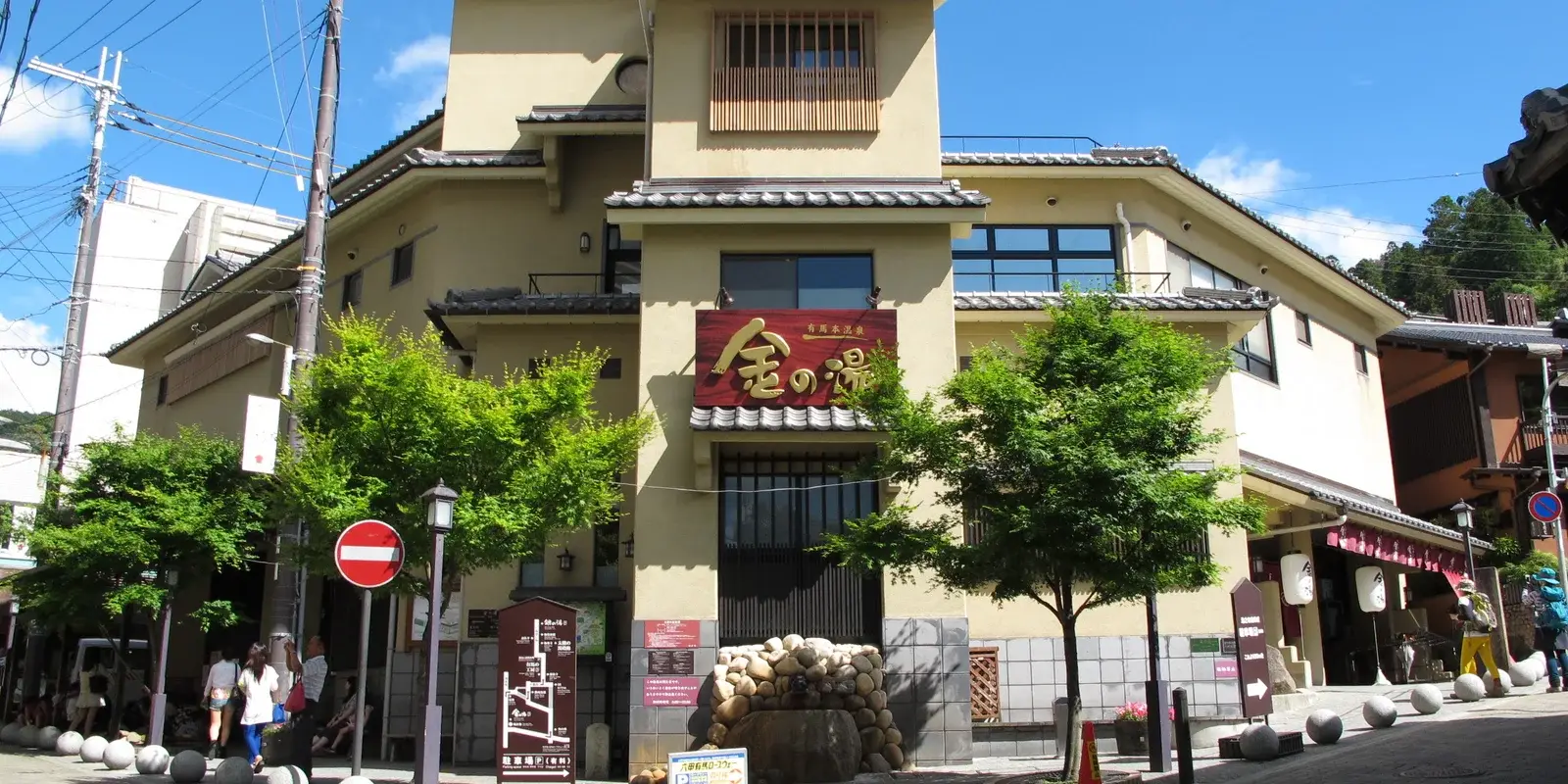
According to the Kobe Tourism Bureau, Arima is the only hot spring in Japan counted among both the "three ancient springs" and the "three famous springs." It has two kinds of water. The gold spring (Kinsen) contains iron and salt and is brown, and the silver spring (Ginsen) is clear. Of the town's two public bathhouses, Kin-no-yu uses the gold spring and Gin-no-yu uses the silver spring. According to the official bathhouse site, the gold spring comes out of the ground clear and turns brown right after, and the silver spring is a carbonated spring and a radium spring.
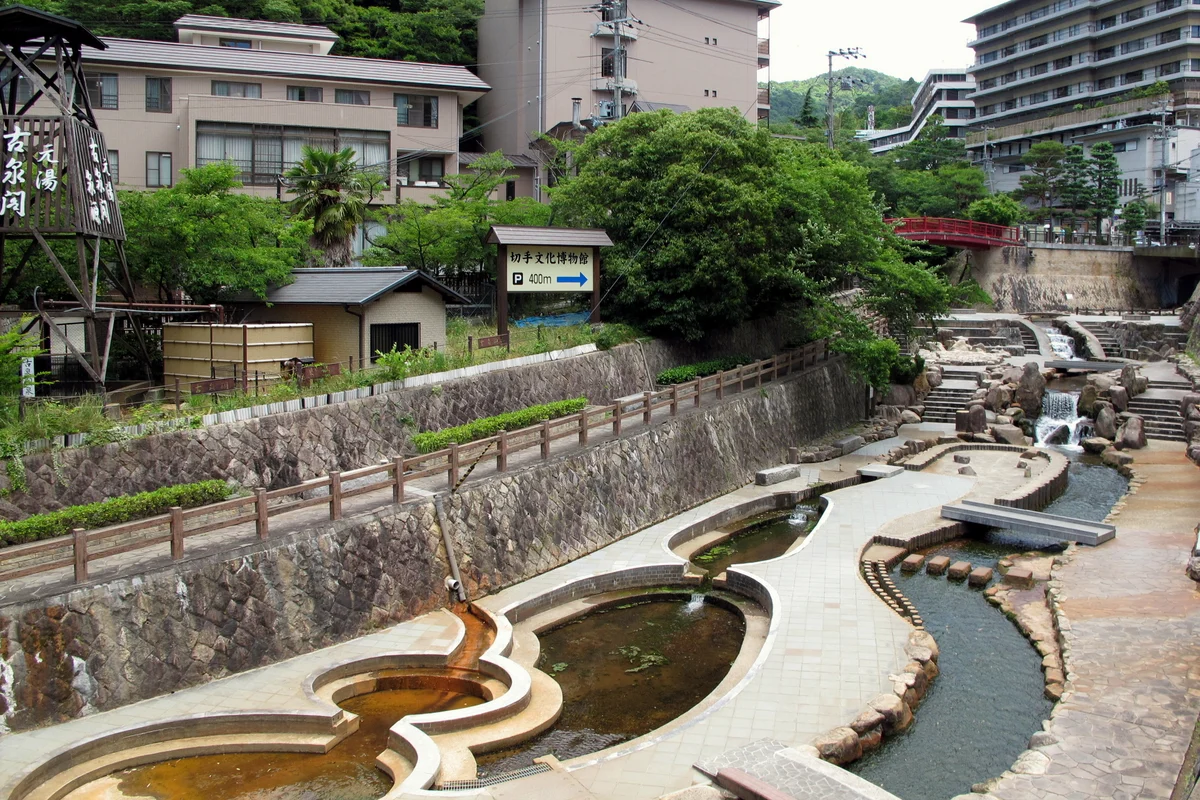
On Hyogo Prefecture's tourism site, the town is described as having more than 1,400 years of history and appearing in the Nihon Shoki and The Pillow Book. Toyotomi Hideyoshi visited many times with his wife Nene and worked to develop the town, and the Taiko-bashi and Nene-bashi bridges in town are associated with the two of them (Taiko was Hideyoshi's title).
The Japanese reviewer who stops by on business trips compares the two springs: "Gin-no-yu is refreshing and Kin-no-yu has a rich character." Another reviewer, trying the gold spring for the first time, wrote: "The cloudy color of the water felt like a real hot spring and got me excited." One international reviewer walked the streets in the early evening, when most of the shops had closed but the restaurants were still open, and wrote that "The place looked like a bit of a ghost town but is was really nice to walk around…"
Crowds, closing times, and when to go
On jalan, reviewers can mark how crowded it was when they went. Of the 42 jalan reviews whose details we could see, 17 marked it, 8 on the page for Arima Onsen as a whole and 9 on the page for Kin-no-yu. Seven of the 17 say it was crowded, four say it was normal, and six say it was not crowded. Reviewers who said when it was crowded named a weekday afternoon in the summer school holidays (one found Kin-no-yu "packed" then), a holiday weekend, the Silver Week holidays in September, the start of the autumn-leaf season, and the middle of the day. Four jalan reviewers say weekdays are calmer. Two point to going early. One strolled the town first, found a wait at both bathhouses, and ended up with only the foot bath, so she says it is better to go early. The other walked the streets first thing in the morning, before the town got "crowded by midday." Another reviewer suggests avoiding the busiest hours on the narrow old streets.
Four international visitors also wrote that it was busy or can get busy. In 2018, one TripAdvisor reviewer warned that Kin-no-yu and Gin-no-yu might be "overcrowded," and another wrote that it "can get very busy here on weekends." One who visited in February 2020 wrote that it can be "very busy after 5PM, weekends and holidays" and added, "I would recommend to come during the week when it’s not busy if you want the best experience." A forum member who went in spring 2024 found it "very crowded" and had to wait in line to get in. According to the official site for Kin-no-yu and Gin-no-yu, entry may be limited when too many people come, and the lower weekday prices do not apply during the New Year holidays, Golden Week, Obon, and other busy days.
Three reviewers wrote about shops or restaurants closing early. One Japanese reviewer set out with her mother for a stroll around 4:30 in the afternoon and found that "every shop was scrambling to close." Two international reviewers who visited in 2019 noticed the same. One wrote that the few restaurants nearby closed early, at 6 p.m., except one that stayed open until 9. The other was the reviewer who walked the empty streets in the early evening. Two Japanese reviewers also could not get dinner in town. The reviewer who went out with her mother found her dinner spot closed that day for maintenance, and a couple on a golf trip had no dinner reservation, were turned away, and drove somewhere else to eat.
Planning your day in Arima
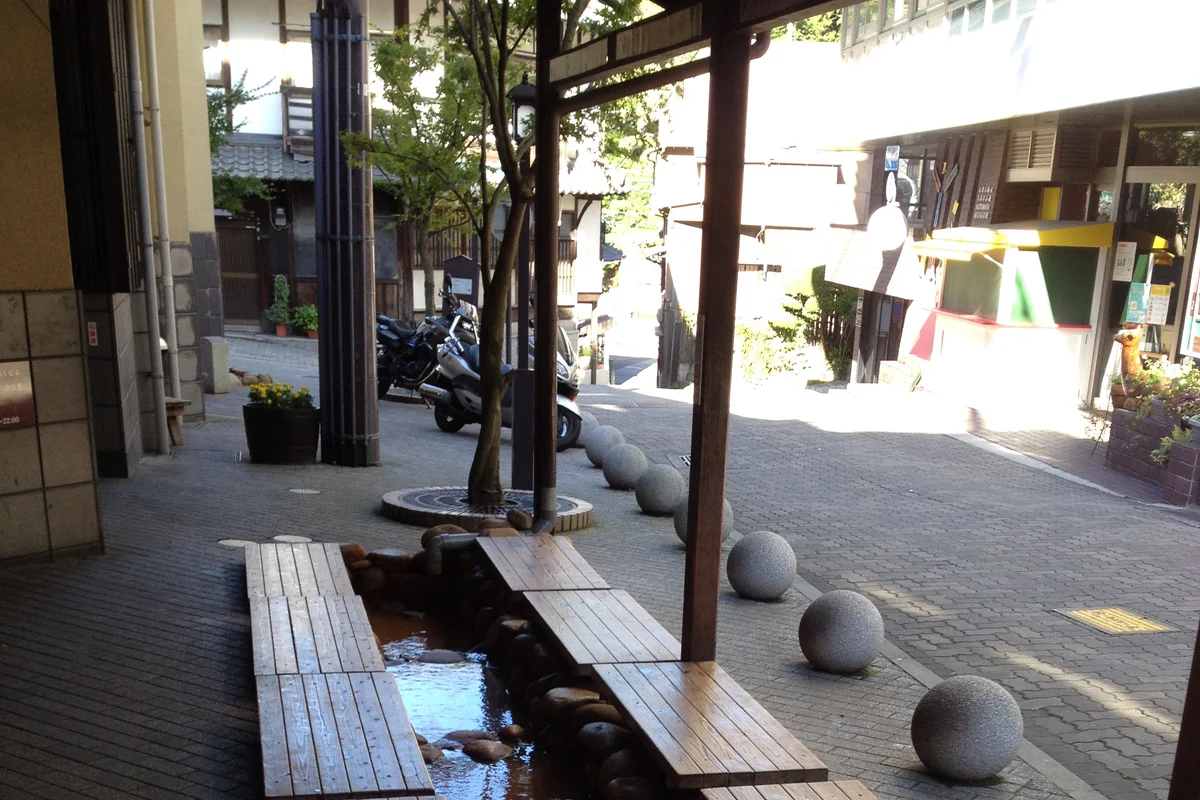
If you can, go to Kin-no-yu or Gin-no-yu early in the day or on a weekday, when reviewers found the baths calmer. According to the official site, Kin-no-yu opens at 8 a.m. and Gin-no-yu at 9 a.m. Both close on January 1. Kin-no-yu closes on the second and fourth Tuesdays and Gin-no-yu on the first and third, so on any other Tuesday at least one of them is open. A ticket for both baths costs 1,200 yen. The free foot bath next to Kin-no-yu is open during Kin-no-yu's hours, and you do not need a ticket. One TripAdvisor reviewer suggested it for anyone who is not comfortable with the public bath.
If you are not eating at your ryokan, it helps to book dinner before you arrive. Shopping is easier in the morning or early afternoon, while the shops are open. If you are staying the night, read recent reviews of the ryokan's meals and open-air bath before you book.
The town is built on a hillside, with narrow, steep lanes. The reviewer who went out with her mother also wrote that even a short walk was hard for her mother, who has bad legs. An international visitor who walked from the ropeway station described "challenging slopes, not for those with mobility issues."
One Japanese reviewer traveling with children found no drugstore in the onsen town and warns that you cannot buy medicine, diapers, or formula there. If you are traveling with children, bring what you might need.
If you are still choosing between Arima and Kusatsu, Kinosaki, or Hakone, the people answering these questions on Reddit and the forum did not agree with each other. Among the people who wrote after a visit, most were positive, including 59 of the 73 international TripAdvisor reviewers and 50 of the 73 Japanese reviewers. One Japanese reviewer described a half-day visit. He wrote that the shuttle bus from Sannomiya in central Kobe took about 20 minutes. He bathed at Kin-no-yu, had a beer, browsed the shops, bathed again at Gin-no-yu, and ate before taking the train back. "You can enjoy it in half a day," he wrote.
Still deciding which famous places actually earn a slot on a short trip? Start with what actually matters in Japan.
Sources
- Feel KOBE (Kobe Tourism Bureau): Arima Onsen area guide: Arima Onsen as the only hot spring in Japan counted among both the "three ancient springs" and the "three famous springs"; the gold spring (Kinsen) as a brown spring containing iron and salt; the silver spring (Ginsen) as a clear carbonated and radium spring; the two public bathhouses, Kin-no-yu (gold spring) and Gin-no-yu (silver spring); the free foot bath beside Kin-no-yu (checked October 8, 2026).
- Hyogo Prefecture official tourism site (Hyogo Tourism Navi): Arima Onsen: more than 1,400 years of history; appearances in the Nihon Shoki and The Pillow Book; Toyotomi Hideyoshi's many visits with his wife Nene and his work to develop the town; the Taiko-bashi and Nene-bashi bridges associated with them; under an hour from the city center (checked October 8, 2026).
- Arima Hon-Onsen Kin-no-yu and Gin-no-yu: official site: notice that entry may be limited when too many people come (checked October 8, 2026).
- Arima Hon-Onsen Kin-no-yu and Gin-no-yu: Kin-no-yu: hours (8:00 to 22:00, last entry 21:30); closed on the second and fourth Tuesdays (open on public holidays, closed the next day instead) and January 1; address in Kita Ward, Kobe; weekday prices not applied on busy days such as the New Year holidays, Golden Week, and Obon; the two-bath ticket (1,200 yen); the gold spring water coming out clear and turning brown right after; the free foot bath, open during Kin-no-yu's hours and used daily by many local people (checked October 8, 2026).
- Arima Hon-Onsen Kin-no-yu and Gin-no-yu: Gin-no-yu: hours (9:00 to 21:00, last entry 20:30); closed on the first and third Tuesdays (open on public holidays, closed the next day instead) and January 1; the spring types (carbonated and radium springs) (checked October 8, 2026).
- Visit years in this article (2016 to 2019, February 2020, spring 2024, and 2023 or later) come from the visit dates on the TripAdvisor and jalan reviews and the posting dates of the japan-guide.com forum posts we collected. They show when each person went. For current hours and prices, see the official pages listed above.
WMJS is written in Japan, in English, with AI help. We check every page, but English is not our first language. If a sentence reads oddly, tell us. One sentence is enough.
Thank you. A person reads every note.
How well do you know Japan?
Based on 51,218+ real Japanese voices
Want to know more? Ask Japanese people
Have a follow-up question about this topic? We'll ask real Japanese people.
Voice Box →