
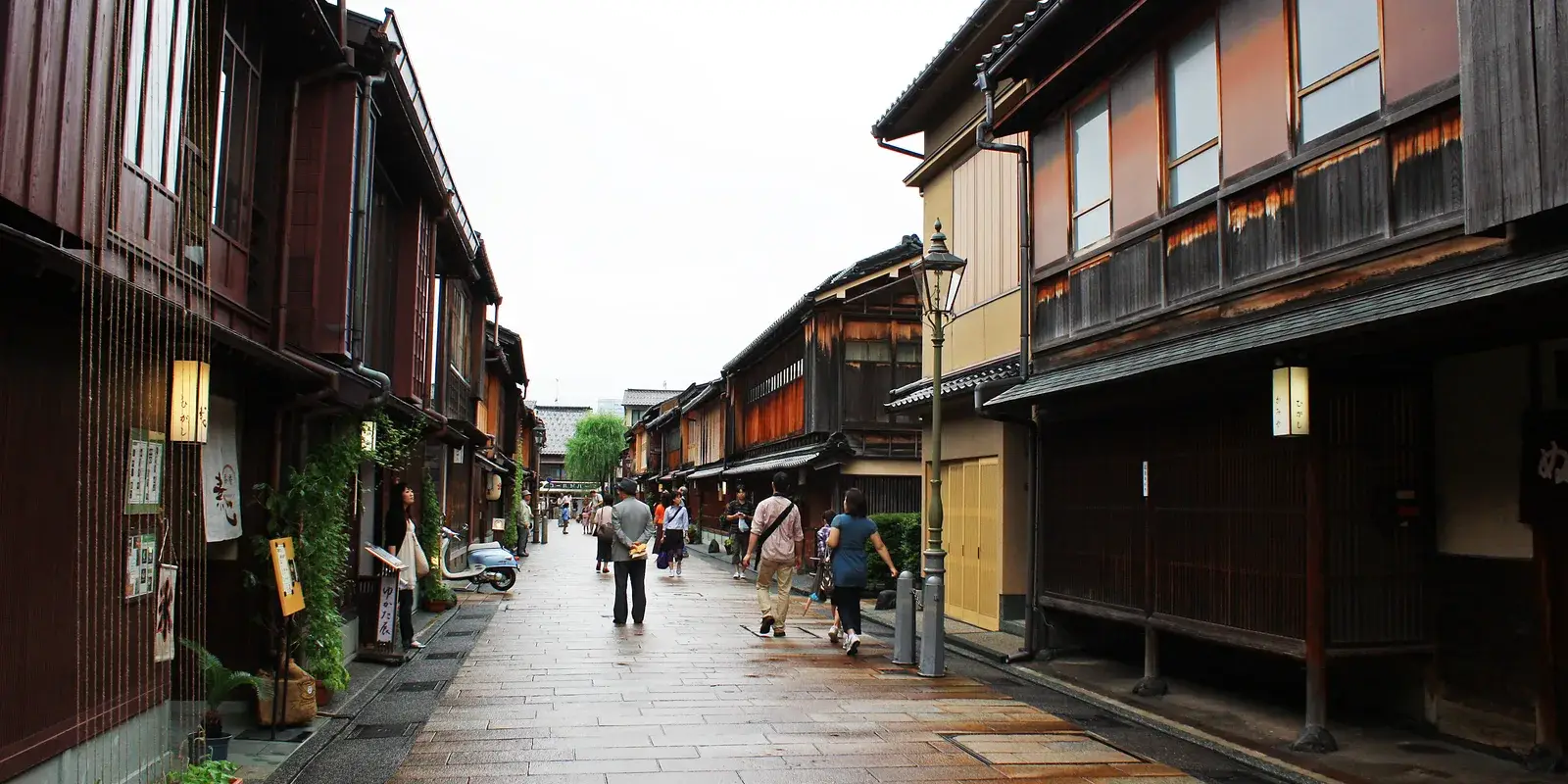
Is Kanazawa Worth It? What Foreign and Japanese Visitors Actually Say
Almost nobody asks whether Kanazawa is nice. They ask whether it's worth the detour: a bullet train off the golden Tokyo–Kyoto line, a night you could have spent somewhere else, a day you might rather add to Kyoto. And when you look at the answers from people who actually went, a clear shape appears: it isn't really a debate about the city at all. It's a question about your days, and about what you came for.
Here is the short version, in travelers' own words: yes, but as a calm, walkable day, not a single must-see garden. The people who came away flat almost always came for a blockbuster, or were weighing a tight-days detour. The people who loved it came for a whole quiet city, and gave it a day.
Is it worth the trip? (in visitors' own words)
We gathered the voices of international travelers who have actually been to Kanazawa and read them with one question in mind: was it worth it? Weighted by how strongly each opinion resonated with other readers, here is how they fell:
Look at the middle bar: that's the real story here, more than the thin red one. The largest doubt isn't "Kanazawa is bad." It's "is it worth the trains and the night, for my particular route?" The single most-upvoted careful voice put it perfectly: "Kanazawa is worth it, but not the way you're planning it, most likely." Others in the same band are just doing the arithmetic out loud: "you can see the highlights of Kanazawa in a full day," "an overnight is worth it if you want something calmer and more traditional than Tokyo," and, honestly, "if you're just going to train there for the one full day, I'd spend that day elsewhere that's closer to your other spots." None of them are saying the city let them down. They're saying: it depends on whether you're passing through anyway, and whether you want a slower day rather than a fuller one.
And the small red sliver is worth reading closely, because it's specific. A few found it "overrated" or "a bit underwhelming", and a common thread is expectation: someone came for one spectacular thing and met a modest, quiet, mid-size city instead. One even offered the fair caveat themselves: "it wasn't worth the detour… but every traveller is different." That's the whole disappointment, in a sentence. It's rarely the place. It's the mismatch between a blockbuster you pictured and a gentle day you got.
How the people who treasure it feel
What Japanese visitors say about Kenroku-en and Higashi Chaya, in their own reviews of the same gardens and streets, tells a different story. It's a warmer register, and it quietly explains the mismatch above.
That red bar is almost empty, and the one voice in it says exactly what the disappointed foreign travelers said. "I couldn't really tell what was where. I'd expected too much, so it was underwhelming. The gold-leaf soft-serve was just ordinary." The same trap, in two languages: arrive expecting fireworks, and a calm place feels flat.
Now look at what the treasured majority are actually doing, because it's the antidote. They come early and they come slowly. "Because it was an early-morning walk with few people, we could enjoy every corner," one wrote of a trip with her daughter; both were "very satisfied." Another set an alarm for the garden's free 4 a.m. summer opening: "the garden was uncrowded and I could stroll leisurely in the fresh morning air." A third, unhurried: "the calming Japanese garden was the best. You could spend all day there. I'd like to come again in a different season." They aren't ranking Kenroku-en against other gardens. They're savoring a whole city at walking pace: the pines and the moss, the gold-leaf soft serve "I'd longed for," the old teahouse lanes, a quiet café on a weekday morning. When you visit the way they do, the flat feeling has nowhere to land.
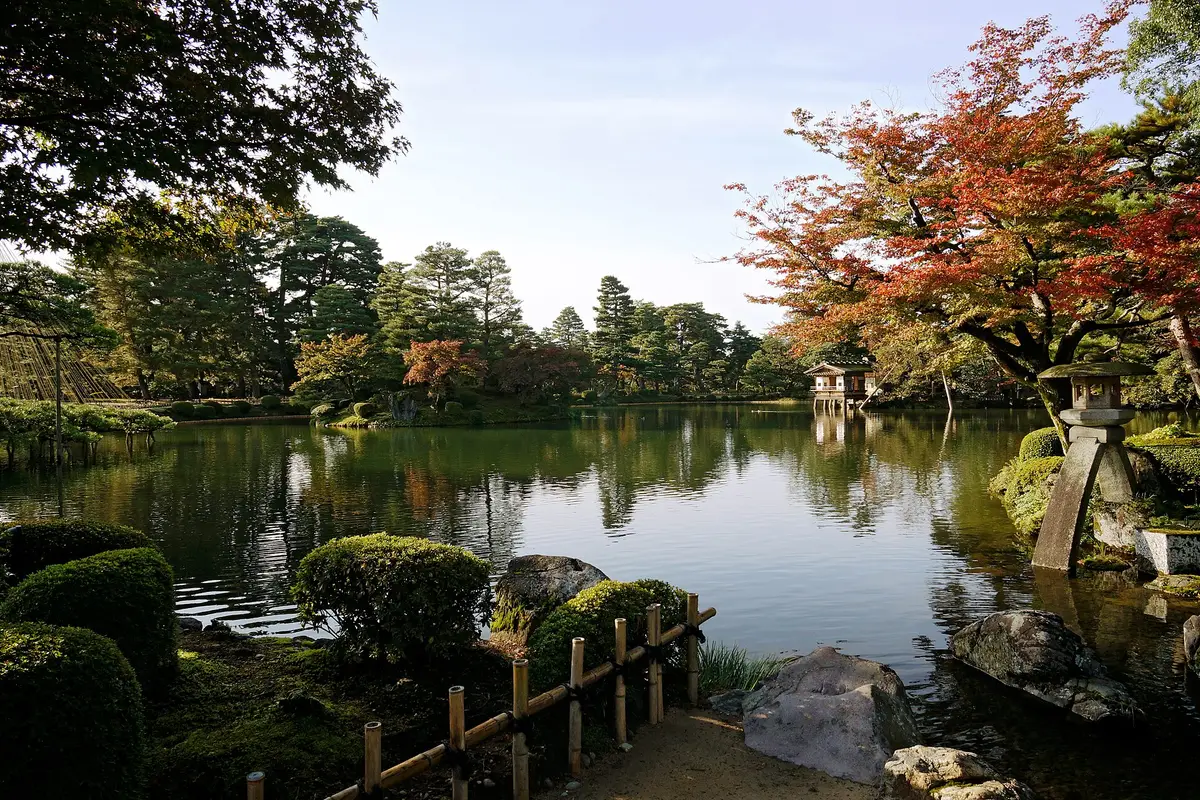
What we wish you'd noticed
The garden is one chapter of a longer book. Kenroku-en earns its fame: begun by the Maeda lords in 1676, opened to the public in 1874, some 11.4 hectares and 8,200 trees, one of the Three Great Gardens of Japan. Its very name means "the garden that combines the six": six qualities an old Chinese essay said could never coexist. But if you make it the only reason you came, you've set up the exact letdown the reviews warn about. One traveler nailed the minority view honestly: "Kenroku-en is beautiful, but not that much different from other famous Japanese gardens." Come for the day, and the garden becomes one lovely hour inside it.
The rest of the day is the point. The people who loved Kanazawa almost never stop at the garden. They list the whole city in one breath: "the Nagamachi and Higashi Chaya district, the castle… an ideal hub, a gem," "the ninja house, the samurai and geisha neighborhoods, and… fresh seafood," "the Omicho Fish Market… the castle is epic and the nearby tea districts and shrines were beautiful." Higashi Chaya is the largest of Kanazawa's teahouse districts, a preservation area where people still live and geisha still perform, and where you meet the gold. Nearly all of Japan's gold leaf, beaten to one ten-thousandth of a millimetre, is made in this one city; that comically gilded soft-serve is a centuries-old craft in disguise. Omicho market has fed the city for centuries, and the 21st Century Museum of Contemporary Art sits a short walk away for a completely different mood.
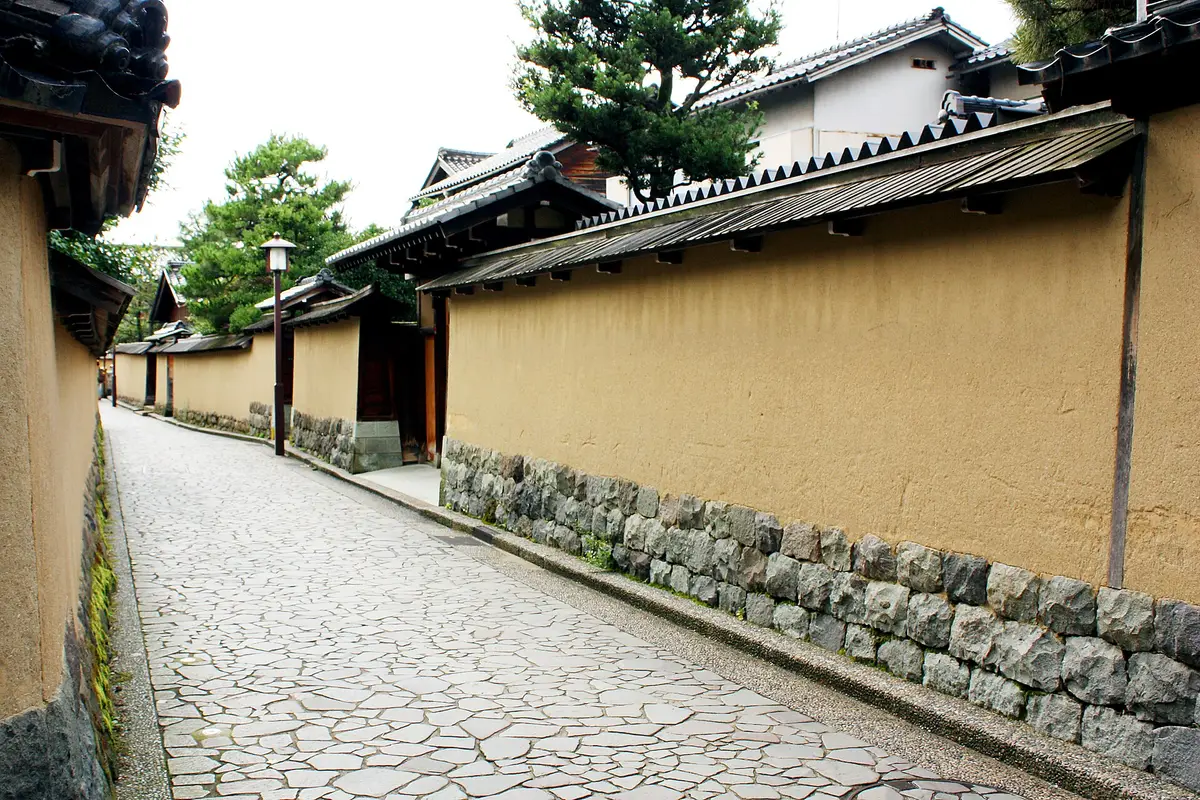
Why it's calm, and why calm is the feature. As one traveler noted, Kanazawa is "one of the few cities to survive WW2 intact," so the samurai lanes and teahouse fronts are the real thing, softened by four hundred winters rather than rebuilt for visitors. And it's quieter than Kyoto because the Maeda, the richest lords in Japan after the shogun, spent their million-koku fortune on gardens, gold and craft instead of armies, a whole domain that chose to be admired rather than feared. What some travelers read as "not much to do" is the same thing others call "the perfect mix of city and country… less crowded." It is a low-key city on purpose.
Doing Kanazawa Well, the Welcomed Way
Everything above resolves into a few simple moves.
- Give it a day instead of a dash. Nearly every happy voice and the calm local reviews agree: the main sights fit comfortably into one full day, and an overnight lets you have the empty, early-morning garden to yourself. A frantic few hours is the surest route to the "underwhelming" verdict.
- Go early. Kenroku-en opens free before official hours: as early as around 4 a.m. in high summer, via the Renchimon and Zuishinzaka gates (times shift by season, so check). The photo-queue at the two-legged Kotoji lantern and the crowds simply aren't there yet.
- Let the route decide. The travelers weighing a detour are right to weigh it. If you're already passing between Tokyo and Kyoto, or pairing Kanazawa with Takayama, Shirakawa-go or the Japan Alps, it slots in beautifully. If it means a long backtrack for a single night on a tight first trip, it's genuinely fine to save it for next time: that's not the city failing you, it's just geography.
- Come for calm, not fireworks. If you want big, loud and unmissable, that's Kyoto's job. Come to Kanazawa for a slow day of gardens, gold, seafood and old streets, and it gives you exactly that.
- Eat. Even the skeptics soften here: "if you're a foodie, maybe it's worth it." Omicho market seafood, the local thick-sauce curry, and gold-leaf sweets are half the reason people say they'd go back.
Do these, and the day tends to go the way the treasured reviews describe rather than the way the flat ones do. Kanazawa doesn't announce itself. It's a city that turned a fortune into quiet beauty, and it rewards the traveler who slows down to match its pace.
So: is Kanazawa worth it? For a whole, unhurried day (a garden that healed one visitor "for the soul," a castle town that survived the centuries intact, and gold on your ice cream), most who went say yes. Come early, give it the day, and let the detour be the calm part of your trip.
Still deciding which famous places actually earn a slot on a short trip? Start with what actually matters in Japan, and for the full story of the domain that spent a fortune on gardens instead of armies, the Kanazawa cultural audio guide is just below.
Sources
- Kenroku-en Tourism Association: Overview, area about 11.4 hectares, roughly 8,200 trees, one of the Three Great Gardens of Japan, designated a Special Place of Scenic Beauty.
- Kenroku-en Tourism Association: History, the garden begun in 1676 by the Maeda lords and opened to the public in 1874.
- Kenroku-en Tourism Association: The Six Attributes (Rokushō), the name meaning "the garden combining the six," from the Chinese essay Record of the Celebrated Gardens of Luoyang; named in 1822.
- Ishikawa Prefecture: Kenroku-en Garden Visitor Information, seasonal hours, admission (¥320 adult / ¥100 child / free for age 65+), and the free early-morning opening via the Renchimon and Zuishinzaka gates.
- Japan National Tourism Organization (JNTO): Higashi Chaya District, the largest of Kanazawa's teahouse districts, where geisha still perform; Kanazawa as the source of about 99% of Japan's gold leaf and the 20-plus-step process.
- Kanazawa City Tourism Association: Kanazawa Gold Leaf, gold beaten to one ten-thousandth of a millimetre; the entsuke gold-leaf technique recognized by UNESCO in 2020.
- Japan Tourism Agency / MLIT: The Power and Wealth of the Maeda Family, the one-million-koku Maeda domain deliberately redirecting its resources into cultural pursuits rather than being seen as a military threat.
- Ishikawa Prefecture: Kanazawa Castle History, Maeda Toshiie's 1583 entry, the keep lost to a lightning fire in 1602 and never rebuilt.
- Visit Kanazawa (Kanazawa City Official Tourism), the direct Tokyo–Kanazawa Shinkansen (about 2½ hours), the post-2024 transfer at Tsuruga from the Kyoto/Osaka direction, the walkable central core, and the Higashi Chaya preservation district.
- Hokuriku Railroad (Hokutetsu): Kanazawa Loop Bus, the sightseeing loop bus (single fare ¥220, one-day pass ¥800) linking the station with the garden, castle and teahouse districts.
WMJS is written in Japan, in English, with AI help. We check every page, but English is not our first language. If a sentence reads oddly, tell us. One sentence is enough.
Thank you. A person reads every note.
How well do you know Japan?
Built from 635 public posts by Japanese people
Want to know more? Ask Japanese people
Have a follow-up question about this topic? We'll ask real Japanese people.
Voice Box →