
Is Kamikochi Worth It? Yes, Say the Walkers, If You Get Three Things Right
The doubts about Kamikochi surface quickly once you start reading. A traveler planning a July trip asked Reddit, two summers ago now: "Is kamikochi worth visting or (especially this busy year) maybe a bit too touristic." On the Japanese side, someone who had fallen for a photo of the valley asked a Q&A board whether the whole thing was even feasible, worried about buses selling out and crowds, admitting they were "物怖じしてます", feeling intimidated before they had begun. A valley you cannot drive into, famous enough to fill buses: the hesitation makes sense.
Here is what the people who made the trip keep answering. Most of them, Japanese and international alike, say yes. And in their reviews, the worth of Kamikochi turns on three things they wish they had known to get right: the hour you arrive, what the sky is doing, and how far past the famous bridge you walk.
What international visitors say once they have been
Of the 70 voices we gathered from foreign speakers, here is how they fell:
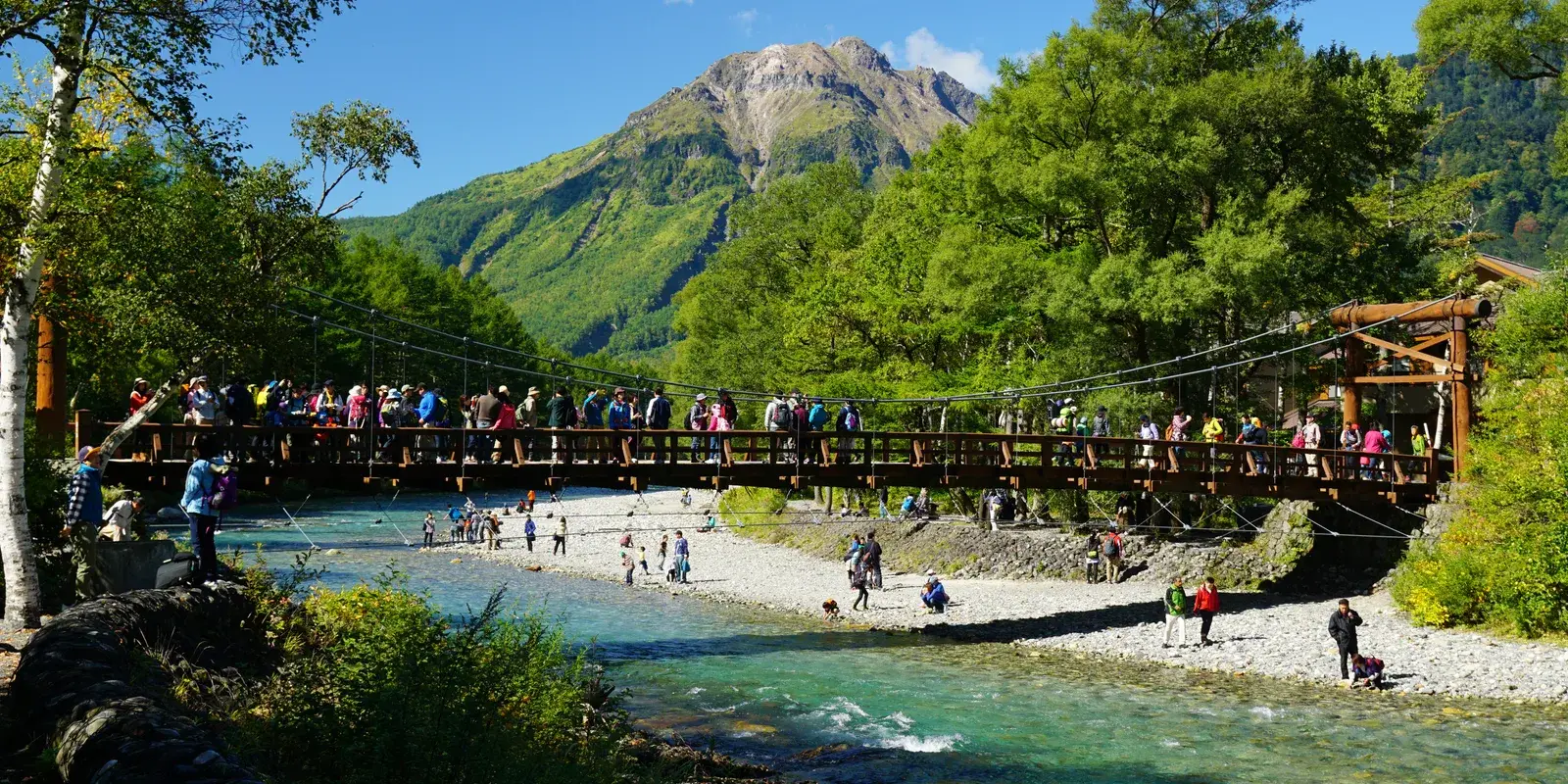
The fear going in was "too touristic". The verdict coming out is a green bar of two-thirds and a red bar you can barely see. That rare disappointed voice deserves a full hearing, because it describes a specific place at a specific point of the trip. In a July 2019 review: "Kappa Bridge area near the bus terminal is when the crowd size can get annoying here... The bridge itself is like a gauntlet of selfie-stick waving tourists..." The reviewer could not get a seat anywhere, at the spot where the bus terminal and most of the valley's shops and restaurants converge.
The warm majority describe the same bridge and simply subtract the hours. One hiker who has passed through in peak summer season explained the mechanics: "Kamikochi is tourist-heavy but it's mostly day trippers between Kappabashi and Taisho Pond from like mid-morning to late afternoon," and if you stay the night, "early morning with just the first hikers setting out and none of the day trippers yet arrived can be pretty magical." Another visitor was there "before 7 am, and returned for lunch. What a difference in the number of tourists at this landmark of Kamikochi." And a middling three-star review names the other escape route, no alarm clock required: "The view is great but it is very busy here. Walk a bit further and the crowds thin."
The remaining hesitations belong to the sky. One summer visitor sat through the worst of it: "It was pouring rain, non-stop for both days I was there," and still conceded, "I did think the scenery was quite pretty though." Mountain weather does not read itineraries, and the peaks are what people come for.
What Japanese visitors add
Japanese reviewers spend their honesty on legs, weather and the calendar; the beauty itself goes unquestioned in review after review.
Of the 125 voices we gathered from Japanese speakers, here is how they fell:
The single most useful Japanese review we found is from a first-time hiker, and it holds both halves of the truth at once (translated): "I like walking, so I had a wonderful time. But honestly, it was tougher than I expected too... that is the truth." The reviewer goes on: on the right-bank path from Kappa Bridge toward Dakesawa Marsh they passed people who had run out of strength, in a place where "whether you go on or turn back, walking is the only way out there..." And still the review lands here: "Even so, I believe Kamikochi is a place you walk: with every step a different view came into sight."
That tension runs through the Japanese gauge. The paths are famously flat. A Q&A answerer reassured a nervous questioner (translated): "I think I walked about 10km. Since it's all flat promenade paths, it was a breeze." Another reviewer read the same geography the opposite way (translated): "But 7 km is not a distance people normally walk... this strong-walker premise is what feels a bit imposed on you." Flat and long are both true of Kamikochi, and each pair of knees gets to decide which fact speaks louder.
The weather appears here too, with a certain resignation. A reviewer whose one visit met clouds wrote (translated): "If it is sunny, the Hotaka range spreads out beyond Kappa Bridge. When I went it was overcast and I could not see it." That review drew 33 likes, the most of any 4travel review we collected. And at the edges of the season the valley shows its limits: one reviewer found it "overflowing with Japanese and foreign tourists" while, at that time of year, "a lot of facilities were closed too, so finding a place to eat lunch was a real struggle" (translated).
What people fall for
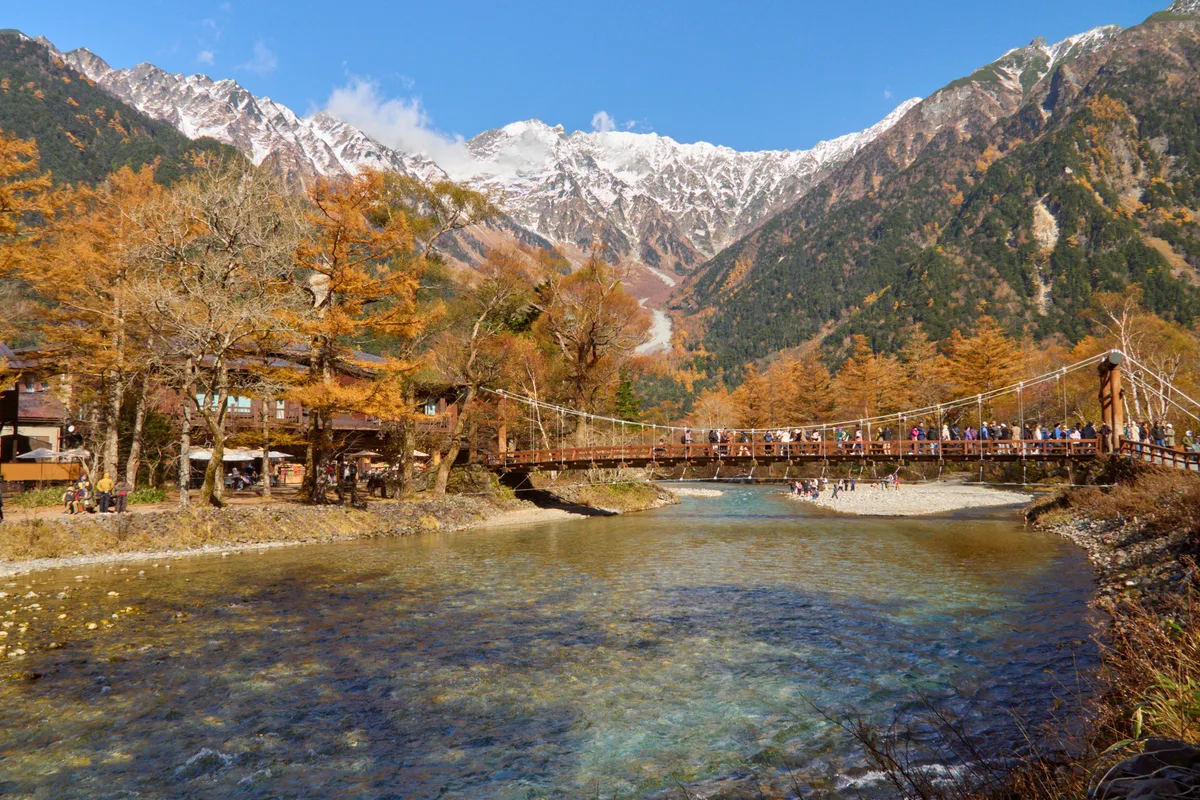
Across the warm majority of both gauges, the same few sights keep coming back. The clarity of the Azusa River startles people: "The transparency of the water is amazing", wrote one Japanese reviewer of the view under the bridge, and an international one chose spring for its "Stunning view of clear turquise water against high mountain, top covered with snow". Wild monkeys wander into a surprising number of reviews, usually met on the further stretches: "On the return (one hour walk) we saw wild monkeys playing in trees."
There is a quieter pleasure in the corpus too, easy to miss in the brochures: this is the Japan Alps without the climb. The reviewer who complained that the walk "felt more like a walking course than a hike" was describing the same fact that delights everyone else. Serious alpinists pass through Kamikochi on their way up. Everyone else gets to stand on the valley floor, in real high-mountain scenery, without ropes or summit legs, though as the first-time hiker above warns, comfortable walking shoes and an honest read of your own strength still matter.
One autumn visitor caught the valley at its very end: "It's November 15th and the park is now closed for winter. Our Autumn visit was spectacular. We imagined much bigger crowds and were pleasantly surprised."
The welcomed way to do Kamikochi
Make the bus part of the plan. Private cars cannot enter Kamikochi: as of September 2026 you drive as far as the Sawando parking area on the eastern side or Hirayu on the western side, then transfer to a bus or taxi, and the direct buses from Matsumoto and Shin-Shimashima run on a reservation-priority system. The disappointed reviewer above had actually reserved a return, guessed the hiking time wrong, and spent the last stretch rushing to make the bus, while still noting that boarding by reservation number "was run very efficiently." So reserve a return with slack in it. In top season the squeeze can start before the valley: one Japanese reviewer who left Matsumoto by car at 6:30 during Obon passed the bus stop at 7:00 and found "Many people were already waiting in line at the bus stop". The official site is candid about when the system strains: weekends from late July through August, the Obon holidays, and the October foliage season.
Arrive with the first buses, or walk beyond the bridge. The crowd complaints in both languages centre on the bridge and bus terminal area through the middle of the day. The voices that name a good hour name early ones: the visitor above who came "before 7 am", and a Japanese reviewer of the bridge who suggests around 7 am, or around 5:30 pm once the day-trippers have left. The walkers who kept going describe the reward, as one three-star review of the famous bridge put it: "There's another bridge nearer to Myojin pond which we found it nicer."
Let the sky choose your day. Clouds took the Hotaka view from the 33-likes reviewer above, and one Japanese voice names a second reason to start early (translated): "Since it's up in the mountains, the weather tends to turn bad in the afternoon... leaving early is recommended." If your schedule has any give, spend it on the clearest forecast.
Respect the flatness. No climbing gear or experience is needed on the valley floor, and none of the walking is technical. But the distances between the famous spots add up, and one reviewer felt the nature trail "seems built on the assumption that you briskly walk the 7 km round trip" with nowhere made for resting along it (translated). Pick the stretch that fits your legs, and treat the walk beyond Myojin as its own outing rather than an add-on.
Leave it the way the photos found it. The park's official rules ask three simple things: take all your litter home, stay on the path, and do not feed the wild animals, monkeys included. Visitors pass the first rule along in their own words: "Make sure to bring your own bag to collect your litter." One 2025 reviewer also noted bear-warning signs had gone up in the valley that year, as in much of Japan; the same review adds that the crowded bridge area is the last place a bear wants to be, and checking the visitor centre's current notices is the sensible move if you plan to walk far.
Know the season's hard edges. Kamikochi opens in late April (in 2026, buses started through the Kama Tunnel on April 17 and the valley opened on April 27) and closes with a ceremony on November 15, after which buses stop and lodges shut until spring. The season's edges are beautiful and divided: one off-season voice found the valley still overflowing while lunch spots had begun to close, while the mid-November visitor above expected big crowds and was pleasantly surprised. If autumn colour is the goal, the October foliage season is the valley's last busy act; our guide to Japan's autumn leaves can help you time the wider trip around it.
A simple lens for deciding
Kamikochi asks more logistics of you than most famous places in Japan: a bus you must plan around, a season with a hard close, weather that owes you nothing. In the voices above, the valley pays that effort back on its own terms. Two-thirds of both gauges land on some version of "go", and most of the rest say "go, and get the details right".
So borrow what the walkers got right. Arrive with the first buses of the morning, keep walking past the crowded bridge, and hold a flexible day for clear weather, and you are in the group that comes home calling it one of the best places in Japan. If your itinerary only allows a brief midday stop at Kappa Bridge in high season, the disappointed one percent wrote their review for you.
If you are weighing Kamikochi against another walk through old Japan nearby, one forum traveler who had done both put Kamikochi first, and our own reading of the Nakasendo trail makes a good second opinion.
If you are also weighing the Tateyama Kurobe Alpine Route, our reading of the Alpine Route covers the same bet on mountain weather, made with six connecting vehicles and a one-day ticket.
Still deciding where Japan is worth your limited days? Our hub on what actually matters when choosing places in Japan gathers every gauge we have made.
Sources
- Kamikochi Official Website (English), 2026 Opening: the Kama Tunnel opened to buses and taxis on April 17, 2026, and Kamikochi officially opened to the public on April 27, 2026.
- Kamikochi Official Website (English), Access: private vehicles are restricted; visitors travel by car as far as the Sawando Parking Area (eastern side) or the Hirayu Parking Area (western side) and continue by bus or taxi. Buses and parking are very crowded on weekends and holidays from late July through August, during Obon, and in the October autumn-leaf season.
- Kamikochi Official Website (English), Rules: take all litter with you, stay on the path, and do not feed the wild animals.
- 上高地公式ウェブサイト, 2025年11月15日 上高地閉山式: the closing ceremony is held on November 15 at Kappa Bridge; from November 16 to mid-April the valley is closed for winter, lodges shut, and no public transport runs.
- アルピコ交通、上高地方面バス案内: the Matsumoto/Shin-Shimashima to Kamikochi bus routes operate on a reservation-priority basis (予約優先制).
Visitor voices in this article are quoted verbatim from public reviews and discussions by international visitors (TripAdvisor, Reddit, travel forums) and Japanese visitors (4travel reviews, TripAdvisor, and a Q&A board), collected in September 2026. Japanese voices are shown in translation; a few Japanese residents' reviews appear as the review platform itself published them in English. The percentage gauges summarize every usable first-hand voice we collected; they are a reading of real voices without the controlled sample a survey would have.
WMJS is written in Japan, in English, with AI help. We check every page, but English is not our first language. If a sentence reads oddly, tell us. One sentence is enough.
Thank you. A person reads every note.
How well do you know Japan?
Built from 635 public posts by Japanese people
Want to know more? Ask Japanese people
Have a follow-up question about this topic? We'll ask real Japanese people.
Voice Box →