
Is the Tateyama Kurobe Alpine Route Worth It? What Happens When You Bet a Whole Day on the Weather
The doubt shows up in the thread titles before anyone even answers. "Is a daytrip to the Alpine Route worth it?" one traveler asked on Reddit, weighing the long ride out from Tokyo against a single day at the top. "Has anyone done the Tateyama Karobe Alpine Route?" asked another, unsure whether the trip was even worth researching further. The route is not cheap and not simple: six connecting vehicles, and a one-way fare of 10,940 yen between Tateyama and Ogisawa stations.
We gathered 155 reviews from people who actually rode it, and a clear majority on both sides answer yes. But a second pattern sits underneath that majority: a bad-weather day costs foreign visitors far more than it costs the Japanese reviewers describing that exact same kind of day.
What international visitors say once they have been
Of the 69 voices we gathered from foreign speakers, here is how they fell:
The green majority is not faint praise. One visitor who crossed just before the November closing wrote, "It was definitely worth it to see the dam--which I had no idea about when I bought the ticket. It's humbling to see something so huge that was built by human ingenuity." A traveler who had gone in apprehensive about the trekking and the ropeways came home converted, describing "the orderliness of the whole trip, how every station, viewpoint is equipped with clear instructions, clean toilets, etc," and the view at Murodo as "breath-taking. So much so I want to return again to do the full route."
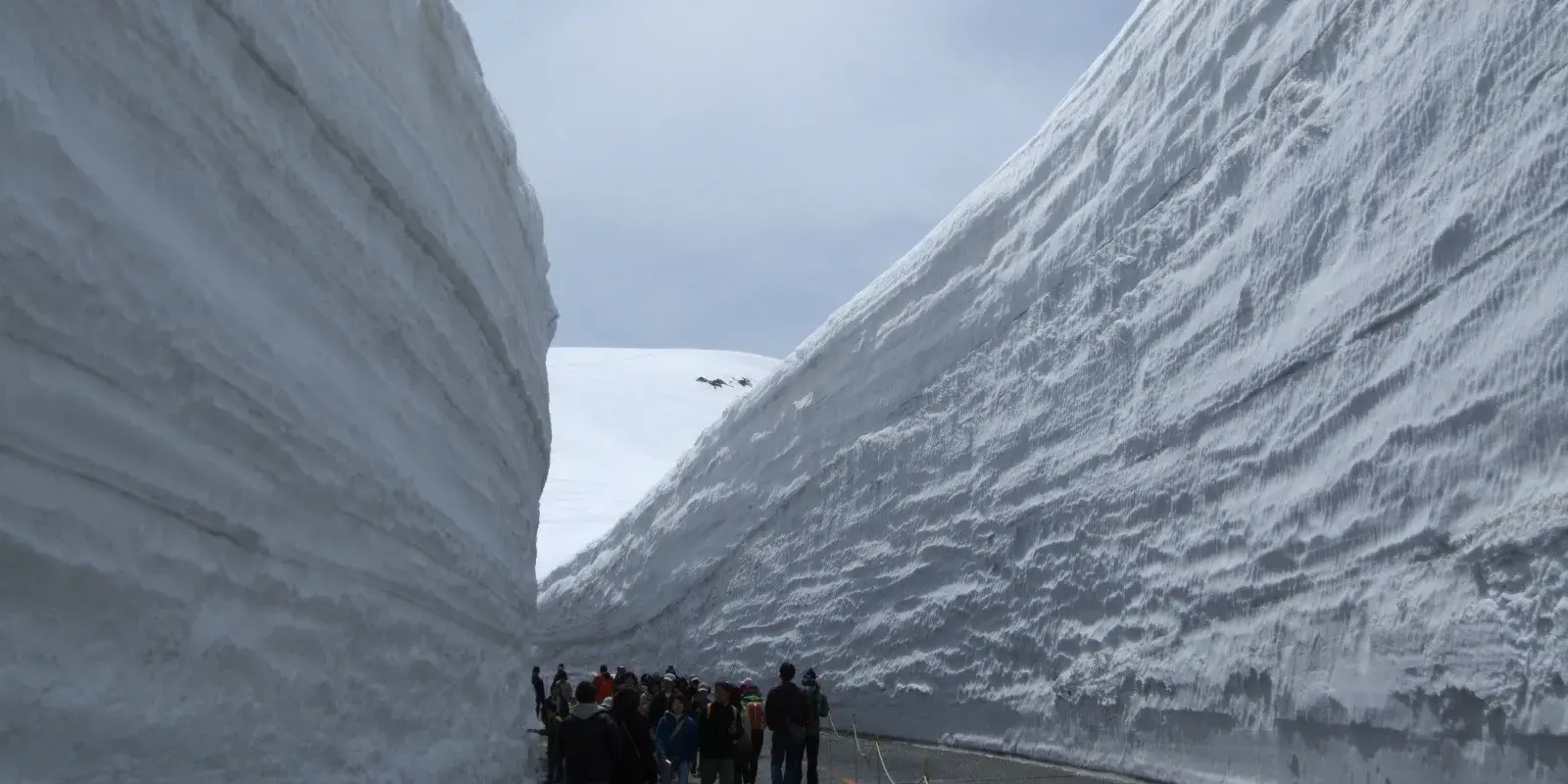
The red seven percent is small, but nearly every voice in it traces back to one structural fact: most foreign visitors get exactly one day on this route, booked weeks ahead, with no second day in reserve if the weather turns. One visitor who came specifically for the Snow Wall Walk missed the last connecting bus back and paid another $100 out of pocket, then closed the review flatly: "The trip is not worth it... NEVER AGAIN - nothing spectacular, not worth it." Another lost the whole day to a storm: "The fact that we couldn't see a thing ruined our trip... it was raining so heavily it was impossible to step out of the stations. We had no option but to end our journey at Tateyama early." Their multi-day pass was still technically valid, but not for a second attempt: "a partial return trip is not allowed, so we'll have to spend a lot more money again to go back."
A third visitor hit the same kind of gap around luggage rather than weather, calling the baggage service "a scam" after being told at the counter that "luggage can only be forwarded to Shinano-Omachi Station, not directly to Nagano." The word is harsh, but the underlying gap is real and checkable: the service is cash only, and Tateyama Station, Ogisawa Station, and several other stops are excluded from pickup and drop-off entirely. For a visitor building one tightly scheduled day around a single ticket, that gap can turn a smooth trip into a scramble.
What Japanese visitors add
Of the 86 voices we gathered from Japanese speakers, here is how they fell:
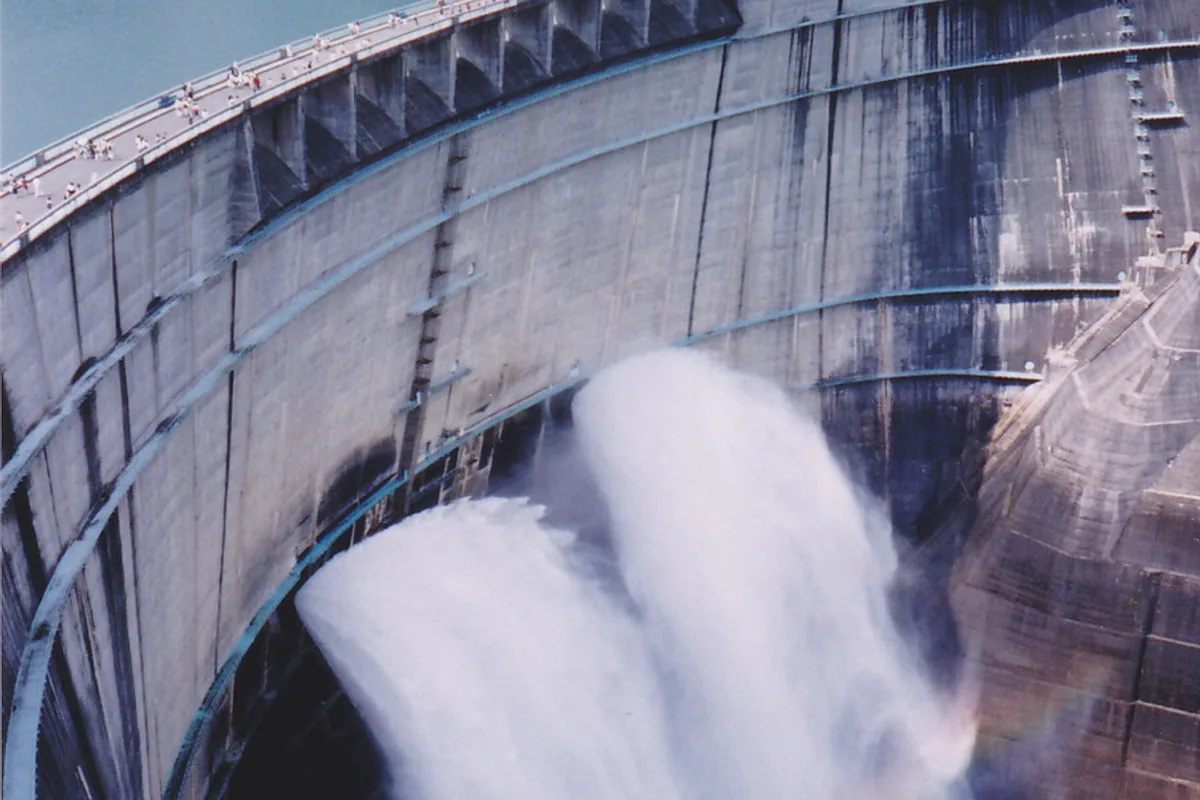
Bad weather shows up in the Japanese reviews too, in almost the same language foreign visitors use for it. One reviewer lost the Snow Wall entirely: "Both the day before and the day before that, there were snowstorms, so I couldn't see the Snow Corridor, just bad luck somehow" (translated). Another had planned the trip around Kurobe Dam's famous water release and got a trickle instead: "I'd been looking forward to it after seeing the powerful footage on TV, but because of a water shortage the dam's water release was pretty underwhelming, which was disappointing" (translated).
What almost none of them write is "never again." Proximity seems to be why: a reviewer whose view was rained out closed with a plan for next time rather than a final word: "Heavy rain meant we couldn't see the views, which was disappointing. I want to go for a rematch next time when the weather is good" (translated). One reviewer who had visited Tateyama "many times" was seeing the Snow Corridor itself for the first time, and picked up on a worry other reviews echo: "It's usually said to be 15-20m, but maybe because of global warming it was only about 10m" (translated). Another visitor heard the same claim and carried it back down with them: "they say it is getting lower year by year due to global warming. I went down the mountain thinking that it might be gone in 10 years" (translated). A third reviewer who loved Kurobe Dam itself still named real friction in getting through the site, "the flow of movement through the site is far from smooth. I think they need to take on board opinions from young people and reform it" (translated), and said in the same breath that they wanted to visit again.
Cost is the one caveat that comes closest to a foreign visitor's math. A few reviewers name it plainly: "the fare is fairly steep, so I probably couldn't go many times" (translated). That sentence still assumes there will be a next time, which sets it apart from the foreign reviews above.
What people fall for
Across both gauges, the same handful of moments repeat regardless of language. Kurobe Dam's summer water release is the single most-cited highlight in the Japanese corpus, especially when it throws a rainbow into its own spray: "The sightseeing water release at Kurobe Dam had real impact. I could also see the rainbow it creates" (translated). International reviewers reach for the same word from the opposite side of the dam wall: "Climbing to the observation deck at Kurobe dam was a great experience," wrote one, standing above the 220 steps that several Japanese reviews count off by name, usually as the price of the view rather than a complaint.
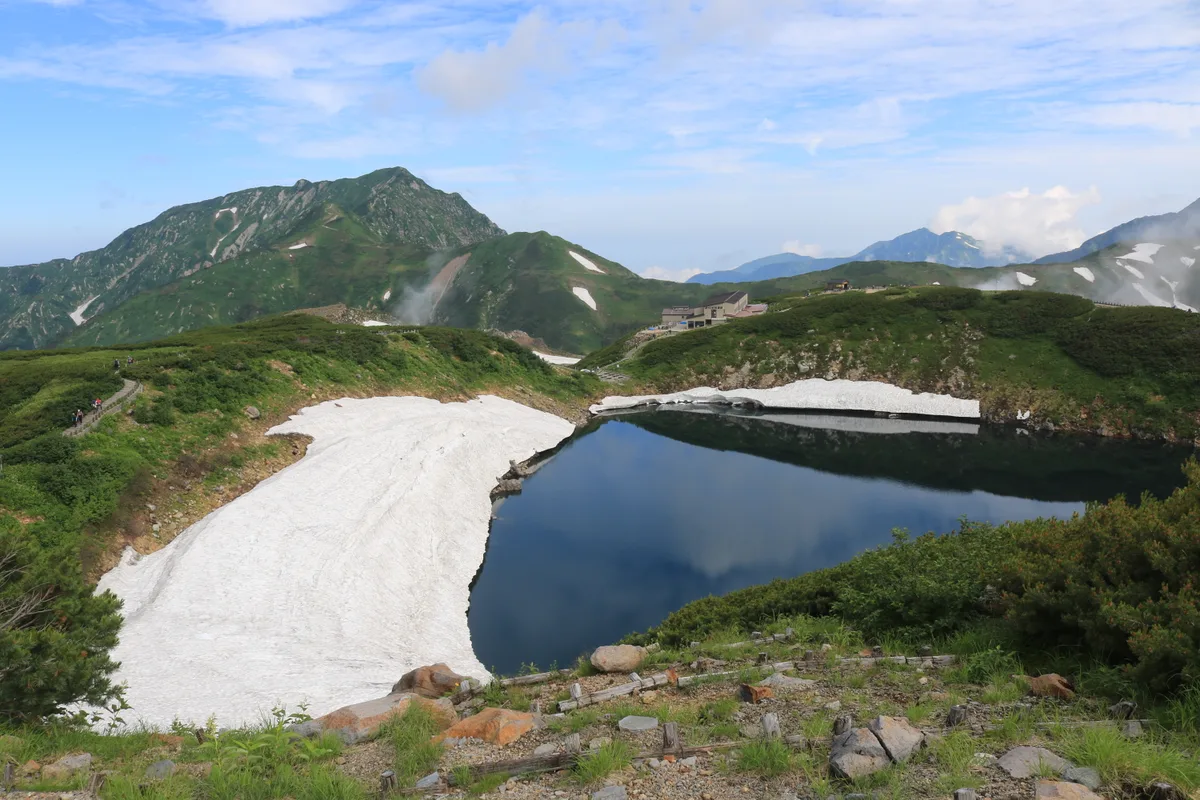
The Snow Wall works on people who arrive with almost no expectations of it. "I've never seen so much snow," wrote a visitor from the tropics who timed a trip to catch it at its highest, days after opening. Mikuriga-ike's still, dark water shows up often enough in both languages that it earns its own stop for anyone walking past Murodo Terminal. Wildlife sightings are not guaranteed, but they show up either way: one family review describes running into "a family of ptarmigans" near the pond, while another came away disappointed not to spot any.
The welcomed way to do the route
Build slack into your one day, especially around the last connections. The visitor who missed the return bus and the one whose rain-out pass could not be reused for a second attempt both describe the same trap: a tight, single-direction plan with no room to absorb a delay. Where your schedule allows it, an earlier departure and a later last connection beat the tightest possible itinerary.
Learn the baggage rules well before you book. The forwarding service in the 2026 season (April 15 to November 8) is a same-day, walk-up counter: no advance reservation needed, cash only, 4,000 yen per piece, and it skips several major stations entirely, including Tateyama Station and Ogisawa Station themselves. If your route runs through Tateyama, Unazuki Onsen, Hotel Tateyama, Midagahara Hotel, Ogisawa, or Nagano Station, plan your luggage separately from your ticket.
Start early, the way the reviewers who beat the crowds did. Long queues at the Tateyama cable car and Ogisawa's electric bus are the most repeated complaint in both languages, and reviewers who arrived at opening, or reserved a timed-entry ticket in advance, wrote some of the smoothest accounts in the whole corpus.
Pack for Murodo's altitude, wherever you are starting from. One June reviewer's warning still holds outside the Snow Wall season too: "in June, it is still cold." A layer you can add costs little against a day you paid for once.
Weigh the season with the wall's real timeline in mind. The Snow Wall Walk runs April 15 through June 25 in 2026, and the wall stood 12 meters tall at that April opening, then shrinks week by week through the season. Reviewers who came for the wall and only the wall were the ones most exposed to disappointment when the melt or the weather did not go their way. If your real interest is the wider alpine scenery, the full 2026 operating season runs April 15 through November 30, and the reviews above suggest June through October carries less all-or-nothing risk.
If the day still goes wrong, treat it the way the Japanese reviewers above do. They almost never call a rained-out visit a waste; they call it bad luck, and they talk about coming back. That habit of mind costs nothing to borrow, and it is the clearest thing separating the two gauges above.
A simple lens for deciding
The route asks a lot of anyone attempting it in a single day: a five-figure yen fare, a chain of six vehicles, and weather that can close in without warning. In the voices above, that bet pays off for three out of every four visitors, regardless of where they started from. Both gauges describe the same dam, the same wall, the same pond, so the gap between them comes down to what one bad-weather day actually costs you. For a Japanese visitor within a train ride of home, a rained-out morning is disappointing. For a visitor who built an entire trip to Japan around one ticket, it can feel like the whole reason for coming.
Reserve slack around your connections, learn the baggage rules before a counter has to explain them to you, and if the day still falls through, file it as bad luck rather than a verdict, the way the repeat visitors above do.
If you are weighing this against another mountain route in the Japan Alps, our own reading of Kamikochi covers a similar bet on weather and timing, without the six-vehicle transfer chain.
Still deciding where Japan is worth your limited days? Our hub on what actually matters when choosing places in Japan gathers every gauge we have made.
Sources
- Tateyama Kurobe Alpine Route Official Website, Fares: one-way adult fare Tateyama Station to Ogisawa Station is 10,940 yen, round trip 19,680 yen, as of February 27, 2026.
- Tateyama Kurobe Alpine Route Official Website, Baggage & Vehicle Forwarding: the 2026 baggage forwarding service runs April 15 to November 8, 4,000 yen per piece, cash only, no advance reservation needed, and it does not handle pickup or drop-off at Tateyama Station, Unazuki Onsen, Hotel Tateyama, Midagahara Hotel, Ogisawa Station, or Nagano Station.
- Tateyama Kurobe Alpine Route Official Website, Enjoying the Snow Wall: the 2026 Snow Wall Walk (Yuki no Otani Walk) runs April 15 to June 25, 9:30-15:00, in the Walking Zone at Murodo.
- Yomiuri Shimbun, April 15, 2026: the Tateyama Kurobe Alpine Route fully reopened on April 15, 2026 after its winter closure, with the Snow Wall reaching a height of 12 meters.
- Tateyama Kurobe Alpine Route Official Website, 2026 Operating Season: the 2026 operating season runs April 15 (Wed) through November 30 (Mon).
- Tateyama Kurobe Alpine Route Official Website, WEB Ticket Guide: WEB tickets are reserved online for a chosen boarding date and boarding time (timed-entry tickets), paid by credit card, and collected at the automatic pickup machines at Ogisawa, Tateyama and Dentetsu-Toyama stations from noon the day before travel.
Visitor voices in this article are quoted verbatim from public reviews and discussions by international visitors (Reddit and TripAdvisor) and Japanese visitors (Jalan reviews and TripAdvisor), collected in September 2026. Japanese voices are shown in translation; a few Japanese residents' reviews appear as the review platform itself published them in English. The percentage gauges summarize every usable first-hand voice we collected; they are a reading of real voices without the controlled sample a survey would have.
WMJS is written in Japan, in English, with AI help. We check every page, but English is not our first language. If a sentence reads oddly, tell us. One sentence is enough.
Thank you. A person reads every note.
How well do you know Japan?
Based on 51,218+ real Japanese voices
Want to know more? Ask Japanese people
Have a follow-up question about this topic? We'll ask real Japanese people.
Voice Box →