
You're Already Living It: The Daily Habits Behind Japan's Longest Life Expectancy
What you'll learn in this article:
- What researchers found in the world's longest-running longevity study, and what it has to do with your Japan trip
- Why Japanese people walk 6,846 steps a day without trying (and you probably do too while you're here)
- The meal structure that a Tohoku University study linked to longer life, and what Japanese people honestly think about their own diet
- Why 47% say the community bonds that once sustained Japan's elderly are disappearing
- The generation question: 58% of Japanese voices doubt today's youth will live as long
Why do Japanese people live so long? We collected 325 public posts by Japanese people, then cross-referenced what they wrote with Blue Zones research, government health data, and a 50-year longevity study. The honest answer: it's not one secret. It's a system of daily habits (walking, eating, connecting) that researchers have linked to longer life. And if you've spent even a few days in Japan, you've already been living inside that system without knowing it.
87.33 years
Japanese women's life expectancy: world #1 for 41 consecutive years (Ministry of Health, Labour and Welfare, 2025)
Quick Guide
| Topic | What Research + Japanese Voices Say | |
|---|---|---|
| 🟢 The data is real | Japan's longevity is extraordinary | Women: 87.33 years (world #1 for 41 years). Men: 81.35. Life expectancy rose from ~50 in 1947 to 84+ today. Okinawa was one of the world's five Blue Zones. |
| 🟡 It's not magic | Daily systems, not ancient secrets | Blue Zones researchers identified 9 longevity factors. At least 5 are built into everyday Japanese life: walking infrastructure, small varied meals, community rituals, sense of purpose, moderate portions. |
| 🔴 It's complicated | Japanese people are honest about the cracks | 47% say community bonds are disappearing. 58% doubt today's youth will live as long. 37% say their diet is less healthy than the world thinks. Longevity is maintained, not automatic. |
The one thing to remember: You're not just sightseeing in Japan. You're walking through a longevity system. The 15,000 steps you take, the small balanced meals, the green tea at every table, the hot bath at night. Researchers have linked all of these to longer life. Japanese people don't think of them as "longevity habits." They're just... life.
How We Gathered These Voices
We collected 325 Japanese-language responses across five longevity topics: daily movement and walking culture (60 responses), food and diet (60 responses), social connection and ikigai (60 responses), self-awareness of longevity (60 responses), and generational change (85 responses). We gathered these voices from public Japanese Q&A sites, forums, and social posts, along with reporting from Toyo Keizai, Nikkei, and other Japanese media, plus academic publications.
The academic backbone comes from the Okinawa Centenarian Study (50+ years, 1,000+ centenarians), Blue Zones research by Dan Buettner, the Ohsaki Cohort Study on ikigai (43,391 participants), and government statistics from the Ministry of Health, Labour and Welfare.
A quick note: This article does not claim that Japanese culture causes longevity. What it does is show you where established research findings overlap with cultural practices you can actually experience in Japan, and what Japanese people themselves think about those connections.
What the Research Says First
Before we hear from Japanese people, here's what scientists have found.
The Okinawa Centenarian Study, running since 1975, has examined over 1,000 people who lived past 100 on the island of Okinawa. Their findings: Okinawan centenarians had one-fifth the heart disease, one-quarter the breast and prostate cancer, and one-third the dementia of Americans.
Dan Buettner's Blue Zones research, conducted with National Geographic, identified nine shared habits across the world's five longest-lived communities (including Okinawa). They called them the "Power 9":
- Move Naturally: daily movement built into everyday life rather than gym sessions
- Purpose: Okinawans call it ikigai (生きがい)
- Down Shift: regular stress-relief routines
- 80% Rule: stop eating when 80% full (hara hachi bu, 腹八分目)
- Plant Slant: diets heavy in vegetables, beans, and grains
- Wine at 5: moderate alcohol in social settings
- Belong: participation in a faith or community group
- Loved Ones First: family proximity and investment
- Right Tribe: social circles that reinforce healthy behavior
Here's what's remarkable: at least five of these nine factors are embedded in daily Japanese life, not as health programs, but as ordinary infrastructure. And during your time in Japan, you've probably experienced most of them without realizing it.
You're Already Walking It
Blue Zones researchers found that the world's longest-lived people don't go to gyms. They move naturally: walking to the store, tending gardens, taking stairs. The infrastructure of their daily lives keeps them active without thinking about it.
Japan is built exactly this way.
Japanese men average 6,846 steps per day. Women average 5,867 (National Health and Nutrition Survey, 2016). In Tokyo's urban areas, working-age adults average roughly 7,500. A 2025 study of 938,568 people confirmed that public transit commuters walk significantly more than car commuters, and 68% of Japanese residents walk to their nearest train station.
If you've been in Japan for even a day, you know this in your legs. The station stairs. The walk from the train to the restaurant. The 20-minute stroll from one shrine to the next. Nobody told you to exercise. The city did it for you.
But do Japanese people actually think about this? Here is what their posts say.
The urban-rural split nobody talks about
The biggest surprise in our data wasn't the health connection. It was the gap between city and countryside.
都会人は平気で10分以上歩くけど地方民は車に慣れすぎてて10分歩くのですら嫌がる City people walk 10+ minutes without thinking. Rural people are so used to cars that they won't even walk 10 minutes.
10分くらい先の家まで歩いて帰ろうとすると「車で送ってくよ!」って申し出を受けることが多い When I try to walk home — about 10 minutes away — people keep offering to drive me.
車が無いとコンビニにも行けんぞ Without a car, you can't even get to the convenience store.
The Japan you experience as a tourist (train stations, walkable cities, temple paths) is the Japan that happens to match what longevity researchers recommend. But 32% of Japanese people pointed out that rural Japan runs on cars, not walking. The longevity infrastructure is uneven. If you're curious about what actually matters most when visiting Japan, movement culture is one of the first things you'll notice, and one of the last you'll expect to be meaningful.
6:30 AM, every park in Japan
There's one more thing researchers might appreciate. Every morning at 6:30, in parks across Japan, groups of elderly people gather for radio taiso (ラジオ体操): a synchronized stretching routine broadcast on NHK radio since 1928. It's not intense exercise. But it's daily, it's social, and it gets people moving before the day begins.
Nobody calls it a longevity practice. It's just what the neighbors do.
💡 You're part of the system now
During your trip, you're probably walking 15,000+ steps a day, more than double the Japanese average and triple what most Americans walk at home. You didn't plan a fitness program. Japan's infrastructure did it for you. That's exactly what Blue Zones researchers mean by "move naturally."
The Meal That's Quietly Different
The Okinawa Centenarian Study found that pre-1960s Okinawans consumed 10-15% fewer calories than standard guidelines, with diets heavy in vegetables, tofu, fish, and sweet potato. Blue Zones researchers call this the "80% Rule": hara hachi bu (腹八分目), eating until you're 80% full.
A 2015 Tohoku University study went further: mice fed a reconstructed 1975 Japanese diet lived significantly longer, with delayed cognitive decline and less visceral fat, compared to mice fed modern 2005 or pre-war 1960 diets. The "sweet spot" wasn't ancient Japanese food or modern Japanese food. It was the diet of a specific generation.
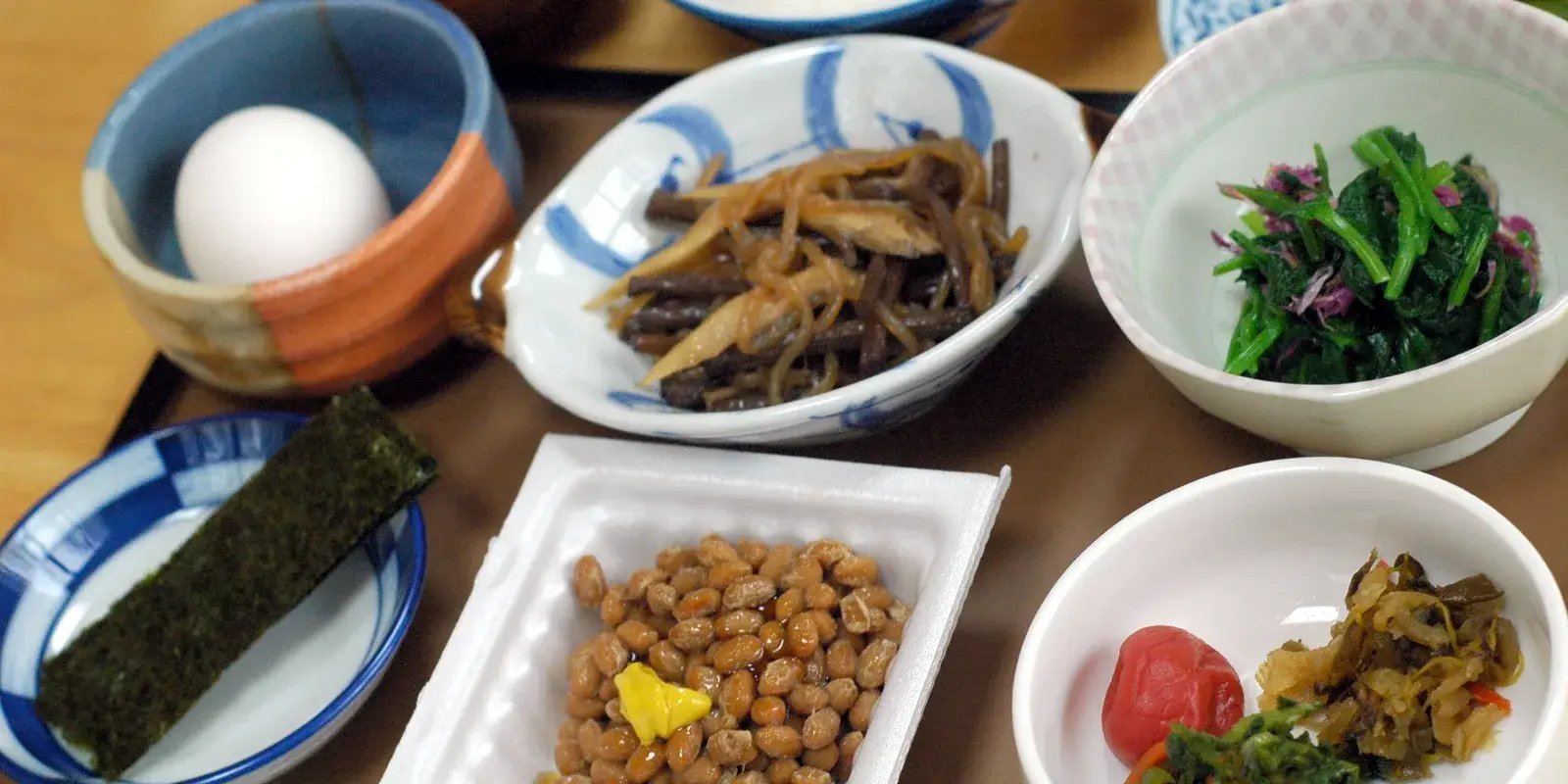
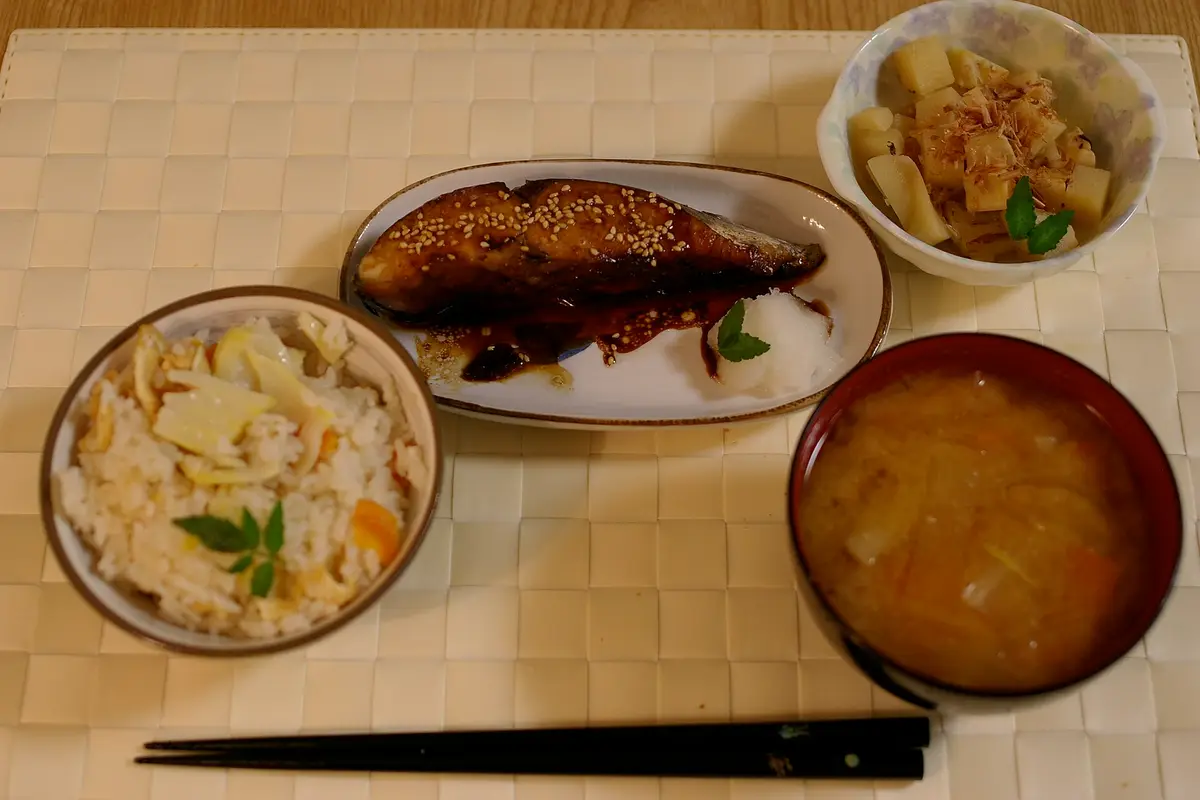
The traditional Japanese meal structure, ichiju-sansai (一汁三菜, one soup and three sides), naturally creates variety and small portions across many food groups. If you've eaten a ryokan breakfast or a teishoku set lunch, you've experienced it: a tray of small dishes, each with something different. (Staying at a ryokan gives you a front-row view of this: here's what to expect from a traditional ryokan stay.)
But what do Japanese people actually think about their own diet?
The salt problem nobody abroad mentions
The biggest pushback from Japanese voices wasn't about fast food or convenience stores. It was about salt.
日本の料理は最後に塩を加えて味を調えるものが多すぎる。最後に塩を加えても実は塩味は効かない Too many Japanese dishes add salt at the end for seasoning. But adding salt last doesn't actually make things taste saltier — you end up using more.
Japan's average salt intake is roughly 10 grams per day (National Health and Nutrition Survey, 2019), double the WHO recommendation of less than 5 grams. This is the "Japanese paradox" that puzzles researchers: high salt intake, yet declining cardiovascular mortality since the 1980s. Scientists believe other dietary factors (high fish intake, potassium-rich vegetables, green tea, and universal healthcare access) may offset the salt.
Japanese people know about this tension. 37% of voices said their diet is less healthy than its international reputation suggests.
What you're actually eating
確かにそうかもしれないですね。主婦が3食きちんとご飯を作るって言うのが結構当たり前の様になっている It's true — in Japan, it's still fairly normal for homemakers to prepare three proper meals a day.
ご飯なしでそのままではバクバク食べられないような塩漬けの食品や乾物が多い A lot of Japanese preserved foods and dried goods are so salty you can't eat them without rice. The rice dilutes the salt.
That second comment reveals something structural about Japanese cuisine: rice functions as a delivery system, moderating the intensity of everything else on the tray. The small portions, the variety, the rice that anchors it all. When you sit down at an izakaya and order several small dishes to share, you're eating in a pattern that researchers have linked to better nutritional outcomes, even if the individual dishes aren't all "health food."
💡 The structure matters more than any single ingredient
Researchers suggest it's not any single Japanese food that matters. It's the structure: small portions, high variety, fermented foods, fish over red meat, green tea throughout the day. The ryokan breakfast you ate this morning? That's closer to the 1975 "sweet spot" diet than what many young Japanese people eat today.
The Net That's Starting to Fray
The Ohsaki Cohort Study at Tohoku University followed 43,391 Japanese adults for seven years. Their finding: people who reported having no ikigai (生きがい: a sense of life worth living) had a 1.5 times higher risk of death from all causes. Cardiovascular risk was 1.6 times higher. External causes of death were 1.9 times higher.
In Okinawa, Blue Zones researchers documented the moai (模合) system: lifelong social support groups of about five people, formed in childhood. One moai group Buettner profiled had been together for 97 years. The average age of its members: 102.
Social connection isn't just nice to have. The data says it's a survival factor.
But here's where Japanese voices show something the research alone doesn't.
The warm side
うちの祖母は90歳ですが、毎朝近所のお友達とラジオ体操をしています。雨の日以外は欠かさず行って、終わった後みんなでお茶を飲むのが楽しみだそうです。あのつながりがあるから元気なんだと思います。 My grandmother is 90. Every morning she does radio taiso with her neighborhood friends. She never misses a day unless it rains, and the tea afterward is what she looks forward to most. I think that connection is why she's still so healthy.
町内会の会合に来なくなったおじいさんを心配して訪ねたら、倒れていたのを発見して助かったケースがあった。普段の付き合いがあったからこそ異変に気づけた。 An elderly man stopped coming to neighborhood association meetings. Someone went to check on him and found him collapsed. He survived because regular contact made the absence noticeable.
The disappearing side
Nearly half of Japanese voices (47%) said these connections are fraying.
近所付き合いの程度について、1988年には64.4%の人が親しく付き合っていたのに、2014年には31.9%にまで減った。半分以下です。昔のような地域のつながりはもうないんです。 In 1988, 64.4% of people had close relationships with their neighbors. By 2014, it was down to 31.9%. Less than half. The old community bonds are gone.
The data behind this voice is stark: in early 2024, 37,227 people living alone were found dead at home in Japan. 70% were aged 65 or older. An estimated 4,000 bodies went undiscovered for more than a month. The Japanese word for this, kodokushi (孤独死, lonely death), has become one of the country's most discussed social issues.
Multigenerational households dropped from 50% in 1980 to 6.3% in 2024 (MHLW Comprehensive Survey of Living Conditions). By 2050, an estimated 10.8 million seniors will live alone.
💡 The paradox within the paradox
Japan's longevity was partly built on social connection: ikigai, neighborhood bonds, moai groups, radio taiso circles. But those structures are eroding. The country with the world's longest life expectancy is simultaneously facing a crisis of isolation. Japanese people know this. They're not hiding it. And the question of whether future generations will inherit the same social safety net is very much open.
Do Japanese People Even Think About This?
Here's something you might not expect: most Japanese people don't think of their daily habits as "longevity secrets." Walking to the station, eating small meals, drinking green tea: it's just how things are. The framing of these habits as remarkable is largely a foreign invention.
We sorted what Japanese people wrote about one simple question: do they think about why Japan has the world's longest life expectancy?
The healthcare answer
The most common explanation from Japanese people wasn't food or culture. It was systems.
決定的な原因は医療の普及です。皆保険制度のおかげで大部分の人が医療の恩恵を受けられるし、世界第三位の経済力で快適な生活ができる。食事の問題じゃなく、システムの問題です。 The decisive factor is universal healthcare. Thanks to our national insurance system, most people can access medical care. Combined with the world's third-largest economy and comfortable living standards — it's a systems issue, not a food issue.
The uncomfortable question
But 38% of voices pushed back on whether long life is even something to celebrate.
高齢者ってどうして長生きしたがるのですか?生きた年数が長ければいいってものではないと思います。質の問題では。 Why do elderly people want to live so long? I don't think more years automatically means better. It's about quality.
世界一添加物の多いといわれている日本、なのに長寿国なのは、なぜですか?添加物で体に悪いはずなのに矛盾していませんか? They say Japan has the most food additives in the world, yet it's also the longest-lived country. Doesn't that contradict itself?
This last question captures something important: Japanese people don't see their longevity as a simple success story. The gap between total life expectancy (87.33 for women, 2025) and healthy life expectancy (75.45, MHLW 2022) means roughly 12 years where many women are alive but not fully healthy. For men, the gap is about 8.5 years.
Japan ranks number one in lifespan but number 51 in the World Happiness Report. Long life and good life are not the same question.
Will It Last? The Generation Question
This was the sharpest divide in all 325 voices. On whether today's young Japanese will live as long as the current elderly, the posts were overwhelmingly skeptical.
The concern
今の若者は今の老人のように長生きできると思いますか?食生活も乱れているし、運動不足だし、ストレスも多いし…正直、今の高齢者のような長寿は無理だと思います。 Do you think today's young people will live as long as today's elderly? With their eating habits, lack of exercise, and stress... honestly, I don't think they can match current levels of longevity.
今の若者たちって、寿命を長くすることに、そんなに関心を持っていないような気がします。長生きしたくないって言う人が周りにも多い。 I get the feeling young people today aren't even interested in living long. A lot of people around me say they don't want to live to old age.
Some researchers have pointed to the "Okinawa 26 Shock" as a warning: Okinawa's men, once among the world's longest-lived, dropped to 26th among Japanese prefectures after younger generations adopted American-influenced fast food diets during the post-war period. A real-world example of longevity gains being reversed within a single generation.
Government data adds texture: among men in their 20s, 37.4% skip breakfast. Young adults have the lowest vegetable intake of any age group. Average sitting time exceeds 8 hours per day.
The defense
But 27% of voices pushed back, and their arguments had data behind them too.
言うほどコンビニ、スーパー惣菜って体に悪い?添加物も国の基準内だし、昔の人だって保存食ばかり食べてた時代もあるでしょ。過剰に心配しすぎだと思う。 Are convenience store meals really that bad? The additives are within government standards. People in the past ate preserved food all the time. I think the worry is overblown.
なぜ若者に「健康オタク」が増えているのか?野村総研の調査では「健康のためにお金を使う」という若者が増えている。プロテイン、サプリ、ジム通いが日常になっている。 Why are there more "health nerds" among young people? Nomura Research Institute data shows more young people spending money on health. Protein, supplements, gym memberships — these are becoming normal.
Young Japanese are drinking less alcohol than any previous generation. The "protein culture" and fitness boom are reshaping how they think about food. And Japan's universal healthcare system (the factor Japanese people themselves most often cite) isn't going anywhere.
💡 Different habits, same safety net
The generation question isn't whether young Japanese are living exactly like their grandparents. They're not. The question is whether Japan's structural advantages (universal healthcare, food safety standards, walkable infrastructure) can compensate for changing individual habits. Japanese people are genuinely divided on the answer.
What This Means for Your Trip
You came to Japan to see temples, eat ramen, and ride the Shinkansen. You didn't come for a longevity program. But the same habits that researchers link to long life (clean environments, fresh food, an unhurried pace) are part of what makes your first week in Japan feel so different from home.
But consider what your days actually look like:
- You're walking 15,000+ steps: through stations, streets, temple grounds. That's Blue Zones' "Move Naturally," happening automatically.
- You're eating small, varied meals: the teishoku lunch, the izakaya spread, the ryokan breakfast with ten small dishes. That's the structure researchers linked to the 1975 "sweet spot."
- You're bathing: in onsen, sento, or your hotel's deep soaking tub. Kyushu University has studied hot spring bathing for 90+ years, though the science remains inconclusive.
- You're drinking green tea: at every restaurant, in every hotel room, from every vending machine. Japanese people consume an average of 3-4 cups daily.
- You're experiencing a quieter pace: the train etiquette, the temple silence, the small moments of consideration that the rest of this site is about. Researchers call this "down shift."
None of this will add years to your life from a two-week trip. But it might help you understand why the daily texture of life in Japan (the part that feels different from home) is the same texture that researchers have been studying for decades.
Japanese people don't call it a longevity system. They don't think of walking to the station as exercise, or ichiju-sansai as a health plan, or radio taiso as preventive medicine.
They just call it Tuesday.
Share Your Experience
Have you noticed the daily rhythms of Japan affecting how you feel? The walking, the meals, the pace? We'd love to hear what you've observed.
Sources
Statistical Data (Primary Sources)
Ministry of Health, Labour and Welfare (厚生労働省): Abridged Life Tables 2025 (令和7年簡易生命表)
- Male: 81.35 years, Female: 87.33 years
- https://www.mhlw.go.jp/toukei/saikin/hw/life/life25/index.html
WHO Global Health Observatory: Japan Profile
- HALE (2021): Male 72.5, Female 75.7
- https://data.who.int/countries/392
Ministry of Health, Labour and Welfare: Healthy Life Expectancy (健康寿命) 2022
- Male: 72.57, Female: 75.45 (announced December 2024, latest available)
- https://www.mhlw.go.jp/content/10904750/001363069.pdf
National Health and Nutrition Survey (国民健康・栄養調査), 2016
- Average daily steps: Men 6,846, Women 5,867
- https://www.nippon.com/en/japan-data/h00372/keeping-a-step-ahead-men-in-osaka-and-women-in-kanagawa-score-top-for-walking.html
- Breakfast skip rate (men in 20s): 37.4%
Longevity Research
Okinawa Centenarian Study: Willcox, Willcox, Suzuki (1975–present)
- 1,000+ centenarians examined
- Findings: 1/5 heart disease, 1/4 breast/prostate cancer, 1/3 dementia vs. Americans
- https://okinawacentenarian.org/the-study
Blue Zones Power 9: Dan Buettner, National Geographic
- 9 shared longevity factors across 5 communities
- https://www.bluezones.com/2016/11/power-9/
Sone et al. 2008: Ikigai and Mortality (Ohsaki Study, Tohoku University)
- 43,391 adults, 7-year follow-up
- No ikigai → HR 1.5 all-cause mortality (95% CI 1.3-1.7)
- Published in Psychosomatic Medicine
Tohoku University 1975 Japanese Diet Study (2015)
- Mice on 1975 diet lived longer, less visceral fat, delayed cognitive decline
JPAH 2025: Step Count by Commuting Mode (n=938,568)
- Public transit commuters walk significantly more than car commuters
- https://journals.humankinetics.com/view/journals/jpah/23/2/article-p162.xml
Social Data
Kodokushi statistics (National Police Agency, 2024)
- 37,227 people living alone found dead at home
- 70% aged 65+, ~4,000 undiscovered for 1+ month
Multigenerational households (65+ elderly households): 50% (1980) → 6.3% (2024), MHLW Comprehensive Survey of Living Conditions (国民生活基礎調査)
Neighbor relationships: 64.4% "close" (1988) → 31.9% (2014), Cabinet Office Survey on Living Conditions of the Elderly (内閣府 高齢者の住宅と生活環境に関する意識調査). Note: the 2021 successor survey changed its question format, so a direct time-series comparison is not available beyond 2014.
Elderly living alone by 2050: 10,839,000 (~10.8 million) single-person households aged 65+, over 20% of all households, an estimated 1.5x increase from 2020 — National Institute of Population and Social Security Research (国立社会保障・人口問題研究所), Household Projections for Japan (日本の世帯数の将来推計、令和6年推計), November 2024.
Salt Intake Research
- Japan average salt intake, 2019 National Health and Nutrition Survey: ~10 g/day (WHO recommendation: <5 g)
- PMC study on Japanese salt and CVD mortality: https://pmc.ncbi.nlm.nih.gov/articles/PMC9506165/
Bathing Research
- Kyushu University Onsen Therapy Research Institute (est. 1931)
- 90+ years of balneotherapy research
- Hypertension link: evening bathing associated with ~15% lower prevalence
- Note: mechanisms "largely unexamined" with "no consensus reached"
Note on Quotations
Quotes from online platforms have been lightly edited for readability (fixing typos, formatting for clarity). The meaning and intent of each comment remain unchanged. Original sources are linked in the research data files.
This article is available in languages covering 95%+ of visitors to Japan (based on JNTO 2025 data). Need another language? Let us know through Voice Box.
WMJS is written in Japan, in English, with AI help. We check every page, but English is not our first language. If a sentence reads oddly, tell us. One sentence is enough.
Thank you. A person reads every note.
How well do you know Japan?
Built from 635 public posts by Japanese people
Want to know more? Ask Japanese people
Have a follow-up question about this topic? We'll ask real Japanese people.
Voice Box →