
How Japan Works
New Year's Eve in Japan: How People Spend the Night of 31 December
Key Takeaways:
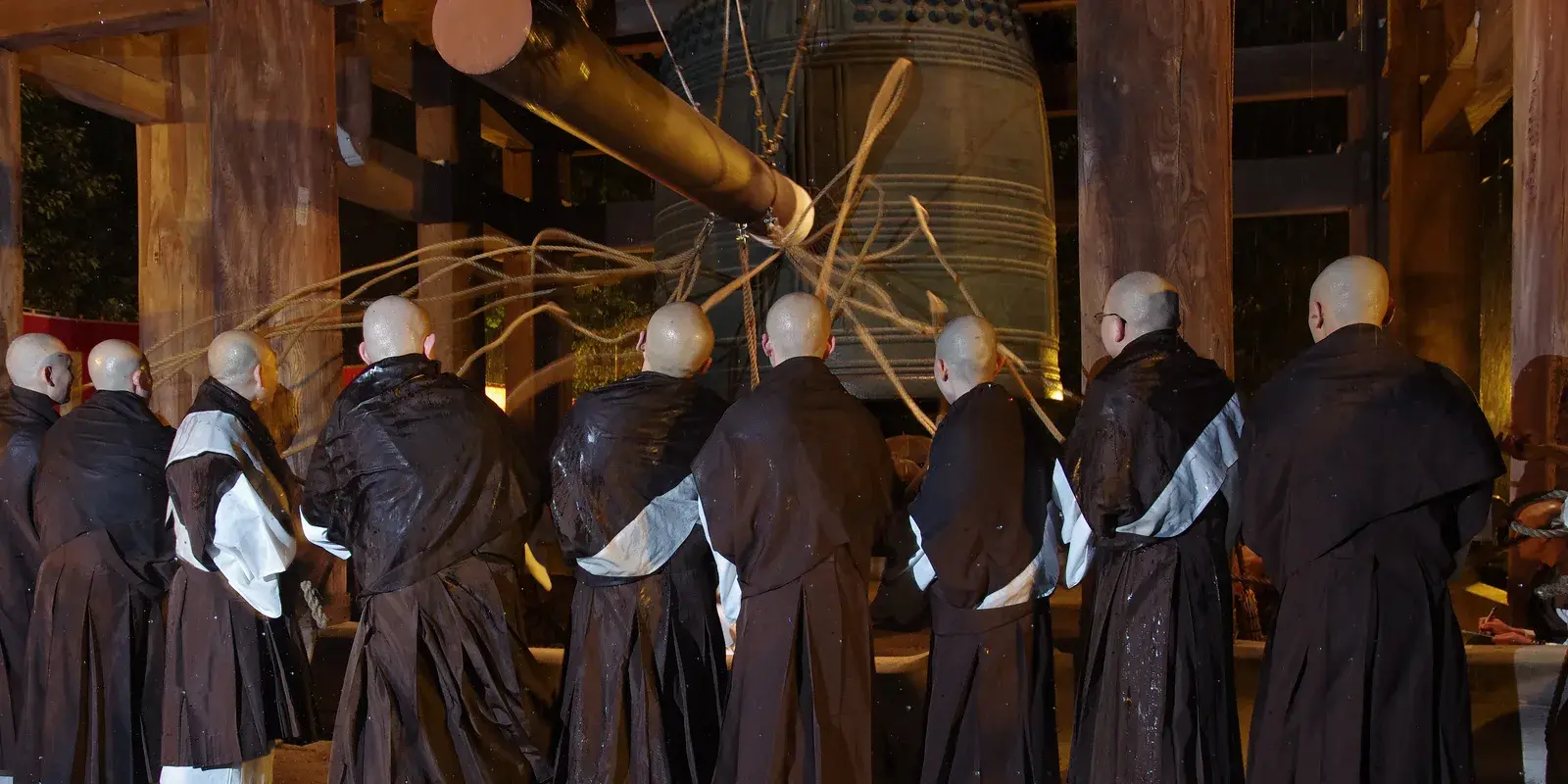
- At some temples you can ring the bell yourself. At Ikegami Honmonji in Tokyo, anyone could on 31 December 2025, with a free first-come ticket. At Chion-in in Kyoto, monks rang it and visitors watched
- For 2026, Universal Studios Japan and Huis Ten Bosch have announced countdowns with fireworks. Tokyo Disney Resort says it won't hold a New Year's Eve event
- Getting home depends on your line. For 2026, JR East adds trains after the last service on six Tokyo-area lines, and JR West only on two lines in Osaka. We couldn't confirm Tokyo Metro or other companies
- Of the 394 public posts by Japanese people we collected, 72 are about how people spend the night. They describe families around the TV, people on their own, people at work and people in bed by midnight, and can't show how many people do each
- You can have New Year's Eve soba at a soba shop or as instant cup soba. The agriculture ministry says the time varies by region. Of 85 posts about it, 39 give a time: 21 after dinner or late at night, 12 at dinner, 5 at lunchtime and 1 at about 4 pm
What do people do on New Year's Eve in Japan? Many watch TV: the second part of NHK's song show Kohaku averaged an estimated 32.9 million viewers in 2025, live or recorded, the highest figure for any programme that year. Temple bells ring from late evening until after midnight, some people visit shrines and temples around midnight, and countdowns with fireworks run at venues such as Universal Studios Japan.
Video Research puts the average household rating for Kohaku's second part at 35.2% in the Kanto area in 2025, counting live viewing. In 1963, when the show wasn't yet split into parts, its Kanto household rating was 81.4%.
This article covers the night of 31 December. For what closes and opens from 29 December into January, see our article on Japan at New Year.
Quick Guide
| On 31 December | What to know | |
|---|---|---|
| 🟢 A night in | Kohaku, 19:20 to 23:45 on NHK General TV | It's a music show in Japanese. |
| 🟡 The temple bell | Hear it, or ring it where allowed | Rules differ by temple, so see the table in the bell section. |
| 🟡 Fireworks | At some venues | We checked Universal Studios Japan and Huis Ten Bosch, which have them in 2026. There may be others. |
| 🟡 A midnight visit | Shrines and temples around midnight | Dress for the cold. Our New Year article covers the first visit of the year. |
| 🟢 Soba | At a soba shop or as instant cup soba | In five of 85 posts, soba shops or shops selling tempura to put on the soba are crowded that day. |
| 🟡 Getting home | Look up your line first | JR East adds trains on six Tokyo-area lines, JR West on two in Osaka, and Nagoya's subway runs through the night. See the section on trains below. |
🟢 is easy to do. 🟡 is worth checking before you go.
This table lists the night in time order. The temple times come from notices for 31 December 2025, the latest we could read in early November 2026, so check again nearer the time.
| Time | What's on | Year of notice |
|---|---|---|
| 19:00 | Universal Studios Japan's countdown event opens, until 21:00 on 1 January | 2026 |
| 19:20 to 23:45 | Kohaku on NHK General TV | 2026 |
| 21:45 to about 23:00 | Bell at Zojoji, Tokyo | 2025 |
| About 22:40 to 0:35 | Bell at Chion-in, Kyoto, rung by monks | 2025 |
| 23:00 | Bell tickets given out at Ikegami Honmonji, Tokyo, with ringing from midnight | 2025 |
| 23:30 to about 3:00 | JR West extra trains on the JR Yumesaki Line, Osaka | 2026 |
| 23:50 to 0:05 | Fireworks, lights and music at Universal Studios Japan | 2026 |
| 0:00 to about 3:00 | JR West extra trains on the Osaka Loop Line | 2026 |
| 1:00 to about 4:50 | JR East extra trains on the Yamanote Line, Tokyo | 2026 |
How We Gathered These Voices
We collected 394 public posts in Japanese on six questions: how people spend the night (72), the temple bell (54), going out around midnight (40), toshikoshi soba (85), the year-end house clean (89), and how people say the year-end has changed (54). They come from 149 threads, articles and posts on Q&A sites, discussion boards, blogs and social posts. The dated ones run from 2005 to 2026, and more than half are from 2024 onward.
Nobody was sent a questionnaire, everyone here chose to post, and we can't know from these counts how many Japanese people do any of this. We chose the searches, so what we found depends on them. Some searches used the name Kohaku, and some looked for people who don't watch it or who spend the night alone instead of going home. For soba, the year-end clean and going out, we searched more for people who skip or dislike them. For the bell, many searches looked for people ringing it. Each bar below is a share of the posts on one question.
We left out comments with discriminatory language and posts about a person's mental health. We also looked for how Japanese people see foreign visitors ringing the bell and found no first-hand post, so these posts can't answer that. Ikegami Honmonji's notice says anyone can ring.
How People Spend the Night
Kohaku Uta Gassen is a song contest between a red team and a white team. It comes up in 23 of these posts, and not all of those writers are watching. In a thread on which they prefer, New Year's Eve or the New Year holiday, one person picks the Eve:
こたつ入ってそばと紅白見ながらみかんがなんか好きだから大晦日 ワクワクするもうちょっとで年明ける〜って I just like sitting at the kotatsu with soba and Kohaku on and a mandarin orange, so New Year's Eve it is. It's exciting, the year's about to turn!
A kotatsu is a low table with a heater under it. Someone else on the same question:
大晦日 なんか夜更かししてダラダラしてるのが許される気がする 正月はきちんとしなきゃいけない感が出る New Year's Eve. Somehow staying up and lazing around feels allowed. At New Year you start to feel you have to do things properly.
In one home, only the wife watches Kohaku. Her husband, in his sixties, reads alone in another room. He likes spending the night this way, though he isn't sure it's a good thing, and he thinks she probably isn't pleased with him.
大晦日の夜を、我が家は、家族団らんではなく、一人一人が好き勝手に過ごしている。(特に私。) On New Year's Eve my family doesn't gather round together. We each do as we please (me especially).
Six of these 72 posts describe being in bed by midnight, one of them from a person staying with in-laws:
普通に寝てる 頑張って23時前かな 年末は義実家だから気が張るし早々に部屋にこもる 年越しの日だけ体が進化する訳でもなく睡魔に勝てんのよ I just go to sleep. Just before 11, at best. Being at my in-laws at year-end puts me on edge, so I retreat to my room early. It's not as if my body evolves for that one day of the year. I can't beat sleep.
Eight of the 72 are from people working that night or on New Year's Day, among them a care worker, someone sorting New Year cards from 9 pm to 5 am, and a member of a volunteer fire brigade.
消防団員ですので年末警戒して越年します。 I'm in the volunteer fire brigade, so I'll see in the new year on the year-end watch.
Being on your own can feel very different from one person to the next. The first of these two finds the season hard, and the second loves the slow pace.
家族で過ごしましょう、帰省しましょう、団らんが幸せです、という空気がずっと流れ続ける。 紅白をぼんやり見ながら、もうすぐこの雰囲気も終わる、1/2になればだいぶ通常運転に戻る、と思ってやり過ごしている。 The mood keeps telling you: spend time with family, go home, being together is happiness. I watch Kohaku vaguely and get through it, thinking this mood will soon be over and that by 2 January things will be mostly back to normal.
一人のんびり年越しそばを食べて、一人のんびり初詣行ってから、酒飲みながら雑煮のスタンバイ。 煩わしさもないし、このマターリした時間が好きだわw I had my New Year's Eve soba on my own at my own pace, made my first shrine visit on my own at my own pace, and now I'm getting the New Year soup ready with a drink. No hassle. I love this slow time.
If you'll be on your own that night, you won't be the only one: six of these 72 posts come from a thread for people spending it alone.
The Temple Bell
Joya no kane (除夜の鐘) is the ringing of a temple bell on the night of 31 December. Chion-in and Kiyomizu-dera give the number of strikes as 108, and Chion-in explains that 108 is the number of worldly desires people hold. Each temple sets its own rules, as these four show:
| Temple | Can visitors ring? | Bell hours | How to join | Notice for |
|---|---|---|---|---|
| Ikegami Honmonji, Tokyo | Yes, anyone | From midnight | Free tickets at the bell tower from 23:00 for the first 600 people, one per person. Six people ring together, and a ticket is void if you aren't there when its number is called. | 31 Dec 2025 |
| Zojoji, Tokyo | With a ticket | 21:45 to about 23:00 | ¥2,000 a person at the temple office, on sale from 1 December at 9:00, limited in number. Four people ring together. | 31 Dec 2025 (its page gives weekdays, not a year) |
| Chion-in, Kyoto | No, 17 monks ring | About 22:40 to 0:35 | To watch, apply in advance, with no same-day entry. ¥3,000, free for primary school age and under. | 31 Dec 2025 |
| Kiyomizu-dera, Kyoto | Not stated | Night of 31 December | Its page says ringing is by reservation, and doesn't say how to reserve. | Every year |
Chion-in's page also gives its application details in English. The other three notices are in Japanese, and a browser's translate function can help. To find a newer one, search the temple's name with 除夜の鐘. Ikegami's ringing starts at midnight and Chion-in's bell ends at about 0:35, so look up your way back before you go, or stay within walking distance.
Some of the 54 write only about the sound. This person's family home is in the countryside of Hokkaido:
しんしんと雪が降る中の除夜の鐘はいいよ。 周りの音が静かの中、ゴーンって聞こえるのはなんとも言えない。 The New Year's Eve bell with the snow falling softly is lovely. Everything around you is silent and then you hear that deep bong. I can't describe it.
In 18 of the 54 posts, the writers have rung it on New Year's Eve, and two of them got there by chance.
大晦日の初詣で鐘をついたのは思い出になってる。 つけるなんて知らなかったけど列に並んだら100番目くらいで。 Ringing the bell when I went to the temple on New Year's Eve has stayed with me. I didn't know you could, but I joined the line and I was about 100th.
Across the road from one writer's home in the suburbs was a small temple:
結構たくさんの人でしたが、騒ぐでもなく、静かに除夜の鐘だけが響いて、「来年は鐘をつきに行こう」と思っていたら、転勤になって・・・そんな思い出があります。 There were a lot of people, but nobody made a fuss. Only the bell rang out in the stillness. I thought, "Next year I'll go and ring it," and then I got transferred. That's my memory of it.
From someone who still goes:
深夜にお寺行って鐘鳴らしてるときの特別感って30になっても全然薄れてないしむしろ学生のときより楽しいぞ 知らん人が寒い中で皆除夜の鐘に集まって、温かいお茶とか飲んでるのめっちゃおもろいよ That special feeling of going to a temple late at night and ringing the bell hasn't faded at all at 30. It's more fun than when I was a student. Strangers all gathering in the cold for the bell, drinking hot tea and so on, it's so entertaining.
Two posts complain about people striking it hard. This one is from someone who lives near a temple:
寺の近くに住んでる者としては力いっぱい鳴らす奴には怒りを覚える。深夜に鳴らすんだから鳴らし方は考えてほしい。 As someone who lives near a temple, people who ring it with all their strength make me angry. It's the middle of the night, so I wish they'd think about how they ring it.
The other, from a parishioner, is angry about people who strike it hard again and again.
💡 When it's your turn at the bell
Watch the person ahead of you and do the same. The complaints mentioned earlier are about people striking it as hard as they can.
Fourteen posts mention or respond to temples that have stopped ringing the bell or now ring it earlier in the day. Nikkei, a national newspaper, reported in December 2018 that some temples were ringing in the daytime or had stopped, citing complaints about noise and fewer people coming as parishioners age. We don't know how many temples this covers. People disagree about it:
除夜の鐘はやっぱり大晦日の夜だよ。除夜の鐘をきくと新しい年が始まるって思うし、清められる。 The New Year's Eve bell belongs on the night of New Year's Eve. When I hear it I feel the new year beginning, and I feel cleansed.
義父がお寺の役員してて、毎年除夜の鐘は案内係とか大仕事なんだけど、子どもが小さいから22時からの除夜の鐘は行けなかったんだよね。 日中の部があっても確かに嬉しいかも! My father-in-law is an officer at a temple, and every year the bell is a big job for him, guiding people and so on, but our kids are small, so we couldn't go to the one that starts at 10 pm. A daytime session might actually be nice!
We found no first-hand post on how Japanese people see foreign visitors ringing the bell, and Ikegami Honmonji's notice says anyone can ring. If you're unsure whether you belong at a temple at all, we looked at that in Am I Cosplaying Their Religion? For shrines over New Year, our article on Japan at New Year quotes a post saying that getting the etiquette wrong is not a problem, and a Shinto priest writing for a foreign audience saying the shrine welcomes you whatever your faith.
Fireworks, Countdowns and Midnight Shrines
Universal Studios Japan in Osaka has announced its 2026 event from 19:00 on 31 December to 21:00 on 1 January. The event includes about 5,000 fireworks at the new year, and entry needs a dedicated Party Pass, on general sale since 4 November. The park closes from 17:00 to 19:00 that day, and daytime tickets for 31 December end at 17:00. Huis Ten Bosch in Nagasaki has announced a countdown with fireworks and recommends buying ahead. These are the venues we checked, and there may be others.
In the Tokyo area, neither place we checked has a countdown announced. Tokyo Disney Resort says Tokyo Disneyland and Tokyo DisneySea won't hold a New Year's Eve event in 2026, so the Disney countdowns you may read about online are from earlier years. The organisers cancelled the 2025 countdown event at Shibuya Station, and we hadn't seen a 2026 announcement by early November. Around the station, drinking on the street and in parks isn't allowed from 18:00 to 5:00 on any day of the year. As 2024 began, one Japanese writer was in Shibuya:
年を越した直後... 渋谷には大量の外国人が。センター街の真ん中で踊ってる人とかいてみてて楽しかった。 Right after the new year began... Shibuya was full of foreigners. There were people dancing in the middle of Center-gai, and it was fun to watch.
People also go to shrines and temples around midnight. Ninen mairi (二年参り), literally a "two-year visit", starts before midnight and ends after it. According to Nagano Prefectural Library, it grew out of an older custom of staying overnight at a shrine or temple. In one writer's area, it works like this:
私の地域ですと近くの神社なのですが 大晦日の夜・紅白が終ったら家を出て12時前に一度神社をお参り(除夜詣) した後に鳥居の外にでて12時を待ちます 12時になったら再度鳥居をくぐって神社にお参り(初詣)します Where I live it's a nearby shrine. On New Year's Eve, when Kohaku ends, you leave home and visit the shrine once before midnight (the year-end visit), then go back outside the torii gate and wait for 12. At midnight you pass through the torii again and visit the shrine again (the first visit of the year).
On theme-park countdowns:
寒すぎる上に激混みで眠いのでほぼ楽しめないことが分かった。若いうちは何回か行きましたが2年参りに行く方がよほど意味あるなと思う。 It's too cold, it's packed and I'm sleepy, so I found I can barely enjoy it. I went a few times when I was young, but I think a two-year shrine visit means far more.
If you're thinking of going alone, this may help:
でも先に言っちゃうと、1人参戦の人は割といました。 But I'll say it up front: there were quite a few people on their own.
The writer, a woman, had hesitated for years about going to Universal Studios Japan's countdown on her own, and finally went.
Shibamata Taishakuten is a temple in Tokyo:
柴又帝釈天行くよ〜 明治神宮ほど混んでないし、程よい人混みの雰囲気が好き I'm going to Shibamata Taishakuten. It's not as crowded as Meiji Jingu, and I like the feeling of a moderate crowd.
Getting Home: Trains After Midnight
Unless your line is listed here, plan on the last train for 31 December. JR East and JR West both run a holiday timetable that day, so weekday times won't apply. We couldn't confirm 2026 plans for Tokyo Metro or other companies. The notices linked here are in Japanese, so this table gives what they say. The times in it are for the added trains only. Normal trains run until the last train at your station, and the added trains come after that.
| Company and year | Line and section | Added trains run | How often |
|---|---|---|---|
| JR East, 2026 | Yamanote Line | About 1:00 to 4:50 | About every 10 to 30 minutes |
| Keihin-Tohoku and Negishi Line, Sakuragicho to Omiya | About 1:00 to 4:00 | About every 10 to 80 minutes | |
| Chuo-Sobu local line, Mitaka to Chiba | About 0:10 to 4:40 | About every 10 to 125 minutes | |
| Chuo Rapid Line, only between Mitaka and Takao | From Mitaka about 1:30, 2:20, 3:00. From Takao about 0:40, 1:30, 2:10 | Three trains each way | |
| Yokosuka Line, Yokohama to Zushi | From Yokohama about 2:30, 4:00. From Zushi about 1:30, 3:10 | Two trains each way | |
| Sobu and Narita lines, Chiba to Narita Station (no stop at Higashi-Chiba) | From Chiba about 1:20, 3:10. From Narita about 2:10, 3:50 | Two trains each way | |
| JR West, 2026 | Osaka Loop Line | 0:00 to about 3:00 | About every 10 minutes |
| JR Yumesaki Line, which serves Universal City | 23:30 to about 3:00 | About every 10 minutes | |
| Nagoya municipal subway, 2026 | Every line but the Kamiiida Line | Through the night | About every 30 minutes |
From 7 December, JR East's extra trains appear in route searches on the JR East app, and JR West's appear in its own timetable pages from around 21 December. JR West says that in the Kyoto, Osaka and Kobe area it runs no all-night trains, and that only those two Osaka lines have trains after the last service. In 2025, the Toei subway in Tokyo ran no all-night trains and no later last trains.
Someone who lives in Japan wrote about getting this wrong:
過去に二年参りをしたのが10年は前なので(コロナ禍前)、終夜運転はするもんだと思ってまして。 My last two-year visit was a good ten years ago (before Covid), so I assumed the trains would run all night.
On 31 December 2024 this writer searched at about 10 pm, found that the planned line wasn't running all night, and took the last train to Omiya to reach the shrine there in time. The writer went on from there to Kanda Myojin and, by the first Ginza Line train of the morning, to Senso-ji. That was 2024, so for 31 December 2026, use the table above.
New Year's Eve Soba
You can have toshikoshi soba (年越しそば), "year-crossing soba", at a soba shop or as instant cup soba such as Midori no Tanuki (緑のたぬき). If you're looking for it in a shop, you can show the staff the name 年越しそば. The custom spread among ordinary people from the Edo period, according to Japan's Ministry of Agriculture, Forestry and Fisheries. The ministry gives several meanings, including long thin noodles for a long life and noodles that break easily for cutting off the year's hardships.
In five posts, soba shops or shops selling tempura to put on the soba are crowded that day, and a writer who goes each year to a shop five minutes' walk away found a line soon after 4 pm. Another finished a round of temples and shrines, then stopped at a chain soba stand inside the ticket gates of a station:
駅そばはどこのチェーンもはずれが大体ありませんので、おいしくいただきました Station soba chains are pretty much never a miss, so I enjoyed it.
The ministry says the timing varies by region, and that a custom of eating it on New Year's Day remains in Aizu, in Fukushima. Of the 85 posts we collected, 39 give a time: 21 after dinner or late at night, 12 at dinner, 5 at lunchtime and 1 at about 4 pm.
夕食には食べないし、午前0時を過ぎると「年越したそば」になってしまうので、23時過ぎに食べます。 I don't have it at dinner, and after midnight it turns into "soba that has already crossed the year", so I eat it after 11.
That writer is playing on the name, which means "year-crossing".
This is from someone who grew up in an old Tokyo family:
いつも夜更かしは厳しく禁止されてましたが、小学校に上がる頃からこの日だけは特別で夜中に夜食を食べられるのは格別の楽しみでした。 Staying up was always strictly forbidden, but from about the time I started primary school this one day was special, and eating a late meal in the middle of the night was a special treat.
Instant noodles come up in 12 posts. One 80-year-old mother wouldn't go without soba. When the family asked who would buy and boil it, she agreed to instant, so for some years they have had Midori no Tanuki, a brand of cup soba:
こんなんで納得するんだぁ。。と思いつつ、 1年の〆に家族でカップ麺を食べてる光景がほほえましいな、と感じます(たった10分で終了の夕食) I think, "So this is enough for her...", and yet the sight of the family eating cup noodles to close out the year makes me smile (a dinner over in just 10 minutes).
The custom also differs by region and family. One writer from Okinawa has Okinawa soba, a local wheat noodle, and one in Kagawa now has udon. Another, living on the coast of northern Mie, says the custom wasn't heard of there in the past, and one from Wakayama says their family didn't have it, adding that it may have been only their family. One more:
人生で一回も食べたことないです I've never eaten it in my life.
The Year-End Clean
Osoji (大掃除) is a big house clean at the end of the year. We only counted cleaning at home.
In 20 of the 89 posts, the writers give the cold as a reason not to clean in December.
夏休みに終えました。 寒い時期に大掃除はやりません。 I finished it over the summer holidays. I don't do a big clean in the cold.
From a diary in late December:
寒さも忙しさもありますが、家の中が少しずつ整っていくと、気持ちまでスッキリしてきます。今年はどうやら少しゆとりを持って新年を迎えられそうです。 It's cold and busy, but as the house slowly comes into order, my mood clears up too. This year it looks as if I'll greet the new year with a little room to spare.
One reply to someone who hadn't managed it that year:
ぐっちゃぐちゃのまま年越しです。。。 そんな家も山程ありますよ! We're seeing in the new year with everything in a mess... There are heaps of homes like that!
How People Say the Year-End Has Changed
These 54 posts are about the end of the year then and now: how it feels, and how people spend it. Some only remember how it was, and some only describe how it is.
Replying in 2006 to a 36-year-old who felt the old solemn mood had gone, a 73-year-old wrote:
大晦日、なんかこう、1年という幕がおりるような 重い感じがしました。 見るものもなく、布団のなかで来る年に思いをはせて 眠りました。 1月1日、なんと明るく軽やかないい気分なものでした。 New Year's Eve had a heavy feeling, somehow, as if the curtain was coming down on the year. With nothing to watch, I lay in bed thinking of the year to come and fell asleep. And 1 January, what a bright, light feeling it was.
Not everyone misses the old mood:
私だけだろうけど、子供のころから年末~正月の「無理やり休んでお祝いしなきゃ感」が大嫌いなので「年末感」もなくなってくれてうれしい Maybe it's only me, but ever since I was a child I've hated the year-end and New Year feeling that you're forced to rest and celebrate, so I'm glad the "year-end feeling" is going away.
In one family, people stopped watching Kohaku one by one. It began with the writer, who hated the show and, as a second-year high school student, kept complaining about it until the father said, "If you don't like it, go to your room." In 2008, the writer told this to someone who also hated it:
私に続いて、翌年には紅白鑑賞会から弟が抜け、その翌年には母が抜け、父は一人で紅白を見ていました。 そして昨年、我が家から紅白は姿を消しました。 でも大晦日には、家族での語り合う時間が出来て充実した年越しになったと思いますよ。 After me, my younger brother dropped out of Kohaku viewing the next year, my mother the year after that, and my father watched Kohaku alone. Last year, Kohaku disappeared from our home. But on New Year's Eve we now have time to talk as a family, and I think it made for a fuller end to the year.
A Few Last Things
In these posts, people spend this night in bed by midnight, at work, in front of the TV or at a temple, so there's no one right way to do it. Standing outside on this night can be cold. Our article on surviving Japan's winter has more on the season. For how to behave at the temple or shrine itself, see visiting temples and shrines.
The phrase for the day is yoi otoshi o, which wishes someone a good end to the year. After midnight it's akemashite omedetou gozaimasu. Our New Year article has more on both.
More Japanese Perspectives
- Christmas in Japan: the week before, and how the decorations change overnight.
- When to Visit Japan: how December compares with the rest of the year.
Share Your Experience
Have you spent New Year's Eve in Japan? Did you ring a bell, find your soba, or make it home on the last train? We'd like to hear how it went.
Sources
Primary Research Data
WMJS New Year's Eve research data, 394 Japanese-language posts collected in November 2026 from 149 threads, articles and posts. We recorded 405 entries and set 11 aside: seven were a post or article already counted under another question, three were off the question, and one we couldn't trace back to its page. Among the comments we left out were ones that blamed particular nationalities for noise complaints.
- How people spend the night of 31 December: 72 posts
- The New Year's Eve temple bell: 54 posts
- Going out around midnight: 40 posts
- Toshikoshi soba: 85 posts
- The year-end house clean: 89 posts
- How people say the year-end has changed: 54 posts
Factual Sources (Tier 1–2)
- Video Research, NHK Kohaku household ratings (Kanto, live viewing, programme average): 35.2% for the second part on 31 December 2025, 81.4% in 1963: https://www.videor.co.jp/tvrating/past_tvrating/music/02/nhk-2.html
- Video Research, 2025 national estimated viewers (14 January 2026): Kohaku's second part ranked first, with an average of 32.927 million viewers including time-shifted viewing: https://www.videor.co.jp/press/2026/260114.html
- Oricon News, on NHK's announcement for the 77th Kohaku: 31 December 2026, 19:20 to 23:45, on NHK General TV and other channels: https://www.oricon.co.jp/news/2480676/full/
- Ministry of Agriculture, Forestry and Fisheries, "Omisoka and Toshikoshi Soba" (aff, December 2025): spread among ordinary people from the Edo period; meanings; timing varies by region: https://www.maff.go.jp/j/pr/aff/2512/event04.html
- National Diet Library Collaborative Reference Database, answer by Nagano Prefectural Library: the history of ninen mairi: https://crd.ndl.go.jp/reference/entry/index.php?page=ref_view&id=1000298522
- Katsushika City Museum: Shibamata Taishakuten is a Nichiren temple: https://www.museum.city.katsushika.lg.jp/bunkazai/2025/03/26/1-1_keidai.pdf
- Nihon Keizai Shimbun, 27 December 2018: temples ringing the New Year's Eve bell in the daytime or stopping it, citing noise complaints and fewer visitors as parishioners age: https://www.nikkei.com/article/DGXMZO39397220W8A221C1CC0000/
- JR East, winter extra trains (22 October 2026): trains after the last service on New Year's Eve on six Tokyo-area lines, sections, times and intervals (Yamanote Line 1:00 to 4:50, Keihin-Tohoku and Negishi Line 1:00 to 4:00, Chuo-Sobu local line 0:10 to 4:40): https://www.jreast.co.jp/press/2026/20261022_ho.pdf
- JR West, New Year's Eve extra trains (30 October 2026): no all-night service in the Kyoto, Osaka and Kobe area; Osaka Loop Line and JR Yumesaki Line only: https://www.westjr.co.jp/press/article/2026/10/30/items/261030_00_press_omisoka_rinji.pdf
- Bureau of Transportation, Tokyo Metropolitan Government (2025): no all-night service and no later last trains on New Year's Eve on the Toei subway: https://www.kotsu.metro.tokyo.jp/pickup_information/news/subway/2025/sub_i_2025112812295_h.html
- City of Nagoya (19 October 2026): overnight subway service from 31 December 2026 to 1 January 2027, except the Kamiiida Line: https://www.city.nagoya.jp/houdou/3003942/3003949/3005888.html
- Shibuya City (3 December 2025 and December 2025 notices): the Shibuya Station countdown event cancelled by its organising committee; street drinking banned from 18:00 to 5:00 every day around the station: https://www.city.shibuya.tokyo.jp/contents/kutyo/aisatsu/hatsugen_20251203.html and https://www.city.shibuya.tokyo.jp/contents/koho-news/1597/20251215_special_mini.html
Official Temple and Venue Pages
These are cited for each temple's or venue's own arrangements and for what each temple says about its own bell.
- Chion-in: 2025 hours; 17 monks; visitors can watch only; advance application and ¥3,000; 108 strikes for worldly desires: https://www.chion-in.or.jp/special/joya/
- Ikegami Honmonji: anyone can ring; ringing from midnight; tickets from 23:00; first 600 people; groups of six; free: https://honmonji.jp/nenmatsunenshi/index.html
- Zojoji: ringing from 21:45 to about 23:00; tickets on sale from 1 December; ¥2,000; four to a group: https://www.zojoji.or.jp/event/ev_hatsumoude.html
- Kiyomizu-dera: 108 strikes on the night of 31 December; ringing by reservation: https://www.kiyomizudera.or.jp/event/joya.php
- Universal Studios Japan (28 September 2026): event hours; fireworks, lights and music 23:50 to 0:05; about 5,000 fireworks; a dedicated Party Pass; general sale from 4 November: https://www.usj.co.jp/company/news/2026/0928/
- Huis Ten Bosch: countdown 2026 to 2027 with fireworks; buying ahead recommended: https://www.huistenbosch.co.jp/event/countdown/2026-2027/
- Tokyo Disney Resort: no New Year's Eve event at Tokyo Disneyland or Tokyo DisneySea on 31 December 2026: https://www.tokyodisneyresort.jp/tdl/event.html
Where the Voices Come From
Japanese Q&A sites, discussion boards, blogs and social posts. We don't use them as factual authorities. They are first-hand accounts of the night, the bell, going out around midnight, soba, the year-end clean, and what people say has changed.
Note on Quotations
Quotes from online platforms have been lightly edited for readability, fixing typos and formatting for clarity. Each quotation is part of a longer post or the whole of a short one, cut at a sentence boundary, and the meaning is unchanged.
WMJS is written in Japan, in English, with AI help. We check every page, but English is not our first language. If a sentence reads oddly, tell us. One sentence is enough.
Thank you. A person reads every note.
How well do you know Japan?
Built from 635 public posts by Japanese people
Want to know more? Ask Japanese people
Have a follow-up question about this topic? We'll ask real Japanese people.
Voice Box →