
How Japan Works
Is Kakunodate Worth It? What Visitors From Abroad and From Japan Say
Kakunodate is a former castle town in Akita, known for its samurai residences and its weeping cherry trees, and if you're planning a trip through northern Japan, you may be wondering whether to stop. We gathered 357 reviews and posts from people writing about their own visits. Of the 186 voices from abroad, 141 (76%) were glad they went. Of the 171 voices from Japan, 138 (81%) were glad they went. People from abroad and people from Japan mostly agree about Kakunodate.
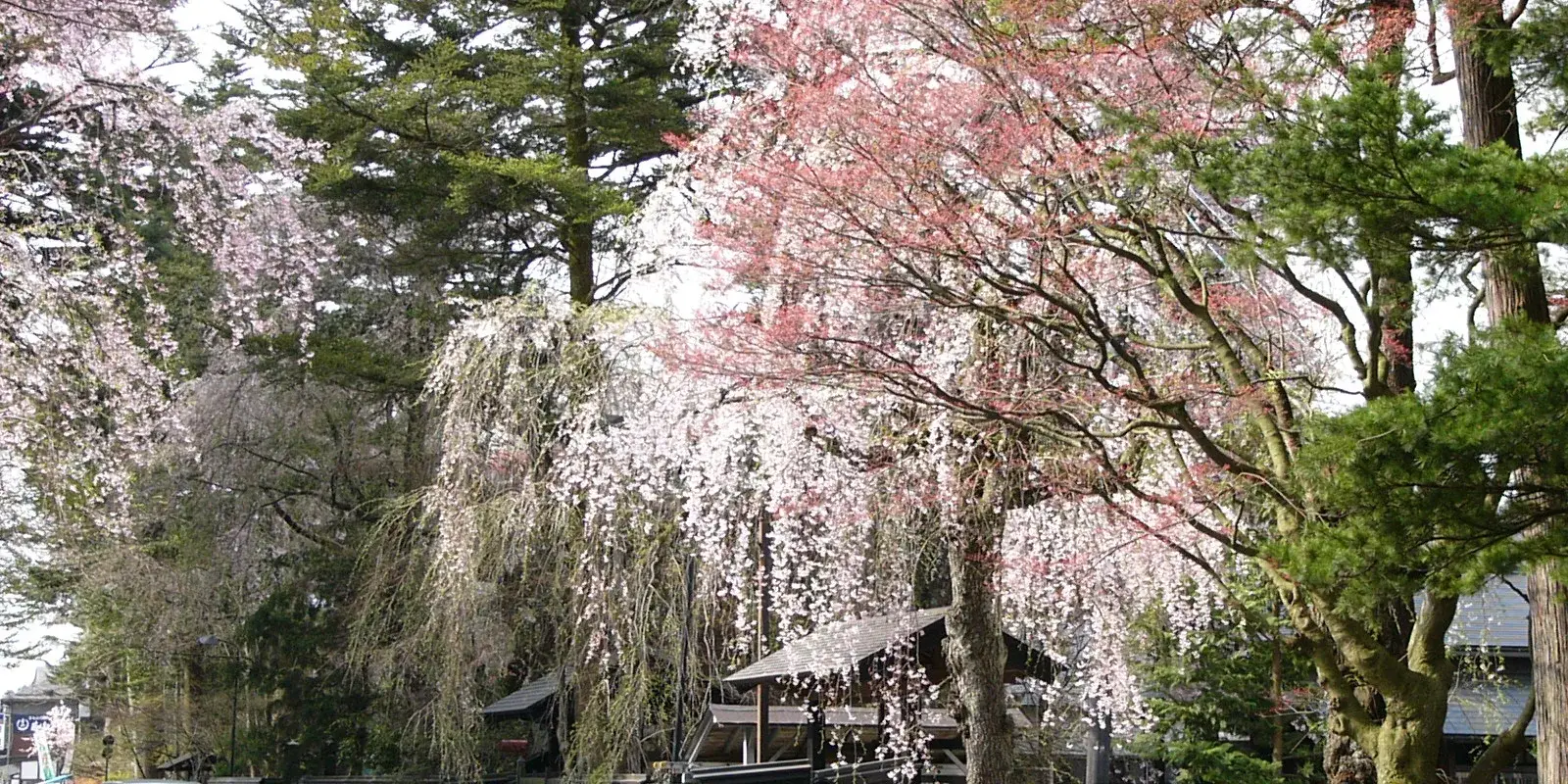
Planners also ask whether the town is worth it without the blossoms. Among voices we could place outside blossom season, about 8 in 10 on each side were glad. People who wrote that they had come in blossom season and mostly missed the flowers were glad less often: 4 of 6 from abroad and 10 of 17 from Japan. The city's records show the weeping cherries reaching full bloom anywhere from April 9 to May 6 since 2013, so the season table and the dates further down may help if your plans depend on the flowers.
Is it worth the trip? (in visitors' own words)
We read reviews and posts by people from abroad and sorted them by how the writer felt after the visit. Of the 186 voices, 108 are Google Maps reviews, nearly all posted in 2025 and 2026. Another 45 are TripAdvisor reviews of visits from 2015 to 2025, 30 are posts on a Taiwanese forum, 2 are Reddit trip reports and 1 is a japan-guide.com forum reply. Some of them review one stop in town: 21 are about the Aoyagi house, 8 about the Ishiguro house, 7 about a samurai house museum page on TripAdvisor and 4 about the river bank.
Some glad visitors write about the history they found. One reviewer in August 2016 called the town "a jewel box of old samurai houses". Someone who posted about a 2021 trip on Reddit missed the weeping cherries by about a week and still wrote "I was blown away by the samurai district/history and spent all day here." A summer visitor wrote: "it lacked the cherry blossoms or autumn colors seen in photos, but it was still a fascinating and peaceful walk through history."
Some people's praise comes with a condition about distance. "Worth seeing if you are in the area but I wouldn't make a trip here if it was too out of the way unless this was your thing", one reviewer wrote in 2018, and a reviewer of the Aoyagi house said much the same in a few words: "Worth a visit if you are near by". Others say it depends on what you've already seen. Another Aoyagi visitor wrote that "If u have visited any old japanese house before, then this might be underwhelming as the architecture remains largely similar", and added that the history is what makes it interesting. One reviewer who came in the peak blossom week of 2017 had mixed feelings, writing that "the samourai area is a bit let down and entry fees in the samourai houses are definitely expensive for what you see", and still called the path along the river great.
Six of the 186 voices were let down, for different reasons. One reviewer in 2026 felt it was "not really worth it to come from Sendai to walk 1 km of streets of old houses that may be scenic but cost 500 yen to get into each." Two write about the season. On the Taiwanese forum, one wrote "可能不是櫻花季,覺得沒什麼看頭" (maybe because it wasn't cherry blossom season, I felt there wasn't much to see), and a reviewer who came in autumn called that season "a bit disappointing". The other three reviews come from the Aoyagi house page. One of them felt it wasn't worth going unless you have nothing else to do, one, giving it one star, wrote that the main house wasn't open and felt that the unlabeled buildings on show gave a misleading picture of the past, and one personally felt it wasn't very well maintained.
What Japanese visitors say
Japanese visitors have also written about Kakunodate, and this is how they felt.
Some glad visitors were surprised by what they found. "駅前の殺風景な様子を見て、不安を感じていたのですが、いきなり緑豊かな武家屋敷が現れたのには感動しました。" (Seeing how bleak it looked in front of the station, I felt uneasy, but I was moved when samurai residences rich in greenery suddenly appeared), a jalan reviewer wrote. Another had passed the town by, feeling the station posters showed all there was, and came for the first time in September 2026. That reviewer urges readers: "街を流すだけでなく是非お屋敷へお入りになってみてください" (rather than only passing through the town, please do go inside the residences).
Some Japanese reviewers with mixed feelings say it depends on when you go. A Google Maps reviewer who came in June wrote "枝垂れ桜、青葉の頃、紅葉の時期なら行く価値あり" (worth going in the weeping cherry, fresh green or autumn leaf season). Another came for the blossoms in April 2026, after most had fallen, found the town packed, and still enjoyed the falling petals and the streetscape. For a photo like the posters, this reviewer's advice was "早朝か夜間しか難しいかもしれません。" (early morning or night may be the only times you can).
Six of the 171 voices were let down. Two found the street itself underwhelming. "道を歩いているだけでは塀と門くらいしか見えないのでそこまで歩いていて面白いわけではない。" (Walking along the road you can see little more than fences and gates, so the walk isn't that interesting), one wrote, allowing that spring's weeping cherries might change that. "他の県の古い街並みに訪れたことがあるとこちらの観光地はたいしたことないと思ってしまいました。" (Having visited old townscapes in other prefectures, I ended up thinking this spot is nothing special), wrote the other. Two came in blossom season, one who found the flowers gone after wind and rain and one in crowds so thick that they "雰囲気を楽しむことはできなかった" (couldn't enjoy the atmosphere). One came during the September festival on a weekday and couldn't sightsee calmly. One came on a weekday in bad weather in November 2022, when few shops were open, and wondered whether the weather, Covid or the weekday was the reason.
Is it worth going without the blossoms?
We put each voice in a row by when the writer says they came. For about a quarter of the voices in the table, mostly short Google Maps reviews with no date or season in the text, we used the date of the review, which can be months after the visit. Someone who lists many visits is counted once. From late April to mid-May, we split voices by what they wrote. Most people who say the blossoms were gone or not yet open are in the second row, those who saw them are in the first, and others from those weeks are in the third, so the second row starts with some disappointment built in. We left out voices we couldn't place with confidence, some of them undated, including 4 of the 12 who were let down, so the table covers 169 of the 186 voices from abroad and 145 of the 171 from Japan. In the table, 23 of 33 means 33 voices fall in that row and 23 of them were glad they went. The groups are small, and we chose the rows ourselves, so please treat them as rough.
| When they came | From abroad: glad | From Japan: glad |
|---|---|---|
| When the cherries were out, even past their peak | 23 of 33 | 34 of 36 |
| In blossom season, but mostly missed the blossoms | 4 of 6 | 10 of 17 |
| After the blossoms, through September | 45 of 59 | 44 of 56 |
| Autumn | 37 of 47 | 22 of 28 |
| Winter | 19 of 24 | 8 of 8 |
From Japan, nearly everyone who saw the blossoms was glad. From abroad, those two rows are close, 23 of 33 and 45 of 59, and some people in the first row only report how far the bloom had come.
Some people liked the months after the blossoms. "桜の時の写真ばかり有りますが、桜がなくても充分に楽しめます。" (The photos all show the cherries, but you can enjoy it plenty without them), a jalan reviewer wrote in July 2026. A poster on the Taiwanese forum remembered "這寧靜、鮮少遊客的夏日角館" (this quiet, rarely visited summer Kakunodate) from July 2024. A Japanese reviewer who came in May 2023 said of the green after the blossoms that it is "地元の方イチオシ時期だそうです。" (apparently the season local people recommend most).
The cherries don't bloom on the same dates each year. Semboku City publishes a record of them, and its weeping cherries reached full bloom on April 9 in 2023, April 15 in 2024 and April 22 in 2025, and as late as May 6 in 2013. In these recent years, the first falling petals came two to seven days after full bloom. The city set the 2026 cherry festival for April 15 to May 5, and its page says the plans may change with the bloom. A Japanese reviewer who came on April 16, 2025 found the buds still tight, yet wrote "それでも、風情があり訪れて良かったです。" (even so, it had atmosphere and I'm glad I went).
There are two groups of trees, and the city's record shows the Somei Yoshino cherries reaching full bloom after the weeping cherries each year from 2016 to 2025, by one to five days. The weeping cherries in the samurai district are a national natural monument, designated in 1974. The Agency for Cultural Affairs describes them as planted house by house from around 1656, and its entry records 153 trees. The Somei Yoshino cherries line about 2 km of the Hinokinai River. A reviewer in 2024 who saw this gap wrote that "両方をベストな時期にみることはできません。" (you can't see both at their best). If the weeping cherries are over when you arrive, the river cherries may still be in bloom.
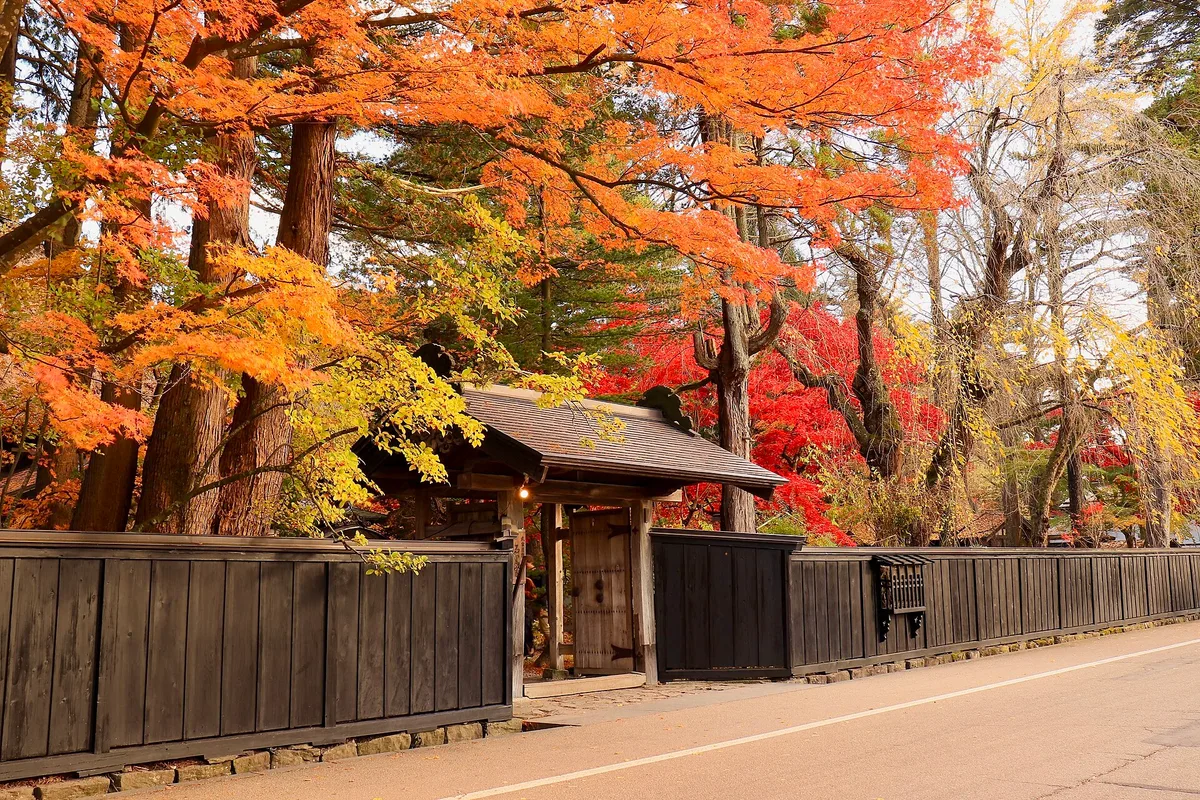
In autumn, reviewers give different dates for the color. A forum visitor who came in October 2023 wrote that October is "probably too early to see autumn colors in the town center", and a reviewer on November 1, 2024 still found it a little early. Reports of good color come from October 31, 2022, from November 12, 2024, a year that reviewer says colored later than usual, and from November 16, 2025. The reviewer who found autumn disappointing saw few leaves in November 2019.
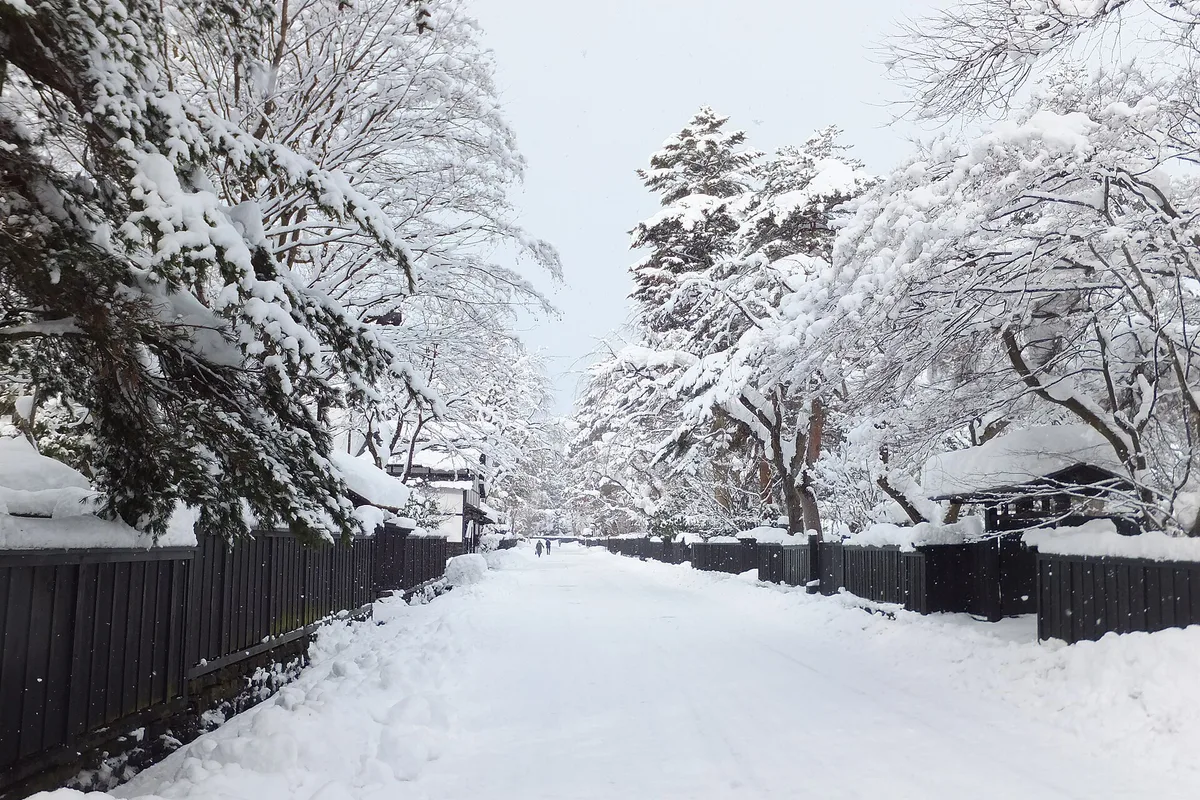
All eight Japanese voices from winter were glad they went, though eight is a small number. A reviewer who came in February 2026 wrote that the street "しっかり除雪されていて歩きにくいなどはなかったです" (was well cleared of snow and wasn't hard to walk). Conditions change from one visit to the next. A visitor from abroad in February 2025 found thick snow on the road and advises warm, non-slip boots, and a poster on the Taiwanese forum who came in February 2017 found the snow melted and felt a little disappointed. Three of the six houses open to the public close for the winter.
What we wish you'd noticed
The road through the samurai district is 11 meters wide, the same as when the town was built, according to Semboku City. A narrow old lane is what some might picture. "イメージはもう少し道幅が狭く連なってる感じかなと思ったけど、違いました。" (I imagined the road a little narrower, with houses packed together, but it wasn't like that), one Japanese reviewer wrote. The city also says today's road surface is about 80 centimeters higher than in the Edo period, so the fences that look low now once stood taller than an average person.
Reviewers note that people still live on this street. The city says the Ishiguro residence, believed to date from 1809, is the oldest of the six that are open and the only one still home to the family's descendants, so only part of it can be visited. Several reviewers from abroad write about being shown around by a member of the family. One reviewer in 2022 wrote that having a descendant explain it made the visit "exceptionally interesting". Other houses on the street aren't open to visitors, and a Japanese reviewer notes that some show 非公開 (not open to the public) where the nameplate would be. Another asks visitors to take care not to wander into the homes where people live, and keeping to the open houses is a kindness to those families.
The samurai district is half of the old town. A firebreak once divided Kakunodate, with samurai to the north in Uchimachi and merchants and townspeople to the south in Tomachi, and the tourist association says the division can still be seen today. A Japanese reviewer wrote "武家屋敷から商人の街も比べるとよいです" (it's good to go on from the samurai residences and compare the merchant quarter too). Another, shown around by a local history guide for the first time after many visits, wrote that the guide's account of these two areas made them feel the town's appeal again.
Doing it well, the welcomed way
Reviewers who give a time range from under an hour for a quick walk to a full day. On jalan, where reviewers can log their stay, 13 of the 24 who did stayed one to two hours. Reviewers report about three hours from Tokyo on the Akita Shinkansen, the train that runs between Tokyo and Akita. The walk from Kakunodate Station takes about 20 minutes, according to the Tohoku tourism site, and the city lists 15 to 25 minutes depending on the house. Several reviewers rented bicycles near the station, and one reports 300 yen an hour in 2025. The city also lists Yobunoru Kakunodate, a shared service that runs when booked online or by phone, and one reviewer reports a 1,000 yen day ticket in April 2026. A reviewer in 2016 left bags at the information center beside the station for 300 yen each, and another in 2017 mentions a temporary luggage drop at the station during cherry season, so you can ask there whether it's still offered.
Reviewers write about arriving early. Someone who took the first local train in April 2023 wrote "I reached Kakunodate at 7am had no people and only a handful of cars", and by about 9:00 other visitors had arrived. Another reviewer wrote "Try to go early if you want to avoid the masses of tour buses." Late in the day, much of the town closes. "武家屋敷の見学もお店もどこも17時には閉まりますのでご注意。" (House visits and shops all close by 17:00, so take care), a Japanese reviewer wrote, and a reviewer from abroad who arrived around 16:00 found the gates shut and came back the next morning.
The tourist association lists three houses that charge and three that are free, and the fees and hours below are from the city's Japanese page and Aoyagi's own site.
| House | Fee for adults | Open |
|---|---|---|
| Aoyagi | 500 yen | Every day, 9:00 to 17:00. From December to March, its own site says it closes at 16:30 and the city says 16:00 |
| Ishiguro | 500 yen | 9:00 to 17:00, or to 16:00 from December to March. Closed on some days without a fixed schedule |
| Kawarada | 500 yen | 9:00 to 17:00, or to 16:30 from December to March, with last entry 30 minutes before closing. Closed over the New Year holidays. Guided tours of 10 to 15 minutes at 10:00, 11:00, 13:15 and 14:15 |
| Iwahashi | Free | April 3 to November 30, 9:00 to 16:30 |
| Odano | Free | April 3 to November 30, 9:00 to 16:30 |
| Matsumoto | Free | April 10 to November 10, 9:00 to 16:00. Closed on some days without a fixed schedule |
The city notes that some houses may only be viewed from outside, and a Japanese reviewer describes houses where you can enter the grounds for free and others where a fee lets you see the rooms and displays.
Reviewers disagree on what the paid houses are worth to them. "たった500円でこれだけの事が見れて体験できるのはそうそうないので、本当に素晴らしい体験でした。" (Rarely can you see and experience this much for just 500 yen, so it was a truly wonderful experience), a jalan reviewer wrote about Aoyagi, and several reviewers write about lifting a sword there. A reviewer who spent nearly 3 hours at Aoyagi wrote "Entry fee of 500¥ is more than fair for what you get to see!" A jalan reviewer wished for a shared ticket, because each visit has its own fee. The 2018 reviewer who wouldn't make a long trip for the town suggested going into only one, since "one will give you the idea", so you could start with one and see how you feel.
Reviewers describe English support differently by house and year. They mention English exhibits, flip charts and signs, one found most of the information in Japanese, and another called the English descriptions "hit and miss".
Some reviewers write about finding a meal, especially at busy times. "食事をするのに行列に並ぶことになるので、前もって下調べが必要。" (You'll end up in a queue to eat, so look things up ahead of time), one wrote after a rainy September day. A visitor in blossom season reports waits of about an hour, walked to the river instead, and suggests convenience store food as another option. In August 2026, another found restaurants closing around 15:00, and a visitor in May 2023 advised booking dinner before arriving.
If you drive, reviewers report 500 yen at the city lot near the river. During the 2026 festival, the city listed that lot at 500 yen for ordinary cars, with large buses given priority until April 30, and a temporary lot by the samurai street at the same price. Reviewers report full lots in blossom season. "昼頃着いたのが悪かった。" (Arriving around noon was my mistake), wrote a jalan reviewer in May 2025. Cars drive along the samurai street too, except on the festival's car-free days, which the city planned for April 18, 19, 25, 26 and 29 from 10:00 to 16:00 in 2026. A reviewer who saw visitors driving through wrote "せっかくの街並みなので車で走り去らずに、歩いてほしいです。" (since it's such a lovely townscape, I'd like people to walk instead of driving through), so leaving the car at a lot and walking is a kind way to see the street.
Four Japanese reviewers writing in 2025 mention bears, including a warning during a visit and signs in the area. Semboku City warned in October 2025 that bears were appearing more often, and advised making noise with a bell, radio or phone when you're outdoors. Before you go, you can check Akita Prefecture's Kumadas map, in Japanese, for reported sightings.
The Kakunodate festival runs every September 7 to 9, and floats pass through the samurai street on the 8th, according to the city. Most of the six reviewers who mention it enjoyed it, and one was let down. "秋祭りだったので山車が武家屋敷をはじめとして市内を回っていたので、非常に旅を楽しむことができました。" (It was the autumn festival, with floats going around the samurai residences and the rest of the town, so I enjoyed the trip very much), wrote one. The reviewer who came on a festival weekday wrote "とても落ち着いて観光する状況ではありませんでした。" (it was in no way a situation for calm sightseeing). If you'd like to see the floats, those are the days, and another date will be calmer if you're hoping for a quiet walk.
Traveling through northern Japan? The Hirosaki Castle guide covers another well-known cherry spot in Tohoku, and is Hirosaki Castle worth it, is Ginzan Onsen worth it and is Yamadera worth it collect voices on other stops in the region. For another old townscape, see is Ouchi-juku worth it. For how we think about choosing what to do in Japan, see what actually matters.
Sources
- Semboku City, Cherry blossom dates in Kakunodate (角館の桜 開花日一覧): dates of opening, full bloom and first falling for weeping cherries and Somei Yoshino, including April 9, 2023, April 15, 2024, April 22, 2025 and May 6, 2013 for the weeping cherries.
- Semboku City, Kakunodate's Historic Samurai District (English): the 11-meter road, the road surface about 80 centimeters higher than in the Edo period, fences taller than an average person of 150 centimeters, the six residences open to the public, the note that some may only be viewed from the outside, and the Ishiguro residence, believed to date from 1809. This page lists 400 yen for Ishiguro; the Japanese page lists 500 yen, which we use here.
- Semboku City, Samurai residences (武家屋敷): opening periods and hours, including 9:00 to 16:30 at Iwahashi and Odano, 9:00 to 16:00 at Matsumoto, last entry 30 minutes before closing at Kawarada, and closed on some days without a fixed schedule at Ishiguro and Matsumoto, fees of 500 yen for adults at Aoyagi, Ishiguro and Kawarada, Kawarada's guided tours at 10:00, 11:00, 13:15 and 14:15, and walks of 15 to 25 minutes from the station.
- Tazawako-Kakunodate Tourist Association, Samurai residence street (武家屋敷通り): the paid and free residences, and the division of the town that remains today.
- Aoyagi Samurai Manor Museum, official site (角館歴史村 青柳家): open every day, 9:00 to 17:00, closing at 16:30 from December to March.
- Semboku City, Kakunodate Cherry Festival 2026 (角館の桜まつり): April 15 to May 5, 2026, the note that plans may change with the bloom, planned car-free days on April 18, 19, 25, 26 and 29 from 10:00 to 16:00, parking at 500 yen, and the Yobunoru Kakunodate service.
- Semboku City, Kakunodate festival (角館のお祭り): September 7, 8 and 9, and floats passing through the samurai street on the 8th.
- Semboku City, notice on bears, October 18, 2025: bears appearing more often and advice to make noise with a bell, radio or phone.
- Akita Prefecture, Kumadas bear information map (クマダス): reported sightings by municipality.
- Agency for Cultural Affairs, Kakunodate weeping cherries (角館のシダレザクラ), Cultural Heritage Online: national natural monument designated in 1974, planted house by house from around 1656, 153 trees remaining.
- Japan Tourism Agency, Kakunodate Samurai Residences: A Designated Preservation District: the firebreak between the northern and southern parts of town, and the Somei Yoshino cherries along about 2 km of the Hinokinai River.
- Travel to Tohoku, Kakunodate Bukeyashiki: about 20 minutes on foot from the station.
- JR East, Akita Shinkansen: the line between Tokyo and Akita.
Reviews and posts are voices, so they aren't listed as sources here. Dates, prices and times in them are as the reviewers gave them, so please check before relying on them: visits or posts from 2015 to 2026, including 2021 and 2022, bicycles at 300 yen an hour, a day ticket at 1,000 yen, bag storage at 300 yen in 2016, parking at 500 yen, waits of about an hour, and about three hours by train from Tokyo.
WMJS is written in Japan, in English, with AI help. We check every page, but English is not our first language. If a sentence reads oddly, tell us. One sentence is enough.
Thank you. A person reads every note.
How well do you know Japan?
Built from 635 public posts by Japanese people
Want to know more? Ask Japanese people
Have a follow-up question about this topic? We'll ask real Japanese people.
Voice Box →