
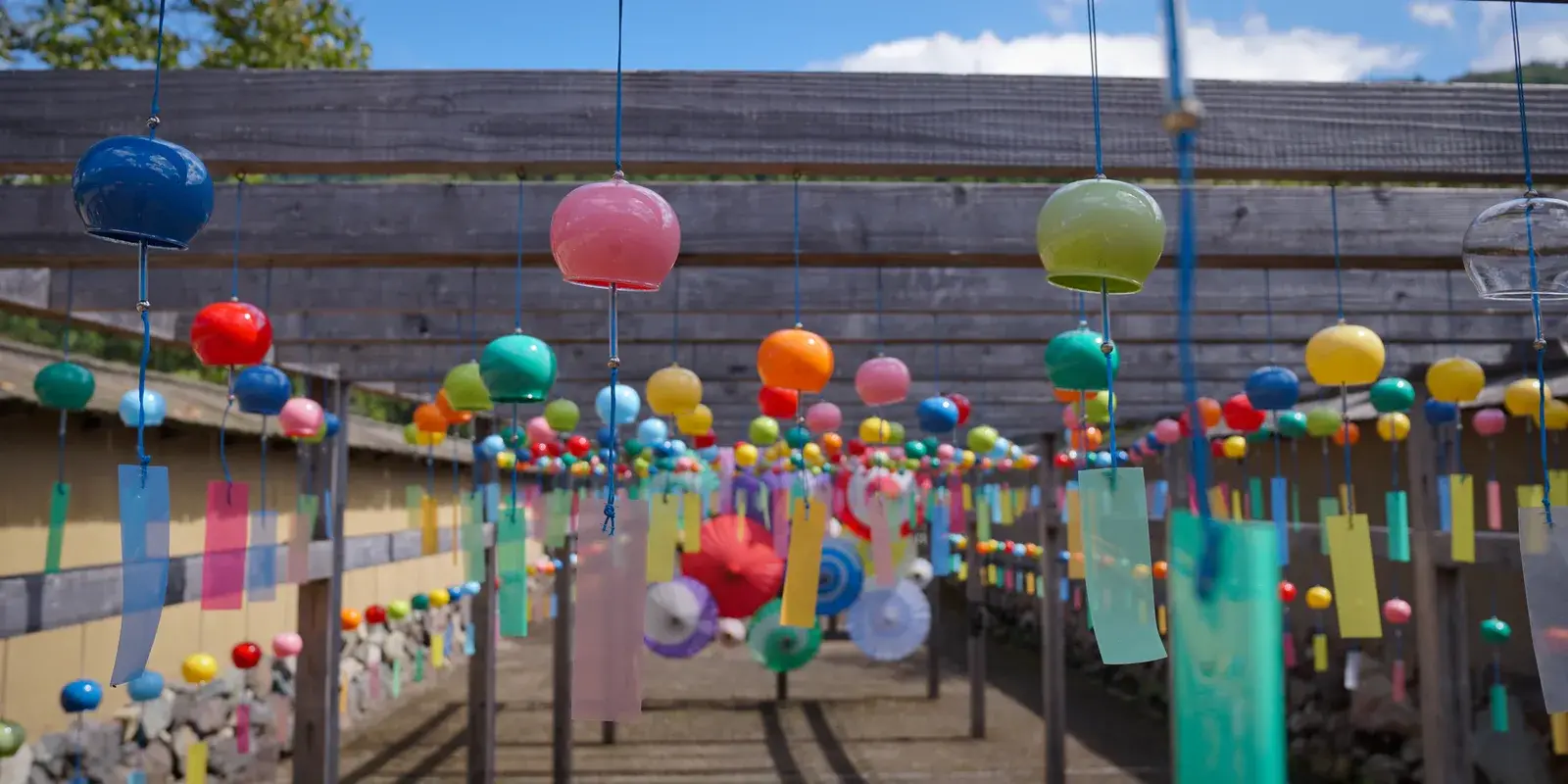
Japan's Art of Staying Cool: How Wind Chimes, Splashing Water, and Shaved Ice Turn Summer Heat Into Beauty
Key Takeaways:
- Japanese people don't just fight summer heat. They've spent centuries turning it into beauty through sound, water, and taste
- Wind chimes (furin) physically cool Japanese people through Pavlovian conditioning: NHK experiments showed their skin temperature drops 2-3°C when hearing the sound. Foreigners' skin temperature doesn't drop. The effect is uniquely cultural
- Uchimizu (sprinkling water on streets) started as a tea ceremony ritual in the 1500s, became a hospitality signal meaning "everything is ready, please come in," and is now practiced by an estimated 500 million+ people annually through organized events
- Kakigori (shaved ice) has a 1,000-year history (Sei Shōnagon wrote about it in The Pillow Book around 1000 CE), and Japanese people say they're "eating memories along with it"
What are Japanese summer traditions? We collected 354 public posts by Japanese people about furin (wind chimes), uchimizu (water sprinkling), and kakigori (shaved ice). The answer: Japan has a philosophy called 涼 (suzushi-sa), finding beauty in coolness through all five senses. Wind chimes cool through sound, water cools through ritual, and shaved ice cools through 1,000 years of memory. This isn't survival. It's art.
354 voices. 6 perspectives. A culture that turned summer heat into a five-sense art form.
Here's something visitors to Japan quickly discover in summer: it's brutally hot. The humidity defeats even people from tropical countries. And yet, walking through a Japanese neighborhood in August, you might hear a gentle chirin sound from a glass wind chime, see someone carefully sprinkling water on the pavement, or watch a line of people waiting patiently for a bowl of ice that costs more than lunch.
None of these things make logical sense as survival strategies. Wind chimes don't lower the temperature. Throwing water on asphalt shouldn't help much. And lining up for an hour in 35-degree heat for shaved ice seems counterproductive.
But they make perfect sense once you understand something about Japanese culture that most travel guides never mention: Japan doesn't just fight the heat. It finds beauty in it. There's a word for this: 涼 (suzushi-sa). It describes not just the absence of heat, but the pleasure of discovering coolness through your senses: the sound of a wind chime, the sight of water darkening stone, the taste of ice dissolving on your tongue.
This article is built on 354 real voices from Japanese people about their relationship with traditional cooling culture: what it means to them, whether it's still alive, and what they feel when visitors from around the world discover it.
Quick Guide
| Topic | What Japanese People Said | |
|---|---|---|
| 🔔 | Wind chimes (furin) | The sound literally cools Japanese people: their skin temperature drops 2-3°C through learned conditioning. Foreigners find furin beautiful but don't feel cooler. Home use is declining, but furin festivals are booming (300,000 visitors in 5 days at one festival). |
| 💧 | Water sprinkling (uchimizu) | More than cooling: it's a hospitality ritual meaning "everything is ready, please come in." Surface temperature drops 20°C, but air temperature only drops 0.5-1.5°C. The tradition nearly died but was revived as an environmental movement in 2003. |
| 🍧 | Shaved ice (kakigori) | A 1,000-year-old tradition that's evolved from aristocratic luxury to festival staple to Instagram-worthy artisan dessert. The debate between 200-yen festival ice and 1,500-yen specialty shop ice divides the nation. Japanese people say they're eating childhood memories. |
| 🌡️ | Traditional vs AC | 64% prefer traditional cooling methods, but feel guilty about needing AC. The traditional system was designed for a climate that no longer exists. |
| 🌏 | When foreigners join in | 67% are happy when visitors appreciate cooling culture. Some say foreign interest is helping save dying traditional crafts. |
How We Gathered These Voices
We collected 354 Japanese-language responses across six topics: the cooling power of wind chimes (62 responses), the uchimizu tradition (62 responses), kakigori culture (62 responses), reactions to foreigners appreciating cooling culture (55 responses), traditional vs modern cooling preferences (58 responses), and generational differences (55 responses). Sources include public Japanese Q&A sites, forums, and social posts, alongside NHK experiments, Weather News surveys, and published interviews in Japanese media.
A note on method: This isn't a controlled scientific survey. It's a collection of what real Japanese people said in their own words, in their own language, on public platforms. Most English-language guides tell you "it's hot in summer, bring water." We wanted to show you something the guides miss entirely: how Japanese people turn heat into beauty.
A House Built for Summer
Before we get to wind chimes and shaved ice, here's the idea that ties everything together. In the 14th century, the monk Yoshida Kenkō wrote what might be the most influential sentence in Japanese residential design:
家の作りやうは、夏をむねとすべし。 House design should prioritize summer.
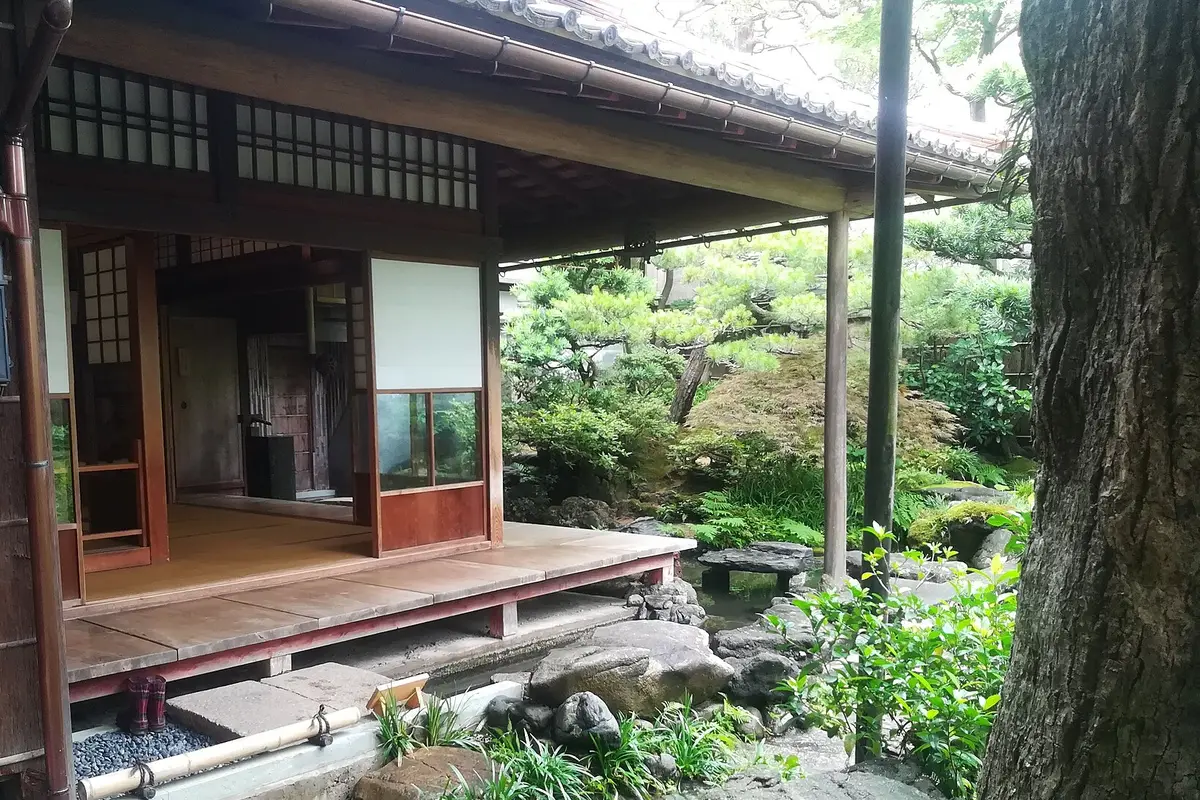
This wasn't a suggestion. It was a philosophy. For centuries, Japanese homes were built with high ceilings, raised floors, open sliding doors, and covered verandas, not to keep heat out but to invite coolness in. The engawa (veranda) connected inside and outside while belonging to neither. It was the space made for summer.
内と外を結びながら、どちらとも付かず離れずの縁側こそ、夏のための空間でありました。 The engawa, connecting inside and outside while belonging to neither — that was the space made for summer.
The system was coherent: the architecture invited airflow, the wind chime announced the breeze, the uchimizu cooled the ground, and the kakigori cooled the body. Each element engaged a different sense: hearing, sight, taste, touch, even smell (mosquito coils, which still use the same natural pyrethrum scent they've had for over 100 years).
This is what 涼 means. Not just temperature. A whole system of sensory delight.
Furin: The Sound That Cools Only Japanese People
Here's a finding that stops most people in their tracks.
In a 2019 experiment broadcast on NHK's Chiko-chan ni Shikarareru, researchers led by Professor Shinohara Kikunori of Suwa University of Science measured skin temperature while participants listened to wind chime sounds. The results:
Japanese participants: skin temperature dropped 2-3°C. Foreign participants: skin temperature went up.
The same sound. Opposite physical effects.
The explanation is Pavlovian conditioning. Over a lifetime of summers, Japanese people have learned an unconscious equation:
「チリン=風が吹いてる=涼しい」っていう方程式を何千回、何万回と学習 We've learned the equation "chirin sound = wind is blowing = cool" thousands, tens of thousands of times.
The brain hears the chime, predicts wind, and pre-cools the body. It's not imagination. It's a measurable physiological response built through cultural experience. A 2019 Weather News survey of 7,618 people confirmed that the "feel cool" response increases with age: older Japanese people, who grew up before air conditioning, have the strongest conditioning.
The sound itself helps too. Furin produce what's called "1/f fluctuation," a pattern that's neither perfectly regular nor random. It induces alpha brain waves, and after about five minutes of listening, heart rate and blood pressure stabilize.
The Nostalgia Trigger
For many Japanese people, furin carry a weight that goes far beyond temperature.
子どもの頃、夏休みに縁側に寝そべって耳にした涼やかな風鈴の音をすごく懐かしく思い出します I feel so nostalgic for the cool sound of wind chimes I heard lying on the veranda during summer break as a child.
風鈴の音が聞こえるところには悪いことが起こらない、なんて言われていましたね They used to say nothing bad happens where you can hear wind chimes.
But Furin Are Under Pressure
Here's the tension. Wind chimes need open windows, and air conditioning keeps them closed. Apartment living means neighbors are close. Tokyo's Environmental Bureau now classifies furin as "residential noise."
風鈴良いんだけどねー。分かるんだけどねー。都心でひしめき合っているマンション、生活リズムもバラバラな地域では、逆に騒音だったり Wind chimes are nice, I get it. But in packed urban condos where everyone's on different schedules, they become noise.
最高気温39度のときにも…叩き割りたくなった Even when it was 39 degrees... I wanted to smash it.
世の中、風情を感じる人も居れば感じない人も居て悲しいけれど、寛容な世の中ではなくなってしまった感じですね。 Some people appreciate the elegance and some don't — it's sad, but the world has become less tolerant.
Home use is declining. But furin festivals are booming. Kawasaki Daishi draws 300,000 visitors in five days. Shojuin Temple in Kyoto displays 2,500 wind chimes. The culture hasn't died. It's migrated from daily domestic life to shared public experience.
Uchimizu: The Water That Says "Welcome"
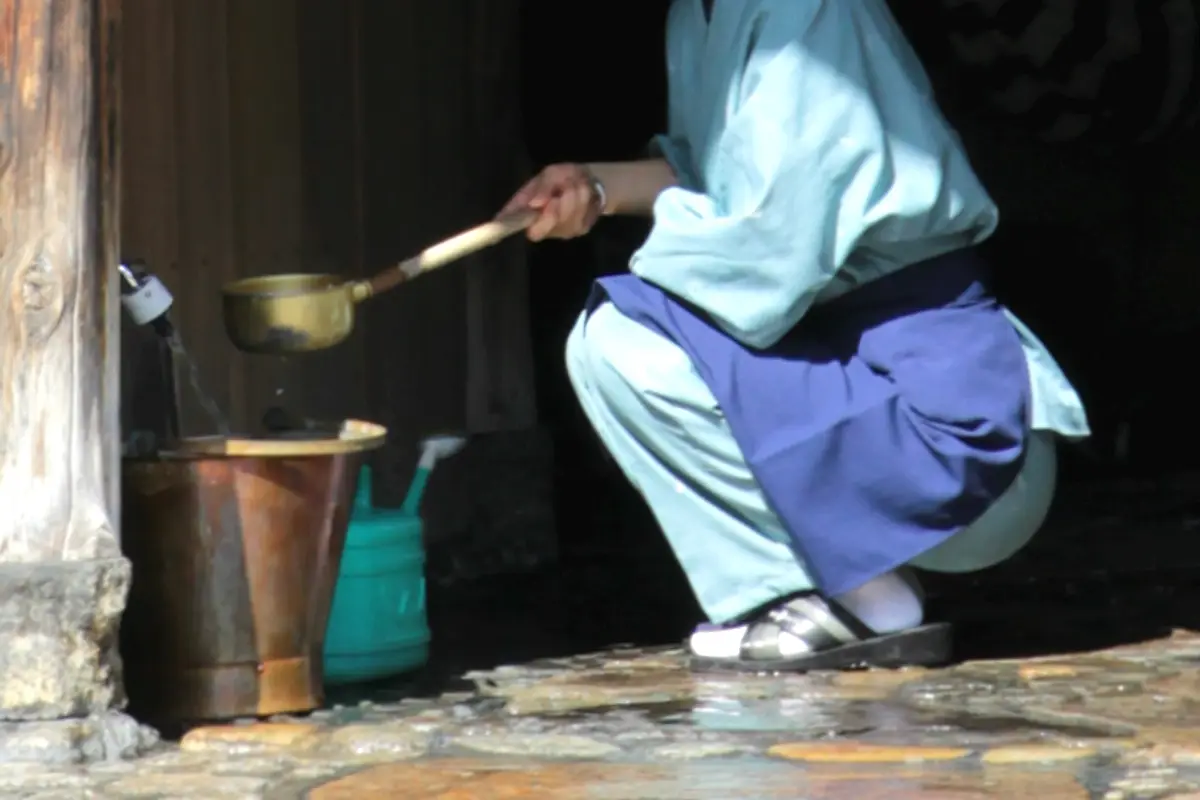
If you see someone in Japan carefully pouring water onto the pavement in front of their home or shop, they're practicing uchimizu, a tradition that goes back to the tea ceremony in the Azuchi-Momoyama period (1568-1600).
But here's what makes uchimizu more than a cooling technique: it was never just about temperature.
「打ち水」は「準備が整っていますからどうぞお入りください」という合図。 Uchimizu is a signal saying "Everything is ready, please come in."
At ryokan and traditional restaurants, water sprinkled at the entrance tells arriving guests: you are expected, you are welcome, we've prepared for you. In the tea ceremony, three separate sprinklings (san-ro) mark different stages of readiness.
打ち水は温度を下げるためだけじゃない。家に「今日もお疲れ様」って声をかける儀式なんや。 Uchimizu isn't just about lowering temperature. It's a ritual of saying "good work today" to the house.
The Science (It's Complicated)
Does uchimizu actually work? The answer depends on when you do it.
In a 2018 field test, the Japan Meteorological Association measured ground surface temperature before and after uchimizu with thermal cameras: the surface dropped from 62.4°C to 41.8°C, a 20-degree difference. But air temperature only drops 0.5-1.5°C. And here's the catch: in a 2011 study, Japan's National Institute of Advanced Industrial Science and Technology (AIST) found that midday sprinkling actually increases humidity by 9.6% with negligible energy savings. Evening sprinkling (around 5 PM), however, is genuinely effective.
The most honest voice in our research put it simply:
「広範囲に打ち水をした時の効果はどのくらい?」聞かれると、答えに窮するのが現状です "How effective is uchimizu over a large area?" When asked this, even experts struggle to answer.
Tajimi City, one of Japan's hottest cities, actually cancelled its organized uchimizu program after citizens complained that it just created steam.
The Revival
Despite the science being mixed, uchimizu has had a remarkable revival. In 2003, the "Uchimizu Daisakusen" (Uchimizu Grand Campaign) launched as an environmental movement, attracting an estimated 500 million+ annual participants across Japan at its peak. August 1st was designated "Uchimizu Day." The campaign has even been held in Paris for two consecutive years.
Tokyo's Bureau of Sewerage provides free reclaimed water specifically for uchimizu events. The Ministry of Environment co-hosts the Marunouchi event.
Poets have been watching this practice for centuries. Takarai Kikaku (1661-1707) wrote:
水うてや蝉も雀もぬるる程 Sprinkle water — until even the cicadas and sparrows get wet.
And tea ceremony practitioners see a dimension most visitors never notice:
打ち水をすると、しっとり濡れて、路地の雰囲気が沈む。それまではっきり見えていた世界が奥行きを増し、より豊かで濃密な風景になる。 When water is sprinkled, the alley becomes moistly quiet, its atmosphere deepens. The world that was clearly visible gains dimension, becoming richer and more concentrated.
Kakigori: A 1,000-Year Love Affair
Around the year 1000 CE, the court lady Sei Shōnagon listed life's most refined pleasures in The Pillow Book. Among them:
削り氷に甘葛入れて、あたらしき鋺に入れたる Shaved ice with sweet vine syrup, served in a new metal bowl.
A thousand years later, Japanese people still line up in summer heat for essentially the same thing. The bowl has changed. The syrup has evolved. But the idea that shaved ice is one of life's elegant pleasures, not just a way to cool down, hasn't moved an inch.
The Great Kakigori Debate
Modern Japan is split. On one side: the festival stall, where a cup of brightly colored shaved ice with artificial syrup costs 200-300 yen. On the other: the specialty shop, where artisans shave natural ice harvested from frozen mountain lakes and top it with handmade syrups for 1,500-2,000 yen.
ランチで700円くらいの定食を食べてから、別のカフェに移動してデザートとして1500円のかき氷を食べたときは、"金銭感覚がバグってきたな"と自分でも思いました When I ate a 700-yen lunch set, then moved to another cafe and had a 1,500-yen kakigori for dessert, even I thought "my sense of money is getting bugged."
The skeptics have a point: it's frozen water. But the believers have their own logic:
かき氷1杯でも...それが思い出に残したい日なら2000円でも全然高いとは思いません Even for one kakigori... if it's a day I want to remember, I don't think 2,000 yen is expensive at all.
There's also the widely known secret that all standard kakigori syrups (strawberry, melon, Blue Hawaii, lemon) are flavored identically. The only difference is the food coloring. Your brain tastes the color. Japanese people know this and defiantly maintain their flavor loyalties anyway.
結局は『自由味』。何味なのかわからない、その自由さがいい。 Ultimately it's a "free flavor." Not knowing what it tastes like — that freedom is what's good about it.
More Than Dessert
The most revealing voice in our research came from someone explaining why they still eat Blue Hawaii flavor even as an adult:
思い出も一緒に食べている I'm eating memories along with it.
Kakigori at a festival isn't about the ice. It's about the yukata you wore, the fireworks overhead, the humid night air, the friend standing next to you. Japanese people are eating all of that along with the ice.

When You Join In
Here's what happens when you, as a visitor, discover Japan's cooling culture.
67% of Japanese people are happy when foreigners appreciate their cooling traditions. But the story goes deeper than simple pride.
外国人の友人たちの感想はみんな同じで、風鈴のデザインはきれいでかわいいし、音を聞くとリラックスすると。でも涼しさとは一切結び付かない My foreign friends all say the same thing — furin designs are beautiful and cute, and the sound is relaxing. But they never connect it to feeling cool.
文化の違いって面白い。外国人はスイカやアイスを食べろと言うけど、日本人は音で涼む。どっちが正しいとかじゃなくて Cultural differences are fascinating. Foreigners say "just eat watermelon or ice cream," but Japanese people cool down through sound. It's not about which is right.
One reaction comes up repeatedly: foreign interest helps Japanese people rediscover their own culture.
伝統工芸の後継者が減る中で、外国人が興味を持ってくれるのは本当にありがたい。風鈴職人を目指すイタリア人の話を見て泣きそうになった With fewer successors for traditional crafts, having foreigners show interest is truly precious. I nearly cried watching the story of an Italian woman aspiring to be a furin craftsperson.
And there's a charming cultural gap that keeps appearing:
外国人に風鈴をお土産にあげたら、年中飾ってたよ。季節感とか関係なく、きれいな音のオブジェとして I gave a furin as a souvenir to a foreigner, and they displayed it year-round — not for the seasonal cooling effect, just as a decorative object with a pretty sound.
In Japan, furin are strictly a summer item. You put them up when summer begins and take them down when it ends. Using one in winter would feel as odd as wearing a Santa hat in July. But for visitors, it's just a beautiful object, and Japanese people find that difference more charming than wrong.
The Big Question: Is Traditional Cooling Dying?
With air conditioning in almost every Japanese building, is the art of staying cool becoming just a memory?
64% of Japanese people say they prefer traditional cooling methods. But there's an uncomfortable truth: the traditional system was designed for a climate that no longer exists.
In the Edo period, Tokyo had only a few days above 30°C per year. A 2025 survey found Japanese summers have expanded from 2.2 months to 3.6 months over the past decade, and only 23% of Japanese people now say they "like" summer. Extreme heat days (35°C+) didn't even have an official weather term until 2007, because they used to be that rare.
The result is a uniquely Japanese emotion: AC guilt.
今日も少しの罪悪感を感じながら、クーラーを付けて適温で過ごさせていただく。 Today, too, I'll turn on the air conditioner and spend the day at a comfortable temperature, with a little guilt.
This guilt has roots in wartime-era mentality. "Luxury is the enemy" (zeitaku wa teki da) was a national slogan, and its echoes persist, especially among older generations who grew up when summers were genuinely cooler and AC felt unnecessary.
「贅沢は敵だ」病ですね。年配者と、それに育てられた人に多いです。もう戦時中ではありません。「贅沢は素敵だ」でいきましょう。 It's the "luxury is the enemy" mentality. Common among older people and those raised by them. This isn't wartime anymore. Let's go with "luxury is lovely."
But something has been lost. And Japanese people know it.
ひょっとしたら失われていったのは人をもてなしてこころよい関係を築きたいという気遣いの心なのかもしれません。 Perhaps what's been lost isn't just the practice — but the caring spirit of wanting to welcome people and build comfortable relationships.
The haiku poet Takahama Kyoshi captured a moment between two cooling traditions, one that may now exist only in poetry:
水打つて風鈴いまだ鳴らぬなり。 Water sprinkled, and the wind chime hasn't rung yet.
A Quick Note on Generations
Japanese people are genuinely divided on whether traditional cooling culture will survive. The data tells a story of transformation rather than simple decline.
Older Japanese people hear a wind chime and feel cooler. Younger Japanese people see a wind chime corridor at a shrine and take photographs. The cultural object is the same. The relationship with it is completely different.
夏になったら絶対行くと決めていた川越氷川神社に行ってきました。期間限定で風鈴回廊など素敵なイベントをしているのですが、写真で見るだけでもう可愛くて可愛くてたまらなくて I decided I'd absolutely go to Kawagoe Hikawa Shrine come summer. The limited-period furin corridor event is so cute in photos I just couldn't resist.
Sound-based cooling has become visual-based consumption. Festival kakigori (200 yen, artificial syrup, childhood nostalgia) has become artisan kakigori (2,000 yen, natural ice, Instagram-worthy). The trigger point? Actress Aoi Yū's 2011 book Kyou mo Kakigōri (Today, Too, Kakigori), which launched the premium kakigori movement among young women.
腹を満たすのではなく心を満たすものなので It fills the heart, not the stomach.
And then there's the wind chime conflict, which isn't gentle nostalgia at all:
回覧板でまわってきたことある。風鈴はトラブルの元になりますので屋外に設置するのは控えてください I've gotten a circular notice saying: "Please refrain from installing wind chimes outdoors as they cause trouble."
The tradition hasn't died. It has split into two streams. One flows through festivals and social media, where young people encounter it as an event rather than a daily practice. The other survives in private memory: the grandmother's veranda, the summer vacation that will never come again, the sound that once meant the whole world was cool and safe.
More Japanese Perspectives
This article is the cultural companion to our practical summer guide. For the survival side (what to carry, where to cool down, and why Japanese people are genuinely worried about you in the heat), see Surviving Japan's Summer.
If you're visiting during summer festival season, How to Blend In at a Japanese Summer Festival covers what makes locals smile when you participate. And for the emotional peak of Japanese summer, Japanese Fireworks Festivals explains the moments that move everyone around you.
For help planning your trip timing, When Should You Visit Japan? combines weather data, crowding data, and Japanese people's honest opinions on when they most want visitors.
Share Your Experience
Have you encountered Japan's cooling culture? Heard a wind chime in a quiet temple, watched water being sprinkled on a summer morning, or waited in line for artisanal kakigori? We'd love to hear your story.
Sources
Wind Chimes (Furin)
- NHK Chiko-chan ni Shikarareru (2019): Wind chime cooling experiment (Prof. Shinohara Kikunori, Suwa University of Science). Thermographic measurement showing 2-3°C skin temperature drop in Japanese participants, temperature increase in foreign participants
- Weather News survey (2019, n=7,618): Wind chime perceptions across age groups
- Tokyo Metropolitan Environmental Bureau: Classification of wind chime noise as residential noise (reported since 2016)
- Kawasaki Daishi Wind Chime Market: 300,000 visitors over 5 days, 900 types from 47 prefectures
- Shojuin Temple (Kyoto): 2,500 wind chime display
Uchimizu
- Japan Meteorological Association (2018): Thermal camera measurement at Minami-Ikebukuro Park (ground surface temperature change from 62.4°C to 41.8°C)
- National Institute of Advanced Industrial Science and Technology (AIST, 2011): Study on uchimizu effectiveness: midday vs evening comparison, humidity impact
- Sumida Ward field experiments (2003-2007): Air temperature reduction of 0.5-0.7°C with coordinated sprinkling
- Ministry of Environment (2023): Perceived temperature reduction data
- Uchimizu Daisakusen (since 2003): 500M+ estimated annual participants
- Tokyo Bureau of Sewerage: Free reclaimed water distribution for uchimizu
- Tajimi City: Cancellation of municipal uchimizu program
Kakigori
- Sei Shōnagon, The Pillow Book (c. 1000 CE, Section 40, "Refined Things")
- LINE Research survey (2020): Kakigori popularity by age group
- Market analysis: Kakigori specialty shop growth data. First-hand Q&A responses (see Online Discussion Platforms below) price specialty-shop kakigori up to 2000 yen (written without a thousand-separator comma; 2,000 yen), matching the range cited in this article's body.
Traditional vs Modern Cooling
- Yoshida Kenkō, Tsurezuregusa (c. 1330): "House design should prioritize summer"
- Panasonic sleep survey (2026, n=560): 28% of people in their 60s said they hold back on AC despite feeling hot at night
- Nihon Information "Summer Consciousness Survey 2025": 58.4% dislike summer, perceived length expanded from 2.2 to 3.6 months
- Tokyo Metropolitan Medical Examiner's Office (2024): 85.6% of indoor heat stroke deaths (249 of 291 cases) occurred in homes without AC installed or with AC not in use
Poetry
- Takarai Kikaku (1661-1707): 水うてや蝉も雀もぬるる程
- Kobayashi Issa (1763-1827): 武士町や四角四面に水を蒔く
- Takahama Kyoshi: 水打つて風鈴いまだ鳴らぬなり
Online Discussion Platforms
- Public Japanese Q&A sites, forums, and social posts: first-hand opinions on wind chimes, uchimizu, kakigori, and summer cooling traditions
- X/Twitter: Uchimizu events, furin festivals
Note on Quotations
Quotes from online platforms have been lightly edited for readability (fixing typos, formatting for clarity). The meaning and intent of each comment remain unchanged. Original sources are linked above.
- https://sirabee.com/2019/07/20/20162123276/
- https://jpnculture.net/furin/
- https://weathernews.jp/s/topics/201908/200085/
- https://4travel.jp/dm_shisetsu/11334695
- https://www.ozmall.co.jp/travel/kyoto/ujitawara/30824/
- https://select.mamastar.jp/853101/2
- https://youpouch.com/2016/07/01/364952/
- https://www.moneypost.jp/1060392
- https://aminaflyers.amina-co.jp/list/detail/866
- https://uchimizu.jp/about/
- https://www.netsuzero.jp/netsu-lab/lab07
- https://nlab.itmedia.co.jp/cont/articles/3281836/
- https://ssl.honjinhiranoya.com/blog/2013/10/13/%E3%81%8A%E3%82%82%E3%81%A6%E3%81%AA%E3%81%97%E3%81%AE%E6%89%93%E3%81%A1%E6%B0%B4/
- https://www.nunokame.co.jp/%E6%89%93%E3%81%A1%E6%B0%B4-%EF%BD%9E%E6%9A%91%E3%81%95%E3%82%92%E3%82%84%E3%81%95%E3%81%97%E3%81%8F%E8%BF%BD%E3%81%84%E6%89%95%E3%81%86%E3%80%81%E3%81%B2%E3%81%A8%E3%81%97%E3%81%9A%E3%81%8F%E3%81%AE/
- https://yakunitatsuchishiki.com/post-2093/
- https://www.kikumasamune.shop/blog/?p=2218
- https://www.env.go.jp/guide/info/ecojin/action/20230809.html
- https://www.543life.com/content/shun/post20240704.html
- https://www.jalan.net/news/article/562561/
- https://www.koncom.co.jp/staffblog/7253/
- https://x.com/chiyoda_city/status/1948711075933028562
- https://www.aist.go.jp/aist_j/new_research/2011/nr20110621/nr20110621.html
- https://www.jwa.or.jp/news/2018/06/4341/
- https://prtimes.jp/main/html/rd/p/000001223.000024101.html
- https://www.hokeniryo.metro.tokyo.lg.jp/shisetsu/jigyosyo/kansatsu/heatstroke/r06-heatstroke
- https://prtimes.jp/main/html/rd/p/000002402.000001594.html
- https://www.n-info.co.jp/report/0079/
WMJS is written in Japan, in English, with AI help. We check every page, but English is not our first language. If a sentence reads oddly, tell us. One sentence is enough.
Thank you. A person reads every note.
How well do you know Japan?
Built from 635 public posts by Japanese people
Want to know more? Ask Japanese people
Have a follow-up question about this topic? We'll ask real Japanese people.
Voice Box →